Pharmacokinetics: High-Yield Guide for Students (2026)

Pharmacokinetics: High-Yield Guide for Students (2026)

What if the secret to mastering pharmacokinetics isn’t memorizing calculus, but understanding the narrative of how a drug travels through the human body? Many students feel an immediate sense of dread when a lecture on drug movement shifts into a barrage of complex mathematical formulas and confusing ADME terminology. It’s a common struggle to connect these abstract theories to the practical reality of clinical dosing, especially when the stakes for your future career are so high.

We understand that you need more than just dry definitions; you need a reliable mentor to help you navigate the rigorous requirements of your 2026 pharmacology coursework and board exams. This high-yield guide simplifies the core principles of ADME and pharmacokinetic modeling, giving you the tools to calculate half-life and clearance with total confidence. We’ll also explore the latest 2026 regulatory updates from the FDA and the new testing formats for BPS exams. By the end of this article, you’ll see pharmacokinetics as a logical road map rather than a series of intimidating equations, ensuring you’re prepared for both the classroom and the clinic.

Key Takeaways

  • Distinguish between what the body does to a drug and what the drug does to the body by mastering the four foundational pillars of the ADME framework.
  • Understand how plasma protein binding and the free drug fraction dictate drug distribution and eventual clinical efficacy in various tissue types.
  • Learn to calculate essential elimination parameters like clearance and half-life to accurately determine steady-state concentrations for different patient populations.
  • Apply pharmacokinetics to real-world clinical scenarios by identifying when to prioritize a loading dose over a standard maintenance dose to reach the therapeutic window.
  • Discover how high-yield video vignettes and interactive flashcards can simplify complex metabolic pathways and drug interactions for superior exam performance.

Understanding the ADME Framework: What the Body Does to the Drug

To understand how a medication achieves its therapeutic goal, we must first look at the journey it takes through the human body. This process is defined as pharmacokinetics, often simplified as “what the body does to the drug.” It’s distinct from pharmacodynamics, which examines the drug’s effect on the body’s receptors. For healthcare students, mastering this Pharmacokinetics Overview is the first step toward predicting clinical outcomes and preventing adverse reactions in a professional setting.

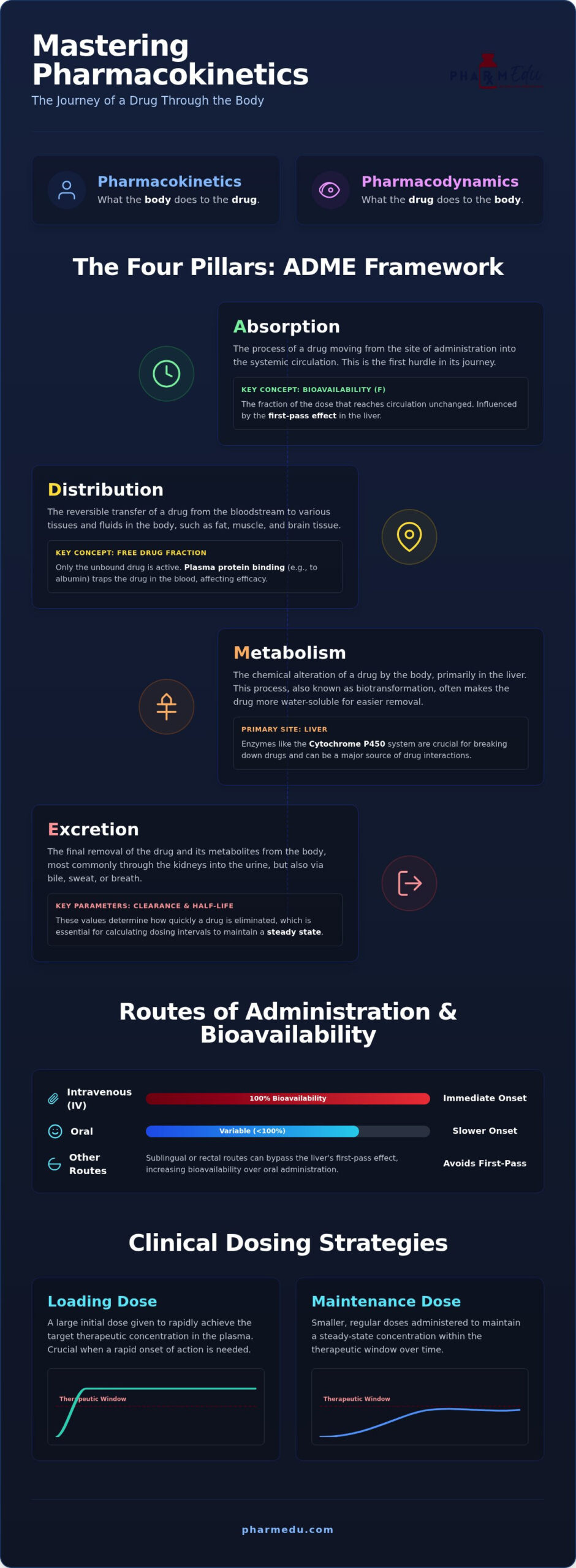
The framework consists of four sequential pillars: absorption, distribution, metabolism, and excretion (ADME). Together, these stages determine the drug’s concentration at the site of action, which directly influences the onset, duration, and intensity of the clinical effect. If a drug is absorbed too slowly, it might never reach the necessary therapeutic threshold. Conversely, if it’s excreted too quickly, the patient won’t benefit from sustained relief. Managing this timeline is a core responsibility in patient care, ensuring that medications remain within a safe and effective range.

Absorption and Bioavailability: The First Hurdle

Absorption describes the translocation of a drug from its site of administration into the systemic circulation. This process depends on several physiological and chemical factors, including the drug’s lipid solubility, its molecular size, and its ionization state. Weak acids and bases behave differently depending on the local environment’s pH, which dictates whether they can pass through lipid membranes. Bioavailability (F) is the fraction of the administered dose that reaches the systemic circulation in an unchanged form, calculated as F = AUC oral / AUC IV. A significant challenge here is the first-pass effect, where the liver metabolizes a portion of the drug before it ever reaches the rest of the body.

Routes of Administration and Their PK Profiles

The choice of administration route fundamentally alters a drug’s pharmacokinetic profile. Intravenous (IV) administration provides 100% bioavailability and an immediate onset, making it the standard for emergency interventions. In contrast, oral administration is more convenient for long term therapy but results in a slower, variable absorption curve. Some medications use sublingual or rectal routes specifically to bypass the portal circulation and avoid early hepatic metabolism. For oral drugs, the small intestine remains the primary site of absorption because its massive surface area and rich blood supply are more efficient than the acidic environment of the stomach. Understanding these variables allows clinicians to tailor dosing strategies to the specific needs of their patients.

The Dynamics of Drug Distribution and Metabolism

Once a drug survives the first-pass effect and enters the systemic circulation, the body begins the complex process of distribution. This stage isn’t a simple dispersal. It’s a selective movement of molecules from the plasma into various tissues and interstitial fluids. A central player in this process is plasma protein binding, specifically to albumin. Drugs that bind tightly to albumin remain trapped in the vascular space, whereas the unbound or “free fraction” is the only portion capable of crossing membranes to reach its target receptors. Understanding these Clinical Pharmacokinetics Principles is vital for predicting how a drug will behave in patients with altered protein levels, such as those with liver disease or malnutrition.

Gatekeepers like the blood-brain barrier (BBB) and the placental barrier further complicate this journey. The BBB uses tight junctions and specific efflux transporters to shield the central nervous system from potentially toxic substances, while the placental barrier serves as a semi-permeable interface between maternal and fetal blood. These barriers dictate which medications can treat meningitis or which are safe during pregnancy, making them essential factors in pharmacokinetics.

Volume of Distribution (Vd) Explained

Volume of distribution is often a point of confusion because it doesn’t represent a physical space in the body. Instead, it’s a theoretical volume that relates the total amount of drug in the body to its concentration in the plasma. If a drug is highly lipid-soluble or has low protein binding, it will exit the blood and sequester in tissues, resulting in a high Vd. Clinically, Vd is the primary parameter used to calculate a loading dose, ensuring a patient reaches therapeutic levels quickly. For students struggling to visualize these mathematical relationships, exploring High-Yield Video Vignettes can provide the clarity needed to bridge the gap between theory and calculation.

Phase I and Phase II Metabolism: The Role of CYP450

Metabolism, or biotransformation, is the body’s primary mechanism for converting lipophilic drugs into polar, water-soluble metabolites that the kidneys can easily excrete. This typically occurs in two stages. Phase I reactions involve oxidation, reduction, or hydrolysis, primarily driven by the cytochrome P450 (CYP450) enzyme system. These reactions often reveal or create a functional group on the molecule. Phase II reactions then involve conjugation, such as glucuronidation or sulfation, which significantly increases water solubility for final elimination.

The clinical danger lies in drug-drug interactions involving CYP450 enzymes. Enzyme inhibitors can lead to toxic drug accumulation, while inducers can cause therapeutic failure by accelerating metabolism. Mastering these interactions is a cornerstone of safe prescribing and a frequent focus of pharmacology board exams.
Pharmacokinetics: High-Yield Guide for Students (2026)

Elimination Kinetics: Clearance, Half-Life, and Steady State

After a drug has been distributed and metabolized, the final phase of pharmacokinetics is its removal from the body. While metabolism often alters the chemical structure of a medication, elimination is the process that actually reduces the total body load. The most critical parameter for students to master in this phase is clearance (Cl). Unlike the theoretical nature of Vd, clearance is a measurable physiological rate. It represents the volume of plasma that is completely cleared of a drug per unit of time, usually expressed in milliliters per minute. This value is the primary determinant for calculating a maintenance dose, ensuring that the patient receives enough medication to replace what’s lost without reaching toxic levels.

Elimination occurs primarily through the kidneys via renal filtration and secretion, or through the liver via biliary excretion. The efficiency of these pathways determines the drug’s half-life ($t_{1/2}$), which is the time required for the plasma concentration to decrease by 50%. A fundamental mathematical relationship exists here: half-life is directly proportional to the volume of distribution and inversely proportional to clearance. If you have already reviewed the sections on Drug Distribution and Metabolism, you’ll recognize that any factor decreasing clearance, such as renal failure, will inevitably prolong the half-life and increase the risk of drug accumulation.

Zero-Order vs. First-Order Elimination Kinetics

Most drugs follow first-order kinetics, where a constant fraction of the drug is eliminated per unit of time. This means the more drug there is in the system, the faster the body works to remove it. On a log-concentration graph, this appears as a predictable straight line. Conversely, zero-order kinetics occur when the body’s elimination mechanisms become saturated. In this scenario, a constant amount of drug is removed regardless of the plasma concentration. This is clinically dangerous because even small dose increases can lead to massive spikes in blood levels. Classic examples of zero-order drugs include ethanol, phenytoin, and high-dose aspirin.

Calculating Half-Life and Reaching Steady State

For medications given at regular intervals, the goal is to reach a plateau where the amount of drug entering the body matches the amount leaving it. Steady state is the point where the rate of drug intake equals the rate of drug elimination. Under first-order kinetics, it takes approximately four to five half-lives to reach this equilibrium. This same “5 half-lives” rule applies to washout periods when a drug is discontinued. Clinical factors like aging or chronic kidney disease can significantly prolong half-life, meaning these patients require longer to reach steady state and are more susceptible to toxicity if dosing isn’t adjusted. Mastering these calculations is a frequent requirement for passing pharmacology boards and ensuring safe patient outcomes.

Clinical Pharmacokinetics: Dosing Regimens and Monitoring

Mastering the theoretical aspects of pharmacokinetics is only the beginning. The real challenge lies in applying these principles to clinical dosing regimens at the bedside. Clinicians must operate within the therapeutic window, which is the range of drug concentrations where the medication is effective without causing unacceptable toxicity. If the concentration drops below this range, the treatment fails. If it rises above, the patient is at risk for adverse events. Maintaining this balance requires a deep understanding of how individual patient variables alter the ADME process.

Choosing between a loading dose and a maintenance dose depends on clinical urgency. As established in previous sections, the loading dose is calculated using the volume of distribution to reach steady state rapidly. This is essential in life-threatening situations, such as treating a severe infection with certain antibiotics. In contrast, the maintenance dose relies on clearance to replace only what the body eliminates over time. Clinicians must also account for population variability. For instance, neonates have a much higher percentage of total body water, which increases the Vd for hydrophilic drugs. Geriatric patients often experience a “start low and go slow” approach because their reduced renal blood flow and liver mass significantly slow down drug elimination.

Narrow Therapeutic Index (NTI) Drugs

Narrow Therapeutic Index drugs like digoxin, warfarin, and lithium require precise Therapeutic Drug Monitoring (TDM). For these substances, the distance between a therapeutic dose and a toxic dose is dangerously small. Students must recognize clinical signs of toxicity, such as the visual disturbances associated with digoxin or the fine tremors linked to lithium toxicity. Measuring peak levels (the highest concentration after a dose) and trough levels (the lowest concentration just before the next dose) ensures the drug remains within the safe zone. To master these complex dosing scenarios, you can test your knowledge with Pharmacology Practice Quizzes that simulate real-world clinical decision-making.

Dosing Adjustments for Organ Impairment

When a patient has renal or hepatic impairment, standard dosing guidelines no longer apply. The Cockcroft-Gault equation remains a primary tool for estimating creatinine clearance and adjusting doses for renal failure. For metabolism-dependent drugs, hepatic impairment is more difficult to quantify but requires extreme caution due to reduced enzyme activity and potential changes in protein binding. When you’re reviewing a drug monograph, pay close attention to the “Special Populations” section. This area provides specific guidance on dose reductions or interval extensions based on the degree of organ dysfunction. Developing a methodical habit of checking these PK parameters is a hallmark of a prepared and safe healthcare professional.

Mastering Pharmacokinetics for Board Exams with PharmEDU

Preparing for board exams in 2026 requires more than just a passing familiarity with drug names. It demands a precise understanding of how the body handles those drugs. As the Board of Pharmacy Specialties (BPS) transitions to new delivery partners like Pearson and updates its reporting formats, the pressure to perform on the first attempt has never been higher. Pharmacokinetics remains a high-weight topic across the NAPLEX, NCLEX, and BPS exams, often serving as the “make or break” section for many candidates. Our platform acts as a digital mentor, providing the structure and clarity you need to turn these complex mathematical concepts into second nature.

PharmEDU’s High-Yield Video Vignettes are specifically designed to help these concepts stick by moving beyond dry equations. We focus on the narrative of drug movement, helping you visualize how a molecule enters the bloodstream and eventually exits through the kidneys or liver. This visual approach is especially effective for busy healthcare students who need to maximize their limited study time. By integrating our micro-learning modules into your daily routine, you can master difficult topics without feeling overwhelmed by the sheer volume of information.

High-Yield PK Concepts for NAPLEX and NCLEX

Board exams frequently use “trap” questions to test your deeper understanding of pharmacokinetics. You might encounter a scenario where a drug follows zero-order kinetics, such as ethanol or phenytoin, and be asked to predict the effect of a small dose increase. Without a firm grasp of the “PEA” mnemonic (Phenytoin, Ethanol, Aspirin), it’s easy to forget that these drugs don’t follow a predictable, linear elimination path. Our resources help you link these theoretical pillars to specific drug classes. For example, understanding the renal implications of ACE inhibitors pharmacology is essential for answering questions about dosing in patients with heart failure or chronic kidney disease.

Leveraging PharmEDU for Exam Success

Confidence comes from active application, not passive reading. Our Pharmacology Practice Quizzes allow you to test your ability to calculate Vd and Clearance under exam-like conditions. We also provide Clinical Case Studies that mirror the complexity of real-world practice, helping you bridge the gap between a textbook formula and a patient’s dosing regimen. Since our platform is fully mobile-compliant, you can review Interactive Pharmacology Flashcards for CYP450 inducers and inhibitors during your commute or between clinical rotations. This flexibility ensures that you’re always making progress toward your professional goals. Start your PharmEDU subscription today to master pharmacokinetics and ace your boards.

Elevating Your Clinical Practice through Pharmacokinetic Mastery

Mastering the complexities of pharmacokinetics is a vital milestone in your journey as a healthcare professional. By viewing the ADME framework as a narrative of drug movement rather than a collection of abstract formulas, you gain the ability to make safer, more precise clinical decisions. Whether you’re calculating a loading dose based on volume of distribution or adjusting maintenance regimens for renal impairment, your theoretical knowledge now has a practical application. This foundation ensures that you don’t just memorize data for an exam; you develop the clinical intuition necessary for superior patient care.

As you prepare for the 2026 board exams, you don’t have to navigate these challenges alone. PharmEDU provides the tools to bridge the gap between confusing textbooks and professional success. With over 100 high-yield pharmacology topics and interactive flashcards, our platform supports your growth through mobile-compliant micro-learning segments and rigorous practice quizzes. Join PharmEDU to master pharmacology and pass your boards with confidence. You have the dedication to succeed, and we’re here to provide the expertise that ensures you reach your goals.

Frequently Asked Questions

What is the main difference between pharmacokinetics and pharmacodynamics?

The primary difference is that pharmacokinetics focuses on the movement of a drug through the body, while pharmacodynamics examines the biochemical and physiological effects the drug has on the body. You can think of PK as what the body does to the drug, covering absorption, distribution, metabolism, and excretion. PD is what the drug does to the body, such as binding to receptors or inhibiting enzymes.

How do you calculate the half-life of a drug?

You calculate the half-life by multiplying the natural log of 2, which is approximately 0.693, by the volume of distribution and then dividing by the clearance. The formula is $t_{1/2} = 0.693 times Vd / Cl$. This relationship shows that any clinical factor increasing the volume of distribution or decreasing the clearance will naturally prolong the drug’s half-life.

Why is the first-pass effect important in pharmacology?

The first-pass effect is critical because it determines the actual bioavailability of a medication after oral administration. When you swallow a pill, it’s absorbed in the gut and sent via the portal vein to the liver. Hepatic enzymes often metabolize a significant portion of the drug before it reaches the systemic circulation, which is why some drugs have much higher oral doses compared to their intravenous equivalents.

What happens to the volume of distribution in an obese patient?

In an obese patient, the volume of distribution typically increases for lipophilic drugs because they sequester in the expanded adipose tissue. Because these drugs have a high affinity for fat, they move out of the plasma and into the body’s fat stores. For hydrophilic drugs, the change is often less dramatic, though clinicians still need to adjust dosing to account for changes in total body water and lean mass.

How many half-lives does it take to reach steady state?

It generally takes four to five half-lives of regular dosing to reach steady state. At this point, the amount of drug you’re putting into the patient’s system equals the amount their body is eliminating. This same rule of thumb applies to the washout period; it takes about five half-lives for a drug to be almost entirely cleared from the body after the last dose is taken.

What are the main Phase I and Phase II metabolic reactions?

Phase I reactions primarily involve oxidation, reduction, and hydrolysis, while Phase II reactions focus on conjugation. Most Phase I reactions use the cytochrome P450 enzyme system to make a drug more polar or to reveal a functional group. Phase II reactions then attach a large, water-soluble molecule, such as glucuronic acid or sulfate, to the drug to ensure the kidneys can easily excrete it.

What is a narrow therapeutic index drug?

A narrow therapeutic index drug is a medication where the margin between a therapeutic dose and a toxic dose is very small. For these drugs, even a minor change in pharmacokinetics can lead to treatment failure or dangerous toxicity. Common examples include digoxin, lithium, and warfarin, all of which require precise blood level monitoring to keep the patient within the safe therapeutic window.

Can renal failure affect a drug’s volume of distribution?

Renal failure can affect the volume of distribution by changing a patient’s fluid status or altering plasma protein binding. For example, if a patient has significant edema or ascites due to kidney issues, hydrophilic drugs have a larger space to distribute into. Additionally, uremia can interfere with how drugs bind to albumin, increasing the free fraction of the drug and effectively changing the distribution profile.


What if the secret to mastering pharmacokinetics isn’t memorizing calculus, but understanding the narrative of how a drug travels through the human body? Many students feel an immediate sense of dread when a lecture on drug movement shifts into a barrage of complex mathematical formulas and confusing ADME terminology. It’s a common struggle to connect these abstract theories to the practical reality of clinical dosing, especially when the stakes for your future career are so high.

We understand that you need more than just dry definitions; you need a reliable mentor to help you navigate the rigorous requirements of your 2026 pharmacology coursework and board exams. This high-yield guide simplifies the core principles of ADME and pharmacokinetic modeling, giving you the tools to calculate half-life and clearance with total confidence. We’ll also explore the latest 2026 regulatory updates from the FDA and the new testing formats for BPS exams. By the end of this article, you’ll see pharmacokinetics as a logical road map rather than a series of intimidating equations, ensuring you’re prepared for both the classroom and the clinic.

Key Takeaways

  • Distinguish between what the body does to a drug and what the drug does to the body by mastering the four foundational pillars of the ADME framework.
  • Understand how plasma protein binding and the free drug fraction dictate drug distribution and eventual clinical efficacy in various tissue types.
  • Learn to calculate essential elimination parameters like clearance and half-life to accurately determine steady-state concentrations for different patient populations.
  • Apply pharmacokinetics to real-world clinical scenarios by identifying when to prioritize a loading dose over a standard maintenance dose to reach the therapeutic window.
  • Discover how high-yield video vignettes and interactive flashcards can simplify complex metabolic pathways and drug interactions for superior exam performance.

Understanding the ADME Framework: What the Body Does to the Drug

To understand how a medication achieves its therapeutic goal, we must first look at the journey it takes through the human body. This process is defined as pharmacokinetics, often simplified as “what the body does to the drug.” It’s distinct from pharmacodynamics, which examines the drug’s effect on the body’s receptors. For healthcare students, mastering this Pharmacokinetics Overview is the first step toward predicting clinical outcomes and preventing adverse reactions in a professional setting.

The framework consists of four sequential pillars: absorption, distribution, metabolism, and excretion (ADME). Together, these stages determine the drug’s concentration at the site of action, which directly influences the onset, duration, and intensity of the clinical effect. If a drug is absorbed too slowly, it might never reach the necessary therapeutic threshold. Conversely, if it’s excreted too quickly, the patient won’t benefit from sustained relief. Managing this timeline is a core responsibility in patient care, ensuring that medications remain within a safe and effective range.

Absorption and Bioavailability: The First Hurdle

Absorption describes the translocation of a drug from its site of administration into the systemic circulation. This process depends on several physiological and chemical factors, including the drug’s lipid solubility, its molecular size, and its ionization state. Weak acids and bases behave differently depending on the local environment’s pH, which dictates whether they can pass through lipid membranes. Bioavailability (F) is the fraction of the administered dose that reaches the systemic circulation in an unchanged form, calculated as F = AUC oral / AUC IV. A significant challenge here is the first-pass effect, where the liver metabolizes a portion of the drug before it ever reaches the rest of the body.

Routes of Administration and Their PK Profiles

The choice of administration route fundamentally alters a drug’s pharmacokinetic profile. Intravenous (IV) administration provides 100% bioavailability and an immediate onset, making it the standard for emergency interventions. In contrast, oral administration is more convenient for long term therapy but results in a slower, variable absorption curve. Some medications use sublingual or rectal routes specifically to bypass the portal circulation and avoid early hepatic metabolism. For oral drugs, the small intestine remains the primary site of absorption because its massive surface area and rich blood supply are more efficient than the acidic environment of the stomach. Understanding these variables allows clinicians to tailor dosing strategies to the specific needs of their patients.

The Dynamics of Drug Distribution and Metabolism

Once a drug survives the first-pass effect and enters the systemic circulation, the body begins the complex process of distribution. This stage isn’t a simple dispersal. It’s a selective movement of molecules from the plasma into various tissues and interstitial fluids. A central player in this process is plasma protein binding, specifically to albumin. Drugs that bind tightly to albumin remain trapped in the vascular space, whereas the unbound or “free fraction” is the only portion capable of crossing membranes to reach its target receptors. Understanding these Clinical Pharmacokinetics Principles is vital for predicting how a drug will behave in patients with altered protein levels, such as those with liver disease or malnutrition.

Gatekeepers like the blood-brain barrier (BBB) and the placental barrier further complicate this journey. The BBB uses tight junctions and specific efflux transporters to shield the central nervous system from potentially toxic substances, while the placental barrier serves as a semi-permeable interface between maternal and fetal blood. These barriers dictate which medications can treat meningitis or which are safe during pregnancy, making them essential factors in pharmacokinetics.

Volume of Distribution (Vd) Explained

Volume of distribution is often a point of confusion because it doesn’t represent a physical space in the body. Instead, it’s a theoretical volume that relates the total amount of drug in the body to its concentration in the plasma. If a drug is highly lipid-soluble or has low protein binding, it will exit the blood and sequester in tissues, resulting in a high Vd. Clinically, Vd is the primary parameter used to calculate a loading dose, ensuring a patient reaches therapeutic levels quickly. For students struggling to visualize these mathematical relationships, exploring High-Yield Video Vignettes can provide the clarity needed to bridge the gap between theory and calculation.

Phase I and Phase II Metabolism: The Role of CYP450

Metabolism, or biotransformation, is the body’s primary mechanism for converting lipophilic drugs into polar, water-soluble metabolites that the kidneys can easily excrete. This typically occurs in two stages. Phase I reactions involve oxidation, reduction, or hydrolysis, primarily driven by the cytochrome P450 (CYP450) enzyme system. These reactions often reveal or create a functional group on the molecule. Phase II reactions then involve conjugation, such as glucuronidation or sulfation, which significantly increases water solubility for final elimination.

The clinical danger lies in drug-drug interactions involving CYP450 enzymes. Enzyme inhibitors can lead to toxic drug accumulation, while inducers can cause therapeutic failure by accelerating metabolism. Mastering these interactions is a cornerstone of safe prescribing and a frequent focus of pharmacology board exams.

Pharmacokinetics: High-Yield Guide for Students (2026)

Elimination Kinetics: Clearance, Half-Life, and Steady State

After a drug has been distributed and metabolized, the final phase of pharmacokinetics is its removal from the body. While metabolism often alters the chemical structure of a medication, elimination is the process that actually reduces the total body load. The most critical parameter for students to master in this phase is clearance (Cl). Unlike the theoretical nature of Vd, clearance is a measurable physiological rate. It represents the volume of plasma that is completely cleared of a drug per unit of time, usually expressed in milliliters per minute. This value is the primary determinant for calculating a maintenance dose, ensuring that the patient receives enough medication to replace what’s lost without reaching toxic levels.

Elimination occurs primarily through the kidneys via renal filtration and secretion, or through the liver via biliary excretion. The efficiency of these pathways determines the drug’s half-life ($t_{1/2}$), which is the time required for the plasma concentration to decrease by 50%. A fundamental mathematical relationship exists here: half-life is directly proportional to the volume of distribution and inversely proportional to clearance. If you have already reviewed the sections on Drug Distribution and Metabolism, you’ll recognize that any factor decreasing clearance, such as renal failure, will inevitably prolong the half-life and increase the risk of drug accumulation.

Zero-Order vs. First-Order Elimination Kinetics

Most drugs follow first-order kinetics, where a constant fraction of the drug is eliminated per unit of time. This means the more drug there is in the system, the faster the body works to remove it. On a log-concentration graph, this appears as a predictable straight line. Conversely, zero-order kinetics occur when the body’s elimination mechanisms become saturated. In this scenario, a constant amount of drug is removed regardless of the plasma concentration. This is clinically dangerous because even small dose increases can lead to massive spikes in blood levels. Classic examples of zero-order drugs include ethanol, phenytoin, and high-dose aspirin.

Calculating Half-Life and Reaching Steady State

For medications given at regular intervals, the goal is to reach a plateau where the amount of drug entering the body matches the amount leaving it. Steady state is the point where the rate of drug intake equals the rate of drug elimination. Under first-order kinetics, it takes approximately four to five half-lives to reach this equilibrium. This same “5 half-lives” rule applies to washout periods when a drug is discontinued. Clinical factors like aging or chronic kidney disease can significantly prolong half-life, meaning these patients require longer to reach steady state and are more susceptible to toxicity if dosing isn’t adjusted. Mastering these calculations is a frequent requirement for passing pharmacology boards and ensuring safe patient outcomes.

Clinical Pharmacokinetics: Dosing Regimens and Monitoring

Mastering the theoretical aspects of pharmacokinetics is only the beginning. The real challenge lies in applying these principles to clinical dosing regimens at the bedside. Clinicians must operate within the therapeutic window, which is the range of drug concentrations where the medication is effective without causing unacceptable toxicity. If the concentration drops below this range, the treatment fails. If it rises above, the patient is at risk for adverse events. Maintaining this balance requires a deep understanding of how individual patient variables alter the ADME process.

Choosing between a loading dose and a maintenance dose depends on clinical urgency. As established in previous sections, the loading dose is calculated using the volume of distribution to reach steady state rapidly. This is essential in life-threatening situations, such as treating a severe infection with certain antibiotics. In contrast, the maintenance dose relies on clearance to replace only what the body eliminates over time. Clinicians must also account for population variability. For instance, neonates have a much higher percentage of total body water, which increases the Vd for hydrophilic drugs. Geriatric patients often experience a “start low and go slow” approach because their reduced renal blood flow and liver mass significantly slow down drug elimination.

Narrow Therapeutic Index (NTI) Drugs

Narrow Therapeutic Index drugs like digoxin, warfarin, and lithium require precise Therapeutic Drug Monitoring (TDM). For these substances, the distance between a therapeutic dose and a toxic dose is dangerously small. Students must recognize clinical signs of toxicity, such as the visual disturbances associated with digoxin or the fine tremors linked to lithium toxicity. Measuring peak levels (the highest concentration after a dose) and trough levels (the lowest concentration just before the next dose) ensures the drug remains within the safe zone. To master these complex dosing scenarios, you can test your knowledge with Pharmacology Practice Quizzes that simulate real-world clinical decision-making.

Dosing Adjustments for Organ Impairment

When a patient has renal or hepatic impairment, standard dosing guidelines no longer apply. The Cockcroft-Gault equation remains a primary tool for estimating creatinine clearance and adjusting doses for renal failure. For metabolism-dependent drugs, hepatic impairment is more difficult to quantify but requires extreme caution due to reduced enzyme activity and potential changes in protein binding. When you’re reviewing a drug monograph, pay close attention to the “Special Populations” section. This area provides specific guidance on dose reductions or interval extensions based on the degree of organ dysfunction. Developing a methodical habit of checking these PK parameters is a hallmark of a prepared and safe healthcare professional.

Mastering Pharmacokinetics for Board Exams with PharmEDU

Preparing for board exams in 2026 requires more than just a passing familiarity with drug names. It demands a precise understanding of how the body handles those drugs. As the Board of Pharmacy Specialties (BPS) transitions to new delivery partners like Pearson and updates its reporting formats, the pressure to perform on the first attempt has never been higher. Pharmacokinetics remains a high-weight topic across the NAPLEX, NCLEX, and BPS exams, often serving as the “make or break” section for many candidates. Our platform acts as a digital mentor, providing the structure and clarity you need to turn these complex mathematical concepts into second nature.

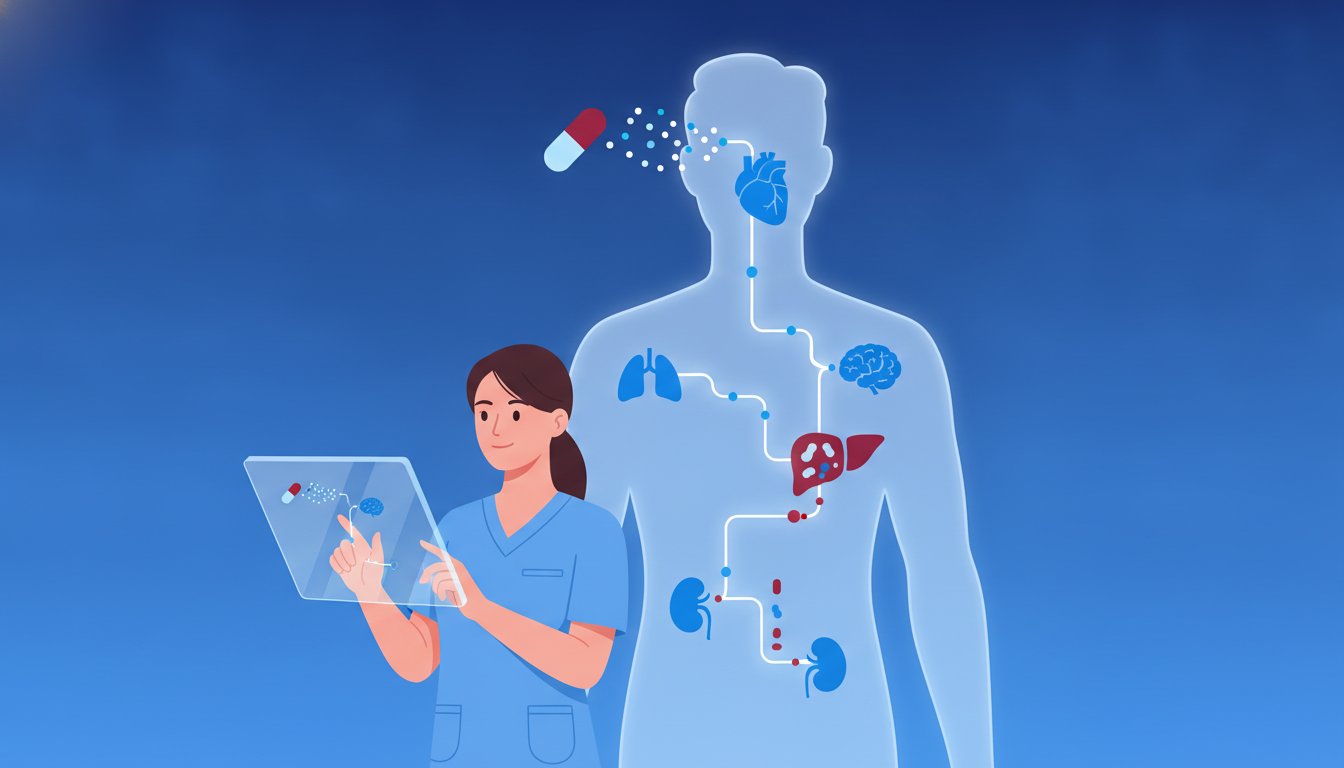
PharmEDU’s High-Yield Video Vignettes are specifically designed to help these concepts stick by moving beyond dry equations. We focus on the narrative of drug movement, helping you visualize how a molecule enters the bloodstream and eventually exits through the kidneys or liver. This visual approach is especially effective for busy healthcare students who need to maximize their limited study time. By integrating our micro-learning modules into your daily routine, you can master difficult topics without feeling overwhelmed by the sheer volume of information.

High-Yield PK Concepts for NAPLEX and NCLEX

Board exams frequently use “trap” questions to test your deeper understanding of pharmacokinetics. You might encounter a scenario where a drug follows zero-order kinetics, such as ethanol or phenytoin, and be asked to predict the effect of a small dose increase. Without a firm grasp of the “PEA” mnemonic (Phenytoin, Ethanol, Aspirin), it’s easy to forget that these drugs don’t follow a predictable, linear elimination path. Our resources help you link these theoretical pillars to specific drug classes. For example, understanding the renal implications of ACE inhibitors pharmacology is essential for answering questions about dosing in patients with heart failure or chronic kidney disease.

Leveraging PharmEDU for Exam Success

Confidence comes from active application, not passive reading. Our Pharmacology Practice Quizzes allow you to test your ability to calculate Vd and Clearance under exam-like conditions. We also provide Clinical Case Studies that mirror the complexity of real-world practice, helping you bridge the gap between a textbook formula and a patient’s dosing regimen. Since our platform is fully mobile-compliant, you can review Interactive Pharmacology Flashcards for CYP450 inducers and inhibitors during your commute or between clinical rotations. This flexibility ensures that you’re always making progress toward your professional goals. Start your PharmEDU subscription today to master pharmacokinetics and ace your boards.

Elevating Your Clinical Practice through Pharmacokinetic Mastery

Mastering the complexities of pharmacokinetics is a vital milestone in your journey as a healthcare professional. By viewing the ADME framework as a narrative of drug movement rather than a collection of abstract formulas, you gain the ability to make safer, more precise clinical decisions. Whether you’re calculating a loading dose based on volume of distribution or adjusting maintenance regimens for renal impairment, your theoretical knowledge now has a practical application. This foundation ensures that you don’t just memorize data for an exam; you develop the clinical intuition necessary for superior patient care.

As you prepare for the 2026 board exams, you don’t have to navigate these challenges alone. PharmEDU provides the tools to bridge the gap between confusing textbooks and professional success. With over 100 high-yield pharmacology topics and interactive flashcards, our platform supports your growth through mobile-compliant micro-learning segments and rigorous practice quizzes. Join PharmEDU to master pharmacology and pass your boards with confidence. You have the dedication to succeed, and we’re here to provide the expertise that ensures you reach your goals.

Frequently Asked Questions

What is the main difference between pharmacokinetics and pharmacodynamics?

The primary difference is that pharmacokinetics focuses on the movement of a drug through the body, while pharmacodynamics examines the biochemical and physiological effects the drug has on the body. You can think of PK as what the body does to the drug, covering absorption, distribution, metabolism, and excretion. PD is what the drug does to the body, such as binding to receptors or inhibiting enzymes.

How do you calculate the half-life of a drug?

You calculate the half-life by multiplying the natural log of 2, which is approximately 0.693, by the volume of distribution and then dividing by the clearance. The formula is $t_{1/2} = 0.693 times Vd / Cl$. This relationship shows that any clinical factor increasing the volume of distribution or decreasing the clearance will naturally prolong the drug’s half-life.

Why is the first-pass effect important in pharmacology?

The first-pass effect is critical because it determines the actual bioavailability of a medication after oral administration. When you swallow a pill, it’s absorbed in the gut and sent via the portal vein to the liver. Hepatic enzymes often metabolize a significant portion of the drug before it reaches the systemic circulation, which is why some drugs have much higher oral doses compared to their intravenous equivalents.

What happens to the volume of distribution in an obese patient?

In an obese patient, the volume of distribution typically increases for lipophilic drugs because they sequester in the expanded adipose tissue. Because these drugs have a high affinity for fat, they move out of the plasma and into the body’s fat stores. For hydrophilic drugs, the change is often less dramatic, though clinicians still need to adjust dosing to account for changes in total body water and lean mass.

How many half-lives does it take to reach steady state?

It generally takes four to five half-lives of regular dosing to reach steady state. At this point, the amount of drug you’re putting into the patient’s system equals the amount their body is eliminating. This same rule of thumb applies to the washout period; it takes about five half-lives for a drug to be almost entirely cleared from the body after the last dose is taken.

What are the main Phase I and Phase II metabolic reactions?

Phase I reactions primarily involve oxidation, reduction, and hydrolysis, while Phase II reactions focus on conjugation. Most Phase I reactions use the cytochrome P450 enzyme system to make a drug more polar or to reveal a functional group. Phase II reactions then attach a large, water-soluble molecule, such as glucuronic acid or sulfate, to the drug to ensure the kidneys can easily excrete it.

What is a narrow therapeutic index drug?

A narrow therapeutic index drug is a medication where the margin between a therapeutic dose and a toxic dose is very small. For these drugs, even a minor change in pharmacokinetics can lead to treatment failure or dangerous toxicity. Common examples include digoxin, lithium, and warfarin, all of which require precise blood level monitoring to keep the patient within the safe therapeutic window.

Can renal failure affect a drug’s volume of distribution?

Renal failure can affect the volume of distribution by changing a patient’s fluid status or altering plasma protein binding. For example, if a patient has significant edema or ascites due to kidney issues, hydrophilic drugs have a larger space to distribute into. Additionally, uremia can interfere with how drugs bind to albumin, increasing the free fraction of the drug and effectively changing the distribution profile.
Similar Posts

Leave a Reply

Your email address will not be published. Required fields are marked *