
Pharmacology Courses in Pharmacy School: The Student’s Guide to Mastery (2026)
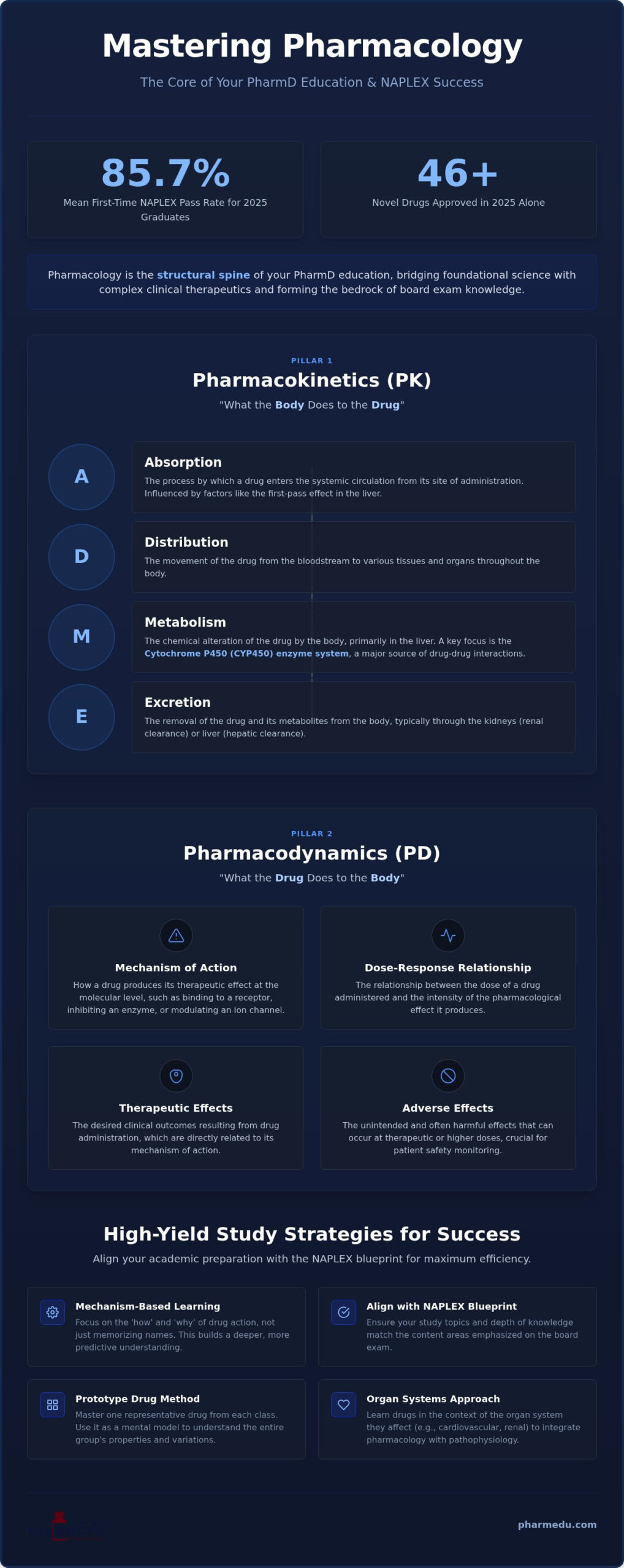
With the mean first-time NAPLEX pass rate reaching 85.7% for 2025 graduates, the academic standard for upcoming clinicians is higher and more clinical than ever before. You’ve likely realized that pharmacology courses in pharmacy school represent the most significant hurdle between your current status as a student and your future as a licensed drug expert. It’s natural to feel overwhelmed by the sheer volume of drug classes, especially with 46 novel drugs approved in 2025 alone and groundbreaking therapies like once-weekly basal insulin now entering the market. You aren’t just memorizing lists; you’re trying to build a foundation for life-saving clinical decisions while facing the constant pressure of high-stakes exams.
We understand that the transition from basic physiology to complex therapeutic management feels like a massive leap. This guide promises to help you master the curriculum by providing a structured roadmap to high-yield topics and expert study strategies. We will explore the latest 2026 curriculum standards, identify the core concepts that appear most frequently on board exams, and show you how to streamline your preparation for maximum efficiency and long-term retention.
Key Takeaways
- Understand how pharmacology serves as the structural spine of your PharmD education, bridging the gap between basic physiology and complex clinical therapeutics.
- Navigate the transition from traditional drug class memorization to the organ system based modules used in modern pharmacology courses in pharmacy school.
- Master the core pillars of pharmacokinetics and pharmacodynamics, using the ADME framework to build a conceptual foundation for clinical decision making.
- Adopt high yield study strategies like the prototype drug method to simplify massive drug lists and focus on mechanism based learning.
- Align your academic preparation with the updated NAPLEX blueprint to ensure your classroom knowledge translates into board exam success and professional competency.
The Role of Pharmacology Courses in the PharmD Curriculum
Pharmacology acts as the central axis of the Doctor of Pharmacy (PharmD) curriculum. It provides the necessary framework to understand how chemical substances interact with living organisms. Within this academic journey, pharmacology courses in pharmacy school serve as the study of drug action on biological systems to inform clinical decision-making. While your first year focuses on the foundational “why” of human biology, the subsequent years demand a rigorous application of these principles to patient care. This sequence is often the most credit-heavy portion of any program because it requires students to synthesize massive amounts of data into actionable clinical intelligence. You’ll find that these courses aren’t merely another subject; they’re the “spine” that supports every clinical decision you’ll make in your career.
The Bridge Between Science and Practice
The study of Pharmacology represents a significant shift in a student’s cognitive load. You aren’t just memorizing drug names; you’re integrating biochemistry and pathophysiology to predict how a body will respond to therapy. It’s the transition from understanding “what the drug is” to “how the drug works in a patient.” This depth of knowledge is what makes the pharmacist an indispensable member of interprofessional healthcare teams. When a physician asks for a recommendation, they aren’t looking for a simple list. They need an analysis of drug-receptor interactions and potential adverse effects based on the patient’s unique physiological state. Mastery here ensures you can communicate effectively with doctors and nurses, providing a layer of safety that only a drug expert can offer.
Typical Course Sequence and Timeline
Most programs structure their curriculum to move from the general to the specific. During the P1 year, students usually encounter introductory pharmacology, which covers basic mechanisms and principles like receptor theory and dose-response relationships. As you progress into the P2 and P3 years, the focus shifts toward advanced, systems-based pharmacology. These modules organize drugs by organ systems, such as cardiovascular, renal, or endocrine therapies, allowing for a deeper dive into specialty drug classes. Students often find that pharmacology courses in pharmacy school are the most demanding part of their education because they must be mastered before entering clinical rotations. This classroom mastery is vital for your success in Introductory Pharmacy Practice Experiences (IPPE) and later in Advanced Pharmacy Practice Experiences (APPE). During rotations, your ability to recall pharmacological profiles quickly will determine your effectiveness in a high-pressure clinical setting.
Core Pillars: Pharmacokinetics and Pharmacodynamics
Success in pharmacology courses in pharmacy school requires more than just memorizing drug names. You must understand the two fundamental pillars that dictate how every medication functions: pharmacokinetics (PK) and pharmacodynamics (PD). While PK describes the journey of the drug through the body, PD focuses on the drug’s eventual impact at the molecular level. Mastering these pillars early in your pharmacology courses in pharmacy school will transform your study habits from rote memorization into a logical, predictive science. These concepts form the bedrock of the North American Pharmacist Licensure Examination (NAPLEX), where you’ll be tested on your ability to apply PK/PD principles to complex clinical scenarios.
Pharmacokinetics (PK): What the Body Does to the Drug
Pharmacokinetics is traditionally organized around the ADME acronym: Absorption, Distribution, Metabolism, and Excretion. Each stage determines the concentration of a drug at its site of action. For instance, bioavailability is often limited by the first-pass effect, where the liver metabolizes a significant portion of an oral medication before it ever reaches systemic circulation. You’ll also spend considerable time studying the Cytochrome P450 (CYP450) enzyme system. These enzymes are the primary drivers of drug-drug interactions, a high-yield topic for both classroom exams and clinical practice. Understanding renal and hepatic clearance is equally vital, especially when adjusting doses for specialized patient populations like the elderly or those with chronic kidney disease. If you find these kinetic equations or metabolic pathways confusing, our pharmacology guides break down these interactions into digestible, visual segments.
Pharmacodynamics (PD): What the Drug Does to the Body
Pharmacodynamics shifts the focus to the drug’s destination. It explores ligand-receptor interactions and the subsequent signal transduction that leads to a physiological response. You’ll need to distinguish between agonists, which activate receptors, and antagonists, which block them. A common point of confusion for many students is the difference between potency and efficacy. Potency refers to the amount of drug required to produce an effect, whereas efficacy describes the maximum possible effect the drug can achieve. In a clinical setting, efficacy is usually the more important metric. You’ll also analyze dose-response curves to determine the therapeutic index, which is the safety margin between a therapeutic dose and a toxic one. Medications with a narrow therapeutic index require intensive monitoring, making them frequent targets for exam questions. To reinforce these concepts, you might consider using interactive pharmacology flashcards to test your knowledge of receptor theory and secondary messenger systems.
Mastering these foundational pillars allows you to predict drug behavior rather than simply reacting to it. By understanding the half-life of a medication, you can determine dosing intervals. By understanding receptor affinity, you can predict side effects. This conceptual framework is what separates a student who struggles from a student who excels.
Systems-Based Pharmacology: Navigating the Integrated Curriculum
Modern pharmacology courses in pharmacy school have largely moved away from teaching drug classes in isolation. Instead, most programs now utilize an integrated, systems-based approach. This means you’ll study the physiology, medicinal chemistry, and pharmacology of a specific organ system simultaneously. While this method better reflects clinical reality, it requires a higher level of cognitive synthesis. You aren’t just learning what a drug does; you’re learning why its chemical structure allows it to bind to a specific receptor in the heart or lungs. This integration is designed to prepare you for the complex decision-making required in modern practice, but it can feel like information overload if you don’t have a structured approach.
The Autonomic Nervous System (ANS) serves as the essential foundation for this entire curriculum. You’ll find that mastering ANS pharmacology early on makes subsequent modules significantly easier. Because the sympathetic and parasympathetic systems regulate almost every organ, understanding adrenergic and cholinergic receptors is the “key” that unlocks cardiovascular, respiratory, and even gastrointestinal pharmacology. Without a strong grasp of the ANS, you’ll likely struggle when these concepts reappear in more complex “jumbo” modules like Cardiovascular or Infectious Disease pharmacology.
Common Organ System Modules
The cardiovascular module is typically the most credit-heavy and challenging section of the year. You’ll focus on high-yield classes such as ACE inhibitors, beta-blockers, and various diuretics. These drugs are the bread and butter of pharmacy practice and appear frequently on clinical exams. The Central Nervous System (CNS) module follows, covering antidepressants, antipsychotics, and anesthetics. This section requires a deep dive into neurotransmitter pathways and the blood-brain barrier. Finally, the Endocrine module focuses on metabolic regulation. With the March 2026 approval of Awiqli (insulin icodec-abae), the first once-weekly basal insulin, you’ll need to stay updated on how these novel formulations change traditional diabetes management protocols.
Specialty Pharmacology Topics
As you progress, the curriculum shifts toward highly specialized areas that are becoming increasingly important in the 2026 clinical landscape. Immunology and biologic agents now represent a massive portion of new drug approvals, requiring you to understand monoclonal antibodies and cytokine inhibitors. Oncology pharmacology is equally intense, focusing on both traditional chemotherapeutic agents and newer targeted therapies. You’ll also encounter Toxicology, where the focus is on antidotes and the specific mechanisms of drug toxicity. These specialty topics often carry significant weight on the NAPLEX, as they require a precise understanding of drug mechanisms and narrow therapeutic windows.
High-Yield Study Strategies for Pharmacy Students
Mastering pharmacology courses in pharmacy school requires a tactical shift in how you process information. Rote memorization often fails because drug lists are too long and constantly evolving. Instead, you should focus on mechanism-based learning. When you understand how a drug class interacts with a specific receptor, the side effects and contraindications become predictable consequences rather than isolated facts. This approach builds a mental framework that stays with you long after the final exam. It’s the difference between knowing a drug name and understanding its clinical behavior.
The most efficient way to apply this is through the prototype method. Rather than trying to learn every detail of ten different ACE inhibitors, master one representative drug. Understand its kinetics, dynamics, and clinical pearls thoroughly. Most other drugs in that class will share the vast majority of those characteristics. This strategy allows you to filter out noise and focus on the unique outliers that professors love to test. As digital platforms become the standard for modern education, many students find that traditional textbooks are being replaced by more dynamic, mobile-friendly resources that support active recall.
Visual and Active Learning Techniques
Visual learners should prioritize drug maps and mechanism-of-action diagrams. These tools help you visualize the path a drug takes, making it easier to recall during high-stakes exams. Mnemonics are also invaluable, especially for memorizing side effects that don’t immediately seem logical. For example, using “ABCD” for anticholinergic effects (Anorexia, Blurry vision, Constipation, Dry mouth) remains a staple for a reason. While group study sessions provide emotional support, individual micro-learning sessions are often more effective for deep retention. Short, focused bursts of study help prevent the cognitive fatigue that often accompanies pharmacology courses in pharmacy school.
Effective Resource Management
Your success depends on your ability to distinguish high-yield clinical information from low-yield academic trivia. You’ll be bombarded with thousands of pages of notes, so you must learn to filter. Focus on the drug classes that make up the bulk of the 2026 NAPLEX blueprint, such as cardiovascular and infectious disease therapies. Integrating video vignettes into your daily routine can provide a quick refresher on complex concepts without the need to lug around heavy manuals. Practicing with clinical case studies is the final step. These simulations force you to apply your knowledge to a patient scenario, which is exactly what you’ll face in professional practice. To start streamlining your study schedule and improving retention, try our Interactive Pharmacology Flashcards today.
Beyond the Classroom: Preparing for NAPLEX and Clinical Practice
The transition from the lecture hall to the pharmacy counter is the most critical phase of your professional education. While pharmacology courses in pharmacy school provide the theoretical foundation, the licensing process demands that you translate this knowledge into clinical competency. The North American Pharmacist Licensure Examination (NAPLEX) serves as the final gatekeeper, and its updated blueprint places an even greater emphasis on clinical applications. Pharmacology and medicinal chemistry concepts are woven throughout the exam, often accounting for 15-25% of the content within various competency areas. You aren’t just answering questions about how a drug works; you’re proving you can manage a patient’s therapy safely and effectively.
Your mastery of pharmacology is also your primary defense against medication errors in real-world practice. In a fast-paced clinical environment, you’re the final check before a medication reaches the patient. If a dose is inappropriate for a patient’s renal function or if a dangerous drug-drug interaction is present, your pharmacological training is what triggers that essential red flag. This is why transitioning from “academic pharmacology” to “clinical therapeutics” is so vital. You’re moving beyond the textbook to understand how a drug’s profile affects a living, breathing person with multiple comorbidities and a complex medication history.
NAPLEX Preparation Strategies
Successful board preparation starts with identifying the “Top 200” drugs and their comprehensive pharmacological profiles. You must be able to recall mechanisms of action, major side effects, and contraindications instantly. Black box warnings (BBWs) are particularly high-yield, as they represent the most critical safety information a pharmacist must know. Don’t wait until the month before your exam to start your review. Integrating a structured NAPLEX prep course into your final year helps reinforce the concepts you learned during your earlier pharmacology courses in pharmacy school. This consistent exposure ensures that foundational PK/PD principles remain fresh when you begin your clinical rotations and final board reviews.
Pharmacology in Real-World Pharmacy
In daily practice, your ability to explain complex mechanisms in simple terms is what makes you a trusted healthcare provider. When counseling a patient, you don’t just list side effects; you explain why they happen and how to manage them. For example, explaining that an ACE inhibitor might cause a dry cough due to bradykinin accumulation helps the patient understand the “why” behind their symptoms. You’ll also collaborate closely with physicians to select the most appropriate therapy. Whether you’re recommending a specific antibiotic based on spectrum of activity or adjusting a maintenance dose, your pharmacological expertise is what guides the team. Remember that the field of drug therapy is dynamic. With 46 novel drugs approved in 2025 alone, staying current through lifelong education is a professional requirement, not just an option.
Mastering the Science of Therapeutics for Your Future Practice
The path through pharmacology courses in pharmacy school is undeniably rigorous, but it’s the most rewarding phase of your clinical development. By moving beyond rote memorization and embracing a systems-based, conceptual approach, you transform dense drug lists into a logical toolkit for patient care. We’ve explored how a deep understanding of pharmacokinetics and pharmacodynamics provides the foundation you’ll need to excel in the classroom and eventually on the NAPLEX. This transition from student to clinician requires a commitment to precision and a methodical approach to learning.
Efficiency is the key to managing this massive curriculum. PharmEDU is designed to be your digital mentor throughout this process, offering a comprehensive curriculum that covers over 100 pharmacology topics. Our high-yield video vignettes break down complex mechanisms into manageable segments, while interactive flashcards allow you to utilize active recall whenever you have a few minutes between classes. These resources are specifically engineered to support pharmacy students in their pursuit of academic and professional excellence.
Start your PharmEDU subscription today and master your pharmacology coursework.
You have the capacity to master this material. With the right resources and a structured study plan, you’ll enter your rotations and your career with the confidence of a true drug expert.
Frequently Asked Questions
How hard are pharmacology courses in pharmacy school?
Pharmacology courses in pharmacy school are widely regarded as the most rigorous part of the PharmD curriculum due to the sheer volume of drugs and complex mechanisms involved. Success requires high-level synthesis rather than simple memorization. Students must often manage credit-heavy modules while preparing for clinical rotations. While the workload is intense, using structured study tools can help manage the cognitive load and ensure long-term retention of drug profiles.
What is the best way to study for pharmacology exams?
The most effective strategy is focusing on mechanism-based learning rather than rote memorization. By mastering drug class prototypes, you can predict the properties of multiple medications within the same family. Utilizing active recall through flashcards and practice quizzes helps reinforce this knowledge. Spaced repetition is also essential to ensure that the information stays fresh for both your semester finals and your future professional practice.
Are pharmacology and pharmacotherapy the same thing?
Pharmacology and pharmacotherapy are distinct but closely related fields. Pharmacology focuses on the science of how drugs interact with biological systems, including their kinetics and dynamics. Pharmacotherapy is the practical application of this science to treat specific diseases in patients. You must master pharmacology courses in pharmacy school first to provide a solid foundation for the clinical decision-making required in your advanced pharmacotherapy modules.
How many drug classes do I need to know for the NAPLEX?
The NAPLEX blueprint doesn’t specify an exact number of drug classes, but you should focus on the “Top 200” drugs and major therapeutic categories. High-yield areas include cardiovascular, infectious disease, endocrine, and psychiatric medications. With 46 novel drugs approved in 2025 alone, staying updated on new classes is essential. Mastery of these core categories ensures you’re prepared for the 15-25% of the exam that directly tests pharmacological knowledge.
Do I need to memorize all drug mechanisms of action?
Understanding the mechanism of action (MOA) is vital because it serves as the logical basis for a drug’s side effects and contraindications. While it feels like a memorization task, it’s actually about building a conceptual framework. Once you know how a drug binds to its target, its clinical behavior becomes predictable. This depth of knowledge is what allows pharmacists to collaborate effectively with physicians on complex dosing and drug selection.
Can I use PharmEDU to supplement my pharmacy school lectures?
PharmEDU is specifically designed as a digital companion to traditional pharmacy school lectures. Our platform offers high-yield video vignettes and interactive flashcards that simplify complex PK/PD concepts into digestible micro-learning segments. Whether you’re a P1 student starting introductory modules or a P3 student preparing for APPE rotations, these resources provide the precision and clarity needed to supplement academic coursework and improve exam performance.
What is the difference between pharmacokinetics and pharmacodynamics?
Pharmacokinetics (PK) describes the movement of a drug through the body, focusing on absorption, distribution, metabolism, and excretion. In contrast, pharmacodynamics (PD) examines the drug’s effects on the body, specifically looking at receptor binding and signal transduction. Mastering both pillars is essential for clinical practice. PK helps you determine appropriate dosing intervals, while PD allows you to predict the therapeutic response and potential adverse reactions.
How does pharmacology integrate with medicinal chemistry?
Medicinal chemistry and pharmacology are integrated to explain how a drug’s chemical structure dictates its biological activity. Medicinal chemistry focuses on the molecular architecture and how specific functional groups influence binding affinity. Pharmacology then tracks the resulting physiological changes within the body’s systems. In modern integrated curricula, these subjects are often taught together to help students understand the relationship between a drug’s shape and its clinical efficacy.