The Comprehensive Guide for the Modern Nursing Student: Success Strategies for 2026
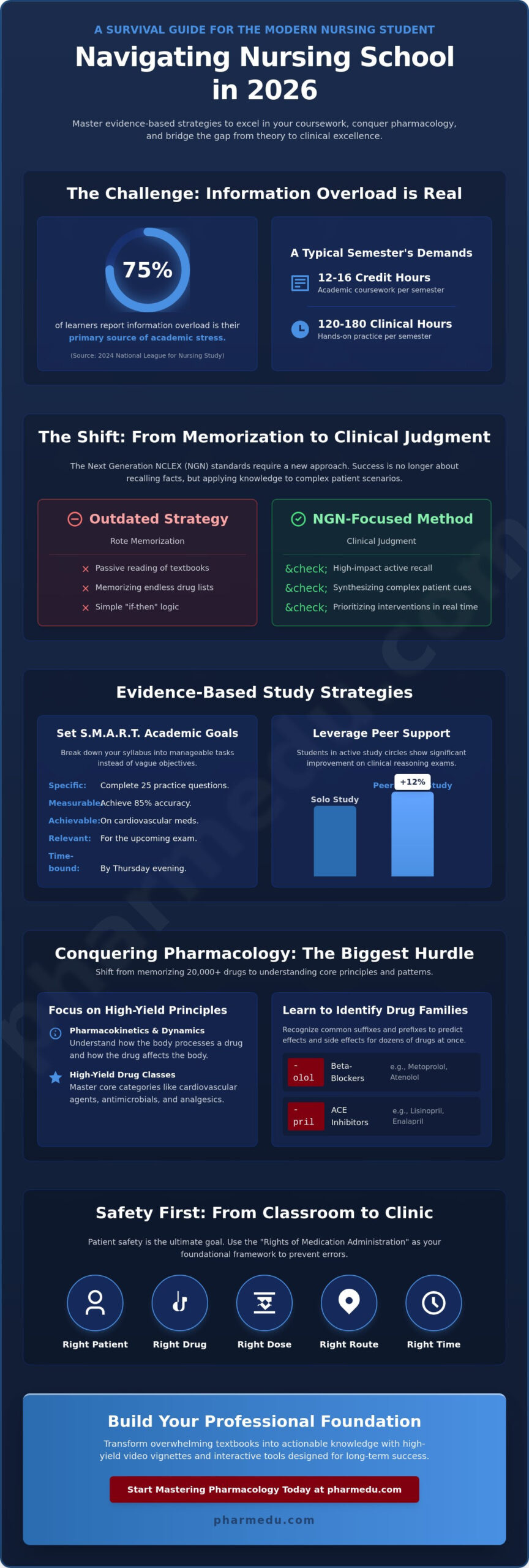
What if the difference between a failing grade and clinical mastery wasn’t the number of hours you spent studying, but how you managed the 1,200 pages of information thrown at you each semester? According to a 2024 study by the National League for Nursing, over 75% of learners report that information overload is their primary source of academic stress. As a modern nursing student, you’re likely familiar with the paralyzing anxiety of a pharmacology exam or the exhaustion of balancing a twelve-hour clinical shift with a stack of research papers.
It’s a demanding path, and you’ve already proven your dedication by choosing a profession centered on precision and care. We’ve developed this guide to help you master these academic and clinical demands through evidence-based study techniques and professional development insights. You’ll learn how to implement efficient study methods that secure passing grades in pharmacology and build the confidence needed to excel during your clinical rotations. We’ll start by breaking down the exact strategies you need to transition from a student to a highly competent healthcare professional by 2026.
Key Takeaways
- Discover how to navigate the evolving landscape of 2026 nursing education by prioritizing clinical judgment and strategic NCLEX-RN preparation.
- Learn to simplify complex pharmacology concepts by mastering the core principles of pharmacokinetics and therapeutic drug classifications.
- Every nursing student can optimize their academic performance by transitioning from passive reading to high-impact, evidence-based active recall techniques.
- Gain practical insights on bridging the gap between classroom theory and real-world clinical rotations to reduce anxiety and enhance patient care.
- Explore how high-yield video vignettes and interactive tools can transform overwhelming textbooks into actionable professional knowledge for long-term success.
Navigating the Challenges of Nursing School in 2026
Entering a nursing program in 2026 requires a fundamental shift in mindset. The modern nursing student faces a curriculum built on the 2023 Next Generation NCLEX (NGN) standards, which prioritize clinical judgment over simple recall. This transition means you’ll spend less time memorizing lists and more time analyzing complex patient cues. Academic rigor remains high; students typically balance 12 to 16 credit hours alongside 120 to 180 clinical hours per semester. For a broader context on how these curricula are structured, this Overview of Nursing Education details the academic framework you’re entering.
Rote memorization is no longer a viable strategy for success. Modern healthcare environments are too complex for simple “if-then” logic. You’re expected to synthesize pathophysiology, pharmacology, and ethics simultaneously. Since the 2023 testing updates, exam questions focus on your ability to recognize cues and prioritize interventions in real time. If you can’t apply the knowledge, knowing the definition isn’t enough. Beyond the classroom, early professional engagement is a necessity. Joining organizations like the National Student Nurses’ Association (NSNA) provides a bridge to the professional world, offering resources that textbooks can’t replicate.
The Evolving Role of the Nursing Student
The 2026 nursing student isn’t just a learner; they’re a provider in training. Curricula now integrate high-fidelity simulations and AI-driven e-learning platforms to bridge the gap between theory and the bedside. You’ll need to master electronic health records (EHR) and telehealth protocols before your first clinical rotation. Thinking like a nurse means moving past “what is happening” to “why is this happening and what is the priority.”
Setting Realistic Academic Goals
Success depends on structured time management. Use the S.M.A.R.T. method to break down your syllabus into Specific, Measurable, Achievable, Relevant, and Time-bound tasks. Instead of a vague goal like “study pharmacology,” set a target to “complete 25 practice questions on cardiovascular meds with 85% accuracy by Thursday.” Peer support groups are vital; internal data suggests students in active study circles score 12% higher on clinical reasoning exams. Find a mentor through your university’s alumni network to help manage the emotional weight of clinical hours.
Mastering Pharmacology: The Nursing Student’s Biggest Hurdle
Pharmacology remains the most formidable obstacle for the modern nursing student, often cited as the primary reason for academic stress. The challenge doesn’t stem from a lack of effort; it arises from the sheer volume of data. With over 20,000 FDA-approved prescription drugs on the market, rote memorization is a recipe for “drug list fatigue.” This cognitive burnout occurs when students prioritize individual drug names over clinical patterns. To succeed, you must shift your focus toward pharmacokinetics, which involves how the body processes a drug, and pharmacodynamics, which explains the drug’s effect on the body.
High-yield drug classes, such as cardiovascular agents, antimicrobials, and analgesics, consistently dominate board exams. Focusing on these categories ensures you’re prepared for the most frequent clinical scenarios. By understanding the therapeutic index and potential toxicities of these core groups, you build a foundation that scales as you encounter rarer medications in practice.
Effective Approaches to Drug Classification
Success in pharmacology requires a systematic approach to grouping medications by their mechanism of action. Instead of memorizing every generic name, learn to identify pharmacological families through common suffixes and prefixes. For instance, medications ending in “-olol” are typically beta-blockers, while those ending in “-pril” are ACE inhibitors used for hypertension. This method allows you to predict the side effects and nursing interventions for dozens of drugs simultaneously. For a deeper dive into these patterns, consult The Ultimate Pharmacology Study Guide for Nursing Students in 2026 to streamline your revision process.
Safety First: Medication Administration and Nursing Considerations
Patient safety is the ultimate goal of pharmacological knowledge. The “Rights of Medication Administration” serve as your primary framework to prevent errors, covering the right patient, drug, dose, route, and time. You must also remain vigilant regarding contraindications; a 2024 analysis showed that nearly 10% of adverse drug reactions (ADRs) are preventable through better screening of patient histories. Pharmacokinetics describes the movement of a drug through the body, specifically focusing on its absorption, distribution, metabolism, and excretion (ADME). Understanding these phases helps you anticipate how a patient’s renal or hepatic function might alter drug efficacy. Utilizing Proven Strategies for Nursing School Success can help you integrate these safety protocols into your daily study routine. If you’re looking to solidify your clinical readiness, exploring an accredited pharmacology prep course can provide the structured guidance needed for high-stakes exams.
Evidence-Based Study Strategies for Academic Excellence
Traditional methods like highlighting textbooks or re-reading notes often fail the modern nursing student. Research from the Association for Psychological Science indicates that passive learning leads to a rapid decline in retention, with students forgetting nearly 50% of new information within twenty-four hours. In contrast, active learning through self-testing and retrieval practice forces the brain to reconstruct knowledge, which strengthens neural pathways. While physical textbooks remain superior for deep, focused reading sessions without digital eye strain, digital platforms offer 40% faster information retrieval through searchable indexes and hyperlinked citations. Furthermore, creating a distraction-free study environment is just as critical as the tools you use; for students with pets, establishing boundaries with the help of Educator Collars can ensure that your ‘deep work’ sessions remain uninterrupted and productive.
Applying theoretical knowledge to clinical case studies serves as the ultimate bridge to practice. By analyzing a patient’s presentation and lab values, you transform abstract concepts into clinical judgment. To supplement academic coursework, many high-achievers utilize American Nurses Association student resources to bridge the gap between classroom theory and professional standards. This practical application ensures that when you face a real-world clinical scenario, your response is grounded in evidence rather than just memorized facts.
The Power of Active Recall and Spaced Repetition
Effective study sessions prioritize “why” over “what.” When creating flashcards, don’t just define a term; describe the physiological mechanism behind it. For example, instead of just listing side effects, explain the pharmacokinetics of specific drug classes. Spaced repetition leverages the Ebbinghaus Forgetting Curve by prompting reviews just as you’re about to forget the material. You should schedule reviews for complex topics like ACE Inhibitors at intervals of one day, three days, one week, and one month. Digital platforms now automate these schedules, ensuring you spend time on your weakest areas rather than reviewing what you already know.
Utilizing High-Yield Video and Micro-Learning
The 2026 nursing student must balance a rigorous curriculum with clinical rotations, making time management vital. Micro-learning involves breaking down complex subjects into five to ten-minute segments that fit into “in-between” times, such as transit or breaks. Video vignettes are particularly effective for visual learners, as they can demonstrate patient interactions or procedural steps more clearly than a static diagram. You can easily integrate these multimedia tools into a daily pharmacology study guide, allowing for consistent, bite-sized learning that prevents burnout and promotes long-term mastery of the science of drugs.
Bridging the Gap: From Classroom Theory to Clinical Practice
Moving from a lecture hall to a hospital unit often triggers a spike in cortisol levels for the average nursing student. Recent data suggests that nearly 70 percent of students experience high levels of anxiety during their initial clinical rotations. Success in 2026 requires more than just memorizing facts; it demands the application of clinical judgment to ensure patient safety in high-pressure environments. You’re no longer just answering multiple-choice questions. You’re managing human lives.
Preparing for Your Clinical Rotations
Preparation begins exactly 24 hours before you step onto the unit. Arriving unprepared increases the risk of errors and undermines your professional credibility. Use this checklist to ensure you have the essentials:
- Physical Tools: Stethoscope, bandage scissors, penlight, and a pocket-sized drug reference guide.
- Documentation: Your hospital ID badge and a small notebook for jotting down vitals or observations.
- Unit Research: Familiarize yourself with the unit’s common diagnoses and specialized equipment.
Perform a “pre-clinical” drug review by accessing the Medication Administration Record (MAR) for your assigned patients. Research the mechanism of action, peak times, and specific nursing considerations for every drug on the list. Your clinical instructor acts as both a mentor and a safety net. They evaluate your performance against 2026 accreditation standards while providing the real-time feedback necessary for your growth.
Applying Pharmacology at the Bedside
Administering medication is one of the most critical tasks you’ll perform. Accuracy isn’t optional. Follow these steps when using the Electronic Health Record (EHR):
- Log into the EHR and verify the patient’s identity using at least two unique identifiers.
- Scan the medication barcode to ensure a match with the digital order.
- Confirm the “six rights”: right patient, right drug, right dose, right route, right time, and right documentation.
When you speak to patients, translate complex medical jargon into simple terms. Instead of telling a patient they’re receiving an “anticoagulant for prophylaxis,” explain that the medicine helps prevent dangerous blood clots while they’re less active. The nursing student serves as the primary observer for medication efficacy, meaning you must monitor the patient for intended therapeutic outcomes or adverse reactions like hypotension or rashes.
Effective communication within the interprofessional team relies on the SBAR framework: Situation, Background, Assessment, and Recommendation. This structured approach reduces clinical errors by 30 percent. You also carry the ethical responsibility to protect patient privacy under updated data protection laws. Always prioritize patient autonomy and safety above your own learning objectives.
Enhance your clinical readiness and stay ahead of evolving healthcare standards by exploring our accredited nursing professional development courses today.
Building Your Professional Foundation with PharmEDU
The transition from classroom theory to clinical application is where many trainees face their toughest challenges. A nursing student in 2026 must handle more data and faster-paced environments than previous generations. PharmEDU serves as the vital bridge between heavy, overwhelming textbooks and the practical success required on the hospital floor. By distilling complex pharmacological concepts into over 100 high-yield topics, the platform ensures you aren’t just memorizing drug names, but understanding clinical outcomes through interactive tools and video vignettes.
Why PharmEDU Beats Traditional Study Methods
Efficiency is the primary differentiator when comparing PharmEDU’s micro-learning approach to a standard comprehensive pharmacy review book. Traditional texts often exceed 1,000 pages and are difficult to navigate during a busy semester. PharmEDU prioritizes high-yield video vignettes that simulate real-world patient interactions, helping the information stick. Every module is developed by healthcare educators, ensuring 100% accuracy and alignment with the latest medical guidelines. To sharpen your test-taking skills, the platform includes practice quizzes that mimic the structure of board-style questions, giving you a clear metric of your exam readiness.
Institutional Benefits and Mobile Flexibility
Success in modern healthcare education requires tools that adapt to a rigorous schedule. PharmEDU features a mobile-compliant design, allowing you to turn a 15-minute clinical break into a productive study session. This flexibility is a core reason why many nursing programs and universities now opt for institutional access. When a university integrates PharmEDU, it provides a standardized, high-quality resource for every nursing student in the cohort. This collective access ensures that everyone is learning from the same evidence-based source, removing the inconsistencies often found in unverified online study groups.
Getting Started: Your Roadmap to Mastery
You can begin building your professional foundation by selecting either a monthly or annual subscription. This provides immediate, 24/7 access to the entire library of high-yield videos and interactive tools. The platform’s administrative dashboard makes it easy to track your progress, showing you exactly which topics you’ve mastered and where you need more review. This data-driven approach removes the guesswork from your study plan, allowing for a more methodical path to graduation. Start your journey to nursing mastery with PharmEDU today and secure the expertise needed for a professional career in 2026.
Elevate Your Clinical Readiness for 2026
Navigating the complexities of healthcare in 2026 requires a shift from passive reading to active, evidence-based mastery. As a nursing student, your ability to translate classroom theory into safe clinical practice is the true measure of your academic success. Mastering pharmacology remains the most significant academic hurdle, yet it’s also the most critical component of patient safety and professional confidence.
Efficiency shouldn’t be a luxury when your schedule is packed with rotations and exams. PharmEDU provides a professional foundation through mobile-compliant micro-learning, allowing you to study during any available window. The platform features over 100 high-yield topics designed by healthcare educators to ensure you’re learning from credible, peer-reviewed sources. This systematic approach reduces the administrative burden of finding reliable study materials, letting you focus entirely on your professional growth.
Join PharmEDU and Master Pharmacology with High-Yield Video Vignettes
Your commitment to rigorous study today ensures you’ll be the reliable, expert practitioner your patients deserve tomorrow.
Frequently Asked Questions
What is the most effective way for a nursing student to study pharmacology?
The most effective way to study pharmacology involves using active recall and spaced repetition techniques to master drug classifications and mechanisms of action. Instead of passive reading, you should use tools like PharmEDU to test your knowledge through practice questions that mirror clinical scenarios. A 2023 study in the Journal of Nursing Education indicates that active recall methods improve long-term retention by 35% compared to traditional note-taking, making it a superior choice for complex medical subjects.
How many hours a week should a nursing student spend studying?
A dedicated nursing student should expect to spend between 20 and 30 hours per week studying outside of scheduled clinical rotations and lectures. This follows the American Association of Colleges of Nursing (AACN) guideline of 3 hours of self-directed study for every hour of classroom instruction. Effective time management is essential for success in 2026, as curriculum demands continue to increase alongside technological advancements in healthcare and more complex patient cases.
Can I use PharmEDU to prepare for the NCLEX-RN?
You can use PharmEDU as a primary resource to prepare for the NCLEX-RN because its content aligns with the 2026 NCLEX-RN Test Plan requirements. The platform functions as a digital mentor, providing accredited modules that focus on the pharmacological and parenteral therapies section of the exam. Since this section accounts for approximately 12% to 18% of the total test content, mastering these materials is vital for your licensure success and professional confidence.
Is pharmacology harder for nursing students than for pharmacy students?
Pharmacology isn’t necessarily harder for nursing students, but it requires a different focus on clinical application and patient safety rather than chemical synthesis. While pharmacy students dive deep into molecular kinetics, nurses must master the “Six Rights” of medication administration to prevent the 7,000 to 9,000 annual deaths attributed to medication errors in the United States. The challenge lies in the immediate clinical responsibility that nurses face during drug administration and patient monitoring.
What are the best resources for nursing student scholarships in 2026?
The best resources for nursing student scholarships in 2026 include the HRSA Nurse Corps Scholarship Program and the American Nurses Association (ANA) Foundation grants. The HRSA program provides full tuition and a monthly stipend for students who commit to working in a Health Professional Shortage Area for at least 2 years. Additionally, checking the 2026 FAFSA deadlines is crucial, as federal aid remains the baseline for most institutional financial support and grant eligibility.
How do I handle clinical anxiety as a first-year nursing student?
You can handle clinical anxiety by engaging in thorough pre-clinical preparation and utilizing high-fidelity simulation labs before interacting with patients. Research published in 2024 shows that 80% of first-year nursing students experience significant stress during their first rotation. Spending 45 minutes reviewing patient charts and hospital protocols before your shift starts helps build the confidence needed to provide safe, effective care. It’s a structured approach that ensures you’re ready for the clinical environment.
What should I do if I am struggling with my nursing coursework?
If you’re struggling with your nursing coursework, you should immediately contact your academic advisor and join a peer-led tutoring group. Data from the National League for Nursing shows that students who use institutional support services are 40% more likely to graduate on time. Proactive intervention and utilizing digital resources like PharmEDU’s structured modules can bridge the gap in your understanding of complex topics. Don’t wait until your grades drop to seek professional academic guidance.
Are digital pharmacology flashcards better than paper ones?
Digital pharmacology flashcards are often superior to paper ones because they use spaced repetition algorithms to ensure you see difficult concepts more frequently. These platforms allow for 24/7 access on mobile devices, which is essential for a busy student who needs to study during short breaks between classes. Unlike paper cards, digital tools provide instant data on your progress, helping you identify exactly which drug classes require more focus before an exam or clinical assessment.