
Pharmacist Education Requirements: The Complete 2026 Guide to Licensure
What if the 1,500 clinical hours you’re currently tracking don’t align with the updated 2026 board standards? It’s a valid concern, especially since recent surveys indicate that nearly 18% of pharmacy students feel overwhelmed by the distinction between pre-pharmacy prerequisites and the professional PharmD curriculum. Mastering the specific pharmacist education requirements is the first step toward a stable career in healthcare, but the path often feels buried under shifting regulations and dense academic jargon.
You’ve likely felt the weight of these expectations as you balance high-stakes pharmacology exams with the search for accredited internship sites. We understand that the pressure to maintain professional standards while managing administrative details can be exhausting. This article provides a comprehensive roadmap of the academic, clinical, and regulatory milestones you must reach to become a licensed pharmacist in 2026. You’ll find a clear step-by-step checklist for licensure, proven strategies to simplify complex pharmacology topics; and a detailed breakdown of the clinical rotation process to ensure you’re fully prepared for your professional journey.
Key Takeaways
- Identify the most efficient path to your Doctor of Pharmacy (PharmD) by comparing 0-6 direct-entry programs with traditional professional tracks.
- Navigate the essential pharmacist education requirements by mastering the 1,500-hour clinical standard through structured IPPE and APPE rotations.
- Gain a clear understanding of the North American Pharmacist Licensure Examination (NAPLEX) and the state-specific MPJE requirements for 2026.
- Optimize your study habits with micro-learning strategies designed to transform complex pharmacology coursework into actionable clinical knowledge.
- Explore advanced career opportunities through post-graduate PGY1/PGY2 residencies and specialized Board of Pharmacy Specialties (BPS) certifications.
The Academic Foundation: Undergraduate and PharmD Degree Requirements
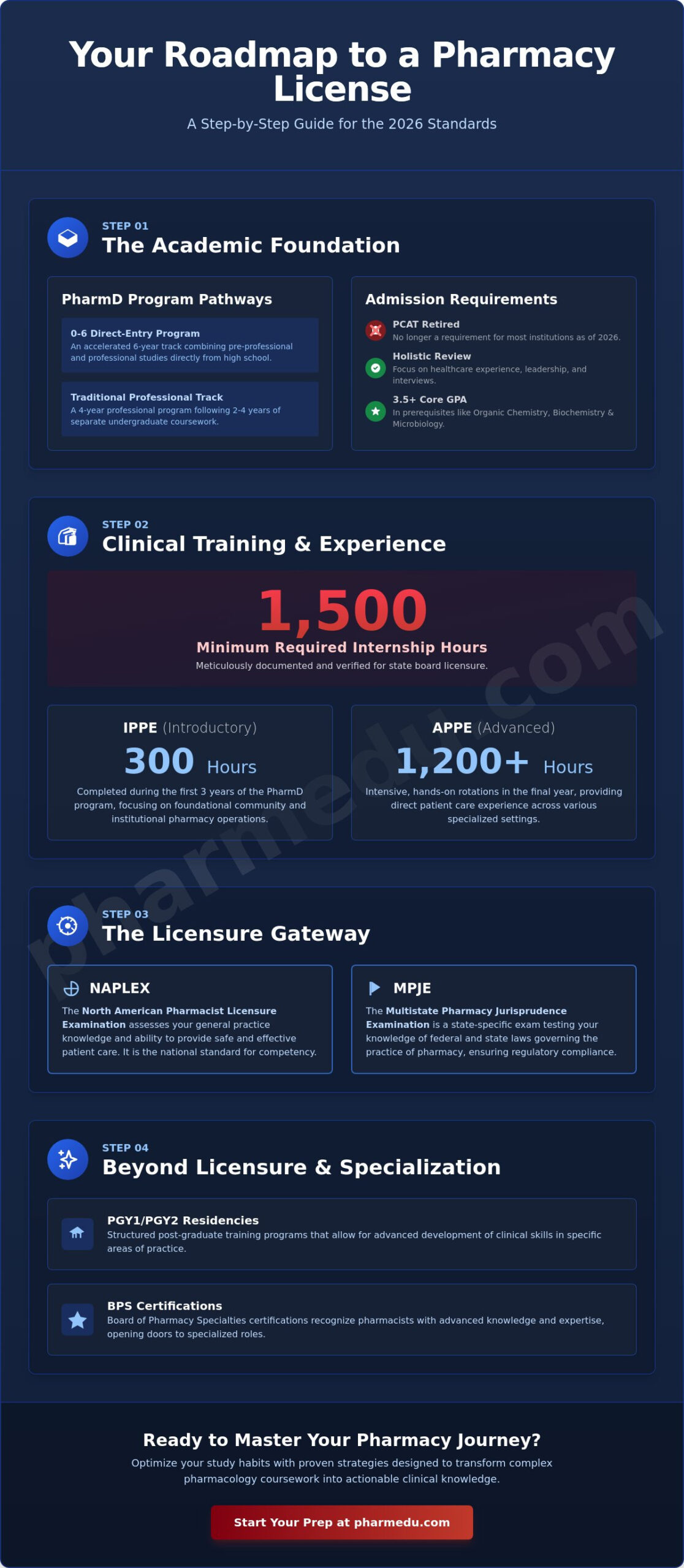
Securing a license to practice pharmacy in 2026 requires a focused academic trajectory centered on the Doctor of Pharmacy (PharmD) degree. This credential serves as the mandatory entry-level requirement for all practicing pharmacists in the United States. To ensure the degree’s validity for state licensure, students must graduate from a program accredited by the Accreditation Council for Pharmacy Education (ACPE). The PharmD degree is a professional doctorate focused on clinical practice and patient care, which distinguishes it from a research-intensive PhD. For those exploring the broader scope of the field, this pharmacist profession overview details how these educational standards support the evolving roles of healthcare providers.
Prospective students generally navigate one of two academic pathways. The “0-6” program is an accelerated track where high school graduates transition directly into a six-year curriculum that blends two years of pre-professional study with four years of professional doctoral training. The traditional pathway involves a separate four-year professional program, which students enter after completing two to four years of undergraduate coursework. Choosing the right path depends on an individual’s readiness to commit to the pharmacist education requirements early in their academic career.
Pre-Pharmacy Coursework and Prerequisites
Success in pharmacy school admission relies heavily on a robust scientific foundation. Most accredited institutions require approximately 60 to 90 semester hours of undergraduate study before professional enrollment. Essential prerequisites include Organic Chemistry, Biochemistry, and Microbiology, often accompanied by intensive laboratory components. Admissions committees prioritize candidates who maintain a GPA of 3.5 or higher in these core STEM classes. While students can major in any field, earning an undergraduate degree in Biology or Chemistry provides a distinct competitive edge, as these curricula naturally cover the advanced scientific concepts required for the PharmD program.
The PCAT and the Transition to Professional School
As of 2026, the Pharmacy College Admission Test (PCAT) is no longer a requirement for most institutions, following its official retirement by the American Association of Colleges of Pharmacy. This shift has led to a holistic admission trend where schools evaluate candidates based on a broader range of attributes. Admissions officers now place significant weight on direct healthcare experience, such as working as a pharmacy technician, and evidence of leadership in community settings. The interview process has become the pivotal final stage of the application. Candidates must demonstrate professional maturity and a clear understanding of the pharmacist’s role in integrated healthcare teams to secure their spot in an accredited program.
Clinical Training: Mastering Internships and IPPE/APPE Rotations
Clinical training is the bridge where the PharmD degree transforms into practical, life-saving skill. Most state boards of pharmacy mandate a minimum of 1,500 internship hours to qualify for professional practice. These hours ensure that graduates possess the hands-on competency required for patient safety and medication management. Understanding these Pharmacist licensure requirements is essential for mapping out your final years of study. This experiential learning is divided into two distinct phases: Introductory and Advanced Pharmacy Practice Experiences.
Documenting these hours through your state board is a non-negotiable step for licensure eligibility. Every hour spent in a clinical setting must be verified by a licensed preceptor and submitted according to state-specific deadlines. Without meticulous record-keeping, even the most brilliant student can face delays in their professional start date.
IPPE: The Early Exposure Years
During the first three years of a PharmD program, students complete Introductory Pharmacy Practice Experiences (IPPE). These sessions typically account for 300 of the total required hours. Students focus on community and institutional settings to learn the fundamental medication dispensing cycle. You’ll work under a preceptor, a licensed pharmacist who mentors your professional development. This phase emphasizes patient communication and basic pharmacy operations. It’s the foundation of your career, helping you translate classroom pharmacology into real-world patient interactions.
APPE: The Final Clinical Year
The fourth year consists of Advanced Pharmacy Practice Experiences (APPE). This “rotation year” is structured into 6 to 9 intensive blocks, each lasting 4 to 6 weeks. During this time, students function as active members of a healthcare team, making clinical recommendations and managing complex drug therapies. These rotations are vital to meeting pharmacist education requirements and preparing for the rigors of the NAPLEX exam.
Standard APPE rotations include several core areas of practice:
- Internal Medicine: Managing acute conditions for patients in a hospital ward.
- Ambulatory Care: Focusing on outpatient clinics and chronic disease management.
- Community Pharmacy: Handling advanced retail management and clinical services like immunizations.
- Hospital/Health-System Pharmacy: Mastering inpatient operations and sterile compounding protocols.
Beyond the core requirements, students choose elective rotations to explore specialized fields. You might spend a block in Oncology, Pediatrics, or even Nuclear Pharmacy. These electives provide a competitive edge when applying for residencies or specialized roles. Staying organized during this transition is demanding, but a professional development platform can provide the resources needed to manage your path from student to licensed practitioner. Success in these rotations proves you’re ready for the responsibility of independent practice.
The Licensure Gateway: Navigating the NAPLEX and MPJE Exams
Securing a PharmD degree marks a significant milestone, but the legal right to dispense medication requires passing the North American Pharmacist Licensure Examination (NAPLEX) and the Multistate Pharmacy Jurisprudence Examination (MPJE). The National Association of Boards of Pharmacy (NABP) oversees this process. Candidates must register through the NABP’s official portal once their specific state board confirms their eligibility. Most successful graduates schedule their testing dates within 45 to 90 days after graduation. This window ensures clinical knowledge remains fresh while allowing enough time for intensive review. Statistics from previous cohorts suggest that waiting longer than six months to test results in a 15% decrease in first-time pass rates, as academic retention begins to fade.
Breaking Down the NAPLEX Competency Areas
The NAPLEX consists of 225 questions designed to measure your ability to provide safe and effective pharmacotherapy. Calculations, drug delivery systems, and sterile compounding represent high-weight sections where precision is non-negotiable. Pharmacology mastery stands out as the single biggest predictor of success. If you can’t identify a drug’s mechanism of action or its contraindications, you’ll struggle with the complex clinical scenarios that dominate the exam. To streamline your study process, many graduates rely on the best NAPLEX prep course guide to identify high-yield topics. These resources ensure your preparation aligns with the updated 2026 pharmacist education requirements and current clinical competency standards.
The MPJE and Regulatory Compliance
While the NAPLEX tests clinical skill, the MPJE evaluates your understanding of the legal framework governing the profession. This 120-question exam covers both federal and state-specific laws. You’ll need to distinguish between federal DEA regulations for controlled substances and the stricter statutes often imposed by individual state boards. State-specific jurisprudence is complex because it governs daily operations like prescription transfers, technician ratios, and emergency refills. For individuals navigating specific legal mandates or looking to fulfill professional obligations through certified programs, you can visit Courses Court Ordered for court-approved online classes. Passing these exams isn’t the final step in your journey. Most states, such as New York and California, require 30 hours of Continuing Education (CE) every two years to maintain an active license. This ongoing commitment to pharmacist education requirements ensures that your practice stays compliant with evolving healthcare legislation and safety protocols.
Academic Success Strategies: Mastering Rigorous Pharmacology Coursework
The transition into professional pharmacy school marks a significant shift in cognitive demand. You’re no longer expected to simply identify chemical structures or memorize drug names. Modern pharmacist education requirements emphasize the transition from rote memorization to the clinical application of drug mechanisms. Success in 2026 requires you to understand how a molecular change in a drug class affects a patient with multiple comorbidities. This level of synthesis is what separates a student from a practitioner ready for the NAPLEX.
Active recall remains the most effective tool for long-term retention. Instead of passively rereading textbooks, use practice questions and “blank sheet” sessions where you write everything you know about a drug class from memory. Case-based learning bridges the gap between theory and the pharmacy counter. By analyzing real-world scenarios, you learn to prioritize clinical decisions, such as identifying a life-threatening drug-drug interaction in a patient taking twelve different medications. This method prepares you for the high-stakes environment of clinical rotations.
Micro-Learning and Digital Study Aids
The sheer volume of pharmacology can feel overwhelming, but 5-10 minute focused study sessions often beat 4-hour cramming marathons. Research suggests that spaced repetition through micro-learning increases retention rates by approximately 20% compared to traditional long-form studying. You should utilize mobile-compliant flashcards and high-yield video vignettes during clinical downtime or commutes. These digital aids turn “dead time” into productive review sessions. For a broader perspective on how other medical professionals approach these subjects, you can reference this pharmacology study guide for nursing students to see how interdisciplinary teams manage medication safety.
Mastering High-Yield Drug Classes
Efficiency is key when navigating the pharmacist education requirements of a four-year program. You should focus your heaviest efforts on the “Top 200” drugs, as these medications represent the vast majority of both board exam questions and daily prescriptions. Developing specific mnemonics for complex mechanisms is essential for mastery. For example, understanding the nuances of ACE inhibitors requires tracking unique side effects like persistent dry cough or angioedema. PharmEDU simplifies these complex topics through visual storytelling, making it easier to connect a drug’s mechanism to its clinical outcome.
- Focus on “must-know” contraindications for high-risk medications like anticoagulants.
- Use comparison tables to differentiate between drugs within the same class.
- Prioritize mechanism of action (MOA) over brand names to ensure foundational understanding.
By adopting these structured strategies, you don’t just survive pharmacy school; you build the expertise needed for a successful career. If you’re looking to streamline your learning process with accredited resources, explore our professional development courses to stay ahead of the curve.
Beyond Licensure: Post-Graduate Training and Specialization
Earning your PharmD and passing the NAPLEX fulfills the core pharmacist education requirements, but your professional growth shouldn’t stop at the initial license. The 2026 job market favors clinicians who pursue advanced credentials to distinguish themselves in specialized environments. Specialized training isn’t just a resume builder; it’s a necessity for those aiming for clinical coordinator or department head positions.
The Residency Path: Is it Right for You?
Post-graduate year one (PGY1) residencies provide a vital bridge between the classroom and clinical practice. While you can enter community pharmacy immediately after graduation, a residency is often mandatory for health-system or hospital roles. The 2024 ASHP Resident Matching Program included 6,437 applicants for PGY1 spots, reflecting a highly competitive environment where only the most prepared candidates succeed. If you choose a PGY2 residency, you’ll focus on specific niches like oncology, critical care, or infectious diseases. Data from the American College of Clinical Pharmacy suggests that residency-trained pharmacists often report higher job satisfaction and access to clinical roles that command premium salaries compared to general staff positions.
A PharmD degree also serves as a versatile foundation for careers outside the traditional pharmacy counter. You might find your calling in the pharmaceutical industry as a Medical Science Liaison (MSL), in clinical research organizations (CROs), or within academia. These paths require a deep understanding of drug development and evidence-based medicine that goes beyond basic pharmacist education requirements. Most industry roles value the clinical perspective a PharmD brings to drug safety and regulatory affairs departments.
Leveraging Digital Platforms for Career-Long Mastery
Staying current shouldn’t feel like a second job. Modern pharmacists use digital tools to manage their continuing education (CE) and clinical updates efficiently. You’ll need to track state-specific credit requirements and keep pace with evolving guidelines from organizations like the CDC and AHA. The Board of Pharmacy Specialties (BPS) now offers 15 distinct certifications, and maintaining these credentials requires a disciplined approach to lifelong learning. With the FDA approving dozens of new molecular entities every year, your knowledge base can become outdated quickly without a structured review process.
Professional development is a marathon. Whether you’re aiming for a BPS certification in Oncology or transitioning into a research role, having a reliable partner for your educational needs is vital. You can start your journey with PharmEDU today to access curated clinical updates and streamlined pharmacology reviews that fit into a busy healthcare schedule. Using these resources ensures you remain a trusted authority in a rapidly evolving pharmaceutical landscape.
Charting Your Path to Pharmacy Licensure in 2026
Navigating the complex landscape of pharmacist education requirements demands a strategic approach to academic and clinical milestones. Success hinges on mastering the PharmD curriculum while completing the 1,500 to 2,000 hours of clinical rotations required for IPPE and APPE credit. As the 2026 licensure standards prioritize clinical proficiency, passing the NAPLEX and MPJE exams remains the definitive gateway to your professional practice. These exams test your ability to apply pharmacology principles in real-world scenarios, making high-quality preparation indispensable.
Building a deep knowledge base doesn’t have to be an administrative burden. You can streamline your study process by accessing specialized resources designed for healthcare students. Master your pharmacology coursework with PharmEDU subscriptions to access 100+ high-yield pharmacology topics and board-review style quizzes. With flashcards trusted by healthcare students nationwide, you’ll transform dense academic material into actionable expertise. It’s time to move beyond simple memorization and start building the professional foundation you need for a career in patient care. Your journey is a marathon, but with the right tools, you’ll reach the finish line with confidence.
Frequently Asked Questions
What is the minimum degree required to become a pharmacist in 2026?
You must earn a Doctor of Pharmacy (PharmD) from an ACPE accredited program to practice as a pharmacist in 2026. This professional doctorate replaced the Bachelor of Pharmacy as the entry level standard in 2000. To meet modern pharmacist education requirements, students complete at least two years of undergraduate pre-professional study followed by four years of professional pharmacy school.
How long does the entire pharmacist education process take?
The entire educational path typically spans 6 to 8 years depending on your undergraduate trajectory. Most students spend 2 to 4 years completing prerequisite coursework before entering a 4 year PharmD program. If you choose an accelerated 3 year program, you’ll enter the workforce 12 months earlier. Clinical residencies add another 1 to 2 years of specialized training for hospital or research roles.
Can I become a pharmacist with a Bachelor’s degree?
You can’t practice as a licensed pharmacist with only a Bachelor’s degree in 2026. While a Bachelor of Science in Chemistry or Biology provides a strong foundation, state boards require a PharmD for licensure. Many students earn a 4 year undergraduate degree first to be more competitive, but it’s not a legal substitute for the professional doctorate needed to sit for the NAPLEX.
What happens if I fail the NAPLEX exam?
If you fail the NAPLEX, you must wait 45 days before you’re eligible to retake the exam. The National Association of Boards of Pharmacy (NABP) limits candidates to five total attempts in their lifetime. You’re also restricted to three attempts within any 12 month period. Failing requires a new application fee and a focused study plan to ensure you meet the pharmacist education requirements for your specific state.
Are pharmacy internships paid or unpaid?
Pharmacy internships in retail or hospital settings are typically paid, with hourly wages often ranging from $20 to $35. However, the Introductory and Advanced Pharmacy Practice Experiences (IPPEs and APPEs) required by your PharmD curriculum are usually unpaid. These rotations provide academic credit rather than a salary. You’ll complete 1,500 to 2,000 supervised hours to qualify for licensure in most jurisdictions.
Is a pharmacist considered a doctor?
Yes, pharmacists are considered doctors because they hold a Doctor of Pharmacy degree. While they don’t practice medicine like a physician, they’re clinical experts in pharmacotherapy and medication management. This title reflects the rigorous academic training and clinical expertise required to ensure patient safety. They serve as the final check in the healthcare chain, preventing drug interactions and optimizing therapeutic outcomes.
What are the continuing education requirements for licensed pharmacists?
Licensed pharmacists must complete between 15 and 30 hours of continuing education (CE) every one to two years to maintain their license. Specific requirements vary by state, but most require at least 2 hours of pharmacy law and 1 hour of patient safety. These accredited courses ensure professionals stay current with new drug approvals and evolving regulations. Tracking these credits is essential for biennial license renewal.
How much does it cost to complete a PharmD program?
The total cost for a PharmD program in 2026 ranges from $65,000 at public in-state institutions to over $260,000 at private universities. According to the American Association of Colleges of Pharmacy (AACP) 2023 data, the median tuition for a four year program is approximately $175,000. These figures don’t include undergraduate prerequisites, housing, or the $475 NAPLEX registration fee. Financial planning is vital for managing this professional investment.