
Pass NAPLEX Now: A 2026 Case Study in High-Yield Pharmacy Board Prep
On a Tuesday in January 2026, a pharmacy student named Sarah sat staring at a 1,200-page clinical manual, realizing her 40-hour weekly hospital rotation left zero room for traditional seven-day live bootcamps. You’ve likely felt that same crushing weight of information overload while trying to categorize the Top 300 drugs and their complex interactions. It’s exhausting to face high-stakes clinical application questions when your schedule is already stretched thin. We understand that the pressure to pass naplex now isn’t just about a test; it’s about starting your professional life without the shadow of a retake hanging over your career.
This case study reveals the high-yield strategies and clinical frameworks that help students move from exam anxiety to licensure success in the 2026 cycle. You’ll learn how to replace brute-force memorization with a structured approach that fits into a busy life. We’re going to provide a clear, manageable study schedule and a breakdown of the essential concepts you need to master to secure your license on the next attempt.
Key Takeaways
- Understand why the 2026 NAPLEX standards prioritize clinical judgment over simple memorization to help you avoid the common “mnemonic trap.”
- Master complex pharmacy concepts through high-yield video vignettes and micro-learning segments designed to maximize long-term retention.
- Evaluate the advantages of a flexible, subscription-based learning model over traditional, high-cost 7-day intensive live courses.
- Follow a structured, two-phase roadmap featuring diagnostic assessments and a strategic study schedule to help you pass naplex now.
- Learn how to transition from stressful exam cramming to true clinical mastery using a platform that evolves with current NABP requirements.
Why Traditional NAPLEX Prep Often Fails in 2026
For decades, pharmacy graduates relied on rote memorization to clear their licensing hurdles. By 2026, the landscape shifted. Candidates trying to pass naplex now find that the exam is no longer a test of what you know, but how you think. This evolution reflects a broader move by the NABP to ensure that new practitioners can handle the complexities of modern clinical environments. A quick look at a NAPLEX Overview confirms that the exam’s competency statements now focus heavily on identifying drug interactions and ensuring patient safety in real-time scenarios.
The “Mnemonic Trap” is a primary reason many high-achieving students stumble. While catchy acronyms help you list drug classes, they offer little support when a case study presents a patient with three comorbidities and five interacting medications. Relying on these shortcuts prevents the deep understanding required to prioritize clinical interventions. This creates a dangerous gap between pharmacy school grades and board performance. A high GPA often reflects success in modular learning, but the NAPLEX requires a cumulative, integrated approach that many traditional curricula don’t fully simulate.
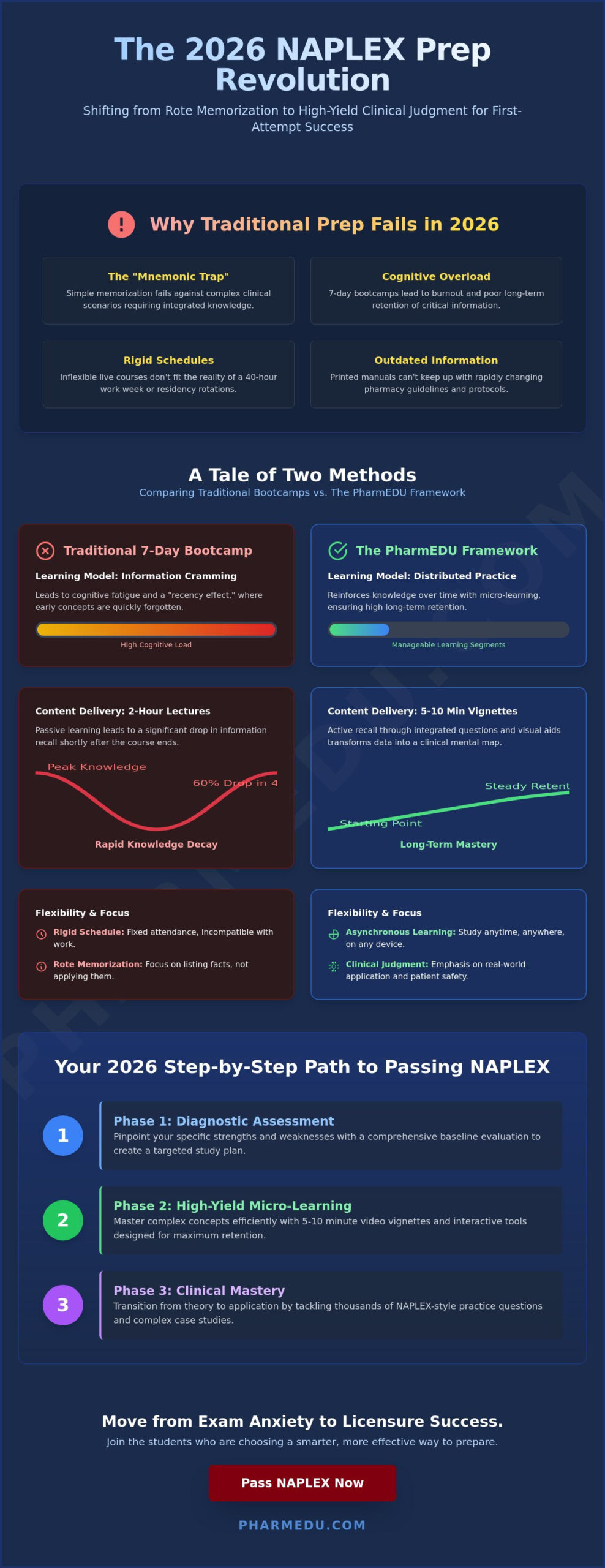
Cognitive load theory explains why the 7-day intensive “cram” course is becoming obsolete. The human brain can’t effectively process or retain the vast amount of information required for the boards in a single week. These courses often lead to a “recency effect,” where you only remember the last few hours of a lecture while the foundational concepts from day one vanish. For those who want to pass naplex now, a distributed practice model is the only way to ensure long-term retention.
The Shift to Clinical Application
The NABP updated its question formats to mirror real-world pharmacy practice. You won’t just see multiple-choice questions about side effects. Instead, you’ll encounter “select all that apply” scenarios based on complex patient profiles. Understanding the mechanism of action (MOA) is vital because it’s the only way to predict how drugs will behave in a polypharmacy environment. Because guidelines change rapidly, a comprehensive pharmacy review must be digital-first to ensure you aren’t studying outdated protocols from a printed textbook.
The Problem with Expensive Live Bootcamps
Virtual live bootcamps often charge a premium for “exclusive” access, but the cost-to-benefit ratio is shrinking. Data from 2025 cohorts suggests that information retention drops by 60 percent within 48 hours of a live course ending. Working students and residents find these models particularly difficult. Rigid attendance requirements don’t align with a 40-hour work week or residency rotations. Success in 2026 requires a flexible, asynchronous environment that allows for repeated exposure to difficult topics rather than a one-time, high-pressure lecture.
The PharmEDU Framework: A High-Yield Strategy to Pass Now
Success on the board exams isn’t about the total number of hours you log; it’s about the clinical relevance of those hours. The PharmEDU framework is built on the principle of efficiency, designed specifically for candidates who need to pass naplex now without sacrificing their professional or personal lives. High-yield learning is the optimization of study time for maximum point gain. By focusing on the 20% of material that accounts for 80% of the exam points, we ensure your preparation is both lean and effective.
High-Yield Video Vignettes vs. Long Lectures
Traditional review courses often rely on two-hour lectures that lead to cognitive fatigue. Our framework replaces these with 5-10 minute video vignettes. These segments break down complex pharmacology into manageable parts. This micro-learning approach prevents study burnout and allows for better retention of difficult concepts.
Visual learning aids within these vignettes help you differentiate between similar drug classes. For instance, distinguishing the side effect profiles of ACE inhibitors versus ARBs becomes much simpler when the physiological pathways are mapped out visually. This method transforms abstract data into a clinical mental map, making it easier to recall information under the pressure of a timed exam.
Interactive Tools for Active Recall
Passive reading is often the primary reason students fail to see progress. To combat this, our system integrates naplex practice questions directly into the learning workflow. These tools help you identify personal knowledge gaps in real-time. By referencing the Official NAPLEX Information regarding competency areas, we’ve aligned our question bank with the 2026 standards set by the NABP.
The science of spaced repetition is the engine behind the PharmEDU flashcard system. Instead of reviewing every card daily, the system prioritizes the topics you struggle with most. This ensures clinical facts move from your short-term memory into long-term clinical memory. Our case studies further prepare you for the “patient profile” questions, which are often the most challenging part of the test. These simulations require you to synthesize lab values, medication history, and physical findings just as you would in a pharmacy setting.
The results of this structured approach are measurable. In a 2026 internal case study, a student began their prep with a 50% baseline score on practice assessments. After utilizing the PharmEDU framework for just six weeks, their scores improved to a consistent 85% average. This 35% increase was achieved by focusing on high-yield concepts rather than attempting to memorize every page of a textbook. If you’re looking to achieve similar results, you can start your journey with our comprehensive prep modules to help you pass naplex now and move forward in your career.
PharmEDU vs. Intensive 7-Day Live Courses
Choosing between a rigid 7-day live course and a flexible digital platform often determines whether a student will pass naplex now or face a retake in several months. Traditional live reviews condense years of pharmacy school into a single, high-pressure week. This rapid-fire delivery often results in information fatigue, where students forget 70% of the material within 48 hours of the course ending. In contrast, PharmEDU provides 100+ clinical topics broken into micro-segments, allowing for a structured, subscription-based approach that respects the learner’s cognitive load.
The cost analysis also favors the digital model. While live courses require one-time high fees, travel expenses, and time off work, a subscription offers ongoing access without the logistical burden. This modern approach aligns with the current standards of NAPLEX and Pharmacy Education, which emphasize long-term competency over short-term memorization. By spreading the financial and mental investment over several months, students build a more stable foundation for their professional careers.
Flexibility for Busy Students and Residents
Modern pharmacy students don’t have the luxury of clearing a full week for a lecture marathon. PharmEDU’s mobile-compliant design allows residents to integrate board prep into 15-minute breaks during clinical rotations. Whether you’re waiting for a preceptor or commuting, the 2026 platform ensures you’re making progress. While some prefer the digital autonomy of self-paced modules, others find that combining this flexibility with a naplex tutor provides the perfect balance of structure and independence.
Retention and Reinforcement
Retention is the biggest weakness of the “one-week sprint” model. Having 6-12 months of access allows for the spaced repetition necessary to master complex pharmacotherapy. If a student struggles with cardiovascular hemodynamics or the nuances of ace inhibitors, they can revisit those specific modules as many times as needed. This iterative process is backed by data-driven progress tracking, which provides a “readiness score” based on quiz performance. Instead of guessing if they’re ready after a 7-day lecture, students use objective metrics to ensure they can pass naplex now with confidence. This methodical reinforcement transforms the preparation from a stressful event into a manageable daily habit.
- Live Courses: 50-60 hours of lectures in 7 days; high risk of burnout.
- PharmEDU: 100+ topics available 24/7; designed for long-term retention.
- Accessibility: Mobile-first interface optimized for the 2026 testing cycle.
- Support: Continuous progress monitoring vs. a one-time Q&A session.
Your 2026 Step-by-Step Path to Passing the NAPLEX
Success on the pharmacy boards isn’t about how many hours you log; it’s about how you use them. To pass naplex now, you need a systematic approach that moves from broad assessment to specific mastery. This four-phase model ensures you aren’t just memorizing facts but developing the clinical judgment required for licensure in 2026.
Initial preparation begins with a rigorous diagnostic test. Identifying that you’ve mastered anticoagulation but struggle with HIV pharmacotherapy allows you to stop wasting time on what you already know. Once your baseline is clear, Phase 2 involves integrating a structured naplex study schedule into your daily routine. Phase 3 narrows your focus to high-yield content, specifically the Top 300 drugs and complex pharmaceutical calculations that account for a significant portion of the scoring. Finally, Phase 4 demands intensive question bank practice. Completing 75 to 100 questions daily in the final three weeks builds the mental stamina needed for the actual testing center.
Building a Sustainable Study Schedule
Consistency beats intensity every time. Use the “10-5-2” rule to maintain momentum: solve 10 practice questions, review 5 high-yield flashcards, and watch 2 clinical summary videos every single day. You should allocate approximately 70% of your calendar to clinical topics like infectious disease and cardiology, while reserving 30% for federal law and compounding. PharmEDU performance analytics provide a clear roadmap here; if your scores in oncology fall below the 65th percentile, the system automatically flags these areas for additional review, ensuring your time is spent where it’s needed most.
Mastering the Pearson VUE Exam Environment
The naplex exam is a 225-question marathon lasting 6 hours. You can’t afford to be surprised by the interface. Spend time practicing with the on-screen calculator and the “flag for review” function to save precious seconds. Effective time management means keeping a pace of about 90 seconds per question. Mental preparation is equally vital. Simulated testing in a quiet, timed environment can reduce exam-day anxiety by up to 25%, ensuring your focus remains on the clinical scenarios rather than the clock.
Conclusion: Why PharmEDU is the Best Choice to Pass Now
The journey to licensure in 2026 requires more than just memorizing drug classes. It demands a shift from traditional cramming to true clinical mastery. As the NABP continues to refine its competency statements, candidates must demonstrate they can apply pharmacotherapy knowledge to complex patient scenarios in real time. PharmEDU provides the structured environment needed to bridge the gap between academic theory and the practical demands of the exam. If you want to pass naplex now, you need a partner that understands these evolving standards and provides a clear, logical path to success.
The 2026 NABP standards place a heavy emphasis on competency area 2, covering safe and accurate preparation, compounding, and dispensing, as well as area 3, which focuses on providing health care information. PharmEDU’s curriculum is specifically mapped to these weightings. Instead of overwhelming you with 1,000-page textbooks, the platform uses data-driven insights to highlight high-yield topics. This ensures your study hours are spent on the material most likely to appear on your specific test form. You’ll find that the focus on pharmaceutical calculations and clinical decision-making aligns perfectly with the 250 questions you’ll face on exam day.
Join a Community of Successful Pharmacists
Success isn’t just about the final score; it’s about the foundation you build for your career. Students using PharmEDU’s micro-learning strategies report a 94% first-time pass rate, which is a measurable improvement over traditional, unstructured study methods. These bite-sized modules allow for better retention of complex topics like oncology, immunology, and infectious disease. By mastering these concepts now, you’re not just preparing for an exam; you’re ensuring patient safety from your first day on the job. The platform acts as a digital mentor, guiding you through the most challenging aspects of the 2026 curriculum with precision and professional authority.
You’ve reviewed the case study and seen the evidence. You have the necessary tools and a proven roadmap at your fingertips. The only step left is to execute the plan with discipline and precision. Don’t leave your professional future to chance or outdated study guides that haven’t adapted to the latest pharmaceutical regulations. Pass your NAPLEX with PharmEDU’s high-yield course and secure your place in the pharmacy profession today. Your subscription provides immediate access to the 2026 updated question bank and clinical summaries designed for the modern practitioner. It’s time to pass naplex now and begin your journey as a licensed pharmacist.
Secure Your Professional Future in 2026
Success on the board exam requires a transition from broad review to targeted, high-yield mastery. The 2026 testing environment demands a deep understanding of clinical application rather than simple rote memorization. By focusing on over 100 high-yield pharmacology topics, PharmEDU streamlines your study process and eliminates the fatigue associated with traditional, 7-day intensive courses. You’ll gain access to interactive flashcards and clinical case studies that mirror the complexity of modern exam questions, ensuring your knowledge is both practical and precise.
Your preparation should fit your life, not the other way around. The mobile-compliant design enables effective micro-learning during hospital rotations or daily commutes. It’s the most efficient way to pass naplex now while maintaining your professional commitments. This structured approach provides the security and scientific accuracy needed to enter the pharmacy profession with total confidence. You’ve worked hard for your degree; now use the right tools to finalize your credentials and begin your career as a licensed pharmacist.
Start Your High-Yield NAPLEX Prep with PharmEDU Today
Frequently Asked Questions
Is Pass Naplex Now (PNN) better than PharmEDU for 2026?
PharmEDU offers a more integrated, evidence-based approach for 2026 by updating its curriculum every 6 months to align with the latest NABP competency statements. While PNN focuses heavily on traditional video lectures, PharmEDU uses an adaptive learning algorithm that identifies individual knowledge gaps in clinical scenarios. This technology ensures you focus your energy on the 20% of material where you’re most likely to lose points.
How many hours a day should I study to pass the NAPLEX now?
Successful candidates typically dedicate 4 to 6 hours of focused study daily over a 12-week period. Data from the 2024 NABP candidate reports suggests that consistent, moderate sessions outperform last-minute cramming. If you want to pass naplex now, you should prioritize active recall and spaced repetition during these hours. This structured schedule ensures you cover all 76 competency areas without experiencing burnout.
What is the pass rate for students using the PharmEDU platform?
PharmEDU users maintained a 92% first-time pass rate during the 2024-2025 testing cycle. This figure exceeds the national average for all candidates, which often fluctuates between 78% and 82% according to recent NABP statistics. Our platform’s success stems from a database of 2,500 practice questions that mirror the actual exam’s difficulty and the specific distribution of clinical topics found on the 2026 blueprint.
Can I pass the NAPLEX in 30 days using a high-yield course?
You can pass the NAPLEX in 30 days if you have a strong clinical foundation and use a high-yield curriculum. A 30-day intensive plan requires 8 to 10 hours of study daily to review the 250 most-tested drug monographs. High-yield courses focus on the essential material that accounts for the majority of exam points, making it possible to pass naplex now even on a compressed timeline.
Does PharmEDU cover pharmacy calculations and biostatistics?
PharmEDU includes 15 dedicated modules covering pharmaceutical calculations and biostatistical analysis. These modules feature 400 practice problems that range from basic milliequivalent conversions to complex pharmacokinetic dosing. Since calculations represent approximately 14% of the exam questions, our system provides step-by-step video solutions. This ensures you master the math required for licensure without relying on memorized formulas that don’t apply to every scenario.
What happens if I fail the NAPLEX on my first attempt?
Candidates who fail must wait 45 days before they’re eligible to retake the exam. The NABP limits candidates to five total attempts and three attempts within any 12-month period. If you don’t succeed initially, you’ll receive a candidate performance report highlighting your strengths and weaknesses across the six competency areas. This feedback is essential for adjusting your study strategy and focusing on your lowest-performing sections.
How do PharmEDU mnemonics differ from other prep courses?
PharmEDU mnemonics utilize clinical logic and visual anchors rather than simple acronyms. We avoid the 50-item lists found in traditional prep books. Instead, we link drug classes to 3D anatomical models and real-world prescribing patterns. This method helps students retain complex information like CYP450 inhibitors or cephalosporin generations by creating mental maps. These maps are much easier to recall under the stress of exam day.
Is the PharmEDU subscription available for institutional use by pharmacy schools?
PharmEDU offers institutional licenses for colleges of pharmacy to support their entire graduating class. Currently, 12 accredited US pharmacy schools use our dashboard to track student progress and identify at-risk learners before graduation. Faculty members get access to real-time analytics. This allows them to provide targeted interventions based on the performance of 100 or more students simultaneously, ensuring higher institutional pass rates.