Mastering Pharmacology for PANCE: The Ultimate 2026 High-Yield Guide
What if the secret to a passing score isn’t memorizing more drug names, but mastering pharmacology for PANCE by focusing on the 18% of the exam content dedicated to pharmaceutical therapeutics with surgical precision? Most PA students feel overwhelmed by 1,000 page textbooks while struggling to link a drug’s mechanism to a specific clinical organ system. It’s frustrating to memorize contraindications only to forget them during a high-stakes practice test. With the 2026 NCCPA blueprint changes looming, this anxiety is a significant hurdle for many candidates.
This guide provides a professional, high-yield strategy to excel by aligning your preparation with the latest clinical standards. You’ll learn a step-by-step method to filter out the noise and focus on the exact drug classes that drive exam success. We’ll preview a structured 12 week study schedule and demonstrate how to anchor pharmaceutical knowledge to the pathophysiology you already know, ensuring you walk into the testing center with total confidence.
Key Takeaways
- Understand how the 2026 NCCPA blueprint shifts the focus from rote memorization to clinical application across all organ systems.
- Learn how to prioritize high-yield drug classes like cardiology and pulmonary to maximize your score based on exam weightings.
- Discover a proven 5-step strategy for organizing your pharmacology for PANCE study sessions by organ system rather than isolated drug classes.
- Evaluate the most effective digital study tools and learn why flashcards alone aren’t enough to master complex clinical vignettes.
- Bridge the gap between textbook knowledge and board-style questions using targeted high-yield video vignettes designed for rapid retention.
The NCCPA Blueprint: Decoding Pharmacology for PANCE
The National Commission on Certification of Physician Assistants (NCCPA) doesn’t treat pharmacology as an isolated subject. Success on the boards requires a shift in perspective. For the 2026 cycle, pharmacology for PANCE is woven into the fabric of every clinical vignette you’ll encounter. You won’t just see a question asking for a drug class; you’ll see a 64-year-old patient with a history of heart failure presenting with acute shortness of breath and must decide the intervention.
The PANCE pharmacology blueprint is an integrated assessment of pharmacotherapeutics.
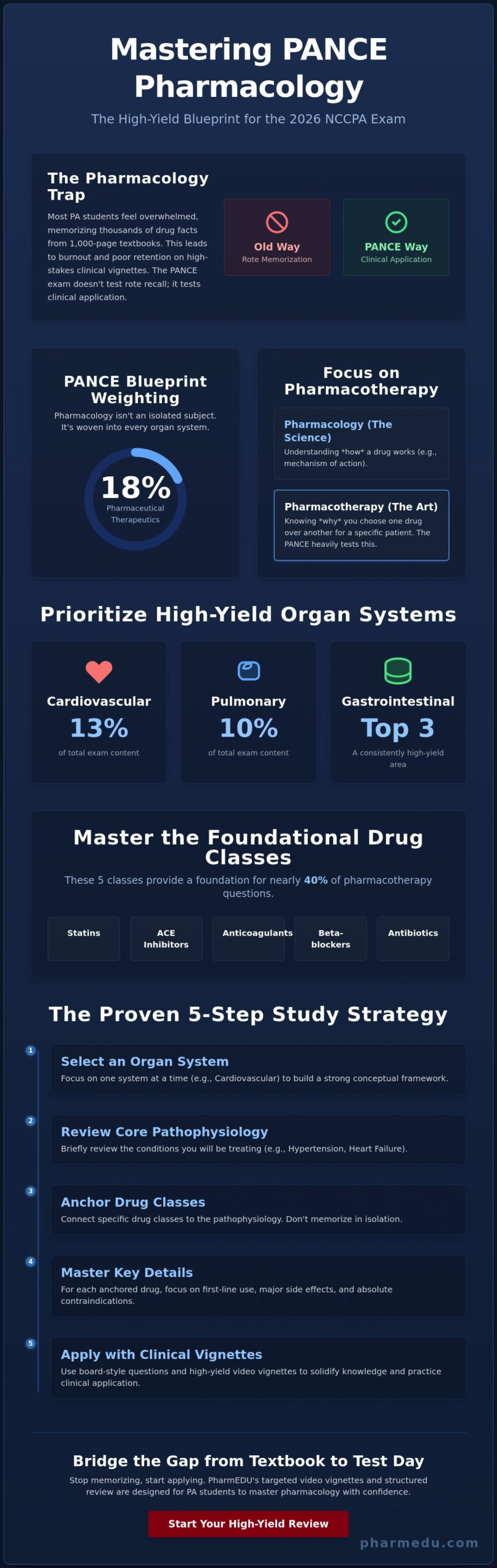
Many students fall into the “Pharmacology Trap” by spending hundreds of hours on rote memorization. They memorize lists of ACE inhibitors or beta-blockers but fail when the exam asks for the most appropriate management for a patient with specific comorbidities. This disconnect leads to failing scores because the exam tests clinical application, not just recall. A solid PANCE exam overview confirms that the NCCPA prioritizes your ability to make safe, evidence-based prescribing decisions in real time.
How Pharmacology is Weighted in 2026
The NCCPA divides the exam into 14 distinct clinical categories, such as the cardiovascular system (13%) and pulmonary system (10%). Pharmacologic therapeutics is a mandatory task for every single one of these organ systems. You’ll find that roughly 14% to 18% of the total exam questions specifically target your knowledge of medications. The 2026 content shift emphasizes “Most Likely Diagnosis” followed immediately by “Next Best Step in Management.” This means you can’t just diagnose the condition; you must know the specific drug required to treat it immediately.
Pharmacology vs. Pharmacotherapy
Pharmacology is the science of how drugs work, but pharmacotherapy is the art of using them to treat patients. The PANCE focuses heavily on the latter. While you need to understand mechanisms, the exam cares more about why you chose a specific drug over another. You should focus your energy on first-line treatments, significant side effects, and absolute contraindications.
To master these concepts, resources like Pharmacology: The Comprehensive Guide help bridge the gap between basic science and clinical practice. Questions often present a patient who cannot take the standard first-line treatment due to an allergy or a specific lab value, like a high potassium level. Your job is to identify the safe alternative. This level of detail is what separates a passing score from a true mastery of pharmacology for PANCE.
High-Yield Drug Classes: Organizing by Organ System
Successful candidates don’t study every drug with equal intensity. They align their efforts with the PANCE Content Blueprint, which dictates the weight of each clinical category. To maximize your score, you’ll need to master the “Big Three”: Cardiology, Pulmonary, and Gastrointestinal systems. These areas consistently represent the highest volume of questions on the exam. Prioritizing pharmacology for PANCE means focusing on the drug classes that appear most frequently across all exam versions.
Efficiency requires identifying the top five drug classes that carry the most weight. These include Statins, ACE Inhibitors, Anticoagulants, Beta-blockers, and Antibiotics. Mastering these provides a foundation that covers nearly 40% of the potential pharmacotherapeutic questions you’ll encounter on test day.
Cardiovascular and Pulmonary Pharmacology
Cardiology accounts for a massive 13% of the overall exam, with the pharmacology subset typically representing about 11% of that clinical section. You must achieve total clarity on ACE Inhibitors Pharmacology and Beta-blockers. The NCCPA frequently tests your ability to distinguish between cardioselective and non-selective Beta-blockers, especially in patients with comorbid asthma. In the respiratory realm, the distinction between “rescue” Short-Acting Beta-Agonists (SABA) and “maintenance” Long-Acting Beta-Agonists (LABA) or Inhaled Corticosteroids (ICS) is a favorite topic. You should also prepare for classic side effect questions. Expect to see the dry cough associated with ACE inhibitors or the visual disturbances and bradycardia linked to Digoxin toxicity. If you feel overwhelmed by these mechanisms, exploring a structured online pharmacology course can help streamline your review process.
Infectious Disease and Endocrinology
Infectious disease questions often hinge on antibiotic selection. You’ll need to know when to pull out the “Big Guns” like Vancomycin or Piperacillin/Tazobactam versus using narrow-spectrum agents like Penicillin VK for simple Pharyngitis. For Endocrinology, the focus remains heavily on the 2026 standards for Diabetes management. While Metformin remains the first-line therapy, you must understand the renal benefits of SGLT2 inhibitors and the cardiovascular advantages of GLP-1 agonists. Thyroid medications also require precise knowledge, specifically regarding the monitoring of TSH levels and the timing of administration. Mastering this specific pharmacology for PANCE ensures you don’t lose easy points on high-frequency topics. Focus on the monitoring requirements for Levothyroxine, as the NCCPA loves to test drug-food interactions and the narrow therapeutic index of thyroid replacements.
Selecting Your Arsenal: Comparing PANCE Study Tools
Success in mastering pharmacology for PANCE depends on the efficiency of your toolkit. You can’t rely on a single source to cover the 13% of the exam dedicated to pharmaceutical interventions. The challenge lies in balancing depth with speed, ensuring you don’t get bogged down in pharmacokinetics that won’t appear on the boards.
Digital Platforms vs. Traditional Textbooks
Choosing between paper and pixels isn’t just about preference. It’s about accessibility. Many Comprehensive Pharmacy Review concepts apply directly to PA students migrating toward digital ecosystems. Mobile-compliant micro-learning modules allow you to study during 15-minute breaks on clinical rotations. Textbooks fail here; you can’t carry a 1,200-page manual into the ICU. Digital QBanks also provide the only way to simulate the 300-question PANCE environment, building the mental stamina you’ll need for the five-hour testing window.
The Role of Active Recall
Flashcards serve as a high-speed engine for rote memorization. Use them for “quick-fire” facts like brand/generic pairings or FDA pregnancy categories. Don’t mistake recognition for mastery, though. Flashcards are often insufficient for complex vignettes. To tackle the “Next Best Step” questions, you need case studies that force you to prioritize one drug over another based on patient comorbidities and side effect profiles.
Video-based learning bridges the gap for physiological mechanisms. Visualizing the RAAS system or the coagulation cascade through animation often sticks better than reading a description. Data from 2024 medical education surveys indicates that multi-modal learners retain 25% more information than those using text alone. To build a cohesive workflow, integrate these tools systematically:
- Flashcards: Use these daily for nomenclature and black box warnings.
- Case Studies: Reserve these for weekend deep-dives into clinical logic.
- Video Modules: Watch these when you encounter a mechanism you can’t explain in your own words.
- QBanks: Use these to test your pharmacology for PANCE knowledge under timed conditions.
When evaluating various PANCE review subscriptions, look at the cost-to-value ratio rather than the sticker price. A platform that lacks updated 2026 guidelines is a liability. It’s better to invest in a tool that integrates your workflow, combining video explanations and active recall into one interface. This structure reduces the cognitive load of switching between apps, keeping your focus where it belongs: on the medicine. A well-chosen arsenal doesn’t just help you pass; it ensures you’re prepared for the clinical responsibilities that follow the “C” in PA-C.
How to Build a PANCE Pharmacology Study Plan in 5 Steps
Success on the board exam requires more than memorizing prefixes and suffixes. You need a structured approach to master pharmacology for PANCE without burning out. Follow this five-step framework to optimize your 2026 preparation and ensure clinical readiness.
- Step 1: Audit your current knowledge. Start with a 60-question baseline practice exam focused solely on pharmacotherapeutics. Identifying your specific deficits in the first 48 hours prevents wasting time on topics where you already possess clinical competency.
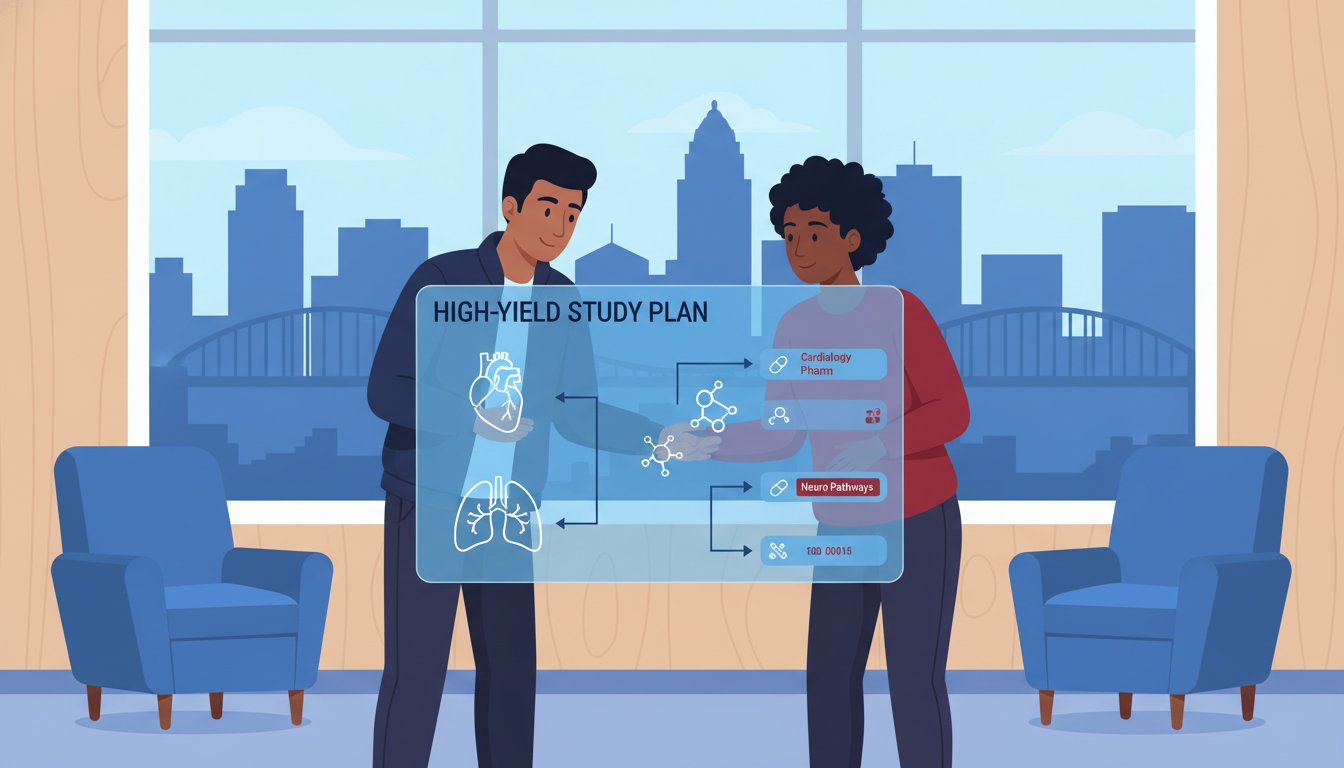
- Step 2: Group study days by organ system. The NCCPA blueprint is system-based, so your studying should be too. Instead of studying all “beta-blockers,” study them within the context of Cardiology to understand their role in heart failure versus hypertension.
- Step 3: Use high-yield vignettes. Connect drugs to patient presentations. Don’t just learn that Furosemide is a loop diuretic; learn to recognize the patient with peripheral edema and crackles who needs it.
- Step 4: Implement Spaced Repetition. Use digital flashcards for difficult drug classes like antimicrobials or antiepileptics. Reviewing these every 2, 5, and 10 days reinforces long-term retention.
- Step 5: Transition to mixed-subject sets. Four weeks before your test date, stop focused system reviews. Start taking 120-question mixed blocks to simulate the mental “switching” required on exam day.
Step-by-Step Category Integration
Allocate your time based on the NCCPA blueprint weights. Spend 3 days on Cardiology (13% of the exam) and 2 days on GI (9%), as these high-weight areas often feature heavy pharmacology for PANCE questions. Create a “Red Flag” list for drugs with narrow therapeutic windows, such as Warfarin, Lithium, and Digoxin. These require precise monitoring and frequently appear in “next step in management” questions. Address cross-category drugs by noting their dual uses; for instance, Propranolol serves both Cardiology and Neurology for migraine prophylaxis.
The 4-Week Countdown Strategy
During the final month, your focus must shift from learning to application. In Week 4, use The Ultimate Pharmacology Study Guide frameworks to simplify complex mechanisms into actionable clinical pearls. Week 3 should focus on your “Red Flag” list and contraindications. By Week 2, prioritize your weakest 3 systems based on practice scores. In the final week, limit new information. Manage testing anxiety by trusting your data; if you’ve consistently scored above 70% on practice sets, don’t second-guess your first instinct during the exam. Consistency in your practice routine builds the stamina needed for the 300-question marathon.
Ready to streamline your revision? Optimize your PANCE prep with our comprehensive pharmacology frameworks.
Strategic Mastery: Why PharmEDU is the PA Student’s Digital Mentor
PA school is a high-pressure marathon, and the final sprint toward certification requires more than just basic memorization. PharmEDU serves as your professional digital mentor, bridging the gap between textbook theory and the high-stakes reality of the boards. We’ve developed over 100 specific topics that focus on rapid retention, ensuring you don’t just learn drug names but understand their clinical impact. Our platform transforms the complex landscape of pharmacology for PANCE into manageable, high-yield modules that fit into a hectic schedule.
Efficiency is the core of our philosophy. Most PA students struggle to find long study blocks during clinical rotations. Micro-learning solves this problem. Our system allows you to master a concept in under 10 minutes, making it the most effective way to study during short breaks or transit. You’ll find interactive flashcards and quizzes that mirror the actual PANCE question style, providing the repetitive exposure needed for long-term memory. This isn’t just about passing; it’s about building the professional confidence to treat patients safely from your first day in practice.
Video Vignettes: Seeing the Patient, Not Just the Pill
Our 2 to 5 minute video vignettes are designed to explain complex mechanisms in the time it takes to drink a coffee. We focus on real-world clinical cases to prepare you for the “management” questions that often trip up students on the exam. Every piece of content is expert-led and stays strictly aligned with the latest 2026 guidelines. You won’t waste time on outdated protocols. Instead, you’ll see the patient behind the prescription, which makes the information stick through narrative and visual context rather than dry lists.
Your Path to Certification
We offer flexible subscription options for individual PA students as well as institutional access for entire PA programs. You can track your progress through our performance analytics tools, which highlight your strengths and pinpoint specific areas that need more attention before test day. Our quizzes don’t just test recall; they test clinical judgment by simulating the pressure and the phrasing of the NCCPA. This data-driven approach ensures your study time is always optimized and your preparation for pharmacology for PANCE is complete. Don’t leave your results to chance. Start your PharmEDU subscription today and master PANCE pharmacology!
Elevate Your Clinical Readiness for 2026
Taking the next step toward your 2026 certification requires more than passive reading. You’ve seen how decoding the NCCPA blueprint and organizing drug classes by organ system creates a foundation for long-term retention. Success on exam day comes down to a structured 5-step study plan and the right clinical tools. PharmEDU serves as your digital mentor, providing over 100 high-yield pharmacology topics designed specifically for the modern PA student. You’ll gain access to interactive flashcards and clinical case studies that bridge the gap between theory and practice. Since the platform’s mobile-compliant design works on any device, you can squeeze in high-quality review sessions between patient encounters on your clinical rotations. Mastering pharmacology for PANCE is a demanding journey, but you don’t have to navigate the complex drug registries alone. Use these resources to build the confidence you need to excel in your career and provide exceptional patient care.
Master PANCE pharmacology with PharmEDU’s high-yield review!
Your dedication to mastering these complex topics today will define your success as a healthcare provider tomorrow. You’ve got this!
Frequently Asked Questions
How many pharmacology questions are on the PANCE?
Exactly 18% of the PANCE exam is dedicated to pharmaceutical therapeutics, which translates to approximately 54 questions out of the 300-question total. These items aren’t isolated in one section but appear throughout the exam within various organ system modules. You’ll encounter these questions as both direct inquiries about mechanisms of action and as critical components of clinical management vignettes.
What is the best way to memorize drug side effects for the PANCE?
The most effective strategy involves grouping medications by class and focusing on the “unique” adverse effects that distinguish a drug from its therapeutic peers. Research indicates that using active recall and spaced repetition can increase retention rates by 40% compared to passive reading. Don’t just memorize lists; link the side effect to the drug’s physiological mechanism to build a deeper, more logical understanding.
Are drug names brand or generic on the PANCE exam?
The NCCPA uses generic drug names almost exclusively on the PANCE exam. You won’t see brand names like Lasix or Coumadin; instead, the test uses furosemide and warfarin. It’s vital to use generic names during your pharmacology for PANCE preparation so you don’t feel confused during the actual 5-hour testing session. Familiarizing yourself with common suffixes like -olol or -pril helps you identify drug classes instantly.
Which drug classes are considered high-yield for the PANCE?
Cardiovascular agents, antibiotics, and endocrine medications are the most high-yield categories you’ll face. Since cardiovascular issues represent 13% of the total blueprint, mastering antihypertensives and anticoagulants is essential for success. You should spend roughly 70% of your study time on these core systems because they appear more frequently than niche areas like hematology or dermatology therapeutics.
How far in advance should I start studying pharmacology for PANCE?
You should initiate a structured review at least 90 to 120 days before your exam date. This timeframe allows you to rotate through all 14 organ systems twice, ensuring that complex topics like autonomic nervous system drugs are reinforced. Starting 4 months early prevents the need for last-minute cramming, which is rarely effective for the high volume of pharmaceutical data required for certification.
Can I pass the PANCE without a dedicated pharmacology review?
Passing without a specific focus on pharmacology is statistically difficult since clinical therapeutics accounts for nearly one-fifth of your final score. If you ignore this section, you’re essentially forfeiting 18% of the available points before you even begin. A dedicated pharmacology for PANCE study plan ensures you don’t miss “easy” points on first-line treatment questions or classic drug-to-drug interactions.
What is the most common mistake students make with PANCE pharmacology?
The most frequent error is memorizing drugs in a vacuum without applying them to clinical scenarios. Students often know a drug’s name but fail to recognize it as the “drug of choice” for a specific patient, such as using ACE inhibitors for a hypertensive patient with underlying diabetes. Always study medications alongside the 2026 blueprint’s clinical guidelines to ensure you understand the practical application of the therapy.
How does PharmEDU help with the 2026 NCCPA blueprint changes?
PharmEDU provides 100% updated e-learning modules that align with the 2026 NCCPA content specifications. Our platform acts as a digital mentor, breaking down complex regulatory changes and new clinical guidelines into structured, manageable lessons. We focus on providing precise, evidence-based content that helps PAs maintain professional currency while meeting the rigorous standards required for modern board certification and practice.