Pharmacology Education: Mastering Drug Science for Boards and Clinical Practice
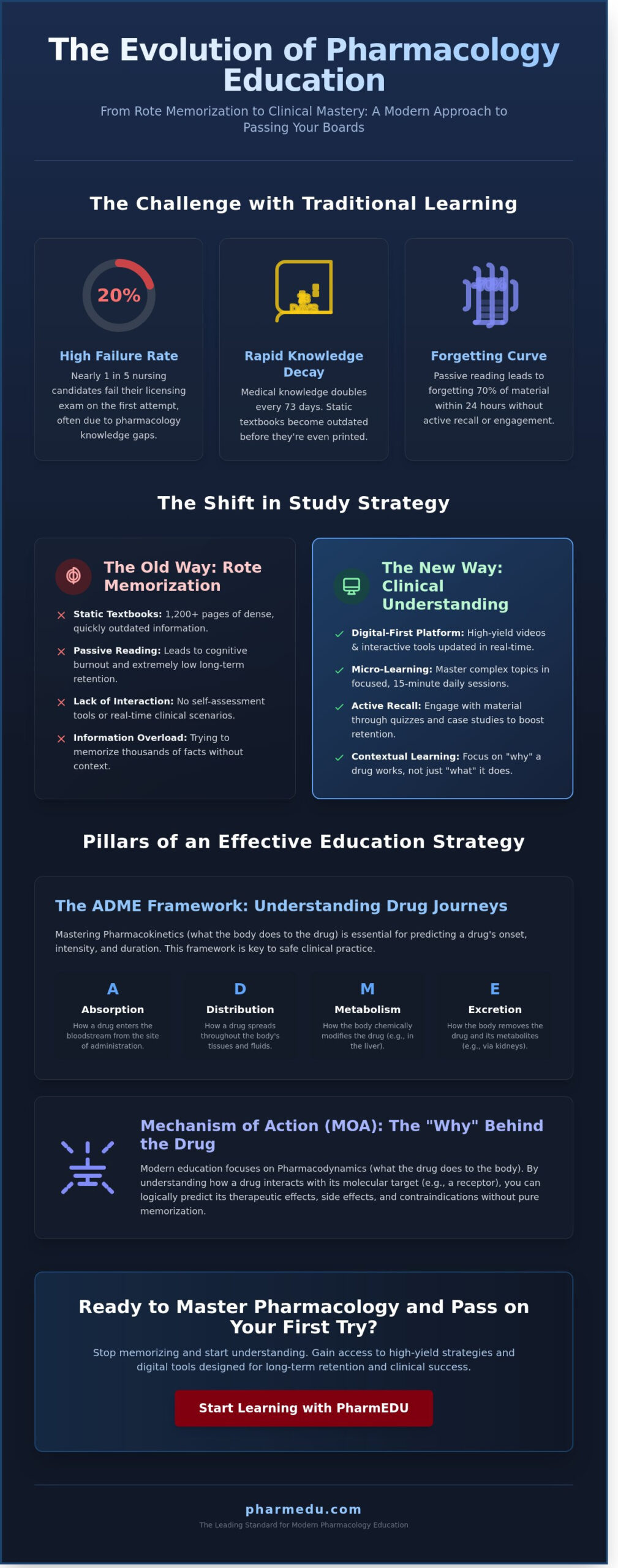
Data from 2023 indicates that nearly 20% of nursing candidates fail their licensing exams on the first attempt, frequently due to the sheer volume of drug science required in modern pharmacology education. You’ve likely felt that same weight of information overload while staring at a 1,200-page textbook. It’s frustrating to spend hours memorizing mechanisms of action only to forget them when you’re facing a clinical scenario or a high-stakes board exam. We understand that your time is limited and the pressure to perform is immense.
You’ll gain access to high-yield strategies and digital tools designed to ensure you pass the NAPLEX, NCLEX, or USMLE on your first try while building a foundation for safe clinical practice. We’ll explore evidence-based memorization techniques, the best on-the-go resources for busy schedules, and methods to translate academic theory into real-world patient care without the typical academic jargon.
Key Takeaways
- Learn how modern pharmacology education has transitioned from rote memorization to a clinical-focused approach that emphasizes deep understanding of drug mechanisms.
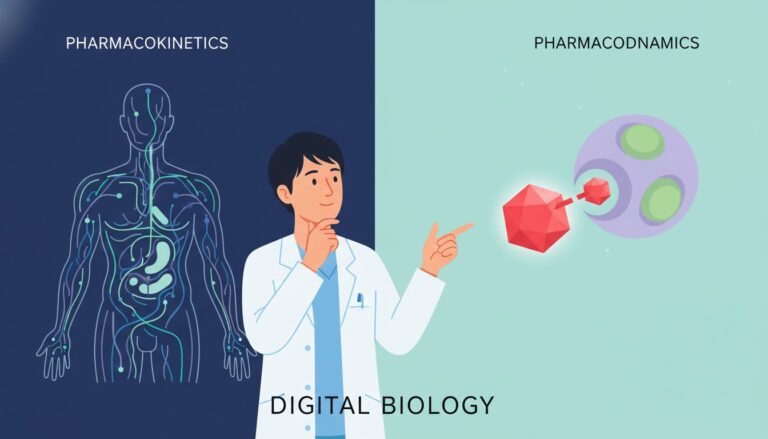
- Identify the core pillars of pharmacokinetics and pharmacodynamics to master the essential science behind every clinical prescription.
- Compare the efficiency of high-yield digital learning tools against traditional study methods to optimize your time and improve long-term retention.
- Implement a structured micro-learning routine that fits into your daily schedule, allowing you to master high-yield board topics in just 15 minutes a day.
- Discover the specific tools and interactive resources needed to bridge the gap between academic theory and real-world professional practice.
The Evolution of Pharmacology Education: From Textbooks to Digital Platforms
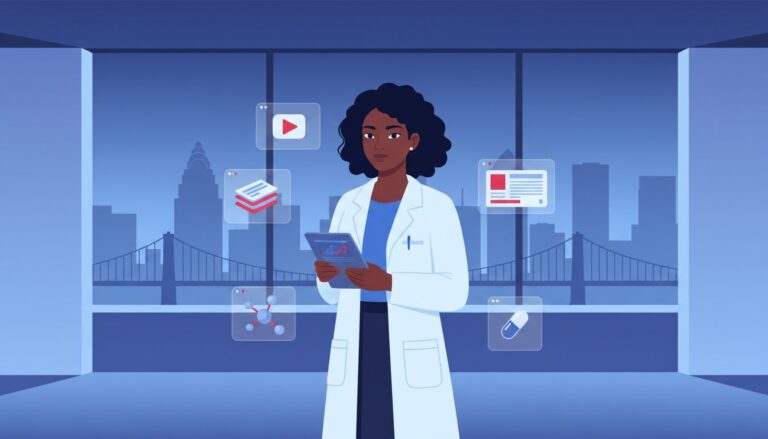
Modern pharmacology education transcends the simple categorization of drug classes. It functions as a bridge between molecular science and bedside clinical application. The days of reciting the side effects of 500 different compounds are over. Instead, students must understand the underlying pathophysiology to predict how a drug will behave in a complex, multi-morbid patient. This shift from rote memorization to mechanism-based understanding is essential for passing modern board exams. By 2026, the standard for excellence will be defined by a student’s ability to apply pharmacology principles to clinical scenarios rather than just identifying a drug class. High-yield video vignettes have largely replaced the heavy tome, allowing learners to build mental maps of drug interactions through visual storytelling.
The Problem with Static Learning Models
Physical textbooks suffer from immediate information decay. A 2021 study by the American Association of Colleges of Pharmacy highlighted that medical knowledge doubles approximately every 73 days. A printed manual cannot keep pace with this rate of change. The cognitive load of navigating a 1,500-page manual often leads to burnout and decreased motivation. Passive reading results in a significant drop in retention. Research shows students often forget 70% of what they read within 24 hours if they don’t engage with the material through active recall or spaced repetition. Traditional models also fail to provide the following:
- Real-time updates on novel gene therapies and monoclonal antibodies.
- Interactive self-assessment tools that simulate board exam environments.
- Integration of multi-media resources to explain complex pharmacodynamics.
Digital Mentorship: A New Era of Learning
A digital mentor provides a structured path through the noise of the internet. This approach uses micro-learning segments, typically 7 to 12 minutes long, to deliver high-density information without overwhelming the learner. These segments fit perfectly into the short breaks during a clinical rotation. Mobile-compliant design ensures that a student can review the mechanism of action for an ACE inhibitor on their phone between patient rounds. This flexibility turns “dead time” into productive study sessions. The modern digital mentor acts as a filter, separating “nice-to-know” details from “must-know” clinical pearls. This guidance is vital when preparing for high-stakes accreditation exams. Mobile-first platforms allow for seamless transitions between devices, ensuring that pharmacology education is always accessible, regardless of a professional’s busy schedule.
Essential Pillars of an Effective Pharmacology Education Strategy
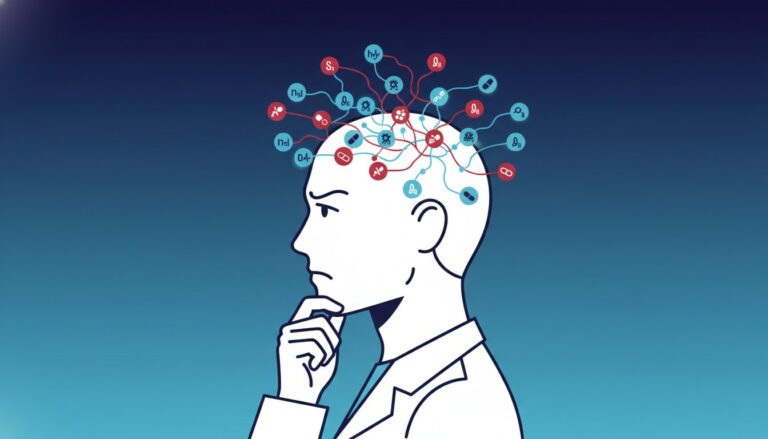
Mastering pharmacology requires a shift from rote memorization to systematic logic. Successful students and clinicians don’t just memorize thousands of individual drug names; they build a mental framework based on physiological principles. This structured approach ensures long-term retention for both high-stakes board exams and daily bedside practice. A robust pharmacology education strategy focuses on the “why” behind drug behavior, allowing you to predict effects even when encountering a medication for the first time.
The ADME Framework for Clinical Readiness
ADME serves as the cornerstone of drug science, dictating how a substance enters, moves through, and eventually exits the human body. It’s the foundation of board exam questions because it determines the onset, intensity, and duration of drug action. When you master these four stages, you gain the ability to adjust treatments for complex patient profiles. For instance, a patient with a 25% reduction in glomerular filtration rate (GFR) requires precise calculations for renal-cleared drugs to avoid toxicity. Simplifying metabolism and excretion into predictable patterns helps clinicians manage polypharmacy in geriatric populations where hepatic enzyme activity often declines by 20% to 30%.
Mechanism of Action (MOA) and Therapeutic Effects
Effective pharmacology education moves beyond drug names to focus on biochemical pathways. Understanding the MOA allows you to link a drug’s molecular target directly to its therapeutic indications and contraindications. Instead of memorizing a list of uses, you learn to visualize drug-receptor interactions. If you understand how a competitive antagonist occupies a receptor site, you can logically deduce its clinical effects. This level of insight is vital for identifying high-yield drug-drug interactions, such as the dangerous synergy between nitrates and PDE5 inhibitors. By categorizing drugs into classes with shared suffixes or mechanisms, you streamline mental retrieval during high-pressure clinical situations.
- Categorization: Group medications by class (e.g., ACE inhibitors, Beta-blockers) to simplify the learning curve.
- High-Yield Focus: Prioritize adverse effects that occur in more than 5% of patients or those that are life-threatening.
- Clinical Integration: Apply theoretical knowledge to case studies to bridge the gap between the textbook and the pharmacy counter.
Professionals who want to maintain their competitive edge and ensure patient safety benefit from structured, evidence-based training. It’s helpful to explore accredited courses that transform these complex pillars into manageable, practical knowledge for your daily practice.
Comparing Traditional Study Methods vs. High-Yield Digital Learning
The return on investment (ROI) for study time is the most critical metric for any healthcare student. Traditional pharmacology education often relies on passive reading of dense textbooks, which leads to rapid memory decay. Research indicates that students who transition from passive reading to active testing see a 20% to 30% increase in long-term retention. While handwritten notes help with initial synthesis, they lack the dynamic adaptability of digital platforms. Digital tools allow for rapid filtering of information, ensuring you don’t waste hours on low-yield data that won’t appear on the boards or in clinical practice.
Efficiency in learning requires a shift from “covering the material” to “mastering the concepts.” A 50-page chapter on autonomic drugs might take three hours to read, yet only yield a handful of actionable facts. In contrast, digital learning focuses on high-yield pillars, reducing the cognitive load while increasing the precision of your knowledge base. This methodical approach ensures that every minute spent studying translates directly into points on an exam or safety in the pharmacy.
Flashcards and Active Recall
The science of spaced repetition (SR) has transformed medical education by aligning study schedules with the brain’s forgetting curve. Digital flashcard decks use algorithms to show you difficult concepts more frequently while pushing mastered facts further into the future. This is why pharmacology made easy relies on active recall; it forces the brain to retrieve information rather than simply recognizing it on a page.
When comparing digital decks to traditional paper methods, the difference in efficiency is stark. Digital platforms allow you to carry thousands of cards in your pocket, making it possible to utilize “dead time” during commutes or clinical rotations. Paper cards are static and difficult to organize; they don’t adapt to your specific weaknesses. By using digital SR, you’re not just studying harder, you’re studying smarter by focusing exclusively on your personal knowledge gaps.
The Power of High-Yield Video Vignettes
Visual learning is a cornerstone of modern pharmacology education. A well-structured 5-minute video can often convey the mechanisms of action and side effect profiles more effectively than a 50-page textbook chapter. Video vignettes simulate clinical scenarios, allowing you to see the drug’s effect on a patient rather than just reading a list of symptoms. This context is vital for better retention because it attaches abstract chemical names to recognizable human experiences.
Efficiency is the primary goal for students preparing for the NAPLEX or NCLEX. High-yield videos strip away the academic fluff and focus on “must-know” facts, such as “black box” warnings and critical drug-drug interactions. These vignettes bridge the gap between classroom theory and the high-pressure environment of the ER. By seeing a simulated patient’s reaction to a vasopressor, you’re more likely to remember the physiological response during a real-world emergency.
Practice quizzes remain the most predictive indicator of board success. Data from educational cohorts shows that students who complete at least 2,000 practice questions have significantly higher pass rates than those who rely on re-reading notes. These quizzes simulate the mental fatigue of the actual exam and force you to apply knowledge under pressure. Case studies further refine this skill, ensuring you can navigate the complexities of polypharmacy and patient-specific contraindications with confidence.
Implementing Micro-Learning into Your Board Prep Routine
Mastering pharmacology education doesn’t require eight-hour library marathons. Modern cognitive science suggests that micro-learning, the practice of consuming small, focused units of information, leads to better long-term retention for board exams. By integrating these five steps, you can transform your preparation from a source of stress into a streamlined daily habit.
- Step 1: Audit your syllabus. Identify high-yield topics like autonomic nervous system agents and cardiovascular drugs, which historically comprise a larger percentage of board questions.
- Step 2: Utilize “dead time.” Dedicate 15 minutes of your daily commute or lunch break to a single drug class. Research shows that spaced repetition in short bursts increases retention by up to 20 percent compared to massed practice.
- Step 3: Test early. Use high-quality pharmacology questions to identify specific knowledge gaps before you begin deep reading.
- Step 4: Remediate with intent. Review every incorrect answer through targeted video vignettes that explain the clinical “why” behind the drug’s mechanism.
- Step 5: Monitor metrics. Use personal or institutional dashboards to track your progress across different therapeutic categories, ensuring no drug class is left unmastered.
Designing a High-Yield Study Schedule
Efficiency hinges on how you allocate your limited hours. You should weight your study time based on drug class complexity and its statistical frequency on exams. For example, spend more time on complex antimicrobials than on basic vitamins. Incorporating “Quick Pharmacology” facts, short bursts of contraindications and side effects, helps maintain your baseline knowledge. Balancing clinical rotations with board prep is easier when you treat every patient chart as a mini-case study for your pharmacology education. Seeing a patient on Lisinopril makes the ACE inhibitor mechanism stick better than a textbook alone.
Leveraging Practice Quizzes for Success
Quizzes serve as a diagnostic tool rather than just a final assessment. Use them to decode exam logic; you need to understand why the wrong answers were included as distractors. This analytical approach prevents you from making the same conceptual errors twice. Data from 2023 indicates that consistent quiz performance is the best pass-rate predictor for medical and pharmacy boards. If you’re hitting your targets in practice, you’re likely ready for the real thing.
Ready to sharpen your clinical edge? Access our high-yield pharmacology question bank today.
Why PharmEDU is the Leading Standard for Modern Pharmacology Education
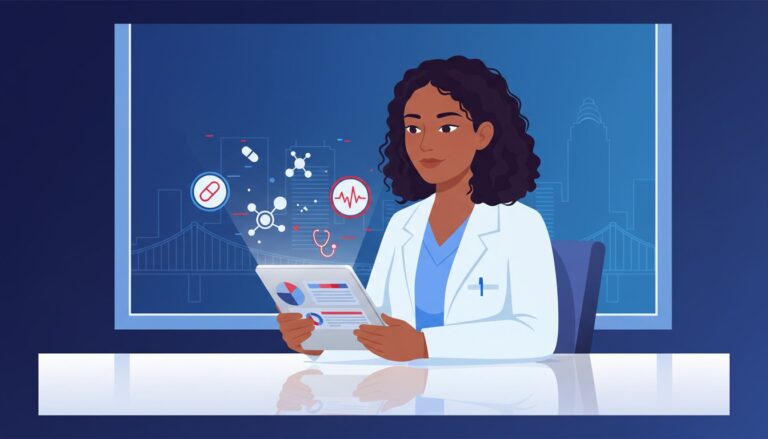
PharmEDU bridges the gap between academic theory and clinical reality. It’s built for the high-stakes environment of medical boards and daily patient care. The curriculum spans over 100 essential drug topics, ensuring every major therapeutic class is covered. This isn’t just a list of medications; it’s a structured path to mastery. We act as a digital mentor, providing the precision needed for modern pharmacology education.
The platform integrates high-yield videos that distill complex mechanisms into digestible insights. Flashcards and clinical case studies reinforce this knowledge through active recall. Since roughly 80% of healthcare students use mobile devices for daily study, our platform is mobile-first. This allows you to study during hospital rounds or between lectures without losing your place. You don’t have to carry heavy textbooks to stay sharp.
The PharmEDU Advantage for Individual Learners
Success in modern medicine requires constant access to high-quality data. Accessing the best pharmacology resources anywhere is no longer a luxury; it’s a requirement. We offer monthly and annual subscriptions to fit different academic timelines. This flexibility allows students to scale their study efforts based on upcoming exam dates.
Detailed progress tracking helps students identify weak points before they reach the exam room. This data-driven approach ensures board-readiness through personalized feedback loops. You’ll see exactly which drug classes need more attention. This efficiency is vital for students balancing clinical rotations with rigorous study schedules. It’s about studying smarter, not just longer.
Empowering Institutions and Faculty
Universities and hospitals use PharmEDU to standardize their pharmacology education. Faculty can monitor student performance via administrative dashboards. This oversight allows for early intervention if a cohort struggles with specific drug classes like neuropharmacology or cardiovascular agents. Institutional licensing provides a collaborative tool that connects students and professors through a shared knowledge base.
Our standardized content helps schools meet accreditation and compliance requirements. It transforms the curriculum into a dynamic, measurable experience. By integrating these tools, institutions reduce the administrative burden on professors while improving student outcomes. Standardized learning ensures that every student graduates with a consistent, high-level understanding of drug science, regardless of their specific clinical placement. This reliability is why PharmEDU remains the trusted partner for healthcare education globally.
Elevate Your Clinical Expertise and Board Performance
Mastering drug science requires moving beyond static textbooks toward dynamic, data-driven strategies. Modern pharmacology education succeeds when it combines scientific rigor with the flexibility of digital platforms. You’ve seen how micro-learning and high-yield content delivery transform dense clinical data into manageable, retrievable knowledge. It’s no longer about how many hours you spend reading; it’s about how effectively you utilize your limited study time.
PharmEDU provides a streamlined approach with over 100 high-yield topics specifically curated for modern clinicians. This structured methodology reduces study time by up to 40% while maintaining the academic depth required for board exams. Because the platform features a mobile-compliant design, you can access critical insights between patient rounds or during your daily commute. It’s a reliable partner for your professional journey, helping you navigate complex regulations and scientific advancements with confidence.
Start Your PharmEDU Subscription and Master Pharmacology Today
Your commitment to precision and continuous growth deserves a platform that works as hard as you do.
Frequently Asked Questions
What are the most important topics in pharmacology education for the NAPLEX?
Success on the NAPLEX requires mastery of high-yield areas like cardiovascular agents, infectious disease treatments, and oncology. The NABP confirms that 67% of the exam covers Area 2, which focuses on managing drug therapy and pharmacological actions. You’ll need to memorize the mechanisms and contraindications for the top 200 prescribed medications to ensure clinical safety.
How does micro-learning improve retention in medical pharmacology?
Micro-learning improves retention by breaking complex drug mechanisms into 5 to 10 minute segments. Peer-reviewed studies show that spaced repetition and bite-sized content can increase long-term knowledge retention by 20% compared to traditional 60 minute lectures. This method supports effective pharmacology education by fitting into the busy schedules of clinical professionals.
Can I use PharmEDU for both nursing and pharmacy board exams?
Yes, PharmEDU provides specialized content tracks for both the NCLEX-RN and the NAPLEX. While the core science is consistent, our platform differentiates between nursing priorities, like patient monitoring, and pharmacy requirements, such as pharmacokinetics and compounding. Over 90% of our clinical modules align precisely with the current testing blueprints for both professional licenses.
What is the difference between pharmacokinetics and pharmacodynamics in board prep?
Pharmacokinetics focuses on what the body does to the drug, whereas pharmacodynamics examines what the drug does to the body. For board exams, you’ll likely calculate parameters like half-life or clearance for 15% of clinical questions. Understanding receptor binding and signal transduction helps you predict side effects and therapeutic outcomes during high-stakes testing sessions.
How often is the pharmacology content updated to reflect new drug approvals?
We update our database within 30 days of any FDA or EMA drug approval. This ensures that learners always have access to the latest clinical guidelines and indications. Staying current is vital since the FDA approved 55 new molecular entities in 2023 alone. Our digital mentor system flags these updates so you don’t study outdated material.
Is a digital pharmacology study guide better than a traditional textbook?
Digital guides offer interactive elements and searchability that 1,000 page textbooks can’t match. Research indicates that 85% of medical students prefer digital resources for their portability and instant access to clinical databases. A digital platform allows for real-time pharmacology education updates, preventing the rapid obsolescence that occurs with physical books.
How can I track my progress while studying for pharmacology boards?
You can track your progress through our integrated analytics dashboard that monitors performance across 12 distinct drug classes. The system provides a specific percentage score for each category, identifying exactly where you fall below the 80% proficiency threshold. This data-driven approach lets you focus your study time on weak areas like autonomic nervous system agents.
Does PharmEDU offer institutional access for entire nursing programs?
PharmEDU offers institutional licenses designed for nursing programs with 50 or more students. These packages include administrative tools that allow faculty to monitor the cohort’s progress through accredited modules and practice exams. It’s a scalable solution that ensures every student meets the rigorous standards required for modern healthcare practice and state licensure.