
Feeling Confident for the NCLEX Pharmacology Section: A Strategic 2026 Study Guide
What if the secret to conquering the most intimidating portion of your boards isn’t memorizing an entire pharmacy manual, but mastering the clinical logic behind how medications actually affect the patient? Most nursing students feel paralyzed by information overload, drowning in textbooks while fearing those unpredictable “Select All That Apply” questions. It’s natural to feel anxious about obscure drug-drug interactions, especially when you know that pharmacological therapies account for up to 19% of your total NCLEX-RN score. This guide helps you trade that anxiety for a structured clinical judgment approach, ensuring you start feeling confident for the NCLEX pharmacology section by focusing on high-yield safety principles instead of rote recall.
We’ve designed this roadmap to help you master the refined test plan effective April 1, 2026, without the stress of traditional study methods. You’ll learn how to prioritize essential drug classes like GLP-1 receptor agonists and SGLT-2 inhibitors while focusing on the safety protocols that examiners actually prioritize. We will provide a clear, manageable study plan that replaces panic with precision, giving you the professional tools needed to answer high-stakes safety questions and pass the NCLEX on your very first attempt.
Key Takeaways
- Understand how the 13-19% weighting of pharmacological therapies in the 2026 test plan shapes your study priorities.
- Transition from passive reading to the NGN Clinical Judgment Model by learning to recognize cues and analyze drug scenarios effectively.
- Master the “Suffix Secret” and body system grouping to start feeling confident for the NCLEX pharmacology section without memorizing every individual drug.
- Implement evidence-based active recall and testing strategies to overcome the “illusion of competence” and ensure long-term retention.
- Discover how high-yield video vignettes and interactive flashcards can streamline your preparation for high-stakes safety questions.
Demystifying the NCLEX Pharmacology Blueprint: What You Actually Need to Know
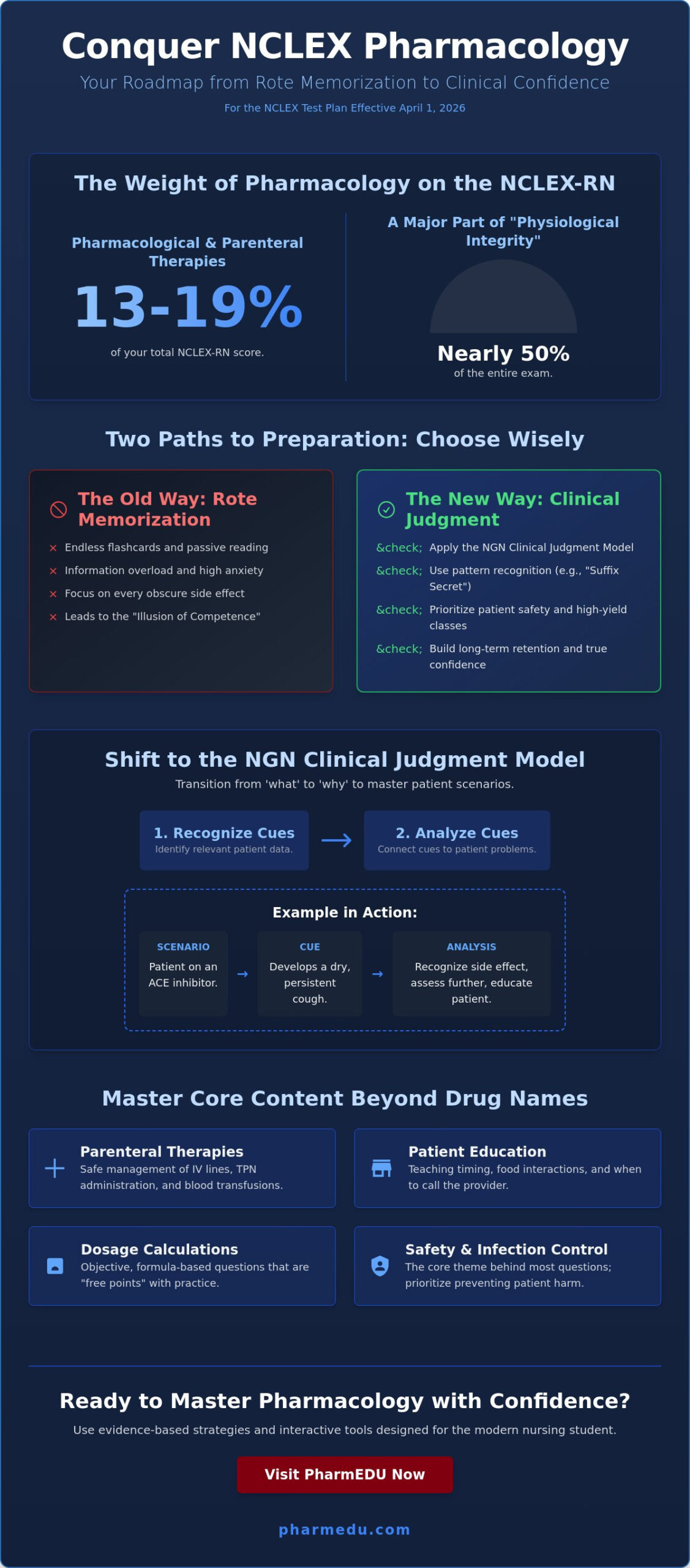
The NCSBN classifies pharmacology under the “Pharmacological and Parenteral Therapies” category, which represents between 13% and 19% of the NCLEX-RN. This percentage isn’t just a static number. It represents a significant portion of the “Physiological Integrity” pillar, which makes up nearly half of the entire exam. To begin feeling confident for the NCLEX pharmacology section, you have to look past the overwhelming list of generic names and see the categories as the examiners do. They aren’t looking for pharmacologists; they’re looking for nurses who can prevent medication errors and prioritize patient safety in real time.
The Weight of Pharmacology on the NGN
The National Council Licensure Examination (NCLEX) operates on a Computerized Adaptive Testing (CAT) model. This algorithm adjusts the difficulty of questions based on your previous answers. If you miss a question about a high-yield medication class, the system will likely probe that weakness further to see if you meet the minimum safety standard. This makes pharmacology a frequent “make or break” area for students hovering near the passing threshold. Focusing on a dedicated pharmacology study guide for nursing students ensures you’re spending your energy on the drug classes most likely to appear in 2026, such as GLP-1 receptor agonists and updated ACLS protocols.
Core Content Areas Beyond Drug Names
Success in this section requires more than just identifying what a pill does. The blueprint includes parenteral therapies, which involve the management of IV lines, TPN administration, and blood transfusion protocols. These are high-stakes areas where a single mistake can lead to significant patient harm. Additionally, patient education is a massive focus. You’ll often be asked what a nurse should teach a patient about their new prescription, focusing on timing, food interactions, and when to call the provider. These questions test your ability to bridge the gap between clinical knowledge and patient safety.
Dosage calculations also fall under this umbrella. While they often trigger math anxiety, they’re essentially “free points” because they rely on objective formulas rather than subjective judgment. Mastering these basics early allows you to approach the exam with a sense of control. By recognizing the hidden themes of safety and infection control, you can shift your focus from memorizing every obscure side effect to identifying the critical safety risks that the NCSBN actually prioritizes. This strategic shift is the most effective way to start feeling confident for the NCLEX pharmacology section as you approach your testing date.
Shifting from Rote Memorization to Clinical Judgment
The traditional approach of flashcard-heavy memorization is often the primary cause of testing anxiety. To start feeling confident for the NCLEX pharmacology section, you must transition from simply recalling drug names to applying the NGN Clinical Judgment Model. This framework asks you to recognize cues and analyze cues within complex patient scenarios. If a patient on an ACE inhibitor develops a dry cough, the exam isn’t just testing if you know the side effect. It’s testing if you recognize this as a cue to assess for more serious reactions or to educate the patient on why the medication might need to be changed.
The “Safety First” rule is your most reliable tool. Theoretical knowledge is secondary to nursing interventions. When you encounter “Select All That Apply” (SATA) questions, don’t let the format overwhelm you. Treat each option as an independent true or false safety check. Ask yourself: “Is this action safe for this specific patient?” This logical filter removes the guesswork and aligns your thinking with the NCSBN safety standards. It’s about protecting the patient, not just passing a quiz.
Mastering the ‘Why’ Behind the ‘What’
Connecting pharmacology fundamentals to real-world outcomes is the fastest way to reduce study time. While a Pharmacology for Nurses textbook provides the scientific foundation, the exam tests your ability to apply that knowledge at the bedside. For example, understanding that non-selective beta-blockers target both Beta-1 and Beta-2 receptors explains why they lower heart rate but can cause bronchoconstriction in asthmatics. When you understand the mechanism of action, you don’t have to memorize side effects; you can predict them. Visualizing these processes through High-Yield Video Vignettes can bridge the gap between theory and clinical application.
Prioritization in Pharmacology
Prioritization questions often ask which patient the nurse should see first after medication administration. Always return to your ABCs: Airway, Breathing, and Circulation. A patient experiencing a common side effect, like nausea from an antibiotic, is never the priority over a patient showing signs of a life-threatening adverse reaction, such as angioedema or anaphylaxis. You must also monitor lab values closely. Knowing that a patient’s potassium level is 3.2 mEq/L is a critical cue when they’re scheduled for a dose of digoxin. Recognizing these clinical links is the key to feeling confident for the NCLEX pharmacology section and ensuring you make the right call under pressure.
The Pattern Recognition Framework: Mastering High-Yield Drug Classes
Attempting to memorize every medication in a pharmacopoeia is a recipe for burnout. Instead, the most effective way to start feeling confident for the NCLEX pharmacology section is to master pattern recognition. By focusing on how drug classes behave as a whole, you can accurately predict the actions, side effects, and nursing interventions for hundreds of medications you’ve never even seen before. This approach aligns with the 2026 NCLEX-RN Test Plan, which prioritizes your ability to group information and apply safety principles across broad categories of care.
Common Suffixes and Prefixes for NCLEX Success
Suffixes are the ultimate NCLEX shortcut because they identify a drug’s classification and primary mechanism of action with just a few letters. While some medications are outliers, mastering these ten high-yield patterns will cover the majority of your cardiac, respiratory, and anti-infective questions:
- -pril (ACE Inhibitors): Used for hypertension; monitor for a persistent dry cough and orthostatic hypotension.
- -olol (Beta-Blockers): Lowers heart rate and blood pressure; always check the apical pulse and avoid use in patients with asthma.
- -sartan (ARBs): Used for heart failure and hypertension; watch for angioedema and elevated potassium levels.
- -pine (Calcium Channel Blockers): Targets blood pressure; monitor for peripheral edema and teach patients about good oral hygiene to prevent gingival hyperplasia.
- -statin (Antilipemics): Lowers cholesterol; patients must report any unexplained muscle pain or tenderness immediately.
- -azole (Antifungals): Treats systemic or topical infections; these are notoriously hard on the liver, so monitor LFTs closely.
- -vir (Antivirals): Used for HIV or herpes; these can be nephrotoxic, making urine output and creatinine levels a priority.
- -pam/-lam (Benzodiazepines): Used for anxiety or sedation; the primary safety concern is respiratory depression and falls.
- -zine (Phenothiazines): Antipsychotics or antiemetics; monitor for extrapyramidal symptoms (EPS) like tremors or shuffling gait.
- -phylline (Methylxanthines): Bronchodilators for COPD; watch for signs of toxicity like tachycardia, jitters, or seizures.
High-Alert Medications and Safety Protocols
Pattern recognition also extends to high-alert medications that require strict safety protocols. Insulin is a prime example; the NCLEX rarely tests the drug name alone, but frequently tests your knowledge of peak times. You must know when a patient is at the highest risk for hypoglycemia after receiving Lispro versus NPH. Similarly, anticoagulants require you to know specific antidotes by heart, such as Protamine Sulfate for Heparin and Vitamin K for Warfarin.
Psychotropic medications and “red flag” drugs with narrow therapeutic indexes, like Digoxin and Lithium, demand another layer of vigilance. For these, the nursing priority is often monitoring serum levels and recognizing early signs of toxicity, such as visual disturbances or coarse tremors. Utilizing tools like Interactive Pharmacology Flashcards can help reinforce these specific safety thresholds. When you focus on these high-stakes patterns, you’ll find yourself feeling confident for the NCLEX pharmacology section because you aren’t just guessing; you’re applying a structured, professional logic to every question.
Evidence-Based Study Strategies for Long-Term Retention
Reading through your notes multiple times creates a false sense of security often called the “illusion of competence.” You recognize the words on the page, so your brain assumes it has mastered the material. However, real learning happens only when you force your brain to retrieve information without looking. This mental effort is what leads to feeling confident for the NCLEX pharmacology section because it mimics the cognitive pressure of the actual exam. Passive review might make you feel comfortable in the short term, but active retrieval is what builds the clinical judgment required for the NGN format.
Active Recall vs. Passive Review
One of the most effective ways to test your knowledge is through “blurting” or whiteboarding. Take a blank sheet of paper and write down everything you can remember about a specific drug class, such as aminoglycosides or diuretics, from memory. Once you’ve exhausted your thoughts, compare your map to your study materials to see exactly where the gaps in your knowledge exist. This method is far more efficient than highlighting a textbook for hours. Research consistently shows that doing 10 practice questions is more effective than reading 10 pages of a textbook because it forces you to apply concepts rather than just recognize them. For those looking for a more structured approach, moving to a comprehensive pharmacy review platform can provide the necessary framework for these retrieval exercises.
Leveraging Micro-Learning for Busy Schedules
Long, grueling study sessions often lead to diminishing returns and cognitive burnout. Instead, break your day into high-yield, 15-minute segments. This micro-learning approach keeps your brain sharp and improves retention over time. You can use mobile-compliant flashcards during clinical downtime or while commuting to keep medication classes fresh in your mind. Another powerful technique is the “Teaching to Learn” method. If you can explain the mechanism of action and the primary nursing considerations of a drug class to a non-medical friend in plain English, you truly understand the material. This level of mastery is what eventually results in you feeling confident for the NCLEX pharmacology section when you sit for the boards.
To put these strategies into practice immediately and build your testing stamina, start challenging yourself with our Pharmacology Practice Quizzes to identify your current strengths and weaknesses.
The PharmEDU Path to NCLEX Pharmacology Confidence
While general test prep platforms provide a broad overview of the nursing boards, they often lack the depth required to master the complex “Pharmacological and Parenteral Therapies” category. PharmEDU bridges this gap by providing specialized tools that align with the 2026 test plan. By integrating the logical frameworks we’ve discussed, such as pattern recognition and clinical judgment, our platform ensures you’re feeling confident for the NCLEX pharmacology section long before you enter the testing center. We replace the stress of disorganized study with a structured, professional path toward licensure.
High-Yield Content Designed for Nurses
Our High-Yield Video Vignettes are specifically engineered to simplify the most complex mechanisms of action into manageable, digestible segments. Instead of sitting through hours of academic lectures, you can access micro-learning videos that cover the 100+ most tested pharmacological topics. Each vignette focuses heavily on the nursing implications the NCSBN prioritizes, such as critical assessments, timing of administration, and patient teaching points. This multi-sensory experience combines visual learning with immediate reinforcement through our Pharmacology Practice Quizzes. This combination ensures that the knowledge doesn’t just enter your short-term memory but becomes a permanent part of your clinical toolkit.
To ensure your preparation remains efficient, our platform provides real-time analytics that track your performance across different drug classes. If the data shows you’re struggling with respiratory medications or parenteral nutrition, you can pivot your focus immediately. This level of precision allows you to fix weak spots before they become a liability on exam day.
Ready to Pass on the First Try?
The transition from a simple flashcard to a complex NGN question is often where students struggle most. Our Clinical Case Studies are designed to bridge this gap, placing you in realistic patient scenarios where you must recognize cues and make high-stakes safety decisions. These studies mimic the “bow-tie” and “matrix” question types you’ll encounter on the actual exam. When combined with our Interactive Pharmacology Flashcards, which are optimized for NCLEX-style recall, you create a simulated practice environment that significantly reduces exam-day anxiety.
Whether you’re utilizing an Institutional Platform License through your nursing school or an individual PharmEDU Annual Subscription, you’re gaining access to the gold standard of pharmacology preparation. We take the administrative and cognitive burden of study planning off your shoulders so you can focus on what matters most: becoming a safe, competent, and licensed professional. You’ve done the hard work of getting through nursing school; now it’s time to ensure you’re feeling confident for the NCLEX pharmacology section with the right partner by your side.
Start your PharmEDU subscription today and master NCLEX pharmacology!
Securing Your Nursing License with Strategic Preparation
Mastering pharmacology for the 2026 NCLEX requires a shift from exhausting rote memorization to a structured clinical judgment approach. By focusing on the official NCSBN blueprint and utilizing pattern recognition through drug suffixes, you can streamline your study hours and prioritize patient safety. Implementing active recall and spaced repetition ensures your knowledge remains accessible under the pressure of the testing center. This strategic transition is the most reliable way to start feeling confident for the NCLEX pharmacology section and achieving your professional goals on the first attempt.
Success on the boards depends on having the right clinical tools at your disposal. PharmEDU provides a specialized platform featuring over 100 high-yield topics, NGN-style case studies, and interactive quizzes designed for modern nursing students. Our mobile-compliant design allows you to refine your knowledge during clinical downtime, turning every spare moment into a step toward licensure. Boost your NCLEX confidence with PharmEDU’s High-Yield Pharmacology Review and join the thousands of professionals who have already secured their future. You have the dedication to succeed, and we have the expert resources to help you cross the finish line.
Frequently Asked Questions
What is the most common pharmacology question type on the NCLEX?
The most common types are prioritization questions and “Select All That Apply” (SATA) items. These questions evaluate your ability to identify multiple correct safety interventions or patient education points. You will also encounter NGN case studies where you must analyze cues to determine the appropriate pharmacological response for a specific patient scenario. These items test your clinical judgment rather than simple recall.
How many pharmacology questions are on the Next Gen NCLEX?
While the exact number of items varies because of the Computerized Adaptive Testing (CAT) model, the 2026 NCLEX-RN test plan allocates 13% to 19% of the exam to pharmacological and parenteral therapies. This means you can expect a significant portion of your total items to focus on medication safety, administration, and patient monitoring. The algorithm will continue to provide items in this category until it determines your competency level.
Do I need to memorize specific drug dosages for the NCLEX?
You don’t need to memorize specific drug dosages for the vast majority of medications. The NCLEX primarily tests your ability to safely administer drugs and monitor for their effects. However, you must be able to perform dosage calculations accurately and know therapeutic ranges for high-alert medications like Lithium or Digoxin, where serum levels dictate nursing priority and safety.
What are the ‘must-know’ drug classes for the 2026 NCLEX-RN?
The 2026 exam emphasizes high-yield classes like GLP-1 receptor agonists, SGLT-2 inhibitors, and cardiovascular agents like ACE inhibitors and beta-blockers. You should also prioritize high-alert medications, including anticoagulants, insulin, and psychotropic drugs. Mastering these broad categories is essential for feeling confident for the NCLEX pharmacology section during your final review and ensuring you can identify critical safety risks.
How can I tell the difference between a side effect and an adverse reaction on the exam?
Side effects are predictable, expected, and usually manageable, such as dry mouth or mild nausea. Adverse reactions are life-threatening or harmful events that require an immediate nursing intervention, such as wheezing, angioedema, or anaphylaxis. On the exam, always prioritize the patient experiencing an adverse reaction over one with a common side effect, as safety and stabilization are the primary nursing goals.
Is pharmacology harder on the Next Gen NCLEX than the old version?
The Next Gen NCLEX isn’t necessarily harder, but it is more application-based. Instead of asking you to define a drug’s mechanism, the NGN format asks you to apply clinical judgment to a realistic scenario. This shift actually helps students who focus on patient safety and the logic behind nursing actions rather than just memorizing long lists of facts. It rewards those who understand clinical logic.
What should I do if I see a drug name I’ve never heard of during the test?
Start by looking for a recognizable suffix or prefix that links the drug to a known class. If the name is completely unfamiliar, use the provided patient data, such as their medical history or vital signs, to deduce the drug’s purpose. Focus on the safest nursing action among the choices, as the NCLEX is designed to test safety even when you encounter unknown variables or medications.
How long should I study pharmacology before taking the NCLEX?
Most successful candidates find that dedicated study for 4 to 6 weeks is the most effective timeframe. Consistency is more important than the total number of hours spent in a single session. Spending 15 to 30 minutes daily on active recall and practice questions is the best way to ensure you are feeling confident for the NCLEX pharmacology section when your testing date arrives.