
Pharmacology Review for Practicing Nurses: A Comprehensive 2026 Guide
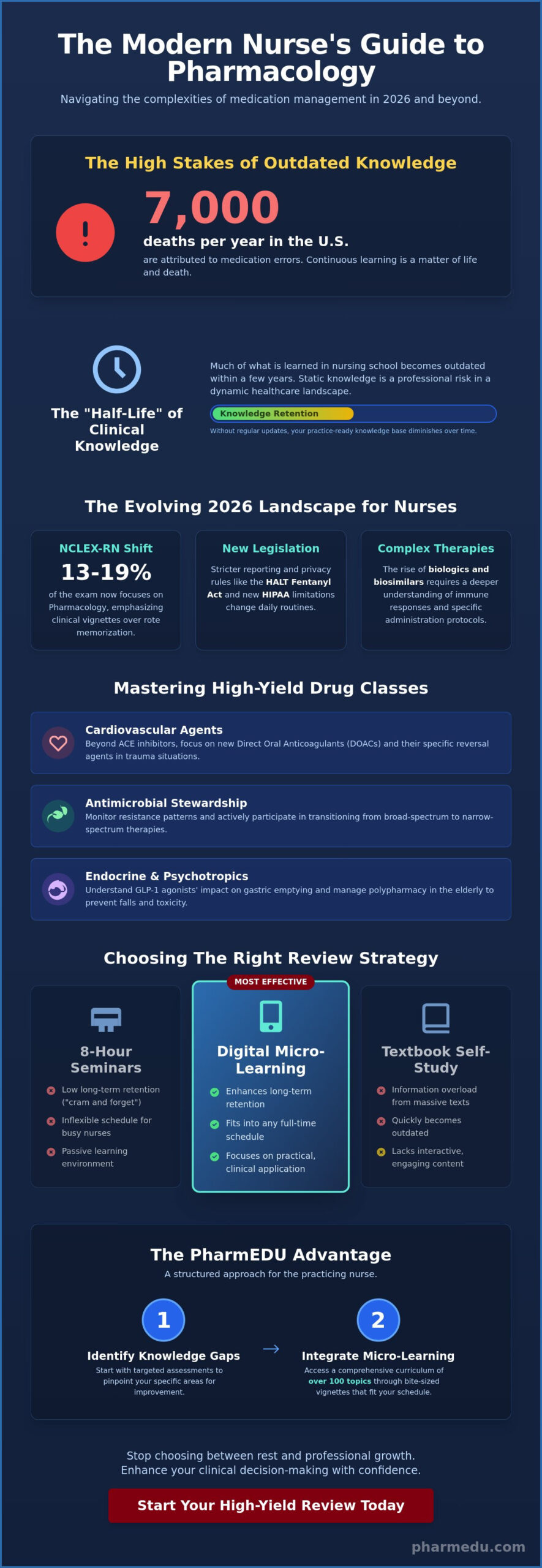
Did you know that medication errors contribute to the deaths of approximately 7,000 people in the United States every year? For a busy nurse balancing long shifts, the pressure to stay current with every new drug release can feel like an impossible task. You’ve likely felt the weight of information overload while staring at a massive textbook that doesn’t account for the realities of modern practice. Finding a high-quality pharmacology review for practicing nurses shouldn’t add to your professional burden. It’s natural to feel concerned about how 2026 updates, such as the HALT Fentanyl Act or new HIPAA privacy limitations, will change your daily routine at the bedside.
We agree that you shouldn’t have to choose between your limited rest and your professional growth. This guide promises to help you master high-yield pharmacology concepts and enhance clinical safety through a review built specifically for your schedule. By focusing on practical application rather than rote memorization, you’ll earn the confidence needed for complex clinical decision-making. We’ll preview the most critical drug classes, examine the impact of the Drug Supply Chain Security Act, and provide strategies for accurate medication reconciliation that protect both you and your patients.
Key Takeaways
- Understand why regular knowledge updates are vital to combat the “half-life” of clinical information and maintain professional competence in a shifting regulatory landscape.
- Learn to prioritize high-yield drug classes, including cardiovascular agents and new anticoagulants, to improve patient safety and medication reconciliation.
- Discover why a digital pharmacology review for practicing nurses using micro-learning vignettes is more effective for long-term retention than traditional 8-hour seminars.
- Follow a structured, two-step approach to identify your specific knowledge gaps and integrate study sessions into a full-time nursing schedule.
- Explore how modern platforms like PharmEDU provide a comprehensive curriculum of over 100 topics to support your ongoing clinical decision-making.
Why a Pharmacology Review is Essential for Practicing Nurses in 2026
The concept of professional competence is shifting from a static achievement to a dynamic, ongoing commitment. In 2026, a pharmacology review for practicing nurses is no longer just a luxury; it’s a necessity for maintaining clinical safety. Science doesn’t stand still. Experts often discuss the “half-life” of clinical knowledge, noting that much of what we learned in nursing school becomes outdated within a few short years. While the Fundamentals of Pharmacology remain constant, the clinical application of these principles evolves as new research and drug classes emerge.
Transitioning from the rote memorization required for the NCLEX to the complex decision-making of the bedside is a significant hurdle. The 2026 healthcare environment demands more than just knowing drug names; it requires an understanding of how medications interact within a living patient. The 2026 NCLEX-RN Test Plan already reflects this shift, with pharmacology accounting for 13-19% of the exam and focusing heavily on clinical vignettes. Since medication errors contribute to approximately 7,000 deaths in the U.S. annually, your ability to apply pharmacological theory isn’t just an academic exercise. It’s a matter of life and death.
The Evolving Pharmaceutical Landscape
Modern practice is increasingly dominated by complex biologics and biosimilars that didn’t exist a decade ago. These therapies require specific administration protocols and a deep understanding of immune responses. Regular reviews help you stay ahead of frequent FDA safety alerts and black box warnings that can change a drug’s indications overnight. A high-yield pharmacology review is a specialized educational tool designed to distill complex drug data into actionable insights for clinical excellence.
Pharmacology and Patient Safety Outcomes
There’s a direct correlation between a nurse’s pharmacological depth and the prevention of adverse drug events (ADEs). You aren’t just a pass-through for a physician’s order; you’re the professional responsible for the final check in the medication administration cycle. This role carries heavy legal and professional implications. Whether you’re navigating the stricter reporting requirements of the HALT Fentanyl Act or managing new anticoagulants, your knowledge protects your license. Maintaining your competence through a structured pharmacology review for practicing nurses ensures you have the decision-making power to catch errors before they reach the patient.
High-Yield Drug Classes and Professional Clinical Considerations
Effective clinical practice requires a shift from memorizing drug lists to understanding how specific classes behave in complex patients. A targeted pharmacology review for practicing nurses focuses on the medications that carry the highest risk and require the most frequent clinical adjustments. In the 2026 healthcare environment, this means moving beyond the basics of ACE inhibitors and beta-blockers to master the nuances of newer anticoagulants and metabolic therapies.
Cardiovascular management now involves a sophisticated balance of traditional agents and direct oral anticoagulants (DOACs). While you likely know that ACE inhibitors can cause hyperkalemia and a persistent cough, you must also recognize the specific reversal agents for DOACs during a trauma. Similarly, antimicrobial stewardship has become a core nursing responsibility. You aren’t just administering a dose; you’re monitoring for resistance patterns and helping the team transition from broad-spectrum to narrow-spectrum therapy as soon as cultures return. This Nursing Pharmacology Guide offers an excellent framework for integrating these stewardship principles into daily rounds.
Endocrine and psychotropic medications also require updated clinical judgment. In 2026, GLP-1 agonists are ubiquitous, not just for diabetes but for weight management. Nurses must understand their impact on gastric emptying, particularly for patients who are NPO for surgery. In psychotropic care, the focus has shifted to managing polypharmacy in the elderly. You should be vigilant for anticholinergic toxicity and orthostatic hypotension, which significantly increase fall risks. Reinforcing these concepts through interactive pharmacology flashcards can help ensure these “red flag” symptoms stay top-of-mind during a busy shift.
Advanced Pharmacokinetics for the Bedside Nurse
Pharmacokinetics isn’t just for the lab; it dictates your bedside assessment. You must evaluate how renal or hepatic impairment alters the half-life of the drugs you administer. For instance, a patient with low albumin will have more “free” drug available if the medication is highly protein-bound, potentially leading to toxicity even with standard doses. Understanding the volume of distribution helps you predict how a drug will behave in an edematous patient versus one who is dehydrated. For a deeper dive into these mechanisms, refer to Pharmacology: The Comprehensive Guide to the Science of Drugs.
Critical Drug-Drug and Drug-Food Interactions
Identifying “red flag” interactions is a primary safety net in ICU and med-surg settings. Many interactions are driven by the CYP450 enzyme system, where common substances like grapefruit juice, St. John’s Wort, or even high-quality supplements from CBD Health Collection can dangerously alter drug metabolism. Your role includes educating patients on these home safety risks. When you conduct medication reconciliation, look for drugs that compete for the same metabolic pathways. This level of scrutiny is what defines a professional pharmacology review for practicing nurses, moving you from simple administration to high-level clinical oversight.
Review Strategies: Self-Study vs. Live Seminars vs. Digital Platforms
Choosing the right format for a pharmacology review for practicing nurses often comes down to balancing professional depth with a punishing work schedule. Traditional live seminars, while structured, frequently demand a significant financial investment and a full day of your time. This rigid format rarely aligns with the reality of 12-hour shifts or the need for immediate, actionable answers. Digital platforms have emerged as a superior alternative, offering a much higher cost-to-value ratio by allowing you to learn at your own pace without sacrificing clinical accuracy.
The efficiency of your study method depends heavily on the “micro-learning” concept. Research shows that 10-minute high-yield vignettes are more effective for long-term retention than 8-hour marathon seminars. This is because short, focused bursts of information prevent cognitive fatigue and allow you to integrate learning into your daily routine. While a Nursing Pharmacology Textbook provides a strong foundational reference, it often encourages passive reading. In contrast, modern digital tools utilize active retrieval through quizzes and case studies, which significantly improves your ability to recall critical drug interactions during a high-stress patient encounter.
The Limitations of Traditional Textbooks
Physical books are often outdated before they even reach the hospital library. With the full enforcement of the Drug Supply Chain Security Act in late 2026, static guides simply can’t keep up with the rapid changes in medication safety protocols. These printed resources also lack the interactive elements, such as video vignettes or searchable databases, that are essential for modern professional development. You can explore this further by reviewing Comprehensive Pharmacy Review: Digital Platforms vs. Traditional Textbooks in 2026.
Choosing a Modern Digital Review Solution
When you’re evaluating a pharmacology review for practicing nurses, prioritize platforms that offer mobile compliance and high-yield content tailored for the bedside. A professional-grade solution should include clinical case studies that mirror the complexities of 2026 practice, such as managing patients on multiple new biologics. Digital platforms provide the most agile way to access real-time pharmacology data as drug classifications and safety protocols change. Look for resources that act as a digital mentor, helping you navigate new regulations like the HALT Fentanyl Act with precision and confidence.
How to Conduct a High-Yield Review While Working Full-Time
Balancing a full-time nursing schedule with professional development requires a methodical approach. You don’t have time to re-read entire textbooks. Instead, a successful pharmacology review for practicing nurses depends on a structured, five-step strategy designed for maximum efficiency. It starts with a precise self-assessment to identify knowledge gaps in specific drug classes. By identifying exactly where your knowledge of drug-drug interactions or renal dosing is weak, you can focus your limited energy on the areas that actually impact patient safety.
Once you’ve identified your gaps, the second step is to utilize micro-learning segments during your commutes or breaks. Small, five to ten-minute windows are perfect for refreshing your memory on a single mechanism of action. Third, integrate active recall through interactive quizzes rather than passive reading. Fourth, apply your new knowledge immediately to your current patient cases. If you’re caring for a patient on a new anticoagulant, review that specific drug’s profile that day. Finally, track your progress through a structured platform to ensure you’ve covered all high-yield topics before your next license renewal. To begin this structured journey, you can access our PharmEDU Monthly Subscription for a complete library of professional resources.
Leveraging High-Yield Video Vignettes
Visual learning aids are incredibly effective for memorizing complex physiological processes. High-yield video vignettes allow you to see the drug’s path through the body, which helps anchor the mechanism of action in your long-term memory. Case-based videos are particularly useful because they simulate the clinical decision-making you face at the bedside. For example, our ACE Inhibitors Pharmacology: The High-Yield Guide for Healthcare Students (2026) provides a clear, visual breakdown of the renin-angiotensin-aldosterone system that is just as relevant for a veteran nurse as it is for a student.
Using Flashcards for Long-Term Retention
The science of spaced repetition is the most reliable way to ensure you don’t forget what you’ve learned. Interactive pharmacology flashcards force your brain to retrieve information actively, which strengthens neural pathways. When you create or use drug cards, focus on “must-know” safety data: black box warnings, common adverse effects, and critical contraindications. Using mobile-compliant tools allows you to turn a few minutes of downtime into a productive study session, making a pharmacology review for practicing nurses a natural part of your professional life rather than a chore.
PharmEDU: The Professional Choice for Nursing Pharmacology Review
PharmEDU stands as a dedicated partner for clinicians who require more than just a surface-level refresher. While many resources focus on entry-level licensure, this platform provides a pharmacology review for practicing nurses that addresses the complexities of a 2026 clinical environment. The curriculum features over 100 high-yield topics, each developed by experienced healthcare educators to ensure clinical accuracy and practical relevance. By utilizing evidence-based content, the platform removes the administrative and cognitive burden of searching through disparate, unverified sources during your limited time off.
The learning experience is centered around high-yield video vignettes and interactive tools. These aren’t long, rambling lectures. Instead, they’re focused segments that distill a drug class into its most critical components: safety alerts, administration protocols, and patient education priorities. When you engage with our pharmacology practice quizzes or interactive pharmacology flashcards, you’re not just memorizing; you’re building the professional confidence needed for rapid decision-making in high-acuity settings. This structured approach ensures that you stay current with the latest pharmaceutical developments without feeling overwhelmed by academic jargon.
A Platform Built for Busy Clinicians
We understand that your time is your most valuable asset. The platform’s mobile-compliant design ensures that a pharmacology review for practicing nurses can happen whenever you have a moment to spare. Whether you’re on a commute or taking a quick break during a 12-hour shift, our micro-learning segments fit seamlessly into your schedule. Clinical case studies bridge the gap between theoretical knowledge and the specific patient scenarios you encounter at the bedside. This ensures that every minute spent studying translates directly into improved patient outcomes and safer medication reconciliation.
Subscription Options for Individuals and Institutions
Flexibility is key to maintaining ongoing competence. A PharmEDU Monthly Subscription offers the freedom to refresh your knowledge on a short-term basis, while the PharmEDU Annual Subscription provides a cost-effective, year-long partnership for continuous growth. For hospital units and nursing programs looking to standardize safety protocols, our Institutional Platform License offers a scalable solution to ensure entire teams remain current with 2026 regulations and drug releases. You don’t have to manage the burden of continuing education alone. Start your pharmacology review with PharmEDU today and join a community of professionals committed to clinical excellence and patient safety.
Elevate Your Clinical Decision-Making for 2026
Maintaining professional competence in a rapidly shifting pharmaceutical landscape is a continuous journey. You’ve seen how the “half-life” of clinical knowledge and the rise of complex biologics demand a more agile approach to learning. By focusing on high-yield drug classes and replacing outdated seminars with efficient digital tools, you can ensure your skills remain sharp despite a demanding 12-hour shift schedule. A targeted pharmacology review for practicing nurses isn’t just an administrative requirement; it’s a commitment to the highest standards of patient safety and clinical excellence.
Don’t let information overload hinder your professional growth. With access to over 100 high-yield topics developed by expert healthcare educators, you can master complex concepts through mobile-compliant micro-learning that fits your life. It’s time to trade passive reading for active retrieval and clinical case studies that reflect real-world challenges. Master Clinical Pharmacology with PharmEDU and gain the confidence to navigate the future of healthcare with precision. Your commitment to learning is the strongest safety net your patients have.
Frequently Asked Questions
Is pharmacology review necessary if I’ve been a nurse for years?
Yes, regular review is essential because clinical knowledge decays and the pharmaceutical landscape shifts rapidly. The industry releases dozens of new molecular entities every year, and safety protocols evolve based on real-world data. Even veteran nurses must stay current with legislative changes like the HALT Fentanyl Act, which took effect in early 2026. A structured pharmacology review for practicing nurses ensures you don’t rely on outdated information that could compromise patient safety.
What are the most common drug classes covered in a professional pharmacology review?
Professional reviews prioritize high-yield drug classes that you’ll frequently encounter in clinical settings. These include cardiovascular agents like DOACs, complex insulin analogs, and GLP-1 agonists. You’ll also find deep dives into antimicrobial stewardship and psychotropic polypharmacy. Focusing on these specific areas allows you to manage the most common “red flag” interactions and side effects seen at the bedside.
How much time should a practicing nurse dedicate to pharmacology review?
You don’t need to spend hours each day studying to see results. Research suggests that 10 to 15 minutes of daily micro-learning is more effective for long-term retention than marathon sessions. This approach allows you to integrate learning into your existing schedule without burning out. Consistency is more important than total hours, as it keeps critical safety data fresh in your mind during your shifts.
Can I use NCLEX study guides for a professional pharmacology refresher?
While NCLEX guides provide a basic foundation, they aren’t ideal for a comprehensive pharmacology review for practicing nurses. Licensure exams focus on rote memorization and entry-level safety. Professional practice requires a deeper understanding of complex clinical vignettes, drug-drug interactions in polypharmacy, and the management of specific patient populations, such as those with renal or hepatic impairment.
What’s the best way to stay updated on new FDA drug approvals?
The most reliable way to track new approvals is through official FDA safety alerts and the CDER database. However, many clinicians prefer digital platforms that curate this information into high-yield summaries. These services distill thousands of pages of regulatory data into actionable insights, helping you understand how a new approval changes your specific nursing protocols without requiring hours of manual research.
Are there free pharmacology review resources for nurses?
Yes, several government and academic organizations offer free resources. The National Center for Biotechnology Information (NCBI) provides extensive databases, and some state boards offer basic modules. While these are excellent for specific research, they often lack the structured, case-based approach found in professional subscription platforms. You’ll need to weigh the time spent searching for data against the efficiency of a curated curriculum.
How does PharmEDU differ from traditional nursing pharmacology textbooks?
PharmEDU replaces static, often outdated text with dynamic, mobile-compliant content. Unlike textbooks that remain unchanged for years, our digital platform updates as new regulations and drug classes emerge. We use high-yield video vignettes and interactive flashcards to encourage active recall. This method is specifically designed to fit the 12-hour shift schedule of a modern clinician rather than a student in a classroom.
Do online pharmacology reviews provide certificates of completion?
Most professional online review platforms provide certificates of completion once you’ve finished specific modules or quizzes. These documents are vital for maintaining your professional portfolio and can be used to demonstrate ongoing competence to employers. Always check if the platform’s credits align with your specific state board of nursing requirements, such as the 2026 Illinois APRN renewal deadlines.