
What is a Nurse Practitioner? The Complete Guide to the NP Career in 2026
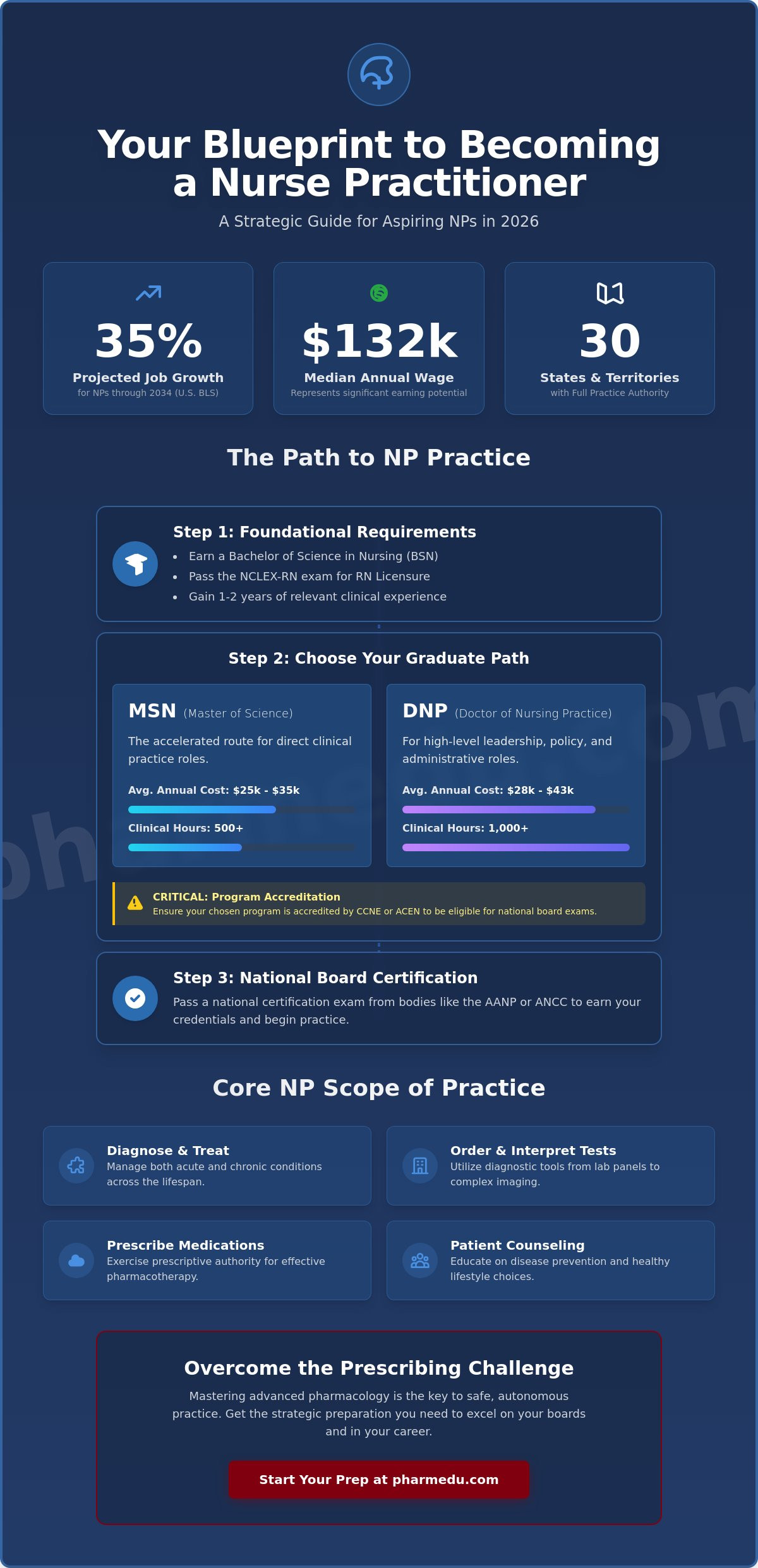
With the U.S. Bureau of Labor Statistics projecting a 35% growth rate for the nurse practitioner role through 2034, this career path represents the fastest-growing sector in modern healthcare. However, becoming an NP is more than just earning a median annual wage of $132,050; it’s a fundamental shift from clinical administration to the heavy responsibility of prescriptive authority. You’ve likely felt the academic pressure of advanced pharmacology or felt confused by the fact that 30 states now grant full practice authority while others remain restricted. It’s normal to feel anxiety about national board certification exams when the path forward seems buried in complex regulations and rigorous science.
We’ve created this guide to transform that overwhelm into a clear, professional strategy for your advancement. You’ll discover exactly how to navigate the educational requirements for MSN and DNP programs, which can range from $25,000 to over $43,000 per year. We’ll also break down the specific differences between AANP and ANCC certification costs and provide a roadmap for mastering the clinical pharmacology you need to practice independently. This is your comprehensive blueprint for transitioning from a registered nurse to a confident, board-certified provider in 2026.
Key Takeaways
- Define the APRN role beyond clinical tasks, focusing on the unique blend of diagnostic expertise and holistic disease prevention.
- Navigate the educational journey from RN licensure to nurse practitioner status, clarifying the differences between MSN and DNP program requirements.
- Evaluate various clinical specialties, such as Family Practice or Adult-Gerontology, to determine which scope of practice best fits your professional goals.
- Overcome the academic hurdle of advanced pharmacology by mastering the pharmacokinetics and pharmacodynamics necessary for safe prescriptive authority.
- Develop a strategic career plan based on 2026 market trends, ensuring you are prepared for the high demand in primary care and specialized settings.
What is a Nurse Practitioner? Defining the APRN Role
A What is a Nurse Practitioner? defines a professional who serves as an Advanced Practice Registered Nurse (APRN) with the clinical authority to manage patient care independently. Unlike traditional nursing roles that focus on the execution of care plans, the nurse practitioner acts as a primary or specialty care provider. This transition requires a master’s or doctoral degree and a mastery of advanced clinical concepts that go beyond the scope of undergraduate nursing education. The core philosophy of an NP is unique; it blends high level clinical expertise with a deep commitment to disease prevention and health education. This dual focus makes them vital in a healthcare system where 30 U.S. states and territories already grant them full practice authority to bridge the gap in patient accessibility.
The role differs significantly from other medical professions. While a Registered Nurse (RN) focuses on patient monitoring and administering treatments, an NP takes on the diagnostic burden. Compared to Physician Assistants (PAs), who follow a medical model similar to physicians, NPs operate under a nursing model. This model prioritizes the patient’s holistic well-being alongside the treatment of their specific pathology. As the physician shortage continues to impact the national healthcare system, NPs have become the backbone of primary care, ensuring that millions of patients receive timely and evidence based interventions.
The Core Responsibilities of an NP
NPs are trained to function as autonomous clinicians. Their daily scope includes diagnosing and treating both acute illnesses, like infections, and chronic conditions, such as diabetes or hypertension. They possess the authority to order and interpret diagnostic tests, including complex imaging and comprehensive laboratory panels. Beyond diagnosis, they manage the entire arc of patient care. This includes prescribing medications and counseling patients on lifestyle modifications. Their role is particularly critical in rural areas where access to specialized care is often limited.
NP vs. MD: Understanding the Collaborative Model
The primary difference between an NP and an MD lies in their educational background and care philosophy. MDs follow a medical model that focuses heavily on the biological and pathological aspects of disease. NPs follow a nursing model, which integrates clinical treatment with environmental and social factors. Despite these different approaches, clinical outcomes for patients treated by NPs are consistently comparable to those treated by physicians. In states with restricted practice, NPs work in close collaboration with MDs, creating a team based environment that improves patient safety. In full practice states, they operate their own clinics, providing a level of independence that reflects their advanced training.
The Path to Practice: NP Education and Certification
The journey to becoming a nurse practitioner begins long before graduate school. Every aspiring NP must first secure a Bachelor of Science in Nursing (BSN) and pass the NCLEX-RN to obtain licensure as a Registered Nurse. This clinical foundation is non-negotiable. Most competitive graduate programs also require at least one to two years of bedside experience before admission. When selecting a graduate program, the most critical factor isn’t the prestige of the university; it’s the accreditation status. Ensuring a program is accredited by the Commission on Collegiate Nursing Education (CCNE) or the Accreditation Commission for Education in Nursing (ACEN) is vital because non-accredited degrees disqualify candidates from national board exams. Students should expect a rigorous curriculum that includes at least 500 clinical hours for a master’s degree, while doctoral candidates often complete over 1,000 hours.
MSN vs. DNP: Which Path is Right for You?
Choosing between a Master of Science in Nursing (MSN) and a Doctor of Nursing Practice (DNP) often comes down to your timeline and career goals. An MSN is traditionally the faster route, typically taking two to three years to complete with an annual cost between $25,000 and $35,000. It’s an excellent choice for those eager to enter clinical practice quickly. However, there’s a significant shift toward the DNP as the entry-level standard. While a DNP requires a larger investment, with annual costs ranging from $28,000 to $43,000, it prepares you for high level leadership and policy roles. This degree carries more weight in clinical administration and academia, often resulting in higher long term salary potential. Analyzing the Career Outlook for Nurse Practitioners suggests that while both degrees currently lead to licensure, the DNP provides a competitive edge in an evolving job market.
National Board Certification (AANP and ANCC)
After graduation, you must pass a national certification exam to practice. The two primary bodies are the American Academy of Nurse Practitioners (AANP) and the American Nurses Credentialing Center (ANCC). The AANP exam costs $240 for members and $315 for non-members, focusing heavily on clinical practice. The ANCC exam is $295 for members and $395 for non-members, but it includes broader topics like research and professional development. To remain eligible for practice, you’ll need to complete recertification every five years. This process requires a mix of clinical practice hours and continuing education units. Staying current with these requirements is much easier when you use a professional education platform to track your progress and earn credits. This ongoing commitment to learning ensures you maintain the high standards expected of an advanced practice provider.
Specialties and Scope of Practice for NPs
The decision to specialize is perhaps the most defining moment in a nurse practitioner‘s career. It dictates the patient population you’ll serve and the clinical settings where you’ll spend your time. Family Nurse Practitioners (FNPs) remain the most versatile group, accounting for the majority of the workforce. They treat patients across the lifespan, from infants to seniors, making them the primary point of contact in many communities. In contrast, Adult-Gerontology (AGNP) providers must choose between primary care, focusing on long term wellness, or acute care, which involves managing unstable patients in high acuity hospital settings.
Addressing the growing national mental health crisis has led to a surge in Psychiatric Mental Health Nurse Practitioners (PMHNPs). These providers are essential in diagnosing psychiatric conditions and managing complex psychotropic medication regimens. Other specialized paths include Pediatrics and Women’s Health, where clinicians focus on specific developmental stages or reproductive wellness. According to the Mayo Clinic College of Medicine & Science, these specialized roles allow for a high degree of clinical autonomy and patient centered care. Choosing a niche early in your education helps streamline your clinical rotations and ensures you’re prepared for the specific demands of your future patient base.
Full, Reduced, and Restricted Practice Authority
State regulations create a varied landscape for NP autonomy. As of early 2026, 30 U.S. states and territories grant full practice authority. This allows an NP to evaluate patients, diagnose conditions, and prescribe medications without physician oversight. Reduced practice states require a collaborative agreement for at least one element of practice, while restricted states require career long supervision. There’s a continuous legislative push for national parity to ensure that every nurse practitioner can practice to the full extent of their graduate training regardless of their geographic location.
Work Environments: Where Do NPs Practice?
Modern healthcare offers diverse settings for advanced practice. While many work in private practices or community health clinics, others are integrated into major hospital systems and emergency departments. We’ve seen a massive shift toward telehealth in recent years. By 2026, remote NP services have become a standard offering, allowing providers to reach patients in underserved rural areas. This flexibility in work environment is one of the primary drivers of career satisfaction in the field today.
The Prescribing Challenge: Mastering Advanced Pharmacology
Mastering advanced pharmacology represents the most significant academic hurdle in the journey to becoming a nurse practitioner. While undergraduate nursing programs focus on the safe administration of medications, graduate level pharmacology requires a complete paradigm shift. You’re no longer just the final check in the medication loop; you’re the architect of the treatment plan. This transition demands a granular understanding of pharmacokinetics and pharmacodynamics. You must predict how a drug is absorbed, distributed, metabolized, and excreted, especially in multi-morbid patients who are often taking five or more concurrent medications. Managing these complex drug-drug interactions is a daily reality that carries significant legal and ethical weight. Prescriptive authority isn’t just a professional privilege; it’s a responsibility that requires lifelong vigilance and precision.
Bridging the Knowledge Gap with High-Yield Review
Traditional 800-page textbooks often overwhelm busy graduate students who are balancing clinical rotations and full-time work. To succeed, many students turn to specialized resources like pharmacology study guides for nursing students to distill complex mechanisms into actionable clinical knowledge. Using video vignettes and case studies allows you to simulate real-world prescribing scenarios before you ever sign your first prescription. This high-yield approach bridges the gap between theoretical science and the practical needs of a primary care setting. It’s about moving from memorization to clinical application.
Preparing for the DEA and State Prescribing Licenses
Securing your prescriptive authority involves more than just passing a course. You must navigate a multi-step process to obtain state-specific licenses and a DEA number for controlled substances. Requirements vary significantly; as of 2026, 30 states allow for full independent prescribing, while others require a collaborative agreement with a physician. Staying current on foundational drug classes, such as ACE inhibitors, is essential for managing the high volume of hypertensive patients seen in primary care. If you’re feeling overwhelmed by the regulatory or scientific demands, enrolling in an accredited pharmacology review course can provide the structured support needed to transition into your new role with confidence.
Career Outlook and Success Strategies for 2026
The financial and professional outlook for a nurse practitioner is exceptionally strong. With a projected 35% growth rate through 2034, the market is set to add approximately 32,700 new openings every year. This demand is fueled by an aging population and a persistent physician shortage in primary care. In May 2024, the median annual wage reached $132,050, but top earners in states like California and New York often exceed $180,000. Success in this field requires more than just clinical skill; it demands active participation in professional organizations like the American Academy of Nurse Practitioners (AANP). Networking within these groups provides access to job boards, legislative updates, and peer mentorship that can define the trajectory of your professional life.
Acing the NP Certification Exam
Securing your license depends on passing a rigorous national board exam. Whether you choose the AANP or the ANCC, your strategy should focus on standardized test-taking techniques and deep conceptual understanding. Many students find that traditional textbooks fall short, making a comprehensive pharmacy review essential for mastering the drug mechanisms that appear on the boards. We recommend a structured 3-month study schedule. Spend the first month on core pathophysiology, the second on advanced pharmacology, and the final 30 days on high-volume practice questions. This methodical approach reduces anxiety and builds the mental stamina required for the four-hour exam.
Lifelong Learning in Advanced Practice
Graduation is only the beginning of your educational journey. The rapid pace of clinical research means that a large portion of medical knowledge becomes obsolete every few years. Staying current with pharmacology updates is a professional obligation that ensures patient safety. Modern NPs are moving away from traditional seminars in favor of digital platforms that offer micro-learning opportunities. These tools allow you to digest new evidence-based guidelines in 10-minute increments during your clinical day. By leveraging these technologies, you can maintain your professional edge while balancing the demands of a high-pressure clinical environment. The future of the nurse practitioner profession is bright, provided you remain committed to the precision and continuous growth that advanced practice demands.
Advancing Your Clinical Authority in 2026
Becoming a nurse practitioner is one of the most significant professional transformations you can undertake. It requires moving beyond clinical support to embracing the full weight of diagnostic and prescriptive authority. Success in this role depends on your ability to navigate complex state regulations and master the high-stakes science of advanced pharmacology. As we’ve explored, the path from BSN to board certification is rigorous; however, it leads to a career defined by autonomy and high-impact patient care.
Transitioning from a student to a board-certified provider doesn’t have to be an overwhelming process. You can bridge the knowledge gap by utilizing modern, high-yield study tools designed for the busy professional. Master NP Pharmacology with PharmEDU’s High-Yield Review to access over 100 high-yield video vignettes, interactive pharmacology flashcards, and a mobile-compliant micro-learning platform. These resources ensure you don’t just pass your boards but enter clinical practice with the precision your patients deserve. Your journey toward advanced practice starts with a structured step toward clinical excellence. We’re here to support your growth every step of the way.
Frequently Asked Questions
What is the difference between a Nurse Practitioner and a Doctor?
The primary difference lies in the educational model and care philosophy. A nurse practitioner follows a nursing model focused on holistic wellness and disease prevention, while a physician follows a medical model centered on the biological aspects of disease. While both can diagnose and treat patients, physicians undergo 11 to 14 years of education including residency, whereas NPs typically complete 6 to 8 years of specialized academic and clinical training.
How long does it take to become a Nurse Practitioner in 2026?
It typically takes between 6 and 8 years of post-secondary education to enter the field. This timeline includes four years for a Bachelor of Science in Nursing (BSN) and an additional two to four years for a Master’s or Doctoral degree. Most competitive graduate programs also require 1 to 2 years of bedside experience as a Registered Nurse before you can begin advanced clinical rotations.
Can a Nurse Practitioner prescribe medication in all 50 states?
Yes, NPs have prescriptive authority in all 50 states, though the degree of independence is regulated by state law. As of early 2026, 30 U.S. states and territories grant full practice authority, allowing NPs to prescribe without physician oversight. In the remaining states, providers must maintain a collaborative agreement with a physician to issue prescriptions for controlled and non-controlled substances.
Is the NP certification exam difficult?
The certification exam is a rigorous test of your advanced clinical decision-making and diagnostic skills. National pass rates for the AANP and ANCC exams generally range between 80% and 85% annually. The difficulty stems from the broad scope of the material, particularly the integration of complex pathophysiology and advanced pharmacology concepts that are essential for safe practice.
What is the average salary of a Nurse Practitioner?
The median annual wage for this role was $132,050 according to May 2024 data from the Bureau of Labor Statistics. Compensation varies significantly based on specialty and location. Top earners in high-demand states like California or New York often see salaries exceeding $180,000, while those in psychiatric or acute care specialties frequently earn more than primary care providers.
Do I need a DNP to practice as a Nurse Practitioner?
No, a Master of Science in Nursing (MSN) remains the minimum educational requirement for entry-level practice in 2026. While professional organizations have pushed for the Doctor of Nursing Practice (DNP) to become the new standard, the MSN is still a recognized pathway for national certification and state licensure. However, many leadership and academic roles now prioritize candidates with doctoral preparation.
Can an NP open their own private practice?
Yes, a nurse practitioner can own and operate a private practice in states with full practice authority. In these 30 jurisdictions, you can function as an independent business owner and clinician. In states with reduced or restricted authority, you may still own the practice entity, but you must legally employ or contract with a physician to provide the required level of supervision or collaboration.
How does PharmEDU help NP students pass their pharmacology courses?
PharmEDU provides a structured, high-yield digital platform that simplifies the most challenging aspects of advanced pharmacology. We use over 100 video vignettes and interactive flashcards to help students understand drug-drug interactions and pharmacokinetics. Our micro-learning approach is designed for the busy professional, ensuring you can master complex drug mechanisms in short, efficient study sessions that fit into a clinical schedule.