The Comprehensive Guide to Becoming and Excelling as a Nurse in 2026
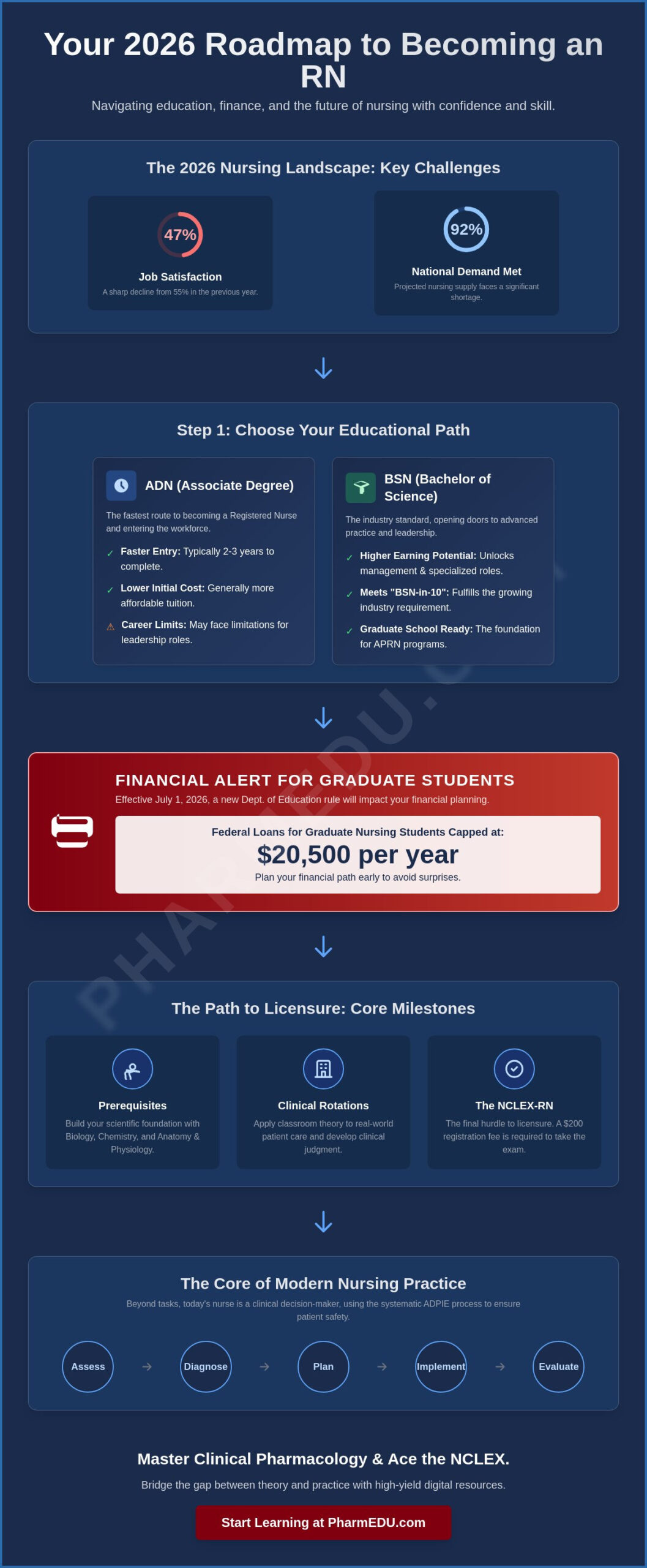
In 2026, nurse job satisfaction has fallen to 47%, a sharp decline from 55% just one year ago. You’re likely feeling the pressure. It’s natural to feel overwhelmed by the information load in nursing school or anxious about the $200 NCLEX-RN registration fee and the high stakes of medication safety. Memorizing hundreds of drug classes and side effects can feel like an impossible task when you’re also managing clinical rotations.
We’re here to help you move beyond the stress of simple task completion and toward true clinical mastery. This guide provides a clear roadmap to becoming a successful nurse, focusing on the pharmacological judgment and core competencies required in a rapidly changing healthcare environment. We believe that professional excellence is built on deep understanding, not just rote memorization.
You’ll learn how to address the latest 2026 regulations, such as the $20,500 federal loan cap for graduate students and the new Joint Commission staffing requirements. We provide the specific tools you need to simplify complex clinical topics. This ensures you enter the workforce with the confidence to provide exceptional patient care while maintaining absolute medication safety.
Key Takeaways
- Identify the optimal educational path by comparing the requirements and career outcomes of ADN and BSN programs.
- Discover how a modern nurse acts as the final line of defense in patient safety through rigorous pharmacological judgment.
- Master the expanded “Rights of Medication Administration” to ensure precision and safety in diverse clinical settings.
- Implement evidence-based study methods like spaced repetition to simplify the most challenging aspects of the NCLEX-RN curriculum.
- Leverage high-yield digital resources to bridge the gap between academic theory and practical clinical pharmacology.
Defining the 21st-Century Nurse: Scope, Science, and Patient Advocacy
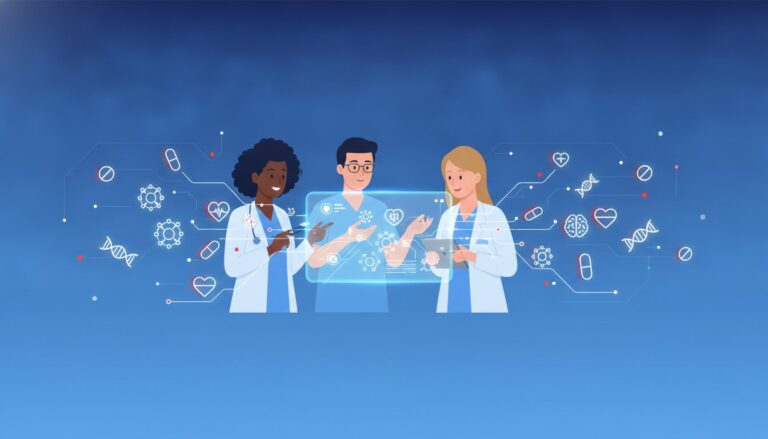
Modern nursing has moved far beyond the traditional image of a bedside assistant. Today, a nurse is a sophisticated clinical decision-maker who serves as the primary advocate for patient safety. This shift represents a fundamental transition from vocational task-management to a high-level, evidence-based practice where every action is backed by scientific research. In 2026, the profession demands a blend of technical expertise and the ability to interpret complex data in real-time.
The professional hierarchy reflects this complexity. Licensed Practical Nurses (LPNs) provide essential bedside care; meanwhile, Registered Nurses (RNs) manage the overall care plan and patient assessment. At the top of the clinical ladder, Advanced Practice Registered Nurses (APRNs) exercise significant autonomy, including prescribing medications and managing chronic conditions. This autonomy is vital as the healthcare system faces a projected shortage in 2026, where the total nursing supply is expected to meet only 91.94% of the national demand.
Professional care is structured around the Nursing Process, often remembered by the acronym ADPIE. This framework includes Assessment, Diagnosis, Planning, Implementation, and Evaluation. It’s a cyclical method that ensures care is never static. By constantly evaluating the patient’s response to interventions, the clinical team can pivot quickly to prevent complications before they escalate. This systematic approach transforms nursing from a series of tasks into a rigorous scientific discipline.
The Evolving Scope of Nursing Practice
The boundaries of the profession are expanding rapidly. Modern clinical settings demand high levels of autonomy and seamless interdisciplinary collaboration with physicians and pharmacists. There’s a massive shift toward preventative care and community health, moving the focus away from just treating acute illnesses in hospitals. Technology plays a massive role here. In 2026, telehealth and AI-assisted triage have become standard tools that reshape daily duties, allowing for remote patient monitoring and more efficient data analysis.
Nursing as a Science: The Importance of Clinical Judgment
Clinical judgment is the cornerstone of modern practice. It’s no longer enough to simply memorize drug names or procedures. Critical thinking allows a professional to synthesize complex data points in real-time to make life-saving decisions. Evidence-based practice ensures that patient outcomes improve by using the most current scientific data rather than outdated traditions. Ultimately, nursing is the synthesis of biological science and human compassion. This dual nature is what makes the role both intellectually demanding and deeply rewarding.
The Educational Journey: How to Become a Registered Nurse (RN)
Before you can step onto a hospital floor, you must conquer the scientific foundations of the profession. Prerequisites like Biology, Chemistry, and Anatomy & Physiology serve as the rigorous gateway to professional practice. These aren’t just “weed-out” courses; they provide the cellular and systemic understanding required for clinical safety. Navigating The Educational Journey: How to Become a Registered Nurse (RN) involves choosing between an Associate Degree in Nursing (ADN) or a Bachelor of Science in Nursing (BSN). While an ADN allows for faster entry into the workforce, the BSN is increasingly becoming the industry standard for those seeking leadership roles.
The “BSN-in-10” movement, which requires a new nurse to obtain their bachelor’s degree within a decade of initial licensure, is gaining traction across several jurisdictions. This shift emphasizes the need for higher education to manage the complexities of 21st-century healthcare. If you’re looking ahead to graduate school, keep in mind the new Department of Education rule effective July 1, 2026, which caps federal loans for graduate nursing students at $20,500 per year. Planning your financial path early is as critical as passing your science exams.
Clinical rotations represent the most transformative part of your curriculum. This is where classroom theory meets the bedside. You’ll witness the impact of the current 10% registered nurse shortage firsthand as you work alongside experienced mentors in high-pressure environments. These rotations allow you to apply the Nursing Process in real-time, helping you develop the clinical judgment needed to ensure patient safety and effective care coordination.
Degree Options and Career Progression
Bridging programs like RN-to-BSN or accelerated degrees offer flexibility for those transitioning from other careers. Once you’ve secured your initial license through the State Board of Nursing, you can pursue specialized certifications in areas like the ICU, Pediatrics, or Oncology. These paths often require additional clinical hours and specific exam preparation to meet the high standards of specialized practice.
The NCLEX-RN: The Final Hurdle
The final step to licensure is the NCLEX-RN, which uses a Computerized Adaptive Testing (CAT) format. It doesn’t just test what you know; it evaluates how you think under pressure. The exam focuses heavily on management of care, safety, and physiological integrity. Pharmacology remains a notoriously difficult portion of the test, as it requires a deep understanding of drug interactions and safety protocols. To build the confidence needed for this high-stakes exam, you might consider using high-yield pharmacology study aids to streamline your revision and ensure you’re prepared for the $200 registration challenge.
Why Pharmacology Mastery is Non-Negotiable in Professional Nursing
Every time a nurse prepares a syringe or scans a patient’s wristband, they act as the final safety barrier between a prescription and a patient. While physicians and pharmacists play vital roles in the care cycle, the responsibility of the “last line of defense” rests squarely with the clinician at the bedside. This duty is central to the Scope, Science, and Patient Advocacy standards established by the American Nurses Association. A single lapse in pharmacological judgment can have devastating consequences, making deep knowledge of drug actions a professional necessity rather than an academic hurdle.
Medication errors remain a significant challenge in modern healthcare. Data from the Institute of Medicine indicates that these errors affect nearly 1.5 million people annually, resulting in billions of dollars in additional healthcare costs. To combat this, the traditional “5 Rights” of medication administration have expanded into 10 essential checks. Today’s practitioners must verify the right patient, drug, dose, route, and time, while also ensuring the right documentation, reason, response, education, and the patient’s right to refuse. Mastery of these protocols is what separates a technician from a truly competent professional.
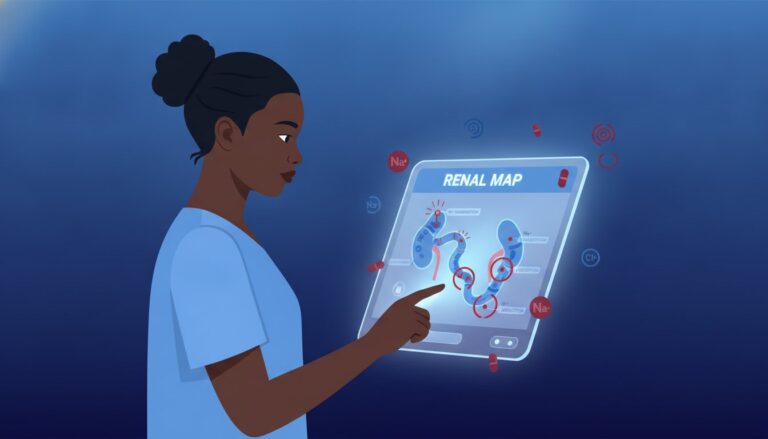
Understanding the science behind the medicine is equally critical. You must grasp pharmacokinetics, which describes how the body moves a drug through its systems, and pharmacodynamics, which explains the drug’s biochemical effects on the body. This knowledge allows you to anticipate how a patient with impaired renal function might react to a standard dose of an antibiotic. It’s this level of clinical reasoning that prevents toxicity and ensures therapeutic success. Without this scientific foundation, you aren’t just administering medicine; you’re taking an uncalculated risk with patient safety.
The Critical Role of Drug Monitoring
Assessment doesn’t end once the medication is administered. A successful nurse must continuously monitor for therapeutic effects and early signs of adverse drug reactions (ADRs). You’ll need to link your pharmacology knowledge directly to your physical assessments, such as checking an apical pulse before giving digoxin. Teaching patients how to manage their medications at home is also a vital part of the role, ensuring they understand both the benefits and potential side effects of their treatment plan.
High-Alert Medications and Vulnerable Populations
Certain medications carry a much higher risk of causing significant harm if an error occurs. You’ll frequently manage high-alert drugs like anticoagulants, insulin, and opioids, all of which require meticulous attention to the Medication Administration Record (MAR). Vulnerable populations, such as pediatric and geriatric patients, demand even greater precision. In pediatrics, where dosages are often weight-based and calculated to the microgram, there’s no room for error. Similarly, geriatric care requires a deep understanding of polypharmacy and how age-related changes in metabolism affect drug clearance.
Strategic Preparation: Mastering Nursing Exams and the NCLEX-RN
Pharmacology is frequently cited as the most difficult course in the nursing curriculum. It’s the point where many students feel the most anxiety, especially when considering that medication safety is a primary focus of the NCLEX-RN. To succeed, you must move away from rote memorization. Active recall and spaced repetition have emerged as the gold standards for long-term retention. These techniques involve testing yourself at increasing intervals, ensuring that high-yield facts move from your short-term memory into your permanent clinical knowledge base.
Practice questions are your most valuable tool for developing “NCLEX-style” thinking. The exam uses Computerized Adaptive Testing to gauge your ability to make safe clinical decisions. By working through hundreds of practice scenarios, you learn to identify the “most correct” answer among several plausible options. This is exactly what a nurse does every day: prioritizing care based on the most urgent patient needs. Developing this mindset early helps mitigate the stress of the $200 registration fee and the pressure of the testing center.
Mnemonics and visualization techniques can also transform how you categorize vast amounts of data. By creating mental “hooks” for drug classes, you can quickly retrieve side effects and contraindications during an exam or at the bedside. This strategic approach is essential in 2026, where the 8.06% nursing shortage means you’ll need to be efficient and accurate from day one of your career.
Simplifying Complex Drug Classes
Mastering every individual medication is impossible. Instead, focus on “prototype” drugs that represent an entire class. If you understand the mechanism of action, side effects, and nursing considerations for one ACE inhibitor, you understand them all. Pay close attention to suffixes and prefixes; identifying that a drug ends in “-pril” or “-sartan” immediately tells you its category and expected effects. Utilizing a pharmacology study guide for nursing students provides a structured framework to organize this information logically.
Bridging the Gap Between Classroom and Clinical
Clinical rotations offer the perfect opportunity to solidify your classroom learning. When you administer a medication to a real patient, you’re no longer just reading a textbook; you’re seeing the physiological response in real-time. Use case studies to simulate real-world nursing scenarios, particularly for high-alert medications you might not encounter every day. Micro-learning helps busy students retain high-yield facts by delivering critical information in short, focused bursts that fit into a hectic clinical schedule. If you want to streamline your study process, explore our high-yield pharmacology resources designed specifically for modern clinical success.
Empowering Your Nursing Education with PharmEDU’s High-Yield Resources
Clinical mastery requires more than just time. It requires a structured approach that translates the overwhelming volume of pharmacological data into actionable bedside knowledge. PharmEDU serves as this vital bridge, offering a suite of tools designed to support the modern nurse through every phase of their professional development. Our platform focuses on high-yield content, ensuring that your study time is spent on the concepts most likely to appear on board exams and in critical patient care scenarios.
Our video vignettes are specifically engineered to simplify the most taxing topics in the curriculum. Instead of wading through dense chapters, you can engage with visual explanations that break down complex mechanisms of action into digestible segments. This is particularly effective for mastering challenging drug categories like ace inhibitors and other cardiovascular agents. By visualizing how these medications interact with the renin-angiotensin-aldosterone system, you build a mental model that lasts far longer than rote memorization.
Institutional licensing has also become a cornerstone of our mission to improve healthcare outcomes. By partnering with nursing schools, we help faculty drive student pass rates higher, directly addressing the 8.06% personnel shortage projected for 2026. When schools provide these resources, they give their students a competitive edge in a demanding market. Interactive flashcards further enhance this experience, allowing for on-the-go NCLEX prep during commutes or between clinical shifts.
A Digital Mentor for Every Stage of Your Career
Whether you’re in your first semester or preparing for advanced board certification, our platform adapts to your needs. The mobile-compliant interface ensures that you have a digital mentor in your pocket, ready for the fast-paced clinical environment. All content is strictly evidence-based and updated to meet 2026 standards, providing the security of knowing your knowledge is current with the latest regulatory shifts and scientific breakthroughs.
Success Stories: From Student to Registered Nurse
The transition from student to registered nurse is often marked by a significant increase in confidence when using structured review tools. Our success stories frequently highlight how high-yield quizzes help identify specific knowledge gaps before they become issues in practice. This targeted approach reduces overall study time while increasing retention. Join the thousands of nurses excelling with PharmEDU and take the next step toward professional excellence today.
Secure Your Future in Professional Nursing
Success in 2026 depends on your ability to integrate scientific knowledge with compassionate advocacy. You’ve seen how the educational journey from ADN to BSN prepares you for the clinical floor, but true excellence requires mastering the complexities of pharmacology. A competent nurse doesn’t just administer medications; they interpret the physiological data to protect their patients from harm. By focusing on prototype drugs and utilizing active recall, you can overcome the anxiety of the NCLEX-RN and enter the workforce with confidence.
PharmEDU is your digital partner in this demanding journey. Our platform provides over 100 high-yield pharmacology topics, interactive flashcards, and clinical case studies used by top nursing programs nationwide. These resources are designed to simplify your study sessions and bridge the gap between classroom theory and real-world application. Don’t let the volume of information overwhelm your potential. Start Your PharmEDU Subscription and Master Pharmacology Today to ensure you’re prepared for every challenge at the bedside. The path to becoming a clinical leader starts with the right tools, and we’re here to support your growth every step of the way.
Frequently Asked Questions
What is the primary role of a nurse in 2026?
The primary role of a nurse in 2026 is that of a high-level clinical decision-maker and patient advocate. Beyond basic care, you manage complex data from AI-assisted triage systems and coordinate interdisciplinary teams. With a national nursing shortage reaching 8.06%, your ability to prioritize care and ensure patient safety through evidence-based practice is more critical than ever.
How long does it take to become a registered nurse?
It typically takes between two and four years to become a registered nurse, depending on your chosen degree path. An Associate Degree in Nursing (ADN) usually requires two years of study; meanwhile, a Bachelor of Science in Nursing (BSN) takes four years. Both paths require you to complete intensive science prerequisites and clinical rotations before sitting for the NCLEX-RN exam.
Is nursing school as hard as everyone says?
Nursing school is academically and emotionally demanding due to its rigorous scientific curriculum and high-stakes clinical responsibilities. Students must balance complex subjects like pathophysiology with 12-hour hospital shifts. This intensity is reflected in the fact that 23% of nurses report they’re likely to leave the profession within a year, highlighting the need for strong mental resilience and effective study habits.
What is the most difficult subject in nursing school?
Pharmacology is widely considered the most difficult subject in nursing school because it requires more than just memorization. You must understand how drugs interact with diverse biological systems and anticipate potential adverse reactions. Because medication errors significantly impact patient outcomes and healthcare costs, instructors maintain exceptionally high standards for this course to ensure clinical safety.
How much do registered nurses earn on average?
Registered nurses earn a median annual wage of approximately $86,070 according to the most recent Bureau of Labor Statistics data. While starting salaries vary by region, the 5% projected job growth through 2034 ensures strong demand and competitive compensation. Specialized roles, such as nurse practitioners, see even higher growth rates of 35% during the same period, often leading to significantly increased earning potential.
What is the difference between an RN and a BSN?
An RN is a professional license granted by a state board, while a BSN is a four-year academic degree. You can become an RN with either an ADN or a BSN, but the bachelor’s degree provides deeper training in leadership and community health. Many hospitals now prefer or require a BSN, supported by “BSN-in-10” laws that mandate higher education for long-term practice.
How can I study pharmacology more effectively for the NCLEX?
You can study pharmacology more effectively by focusing on prototype drugs and using spaced repetition techniques. Instead of memorizing every individual medication, learn the characteristics of one representative drug for each class. Using high-yield resources like interactive flashcards and case studies helps bridge the gap between classroom theory and the clinical judgment required for the NCLEX-RN.
Can I work as a nurse while pursuing an advanced degree?
Yes, you can work as a nurse while pursuing an advanced degree, and many employers offer tuition reimbursement to support this transition. However, you should carefully manage your finances and schedule, especially with the new July 1, 2026, federal loan cap of $20,500 per year for graduate nursing students. Balancing professional shifts with clinical hours for a master’s or doctorate requires disciplined time management.