
Gout Medication: Pharmacology Guide for Students (2026)
Why would a clinician initiate urate-lowering therapy in the middle of an excruciating acute flare, even though it might temporarily heighten the patient’s discomfort? This counterintuitive approach is just one of the many nuances that makes gout medication a challenging subject for healthcare students to master. It’s perfectly normal to feel overwhelmed when you’re trying to distinguish between acute anti-inflammatory responses and long-term metabolic modulation, especially when high-stakes exams require you to recall specific drug-drug interactions and genetic contraindications under pressure.
This pharmacology guide bridges the gap between complex pathophysiology and clinical reality. You’ll gain a clear understanding of how to differentiate drug classes by their molecular targets, from xanthine oxidase inhibitors to the latest biologic advancements. By focusing on high-yield exam pearls and the most recent 2026 clinical standards, we’ll help you navigate the xanthine oxidase pathway with confidence. We’ll explore the critical role of HLA-B*5801 testing, the expanded label for pegloticase co-administration, and the precise timing required to transition a patient from crisis management to long-term stability.
Key Takeaways
- Identify the specific molecular targets within the purine metabolism pathway to understand how different drugs disrupt monosodium urate crystallization.
- Differentiate between first-line pharmacological agents for acute flares, including the specific timing and dosing requirements for colchicine and NSAIDs.
- Master the “treat-to-target” approach by titrating gout medication to achieve and maintain a serum urate level below 6 mg/dL for long-term prevention.
- Recognize critical board-exam pearls, such as the dangerous interaction between allopurinol and azathioprine and the indications for HLA-B*5801 genetic testing.
- Accelerate your exam preparation by using interactive flashcards and clinical vignettes to simplify the memorization of complex drug-drug interactions.
Pathophysiology of Gout and the Targets of Pharmacotherapy
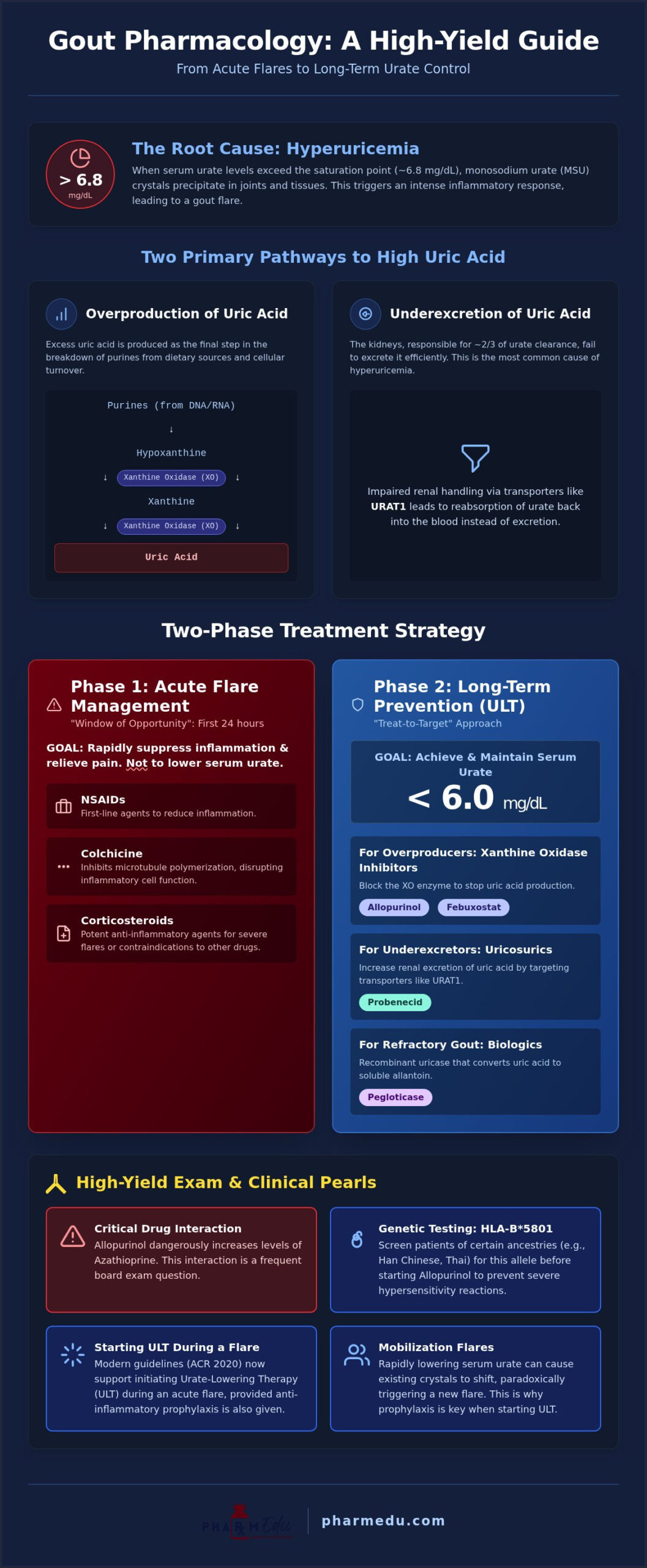
Gout is far more than a simple inflammatory joint condition. It’s a complex metabolic disorder rooted in the dysregulation of purine metabolism. When serum urate levels exceed the physiological saturation point of approximately 6.8 mg/dL, monosodium urate (MSU) crystals begin to precipitate in the synovium and surrounding tissues. This state of hyperuricemia serves as the biochemical foundation for the disease, but the clinical “flare” only occurs when the immune system recognizes these crystals as foreign threats.
The transition from asymptomatic hyperuricemia to acute gouty arthritis involves the activation of the NLRP3 inflammasome. This intracellular protein complex detects MSU crystals and triggers an inflammatory cascade, leading to the maturation of caspase-1 and the subsequent release of interleukin-1β (IL-1β). This cytokine is the primary driver of the intense pain, heat, and swelling seen in patients. Understanding this cascade is essential for students, as it explains why certain gout medication classes, like colchicine, focus specifically on inhibiting this inflammatory response rather than altering urate levels.
The Purine Degradation Pathway
The production of uric acid is the final step in the breakdown of purine nucleotides derived from both dietary intake and endogenous cellular turnover. DNA and RNA breakdown leads to the formation of hypoxanthine, which is then oxidized into xanthine. The enzyme Xanthine Oxidase (XO) is the critical catalyst in this process, responsible for converting both hypoxanthine to xanthine and xanthine to uric acid. Because humans lack the enzyme uricase, which converts uric acid into the highly soluble allantoin, we are uniquely predisposed to urate accumulation. This enzymatic pathway is the primary target for Gout suppressant medications like allopurinol and febuxostat, which bind to XO to halt production at the source.
Renal Handling of Uric Acid
The kidneys are responsible for approximately two-thirds of urate excretion, making renal physiology a major factor in gout management. Urate undergoes a complex four-component process in the proximal tubule: glomerular filtration, nearly total reabsorption, subsequent secretion, and finally, post-secretory reabsorption. The transporter URAT1 is the chief mediator of reabsorption, while various Organic Anion Transporters (OAT) handle secretion. Many patients are “underexcretors” due to genetic variations in these transporters. This renal complexity is why kidney function is a decisive factor when selecting a gout medication; for instance, uricosuric agents like probenecid lose efficacy as the glomerular filtration rate declines, and allopurinol requires careful dose titration in patients with chronic kidney disease.
By targeting these specific metabolic and physiological checkpoints, clinicians can either suppress the production of urate or accelerate its removal. This dual-track approach allows for personalized therapy based on whether a patient is an overproducer or an underexcretor of uric acid.
Pharmacotherapy for Acute Gout Flares: Rapid Relief Strategies
The management of an acute gout flare is a race against time. Clinicians refer to the first 24 hours of symptom onset as the “window of opportunity.” Initiating a gout medication during this period is essential to abort the inflammatory cascade before it reaches its peak. The primary objective is not to lower serum urate, but rather to provide rapid relief from the debilitating pain and swelling caused by the NLRP3 inflammasome activation discussed in the previous section.
While the ACR Gout Management Guidelines now suggest that urate-lowering therapy (ULT) can be started during a flare if anti-inflammatory prophylaxis is provided, many students are taught the traditional caution: don’t initiate ULT during an active crisis. Rapid shifts in serum urate levels can actually trigger “mobilization flares” as crystals shift within the joint. Therefore, the immediate focus remains on three pillars of therapy: NSAIDs, colchicine, and corticosteroids.
Colchicine: Mechanism and Dosing
Colchicine is a unique alkaloid that doesn’t affect urate levels but specifically targets the inflammatory response. It works by binding to intracellular tubulin, which inhibits microtubule polymerization. This disruption is critical because it prevents neutrophils from migrating toward the monosodium urate crystals (chemotaxis) and stops their degranulation. Without these microtubules, the cells simply can’t move or release the mediators that drive a flare.
For board exams, you must master the modern dosing shift. The historical “high-dose” regimen, where patients took the drug until they developed diarrhea, is obsolete. Today, the “low-dose” protocol is the standard: 1.2 mg at the first sign of a flare, followed by 0.6 mg one hour later. This approach offers the same efficacy as higher doses with a much lower risk of toxicity. If you’re struggling to memorize these specific dosing windows, our interactive pharmacology flashcards provide a streamlined way to drill these high-yield facts.
NSAIDs and Systemic Corticosteroids
NSAIDs are often the preferred first-line gout medication for younger patients without significant comorbidities. Indomethacin has long been the “classic” choice in clinical rotations, but naproxen is frequently used due to its more favorable side effect profile and longer half-life. These agents work by inhibiting cyclooxygenase (COX) enzymes, thereby reducing prostaglandin synthesis at the site of inflammation.
When NSAIDs or colchicine are contraindicated, such as in patients with advanced chronic kidney disease or those on anticoagulation, corticosteroids become the primary tool. Oral prednisone is highly effective for polyarticular gout. However, if the flare is confined to a single large joint like the knee, intra-articular corticosteroid injections are often preferred. This localized delivery provides intense anti-inflammatory action while avoiding the systemic side effects of oral steroids, such as hyperglycemia or fluid retention.
Urate-Lowering Therapy (ULT): Long-Term Prevention and Management
While acute therapy manages the immediate crisis, long-term stability requires a shift toward urate-lowering therapy (ULT). The clinical indications for initiating permanent gout medication include frequent flares (two or more per year), the presence of tophi, or evidence of radiographic joint damage. According to a comprehensive Gout Diagnosis and Treatment Review, the goal is to lower the total body urate pool rather than just masking symptoms. The “treat-to-target” strategy is the gold standard, requiring clinicians to titrate doses until the patient’s serum urate level is consistently below 6 mg/dL.
A critical point for students is the timing of initiation. When you start ULT, the sudden drop in serum urate can cause existing crystals to dissolve and shift, triggering a “mobilization flare.” To prevent this, you must provide anti-inflammatory prophylaxis with low-dose colchicine or NSAIDs for three to six months. This transitional phase is often where patient adherence fails, making it a high-yield topic for clinical rotations and exams alike.
Xanthine Oxidase Inhibitors (XOIs): Allopurinol and Febuxostat
Allopurinol remains the first-line choice for most patients. As a purine analog, it competitively inhibits xanthine oxidase, the enzyme we identified in the first section as the catalyst for uric acid production. Its active metabolite, oxypurinol, has a long half-life, allowing for once-daily dosing. However, clinicians must start at low doses (100 mg/day or less) and titrate slowly to avoid hypersensitivity reactions.
Febuxostat is a non-purine selective inhibitor used primarily for patients who don’t tolerate allopurinol or fail to reach their target urate levels. While effective, it carries a significant clinical pearl regarding cardiovascular safety. Earlier studies suggested an increased risk of cardiovascular death compared to allopurinol. Although more recent data has provided some reassurance, it’s still generally reserved for those without major underlying heart disease. For students, remembering that febuxostat is a non-purine analog is a common board exam differentiator.
Uricosurics and Uricolytics
If a patient is an “underexcretor” and has adequate renal function, uricosuric agents like probenecid are an option. Probenecid works in the proximal tubule by inhibiting the URAT1 transporter, which prevents the reabsorption of uric acid. Because this increases the concentration of urate in the urine, patients must maintain high fluid intake to prevent the formation of uric acid stones. Probenecid is also known for its drug interactions, as it inhibits the renal secretion of many other drugs, including penicillin.
For refractory, chronic tophaceous gout, we turn to uricolytics like pegloticase. This is a recombinant uricase enzyme that breaks down uric acid into allantoin, a much more soluble substance that’s easily excreted. As of 2026, the expanded label for pegloticase allows for co-administration with methotrexate to reduce the development of anti-drug antibodies, which previously limited its long-term efficacy. This gout medication is administered via intravenous infusion and is reserved for the most severe cases where standard oral therapies have failed.
High-Yield Clinical Pearls and Side Effect Profiles for Board Exams
Mastering the nuances of gout medication is often the difference between passing and excelling on national board exams. One of the most critical drug-drug interactions involves allopurinol and the immunosuppressants azathioprine or 6-mercaptopurine. Because xanthine oxidase is the primary enzyme responsible for metabolizing these purine analogs, inhibiting it with allopurinol leads to a dangerous accumulation of the immunosuppressant. This results in severe bone marrow suppression, a high-yield fact that appears frequently on the NAPLEX and other clinical assessments.
Clinicians must also exercise caution when selecting NSAIDs for acute management. While effective, these agents are contraindicated in patients with chronic kidney disease because they inhibit prostaglandins that maintain renal blood flow. Similarly, patients with peptic ulcer disease or congestive heart failure should avoid NSAIDs to prevent gastrointestinal bleeding and fluid retention. For students, colchicine represents a different challenge due to its narrow therapeutic index. Gastrointestinal distress, particularly severe diarrhea, is often the first sign of toxicity and serves as the clinical ceiling for dosing.
Pharmacogenomics in Gout Treatment
The 2026 standards of care place heavy emphasis on genetic safety. Before initiating allopurinol, screening for the HLA-B*5801 allele is mandatory for high-risk populations, including patients of Han Chinese, Thai, and Korean descent. Carrying this genetic marker significantly increases the risk of Allopurinol Hypersensitivity Syndrome, which can manifest as life-threatening Stevens-Johnson Syndrome (SJS) or Toxic Epidermal Necrolysis (TEN). If a patient tests positive, clinicians must pivot to an alternative gout medication, such as febuxostat, to ensure patient safety while managing hyperuricemia.
The “Gout Flare” Paradox
Students often find the “mobilization flare” counterintuitive. Why would a drug designed to treat gout cause a flare? When urate-lowering therapy rapidly decreases serum levels, it creates a concentration gradient that causes monosodium urate crystals to “remodel” and shed from the synovial tissue into the joint space. This shedding triggers the same inflammatory cascade as a primary attack. To mitigate this, a mandatory co-prescription of low-dose colchicine or an NSAID is required for the first three to six months of ULT initiation. If you want to master these complex pathways and ensure you don’t miss these critical points on exam day, explore our High-Yield Video Vignettes for a visual breakdown of drug mechanisms.
Mastering Gout Pharmacology with PharmEDU’s High-Yield Resources
Navigating the intricacies of gout medication requires more than just memorizing a list of drugs. It demands a deep understanding of metabolic pathways and the ability to apply that knowledge in high-pressure clinical scenarios. PharmEDU is designed to bridge the gap between classroom theory and board-exam success. By transforming dense pharmacological data into digestible, high-yield content, we help you master the material without the burnout often associated with traditional study methods.
Our High-Yield Video Vignettes specifically target the most challenging concepts, such as the xanthine oxidase pathway and the renal handling of urate. Seeing these processes visualized helps solidify your understanding far more effectively than reading a textbook. Pair these with our Interactive Pharmacology Flashcards to ensure rapid recall of drug classes, dosing protocols, and those critical mobilization flare timelines. To prepare you for the clinical environment, our Clinical Case Studies place you in the role of the provider. You’ll practice selecting the appropriate gout medication for patients with complex comorbidities, such as renal impairment or cardiovascular disease. These real-world simulations are essential for developing the clinical judgment needed for both the NAPLEX and your future practice.
Micro-Learning for Gout Pharmacotherapy
We understand that healthcare students are constantly balancing clinical rotations with rigorous study schedules. That’s why we’ve broken down complex topics like XOIs and uricosurics into 5-minute study segments. This micro-learning approach allows you to master gout pearls during a quick break or while commuting. Our platform’s mobile-compliant design ensures that high-quality education is always within reach. For a deeper look at why this approach works, read our article on Comprehensive Pharmacy Review: Digital Platforms vs. Traditional Textbooks in 2026.
Board-Style Practice and Certification
Success on the NAPLEX isn’t just about what you know; it’s about how you apply that knowledge under exam conditions. PharmEDU’s Pharmacology Practice Quizzes feature board-style questions that mimic the format and difficulty of national exams. You can expect questions that test your ability to identify contraindications for NSAIDs or the correct genetic screening protocols for allopurinol. Our institutional administrative tools also allow you to track your progress and identify specific areas where you need more review. To see how our platform fits into a broader study plan, check out The Best NAPLEX Prep Course Guide: How to Pass in 2026.
Elevate Your Clinical Mastery of Gout Pharmacotherapy
Mastering the complexities of gout medication is a significant milestone in your journey toward becoming a competent healthcare provider. By understanding the metabolic triggers of hyperuricemia and the nuanced inflammatory cascade of an acute flare, you’ve moved beyond simple memorization toward true clinical application. Success on your exams and in your future practice depends on recognizing critical safety markers, such as HLA-B*5801 screening, and managing the delicate transition from acute relief to long-term urate suppression.
PharmEDU is here to support your professional growth with a comprehensive suite of digital tools. Our platform features high-yield video vignettes on xanthine oxidase inhibitors and interactive flashcards for all major gout drug classes, ensuring you retain these essential facts. With over 100 pharmacology topics covered in our library, you’ll have the resources needed to excel in your board exams and beyond. Start your PharmEDU Monthly Subscription today to master gout pharmacology and more!
Your dedication to high-quality patient care starts with the knowledge you build today. We’re proud to be your partner on this academic path as you strive for excellence in every clinical encounter.
Frequently Asked Questions
Why can you not start allopurinol during an acute gout flare?
Starting allopurinol during an acute flare can exacerbate symptoms because rapid shifts in serum urate levels cause monosodium urate crystals to dissolve and mobilize from the joint tissue. This process triggers additional inflammatory responses. While current guidelines allow for initiation if the patient is simultaneously taking anti-inflammatory prophylaxis, many clinicians wait until the acute phase resolves to avoid mobilization flares. This ensures the patient remains stable before introducing a long-term maintenance drug.
What is the most dangerous drug interaction with allopurinol?
The most dangerous interaction occurs between allopurinol and purine analogs like azathioprine or 6-mercaptopurine. Allopurinol inhibits xanthine oxidase, which is the enzyme required to metabolize these immunosuppressants. If the dose of azathioprine isn’t reduced by 60% to 75%, the patient faces a high risk of life-threatening bone marrow suppression and severe leukopenia. This interaction is a critical safety checkpoint for any clinician managing patients with both gout and inflammatory bowel disease.
How does colchicine differ from NSAIDs in treating gout?
Colchicine specifically targets the inflammatory response by binding to tubulin and inhibiting microtubule polymerization, which stops neutrophil chemotaxis and degranulation. In contrast, NSAIDs work by inhibiting cyclooxygenase (COX) enzymes to reduce prostaglandin synthesis. While both provide rapid relief, colchicine is more specific to gout pathophysiology. NSAIDs offer broader anti-inflammatory effects but carry higher risks for patients with renal impairment, peptic ulcer disease, or heart failure, making colchicine a valuable alternative in specific populations.
Which patients should be screened for the HLA-B*5801 allele before starting allopurinol?
Patients of Han Chinese, Thai, or Korean descent should undergo screening for the HLA-B*5801 allele before starting this gout medication. The American College of Rheumatology also recommends screening for African American patients due to a higher prevalence of the marker in these populations. Testing positive for this allele significantly increases the risk of developing Allopurinol Hypersensitivity Syndrome. This severe reaction can lead to Stevens-Johnson Syndrome or Toxic Epidermal Necrolysis, which are medical emergencies.
What is the mechanism of action for pegloticase in refractory gout?
Pegloticase functions as a recombinant uricase enzyme, which catalyzes the oxidation of uric acid into allantoin. Unlike humans, most other mammals possess this enzyme naturally. Allantoin is approximately five to ten times more soluble than uric acid, allowing it to be easily excreted by the kidneys. This intravenous gout medication is reserved for refractory cases where oral therapies fail to dissolve tophi or achieve target serum urate levels below 6 mg/dL.
Can probenecid be used in patients with a low GFR?
Probenecid is generally ineffective in patients with a low glomerular filtration rate (GFR), typically defined as less than 30 mL/min. The drug requires adequate renal function because it must be secreted into the tubular lumen to reach its target, the URAT1 transporter. If the kidneys can’t filter or secrete the drug efficiently, it can’t inhibit the reabsorption of uric acid. In these cases, xanthine oxidase inhibitors are preferred over uricosuric agents for long-term management.
What are the main side effects of long-term colchicine use?
Long-term use of colchicine can lead to chronic gastrointestinal issues, but more serious risks include neuromyopathy and bone marrow suppression. Patients may experience proximal muscle weakness or elevated creatine kinase levels, especially if they have underlying renal impairment. Because colchicine has a narrow therapeutic index, it’s vital to monitor for signs of toxicity. Rare but severe side effects include agranulocytosis and aplastic anemia, which require immediate discontinuation of the medication and clinical intervention.
How does febuxostat compare to allopurinol in terms of efficacy and safety?
Febuxostat is a non-purine selective inhibitor that’s often more potent than allopurinol at standard doses, making it highly effective for reaching urate targets. However, safety data suggests a potential increase in cardiovascular-related deaths compared to allopurinol. While newer studies have mitigated some of these concerns, allopurinol remains the first-line choice for most patients due to its long-standing safety profile and lower cost. Febuxostat is typically reserved for those who don’t tolerate or respond to allopurinol.