
Diabetes Pharmacology: High-Yield Nursing Study Guide
With over 40 million Americans now living with diabetes, the chances of you managing a complex insulin regimen on your very first clinical shift aren’t just high; they’re guaranteed. It’s completely normal to feel a sense of dread when looking at a table of twenty different oral antidiabetics and insulin types. You aren’t alone if you’ve stared at a peak-time chart until the numbers blurred or worried that you’ll miss the subtle signs of hypoglycemia while juggling four other patients.
This guide is designed to transform that anxiety into clinical confidence. We’re going to master diabetes pharmacology for nursing students by focusing on the high-yield concepts that actually appear on the NCLEX and in real-world practice. We’ll break down the “why” behind every drug class, from the foundational role of Metformin to the latest GLP-1 receptor agonists like Rybelsus, ensuring you understand the mechanism rather than just memorizing a list. By the end of this study guide, you’ll have a structured framework for patient safety and the pharmacological expertise needed to excel in your exams.
Key Takeaways
- Understand the critical “Peak Rule” for different insulin types to accurately predict and prevent hypoglycemic events in clinical settings.
- Simplify oral agent memorization by grouping medications like Metformin and Sulfonylureas by their specific physiological mechanism of action.
- Master the essential nursing assessments and the “Rule of 15” to maintain patient safety when managing fluctuating blood glucose levels.
- Discover how to optimize your study sessions for diabetes pharmacology for nursing students using High-Yield Video Vignettes and active recall techniques.
- Build a professional foundation that moves beyond isolated facts to a comprehensive understanding of the physiological “why” behind nursing interventions.
The Foundation of Diabetes Pharmacology: Pathophysiology and Goals
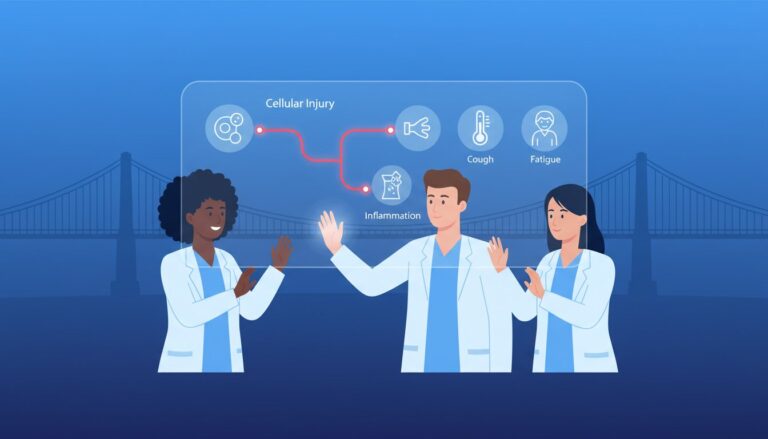
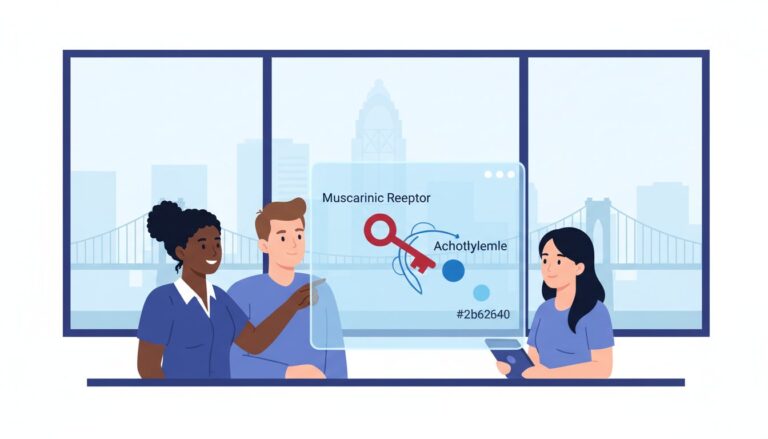
To master diabetes pharmacology for nursing students, you first have to visualize the “lock and key” mechanism of metabolism. Insulin acts as the essential key that unlocks cellular membranes, allowing glucose to move from the bloodstream into the cells for energy. When this process fails, glucose remains trapped in the vascular system, leading to the systemic damage we see in clinical practice. Understanding this foundation is what allows you to move beyond rote memorization and begin predicting how specific medications will affect your patient’s lab values.
Pharmacological interventions target three primary physiological disruptions: insulin secretion from the pancreas, insulin sensitivity at the cellular level, and glucose absorption within the gastrointestinal tract. Our clinical priority is maintaining a stable HbA1c, which reflects average blood sugar levels over three months. By keeping this value within a tight range, we help patients avoid microvascular complications like nephropathy and retinopathy, as well as macrovascular events such as myocardial infarction and stroke. With approximately 40.1 million Americans currently diagnosed with diabetes, these interventions are a cornerstone of modern nursing care.
Type 1 Diabetes: The Necessity of Exogenous Insulin
In Type 1 Diabetes (T1DM), the pathophysiology is rooted in an autoimmune destruction of the pancreatic beta cells. Because the body has an absolute insulin deficiency, oral medications that stimulate the pancreas are entirely ineffective. There’s simply no “factory” left to stimulate. Nursing care for these patients focuses heavily on exogenous insulin replacement and precise timing. Basal-bolus insulin therapy involves using a long-acting insulin to maintain a steady background level of glucose control while using rapid-acting insulin to manage the sharp glucose spikes that occur after eating.
Type 2 Diabetes: A Multi-Faceted Pharmacological Approach
Type 2 Diabetes (T2DM) presents a different challenge: insulin resistance. The “cellular locks” have become rusty and don’t respond well to the insulin key. Initially, the pancreas compensates by overproducing insulin, but it eventually becomes exhausted. Treatment usually follows a progressive path, starting with lifestyle modifications and moving to oral agents like Metformin. As the disease advances, many patients will eventually require insulin as their endogenous production fails. For a deeper look at how these chemical interactions work across various body systems, you can explore Pharmacology: The Comprehensive Guide to the Science of Drugs. Understanding this progression helps you explain to patients why their medication regimen might change over time despite their best efforts at compliance.
Mastering Insulin Therapy: Types, Peaks, and Nursing Priorities
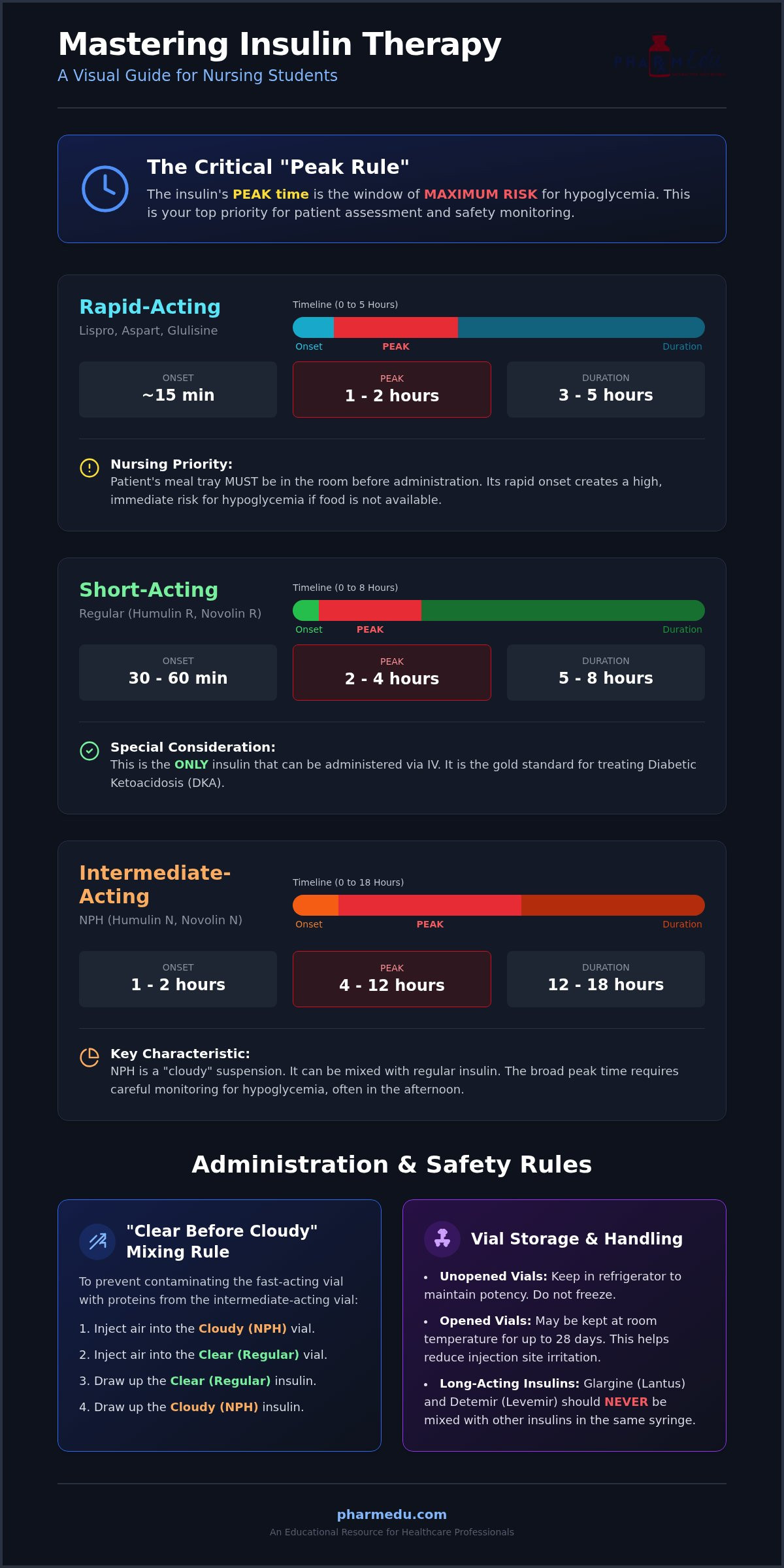
For any student tackling diabetes pharmacology for nursing students, insulin timing is the highest stakes topic. You aren’t just memorizing numbers; you’re identifying the exact moment your patient is most likely to crash. The “Peak Rule” is simple: the peak time of insulin is the window of maximum risk for hypoglycemia. This is when the medication is working at its hardest to lower blood glucose, and if there isn’t enough glucose in the bloodstream to meet it, the patient’s safety is compromised.
Safe administration also requires meticulous handling. Unopened vials should remain in the refrigerator to maintain potency. Once opened, most insulin vials can stay at room temperature for up to 28 days, which helps reduce injection site irritation. When you’re required to mix insulins, always follow the “Clear before Cloudy” rule. You’ll draw up the clear (Regular) insulin first, followed by the cloudy (NPH), to prevent contaminating the fast-acting vial with NPH proteins.
Rapid-Acting and Short-Acting Insulins
Lispro, Aspart, and Glulisine are your “sprinters.” These medications have a lightning-fast onset of about 15 minutes. Because they work so quickly, you must see the meal tray in the room before you even consider drawing up the dose. Administering these without food immediately available is a recipe for a rapid hypoglycemic event. Regular insulin is the workhorse of the hospital setting because it’s the only insulin that can be administered intravenously, making it the gold standard for treating Diabetic Ketoacidosis (DKA).
Intermediate and Long-Acting Insulins
NPH is the “cloudy” intermediate insulin. It typically peaks 4 to 12 hours after administration, which often coincides with the mid-afternoon or late-night window. This makes it a high-risk time for patients who might skip a snack. If these complex timing windows feel overwhelming, watching High-Yield Video Vignettes can help you visualize these drug relationships in a clinical context.
On the other end of the spectrum are Glargine and Detemir, the long-acting basal insulins. These are “peakless” and provide a steady, background level of control. Glargine achieves 24-hour coverage by forming micro-precipitates in the subcutaneous tissue that dissolve slowly over a full day. Because of their unique chemical properties, you must never mix long-acting insulins in the same syringe with any other type. Doing so can alter their absorption rate and lead to unpredictable blood glucose swings.
Oral Antidiabetic Agents: Mechanism-Based Categorization
While insulin replaces a missing hormone, oral agents focus on correcting the underlying dysfunction seen in Type 2 Diabetes. Understanding diabetes pharmacology for nursing students requires you to look past the long list of brand names and focus on where each drug acts. Some medications target the liver, others the pancreas, and newer classes even work through the kidneys or the digestive tract. By grouping these drugs by their mechanism of action, you can easily predict their side effects and the necessary nursing assessments without relying on pure memorization.
Modern therapy often combines these classes to achieve a synergistic effect. For example, a patient might take a Biguanide to improve insulin sensitivity alongside an SGLT2 inhibitor to promote glucose excretion. Research from 2026 shows a significant shift toward using newer agents like SGLT2 inhibitors and GLP-1 agonists not just for glucose control, but for their documented cardiovascular and renal protective benefits. This evolution in treatment means nurses must stay current on how these drugs impact systemic health beyond the glucometer reading.
Metformin: The First-Line Gold Standard
Metformin is the only drug in the Biguanide class and remains the foundational treatment for Type 2 Diabetes. It’s unique because it isn’t a secretagogue; it doesn’t force the pancreas to produce more insulin. Instead, it reduces the amount of glucose the liver produces and increases cellular sensitivity to the insulin already present in the body. Because it doesn’t stimulate insulin secretion, Metformin carries a very low risk of hypoglycemia when used as a monotherapy.
Your primary nursing priority with Metformin is safety during diagnostic procedures. You must ensure the medication is held 48 hours before and after any study involving IV contrast dye. The combination of contrast and Metformin can lead to acute renal failure and a life-threatening condition called lactic acidosis. Patients also frequently report GI upset, so teach them to take the medication with food to improve tolerance and compliance.
Second-Line Agents and Their Unique Side Effects
Sulfonylureas, such as Glipizide, work by stimulating the beta cells of the pancreas to “squeeze” out more insulin. This mechanism carries a high risk of hypoglycemia and weight gain, making it essential to monitor patients closely for signs of low blood sugar. In contrast, SGLT2 inhibitors like Empagliflozin (Jardiance) work in the kidneys to prevent glucose reabsorption. While this class provides excellent cardiovascular benefits, the increased glucose in the urine (glycosuria) significantly raises the risk of UTIs and yeast infections.
Alpha-glucosidase inhibitors, such as Acarbose, take a different route by delaying carbohydrate absorption in the small intestine. This reduces post-prandial glucose spikes but often causes significant flatulence and bloating. When managing these various agents, remember that the goal is always a balanced approach that minimizes the risk of complications while maximizing the patient’s quality of life.
Nursing Process: Assessment, Implementation, and Patient Safety
Applying the nursing process to diabetes pharmacology for nursing students ensures that medication administration is a strategic intervention rather than a repetitive task. Assessment is your first line of defense. You’ll need to evaluate the patient’s HbA1c to understand their long-term compliance, but daily blood glucose monitoring provides the immediate data required for safe dosing. Because many diabetes medications are cleared by the kidneys, you must monitor BUN and Creatinine levels regularly. This is especially true for patients on Metformin or SGLT2 inhibitors, as declining renal function can lead to drug toxicity or life-threatening lactic acidosis.
Implementation goes beyond the “six rights” of medication administration. For patients receiving insulin, rotating injection sites within the same anatomical area is critical to prevent lipodystrophy. This condition creates thickened tissue that leads to erratic and unpredictable insulin absorption. When you’re educating patients, emphasize daily foot inspections and the importance of wearing medical alert identification. With Medicare now capping insulin costs at $35 per month as of 2026, you can also help patients navigate the financial aspects of their care to improve long-term adherence.
Recognizing and Treating Hypoglycemia
Hypoglycemia is the most dangerous acute complication of diabetes pharmacology. You’ve likely heard the mnemonic “cool and clammy, need some candy” to identify the diaphoresis and shakiness of a low blood sugar event. Contrast this with the “hot and dry, sugar high” signs of hyperglycemia, such as fruity breath and Kussmaul respirations. If a patient is conscious, follow the “Rule of 15”: provide 15 grams of fast-acting carbohydrates, wait 15 minutes, and recheck the glucose. If the patient is unconscious or cannot swallow, your priority shifts to administering IM Glucagon or IV D50W to restore safe levels immediately.
The ‘Sick Day’ Rules for Diabetic Patients
Illness is a major physiological stressor that triggers the release of cortisol and adrenaline. These hormones act as insulin antagonists, causing blood glucose to rise even if the patient isn’t eating. Patients must continue taking their basal insulin during illness, but they may need more frequent monitoring every 3 to 4 hours. For Type 1 diabetics, testing for urine ketones is essential during these periods to catch early signs of Diabetic Ketoacidosis. You can find more structured safety protocols in The Ultimate Pharmacology Study Guide for Nursing Students in 2026. Mastering these clinical scenarios now will prepare you for the high-pressure environment of the NCLEX and your future hospital shifts. Test your clinical judgment today with our Interactive Pharmacology Flashcards to ensure you’re ready for any patient emergency.
Strategic Study Methods for Diabetes Pharmacology
Mastering diabetes pharmacology for nursing students isn’t about working harder; it’s about working smarter. The sheer volume of drug names, peak times, and contraindications can lead to cognitive overload if you rely on traditional rote memorization. Instead, you should focus on active recall and the physiological “why” behind each medication. By understanding that a side effect is often just an extension of the drug’s primary action, you’ll find that the information sticks much more effectively than isolated facts ever could.
The most successful students prioritize high-yield medications that frequently appear on the NCLEX. While it’s tempting to try and learn every obscure drug in the endocrine chapter, your time is better spent mastering the “Big Three”: Metformin, Sulfonylureas, and the various insulin categories. Integrating Clinical Case Studies into your routine allows you to simulate real-world nursing scenarios, forcing you to apply your knowledge to a patient’s fluctuating glucose levels rather than just answering a multiple-choice question.
Leveraging PharmEDU for Exam Success
Digital platforms have fundamentally changed how we approach 2026 nursing curricula. Traditional textbooks are often too dense for efficient review, whereas micro-learning segments like High-Yield Video Vignettes allow you to absorb complex drug classes during short breaks or between clinical shifts. These bite-sized lessons prevent the mental fatigue that usually sets in during finals week.
To truly cement your knowledge, you must move from passive reading to active testing. Using Interactive Pharmacology Flashcards helps build the rapid-fire recognition needed for drug names and their corresponding nursing priorities. Once you feel confident, transition to Pharmacology Practice Quizzes. These tools are specifically designed to identify your weak areas in endocrine pharmacology, allowing you to focus your remaining study time where it will have the most impact on your grade.
Creating a High-Yield Study Schedule
A structured schedule is the backbone of long-term retention. Divide your study blocks into two distinct phases: one for the chemical mechanisms of drug classes and another for the specific nursing interventions they require. For example, spend thirty minutes on how SGLT2 inhibitors work in the proximal tubule, then spend the next thirty minutes on the patient education required for glycosuria. This dual approach ensures you understand the science and the safety protocols equally.
Don’t underestimate the power of cumulative review. Every time you start a new topic, spend ten minutes reviewing the insulin peak times you learned the week before. This constant reinforcement prevents “information decay” and builds a solid foundation for your board exams. As a final tip, always link the drug’s side effect back to its primary action; if a drug’s job is to lower blood sugar, the most logical and dangerous side effect will always be hypoglycemia.
Advancing Your Clinical Excellence in Diabetes Care
Mastering diabetes pharmacology for nursing students is a journey from memorizing drug names to understanding life-saving physiological relationships. You’ve now explored how insulin timing dictates patient safety and why specific oral agents require precise nursing assessments. By focusing on the “Peak Rule” and the mechanism-based categorization of antidiabetics, you’re building the clinical judgment necessary for both your exams and your future practice. Transitioning from passive reading to active application is the final step in ensuring you’re ready for the complexities of modern healthcare.
To further solidify your expertise, you can Master Diabetes Pharmacology with PharmEDU’s High-Yield Subscriptions. Our platform offers over 100 high-yield pharmacology topics through mobile-compliant micro-learning segments, allowing you to study on-the-go between clinical shifts. With interactive flashcards and practice quizzes, you’ll benefit from active recall that ensures long-term retention of critical NCLEX concepts. You have the tools to turn complex pharmacology into a professional strength. Stay focused, keep practicing, and you’ll approach your next exam and clinical shift with absolute confidence.
Frequently Asked Questions
What is the most important nursing intervention before administering insulin?
The most critical intervention before administering any insulin is checking the patient’s current blood glucose level. You must ensure the value is within a safe range to prevent a severe hypoglycemic event. Additionally, hospital protocols often require a second nurse to verify the dose and type as a high-alert medication safety check. This step is a cornerstone of diabetes pharmacology for nursing students to prevent life-threatening medication errors during clinical rotations.
How do I remember the difference between DKA and HHS pharmacology?
DKA requires immediate IV Regular insulin to stop ketone production, while HHS management focuses primarily on aggressive fluid resuscitation. In DKA, you’ll also monitor potassium closely because insulin shifts potassium into the cells, potentially causing hypokalemia. HHS patients usually have much higher glucose levels but no ketones, so the pharmacological goal is gradual rehydration and glucose lowering to avoid cerebral edema. Always prioritize fluid balance alongside the insulin drip in these emergencies.
Why can’t I mix Insulin Glargine (Lantus) with other insulins?
You can’t mix Insulin Glargine with other insulins because its low pH causes it to precipitate when combined with other preparations. This medication is designed to form micro-precipitates in the subcutaneous tissue that dissolve slowly over 24 hours. Mixing it in a syringe with another insulin would alter this absorption rate, destroying its peakless long-acting profile and putting the patient at risk for unpredictable blood sugar swings. Always use a separate syringe for basal doses.
What should a nurse do if a patient is NPO but has a scheduled dose of Metformin?
If a patient is NPO, you should typically hold the scheduled dose of Metformin and notify the provider for further instructions. Metformin is often held before procedures because of the risk of lactic acidosis, especially if IV contrast dye is involved. Since the patient isn’t eating, the risk of GI upset and potential hypoglycemia increases. Always check your facility’s specific NPO protocol regarding oral antidiabetic agents to ensure you’re following the latest safety guidelines.
How does the ‘Rule of 15’ work for treating hypoglycemia?
The Rule of 15 is a structured protocol for treating conscious patients with hypoglycemia. You provide 15 grams of fast-acting carbohydrates, such as four ounces of orange juice or four glucose tablets, and wait 15 minutes to recheck the blood sugar. If the glucose remains below 70 mg/dL, repeat the process. Once it’s stable, give a snack with protein and complex carbohydrates to maintain the level and prevent a secondary drop in blood glucose.
Which diabetes medications carry the highest risk for weight gain?
Sulfonylureas like Glipizide and Thiazolidinediones like Pioglitazone carry the highest risk for weight gain. Sulfonylureas stimulate insulin secretion, which is an anabolic hormone that promotes fat storage. Thiazolidinediones can cause fluid retention and peripheral edema, leading to a rapid increase in weight. Understanding these metabolic effects is essential in diabetes pharmacology for nursing students to provide accurate patient education and monitor for new or worsening heart failure symptoms during clinical assessments.
What are the specific nursing considerations for GLP-1 agonists like Semaglutide?
Nursing considerations for GLP-1 agonists like Semaglutide focus on gastrointestinal tolerance and serious systemic risks. You must teach patients that nausea and delayed gastric emptying are common, especially when starting the medication. Monitor for severe abdominal pain that radiates to the back, which may indicate acute pancreatitis. Also, assess for any history of medullary thyroid carcinoma, as these drugs are contraindicated in patients with a family history of that specific cancer or multiple endocrine neoplasia.
Can nursing students use PharmEDU to prepare for their HESI or ATI pharmacology exams?
Yes, nursing students can effectively use PharmEDU to prepare for high-stakes HESI and ATI exams. Our High-Yield Video Vignettes break down the most tested endocrine concepts into micro-learning segments that fit a busy clinical schedule. By using our Interactive Pharmacology Flashcards, you can leverage active recall to master the drug classes and nursing interventions that frequently appear on these standardized tests, ensuring you’re fully prepared for exam day and your future nursing career.