Beta Blockers Pharmacology: High-Yield Guide (2026)
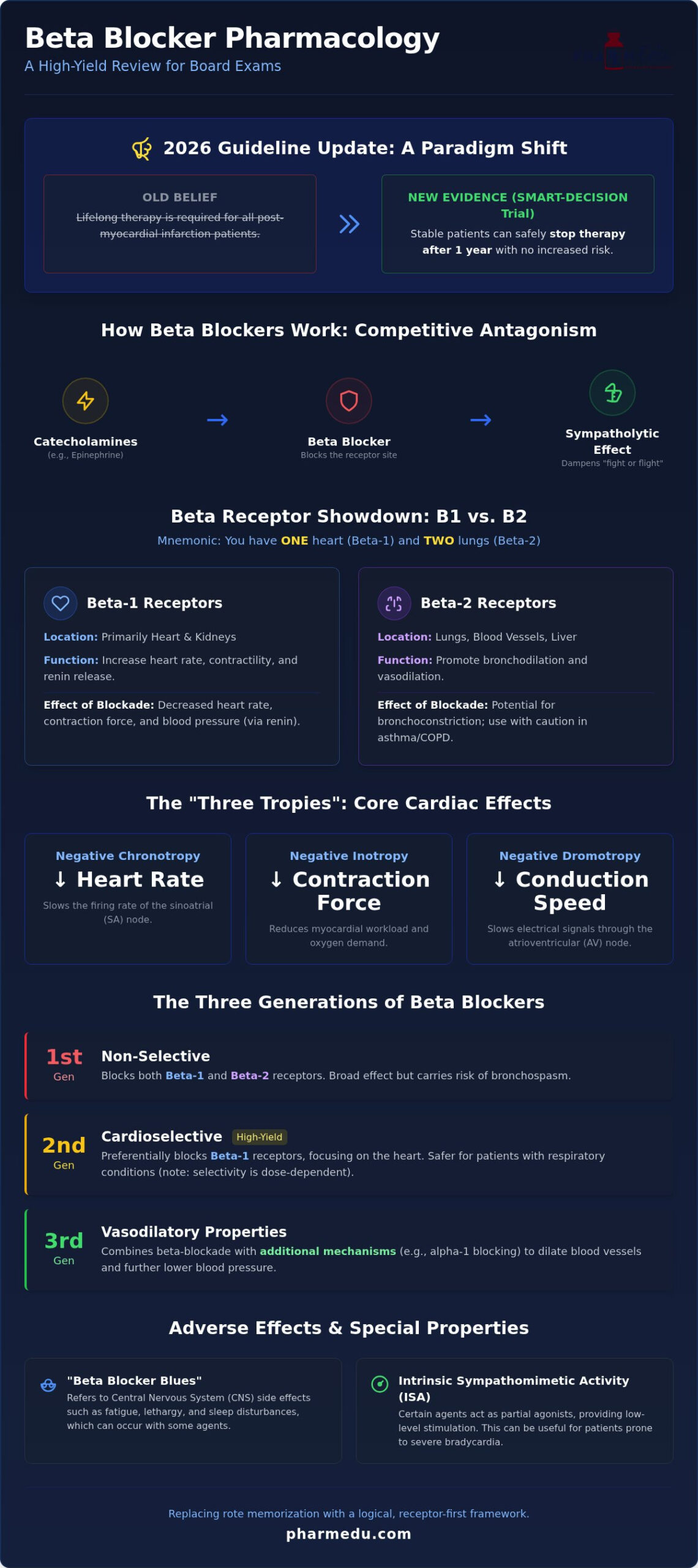
The long-held medical belief that every post-MI patient requires lifelong therapy is no longer supported by the latest clinical evidence. According to the 2026 SMART-DECISION trial, stable patients who have suffered a myocardial infarction can safely discontinue treatment after just one year without increasing their risk of death or hospitalization. This significant shift highlights why staying current with beta blockers pharmacology is so challenging for students and clinicians alike. You are expected to juggle receptor selectivity, organ-specific impacts, and rapidly evolving guidelines while preparing for high-stakes board exams.
It’s understandable if you feel overwhelmed by the sheer volume of drug names and their conflicting contraindications. We have designed this high-yield review to replace rote memorization with a logical, receptor-first framework. You will master the essential classifications and understand the physiological nuances that differentiate non-selective agents from cardioselective ones. We will bridge the gap between classic textbook theory and the latest 2026 clinical standards, ensuring you have the confidence to answer complex board-style questions and manage real-world patient scenarios with precision.
Key Takeaways
- Understand the core mechanism of adrenoceptor antagonism and how competitive inhibition creates a stabilizing sympatholytic effect throughout the body.
- Distinguish between the three generations of agents, focusing on why cardioselectivity remains the most frequently tested concept in board reviews.
- Review the updated 2026 clinical applications of beta blockers pharmacology for hypertension and chronic stable angina.
- Recognize significant adverse effects and contraindications, including central nervous system impacts often referred to as the “Beta Blocker Blues.”
- Discover how to integrate interactive pharmacology flashcards and high-yield vignettes into your study routine to master drug classifications efficiently.
Mechanism of Action: Adrenoceptor Antagonism Explained
Mastering beta blockers pharmacology begins with understanding that these agents function as competitive antagonists. They bind to beta-adrenergic receptors and physically prevent endogenous catecholamines, such as epinephrine and norepinephrine, from attaching. By occupying these sites, the drugs produce a sympatholytic effect. This essentially dampens the “fight or flight” response of the sympathetic nervous system. It’s a reversible blockade; if catecholamine levels rise significantly, they can displace the drug from the receptor site.
At the cellular level, the Beta blocker interacts with G-protein coupled receptors (GPCRs). In cardiomyocytes, these receptors are typically coupled to the Gs protein. In a standard physiological state, catecholamine binding activates adenylyl cyclase, which increases intracellular levels of cyclic adenosine monophosphate (cAMP). This second messenger then activates protein kinase A, leading to increased calcium influx. By interrupting this signaling cascade, beta blockers decrease intracellular calcium availability. This effectively lowers the heart’s workload and total oxygen consumption.
You’ll also encounter the concept of Intrinsic Sympathomimetic Activity (ISA). These specific agents act as partial agonists. They block the receptor from full catecholamine stimulation but still provide a low level of background activation. Clinically, drugs with ISA are useful for patients who require beta blockade but are prone to excessive bradycardia. It’s a nuanced distinction that often appears on board exams to test your deeper understanding of pharmacodynamics and patient-specific therapy.
Beta-1 vs. Beta-2 Receptor Distribution
Receptor location dictates the clinical effects and potential side effects of these medications. Beta-1 receptors are primarily concentrated in the heart and the juxtaglomerular cells of the kidneys, where they stimulate renin release. In contrast, Beta-2 receptors are found in bronchial smooth muscle, peripheral blood vessels, and the liver. To keep these straight for your exams, remember the simple mnemonic: You have one heart (Beta-1) and two lungs (Beta-2).
Physiological Effects: Chronotropy, Inotropy, and Dromotropy
The primary therapeutic value of beta blockers lies in their ability to alter cardiac performance through three specific mechanisms:
- Negative chronotropy: This refers to a decrease in heart rate by slowing the firing rate of the sinoatrial (SA) node.
- Negative inotropy: The drug reduces the force of myocardial contraction, which significantly lowers myocardial oxygen demand.
- Negative dromotropy: By slowing electrical conduction through the atrioventricular (AV) node, these agents help manage various tachyarrhythmias.
These “negative” effects are the cornerstone of therapy for conditions like chronic stable angina. By slowing the rate and reducing the force of contraction, the heart requires less oxygen to function. This allows patients to undergo stress without reaching the threshold for ischemic pain. Understanding these three “tropies” isn’t just about memorizing terms; it’s about predicting how a patient’s hemodynamics will change once therapy begins.
Classification and Generations of Beta-Adrenergic Antagonists
Understanding the classification of beta blockers pharmacology is essential for predicting clinical outcomes and avoiding adverse drug interactions. These agents are categorized into three distinct generations based on their receptor selectivity and additional vasodilatory properties. While the first generation provides broad blockade, subsequent iterations have refined the targeting of cardiac tissues or added vascular benefits. For a deeper dive into the historical development and pharmacodynamics of these agents, this β‐Adrenergic Blockers Review provides an excellent academic foundation.
Cardioselectivity is arguably the most frequently tested concept in pharmacology board reviews. It refers to a drug’s preference for Beta-1 receptors over Beta-2. However, clinicians must remember that selectivity is dose-dependent. At higher therapeutic doses, even “selective” agents lose their specificity and begin to occupy Beta-2 receptors, potentially triggering bronchospasm in susceptible patients. Additionally, some agents possess Membrane Stabilizing Activity (MSA). This property mimics Class I antiarrhythmics by inhibiting sodium channels, which is particularly relevant in cases of drug toxicity or overdose.
First-Generation: Non-Selective Agents
First-generation agents, including Propranolol, Nadolol, and Timolol, block both Beta-1 and Beta-2 receptors with equal affinity. Because they inhibit Beta-2 receptors in the lungs, they’re generally avoided in patients with asthma or severe COPD. Propranolol stands out due to its high lipid solubility. This characteristic allows it to cross the blood-brain barrier easily, making it a primary choice for non-cardiac indications like migraine prophylaxis, essential tremor, and performance anxiety. If you’re struggling to keep these non-selective agents straight, using interactive pharmacology flashcards can help you solidify these categories through active recall.
Second-Generation: Cardioselective Beta-1 Blockers
Second-generation drugs like Metoprolol, Atenolol, and Esmolol primarily target the heart. By sparing Beta-2 receptors at standard doses, these agents offer a safer profile for patients with peripheral vascular disease or well-controlled respiratory conditions. Esmolol is unique in this group; it’s an ultra-short-acting agent with a half-life of approximately nine minutes. This makes it invaluable in acute care settings, such as hypertensive emergencies or intraoperative tachycardia, where rapid titration is required.
Third-Generation: Vasodilatory Beta Blockers
The third generation represents the most pharmacologically diverse group. Agents like Carvedilol and Labetalol provide a “dual action” by blocking both beta receptors and alpha-1 receptors, which leads to peripheral vasodilation and reduced systemic vascular resistance. Nebivolol takes a different approach, achieving vasodilation through the stimulation of nitric oxide release from the endothelium. These vasodilatory properties make third-generation agents preferred in specific populations, particularly those with heart failure or resistant hypertension, as they reduce afterload without significantly increasing peripheral resistance.
Therapeutic Indications in Cardiovascular Medicine
Mastering beta blockers pharmacology requires a deep understanding of their clinical utility across diverse patient populations. While these agents were once the primary choice for essential hypertension, current guidelines often reserve them for cases with specific comorbidities like heart failure or ischemic heart disease. In chronic stable angina, they serve as a cornerstone of therapy. By reducing the heart rate and contractility, these drugs decrease myocardial oxygen consumption during physical exertion, which effectively raises the ischemic threshold and prevents anginal symptoms.
The clinical landscape for post-myocardial infarction (MI) care has shifted significantly in 2026. Data from the SMART-DECISION trial published in the New England Journal of Medicine showed that stable patients with a preserved ejection fraction of 50% or greater can safely discontinue therapy after one year. This challenges the older practice of lifelong treatment. For patients who undergo successful reperfusion and maintain healthy ventricular function, a February 2026 meta-analysis confirmed there’s no additional mortality benefit to starting a beta blocker. However, they remain vital for rate control in atrial fibrillation, where they protect the ventricles from rapid, irregular impulses by slowing conduction through the AV node.
Beta Blockers in Congestive Heart Failure (CHF)
Using negative inotropes to treat a failing heart seems paradoxical. However, long-term sympathetic activation in CHF is actually cardiotoxic. By blocking chronic catecholamine exposure, these agents allow for “reverse remodeling” of the left ventricle. Only three specific agents are evidence-based for this use: Metoprolol succinate, Carvedilol, and Bisoprolol. Clinicians must follow the “start low and go slow” principle during titration. Initiating therapy at too high a dose can cause an acute decompensation of heart failure due to the initial decrease in contractility.
Non-Cardiac Uses: From Glaucoma to Essential Tremor
The reach of these drugs extends far beyond the cardiovascular system. In ophthalmology, Timolol is frequently used to manage glaucoma by reducing aqueous humor production, which lowers intraocular pressure. Propranolol remains the gold standard for treating essential tremors and managing performance anxiety due to its ability to blunt the peripheral symptoms of sympathetic surge. Additionally, beta blockers play a critical role in managing hyperthyroidism and thyroid storm. They don’t just control the resulting tachycardia; they also inhibit the peripheral conversion of T4 to the more active T3 hormone, providing a multi-layered approach to stabilizing the patient.
Adverse Effects, Contraindications, and Clinical Precautions
The clinical utility of beta blockers pharmacology is often limited by a distinct profile of adverse effects that can significantly impact patient adherence. Fatigue and bradycardia are the most frequently reported issues, as the reduction in cardiac output and sympathetic tone can leave patients feeling lethargic. Sexual dysfunction is another common side effect that clinicians must address proactively, as it remains a primary reason for treatment discontinuation. For lipophilic agents like propranolol, central nervous system penetration can lead to the “Beta Blocker Blues,” characterized by vivid dreams, insomnia, and even depressive symptoms.
Abrupt withdrawal from these medications carries severe risks. Chronic blockade leads to the up-regulation of beta receptors. If the drug is stopped suddenly, the increased density of available receptors becomes hyper-responsive to endogenous catecholamines. This results in Abrupt Withdrawal Syndrome, manifesting as severe rebound hypertension and reflex tachycardia. Clinicians must also be cautious of drug-drug interactions, particularly with non-dihydropyridine calcium channel blockers like verapamil or diltiazem. Combining these agents can lead to additive suppression of the AV node, resulting in profound bradycardia or complete heart block. To visualize these complex interactions and safety profiles, you can utilize our high-yield video vignettes to see these scenarios in a clinical context.
Critical Contraindications for Board Exams
Understanding when to withhold these drugs is a frequent focus of pharmacology board exams. The three most critical contraindications include:
- Asthma and Severe COPD: Non-selective agents cause Beta-2 mediated bronchospasm, which can be fatal in patients with reactive airway disease.
- Bradycardia and High-Grade Heart Block: Because these drugs slow conduction through the AV node, they can exacerbate pre-existing conduction delays.
- Decompensated Heart Failure: While they are essential for chronic management, beta blockers can worsen acute failure because the heart currently requires sympathetic drive to maintain minimal cardiac output.
Metabolic Considerations: Diabetes and Lipid Profiles
Beta blockers present unique challenges for patients with diabetes. One of the most dangerous effects is the masking of hypoglycemic symptoms. Normally, a drop in blood glucose triggers a sympathetic surge, causing tachycardia and tremors. Beta blockers suppress these warning signs, leaving only diaphoresis as a reliable indicator of low blood sugar. Beyond masking symptoms, these drugs can impair glucose metabolism and reduce insulin sensitivity in some populations. Beta-2 blockade inhibits glycogenolysis in the liver, which prevents the body from naturally raising blood glucose levels during a hypoglycemic event. This metabolic interference requires careful monitoring and patient education to ensure safety during long-term therapy.
Master Beta Blocker Pharmacology for Board Exams with PharmEDU
Mastering beta blockers pharmacology requires more than just reading a list of drug names; it demands a structured approach that mirrors how boards actually test your knowledge. You can’t rely on passive reading if you want to remember the nuances between non-selective and vasodilatory agents under pressure. Instead, you should integrate this review into a broader pharmacology study guide that prioritizes high-yield concepts over exhaustive, low-value details. By breaking the curriculum down into manageable units, you can master one generation of medications at a time. This ensures you don’t confuse the metabolic side effects of propranolol with the vasodilatory benefits of carvedilol during a timed exam.
Active recall is the most effective strategy for long-term retention. Rather than just reviewing notes, you should challenge yourself to explain the receptor-first logic behind every clinical effect. This method forces your brain to retrieve information, which strengthens the neural pathways associated with these complex drug classes. When you understand why a drug works, you won’t need to memorize every individual side effect; the symptoms become predictable based on the receptor being blocked.
Leveraging High-Yield Video Vignettes
Effective board preparation means moving beyond the basic definition of what is pharmacology and diving straight into clinical application. Our high-yield video vignettes are designed to help you visualize receptor physiology in real time. Instead of just memorizing the “One Heart, Two Lungs” rule, you’ll see animated lessons that demonstrate exactly how Beta-1 and Beta-2 blockade impact specific organs. These lessons include clinical case studies that simulate real-world decision-making. You’ll practice identifying which patient should receive esmolol in an acute care setting and why a patient with reactive airway disease requires a cardioselective agent.
Interactive Flashcards and Quizzes
Consistency is key when preparing for high-stakes exams. You can build custom decks of interactive pharmacology flashcards to drill down into the differences between selective and non-selective agents. This targeted approach allows you to focus your energy where it’s needed most. Once you’ve mastered the flashcards, test your knowledge with our pharmacology practice quizzes. These questions are written in a board-style format to mirror the difficulty and phrasing you’ll encounter on exam day.
Our platform allows you to track your progress with precision. By identifying your weak areas early, you can refine your study plan and walk into your testing center with total confidence. Don’t leave your professional success to chance. Start your PharmEDU subscription today and ace your next pharmacology exam!
Solidifying Your Pharmacology Expertise for 2026
Mastering beta blockers pharmacology requires a shift from rote memorization to a receptor-first logic that makes clinical effects predictable. By understanding the distinction between drug generations and the latest 2026 evidence regarding post-MI therapy, you’re better equipped to handle both complex board questions and nuanced patient care. You’ve now seen how competitive antagonism impacts everything from myocardial oxygen demand to metabolic pathways in diabetic patients. This foundational knowledge is your first step toward clinical mastery.
To ensure this information sticks, you need active recall strategies that fit into your busy schedule. PharmEDU is designed to be your digital mentor, providing Interactive Pharmacology Flashcards for rapid memorization and High-Yield Video Vignettes for visualizing complex mechanisms. You can also challenge yourself with our Comprehensive Pharmacology Practice Quizzes to identify and bridge any remaining knowledge gaps before your next exam.
Unlock High-Yield Pharmacology Reviews with PharmEDU and transform your study routine into a streamlined path toward success. You’ve built a strong foundation today; keep that momentum going as you advance in your healthcare career.
Frequently Asked Questions
What is the difference between selective and non-selective beta blockers?
Selective beta blockers primarily target Beta-1 receptors in cardiac tissue to reduce heart rate and contractility. Non-selective agents block both Beta-1 and Beta-2 receptors, affecting the heart, lungs, and peripheral vasculature. This distinction is crucial in beta blockers pharmacology because non-selective drugs can inadvertently cause bronchoconstriction in patients with underlying respiratory issues. Selecting the correct agent depends on the patient’s comorbidities and the specific therapeutic goal of the treatment.
Why are beta blockers used in heart failure if they decrease contractility?
While they are negative inotropes, beta blockers protect the heart from the long-term toxic effects of chronic sympathetic nervous system activation. In heart failure, the body’s compensatory surge of catecholamines eventually leads to ventricular remodeling and worsening dysfunction. By using specific evidence-based agents like carvedilol or metoprolol succinate, clinicians can actually improve survival rates and promote reverse remodeling. This therapy is always initiated when the patient is stable and euvolemic to avoid acute decompensation.
Can patients with asthma take beta blockers safely?
Patients with asthma should generally avoid non-selective beta blockers because blocking Beta-2 receptors in the lungs can trigger severe bronchospasm. Cardioselective agents are a safer alternative because they have a much higher affinity for Beta-1 receptors in the heart. However, this selectivity is dose-dependent and can be lost at higher concentrations. Clinicians must carefully monitor respiratory function whenever any beta-adrenergic antagonist is prescribed to a patient with a history of reactive airway disease.
What does it mean for a beta blocker to have Intrinsic Sympathomimetic Activity (ISA)?
Agents with ISA, such as pindolol or acebutolol, act as partial agonists at the receptor site. They block the potent effects of endogenous catecholamines like epinephrine while simultaneously providing a low level of background stimulation. This unique property means they cause less resting bradycardia than traditional beta blockers. They’re particularly useful for patients who need the benefits of beta blockade but cannot tolerate a significant drop in their baseline heart rate.
How do beta blockers ‘mask’ the symptoms of hypoglycemia in diabetic patients?
Beta blockers suppress the sympathetic warning signs of low blood sugar, such as tachycardia, palpitations, and tremors. Diaphoresis, which is mediated by cholinergic receptors, is often the only remaining symptom a diabetic patient might notice. Additionally, these drugs can interfere with the body’s ability to recover from hypoglycemia by inhibiting Beta-2 mediated glycogenolysis in the liver. This dual impact makes careful glucose monitoring essential for any diabetic patient starting a new regimen.
What is the difference between Metoprolol Succinate and Metoprolol Tartrate?
The primary difference lies in their pharmacokinetic profiles and clinical indications. Metoprolol succinate is a sustained-release formulation designed for once-daily dosing and is specifically indicated for reducing mortality in heart failure. Metoprolol tartrate is an immediate-release version that typically requires twice-daily administration and is often used for post-MI care or hypertension. You can’t safely substitute one for the other without adjusting the dosing frequency and considering the patient’s specific cardiac needs.
Why is it dangerous to abruptly stop taking a beta blocker?
Chronic use of these agents causes the body to up-regulate the number of beta receptors on the cell surface as a compensatory mechanism. If you stop the medication suddenly, these extra receptors are suddenly exposed to normal levels of catecholamines, leading to an exaggerated response. This often results in dangerous reflex tachycardia, severe rebound hypertension, or even acute myocardial ischemia. To avoid this withdrawal syndrome, the dose must be tapered gradually over several weeks.
Which beta blockers also have alpha-blocking properties?
Carvedilol and Labetalol are the two most common agents that provide combined alpha-1 and beta-receptor blockade. By blocking alpha-1 receptors in the peripheral vasculature, these third-generation drugs induce vasodilation and reduce systemic vascular resistance. This makes them highly effective for managing hypertensive emergencies or providing afterload reduction in heart failure. Understanding these multi-receptor interactions is a key component of mastering beta blockers pharmacology for clinical practice and professional certification exams.