
Creating a Pharmacology Concept Map: A High-Yield Guide for Healthcare Students
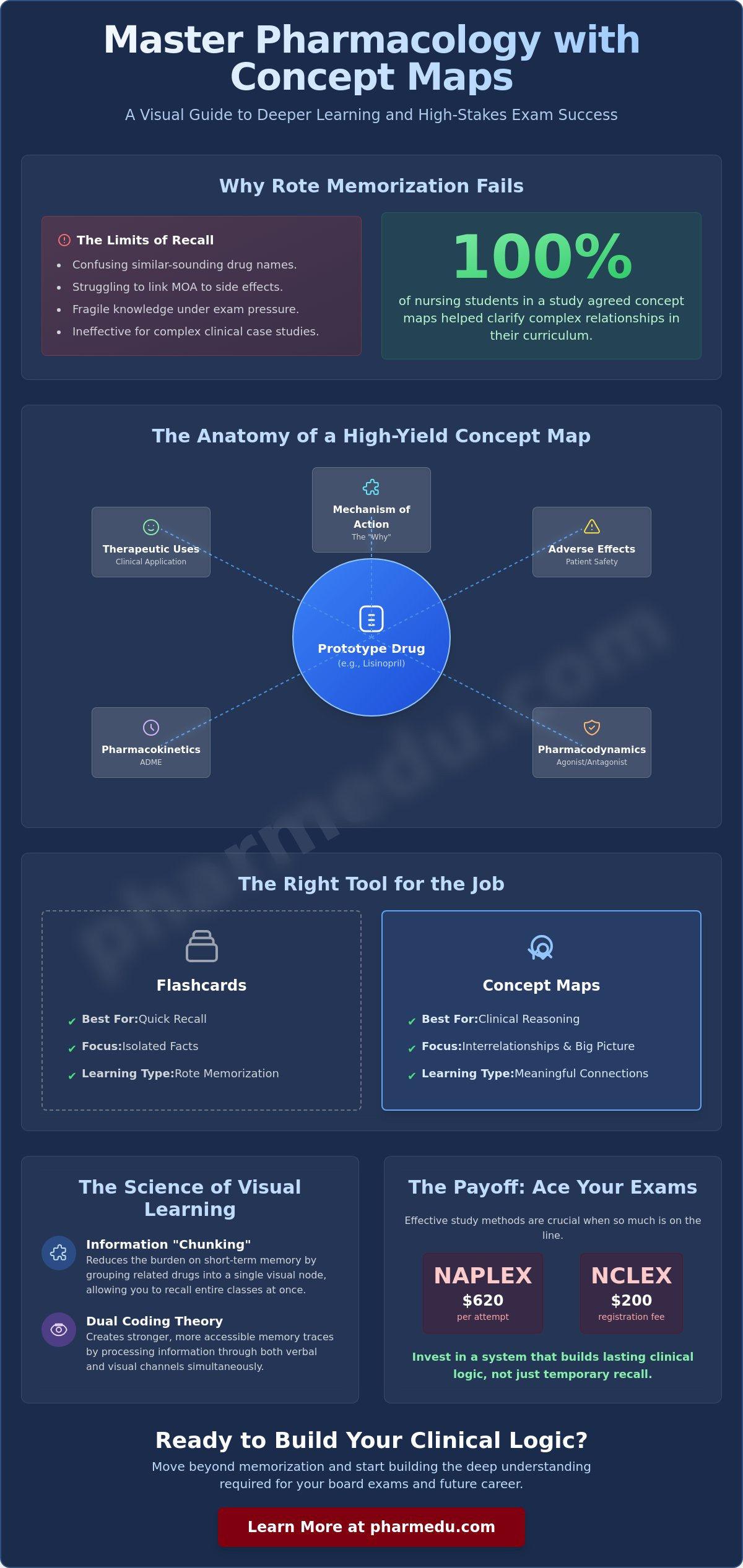
Did you know that in a study of 109 nursing students, 100% of respondents agreed that concept mapping helped them clarify the complex interrelationships within their curriculum? It’s a striking figure that highlights why traditional rote memorization often fails during high-stakes testing. You’ve likely experienced the frustration of confusing similar sounding drug names or struggling to link a mechanism of action to its specific side effects. By creating a pharmacology concept map, you can move beyond passive reading and start building the clinical logic required for professional practice.
We understand that your time and financial resources are significant investments, especially with the NAPLEX now costing $620 per attempt and the NCLEX requiring a $200 registration fee. This guide provides a repeatable system to master visual learning, transforming overwhelming drug lists into clear, mental frameworks. You’ll learn how to integrate mechanism of action (MOA) data with clinical application to improve your reasoning skills. We’ll preview the essential steps to organize drug classes effectively, ensuring you’re fully prepared for your board exams and your future career as a healthcare provider.
Key Takeaways
- Move beyond rote memorization by utilizing the cognitive science of information “chunking” to improve your board exam performance.
- Master the systematic process of creating a pharmacology concept map to organize drug classes around central prototype medications.
- Understand the strategic balance between using flashcards for quick recall and concept maps for deep clinical logic.
- Discover how to use high-yield pharmacology guides to populate your maps with essential mechanism of action and patient safety data.
- Learn how to integrate these visual tools into your NAPLEX or nursing board review to solve complex clinical case studies effectively.
What is a Pharmacology Concept Map and Why Does it Beat Memorization?
A pharmacology concept map is a non-linear graphic organizer designed to visualize the intricate relationships between drug classes, mechanisms of action, and patient outcomes. Unlike traditional linear notes that present information in isolated silos, these maps allow you to see the “big picture” of how a medication functions within a biological system. Understanding What is a Concept Map? provides the foundation for this method, as it emphasizes the connections between ideas rather than just the ideas themselves. When you’re creating a pharmacology concept map, you’re building a mental bridge between basic science and clinical application.
Cognitive science supports this approach through a process called “chunking.” By grouping related drugs into a single visual node based on their shared mechanism, you significantly improve your board exam performance. This method reduces the burden on your short-term memory, allowing you to recall entire drug classes by remembering one central prototype. It’s a strategy that simulates real-time clinical decision-making, where a provider must quickly link a drug’s properties to a patient’s specific needs.
The Limitations of Rote Memorization in 2026
As we move through 2026, the complexity of multi-drug regimens in modern pharmacotherapy has reached unprecedented levels. Simply memorizing the “top 200” drug list is no longer a viable strategy for succeeding in complex clinical case studies. Board exams now test your ability to apply knowledge in nuanced scenarios, not just your ability to recognize a name. This is the difference between rote learning and meaningful learning. Rote learning is fragile; it breaks under the pressure of a high-stakes exam. Meaningful learning, however, happens when you anchor new information to concepts you already understand, creating a permanent knowledge structure.
Visual Learning and the Healthcare Mindset
Experienced clinicians don’t think in lists. They think in hierarchies and patterns. Visual learning tools like concept maps mirror this professional mindset by organizing data spatially. Your brain’s spatial memory is incredibly powerful; it’s often easier to recall that a “red flag” contraindication was placed in a specific corner of your map than it is to remember a line of text from a 500-page textbook. This efficiency is explained by dual coding theory, which states that the brain creates stronger, more accessible memory traces when it processes information through both verbal and visual channels at the same time.
The Anatomy of a High-Yield Pharmacology Concept Map
A high-yield concept map isn’t just a collection of bubbles and lines. It’s a structured representation of clinical logic. When you’re creating a pharmacology concept map, the central node serves as your anchor. This node should ideally represent a prototype drug, such as Lisinopril, rather than a broad, vague drug class. By focusing on the prototype, you establish a standard against which all other drugs in that category can be compared. This specific focus helps prevent the confusion that often arises when students try to memorize dozens of similar-sounding medications without a clear reference point.
Branching out from this center, the Mechanism of Action (MOA) serves as the “why” behind the drug’s existence. This branch shouldn’t just list a definition; it should illustrate the physiological engine that drives the drug’s effects. From the MOA, you can logically derive therapeutic uses and adverse effects. For instance, if a drug’s MOA involves blocking calcium channels in vascular smooth muscle, the therapeutic node for hypertension and the adverse effect node for peripheral edema become predictable outcomes rather than isolated facts to memorize. To see how these connections play out in real-world scenarios, you might find our Clinical Case Studies helpful for testing your map’s accuracy.
Essential Nodes for Every Drug Class
To ensure your map meets the rigorous standards of pharmacy and medical education, you must include nodes for pharmacokinetics and pharmacodynamics. Pharmacokinetics covers the ADME process: Absorption, Distribution, Metabolism, and Excretion. This is where you’ll note if a drug is a prodrug or if it’s heavily dependent on cytochrome P450 enzymes. Pharmacodynamics nodes should detail whether the drug acts as an agonist or antagonist at specific receptor sites. Finally, always include a “red flag” node for contraindications, which are the absolute barriers to safe administration.
Connecting the Dots: Using Linkage Phrases
The lines connecting your nodes are just as important as the nodes themselves. Without linkage phrases, a map is just a cluster of terms. Use strong action verbs like “inhibits,” “stimulates,” or “blocks” to define the exact relationship between a drug and its biological target. For example, a line between “Beta-Blocker” and “Heart Rate” should be labeled “decreases.” These verbs force your brain to process the physiological direction of the drug’s effect, which is essential for answering “what happens next” questions on board exams. By explicitly linking side effects to the MOA through these phrases, you transform your study session from passive reading into active clinical reasoning.
Concept Mapping vs. Flashcards: Choosing Your Strategy
Flashcards excel at managing atomic facts. They’re the ideal tool for remembering that the suffix “-pril” identifies an ACE inhibitor or that a specific medication requires refrigeration. However, flashcards often fail to explain the physiological “why” behind a drug’s clinical presentation. This is where creating a pharmacology concept map becomes a superior strategy. While a card tells you what a drug is, a map shows you how it interacts with a biological system. It bridges the gap between isolated data points and the integrated knowledge required for patient safety.
Many students avoid mapping because they believe they don’t have time to draw. This is a significant tactical error. Evidence suggests that 30 minutes of active mapping provides a higher return on investment than two hours of passive card flipping. When you construct a map, you’re forced to synthesize information and identify relationships. This deep cognitive processing creates stronger neural pathways than simple recognition. You aren’t just memorizing a list; you’re building a mental framework that survives the pressure of a high-stakes exam environment.
When to Use Each Tool
Success in pharmacology requires a hybrid approach. Not every drug class needs a full visual breakdown. For straightforward categories like electrolyte supplements or basic vitamins, pharmacology flashcards are perfectly efficient for drilling doses and names. Reserve your mapping sessions for high-complexity topics like the autonomic nervous system, cardiac medications, or multi-step endocrine pathways. A professional study plan involves “mapping the class and flashing the facts.” Use the map to understand the overarching clinical logic and use flashcards to solidify the specific details within each node.
Active Recall vs. Passive Review
The most effective form of active recall is drawing your map from memory on a blank surface. Staring at a pre-made template often leads to the “illusion of competence,” where you mistake familiarity for actual understanding. You might feel you know the material because the diagram looks logical, but the true test is whether you can recreate those connections without assistance. Creating a pharmacology concept map from scratch exposes your knowledge gaps immediately. Once you’ve completed your draft, you can use PharmEDU’s Pharmacology Practice Quizzes to validate the accuracy of your nodes and ensure your clinical reasoning aligns with current board standards. This validation step prevents the reinforcement of incorrect information and ensures your study time remains productive.
How to Create a Pharmacology Concept Map: A Step-by-Step Guide
Overcoming the “blank page” syndrome is the first hurdle in creating a pharmacology concept map. Instead of attempting to map an entire body system at once, you should start with a manageable subject. You can choose to map a specific prototype drug or an entire drug class. This structured approach ensures that you don’t become overwhelmed by the volume of data found in traditional textbooks. By narrowing your focus, you allow your brain to build deep connections rather than skimming the surface of multiple topics.
Phase 1: The Information Gathering Stage
The goal of this phase is to filter out academic “noise” and focus exclusively on high-yield facts likely to appear on board exams. Start by identifying the “Prototype” drug that serves as the gold standard for the class. For example, when you are studying ACE Inhibitors, Lisinopril is your central anchor. All other drugs in the class will share its primary characteristics, so mastering the prototype saves you from redundant work.
Once you’ve selected your subject, gather data from comprehensive pharmacology guides to populate your nodes. PharmEDU’s High-Yield Video Vignettes are particularly useful here. They distill complex mechanisms into the primary MOA and essential side effects you must know. This step prevents you from getting lost in clinical minutiae that rarely translates to exam success or bedside safety.
Phase 2: Visual Construction and Linking
Now it’s time to build the map. You can choose an analog approach using whiteboards and markers or utilize digital mapping software. Regardless of the medium, use color-coding to enhance your spatial memory. Assign red to toxicities and contraindications, while using green for therapeutic effects. This visual distinction allows you to scan your map and immediately identify the most critical safety information during high-stress review sessions.
As you draft the hierarchy, move from general concepts at the top to specific drug details at the bottom. The most critical step is cross-linking. Look for similarities between seemingly unrelated drug classes. For instance, you might link diuretics and ACE inhibitors through their shared effect on blood pressure regulation. This self-correction and refinement process is where true learning happens. To ensure your visual logic is flawless, consider a PharmEDU Monthly Subscription to access expert-led tutorials on mastering drug relationships.
Finally, use the “Teach-Back” method. Look at your completed map and try to explain the entire class to a peer. If you hit a point where the logic fails, you’ve found a knowledge gap that needs further review. Refine the map until the flow of information is seamless and logical.
Integrating Concept Maps into Your NAPLEX or Nursing Board Review
Integrating your visual tools into a final board review transforms them from static study aids into active diagnostic instruments. When you’re creating a pharmacology concept map, you aren’t just doodling. You’re building a logic tree that helps you navigate complex clinical case studies. In an exam setting, you’ll find that these maps allow you to quickly cross-reference contraindications and therapeutic goals without the panic of searching through mental drug lists. It’s about moving from recognition to application, which is the hallmark of a prepared healthcare professional.
Group study sessions provide an excellent opportunity to stress-test your visual logic. By comparing your maps with colleagues, you can identify missing “red flag” contraindications that you might’ve overlooked during solo study. This collaborative review ensures your understanding is comprehensive and aligns with the safety standards required for professional licensure. If your map differs significantly from a peer’s, it prompts a deeper dive into the evidence, reinforcing the material for everyone involved.
One week before your exam, try the “Blank Map” Challenge. Take a clean sheet of paper and attempt to recreate a drug class hierarchy from memory without looking at your notes. If you can’t link the primary MOA to three distinct side effects, you’ve identified a critical knowledge gap that needs immediate attention. PharmEDU’s platform provides the structured data and high-yield insights necessary to fill these gaps before they impact your final score. This method ensures that your creating a pharmacology concept map effort translates directly into exam-day confidence.
Mapping for the NAPLEX and NCLEX
Success on national boards requires a deep focus on the “Safety and Infection Control” categories. On the NAPLEX, drug-drug interactions (DDIs) are particularly high-yield. Mapping these interactions helps you visualize how one drug’s metabolism affects another, especially when dealing with cytochrome P450 inducers or inhibitors. You should use reputable NAPLEX prep courses to verify that your map’s nodes contain the most current, exam-relevant facts. For the NCLEX, ensure your maps prioritize nursing assessments and “priority” interventions that ensure patient safety.
Finalizing Your Study Workflow
As you approach your test date, organize your final review by creating a “Master Map” for each major organ system. These comprehensive diagrams should serve as your primary reference in the final 48 hours before the boards. Instead of re-reading long chapters, review these hierarchies to keep the relationships fresh in your mind. This high-level review prevents you from getting bogged down in minor details while keeping the critical clinical logic at the forefront of your memory.
Ready to master your board exams? Start your PharmEDU subscription today to access the clinical data and video vignettes you need for your next high-yield concept map.
Elevate Your Clinical Reasoning and Board Performance
Success in pharmacology requires a transition from memorizing isolated drug names to understanding the physiological logic that governs their use. By mastering the art of creating a pharmacology concept map, you’ve equipped yourself with a tool that bridges the gap between basic science and patient safety. You now have a repeatable system to organize complex drug classes, prioritize high-yield nodes, and validate your knowledge through active recall strategies. These visual frameworks don’t just help you pass exams; they build the mental habits necessary for a safe and effective healthcare career.
To further streamline your study process, you can Master Pharmacology with PharmEDU’s High-Yield Video Vignettes. Our platform, designed by healthcare educators, offers mobile-compliant micro-learning and covers over 100 high-yield topics to ensure you’re always focused on what matters most. Stop struggling with overwhelming drug lists and start building the visual clarity you need to succeed. You have the tools and the strategy; now it’s time to apply them. We’re proud to be your partner on this professional journey.
Frequently Asked Questions
Is it better to make concept maps for individual drugs or entire drug classes?
Focusing on entire drug classes is generally more efficient for building a mental framework. You should anchor the map with a prototype drug to represent the class. This allows you to apply the shared mechanism of action to all related medications without redundant effort. It’s a strategy that emphasizes the commonalities while noting the few exceptions that might appear on an exam.
How much time should I realistically spend on one pharmacology concept map?
You should aim to spend between 20 and 40 minutes per map depending on the complexity of the drug class. Spending more than an hour often leads to diminishing returns and unnecessary detail. The goal is to capture high-yield relationships that drive clinical decision-making during board exams. Efficiency is key when you’re managing a heavy course load.
Can I use digital tools to create concept maps, or is hand-drawing better?
Both methods are effective, but hand-drawing on a whiteboard often provides superior active recall benefits. Digital tools are excellent for long-term storage and easy editing of your master maps. If you choose a digital route, ensure the software doesn’t automate the connections. The act of manually linking nodes is where the actual learning occurs.
What are the most important nodes to include for a nursing pharmacology exam?
Priority nodes for nursing students include mechanism of action, priority nursing assessments, and patient education. You must emphasize the “red flag” contraindications and specific monitoring requirements, such as checking an apical pulse before administering digoxin. These nodes link directly to the safety and infection control categories tested on the NCLEX.
How do I know if my concept map is accurate?
Validating your map against authoritative sources like PharmEDU’s High-Yield Video Vignettes or clinical case studies is the best way to ensure accuracy. When creating a pharmacology concept map, you should always cross-reference your links with current evidence-based guidelines. If your map leads you to the correct answer on a practice quiz, your logic is likely sound.
Can concept mapping help with drug-drug interaction questions on the NAPLEX?
Yes, concept mapping is highly effective for visualizing drug-drug interactions by creating inter-map links. For example, you can draw a line between a CYP450 inhibitor map and a substrate drug map to show the risk of toxicity. This visual representation makes complex pharmacokinetic interactions much easier to recall under the pressure of a pharmacy board exam.
Should I include dosages and frequencies on my pharmacology map?
You should generally exclude specific dosages and frequencies from your map to avoid visual clutter. These details are better suited for interactive flashcards. Keep your map focused on the “how” and “why” of the drug’s effect. Only include a dose if it’s a critical safety threshold, such as the toxic level of lithium or digoxin.
How do I use a concept map during a clinical rotation?
Use your maps as a quick-reference clinical logic tool when preparing for patient hand-offs or medication administration. When creating a pharmacology concept map for a specific patient’s regimen, you can see how their various medications might interact or overlap in therapeutic goals. This helps you anticipate potential adverse effects and improves your clinical reasoning at the bedside.