
Pharmacology for Nurses: 2026 Guide to Clinical Mastery
What if the secret to clinical mastery isn’t memorizing thousands of drug names, but understanding the physiological “why” that connects them all? It’s a common struggle to feel buried under massive textbooks while fearing that a single missed detail could lead to a fatal medication error. Most students find that traditional pharmacology for nurses coursework feels disconnected from the high-stakes reality of the bedside. It’s an overwhelming volume of information to process, especially when the pharmaceutical landscape evolves as quickly as it does in 2026.
This guide provides a research-backed framework to help you master drug classifications and safety protocols with clinical precision. We’ll show you how to move beyond rote memorization to develop a systematic way of understanding drug mechanisms. You’ll learn about the latest NCLEX-RN test plan updates effective as of April 2026 and how to handle recent FDA approvals like Zanvastro. By the end of this guide, you’ll have the tools to pass your exams with confidence, understand the logic behind side effects, and provide the highest level of care to your patients.
Key Takeaways
- Learn how to integrate pharmacological knowledge into every stage of the Nursing Process (ADPIE) to act as the final safety barrier for your patients.
- Master the core principles of pharmacokinetics and pharmacodynamics, moving beyond memorization to understand exactly how drugs move through and interact with the body.
- Simplify your study load by using the “Prototype Drug” method, a systematic approach to pharmacology for nurses that allows you to categorize and understand entire medication classes at once.
- Discover high-yield study techniques like active recall and spaced repetition that are proven to improve long-term retention for both clinical rotations and the NCLEX.
- Explore how transitioning from dense textbooks to interactive digital tools, such as clinical case studies and video vignettes, can bridge the gap between theory and bedside practice.
The Critical Role of Pharmacology in Modern Nursing Practice
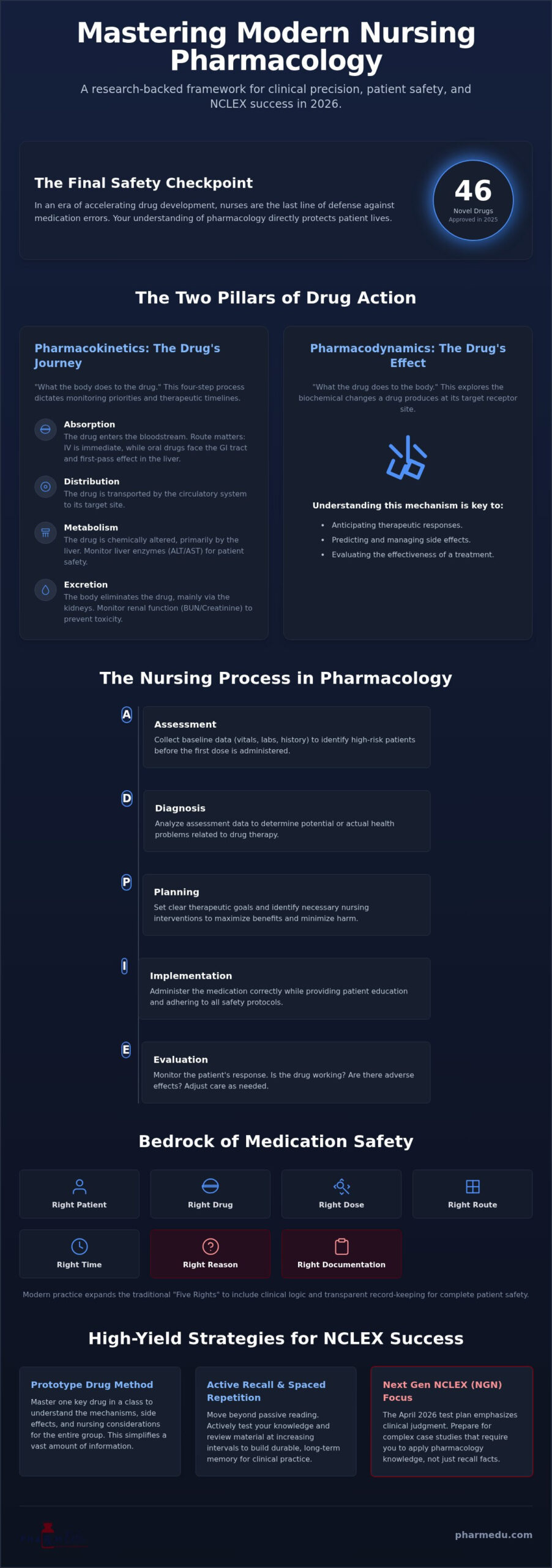
Nurses function as the final safety checkpoint between a prescriber’s order and the patient’s wellbeing. In 2026, the complexity of drug therapy is accelerating at a record pace. With the FDA approving dozens of novel medications annually, including 46 in 2025 alone, the burden of safety rests heavily on clinical shoulders. Understanding pharmacology for nurses isn’t just about passing a class; it’s about protecting lives in an environment where medication errors can have devastating consequences. You aren’t just an administrator of pills; you’re the last line of defense.
Integrating drug knowledge into the Nursing Process (ADPIE) transforms a simple task into a clinical strategy. During the assessment phase, you collect baseline data to identify high-risk patients before the first dose is even pulled. In the evaluation phase, you’re the one identifying if a new therapy is achieving its therapeutic goal or causing unexpected toxicity. This systematic approach ensures that pharmacology for nurses remains patient-centered and evidence-based. It also helps you navigate a shifting legal landscape, such as the 2026 updates to the Illinois Nurse Practice Act, which recently aligned state standards with higher national benchmarks.
The Five Rights and Beyond: Safety Protocols
The traditional “Five Rights” (patient, drug, dose, route, and time) remain the bedrock of medication safety. However, modern clinical practice now requires “Right Reason” and “Right Documentation” to ensure full transparency and clinical logic. You must understand why a specific patient is receiving a specific drug to catch potential prescribing errors. Medication reconciliation is the formal process of creating an accurate list of all medications a patient is taking and comparing it against new orders to prevent omissions, duplications, or dangerous interactions. These protocols are essential as more states, like New Jersey in March 2026, expand independent prescribing authority for advanced practice nurses with extensive clinical experience.
Pharmacology and the Next Gen NCLEX (NGN)
The NCLEX-RN test plan, which was updated in April 2026, emphasizes clinical judgment over simple memorization. You’re no longer just asked to identify a drug class; you must apply the Fundamentals of Nursing Pharmacology to complex, multi-layered case studies. The exam now tests your ability to prioritize nursing actions when a patient exhibits specific side effects or adverse reactions. Success requires a shift from rote recall to active application. This mirrors the reality of the bedside, where you’ll often encounter new drugs like Zanvastro or Bixlenvo shortly after their market release. Preparing for these case-study based questions is the best way to ensure you’re ready for the high-stakes environment of modern healthcare.
Fundamentals of Nursing Pharmacology: Pharmacokinetics and Dynamics
Mastering pharmacology for nurses starts with understanding the two pillars of drug action: pharmacokinetics and pharmacodynamics. Pharmacokinetics describes the journey of a drug through the body, while pharmacodynamics explores the biochemical changes that occur once the drug reaches its target. These aren’t just abstract concepts; they dictate how you monitor for toxicity and when you should expect to see a therapeutic response. Understanding these mechanisms is the difference between simply following an order and practicing as a vigilant clinician.
The ADME Framework for Clinical Monitoring
Absorption is the first hurdle, and the route of administration drastically changes your nursing priorities. Intravenous drugs reach the bloodstream immediately, while oral medications must survive the digestive tract. The first-pass effect occurs when an oral medication is significantly metabolized by the liver before reaching the rest of the body, which explains why oral dosages are often much higher than their parenteral counterparts. As a nurse, you must recognize that any condition affecting the GI tract or liver will alter how much of that drug actually becomes available to the patient.
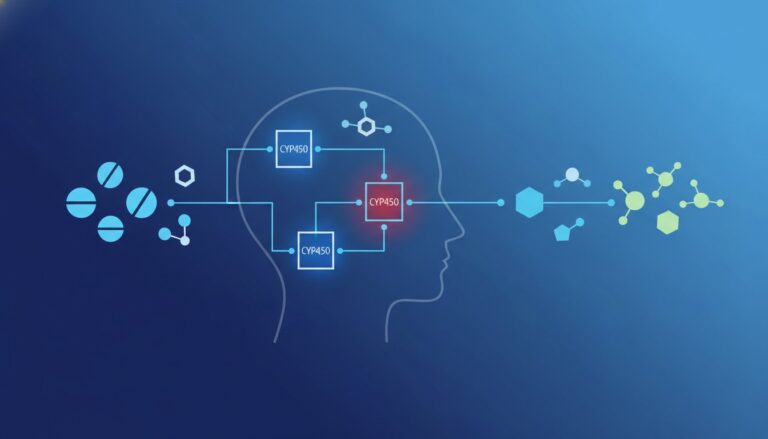
Metabolism and excretion are the next critical phases. You’ll primarily monitor liver enzymes (ALT/AST) and kidney function (BUN/Creatinine) to ensure the patient can safely process and clear the medication. If these organs are compromised, drugs can accumulate to toxic levels. While a standard nursing pharmacology textbook provides the theoretical definitions, clinical mastery requires applying these concepts to real-time patient assessments. If you’re struggling to visualize how these processes impact patient care, exploring high-yield video vignettes can help bridge the gap between theory and clinical application.
Agonists, Antagonists, and Receptor Sites
Pharmacodynamics focuses on how drugs interact with biological receptors. Think of receptors as locks and drugs as keys. Agonists turn the lock to activate a response, while antagonists block the lock to prevent other substances from binding. Understanding these interactions helps you predict side effects. For example, a drug that blocks beta receptors in the heart may also inadvertently affect receptors in the lungs, leading to bronchospasm. This predictive power is what allows you to anticipate a patient’s needs before they become urgent.
Safety is paramount when managing drugs with a narrow therapeutic index, such as Digoxin or Lithium. These medications have a very small window between a helpful dose and a lethal one. You’ll often need to monitor “trough” levels, which represent the lowest concentration of the drug in the patient’s bloodstream, to ensure safety before the next dose. Factors like age, genetics, and polypharmacy also play a role. Older adults often have decreased organ function and take multiple medications, increasing the risk of adverse drug-drug interactions. Your role is to synthesize these variables to ensure safe, effective therapy every time you step into a patient’s room.
Navigating Major Drug Classes: A Systematic Nursing Approach
Organizing the vast array of medications is the most significant challenge in pharmacology for nurses. Instead of memorizing every individual drug, professional clinicians use the “Prototype Drug” method. By mastering one representative agent, such as Lisinopril for ACE inhibitors, you understand the mechanism, side effects, and nursing considerations for the entire class. This systematic approach is more efficient than rote memorization and aligns with the clinical judgment models required for modern practice. While resources like Nursing Pharmacology (Open RN) provide excellent foundational data, applying this to high-alert medications is where your clinical skill truly shines.
Drugs are typically classified by body system or therapeutic use. Identifying common suffixes and prefixes allows you to categorize new medications instantly. For instance, recognizing that a drug ending in “-statin” targets cholesterol levels helps you anticipate the need for liver function tests. Prioritizing high-alert medications, such as insulin or anticoagulants, is a core competency. These drugs require double-checks and precise documentation because the margin for error is razor-thin.
Cardiovascular and Respiratory Medications
When managing ACE inhibitors, your priority is monitoring for the “ACE cough” and potential angioedema. Beta-blockers require a different focus; the heart rate is your primary vital sign. You must hold the medication if the apical pulse falls below 60 beats per minute. For respiratory distress, sequencing is the key to effective care. Always administer the bronchodilator first to open the airways before giving the corticosteroid. This order ensures the anti-inflammatory medication reaches deep into the lung tissue where it’s needed most.
Neurological and Psychotropic Drug Classes
Neurological medications demand a delicate balance between pain relief and safety. Analgesics, especially opioids, require vigilant monitoring of respiratory rates to prevent life-threatening depression. In psychotropic care, patient education is your most valuable tool. Most antidepressants have a “lag time” of two to four weeks before the therapeutic effect is felt. Managing these expectations prevents patients from discontinuing treatment prematurely. Understanding pharmacology for nurses means knowing that the drug’s success often depends on the patient’s adherence to the regimen.
| Suffix | Drug Class | Clinical Example |
|---|---|---|
| -olol | Beta-Blockers | Metoprolol |
| -pril | ACE Inhibitors | Lisinopril |
| -statin | Lipid-Lowering Agents | Atorvastatin |
| -prazole | Proton Pump Inhibitors | Omeprazole |
| -azepam | Benzodiazepines | Diazepam |
Proven Study Strategies for Nursing Pharmacology and the NCLEX
Traditional study methods often fail because they rely on passive reading rather than active engagement. To truly master pharmacology for nurses, you must shift your focus toward active recall and spaced repetition. These techniques force your brain to retrieve information, which strengthens neural pathways and ensures the long-term retention of drug mechanisms. Instead of highlighting a textbook for hours, use pharmacology flashcards to test your knowledge of drug-receptor interactions. This approach is particularly effective for the 2026 NCLEX-RN, where the emphasis has moved toward applying clinical judgment in realistic scenarios.
Building Your Pharmacology Study Guide
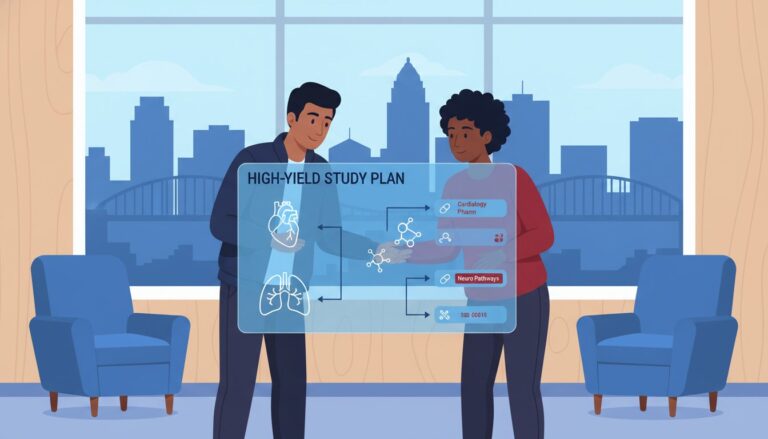
A structured approach is the only way to avoid information overload during your prep. You can start by creating a pharmacology study guide for nursing students that follows these three essential steps:
- Step 1: Identify prototype drugs. Focus on one representative drug per class, such as Lisinopril for ACE inhibitors, to serve as your mental anchor.
- Step 2: Map drug actions. Connect the medication’s mechanism to the physiological body system it affects to understand the “why” behind side effects.
- Step 3: Test with NCLEX-style questions. Use practice quizzes that mirror the case-study format of the Next Gen NCLEX to build clinical stamina.
Combining these steps with high-yield video vignettes helps you visualize how a drug moves through the ADME process. Visual learners often find that seeing a mechanism in action is far more memorable than reading a dry description. If you want to streamline your preparation, you can access PharmEDU’s interactive pharmacology flashcards to start testing your knowledge in a clinical context today.
Mnemonics and Memory Triggers
Mnemonics are powerful tools for mastering the “red flags” of drug therapy without getting lost in the details. For example, the ‘P-R-I-L’ mnemonic for ACE inhibitors helps you remember the risk of hyperkalemia and the persistent, dry cough. Visual drug maps are often superior to traditional lists because they show the relationship between different drug classes and their target organs. Dividing complex drug data into micro-learning segments prevents cognitive overload by allowing the brain to consolidate information more efficiently between study sessions. This methodical approach is essential for anyone studying pharmacology for nurses who wants to be prepared for the 13-19% of the NCLEX dedicated to Pharmacological and Parenteral Therapies.
PharmEDU: Your Digital Partner for Pharmacology Success
Modern nursing education requires tools that keep pace with a rapidly changing clinical environment. PharmEDU serves as a digital mentor, helping students and professionals move past the limitations of traditional learning. Instead of relying on static resources that quickly become outdated, you can access High-Yield Video Vignettes that explain complex drug actions in under five minutes. This mobile-first approach is essential for mastering pharmacology for nurses, especially during demanding clinical rotations where time is a luxury. By focusing on micro-learning, the platform ensures that you can absorb critical information without the cognitive overload often associated with professional healthcare studies.
The transition from academic theory to bedside practice is often the most difficult hurdle for new clinicians. PharmEDU bridges this gap by providing resources that mirror the high-stakes reality of modern medicine. You don’t just learn drug names; you learn how to apply that knowledge in a clinical context. This focus on practical application is why the platform’s tools are designed to align with current board exam standards, ensuring that your study time directly translates to professional success.
High-Yield Content for the Modern Learner
The platform’s Interactive Pharmacology Flashcards are designed to adapt to your specific knowledge gaps. They use intelligent algorithms to prioritize the topics you find most challenging, ensuring you spend your time where it’s needed most. These cards facilitate active recall, which is a proven method for moving drug data from short-term memory to long-term mastery. Clinical Case Studies further enhance this process by placing you in realistic scenarios that build real-world judgment. You’ll also benefit from video vignettes that clarify the “why” behind a drug’s mechanism, making the information stick far better than a list of facts ever could. If you’re looking for a systematic way to test your progress, the Pharmacology Practice Quizzes provide immediate feedback on your readiness for exams.
Subscription Options for Students and Institutions
PharmEDU offers flexible pathways to accommodate different learning needs and timelines. The PharmEDU Monthly Subscription is ideal for students who need a targeted, high-intensity boost before a specific final or unit exam. For those seeking consistent support throughout their entire degree program, the PharmEDU Annual Subscription provides a comprehensive, year-long resource that covers over 100 topics. These plans ensure that high-quality, research-backed information is always at your fingertips, whether you’re in the library or on the hospital floor.
Educational leaders can also benefit from the Institutional Platform License. This allows nursing university programs to provide their entire student body with standardized, high-quality resources. Faculty members can use these tools to track student mastery and identify which topics require additional focus in the classroom. Whether you’re an individual student or a program director, PharmEDU provides the precision and reliability needed to excel in the field of pharmacology for nurses. This partnership ensures that the next generation of nurses is prepared to meet the complexities of modern pharmacotherapy with confidence and skill.
Advancing Your Clinical Practice in 2026
Mastering the complexities of drug therapy requires a transition from passive memorization to active clinical judgment. By focusing on prototype drug frameworks and the physiological “why” behind patient responses, you transform from a task-oriented administrator into a vigilant safety expert. The evolving standards of 2026 demand that you stay current with rapid FDA approvals and shifting state regulations. Proficiency in pharmacology for nurses is no longer about how much you can memorize; it’s about how effectively you can apply that knowledge in high-stakes environments.
You don’t have to navigate this volume of information alone. PharmEDU provides the digital mentorship you need to succeed in your exams and at the bedside. With over 100 high-yield pharmacology topics and interactive quizzes designed for NCLEX success, our platform is trusted by nursing students and healthcare institutions nationwide. Start your PharmEDU Monthly Subscription and master pharmacology today. You’ve got the dedication to provide excellent care; now you have the framework to make it happen.
Frequently Asked Questions
What is the best way to study pharmacology for nurses?
The most effective method involves active recall and spaced repetition rather than passive reading. You should focus on mastering one prototype drug per class to understand the broader group’s mechanisms and side effects. Utilizing digital tools like interactive flashcards allows you to identify knowledge gaps quickly. Integrating micro-learning segments into your daily routine prevents cognitive overload while ensuring that pharmacology for nurses remains a manageable part of your professional development.
Why is pharmacology so difficult for nursing students?
The difficulty often stems from the sheer volume of information and the pressure to memorize thousands of individual drug facts. Many students struggle because traditional curricula focus on rote memorization instead of the physiological “why” behind drug actions. This disconnect makes it hard to apply theoretical knowledge to complex bedside scenarios. Breaking down these topics into high-yield vignettes and clinical case studies helps bridge the gap between academic theory and safe patient care.
What are the most common drug classes on the NCLEX-RN?
The NCLEX-RN frequently tests drug classes with a high impact on patient safety and vital signs. You’ll commonly encounter cardiovascular agents like ACE inhibitors and beta-blockers, as well as respiratory medications such as bronchodilators. Other high-yield areas include psychotropic drugs, analgesics, and endocrine medications like insulin. Mastering these classes is critical since the “Pharmacological and Parenteral Therapies” category consistently accounts for 13 to 19% of the total exam weight in the 2026 test plan.
How do pharmacokinetics and pharmacodynamics differ in nursing practice?
Pharmacokinetics involves the body’s impact on the drug, specifically the processes of absorption, distribution, metabolism, and excretion. In clinical practice, this helps you monitor organ function and predict dosing intervals. Pharmacodynamics describes the drug’s impact on the body through receptor interactions and biochemical changes. Understanding this difference is vital for pharmacology for nurses as it allows you to anticipate therapeutic effects and potential adverse reactions based on how a medication functions.
What are ‘high-alert’ medications in a nursing context?
High-alert medications are drugs that bear a heightened risk of causing significant patient harm when used in error. Common examples include anticoagulants, concentrated electrolytes, insulin, and opioids. While errors may not be more frequent with these drugs, the consequences are often devastating. Nursing protocols for these substances usually require independent double-checks and precise documentation to ensure the highest level of patient safety and to mitigate the risks of fatal medication errors.
Can I use PharmEDU flashcards on my mobile device during clinicals?
Yes, the platform features a mobile-compliant design specifically created for on-the-go studying during busy clinical rotations. You can access interactive pharmacology flashcards and micro-learning segments directly from your smartphone or tablet between patient rounds. This flexibility allows you to reinforce your knowledge in real-time, making it easier to connect classroom theory with the practical demands of the bedside. It’s a convenient way to maximize your study time without carrying heavy resources.
How does the Next Gen NCLEX change how I should study pharmacology?
The Next Gen NCLEX (NGN) shifts the focus from simple recall to the application of clinical judgment. You should prepare by working through case studies that mirror realistic patient scenarios rather than just memorizing drug lists. The exam now evaluates your ability to prioritize nursing actions and identify subtle changes in a patient’s condition. Using high-yield video vignettes that explain the clinical “why” behind drug actions will better prepare you for these complex, multi-layered question formats.
What is a prototype drug and why should I learn them?
A prototype drug is a single medication that represents an entire drug class because it shares the same basic mechanism of action and side effects. Learning one prototype, like Lisinopril for ACE inhibitors, allows you to understand the characteristics of all drugs within that category. This systematic approach is far more efficient than memorizing every individual agent. It helps you develop a framework for categorizing new medications you’ll encounter throughout your nursing career and on board exams.