
SSRI Mechanism of Action: A High-Yield Pharmacology Guide for Students (2026)
Why does a medication that alters synaptic chemistry within minutes require four to six weeks to produce a meaningful clinical response? This “Paradox of Time” is one of the most common hurdles for students trying to master the SSRI mechanism of action. It’s easy to get lost in the sea of neurotransmitter data, especially when you’re trying to differentiate between nearly identical agents while preparing for high-stakes boards.
You’ve likely felt the pressure of information overload as you attempt to bridge the gap between basic synaptic physiology and actual patient outcomes. We understand that your time is a valuable resource during your professional journey. That’s why we’ve designed this guide to act as a digital mentor, stripping away the academic fluff to focus on the precise details that examiners prioritize.
By the end of this article, you’ll have a clear grasp of SERT inhibition and the downstream neuroplasticity that defines modern antidepressant therapy. We’ll also cover the essential clinical pearls for the most prescribed SSRIs, including sertraline and escitalopram, ensuring you’re fully prepared for your 2026 certification exams.
Key Takeaways
- Understand the foundational role of serotonin in mood regulation and why SSRIs remain the first-line pharmacological intervention for major depressive disorder and anxiety.
- Master the SSRI mechanism of action by tracing the path from acute SERT protein inhibition to the downstream neuroplastic changes required for therapeutic effect.
- Differentiate between the “Big 6” SSRI agents using high-yield exam pearls, including critical variations in half-life and metabolic pathways.
- Connect synaptic physiology to clinical safety by identifying the mechanism behind common adverse effects and the implications of the FDA Black Box warning.
- Learn how to utilize interactive vignettes and flashcards to bridge the gap between complex molecular theory and NAPLEX or NCLEX success.
Understanding the Synaptic Role of Serotonin and Reuptake
A Selective serotonin reuptake inhibitor (SSRI) represents the primary pharmacological intervention for patients struggling with major depressive disorder (MDD) and generalized anxiety. These agents are favored in clinical settings because they provide a targeted approach to neurochemistry with a manageable side effect profile. To understand the SSRI mechanism of action, we must first look at the role of 5-hydroxytryptamine (5-HT), commonly known as serotonin. This neurotransmitter acts as a chemical messenger that influences mood, emotional stability, and sleep cycles. In a balanced system, serotonin levels in the brain remain at a steady “tonal” level, ensuring that neurons communicate effectively without overstimulation or depletion.
The termination of this signaling process is just as vital as the release itself. Under normal physiological conditions, the brain uses a process called reuptake to clear neurotransmitters from the synaptic space. This recycling mechanism prevents the signal from persisting indefinitely. By understanding how the body naturally ends a serotonin signal, students can better grasp how SSRIs intervene to prolong that signal’s duration in patients with depressive symptoms.
The Anatomy of a Serotonergic Synapse
The serotonergic synapse is a complex junction consisting of the pre-synaptic neuron, the synaptic cleft, and the post-synaptic receptors. Serotonin synthesis begins with the amino acid tryptophan, which undergoes enzymatic conversion before being packed into specialized vesicles. When a nerve impulse arrives, these vesicles release their 5-HT cargo into the synaptic cleft. Once in this gap, the serotonin molecules bind to various post-synaptic receptors to propagate the signal. It’s the concentration of 5-HT within this specific gap that determines the strength of the “mood signal” being sent throughout the central nervous system.
The SERT Protein: The Gatekeeper of Serotonin
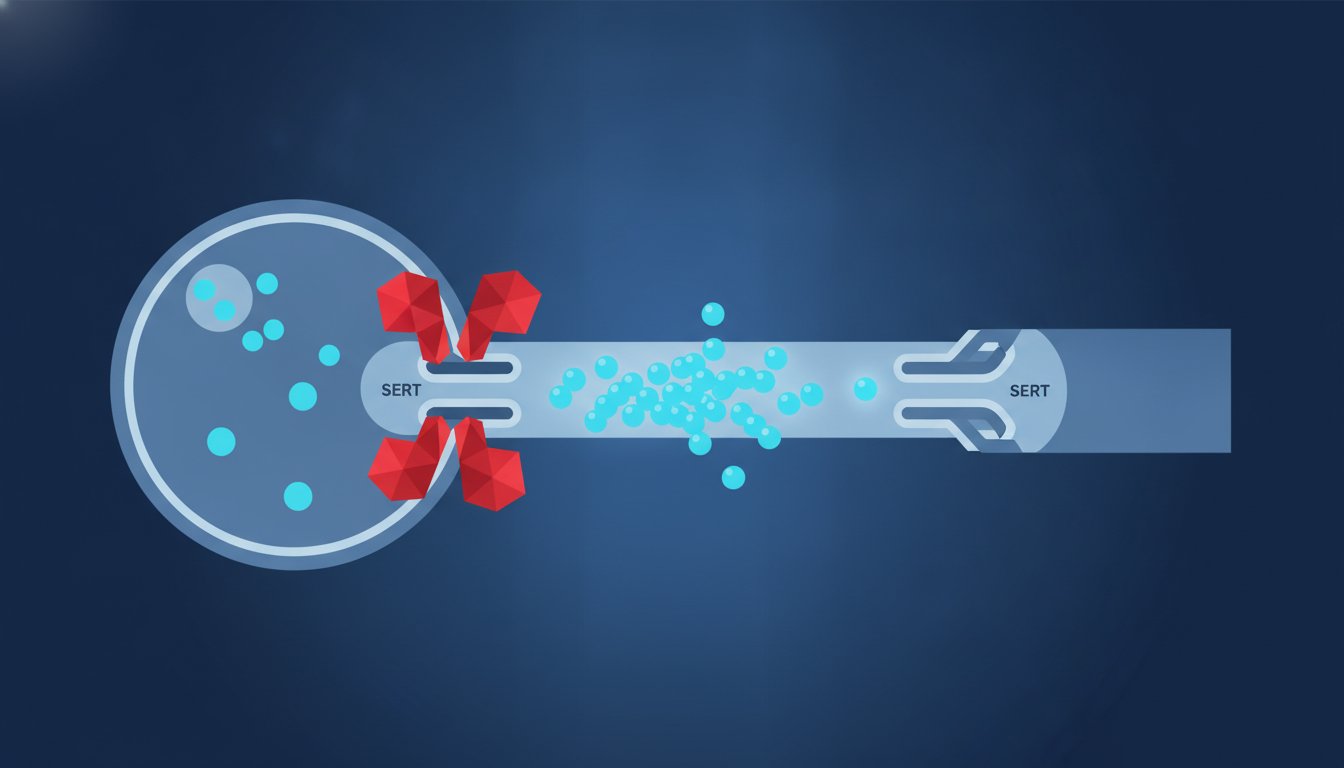
The Serotonin Transporter (SERT) is a sodium-dependent protein located on the membrane of the pre-synaptic neuron. Think of SERT as a highly efficient vacuum cleaner that pulls serotonin back into the cell where it can be recycled or degraded. This transporter uses active transport, relying on sodium and chloride ion gradients to move 5-HT molecules against their concentration gradient. This is the specific molecular target where the SSRI mechanism of action takes place.
What sets SSRIs apart from older antidepressants is their high degree of selectivity. While older medications might accidentally block transporters for norepinephrine (NET) or dopamine (DAT), SSRIs have a much higher affinity for SERT. This precision means they don’t significantly interfere with other neurotransmitter systems, which helps avoid the “jittery” or cardiovascular side effects often seen with less specific drugs. By locking the SERT protein in a non-functional state, SSRIs ensure that more serotonin remains available to stimulate the post-synaptic receptors, effectively boosting the brain’s natural mood-regulating signals.
The Molecular Mechanism of Action: From Inhibition to Neuroplasticity
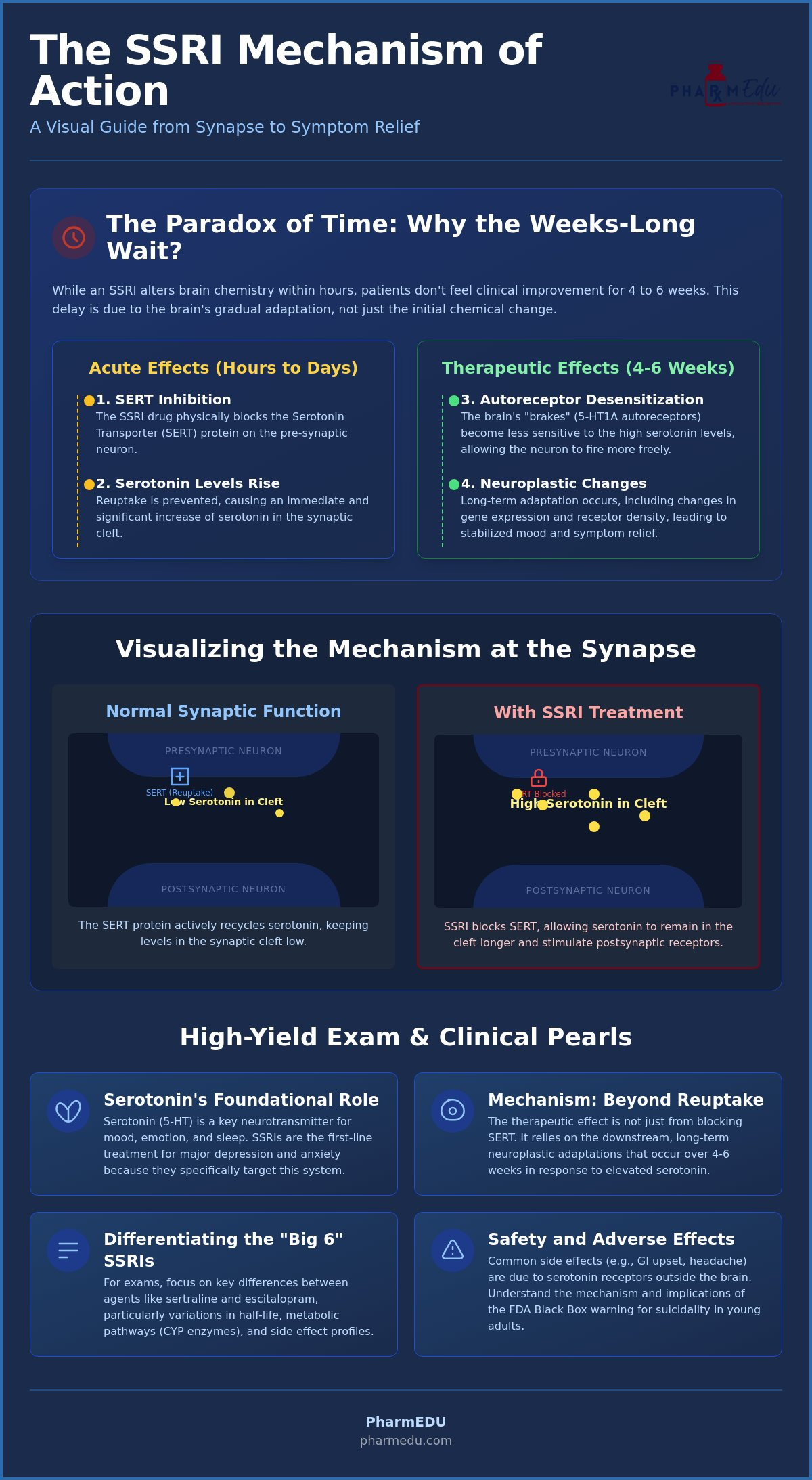
The SSRI mechanism of action begins with the acute competitive inhibition of the SERT protein. When a patient starts therapy, the drug molecules quickly occupy the binding sites on the serotonin transporter, preventing the reuptake of 5-HT into the pre-synaptic neuron. This blockade results in an immediate and significant increase in synaptic serotonin concentrations. However, clinicians and students recognize a frustrating reality: while neurochemistry changes in hours, clinical improvement takes weeks. This delay, often called the “Paradox of Time,” suggests that simple reuptake inhibition isn’t the final step in treating depression.
For a more in-depth review of SSRI pharmacology, it’s essential to look beyond the synapse at how the brain adapts to sustained serotonin levels. True therapeutic success relies on chronic cellular adaptations that occur over 4 to 6 weeks. These changes involve a complex interplay between receptor sensitivity and gene expression that eventually stabilizes the patient’s mood.
Autoreceptor Desensitization: The Key to Therapeutic Lag
Serotonin release is regulated by 5-HT1A somatodendritic autoreceptors, which function as “brakes” on the neuron. When synaptic serotonin first rises, these autoreceptors detect the increase and signal the neuron to slow down 5-HT release, effectively neutralizing the drug’s initial impact. Over several weeks of continuous SSRI use, these receptors become desensitized and down-regulated. Desensitization is the physiological process where the neuron’s inhibitory brakes fail, finally allowing for a sustained and robust release of serotonin that matches the 4 to 6 week clinical window for symptom relief.
Neurotrophic Factors and Brain-Derived Neurotrophic Factor (BDNF)
The long-term SSRI mechanism of action also involves the activation of secondary messenger systems, specifically the cAMP/CREB pathway. Sustained 5-HT signaling triggers these intracellular cascades, eventually leading to increased expression of Brain-Derived Neurotrophic Factor (BDNF). BDNF acts as a growth factor for the brain, promoting neuronal survival, dendritic branching, and synaptic plasticity. These structural changes, particularly in the hippocampus, are what ultimately lead to the resolution of depressive symptoms and the restoration of cognitive function.
Visualizing these microscopic shifts can be challenging during exam prep, but you can use High-Yield Video Vignettes to see these molecular pathways in action. Understanding these downstream effects is what separates a passing score from true mastery of clinical pharmacology.
Comparing SSRI Agents: Selectivity, Half-Life, and Exam Pearls
While every drug in this class shares the same fundamental SSRI mechanism of action, they aren’t interchangeable in clinical practice. The “Big 6” agents, fluoxetine, sertraline, paroxetine, fluvoxamine, citalopram, and escitalopram, differ significantly in their pharmacokinetic profiles and side effect tendencies. Understanding these nuances is critical for board exams and safe prescribing. Students should focus on how these variations influence drug choice for specific patient populations, as examiners often test the “best fit” for a clinical scenario rather than just general class knowledge.
The primary differences between these medications lie in their half-lives and their affinity for various cytochrome P450 (CYP) enzymes. Some agents are potent inhibitors of metabolic pathways, while others are relatively “clean,” meaning they have a lower risk of drug-drug interactions. Gaining a deeper perspective on how SSRIs work within these metabolic frameworks is essential for managing complex patients on multiple medications.
Pharmacokinetic Profiles: Absorption and Elimination
A drug’s half-life determines how long it stays in the system and how quickly withdrawal symptoms might appear. Fluoxetine is the notable outlier in this category. It has a parent half-life of 4 to 6 days, but its active metabolite, norfluoxetine, persists for 1 to 2 weeks. This exceptionally long duration makes it a forgiving choice for patients who occasionally miss a dose. In contrast, paroxetine has a short half-life of roughly 21 hours. This rapid clearance significantly increases the risk of discontinuation syndrome, which presents as flu-like symptoms, dizziness, and sensory disturbances if the medication is stopped abruptly.
High-Yield Clinical Pearls for Boards
To succeed on the NAPLEX or NCLEX, you’ll need to associate specific “pearls” with each agent. These unique characteristics are the most likely to appear in clinical vignettes. Use the following summary to organize your study notes:
- Fluoxetine: Often described as “activating.” It’s usually taken in the morning to avoid insomnia and is the only SSRI approved for use in children for certain indications.
- Sertraline: Frequently associated with GI distress. Students often use the mnemonic “squirtraline” to remember the higher risk of diarrhea compared to its peers.
- Paroxetine: The most sedating and anticholinergic of the group; it’s also linked to higher rates of weight gain and is generally avoided in pregnancy due to cardiac malformation risks.
- Citalopram: Notable for dose-dependent QTc prolongation. The FDA recommends a maximum dose of 40 mg daily (20 mg in the elderly) to mitigate these cardiac risks.
- Escitalopram: Considered the “cleaner” version of citalopram. It’s the S-enantiomer and generally exhibits fewer drug-drug interactions, making it a favorite for elderly patients.
Mastering these distinctions allows you to apply the SSRI mechanism of action to real-world patient care, ensuring you can select the right agent based on a patient’s comorbidities and lifestyle needs.
Safety and Adverse Effects: Navigating the Serotonin Spectrum
The SSRI mechanism of action involves increasing serotonin availability, but this physiological shift isn’t limited to the specific receptors responsible for mood regulation. When serotonin levels rise, they stimulate a wide range of receptor subtypes throughout the body, leading to the class’s characteristic side effect profile. For example, stimulation of 5-HT3 receptors in the gastrointestinal tract and the brain’s area postrema often causes the nausea and dyspepsia patients report during the first weeks of therapy. Understanding this connection helps students predict adverse effects based on receptor location rather than relying on rote memorization.
Clinicians must also remain vigilant regarding the FDA “Black Box” warning. This regulatory requirement highlights a paradoxical increase in suicidal thoughts and behaviors in children, adolescents, and young adults under the age of 25. While the absolute risk remains low, the monitoring of these populations is a non-negotiable aspect of safe practice during the initial stages of treatment.
The Mechanism of Common Side Effects
Sexual dysfunction is perhaps the most persistent adverse effect, affecting a significant portion of patients. This occurs because elevated serotonin levels stimulate 5-HT2 and 5-HT3 receptors in the central nervous system, which can inhibit sexual desire and arousal. Additionally, SSRIs influence the sleep-wake cycle by suppressing REM sleep. This often manifests as insomnia or vivid, disturbing dreams during the early stages of treatment. While many side effects are class-wide, weight gain is more closely associated with specific agents. Paroxetine, for instance, is notorious for metabolic changes and significant weight gain compared to more weight-neutral options like fluoxetine.
Identifying and Managing Serotonin Syndrome
Serotonin syndrome is a potentially life-threatening condition resulting from the excessive stimulation of 5-HT1A and 5-HT2 receptors. This usually occurs when SSRIs are combined with other serotonergic agents like MAOIs, tramadol, or linezolid. You can identify this syndrome by looking for a classic triad of symptoms:
- Cognitive effects: Confusion, agitation, and hypomania.
- Autonomic hyperactivity: Fever, tachycardia, and diaphoresis.
- Neuromuscular abnormalities: Tremor, myoclonus, and hyperreflexia.
Cyproheptadine is the definitive pharmacological treatment for severe cases of serotonin syndrome that don’t respond to supportive care. If you’re struggling to memorize these interactions, our Interactive Pharmacology Flashcards provide a high-yield way to drill these safety protocols.
Finally, stopping these medications too quickly can lead to discontinuation syndrome. Students use the FINISH mnemonic to recall the symptoms: Flu-like symptoms, Insomnia, Nausea, Imbalance, Sensory disturbances, and Hyperarousal. To avoid this, clinicians should always use a gradual taper, especially with short half-life agents like paroxetine, to allow the brain’s neurochemistry to adjust safely. This clinical caution is a direct reflection of the long-term SSRI mechanism of action and the receptor adaptations discussed in previous sections.
Mastering Pharmacology with PharmEDU High-Yield Resources
Mastering the SSRI mechanism of action is a pivotal milestone for any healthcare student. Whether you’re preparing for the NAPLEX or the NCLEX, examiners expect you to understand more than just the names of the “Big 6” agents. They want to see that you can connect synaptic physiology to real-world clinical outcomes and safety protocols. At PharmEDU, we serve as your digital mentor, providing the tools necessary to bridge the gap between complex textbook theory and board exam success. Our platform is built on the principle of high-yield education, distilling over 100 pharmacology topics into manageable segments that respect your busy schedule.
By focusing on the precise molecular details that matter most, we help you avoid the information overload that often stalls professional progress. We understand that your time is a valuable resource during your professional journey, and our goal is to take the administrative weight of exam prep off your shoulders.
Visual Learning for Complex Mechanisms
Abstract concepts like autoreceptor desensitization and BDNF upregulation are often difficult to grasp through text alone. Our High-Yield Video Vignettes allow you to visualize the serotonergic synapse in motion, making the SSRI mechanism of action clear and memorable. These micro-learning segments are designed for efficiency, ensuring you master the material without wasting time on dry academic language. To complement these videos, our Pharmacology Practice Quizzes use formats that mimic actual board exam questions. This practical application is essential for building the confidence needed on test day. For those looking for a structured approach, we recommend exploring The Ultimate Pharmacology Study Guide for Nursing Students in 2026.
Join the PharmEDU Community
Success in pharmacology requires consistent, active recall. Our Interactive Pharmacology Flashcards are specifically designed to help you master the nuances of SSRI drug-drug interactions and CYP450 profiles. These tools allow you to drill high-yield facts during clinical rotations or between classes, thanks to our mobile-compliant design. We offer flexible subscription options, including a PharmEDU Monthly Subscription and a PharmEDU Annual Subscription, as well as Institutional Platform Licenses for schools and hospitals.
By integrating our Clinical Case Studies into your routine, you can apply your knowledge to realistic patient scenarios, ensuring you’re ready for both the exam room and the clinic. For a deeper dive into the broader field, consult Pharmacology: The Comprehensive Guide to the Science of Drugs. We’re here to be your reliable partner throughout your professional journey, providing the practical knowledge you need to excel in a strictly regulated sector.
Advancing Your Clinical Expertise in Psychopharmacology
Mastering the SSRI mechanism of action involves more than memorizing a single synaptic event. It requires a clear understanding of the transition from acute SERT inhibition to the long-term neuroplastic changes that restore emotional stability. By recognizing the clinical nuances between agents like fluoxetine and paroxetine, you’re better prepared to navigate the complex vignettes found on the NAPLEX and NCLEX. These insights aren’t just for exams; they’re the foundation of safe and effective patient care in 2026.
Start your high-yield pharmacology review with a PharmEDU subscription today! We’re excited to support your growth as you move toward board certification and beyond.
Pharmacology Frequently Asked Questions
Why do SSRIs take 4 to 6 weeks to work?
The therapeutic lag is caused by the time required for the brain to undergo structural and functional adaptations. While the SSRI mechanism of action increases synaptic serotonin almost immediately, clinical improvement depends on the desensitization of inhibitory autoreceptors and the subsequent increase in neurotrophic factors like BDNF. These cellular changes typically require several weeks of sustained medication levels to reach a therapeutic threshold.
What is the primary difference between SSRIs and SNRIs?
The main distinction lies in their transporter selectivity. SSRIs specifically target the serotonin transporter (SERT), whereas SNRIs block both the serotonin transporter and the norepinephrine transporter (NET). This dual inhibition makes SNRIs useful for treating certain pain conditions, though it also introduces a higher risk of adrenergic side effects like increased heart rate or blood pressure.
Can SSRIs cause Serotonin Syndrome on their own?
It’s very rare for an SSRI to cause serotonin syndrome when taken alone at prescribed doses. Most cases of this potentially life-threatening condition occur when an SSRI is combined with another serotonergic agent, such as an MAOI, tramadol, or linezolid. These combinations lead to excessive stimulation of 5-HT1A and 5-HT2 receptors, resulting in the classic triad of cognitive, autonomic, and neuromuscular symptoms.
Which SSRI has the longest half-life and why does it matter?
Fluoxetine has the longest half-life in the class. The parent drug lasts 4 to 6 days, while its active metabolite, norfluoxetine, stays in the system for up to two weeks. This long duration is beneficial for patients who might occasionally miss a dose because the blood levels remain relatively stable. However, it requires a much longer washout period when switching a patient to a different antidepressant class.
What are the symptoms of SSRI discontinuation syndrome?
Symptoms are commonly categorized using the FINISH mnemonic: flu-like symptoms, insomnia, nausea, imbalance, sensory disturbances, and hyperarousal. These effects are most common with short half-life agents like paroxetine. To prevent this, clinicians should always utilize a gradual dose taper rather than abrupt cessation, allowing the brain’s neurochemistry to adjust slowly.
Why is there a Black Box Warning for SSRIs in young adults?
The FDA requires this warning because clinical data showed an increased risk of suicidal thoughts and behaviors in children, adolescents, and young adults under age 25. While this risk is statistically significant, it doesn’t mean the medication causes suicidal acts. Instead, it serves as a mandate for close clinical monitoring during the initial weeks of the SSRI mechanism of action when energy levels might improve before mood fully stabilizes.
How does Escitalopram differ from Citalopram pharmacologically?
Escitalopram is the pure S-enantiomer of citalopram, which is a racemic mixture of both S and R forms. The S-enantiomer is the component that actually inhibits serotonin reuptake, so escitalopram is more potent and selective. This purity results in fewer drug-drug interactions and a lower risk of dose-dependent QTc prolongation compared to the older racemic formulation.
What happens to serotonin receptors after chronic SSRI use?
Chronic use leads to the down-regulation and desensitization of specific serotonin receptors. Specifically, the 5-HT1A somatodendritic autoreceptors, which normally act as brakes on serotonin release, become less sensitive over time. This adaptation allows the neuron to maintain a higher tonal level of serotonin in the synapse, which is the foundational goal of long-term antidepressant therapy.