
Pharmacology vs. Pathophysiology: The Ultimate Guide for Healthcare Students (2026)
What if the reason you’re struggling with drug mechanisms isn’t a lack of effort, but a fundamental gap in how you view the “broken” body? For many healthcare students, the comparison of pharmacology vs pathophysiology feels like a battle between two separate, overwhelming worlds of data. You’ve likely felt the familiar sting of information overload while trying to distinguish between a cellular malfunction and the chemical agent meant to fix it. It’s a common hurdle that fuels anxiety about high-stakes board exams like the NAPLEX or NCLEX.
We understand that these subjects are the “weed-out” cornerstones of your education; mastering them is essential for your professional advancement. This guide provides a clear mental framework to help you bridge that gap, improving your study efficiency and building your confidence for clinical rotations. You’ll learn how to stop memorizing isolated facts and start applying integrated concepts to complex case studies. We’ll explore the distinct roles of each discipline and how they work together to form the foundation of modern medical practice in 2026.
To further build your confidence for clinical rotations, especially if you are navigating these complex topics in a second language, you can discover Virtuous English Academy for free English language support tailored to healthcare professionals.
Key Takeaways
- Understand the core distinction between disease processes and drug interventions to create a logical roadmap for your clinical education.
- Identify how cellular and systemic dysfunctions lead to specific symptoms, providing the necessary context for all therapeutic decisions.
- Shift from memorizing individual drug names to mastering high-yield drug classes and their mechanisms of action for better long-term retention.
- Explore the “lock and key” clinical connection to understand why mastering pharmacology vs pathophysiology as an integrated unit is vital for board exam success.
- Adopt a strategic three-step study method that builds from normal anatomy to disease states before introducing pharmacological solutions.
Understanding the Fundamental Differences: Pharmacology vs. Pathophysiology
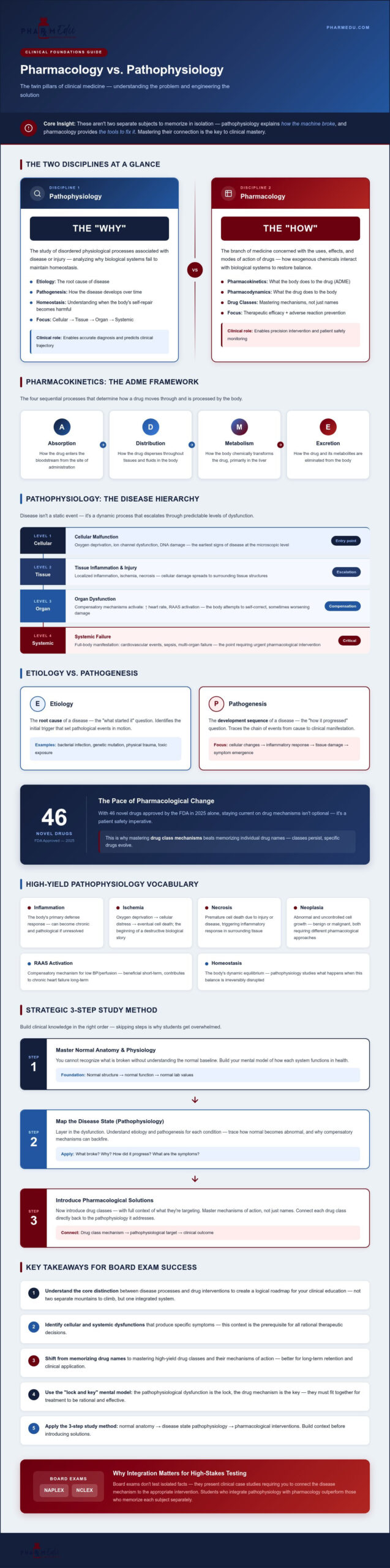
To succeed in a clinical setting, you must look at the human body as a complex, self-regulating machine. When that machine fails, two distinct yet inseparable sciences come into play. The comparison of pharmacology vs pathophysiology isn’t a choice between two separate subjects; it’s the study of the problem and its specific solution. Think of it this way: pathophysiology explains how the machine broke, while pharmacology provides the tools and instructions to fix it.
These subjects are often referred to as the “twin pillars” of clinical medicine. You can’t effectively treat a patient if you don’t understand the underlying dysfunction. Likewise, knowing a disease exists is useless without the pharmacological knowledge to intervene. For students preparing for board certifications like the NAPLEX or NCLEX, mastering this relationship is the difference between struggling with rote memorization and achieving true clinical mastery.
Pathophysiology: The “Why” of Disease
Pathophysiology is the study of the disordered physiological processes associated with disease or injury. It moves beyond basic anatomy to analyze why biological systems fail to maintain homeostasis. By focusing on etiology (the cause) and pathogenesis (the development), you learn to decode the hierarchy of dysfunction from a cellular level up to systemic failure.
In practice, this discipline is essential for accurate diagnosis. It helps you understand why a patient presents with specific symptoms, such as the localized inflammation seen in an injury or the systemic ischemia of a cardiovascular event. Without this foundation, you’re simply guessing at the “why” behind a patient’s suffering. It’s the map that identifies exactly where the biological breakdown occurred.
Pharmacology: The “How” of Treatment
Pharmacology is the branch of medicine concerned with the uses, effects, and modes of action of drugs. It analyzes how exogenous chemicals interact with biological systems to restore balance or manage symptoms. To master this, you must understand the two halves of the pharmacological coin: pharmacokinetics and pharmacodynamics.
- Pharmacokinetics: What the body does to the drug (absorption, distribution, metabolism, and excretion).
- Pharmacodynamics: What the drug does to the body (the biochemical and physiological effects).
With 46 novel drugs approved by the FDA in 2025 alone, staying current on these mechanisms is vital for patient safety. Pharmacology ensures you aren’t just administering medication, but monitoring for therapeutic efficacy and preventing adverse reactions. It’s the science of precision intervention in an environment that is constantly evolving with new discoveries.
Pathophysiology: Decoding the Mechanism of Human Disease
Pathophysiology acts as the investigative branch of medicine. It examines the “broken” state of the body across a specific hierarchy: starting at the cellular level, progressing through tissues and organs, and finally manifesting as systemic dysfunction. To truly grasp the debate of pharmacology vs pathophysiology, you must first understand that disease isn’t a static event. It’s a dynamic process that follows a predictable, albeit destructive, logic.
Key concepts like inflammation, ischemia, necrosis, and neoplasia represent the vocabulary of this field. For instance, ischemia isn’t just a clinical term; it’s the beginning of a biological story where oxygen deprivation leads to cellular distress and eventual death. Academic institutions, such as the Department of Physiology & Pharmacology at the University of Georgia, emphasize that these physiological changes are the bedrock upon which all medical interventions are built. Without this foundation, the “fix” provided by medication lacks context.
Compensatory mechanisms often complicate this narrative. When the body detects a failure, it triggers “fixes” like increasing the heart rate or activating the renin-angiotensin-aldosterone system (RAAS). While these responses aim to maintain homeostasis, they often lead to further damage over time if left unchecked. Recognizing these patterns helps you move from simply identifying symptoms to predicting a patient’s clinical trajectory. It’s about seeing the body’s attempt to heal itself and knowing when that attempt becomes part of the problem.
Etiology vs. Pathogenesis
Etiology identifies the root cause of a condition, whether it’s a genetic mutation, an environmental toxin, or an infectious pathogen. Pathogenesis, however, is the step-by-step progression of the disease. It describes the specific cellular changes that occur after the etiological factor is introduced. Learning the “story” of pathogenesis makes long-term retention easier because you’re following a logical sequence rather than memorizing isolated facts. If you’re finding these complex mechanisms difficult to visualize, practicing with Interactive Pharmacology Flashcards can help reinforce how specific disease states create the “locks” that medications must eventually open.
Clinical Manifestations
Clinical manifestations are the bridge between cell biology and patient care. This stage involves linking internal dysfunction to external signs, which are objective findings like a fever or high blood pressure, and symptoms, which are subjective experiences like pain or fatigue. Pathophysiology allows you to work backwards from these manifestations to identify the underlying cellular crisis. By predicting potential complications through these signs, you become a proactive provider rather than a reactive one.
Pharmacology: Mastering the Science of Therapeutic Intervention
Many students view pharmacology as a test of raw memory. They spend hours staring at lists of drug names, hoping the prefixes and suffixes eventually stick. However, true mastery comes from understanding drug classes through their Mechanism of Action (MOA). Drugs don’t create entirely new functions in the human body; they simply mimic or block natural physiological processes. This is where the intersection of pharmacology vs pathophysiology becomes practical. If you understand that the RAAS pathway is overactive in a patient with hypertension, you can logically predict how an ACE inhibitor will intervene to restore balance.
With the FDA approving 46 novel drugs and 18 biosimilars in 2025 alone, trying to memorize every specific agent is a losing game. You must focus on high-yield information. This means prioritizing the drug classes and prototypes most likely to appear on board exams like the NCLEX or NAPLEX. Utilizing resources like High-Yield Video Vignettes allows you to visualize these interactions. You move beyond the printed page to see exactly how a chemical agent alters a biological system. Safety and toxicology are the critical boundaries here; knowing when a “fix” becomes a poison is the hallmark of a competent provider.
Pharmacokinetics: ADME Explained
Pharmacokinetics describes the journey of a drug through the body, summarized by the acronym ADME: Absorption, Distribution, Metabolism, and Excretion. This journey is heavily dictated by a patient’s underlying pathophysiology. For example, if a patient has chronic kidney disease, their ability to excrete drugs is severely compromised. This directly impacts dosing and increases the risk of systemic toxicity. Understanding the health of the liver and kidneys is essential for determining drug half-life. You aren’t just giving a pill; you’re managing a chemical process within a living, changing environment.
Pharmacodynamics: Receptors and Response
While kinetics is about the body’s effect on the drug, pharmacodynamics focuses on the drug’s effect on the body. This interaction typically occurs at receptors, where drugs act as either agonists or antagonists. Think of the “lock and key” analogy mentioned in previous sections. An agonist acts as a key that turns the lock to trigger a response, while an antagonist jams the lock to prevent other keys from entering.
A critical concept in this field is the dose-response curve and the therapeutic index. The therapeutic index is the margin between a curative dose and a lethal one. Drugs with a narrow therapeutic index require constant clinical monitoring because the line between healing and harm is razor-thin. Testing your knowledge with Pharmacology Practice Quizzes is an effective way to ensure you can identify these high-risk medications before you ever step onto a hospital floor.
The Clinical Connection: Why You Cannot Have One Without the Other
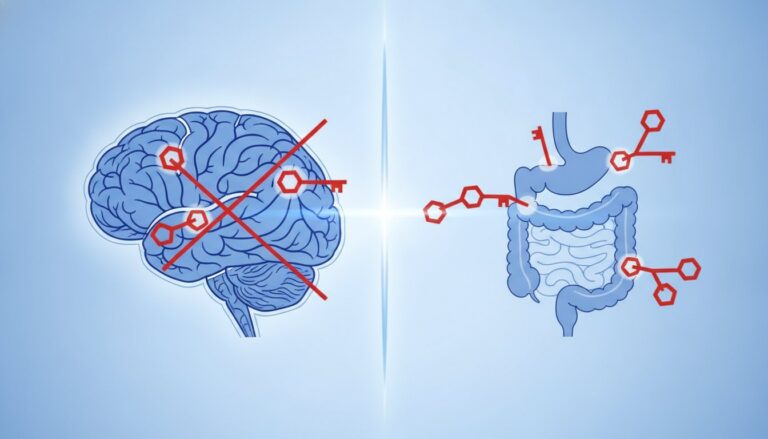
The relationship between disease and treatment is often described as a “lock and key” mechanism. In this analogy, the pathophysiology represents the lock; the specific biological malfunction that requires a solution. Pharmacology provides the key. If you don’t understand the intricate grooves of the lock, you’ll never select the right key. This integrated view is exactly what separates a student who merely passes a test from a clinician who safely manages patient care. When you approach pharmacology vs pathophysiology as a single, cohesive narrative, you stop viewing them as competing subjects and start seeing them as the two halves of a clinical conversation.
Siloed learning, where you memorize drug lists in one hour and disease mechanisms in another, is a dangerous habit. It leads to fragmented knowledge that often fails under the pressure of clinical rotations or high-stakes exams like the NCLEX. Without the context of the “broken machine,” drug names become abstract strings of letters. For example, trying to understand ACE inhibitors is nearly impossible without first mastering the Renin-Angiotensin-Aldosterone System (RAAS). If you don’t know that the body is inappropriately retaining sodium and water, you won’t understand why blocking Angiotensin II is the logical solution. This connection is the heartbeat of clinical reasoning.
Case in Point: Hypertension
Hypertension offers a perfect look at this synergy. From a pathophysiological standpoint, the condition is usually driven by two factors: increased peripheral vascular resistance or excessive fluid volume. Once you identify these “locks,” the pharmacological “keys” become obvious. Diuretics are used to reduce that fluid volume; Calcium Channel Blockers (CCBs) and Beta-Blockers work to decrease the resistance of the vessels. It’s no coincidence that many drug classes are named specifically after the pathophysiological process they are designed to interrupt. The name itself tells you the story of the disease it treats.
Bridging the Gap with High-Yield Resources
Mastering this intersection requires resources that don’t force you to switch back and forth between textbooks. A deep dive into pharmacology provides the necessary framework for understanding how drugs interact with diseased tissue. By using a case study approach, you can simulate real-world decision-making, which significantly improves retention for the NAPLEX and NCLEX. You’ll find that your brain begins to think in “Pharm-Patho” loops; every time you see a symptom, you’ll automatically visualize the cellular mechanism and the drug class that can correct it.
To truly excel, you need to see these concepts in action through integrated scenarios. Exploring our Clinical Case Studies is an excellent way to bridge the gap between theory and practice, ensuring you’re ready for the complexities of modern healthcare in 2026.
Strategic Study Methods: Mastering Both Subjects for Your Board Exams
Studying harder isn’t always the answer when you’re facing two “weed-out” courses simultaneously. Efficiency is the currency of medical education. To move from confusion to clinical mastery, you must adopt a systematic approach that respects the natural hierarchy of biological science. Understanding the sequence of pharmacology vs pathophysiology is the first step toward reducing your study time while increasing your board exam scores. Don’t treat these subjects as separate silos; treat them as a continuous narrative of human health.
- Step 1: Master the normal state. You can’t recognize a “broken machine” if you don’t understand the healthy one. Revisit your anatomy and physiology (A&P) foundations before diving into disease states.
- Step 2: Learn pathophysiology first. Always master the disease mechanism of a specific system before opening the pharmacology chapter. This ensures the “lock” is clearly defined before you look for the “key.”
- Step 3: Implement active recall. Ditch the highlighters. Use spaced repetition and testing to move drug names and classes from short-term memory to long-term storage.
- Step 4: Use integrated vignettes. Practice with scenarios that force you to link a patient’s symptoms to a cellular malfunction and a subsequent drug intervention.
- Step 5: Leverage specialized platforms. Use tools like PharmEDU to access structured, board-relevant content that distills complex topics into manageable units.
Leveraging High-Yield Video Vignettes
Micro-learning is significantly more effective for dense, high-stakes subjects. Traditional textbooks often bury critical information in 50-page chapters, leading to cognitive fatigue and poor retention. Our High-Yield Video Vignettes solve this by distilling those massive chapters into high-impact visual lessons. These vignettes focus exclusively on the information you’ll actually see on boards like the NAPLEX or NCLEX. By reducing the noise, you can focus your mental energy on the essential connections between a drug’s mechanism and its clinical outcome.
Active Recall with Flashcards and Quizzes
The science of spaced repetition is the most reliable way to combat the “forgetting curve” in medical education. Simply reading about drug classes isn’t enough; you must force your brain to retrieve that information under pressure. Utilizing nursing pharmacology flash cards helps bridge the gap between theoretical knowledge and instant recall. These tools are designed for micro-learning on the go, allowing you to turn idle minutes into productive study sessions.
Once you’ve mastered the basics, transition to Pharmacology Practice Quizzes and Clinical Case Studies. These resources simulate the actual exam environment, testing your ability to apply concepts to real-world patient scenarios. By the time you sit for your boards, the integrated logic of these subjects will be second nature. You’ll enter the exam room with the confidence of a clinician, not just the anxiety of a student.
Master the Intersection for Clinical Excellence
Mastering the relationship between pharmacology vs pathophysiology is more than an academic requirement; it’s the foundation of your future as a safe, effective healthcare provider. By viewing disease states as the “lock” and pharmacological interventions as the “key,” you move beyond the stress of rote memorization. You’ve learned that understanding the biological “why” of a condition makes the “how” of its treatment logical and intuitive. This integrated approach doesn’t just help you survive your coursework; it ensures you excel on critical board exams like the NCLEX or NAPLEX. As you prepare for this demanding career, you might also consider how you’ll maintain your social life; DownToDate provides a space for healthcare professionals to connect with peers who understand their unique lifestyle.
Don’t let information overload stall your professional progress. PharmEDU is here to streamline your journey with a platform designed by healthcare educators specifically for student success. With over 100 high-yield topics, interactive quizzes, and flashcards for active recall, we help you bridge the gap between theory and clinical application. Master Pharmacology with PharmEDU’s High-Yield Video Vignettes today and gain the confidence you need for the bedside. Your dedication to learning today will define the quality of care you provide tomorrow. You’re well on your way to mastery.
Frequently Asked Questions
Is it better to take pathophysiology before pharmacology?
Yes, taking pathophysiology before pharmacology is the most logical sequence for healthcare students. You need to understand the biological breakdown of the body before you can learn how to fix it with chemical interventions. Pathophysiology provides the essential context that makes drug mechanisms feel like a natural solution rather than a list of abstract facts.
Why is pharmacology considered one of the hardest classes in nursing school?
Pharmacology is challenging because it requires you to synthesize massive amounts of data with complex biological logic. It’s not just about memorizing drug names; it involves understanding how those chemicals alter systemic functions in high-stakes environments. The sheer volume of information, combined with the need for clinical application, often leads to cognitive overload for many students.
How does pathophysiology help in understanding drug side effects?
Pathophysiology helps you predict side effects by highlighting how a drug’s mechanism might affect non-diseased tissues. For example, if you know a drug targets a receptor found in both the heart and the lungs, you can anticipate respiratory impacts even if the drug is intended for cardiac care. Understanding the body’s normal and disordered states allows you to see side effects as logical extensions of a drug’s action.
Can I pass pharmacology without a strong background in pathophysiology?
You can technically pass, but your clinical performance and long-term retention will likely suffer. Without a firm grasp of pharmacology vs pathophysiology, you’re forced to rely on rote memorization, which is prone to failure during complex board exam scenarios. Mastering the “why” behind the disease makes the “how” of the treatment much easier to recall under pressure.
What are the best study resources for mastering both subjects simultaneously?
Integrated digital platforms like PharmEDU are the most effective resources because they bridge the gap between these two disciplines. High-yield video vignettes and interactive flashcards allow you to see the disease process and the drug intervention in a single, cohesive framework. Using resources that focus on board-relevant information helps you prioritize your time and reduces unnecessary academic stress.
How do board exams like NAPLEX or NCLEX test these two subjects?
Board exams use clinical vignettes to test your ability to integrate both subjects in a real-world scenario. They don’t just ask for a drug’s class; they present a patient’s pathophysiological state and ask you to select the safest, most effective pharmacological intervention. These questions are designed to ensure you can think like a clinician who understands the entire cycle of disease and treatment.
What is the difference between a mechanism of action and a disease mechanism?
A disease mechanism is the step-by-step biological process of how a condition develops and harms the body’s tissues or organs. A mechanism of action (MOA) is the specific biochemical interaction through which a drug produces its intended therapeutic effect. One describes the problem, while the other describes the chemical solution used to counteract that problem.
How often should I review pharmacology flashcards to ensure long-term retention?
You should review your pharmacology flashcards daily using a spaced repetition system to move information into your long-term memory. Short, consistent study sessions of 15 to 20 minutes are much more effective than marathon “cram” sessions. This consistency ensures that drug classes and prototypes remain fresh in your mind for both your coursework and your future clinical practice.