Benzodiazepine Overdose: A High-Yield Clinical and Pharmacology Review (2026)
Did you know that between January 2023 and February 2026, emergency medical services in the United States responded to 114,706 nonfatal encounters involving a benzodiazepine overdose? It’s a staggering figure that underscores why mastering this topic is essential for both your clinical rotations and upcoming board exams. You’ve likely felt the pressure of trying to distinguish these cases from barbiturate toxicity or felt hesitant about the high-risk nature of Flumazenil administration in a poly-substance setting. We understand that memorizing receptor-level interactions can feel overwhelming when you’re also trying to stay current with the latest 2026 ASAM tapering guidelines and legislative shifts.
This review will help you master the nuances of GABA-A receptor modulation and current management protocols so you can approach these scenarios with confidence. We’ll provide a clear framework for differentiating benzodiazepine toxicity from other CNS depressants and detail the safest intervention strategies. By the end of this guide, you’ll have a firm grasp on the clinical presentation and pharmacology required for high-yield exam performance and safe bedside practice. We’ve structured this information to be your reliable partner in professional development, ensuring you’re prepared for the complexities of modern toxicology.
Key Takeaways
- Master the pharmacology of Positive Allosteric Modulation (PAM) at the GABA-A receptor to understand how these agents enhance inhibitory neurotransmission.
- Learn to identify the clinical indicators that distinguish a benzodiazepine overdose from opioid or barbiturate toxicity, focusing on key signs like the absence of miosis.
- Evaluate the primary role of supportive care in acute management and the specific contraindications for using Flumazenil in complex, poly-substance clinical scenarios.
- Develop a systematic approach to toxicology vignettes that simplifies the memorization of subunit binding sites and medication half-lives for high-yield board exam performance.
Understanding Benzodiazepine Overdose: Clinical Context and Board Relevance
A benzodiazepine overdose represents a state of acute central nervous system (CNS) depression resulting from the excessive stimulation of inhibitory neurotransmitters. These medications are ubiquitous in modern clinical practice, serving as the first-line treatment for generalized anxiety, acute seizure management, and procedural sedation. Because of their widespread use, they’re a “must-know” topic for candidates preparing for the NAPLEX and NCLEX exams. Boards frequently test your ability to recognize the classic “coma with stable vitals” presentation that often characterizes these cases.
It’s vital to distinguish between a “pure” overdose and a “mixed” ingestion. In a pure benzodiazepine overdose, the patient rarely experiences life-threatening respiratory depression or cardiovascular collapse. The real clinical danger arises when these drugs are combined with other CNS depressants like alcohol, barbiturates, or opioids. This Benzodiazepine Overdose Overview provides a useful foundation for understanding how these substances interact at the molecular level to increase patient risk.
The Epidemiology of Sedative-Hypnotic Toxicity
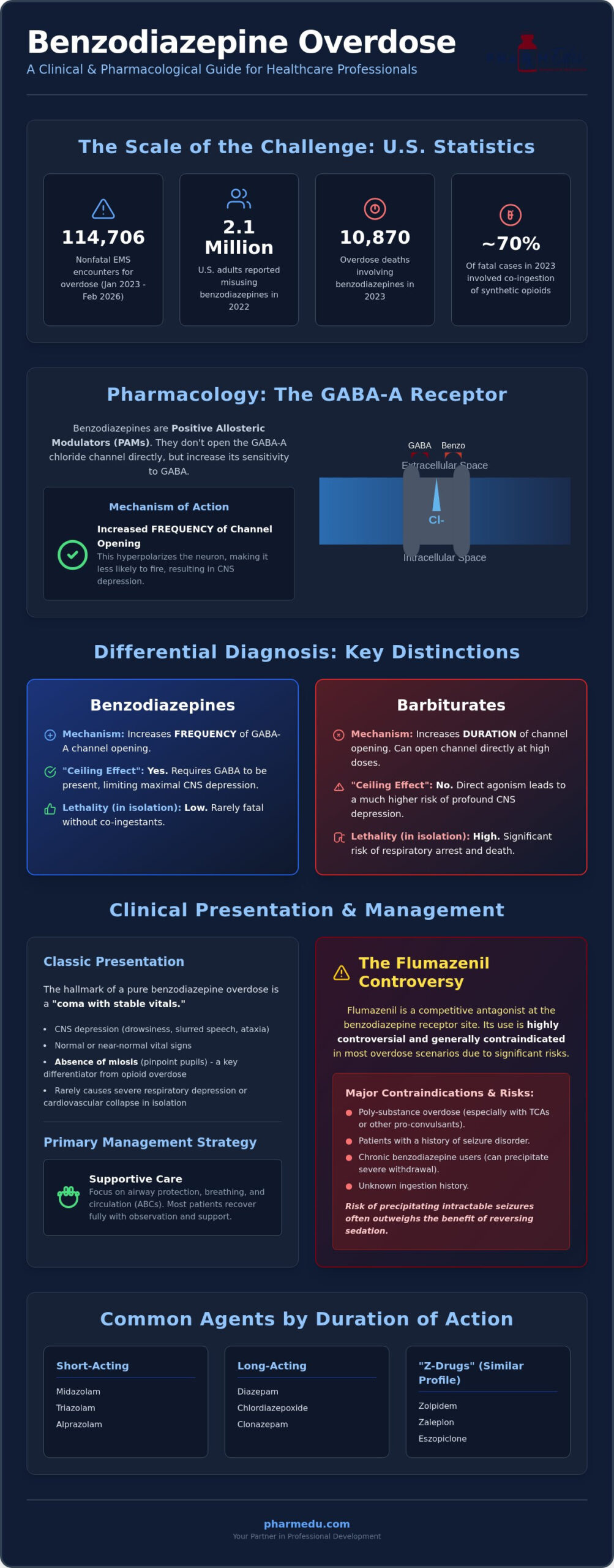
The scale of this clinical challenge is significant. In 2022, roughly 2.1 million adults in the United States reported misusing benzodiazepines. This high rate of misuse contributed to 10,870 overdose deaths in 2023. We’re also seeing a rise in polydrug use involving synthetic benzodiazepines, which are often more potent than traditional pharmaceutical versions. While pediatric cases are typically accidental ingestions by curious toddlers, adult cases are frequently intentional or the result of synergistic toxicity with illicit substances like fentanyl. In fact, nearly 70% of fatal cases in 2023 involved the co-ingestion of synthetic opioids.
Commonly Encountered Agents in Clinical Practice
To manage these patients effectively, you must categorize agents by their duration of action. Short-acting medications like Midazolam or Triazolam are frequently used in hospital settings for rapid sedation. Conversely, long-acting agents like Diazepam or Chlordiazepoxide have active metabolites that can extend the duration of CNS depression for several days. You should also be familiar with “Z-drugs” like Zolpidem and Zaleplon. Although they aren’t benzodiazepines by chemical structure, they bind to the same receptor sites and produce a nearly identical toxicological profile. For a detailed breakdown of these drug classes and their specific indications, you can refer to our comprehensive pharmacology guide. Understanding these differences is the key to predicting the clinical course of an overdose.
The Pharmacology of Toxicity: GABA-A Modulation and CNS Depression
The core of understanding a benzodiazepine overdose lies in the complex architecture of the GABA-A receptor. This pentameric protein serves as a ligand-gated chloride channel. Benzodiazepines specifically target the binding pocket located at the interface of the alpha and gamma subunits. Unlike many other CNS active drugs, these agents don’t act as direct agonists. Instead, they function as Positive Allosteric Modulators (PAM). This means they increase the frequency of the chloride channel opening only when the endogenous neurotransmitter GABA is already present. By increasing chloride conductance, they hyperpolarize the postsynaptic neuron, making it less likely to fire an action potential.
For your board exams, the most critical distinction to memorize is the “ceiling effect” of benzodiazepines compared to barbiturates. Since benzodiazepines require the presence of GABA to exert their effect, they have a built-in limit to the level of CNS depression they can cause. Barbiturates, on the other hand, increase the duration of chloride channel opening and can even open the channel directly at high concentrations. This lack of a ceiling effect is why barbiturates are inherently more lethal in isolation. For a deeper look at these mechanisms, the Clinical Review of Benzodiazepine Toxicity provides an excellent breakdown of the molecular pathophysiology.
Pharmacokinetics also play a vital role in how an overdose presents. Highly lipophilic agents, such as diazepam and midazolam, cross the blood-brain barrier rapidly, leading to a quick onset of symptoms. If you’re struggling to keep these pharmacokinetic profiles straight, our interactive pharmacology flashcards can help you memorize half-lives and onset times efficiently. Understanding these properties allows you to predict how quickly a patient’s status might change during a benzodiazepine overdose event.
The Mechanism of Respiratory Depression
While benzodiazepines inhibit the medullary respiratory center by enhancing GABAergic signaling, this effect is usually mild in healthy individuals. In a “pure” overdose, the patient might be deeply somnolent or in a “coma,” but they typically maintain a patent airway and adequate minute ventilation. This is why intubation is rarely required unless other factors are at play. The primary pharmacodynamic effects you’ll observe include profound sedation, ataxia, and significant cognitive impairment.
Synergy and Co-ingestion: The Deadly Combination
The clinical picture changes drastically when other substances are involved. Ethanol acts on a different site of the GABA receptor, creating a potent synergistic effect that can lead to life-threatening respiratory failure. Similarly, opioids suppress the respiratory drive through a different pathway, compounding the sedative effects of the benzodiazepine. Pharmacodynamic synergy occurs when the combined effect of two drugs, such as alprazolam and alcohol, is significantly greater than the sum of their individual effects.
Differential Diagnosis: Distinguishing Benzodiazepines from Barbiturates
The term “toxidrome” is a shorthand for the physical exam findings that suggest a specific class of poison. In a suspected benzodiazepine overdose, the patient often presents with the sedative-hypnotic toxidrome. This is typically characterized by CNS depression, slurred speech, and ataxia, but with remarkably stable vital signs compared to other poisonings. One of the most reliable clinical clues is the absence of miosis. While opioid toxicity presents with pinpoint pupils, patients who have ingested benzodiazepines will generally have normal or slightly dilated pupils that remain reactive to light.
Relying solely on laboratory data can be a pitfall for clinicians. Standard urine drug screens (UDS) use immunoassays that primarily detect oxazepam, a common metabolite of many older benzodiazepines. However, these screens often yield false negatives for newer or highly potent agents like clonazepam, lorazepam, or synthetic analogs. This diagnostic gap is a significant concern, especially as the CDC Report on Benzodiazepine Overdose Trends highlights the increasing complexity of polydrug ingestions. Diagnosis remains a clinical one; you shouldn’t wait for a lab result to begin supportive management.
Benzodiazepines vs. Barbiturates: The Exam Showdown
On your board exams, the distinction between these two classes often comes down to their specific effect on the chloride channel. While both enhance GABAergic activity, they do so through different mechanisms:
- Benzodiazepines: Increase the frequency of chloride channel opening.
- Barbiturates: Increase the duration of chloride channel opening.
This fundamental difference is why barbiturates are significantly more dangerous. They lack the pharmacological ceiling that prevents benzodiazepines from causing fatal CNS depression in isolation. Additionally, benzodiazepines have a specific competitive antagonist, Flumazenil, whereas barbiturates have no specific reversal agent. This makes the management of barbiturate toxicity purely supportive and significantly higher risk for the patient.
Excluding Other Metabolic and Toxic Insults
Before you settle on a drug-induced cause, you must rule out metabolic emergencies. Hypoglycemia is the great medical mimic and can present with altered mental status that looks identical to a sedative overdose. Checking a finger-stick blood glucose is a mandatory first step for every patient with reduced consciousness. You should also consider post-ictal states or ethanol toxicity. Ethanol often presents with a characteristic odor and more pronounced cerebellar signs. Because it’s so frequently co-ingested, it complicates the diagnostic picture of a benzodiazepine overdose. A thorough physical exam and a broad differential are your best tools for ensuring patient safety.
Clinical Management and the Flumazenil Controversy
The management of a benzodiazepine overdose focuses on stabilization and meticulous observation. Unlike opioid toxicity, where the immediate administration of an antagonist is the standard of care, the approach here is much more conservative. The primary goal is to ensure the patient’s physiological parameters remain within safe limits while the drug is naturally metabolized. Most patients will recover fully with supportive care alone, provided they haven’t co-ingested other respiratory depressants.
Decontamination with activated charcoal is a frequent point of confusion for students. While it can bind benzodiazepines in the gastrointestinal tract, its use is generally restricted to patients who present within one hour of ingestion. Even then, the risk of aspiration in a somnolent patient often outweighs any potential benefit. You should prioritize airway protection and serial neurological exams over aggressive decontamination. Monitoring should include continuous pulse oximetry and capnography, as end-tidal CO2 levels provide a more sensitive measure of hypoventilation than oxygen saturation alone.
Supportive Care: The Gold Standard
Effective management follows a structured hierarchy of interventions. Your first priority is always assessing airway patency. If the patient is unable to protect their airway or shows signs of significant respiratory distress, supplemental oxygen or mechanical ventilation may be necessary. Hypotension, though less common in pure benzodiazepine overdose, should be addressed with intravenous fluid resuscitation. Finally, continuous cardiac monitoring is essential. This allows you to monitor for QTc prolongation or other arrhythmias that might suggest the presence of dangerous co-ingestants like tricyclic antidepressants (TCAs).
To sharpen your clinical decision-making during high-pressure scenarios, you can practice with our Clinical Case Studies to see how these management protocols apply to real-world patient vignettes.
Flumazenil Pharmacology and Contraindications
Flumazenil acts as a competitive antagonist at the benzodiazepine binding site on the GABA-A receptor. While it effectively reverses sedation, its use is fraught with risk. The FDA “Black Box” warnings highlight the potential for precipitating life-threatening seizures, particularly in patients who use benzodiazepines chronically or those who have co-ingested pro-convulsant drugs like TCAs. In these individuals, the sudden removal of GABAergic inhibition can trigger status epilepticus that is difficult to treat. Flumazenil has a significantly shorter half-life than most benzodiazepines, which often leads to resedation and the need for repeated dosing or a continuous infusion. Because of these complications, Flumazenil is typically reserved for pediatric accidental ingestions or reversing procedural sedation in patients without a history of seizure disorders.
Master Toxicology and Board Exams with PharmEDU
At PharmEDU, we’ve refined the study process through a mobile-compliant micro-learning approach that fits into the gaps of your clinical rotations. Instead of wading through dry, academic texts, you can use our interactive pharmacology flashcards to cement your knowledge of drug classes, half-lives, and receptor-level interactions. We aim to remove the administrative and cognitive burden of board preparation, allowing you to focus on the practical application of these scientific principles. This structured approach ensures you’re not just prepared for the test, but ready for the bedside.
High-Yield Video Vignettes for Toxicology
Visual learners often struggle with the subtle overlaps between different sedative-hypnotic toxidromes. Our high-yield video vignettes solve this by providing clear, case-based demonstrations of patient presentations, helping you distinguish a benzodiazepine overdose from other CNS insults in seconds. This method of learning is particularly effective for the NAPLEX, where identifying the correct clinical “clue” is often the difference between success and failure. For more strategies on tackling these difficult questions, explore our NAPLEX prep guide.
Join the PharmEDU Community
Whether you’re a student preparing for your first clinical year or a faculty member looking for an institutional platform license, our tools are designed to support every stage of the professional journey. We provide a structured, logical path from initial problem-solving to complete mastery, ensuring that your knowledge is both deep and durable. We don’t believe that professional education should be a dry, administrative chore. Instead, we offer a dynamic platform that evolves alongside the latest scientific results and industry regulations. You can upgrade your board prep with PharmEDU today and gain full access to our comprehensive curriculum of videos, quizzes, and clinical case studies.
Advancing Your Clinical Expertise and Board Readiness
Mastering the management of a benzodiazepine overdose requires a deep understanding of Positive Allosteric Modulation and the critical differences between various sedative-hypnotic agents. You’ve learned that while these cases often present with stable vitals, the risk of synergy with co-ingestants like alcohol or fentanyl remains a significant clinical challenge. Relying on supportive care and recognizing the specific dangers of Flumazenil are the hallmarks of a prepared practitioner. These concepts aren’t just for exams; they’re the foundation of safe patient care in high-pressure environments.
Our platform is designed to take the administrative weight off your shoulders so you can focus on these high-yield topics. With a comprehensive curriculum covering over 100 topics, PharmEDU provides the tools you need for professional success. You can use our interactive flashcards and practice quizzes, all developed by experienced healthcare educators, to ensure your knowledge is both precise and practical. We’re here to be your partner through every rotation and licensing hurdle.
Master Pharmacology with PharmEDU High-Yield Subscriptions today and join a community of professionals dedicated to continuous development. You’ve got the talent and the drive to succeed in your medical career, and we’re excited to help you reach your full potential at the bedside.
Frequently Asked Questions
Is benzodiazepine overdose fatal?
A pure benzodiazepine overdose is rarely fatal in healthy individuals because these drugs have a high therapeutic index. Mortality typically occurs when they are combined with other CNS depressants like alcohol or opioids. In 2023, nearly 70% of fatal cases involving these medications also involved synthetic opioids like fentanyl. Without co-ingestants, most patients experience profound sedation but maintain enough respiratory drive to survive with basic supportive care.
What is the antidote for benzodiazepine overdose?
Flumazenil is the specific competitive antagonist used to reverse the effects of these medications. It works by binding to the same site on the GABA-A receptor, effectively blocking the benzodiazepine from exerting its sedative effects. However, clinicians use it sparingly due to the risk of precipitating acute withdrawal or seizures. It is most commonly reserved for pediatric accidental ingestions or the reversal of procedural sedation rather than undifferentiated toxicity.
How do benzodiazepines affect the GABA receptor differently than barbiturates?
Benzodiazepines increase the frequency of the chloride channel opening, whereas barbiturates increase the duration of the opening. This mechanistic difference is why barbiturates are inherently more dangerous in a toxicological context. Because benzodiazepines only enhance the effect of existing GABA, they have a pharmacological limit. Barbiturates, at high doses, can open the chloride channel directly without the presence of endogenous GABA, leading to fatal CNS depression.
Why is Flumazenil contraindicated in patients with a history of seizures?
Flumazenil is contraindicated in these patients because it can precipitate acute, life-threatening withdrawal seizures. In chronic users or those with a known seizure disorder, the sudden removal of GABAergic inhibition shifts the brain into a pro-convulsant state. These seizures are often refractory to standard treatments since the primary inhibitory pathway is blocked by the antagonist. Clinicians must carefully screen for chronic use or co-ingestion of tricyclic antidepressants before considering its administration.
Can a standard urine drug screen detect all benzodiazepines?
No, standard urine drug screens frequently fail to detect many common agents. These immunoassays are typically designed to identify oxazepam or its glucuronide conjugates, which are metabolites of older drugs like diazepam. Highly potent or newer medications, such as lorazepam, clonazepam, and alprazolam, often don’t cross-react with the assay. Clinicians shouldn’t rely on a negative urine screen to rule out toxicity if the clinical presentation is consistent with a sedative-hypnotic toxidrome.
What are the symptoms of a mixed benzodiazepine and opioid overdose?
A mixed ingestion presents with more severe respiratory depression and altered pupillary response compared to a pure sedative case. While a pure benzodiazepine overdose usually features normal or slightly dilated pupils, the presence of opioids will cause miosis, or pinpoint pupils. You’ll also observe a significantly decreased respiratory rate and potential hypoxia. This combination is particularly lethal because both drug classes suppress the medullary respiratory center through different, synergistic pathways.
How long does it take for benzodiazepine overdose symptoms to appear?
The onset of symptoms depends heavily on the specific agent’s lipophilicity and route of administration. Highly lipophilic drugs like midazolam or diazepam can cause sedation within minutes, especially if taken intravenously. Oral ingestions typically show peak effects within one to four hours. Understanding these pharmacokinetic profiles is essential for determining the appropriate observation window. Using interactive flashcards can help you memorize these onset times for various agents during your clinical rotations.
What is the “ceiling effect” in benzodiazepine pharmacology?
The “ceiling effect” refers to the built-in limit of CNS depression that benzodiazepines can cause in isolation. Because they are positive allosteric modulators, their effect is dependent on the amount of endogenous GABA present in the synapse. Once all available GABA receptors are modulated, increasing the dose of the benzodiazepine won’t further increase the inhibitory effect. This property makes a pure benzodiazepine overdose significantly less likely to cause fatal respiratory arrest than direct GABA agonists like barbiturates.