
High-Yield Pharmacology for PANCE: The 2026 Board Review Guide
With pharmacology accounting for up to 20% of your total score, mastering high yield pharmacology for PANCE is the difference between achieving a passing 350 and paying a $550 retake fee. It’s natural to feel overwhelmed by the sheer volume of drug classes and their nearly identical side effect profiles. You aren’t alone in feeling that late-night anxiety when Beta-blockers and ACE inhibitors start to blur together after hours of study. Many students struggle to bridge the gap between a drug’s mechanism of action and its practical application in a high-stakes clinical vignette.
This guide changes your approach by focusing on the clinical “if-then” scenarios found in the 2025 blueprint rather than rote memorization. We’ll provide a clear list of the most frequently tested topics and a structured study plan designed to build your confidence for all 300 questions. You’ll learn exactly how to distinguish between similar medications and apply that knowledge to the complex cases you’ll face on exam day. By the end of this review, you’ll have the tools to tackle the most challenging pharmacology questions with precision and ease.
Key Takeaways
- Understand how the NCCPA integrates pharmacology across all organ systems, representing up to 20% of your total exam content.
- Identify the critical “must-know” medications within the cardiovascular and endocrine systems that appear most frequently in clinical vignettes.
- Shift from rote memorization to a mechanism-first approach to accurately predict drug side effects and contraindications under pressure.
- Implement a structured four-week study plan that leverages high yield pharmacology for PANCE to ensure professional readiness and exam success.
Understanding the NCCPA Blueprint: Why Pharmacology is the Key to PANCE Success
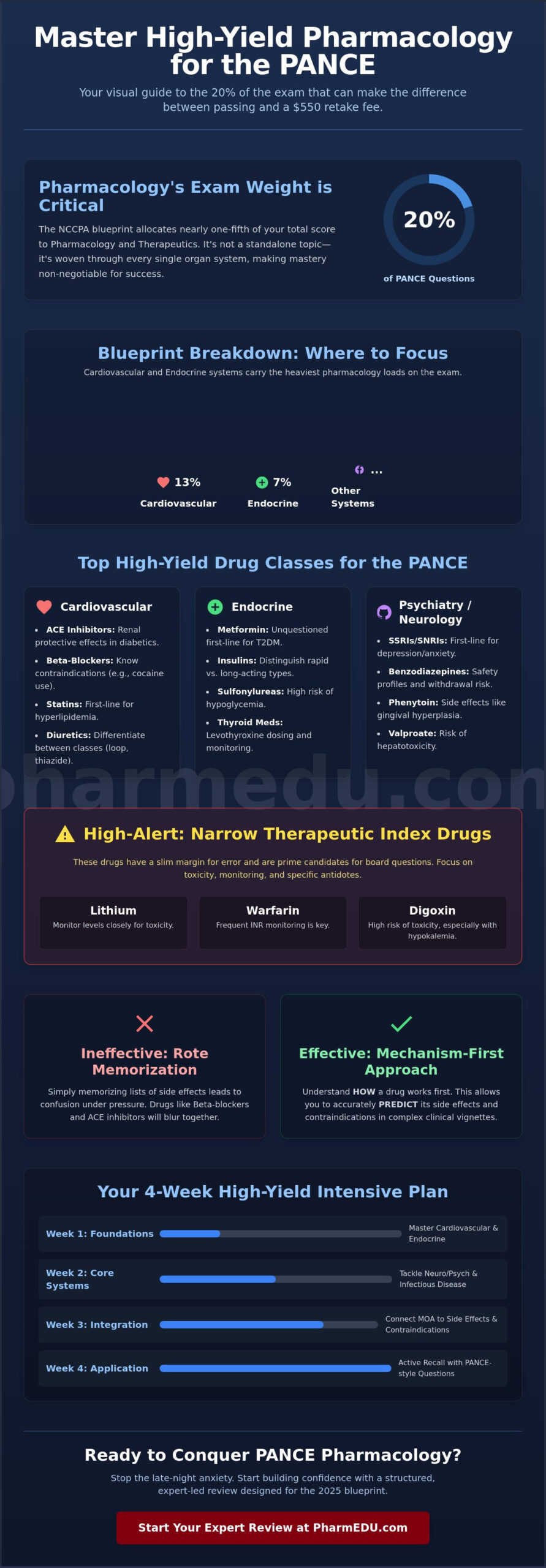
The NCCPA blueprint allocates approximately 18-20% of questions specifically to Pharmacology and Therapeutics, making it one of the most significant pillars of your preparation. This weight isn’t just a number; it represents nearly one-fifth of your total score. Pharmacology isn’t a silo. It’s a thread woven through every organ system, from Cardiology and Pulmonology to Psychiatry and Infectious Disease. We define high yield pharmacology for PANCE as the specific intersection where drug frequency in clinical practice meets exam recurrence.
The Physician Assistant National Certifying Exam (PANCE) tests your ability to apply pharmacological principles to real-world patient scenarios. To succeed, you must prioritize the “most common side effect” and “drug of choice” for every condition. These two data points are the most frequent targets in clinical vignettes. If you can identify the first-line treatment and its most likely adverse reaction, you’ve already solved a large portion of the exam’s pharmacology component.
How Pharmacology is Weighted Across Organ Systems
Cardiovascular (13%) and Endocrine (7%) systems carry the heaviest pharmacology loads on the exam. You won’t just see a question asking for a drug’s mechanism. Instead, you’ll encounter a clinical vignette about a diabetic patient with new-onset hypertension. Understanding the “why” behind the drug of choice is essential. For instance, you should know why ACE inhibitors are the preferred first-line therapy in diabetics due to their proven renal protective effects. This level of clinical reasoning is what separates a passing score from a retake.
Don’t overlook the role of pharmacokinetics in board questions. You’ll need a firm grasp of absorption, distribution, metabolism, and excretion (ADME). These principles aren’t just academic; they explain why a patient with liver failure needs a lower dose of a drug metabolized by the CYP450 system. Mastering high yield pharmacology for PANCE requires you to connect these physiological dots within the context of the organ systems themselves.
Identifying ‘Must-Know’ vs. ‘Nice-to-Know’ Medications
Success requires distinguishing between first-line therapies and salvage treatments. While hundreds of drugs exist, the exam focuses heavily on medications with narrow therapeutic indices. Drugs like Lithium, Warfarin, and Digoxin require precise dosing and frequent monitoring. Because the margin for error is slim, they’re prime candidates for board questions. You’ll likely see questions regarding their toxicity levels and specific antidotes.
Contraindications are equally vital. The NCCPA often uses contraindications as “distractor” answers in PANCE vignettes to test your clinical judgment. Knowing when to withhold a drug is just as important as knowing when to prescribe it. For example, understanding why you shouldn’t give a Beta-blocker to a patient in an acute cocaine-induced hypertensive crisis is a classic board favorite. By focusing on these high-stakes details, you’ll build the confidence needed to navigate the 300 questions on exam day.
Top High-Yield Drug Classes for the 2026 PANCE
Identifying the core drug classes is the first step in streamlining your study time and avoiding the trap of information overload. The NCCPA PANCE Content Blueprint highlights specific areas where certain medications dominate the 300-question exam. While you might feel tempted to learn every rare toxin, your success depends on mastering the heavy hitters that appear in nearly every block. Focus your energy on cardiovascular agents, endocrine therapies, and infectious disease treatments to secure the bulk of your points.
In the endocrine section, you’ll need to distinguish between rapid-acting and long-acting insulins, while also understanding why Metformin remains the first-line choice for Type 2 Diabetes. For psychiatry and neurology, the focus shifts to SSRIs, SNRIs, and the safety profiles of benzodiazepines. Pay close attention to anticonvulsants like Phenytoin and Valproate, as their narrow therapeutic windows and specific side effects, such as gingival hyperplasia or hepatotoxicity, are classic board targets. Utilizing interactive pharmacology flashcards can help solidify these distinctions during your daily review sessions.
Cardiovascular Pharmacology: The Heavy Hitter
Cardiovascular pharmacology remains the most significant category, reflecting its 13% weight on the exam. Mastering the RAAS system is non-negotiable for anyone seeking a score above the 350 passing threshold. You must understand how ACE inhibitors, ARBs, and Beta-blockers function not just as antihypertensives, but as mortality-reducing agents in heart failure. When studying anti-arrhythmics, focus your attention on Class III agents like Amiodarone and Class IV agents such as Verapamil and Diltiazem. Amiodarone is a frequent guest on the PANCE because of its extensive side effect profile involving the thyroid, lungs, and liver.
Statins also require deep dives into their mechanism of action and monitoring requirements. You’ll likely encounter a vignette asking about a patient with muscle pain after starting atorvastatin. Knowing when to check liver function tests (LFTs) and how to identify rhabdomyolysis is essential for high yield pharmacology for PANCE. These clinical applications are what the NCCPA uses to test your readiness for practice.
Antibiotic Stewardship and Selection
Selecting the right antibiotic is a foundational skill for any Physician Assistant. For the PANCE, you must know the drug of choice for common presentations like community-acquired pneumonia (CAP), urinary tract infections (UTIs), and sinusitis. For example, knowing that a macrolide or respiratory fluoroquinolone is preferred for CAP can save you valuable time during the exam. Don’t let cross-reactivity myths confuse you; modern 2026 clinical guidelines clarify that the risk of cross-reactivity between penicillins and cephalosporins is much lower than the historically cited 10%.
Certain side effects “scream” the name of the drug. If a clinical vignette mentions “Red Man Syndrome,” your mind should immediately go to Vancomycin and its infusion rate. Similarly, a patient complaining of sudden heel pain while on Ciprofloxacin is a textbook case of tendon rupture. High yield pharmacology for PANCE isn’t just about the name of the drug; it’s about recognizing these specific, high-stakes clinical associations.
Active Recall vs. Rote Memorization: Strategies for Long-Term Retention
Rote memorization often fails when you’re faced with the complex reality of a 5-sentence clinical vignette. While traditional flashcards help with vocabulary, they rarely prepare you for the “next best step” questions that define the PANCE. High yield pharmacology for PANCE requires a shift from simply naming a drug to understanding its behavior within a living system. If you only memorize that a drug causes a specific side effect, you’ll likely struggle when the exam presents that side effect as a patient’s chief complaint.
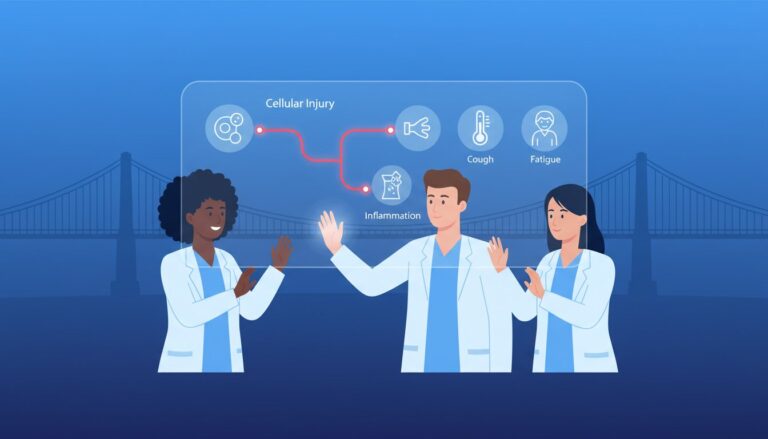
Adopting a “Mechanism First” approach is the most efficient way to secure long-term retention. When you truly grasp how a drug interacts with its receptor, you can logically predict its therapeutic effects and its adverse reactions without relying on mental lists. Essentially, pharmacology acts as the bridge between pathophysiology and clinical medicine, allowing you to translate cellular changes into patient outcomes. This conceptual framework turns every question into a logical puzzle rather than a memory test.
Micro-learning vignettes are an excellent tool for simulating exam-day pressure in 5-minute bursts. Instead of marathon study sessions that lead to burnout, use these short, high-intensity exercises to test your clinical reasoning. This method keeps your brain engaged and helps you build the stamina needed for the 300-question marathon you’ll face in 2026. By treating your study time like a series of clinical shifts, you’ll develop the “if-then” mindset required for board success.
The Power of Clinical Vignettes
Identifying “buzzwords” in a PANCE question is a skill that comes from consistent exposure to clinical vignettes. A phrase like “grayish-blue skin discoloration” should immediately point you toward Amiodarone, while “yellow-green halos” suggests Digoxin toxicity. However, the 2026 exam often goes deeper, asking how comorbidities like chronic kidney disease or asthma affect your drug selection. Practicing with detailed case studies allows you to see these interactions in a controlled environment. Many visual learners find that PharmEDU’s high-yield video vignettes outperform static text because they provide a narrative context that anchors the information in the mind.
Spaced Repetition and Mnemonics
Spaced repetition is the gold standard for moving high yield pharmacology for PANCE from short-term to long-term memory. Set a schedule that revisits “hard” drug classes, such as anti-arrhythmics or chemotherapy agents, every 3 days. Use simple, relevant mnemonics to keep the details straight, but don’t let them replace a deep understanding of the MOA. Finally, utilize the “teach-back” method. Explaining a complex mechanism of action to a peer or even out loud to yourself is the ultimate test of mastery. If you can’t explain it simply, you don’t know it well enough for the boards.
Your 4-Week High-Yield Pharmacology Intensive Study Plan
Mastering high yield pharmacology for PANCE requires more than just a list of medications. It demands a disciplined, structured timeline that integrates drug knowledge into clinical systems. This four-week plan is designed to help you navigate the 18-20% pharmacology weight on the exam without succumbing to information overload. By breaking the content into manageable blocks, you ensure that every drug class receives the attention it deserves based on the NCCPA blueprint.
- Week 1: The Foundations. Focus your energy on the “Big Three” organ systems: Cardiovascular, Pulmonology, and GI. Since cardiovascular topics alone account for 13% of the exam, this week is the most critical for your success.
- Week 2: Metabolic and Renal. Dedicate these seven days to Endocrine, Renal, and Urology pharmacology. This is the time to master insulin titration, SGLT2 inhibitors, and the nuances of diuretic therapy.
- Week 3: Complex Therapies. Shift your focus to Infectious Disease, Hematology, and Oncology. Revisit the antibiotic selection strategies discussed earlier and ensure you can identify the specific side effects of common chemotherapeutic agents.
- Week 4: The Final Push. Cover Psychiatry and Neurology while transitioning into comprehensive “Mixed Bag” practice exams. This week is about building the mental stamina required for the 300-question marathon.
Consistency is your greatest ally during this intensive period. To see real results, you should integrate your pharmacology review into your existing organ system study blocks. If you are studying the respiratory system, that is the day to master beta-agonists and inhaled corticosteroids. To gauge your progress effectively, you can access pharmacology practice quizzes that simulate the exact format of the 2026 boards.
Daily Study Habits for Maximum Efficiency
Efficiency is about quality, not just quantity. Start every morning with the “Morning 10,” which consists of 10 random pharmacology practice questions. This habit wakes up your clinical reasoning and forces you to recall information across different drug classes. In the evening, commit to 15 minutes of high yield pharmacology for PANCE using interactive flashcards. These short bursts of “spaced repetition” are far more effective for long-term retention than a single five-hour cramming session. Balancing these habits ensures that pharmacology remains a constant, manageable part of your daily routine rather than a looming hurdle.
Final Week Polish: The ‘Red Flag’ Drugs
During your final seven days, focus on the “Red Flag” medications that the NCCPA frequently uses to test safety and judgment. Review the black box warnings for the top 50 most tested drugs, such as the risk of tendon rupture with fluoroquinolones or the fetal toxicity associated with ACE inhibitors. Pay special attention to the CYP450 system and drug-drug interactions, as these are common “distractor” targets in clinical vignettes. Finish your preparation by simulating a full-length PANCE block. Testing your endurance under timed conditions will help you maintain focus when you reach the final 60-minute block on exam day.
Mastering the PANCE with PharmEDU: Expert-Led Review for 2026
Successfully executing a four-week study plan requires the right tools to transform raw data into clinical expertise. PharmEDU provides access to over 100 high yield pharmacology for PANCE topics, each meticulously curated to align with the 2025-2026 NCCPA standards. These resources don’t just list drug names; they provide the deep physiological context necessary for professional practice. By utilizing specialized pharmacology study guides, you can effectively bridge the gap between classroom theory and the complex vignettes found on the boards.
Clinical rotations often leave little room for traditional, hours-long study sessions. Our platform’s mobile-compliant micro-learning modules allow you to turn a 10-minute break between patient rounds into a productive review of high yield pharmacology for PANCE. This flexibility ensures your preparation remains consistent, even during your busiest clinical weeks. Interactive flashcards and practice quizzes provide real-time feedback, instantly identifying your weak areas so you can adjust your focus before exam day arrives.
Why Video Vignettes are the Gold Standard
Static text often fails to capture the nuance of a patient’s clinical presentation. Seeing a scenario play out in a high-yield video vignette helps anchor drug names to specific patient faces and symptoms, making recall much easier under the pressure of the 300-question exam. Our expert instructors break down complex mechanisms of action into the essential “need-to-know” facts for 2026. This method is a core part of our comprehensive pharmacy review approach, which prioritizes modern digital learning over the limitations of traditional, heavy textbooks.
Visual learning creates stronger neural pathways by connecting pharmacological interventions with their visual outcomes. When you watch a video explaining the management of a hypertensive crisis, you aren’t just reading about Labetalol; you’re witnessing the clinical decision-making process in real time. This narrative structure is what helps students move beyond rote memorization toward genuine mastery of the material.
Join the PharmEDU Community
Whether you’re an individual student or part of a larger program, we offer subscription options tailored to your needs. Individual students can choose between monthly and annual plans, while institutional platform licenses provide comprehensive tools for entire cohorts. Our administrative tools allow you to track your progress with detailed performance metrics, showing you exactly how your scores improve over time. This data-driven approach removes the guesswork from your preparation, giving you the security of knowing you’re ready for the 350-point passing threshold.
Your journey toward becoming a certified Physician Assistant is a significant professional milestone. Don’t let the 20% pharmacology weight on the exam become a barrier to your success. Start your PharmEDU subscription today and master PANCE pharmacology with the support of a digital mentor dedicated to your professional growth.
Take Command of Your PANCE Preparation Today
Mastering high yield pharmacology for PANCE is a journey that requires both clinical precision and a structured study strategy. You’ve seen how the 2026 blueprint prioritizes practical application over rote memory; focusing on the most common side effects and first-line treatments is your most effective path to a passing score. By shifting your focus to the “Big Three” organ systems and utilizing active recall, you can confidently navigate the 300 multiple-choice questions you’ll face on exam day.
You don’t have to face this challenge alone. PharmEDU offers 100+ high-yield video vignettes and interactive flashcards designed by healthcare educators to ensure your board success. These tools use spaced repetition and clinical case studies to bridge the gap between classroom theory and professional practice. Unlock High-Yield PANCE Mastery with PharmEDU today and secure the future you’ve worked so hard to build. You’ve got the talent and the drive; now you have the right partner to help you cross the finish line with confidence.
Frequently Asked Questions
What percentage of the PANCE is pharmacology?
Approximately 18-20% of the PANCE questions are categorized under Pharmacology and Therapeutics. This makes it one of the largest single content areas on the exam. Since the exam consists of 300 questions, you can expect roughly 54 to 60 questions to focus specifically on drug therapy across various organ systems. This weight has remained consistent in the 2025 and 2026 content blueprints.
What are the most commonly tested drug classes on the PANCE?
Cardiovascular and Endocrine agents are the most frequently tested classes on the exam. You’ll see numerous questions on ACE inhibitors, Beta-blockers, and Diuretics due to their 13% weight in Cardiology. Insulin types and Metformin are also critical, reflecting the 7% weight of the Endocrine system. Mastering high yield pharmacology for PANCE means prioritizing these heavy hitters over rare or specialized medications.
How should I study for pharmacology if I am a visual learner?
Visual learners should prioritize video vignettes and color-coded mechanism-of-action diagrams over standard textbooks. Seeing a clinical scenario play out in a video helps anchor drug names to specific patient symptoms. Using interactive flowcharts that trace a drug’s path through the body can also help you visualize the “if-then” logic required for 2026 board success. This method creates stronger neural pathways than static text alone.
Are drug doses tested on the PANCE?
No, the NCCPA rarely tests specific drug dosages on the PANCE. You should focus your energy on the “drug of choice” for specific conditions and the most common side effects instead. The only exceptions are drugs with narrow therapeutic indices, such as Lithium or Warfarin, where you might need to know therapeutic ranges or toxic levels to identify a patient in crisis.
How do I distinguish between similar-sounding drug names (e.g., -olol vs. -pril)?
Use the “suffix method” to quickly categorize medications by their endings. For example, medications ending in “-pril” are always ACE inhibitors, while those ending in “-olol” are Beta-blockers. Recognizing these patterns allows you to immediately identify the drug class and its associated side effects, such as the dry cough often linked to ACE inhibitors. This strategy is essential for navigating high yield pharmacology for PANCE without confusion.
Is the pharmacology on the PANCE harder than my PA school exams?
The PANCE isn’t necessarily harder, but its focus is more clinical. While school exams often require rote memorization of drug names, the boards test your ability to apply pharmacological principles in complex patient vignettes. You’ll need to identify the next best step in treatment for a patient with multiple comorbidities rather than just naming a drug or its mechanism of action.
Should I focus more on side effects or mechanisms of action?
You should focus more on side effects and “drug of choice” scenarios. While the mechanism of action is important for understanding how a drug works, the PANCE primarily tests your ability to recognize adverse reactions and select the correct first-line therapy. Knowing that ACE inhibitors are contraindicated in pregnancy is often more valuable for your score than memorizing every enzymatic step of the RAAS cascade.
How many weeks before the PANCE should I start my pharmacology-specific review?
You should start a dedicated pharmacology review at least four weeks before your exam date. This timeline allows you to spend one week on each major category, such as Cardiology, Endocrine, and Infectious Disease. Starting early ensures you have enough time for spaced repetition, which is the most effective way to move drug information into your long-term memory for exam day.