
Top 200 Drugs Study Guide 2026: High-Yield Strategies for Board Success
What if the secret to passing your boards isn’t memorizing more, but understanding less? Many students treat the medication list like a phone book, yet the most successful candidates know that mastery is actually a linguistic exercise in pattern recognition. It’s completely normal to feel overwhelmed by the sheer volume of brand and generic names, especially with the 2026 PTCE updates reducing the Medications domain to 35% and shifting focus toward clinical safety. You’re likely anxious about how new 2025 FDA approvals and the patent cliff for blockbusters like Januvia will change what you need to know.
This top 200 drugs study guide 2026 provides the structured, high-yield strategy you need to replace panic with precision. We’ll show you how to recognize therapeutic classes instantly by their suffixes and retain the contraindications that matter most for board success. We’re going to dive into the current prescribing data, analyze the impact of GLP-1 agonists, and give you a clear roadmap to pass your exams on the first attempt without the burnout of traditional rote learning.
Key Takeaways
- Shift from rote memorization to pattern recognition by mastering the ‘Stem System’ of prefixes and suffixes to identify drug classes instantly.
- Prioritize your study time on high-yield therapeutic buckets like Cardiovascular and Endocrine medications, which remain the most tested areas on 2026 board exams.
- Use this top 200 drugs study guide 2026 to implement a structured Spaced Repetition Schedule (SRS) and interactive quizzes for long-term clinical retention.
- Stay ahead of the “patent cliff” and new 2026 FDA approvals by focusing on clinical application and safety protocols rather than just drug names.
- Leverage digital tools like video vignettes and interactive flashcards to transform dry medication lists into practical, board-ready knowledge.
The 2026 Top 200 Drugs List: Your Board Exam North Star
The Top 200 medications list isn’t an arbitrary collection of names. It represents the most frequently prescribed drugs in the United States, serving as a data-driven reflection of modern healthcare priorities. Board exams prioritize these specific agents because they carry the highest statistical probability of being dispensed or administered. This focus ensures that new practitioners are equipped to manage the medications they’ll encounter daily, emphasizing patient safety and clinical relevance. As we move into 2026, the list reflects a significant shift toward biologics and advanced therapies for chronic disease management, moving beyond simple small-molecule generics. The Top 200 list is the essential foundation for clinical safety.
Why the List Changes Every Year
Pharmacology is dynamic. This top 200 drugs study guide 2026 tracks how new FDA approvals and patent expirations reshape the clinical landscape. For instance, the 2026 “patent cliff” for blockbuster drugs like Januvia (sitagliptin) means generic availability will soon influence prescribing trends. When a drug becomes more affordable or a new, more effective therapy is approved, clinicians adjust their habits. These real-world shifts dictate exam content. Testing bodies use the ‘High-Yield’ concept to filter out obscure medications, focusing your energy on the drugs that account for billions in healthcare spending. Concepts like those found in the WHO Model List of Essential Medicines remind us that global health priorities often align with these high-frequency prescribing patterns.
Board Exam Relevance: NAPLEX, NCLEX, and PTCB
The level of depth required depends on your specific license. For the PTCB, the Medications domain now accounts for 35% of the exam as of January 2026. Candidates here focus on name recognition and basic classification. However, for NAPLEX and NCLEX candidates, the expectation moves from recognition to clinical application. You won’t just identify a drug; you’ll manage its side effects and contraindications. Understanding these nuances is critical for board success. If you’re deciding between different study methods, you might find our comprehensive pharmacy review helpful for choosing the right tools. Mastery of these 200 agents typically covers a vast majority of the pharmacology questions you’ll face, making it the most efficient use of your study time.
Decoding Drug Names: Pattern Recognition Strategies for 2026
Memorizing a list of two hundred individual names is a recipe for cognitive burnout. Successful candidates for the 2026 boards treat the medication list as a language rather than a directory. By using the ‘Stem System,’ you can identify the mechanism of action, therapeutic class, and potential side effects of a drug you’ve never even seen before. This system relies on identifying prefixes, infixes, and suffixes that the United States Adopted Names (USAN) Council uses to categorize medications. When you see a drug ending in -statin, like Atorvastatin, or -prazole, like Omeprazole, you’re looking at a linguistic code that instantly tells you how that drug behaves in the body. This top 200 drugs study guide 2026 focuses on these patterns to save you hundreds of hours of rote memorization.
Mastering Suffixes and Stems
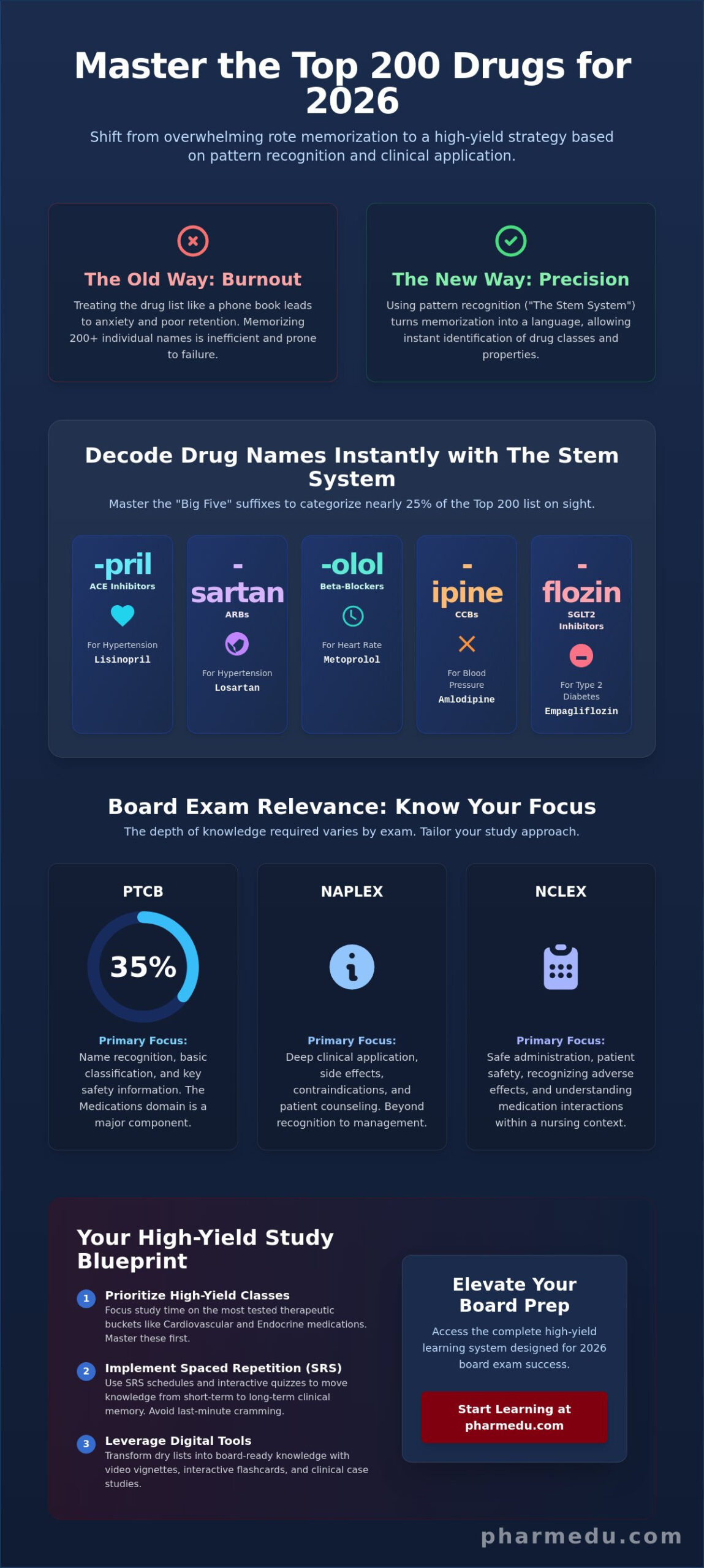
The foundation of name recognition lies in the ‘Big Five’ suffixes. These are the most frequently tested stems because they represent the Top-Selling Drug Classes globally. Mastering these five allows you to categorize nearly 25% of the entire list instantly:
- -pril: ACE Inhibitors (e.g., Lisinopril) for hypertension.
- -sartan: Angiotensin II Receptor Blockers (e.g., Losartan).
- -olol: Beta-Blockers (e.g., Metoprolol).
- -ipine: Dihydropyridine Calcium Channel Blockers (e.g., Amlodipine).
- -flozin: SGLT2 Inhibitors (e.g., Empagliflozin) for type 2 diabetes.
Stems like ‘-mab’ indicate monoclonal antibody therapies, which are becoming increasingly prevalent as biologics take a larger share of the 2026 pharmaceutical market. If you find these patterns difficult to spot at first, practicing with interactive pharmacology flashcards can help reinforce the connection between a drug’s name and its therapeutic class.
Avoiding Common LASA Errors
Pattern recognition is powerful, but it can lead to dangerous ‘Look-Alike, Sound-Alike’ (LASA) errors if you aren’t precise. In a high-pressure exam environment, it’s easy to confuse hydralazine, a vasodilator, with hydroxyzine, an antihistamine used for anxiety or itching. Testing bodies frequently include these pairs to ensure you’re paying attention to clinical safety. To combat this, we recommend using ‘Tall Man Lettering’ in your study notes, such as hydrOXYzine versus hydrALAzine. Misidentifying brand names with similar phonetics isn’t just an exam risk; it’s a significant clinical danger that can lead to medication errors. For drugs that don’t follow standard stems, like gabapentin or metformin, focus on their unique clinical pearls and use spaced repetition to lock them into your long-term memory.
High-Yield Categorization: Mastering the Top 200 by Therapeutic Class
Organizing your study material by therapeutic class is the most efficient way to process the vast amount of data in this top 200 drugs study guide 2026. Instead of viewing 200 isolated data points, you should group medications into ten primary therapeutic buckets. This method allows you to apply a single set of clinical rules to multiple drugs at once. While all classes are important, board exams consistently prioritize the “Big Three”: Cardiovascular, Endocrine, and Psychotropic medications. These categories represent the highest volume of retail prescriptions and carry the most significant risks for drug-drug interactions and adverse events.
The ten primary buckets for 2026 board preparation include:
- Cardiovascular: Antihypertensives, statins, and anticoagulants.
- Endocrine: Antidiabetics and thyroid replacements.
- Neurology/Psychiatry: Antidepressants, anxiolytics, and anticonvulsants.
- Respiratory: Bronchodilators and inhaled corticosteroids.
- Gastrointestinal: PPIs and H2 blockers.
- Anti-infectives: Antibiotics, antivirals, and antifungals.
- Musculoskeletal: NSAIDs and muscle relaxants.
- Genitourinary: BPH and overactive bladder agents.
- Analgesics: Opioids and non-opioid pain relief.
- Miscellaneous: Vitamins, supplements, and specialized biologics.
Cardiovascular and Endocrine Powerhouses
Cardiovascular agents remain the cornerstone of pharmacology exams. You’ll need to distinguish between ACE inhibitors and ARBs, focusing on side effects like the bradykinin-induced dry cough. For a deeper dive into these mechanisms, refer to our ACE inhibitors pharmacology guide. In the endocrine sector, 2026 guidelines reflect the massive surge in GLP-1 agonists and SGLT2 inhibitors. GLP-1 agonists accounted for roughly 14% of all U.S. prescription spending in 2025, and their clinical footprint continues to grow. Monitoring parameters are essential here; you must track potassium levels for diuretics and INR or Factor Xa levels for anticoagulants to ensure patient safety.
Neurology and Psychiatry Essentials
Psychotropic medications require a nuanced understanding of neurotransmitter modulation. You should master the differences between SSRIs and SNRIs, specifically noting the risk of serotonin syndrome. When studying antipsychotics, focus on the metabolic side effects of second-generation agents versus the extrapyramidal symptoms common in first-generation versions. Benzodiazepines frequently appear in safety-focused questions regarding their tapers and respiratory depression risks.
| Drug Class | Common Example | High-Yield Clinical Pearl |
|---|---|---|
| ACE Inhibitor | Lisinopril | Monitor for dry cough and angioedema. |
| ARB | Losartan | Used if ACE inhibitors cause a cough. |
| Beta-Blocker | Metoprolol | Can mask symptoms of hypoglycemia. |
| CCB (DHP) | Amlodipine | Commonly causes peripheral edema. |
Clinical pearls often provide the “tie-breaker” on difficult board questions. For example, you must remember that levothyroxine should be taken on an empty stomach, at least 30 to 60 minutes before breakfast, to ensure optimal absorption. Similarly, patients on statins or certain calcium channel blockers should avoid grapefruit juice due to CYP3A4 inhibition, which can lead to toxicity. These practical details bridge the gap between simple memorization and true clinical competence.
Your 2026 Study Blueprint: From Rote Memorization to Clinical Application
Transitioning from a student mindset to a clinical professional requires a shift in how you process information. A top 200 drugs study guide 2026 shouldn’t just be a list you read; it must be a curriculum you actively engage with. Start your journey with a baseline assessment using pharmacology practice quizzes to identify your knowledge gaps. This diagnostic step prevents you from wasting time on medications you already know, allowing you to focus on high-risk classes like anticoagulants or complex biologics. Once you’ve established your baseline, move into a structured Spaced Repetition Schedule (SRS). This method ensures you review difficult drugs just as you’re about to forget them, which is the most efficient way to achieve long-term retention for the 2026 boards.
Your goal is to evolve from simple brand-generic recognition to understanding how these agents function within a patient’s physiology. Instead of asking “What is the brand for lisinopril?”, ask “How does inhibiting the angiotensin-converting enzyme lower blood pressure?” Utilizing micro-learning segments like high-yield video vignettes helps bridge this gap. These short, focused lessons are designed for busy students who need to master complex concepts in five-minute windows. To start your baseline assessment today, you can access our pharmacology practice quizzes and begin tracking your progress immediately.
The Power of Active Recall
Reading a list three times is the least effective way to learn. It creates an illusion of competence that vanishes under the pressure of a board exam. Active recall forces your brain to retrieve information, which strengthens neural pathways. Use blank templates to force yourself to write out generic names when given only a brand name or a clinical indication. Clinical case studies further cement these associations by placing the medication in a real-world context, helping you remember that metformin isn’t just a pill, but a first-line treatment requiring monitoring of renal function and B12 levels.
Creating a 4-Week Mastery Schedule
A structured timeline prevents the last-minute panic that often leads to exam failure. This four-week plan ensures comprehensive coverage of the 2026 therapeutic priorities:
- Week 1: Foundations. Focus on USAN stems and the Cardiovascular system. Master your -prils, -statins, and -olols.
- Week 2: Metabolism. Dive into Endocrine and Gastrointestinal agents. This is the week for GLP-1 agonists and PPIs.
- Week 3: Complexity. Tackle Psychotropic, Neurology, and Anti-infective classes. Focus on side effect profiles and resistance patterns.
- Week 4: Review and Safety. Final review of all classes with a heavy focus on LASA prevention and high-yield contraindications.
By following this structured approach, you’re not just memorizing names; you’re building a clinical framework. This methodology ensures that when you see a drug name on your exam, you don’t just recognize it, you understand its place in therapy. The 2026 boards demand this higher level of thinking, moving beyond the technician level of simple identification into the professional level of clinical decision-making.
Elevate Your Board Prep with PharmEDU’s High-Yield Learning System
PharmEDU isn’t just a repository of facts. It’s a digital mentor designed to transform the top 200 drugs study guide 2026 from a static document into a dynamic, interactive learning journey. We know that today’s healthcare students balance clinical rotations, part-time jobs, and personal commitments. That’s why our platform prioritizes mobile-compliant micro-learning. You can master a complex drug class during a fifteen-minute commute or between patient rounds. This flexibility ensures that your study schedule fits your life, not the other way around.
The transition from student to professional requires more than just passing a test. It requires up-to-date knowledge that you can apply at the bedside or the pharmacy counter immediately. For educators and program directors, our institutional platform license provides a structured way to monitor this growth. By tracking student progress through our quizzes and case studies, institutions can identify struggling students early. This ensures their cohorts are fully prepared for the 2026 board shifts and the clinical challenges that follow graduation.
Why Video Vignettes Beat Textbooks
Traditional textbooks often become obsolete the moment a new generic hits the market or the FDA updates a black box warning. Our high-yield video vignettes solve this problem by providing visual explanations of complex pharmacology that stay current with 2026 standards. You’ll visualize how a GLP-1 agonist interacts with receptors rather than just reading a paragraph about it. This visual context creates much stronger long-term retention than rote memorization ever could. These vignettes use real-world clinical scenarios that mirror the exact types of questions you’ll face on the NAPLEX, NCLEX, or PTCB. If you’re looking for a resource specifically designed for the clinical side of care, explore the ultimate pharmacology study guide for nursing students.
Join the PharmEDU Community
Investing in a PharmEDU monthly or annual subscription gives you access to a curated ecosystem of high-yield tools. Our interactive pharmacology flashcards use the pattern recognition strategies we’ve discussed to help you master stems and suffixes. Meanwhile, our pharmacology practice quizzes provide instant feedback, helping you refine your test-taking strategy. There’s a specific kind of peace of mind that comes with using accredited, expert-led content. You aren’t just guessing what might be on the exam; you’re following a proven path to success. Start your pharmacology mastery today with PharmEDU and move toward your professional goals with confidence.
Secure Your Professional Future in 2026
Mastering the most frequently prescribed medications isn’t about brute force memorization. It’s about leveraging the linguistic patterns of drug stems and organizing your study around high-yield therapeutic classes. By shifting your focus from simple identification to clinical application, you prepare yourself for the safety-centric demands of modern board exams. You’ve seen how a structured four-week plan and the power of active recall can replace exam anxiety with clinical confidence.
This top 200 drugs study guide 2026 has provided the framework, but the right tools make the difference between passing and excelling. PharmEDU provides micro-learning segments and a mobile-compliant design that allows you to study anywhere, fitting into even the most demanding clinical schedule. Our curriculum is designed by healthcare educators to ensure you’re learning exactly what matters for your license. Unlock High-Yield Pharmacology Mastery with PharmEDU.
You have the strategy and the resources to succeed on your first attempt. Stay consistent with your active recall, trust your preparation, and take the next step toward your healthcare career today.
Frequently Asked Questions
What are the new drugs added to the Top 200 list for 2026?
New additions for 2026 include novel therapies like Awiqli (insulin icodec), a once-weekly basal insulin, and Langlara, a biosimilar for Lantus. These additions reflect the FDA’s 2025 approval of 46 novel drugs and a growing clinical shift toward biologics. You’ll also see a higher frequency of GLP-1 agonists like Wegovy due to their massive surge in retail prescriptions for weight management and diabetes.
How many hours should I spend studying the Top 200 drugs for the NAPLEX?
Most successful candidates dedicate 40 to 60 hours specifically to medication mastery over a four-week period. This top 200 drugs study guide 2026 recommends focusing on high-yield classes like cardiovascular and endocrine agents first. Quality of study matters more than quantity, so use active recall and practice quizzes rather than passively reading lists to ensure you retain clinical pearls for exam day.
Is it more important to know brand names or generic names for the NCLEX?
Generic names are the absolute priority for the NCLEX because the exam uses them exclusively to maintain national testing standards. While brand names are useful for real-world practice, the NCSBN focuses on generic nomenclature to test your understanding of drug classes. Mastering the USAN stem system will help you identify the class and mechanism of action regardless of the brand name used in a clinical setting.
What is the best way to remember drug-drug interactions for the Top 200?
The most efficient strategy is to learn interactions by therapeutic class rather than memorizing individual drug pairs. For example, instead of learning every drug that interacts with lisinopril, learn that ACE inhibitors as a class interact with potassium-sparing diuretics and NSAIDs. This categorical approach allows you to apply one piece of knowledge to dozens of different medications simultaneously, reducing your total study load.
Can I use the Top 200 list from 2024 for my 2026 board exam?
No, using an outdated list is a significant risk because prescribing data and exam weights changed in January 2026. Blockbuster drugs like Januvia have lost patent exclusivity, leading to a shift toward generic sitagliptin in clinical practice. An updated top 200 drugs study guide 2026 accounts for these “patent cliffs” and the latest FDA guidance, ensuring you don’t waste time on obsolete data.
How does pattern recognition help with drugs I’ve never seen before?
Pattern recognition uses the USAN stem system to help you decode a drug’s pharmacology based on its name structure. If you encounter an unfamiliar drug ending in -flozin, you can immediately identify it as an SGLT2 inhibitor. This allows you to predict its mechanism, common side effects, and monitoring requirements even if that specific agent wasn’t part of your primary study list.
Are biologics included in the Top 200 study guide for 2026?
Yes, biologics and biosimilars now represent a larger portion of the list than in previous years due to their increased utilization. You’ll find monoclonal antibodies ending in -mab and new biosimilars like Langlara featured prominently. As total U.S. prescription spending is projected to exceed $1 trillion by the end of 2026, understanding these high-cost specialty medications is essential for modern board success.
What happens if I misidentify a LASA drug on my board exam?
Misidentifying a Look-Alike, Sound-Alike (LASA) drug often leads to failing safety-critical questions that carry heavy weight in the scoring process. Testing bodies like the PTCB and NABP use these pairs to ensure you can distinguish between high-risk medications like hydralazine and hydroxyzine. Developing a habit of using Tall Man Lettering during your preparation can help prevent these common but costly errors on the actual exam.