USMLE Pharmacology Question Bank: The 2026 High-Yield Mastery Guide
Why do many medical students spend hundreds of hours memorizing drug mechanisms only to see their NBME scores stagnate when faced with a clinical vignette? It is a common frustration to feel like you’ve mastered the flashcards but still struggle to distinguish between similar side effect profiles during a timed block. If you’ve found yourself staring at a question about autonomic drugs and feeling the pressure of the 2026 exam’s shorter blocks, you’re likely relying on recall rather than clinical intuition. Finding the right USMLE pharmacology question bank is no longer just about volume; it is about how effectively the resource bridges the gap between basic science and the bedside.
We understand that your time during dedicated study is your most valuable asset, and you need a partner that simplifies the complex scientific landscape of modern medicine. This guide provides a strategic roadmap to help you master challenging pharmacology concepts through a focused, clinical approach. We’ll show you how to utilize interactive tools and high-yield vignettes to ensure you don’t just pass, but score in the top 10% for pharmacology. By the end of this article, you’ll know exactly how to reduce your study hours while building the confidence needed for the new modernized testing interface.
Key Takeaways
- Understand why pharmacology remains the highest-weighted basic science category across all USMLE steps and how its integration is essential for clinical success.
- Learn how to select a USMLE pharmacology question bank that prioritizes high-yield clinical integration over the simple volume of static questions.
- Master the “Mechanism First” approach to move beyond rote memorization and intuitively understand how drug classes behave in complex patient scenarios.
- Identify the four structural components of a high-yield vignette to quickly filter out distractor drug options and improve your accuracy under time pressure.
- Discover how specialized tools like high-yield video vignettes and targeted practice quizzes can help you achieve a top 10% score while reducing overall study time.
Why Pharmacology is the Make-or-Break Component of the USMLE
Pharmacology often feels like an insurmountable wall of drug names and side effects. However, it remains the most consistently high-yield category across the entire United States Medical Licensing Examination (USMLE). While other basic sciences like anatomy or biochemistry might fade in relevance as you progress, pharmacology only becomes more integrated into clinical decision making. In 2026, the high-yield pharmacology mindset means recognizing that every drug mechanism is a clue to a patient’s clinical presentation, potential complications, and eventual management plan. Success requires more than a standard USMLE pharmacology question bank; it demands a shift from recognizing names to predicting physiological responses.
Pharmacology Distribution Across the NBME Exams
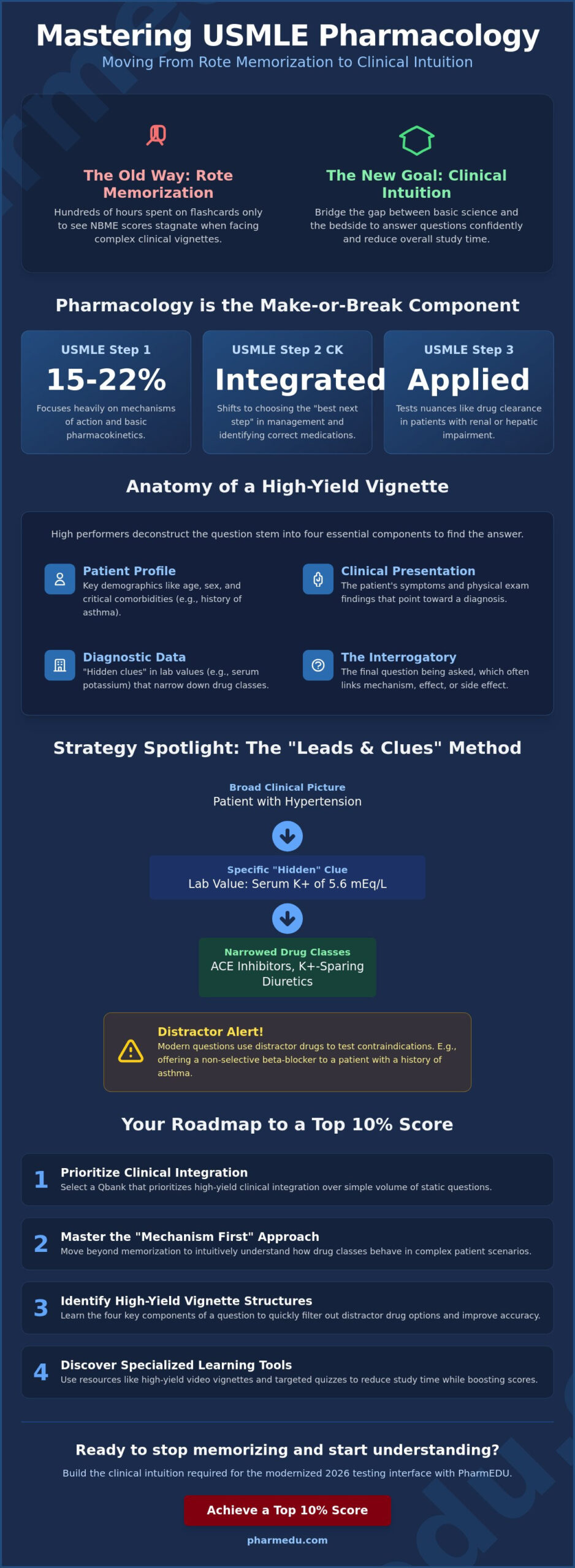
On Step 1, pharmacology typically accounts for 15% to 22% of the total questions. These items focus heavily on mechanisms of action and basic pharmacokinetics. As you transition to Step 2 CK and Step 3, the percentage doesn’t necessarily drop; it simply changes shape. The NBME shifts its focus toward choosing the “best next step” in management, which often involves identifying the correct medication while accounting for contraindications. You’ll find that board-style scoring rewards those who understand how a drug’s volume of distribution or clearance rate affects a patient with renal or hepatic impairment. Scoring in the top decile requires mastery of these nuanced interactions and their impact on patient safety.
The Problem with Rote Memorization in 2026
The era of simple questions asking which drug treats which disease is over. Modern boards utilize second-order and third-order questions that test your ability to synthesize information. A question might describe a patient’s symptoms, require you to diagnose the condition, identify the first-line treatment, and then ask about a specific side effect of that treatment’s mechanism. Relying on rote memorization fails here because you lose the logical thread between steps. This is why a comprehensive USMLE pharmacology question bank must prioritize integrated learning over static lists.
At PharmEDU, our curriculum is designed to move students past passive recognition. We focus on conceptual mastery, ensuring you can navigate complex vignettes where distractor drugs are specifically chosen to test your understanding of drug-drug interactions. Our approach ensures that you aren’t just memorizing lists, but developing the clinical intuition required for the modernized 2026 testing interface. By understanding the “why” behind the drug, you’ll find that the “what” becomes much easier to recall under the pressure of the exam clock.
Anatomy of a High-Yield USMLE Pharmacology Question
Deciphering a complex vignette requires more than just medical knowledge; it requires a systematic approach to the question’s architecture. Most students treat the stem as a wall of text, but high performers recognize it as a collection of specific data points. A high-quality USMLE pharmacology question bank doesn’t just test your memory; it trains you to deconstruct these stems into four essential components. First is the patient profile, including age and comorbidities. Second is the clinical presentation or physical exam findings. Third is the diagnostic data, specifically laboratory values that often act as “hidden” clues. Finally, there is the interrogatory, which is the actual question being asked at the end of the stem.
The “Leads and Clues” method is particularly effective for narrowing down drug classes before you even look at the answer choices. Laboratory values are often the most objective indicators in a vignette. For instance, a serum potassium level of 5.6 mEq/L in a patient with hypertension immediately narrows your focus to drugs that cause hyperkalemia, such as ACE inhibitors or potassium-sparing diuretics. Distractor drugs are then strategically placed to catch students who recognize the disease but don’t understand the specific contraindications. If a patient has a history of asthma, a non-selective beta-blocker will be a prominent distractor designed to test your awareness of bronchospasm as an adverse effect.
Mechanism of Action (MOA) and Pathophysiology Links
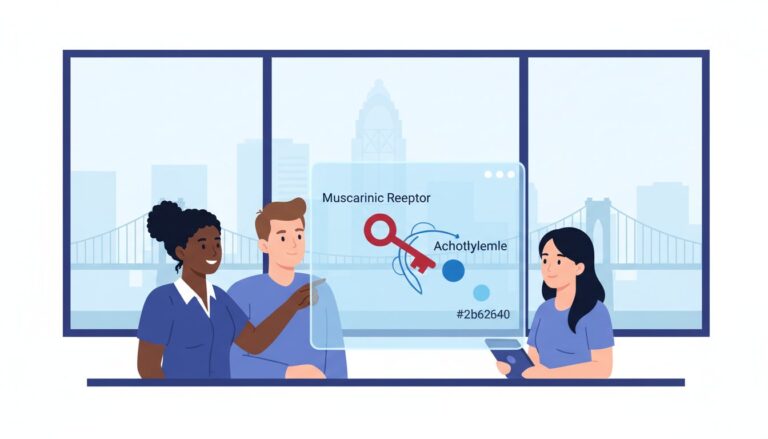
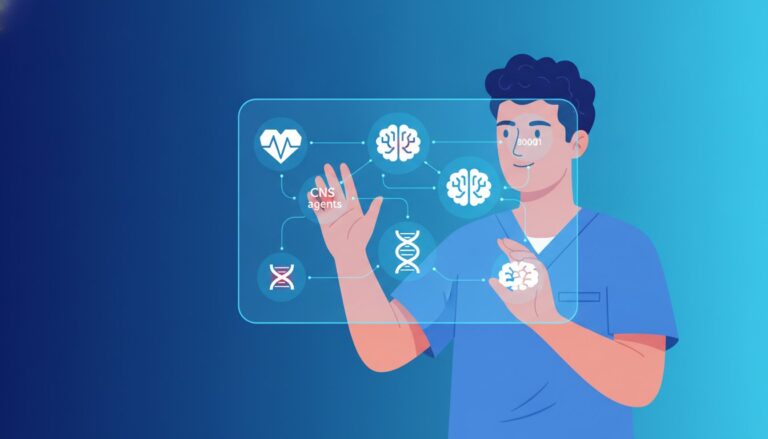
Modern exams rarely ask you to simply name a drug. Instead, they require you to link the drug’s mechanism directly to the pathophysiology of the disease described. In 2026, MOA questions are typically phrased to ask for the specific molecular target or the downstream cellular effect of the most appropriate therapy for the patient’s condition. For cardiovascular questions, you might need to identify a drug that decreases preload by increasing cGMP. For CNS questions, the focus often shifts to the specific neurotransmitter receptor subtype involved in a drug’s therapeutic or toxic effect.
Adverse Effects and Contraindications
You must learn to distinguish between a drug’s “classic” side effect and its actual clinical presentation in a toxicity scenario. A question might ask for the “most likely” side effect, which refers to a common occurrence like a dry cough with ACE inhibitors. This is different from the “most severe” side effect, such as angioedema. Identifying contraindications is equally vital. If the stem mentions a patient with a sulfa allergy, the correct answer for their diuretic needs will shift away from thiazides or loops toward ethacrynic acid. Mastering these nuances through high-yield video vignettes ensures you can handle second-order questions with precision and speed.
Evaluating Qbanks: Quantity vs. Quality vs. Integration
Choosing the right USMLE pharmacology question bank often feels like a numbers game. Many students are lured by platforms boasting 1,500 or 2,000 questions, assuming that higher volume guarantees a better score. However, volume alone is a deceptive metric. In the 2026 testing environment, the quality of clinical integration matters far more than the sheer quantity of items. A set of 500 high-quality, integrated questions that force you to connect pathophysiology to drug mechanisms is significantly more effective than 1,000 static, one-dimensional queries. While high volume might provide a sense of security, it often leads to cognitive fatigue without building the deep neural pathways required for exam day.
The distinction between active recall and passive recognition is where most study plans succeed or fail. Passive recognition occurs when you see a drug name and remember its class because you’ve seen the flashcard recently. Active recall, however, requires you to synthesize patient data from a vignette to “solve” for the drug. A superior Qbank prioritizes this active process, ensuring you can’t guess the answer simply through the process of elimination. Additionally, your practice software must mirror the modernized 2026 USMLE interface. With Step 1 now featuring 14 blocks of 20 questions each, practicing with a tool that simulates this specific timing and layout is essential for managing your cognitive load during the actual exam.
The Static Resource Trap
It’s easy to rely on traditional study materials, but physical textbooks and basic eBooks don’t offer the randomization necessary for true mastery. These resources often lead to “Recognition Bias,” where you get questions right because of their location in a chapter rather than your own knowledge. Digital platforms provide the randomized, timed environment that forces your brain to switch between organ systems rapidly. For a deeper look at why modern students are moving away from paper, see our analysis on Comprehensive Pharmacy Review: Digital Platforms vs. Traditional Textbooks in 2026. Static resources simply cannot prepare you for the second-order thinking required by the NBME.
The Power of Integrated Learning Ecosystems
Data becomes “sticky” when it’s reinforced through multiple sensory channels. When you miss a question in a Qbank, simply reading a text explanation is rarely enough for long-term retention. Mastery happens when that question is directly linked to high-yield video vignettes that visually demonstrate the drug’s mechanism. This ecosystem approach, combining interactive flashcards with micro-learning segments, fits the schedule of a busy medical student. It allows you to turn a ten-minute break into a high-yield review session, ensuring that drug names and side effects stay fresh in your mind through constant, varied reinforcement.
5 Strategies to Master Pharmacology Questions Without Rote Memorization
Mastering pharmacology requires a shift from memorizing endless lists to understanding physiological systems. When using a USMLE pharmacology question bank, your goal isn’t just to find the right answer; it is to understand the logic behind every option. This starts with the “Mechanism First” approach. Instead of starting with a drug name, focus on the receptor, enzyme, or ion channel being targeted. Once you understand the mechanism, the side effects and contraindications become logical extensions of that physiology rather than isolated facts to be memorized. This conceptual foundation is what separates top-tier students from those who struggle with second-order questions.
A second critical strategy is “Wrong Answer Analysis.” Every question in a high-yield Qbank provides five learning opportunities, not one. By explaining why each distractor is incorrect, you reinforce your knowledge of adjacent drug classes. Mnemonics can be helpful for specific lists, but they should serve as a secondary safety net rather than your primary learning method. For complex drug-drug interactions, utilize spaced repetition to ensure these high-stakes details move into your long-term memory. Finally, case-based reasoning is essential for Step 2 CK, where the focus shifts from how a drug works to which medication is best for a specific patient profile.
Bridging Basic Science and Clinical Practice
Connecting classroom theory to patient care is the hallmark of clinical mastery. For example, understanding how ACE Inhibitors impact the efferent arteriole allows you to predict changes in glomerular filtration rate (GFR) without memorizing a table. Using clinical case studies helps you simulate these real-world encounters, making the transition between exam steps much smoother. The “Mechanism First” approach for 2026 means prioritizing the molecular target as the foundation for all clinical predictions and management decisions.
Optimizing Your Study Schedule
Consistency consistently beats intensity. It’s more effective to study pharmacology in small, 30-minute daily blocks than in a single eight-hour marathon. You can integrate your Qbank sessions into a broader NAPLEX or USMLE study plan by using the “20-Question Sprint” during the day. These short bursts build mental endurance and keep your recall sharp. For those aiming for mastery, a “40-Question Marathon” once a week can help simulate the fatigue you’ll face during the actual 2026 exam blocks. To start building these high-yield habits today, we recommend testing your skills with our specialized Pharmacology Practice Quizzes.
PharmEDU: The All-in-One Pharmacology Learning Ecosystem
PharmEDU isn’t just another study tool; it’s a comprehensive digital mentor designed to address the specific challenges of pharmacological education. While a standard USMLE pharmacology question bank provides necessary practice, PharmEDU integrates that practice into a larger ecosystem of clinical application. We recognize that medical students don’t just need more questions; they need better explanations that connect drug mechanisms to patient outcomes. Our platform serves as a reliable partner throughout your academic journey, removing the administrative and cognitive burden of managing disparate study resources. By choosing a specialized USMLE pharmacology question bank that prioritizes integration, you’re investing in a deeper level of professional preparation.
By combining High-Yield Video Vignettes with interactive Pharmacology Practice Quizzes, we ensure that your learning is both active and efficient. This integrated approach allows you to move seamlessly from watching a complex mechanism to testing your recall in a clinical scenario. For medical and pharmacy schools, our Institutional Platform License provides a standardized, high-quality curriculum that supports students in achieving top-tier board scores. We focus on the precision and scientific thoroughness required by the industry while maintaining a supportive environment that encourages continuous professional growth.
Beyond the Question: Video Vignettes and Interactive Tools
The true value of our ecosystem lies in its ability to explain the “why” behind the most tested drugs. Our High-Yield Video Vignettes break down complex physiological pathways into digestible segments, ensuring you understand the logic before you attempt a quiz. To support daily retention, our pharmacology flashcards utilize spaced repetition to keep drug names and side effects fresh in your mind. This platform was built for healthcare professionals, focusing on the practical knowledge you’ll use in the clinic, not just on a computer screen.
Start Your Mastery Today
We offer flexible PharmEDU Monthly Subscription and PharmEDU Annual Subscription options to fit your specific study timeline. Whether you’re in the middle of a heavy academic block or navigating clinical rotations, our mobile-compliant design allows for effective micro-learning on the go. You can review Clinical Case Studies or complete a quick quiz between patient rounds, turning every spare moment into a high-yield study session. Join a growing community of successful students who have moved beyond rote memorization to achieve true mastery and score in the top 10% of their exams.
Elevate Your Clinical Preparation for 2026
Mastering the complexities of drug mechanisms and clinical applications is a journey that requires more than just high-volume practice. Success on the modern boards depends on your ability to move beyond rote memorization and embrace a system-based, integrated approach. Selecting a specialized USMLE pharmacology question bank is a critical decision that determines how effectively you bridge the gap between basic science and patient management. By focusing on conceptual mastery and deconstructing vignettes, you’ll find that even the most challenging second-order questions become manageable.
PharmEDU provides the tools you need to excel, offering over 100 topics through high-yield video vignettes and interactive flashcards. Our mobile-compliant design ensures that clinical case studies are always within reach, allowing you to study effectively during rotations or dedicated prep. Don’t leave your pharmacology scores to chance when you can rely on a platform built for precision and professional growth.
Master Pharmacology with PharmEDU: Start Your High-Yield Subscription Now
Your commitment to excellence today is the foundation for your success as a future healthcare leader. We’re here to support you every step of the way.
Frequently Asked Questions
Is pharmacology heavily tested on USMLE Step 1 since it became Pass/Fail?
Pharmacology remains a pillar of the Step 1 exam, consistently accounting for 15% to 22% of the total content. While the shift to a pass/fail system has changed how students prioritize their time, you can’t ignore this category. Mastery is still essential because the basic science concepts you learn for Step 1 provide the necessary foundation for clinical management questions on Step 2 CK and Step 3.
How many pharmacology questions should I do per day to be ready for the boards?
Consistency is more important than sheer volume. Aiming for 20 to 40 high-quality, integrated questions per day is usually sufficient for most students during their dedicated study period. This pace allows enough time for a deep “Wrong Answer Analysis” of every option. It’s better to understand 20 questions thoroughly than to rush through 100 questions without grasping the underlying physiological mechanisms.
What are the highest-yield drug classes for USMLE Step 1 in 2026?
Cardiovascular, Autonomic, and Antimicrobial drugs are historically the most frequently tested categories. You should also prioritize CNS and endocrine pharmacology, as these often involve complex second-order questions. In 2026, the USMLE has increased its focus on nutrition science, so it’s vital to understand the pharmacological roles of vitamins and their metabolic cofactors in various disease states.
Should I use a specialized pharmacology Qbank or just a general one like UWorld?
A specialized USMLE pharmacology question bank is an excellent investment if you find that general resources don’t provide enough depth. While general banks are a standard part of prep, they often lack the specific video vignettes and clinical case studies needed to master difficult mechanisms. Specialized tools help you focus on your weakest areas without the distraction of unrelated topics.
How do I distinguish between similar-sounding drug names in a timed exam?
Focus on the chemical suffixes and prefixes rather than trying to memorize every unique name. For example, recognizing the “-prazole” suffix immediately identifies a proton pump inhibitor, regardless of the brand name. Use the “Mechanism First” approach to link these suffixes to their molecular targets. This strategy helps you maintain accuracy even under the time pressure of the modernized 2026 testing interface.
Can I use PharmEDU for both USMLE and NAPLEX preparation?
Yes, our platform is designed as a universal ecosystem for all healthcare professionals. The core science of pharmacology doesn’t change between disciplines. Whether you’re a medical student or a pharmacy candidate, our High-Yield Video Vignettes and Practice Quizzes provide the conceptual clarity required for success. We focus on the high-yield principles that are essential for any board-level examination.
What is the best way to memorize drug-drug interactions for the boards?
Don’t try to memorize a massive table of interactions. Instead, focus on the major metabolic pathways, such as the Cytochrome P450 system. Learn the most common inducers and inhibitors first. When you understand how these enzymes work, you can logically predict interactions rather than relying on rote memory. Spaced repetition through interactive flashcards is also highly effective for reinforcing these high-stakes details.
How does PharmEDU integrate video vignettes with its question bank?
We link every quiz response in our USMLE pharmacology question bank directly to a relevant high-yield video explanation. If you get a question wrong, you don’t just read a text summary; you watch a visual breakdown of the concept. This multi-sensory approach ensures the data becomes “sticky,” helping you move from passive recognition to the active recall needed for exam day success.