Pharmacology of Anticoagulants: The High-Yield Guide for Healthcare Students (2026)
Why does the coagulation cascade feel like an unsolvable puzzle the moment you open a pharmacology exam? It’s a common struggle for healthcare students who find themselves buried under a mountain of textbook details and confusing pathways. Mastering the pharmacology of anticoagulants doesn’t require memorizing every single footnote; it requires a structured approach that connects each drug to its target factor. With the FDA’s 2025 approval of generic rivaroxaban and the updated 2026 clinical guidelines from the American College of Cardiology, staying current is more critical than ever for your future practice.
We know how frustrating it is to mix up reversal agents or second-guess which monitoring parameters apply to specific patient populations. This high-yield review is designed to replace that confusion with clinical clarity. You’ll master the essential mechanisms, explore the latest 2026 pediatric prophylaxis standards, and gain the confidence to tackle any board-style question. We’re going to bridge the gap between complex theory and practical application so you can focus on what truly matters: safe patient care. By the end of this guide, you’ll have a reliable framework for managing therapy and acing your exams.
Key Takeaways
- Differentiate between anticoagulants, antiplatelets, and thrombolytics by understanding their specific roles within the coagulation cascade.
- Analyze the mechanisms of indirect thrombin inhibitors, focusing on how Heparin and LMWH interact with Antithrombin III to neutralize clotting factors.
- Master the pharmacology of anticoagulants by comparing Warfarin’s impact on vitamin K-dependent factors with the targeted action of modern Direct Oral Anticoagulants.
- Identify essential clinical monitoring parameters and the specific reversal agents required for managing anticoagulant-related bleeding complications.
- Leverage high-yield video vignettes and interactive study tools to transition from textbook information overload to clinical and board exam readiness.
The Coagulation Cascade: The Foundation of Anticoagulant Pharmacology
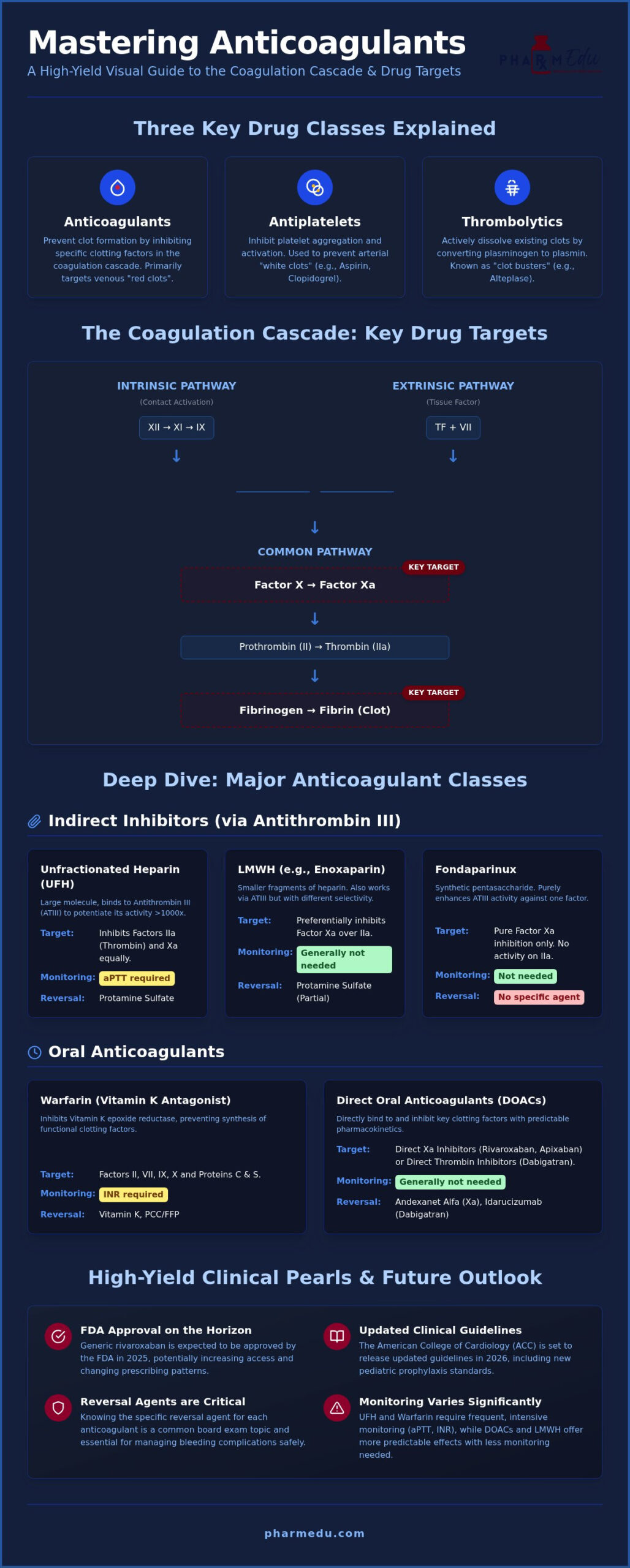
To understand the pharmacology of anticoagulants, you first need to visualize the coagulation cascade as a precise sequence of enzymatic reactions rather than a chaotic web. An Anticoagulant is a substance that prevents the formation or extension of blood clots by inhibiting specific steps in this cascade. It’s vital to distinguish these from antiplatelets, which inhibit platelet aggregation, and thrombolytics, which actively dissolve existing clots. While antiplatelets like aspirin work on the “white clot” of the arterial system, anticoagulants primarily target the “red clot” found in venous thromboembolism.
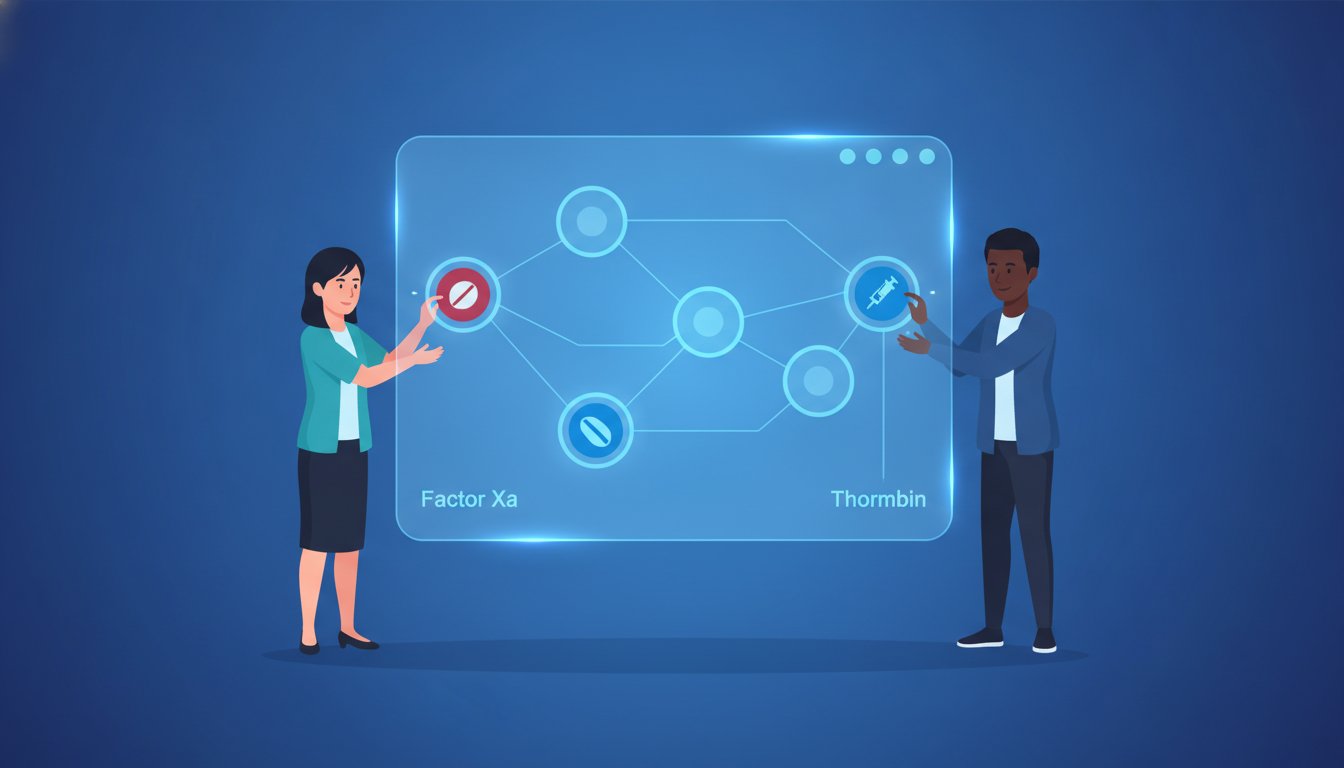
Modern therapy focuses on high-yield targets that provide the most efficient control over clot formation. Specifically, Factor Xa and Thrombin (Factor IIa) are the two primary nodes where most pharmacological interventions occur. By targeting these specific factors, clinicians can achieve predictable therapeutic outcomes with manageable risk profiles. Mastering the pharmacology of anticoagulants begins with knowing exactly where each drug class interrupts this flow to stop the fibrin mesh from stabilizing.
Intrinsic vs. Extrinsic Pathways
The intrinsic pathway, often called the contact activation pathway, begins when blood comes into contact with damaged vessel surfaces or collagen. This triggers a sequence involving Factors XII, XI, IX, and VIII. It’s a complex process that takes longer than its counterpart but plays a significant role in clinical conditions. Conversely, the extrinsic pathway is much faster, relying on Tissue Factor (TF) and Factor VII. Both pathways converge at the activation of Factor X, the gateway to the final stages of clot formation.
The Role of Antithrombin III
Antithrombin III is the body’s natural defense against excessive clotting. It’s a protease inhibitor that neutralizes several factors, most notably Thrombin and Factor Xa. Many drug classes, particularly heparins, rely on Antithrombin III to exert their therapeutic effect. By binding to this protein, these drugs induce a conformational change that accelerates its inhibitory activity significantly. The common pathway begins with the activation of Factor Xa, which converts prothrombin into thrombin, ultimately leading to the formation of a cross-linked fibrin clot.
By focusing on these pathways, students can move away from rote memorization and toward a functional understanding of drug action. Recognizing that most anticoagulants either enhance natural inhibitors or directly block key factors like Xa and IIa simplifies the transition from the classroom to clinical practice. This foundational knowledge is what allows healthcare providers to manage complex cases and anticipate how different therapies will interact with a patient’s unique physiology.
Indirect Thrombin Inhibitors: Heparins and Fondaparinux
Indirect thrombin inhibitors represent a cornerstone in the pharmacology of anticoagulants. Unlike direct inhibitors, these agents don’t block clotting factors on their own. Instead, they work through a biological middleman: Antithrombin III (ATIII). Unfractionated Heparin (UFH) is a large, naturally occurring glycosaminoglycan that binds to ATIII, inducing a conformational change that increases its ability to neutralize Thrombin (Factor IIa) and Factor Xa by over 1,000 fold. Because UFH consists of long polysaccharide chains, it provides a physical bridge between ATIII and Thrombin, making it equally effective against both targets.
Low-Molecular-Weight Heparins (LMWH), such as Enoxaparin, are smaller fragments derived from UFH. These shorter chains are highly effective at catalyzing the inhibition of Factor Xa but are generally too short to bridge ATIII to Thrombin. This shift in selectivity is a key distinction for board exams. Taking this selectivity to the extreme, Fondaparinux is a synthetic pentasaccharide that mimics the exact binding sequence needed for ATIII. It provides pure Factor Xa inhibition with zero activity against Thrombin, offering a targeted approach for patients who cannot tolerate heparin.
Unfractionated Heparin (UFH) vs. LMWH
The clinical choice between UFH and LMWH often comes down to predictability and clearance. UFH has highly variable pharmacokinetics due to its binding to plasma proteins and macrophages, requiring frequent monitoring via the activated partial thromboplastin time (aPTT). In contrast, LMWH has a more predictable dose-response curve and a longer half-life, which allows for subcutaneous administration without routine laboratory monitoring. This makes LMWH the preferred choice for outpatient management. Clinicians must exercise caution with renal impairment, though. While UFH is cleared by the reticuloendothelial system and is safer in end-stage renal disease, LMWH and Fondaparinux are primarily cleared by the kidneys, increasing the risk of accumulation and bleeding in patients with low GFR.
Heparin-Induced Thrombocytopenia (HIT)
One of the most dangerous complications in the pharmacology of anticoagulants is Heparin-Induced Thrombocytopenia. HIT (Type II) is an immune-mediated reaction where the body develops IgG antibodies against complexes of Heparin and Platelet Factor 4 (PF4). These antibodies activate platelets, leading to a paradoxical state of thrombosis despite the patient being on an anticoagulant. You should suspect HIT if you see a 50% or greater drop in platelet count from baseline, typically occurring 5 to 10 days after starting therapy. If HIT is confirmed, you must stop all heparin products immediately, including heparin flushes. To maintain anticoagulation while avoiding further platelet activation, clinicians switch to direct thrombin inhibitors like Argatroban or Bivalirudin. If you find these immunological pathways difficult to visualize, practicing with Interactive Pharmacology Flashcards can help solidify these high-yield distinctions before your next exam.
Oral Anticoagulants: Warfarin and the Rise of DOACs
The transition from parenteral to oral therapy is a critical phase in patient management. For decades, the pharmacology of anticoagulants was synonymous with Warfarin, a Vitamin K antagonist. Warfarin exerts its effect by inhibiting the enzyme Vitamin K Epoxide Reductase (VKOR). This inhibition prevents the recycling of Vitamin K, which is essential for the gamma-carboxylation of clotting Factors II, VII, IX, and X, as well as the anticoagulant Proteins C and S. Because Warfarin only affects the synthesis of new factors, its therapeutic effect is delayed by 3 to 5 days while existing factors decay.
This delay necessitates the “Warfarin Bridge.” During the first few days of therapy, levels of Protein C (which has a short half-life) drop faster than prothrombin (Factor II). This creates a temporary prothrombotic state. To prevent skin necrosis or clot extension, clinicians must co-administer a rapid-acting anticoagulant, like Heparin or LMWH, until the patient reaches a therapeutic International Normalized Ratio (INR). Recent February 2026 AHA/ACC guidelines have shifted the landscape, now recommending Direct Oral Anticoagulants (DOACs) over Vitamin K antagonists for conditions like acute pulmonary embolism due to their immediate onset and superior safety profiles.
Warfarin: Pharmacogenetics and Interactions
Dosing Warfarin is notoriously difficult because of significant inter-patient variability. Genetic polymorphisms in the CYP2C9 enzyme, which metabolizes the drug, and the VKORC1 subunit, the drug’s target, can fluctuate a patient’s required dose by over 50%. Beyond genetics, drug-drug interactions are a major board exam focus. CYP450 inhibitors like amiodarone or fluconazole can dangerously increase INR, while inducers like rifampin or St. John’s Wort can lead to subtherapeutic levels. Patients must also maintain a consistent intake of Vitamin K-rich foods, such as spinach and kale, as sudden dietary changes can directly counteract the drug’s mechanism.
Direct Oral Anticoagulants (DOACs) Comparison
DOACs have revolutionized the pharmacology of anticoagulants by offering predictable pharmacokinetics without the need for routine laboratory monitoring. These agents are classified into two groups: Direct Thrombin Inhibitors (Dabigatran) and Direct Factor Xa Inhibitors (Rivaroxaban, Apixaban, and Edoxaban). While Apixaban and Rivaroxaban are often preferred for their once or twice-daily dosing, clinicians must carefully calculate renal adjustments. For instance, Dabigatran is 80% renally cleared, making it less ideal for patients with significant kidney disease. Despite the 2025 arrival of generic Rivaroxaban increasing accessibility, Warfarin remains the gold standard for patients with mechanical heart valves or antiphospholipid syndrome, where DOACs have shown inferior outcomes in clinical trials.
Clinical Pearls: Monitoring, Reversal, and Board Exam Essentials
Mastering the pharmacology of anticoagulants requires more than understanding how drugs work; you must also know how to manage them safely in a clinical setting. Monitoring is the primary safeguard against therapeutic failure or life-threatening hemorrhage. For Unfractionated Heparin, we use the activated partial thromboplastin time (aPTT) to monitor the intrinsic pathway. Conversely, Warfarin therapy is managed using Prothrombin Time (PT) and the International Normalized Ratio (INR), which standardizes results across different laboratories. While DOACs typically don’t require routine monitoring, clinicians must still track renal function to avoid drug accumulation.
High-yield exam questions often focus on the Vitamin K-dependent factors. A simple way to remember these is the “SNOT” mnemonic: Seven, Nine, One-zero (Ten), and Two. These are the factors Warfarin inhibits by blocking Vitamin K recycling. Additionally, patient safety hinges on recognizing “Look-alike/Sound-alike” (LASA) medications. It’s easy to confuse Pradaxa (dabigatran) with Plavix (clopidogrel), or Heparin with Hespan (a volume expander). Distinguishing these is a critical competency for any healthcare professional.
Antidotes and Reversal Strategies
When bleeding occurs, immediate reversal is necessary. Protamine sulfate is the specific antidote for Unfractionated Heparin, though it only partially reverses LMWH. For Warfarin, Vitamin K (phytonadione) is used for non-urgent reversal, while Prothrombin Complex Concentrate (PCC) is preferred for rapid correction in emergencies. Specific DOAC reversal agents are now standard: Idarucizumab (Praxbind) specifically binds Dabigatran, and Andexanet Alfa acts as a decoy for Factor Xa inhibitors like Rivaroxaban and Apixaban. For a deeper dive into how these agents are handled by the body, consult our comprehensive pharmacology guide.
Board Exam ‘Must-Knows’
Pregnancy is a frequent topic in the pharmacology of anticoagulants. Low-Molecular-Weight Heparin (LMWH) is the first-line choice because it doesn’t cross the placenta. Warfarin is strictly contraindicated due to its teratogenic effects, which can cause fetal bone abnormalities. For most indications, such as atrial fibrillation or DVT, the target INR range is 2.0 to 3.0. Bridge therapy is required for Warfarin due to the short half-life of Protein C and S, which can lead to a temporary hypercoagulable state before the therapeutic factors are fully depleted. If you want to test your knowledge on these high-yield facts, our Pharmacology Practice Quizzes provide the active recall needed for exam success.
Accelerating Your Board Prep with PharmEDU’s Pharmacology Resources
Mastering the pharmacology of anticoagulants is a significant milestone in any healthcare student’s journey. However, the sheer volume of mechanisms, drug interactions, and reversal protocols can easily lead to information overload. PharmEDU serves as a premier digital platform designed to streamline this process, moving beyond the dense, dry text of traditional books. By focusing on high-yield content, we help you prioritize the facts that actually appear on national licensure exams.
Visual learners often find the coagulation cascade particularly challenging to memorize through reading alone. Our High-Yield Video Vignettes bring these pathways to life, illustrating how drugs like Heparin or DOACs interrupt specific enzymatic steps. This visual context makes it much easier to recall information under the pressure of a timed exam. When you pair these videos with our Pharmacology Practice Quizzes, you aren’t just reading about therapy; you’re applying your knowledge to scenarios that mimic real board questions. This approach is a core part of how our curriculum aligns with the requirements found in a top-tier NAPLEX prep course.
Micro-Learning for Busy Healthcare Students
We’ve built our platform with a mobile-compliant design because we know your time is limited. Whether you’re on a clinical rotation or commuting, you can access Interactive Pharmacology Flashcards for quick active recall sessions. This micro-learning strategy is incredibly effective for breaking down complex drug classes into digestible segments. Just as we simplify the pharmacology of anticoagulants, we apply the same structured logic to other challenging topics like ACE inhibitors. For universities and pharmacy schools looking to support their entire student body, our Institutional Platform License provides a scalable solution for high-quality pharmacology education. To see how other leading academic organizations provide technical support to their students, you can visit National Taiwan University of Science and Technology_20220414.pdf).
Join the PharmEDU Community
Your professional advancement shouldn’t be stalled by inefficient study habits. By signing up for a PharmEDU Monthly or Annual Subscription, you gain full access to a library of over 100 high-yield topics. We act as your digital mentor, helping you navigate the complexities of modern medicine with precision and confidence. If you’re specializing in patient care, don’t forget to explore our nursing pharmacology study guide for content tailored to your specific licensure requirements. Let’s transform your study sessions from a source of stress into a pathway for clinical mastery.
Achieving Mastery in Anticoagulant Management
Your journey toward professional excellence doesn’t have to be a solitary struggle through dense textbooks. To further solidify your understanding of the pharmacology of anticoagulants, take the next step in your education. You can Master Anticoagulant Pharmacology with PharmEDU Subscriptions, gaining access to over 100 high-yield topics, board-aligned video vignettes, and interactive active recall tools. We’re here to support your growth as a confident, competent healthcare provider. Your future patients are counting on your expertise, and we’re proud to be your partner in achieving it.
Frequently Asked Questions
What is the difference between anticoagulants and antiplatelet drugs?
Anticoagulants work by inhibiting various clotting factors within the coagulation cascade to prevent the formation of fibrin. These agents are primarily used to treat “red clots” in the venous system, such as deep vein thrombosis. In contrast, antiplatelet drugs like aspirin target platelet aggregation and are used for “white clots” in the high-pressure arterial system. Understanding this distinction is a fundamental part of the pharmacology of anticoagulants.
Why is heparin often used as a bridge to warfarin therapy?
Heparin is used as a bridge because warfarin has a delayed onset of action, typically taking three to five days to become therapeutic. During the initial phase of warfarin therapy, levels of the natural anticoagulants Protein C and S drop faster than the procoagulant factors. This creates a temporary prothrombotic state. Co-administering heparin provides immediate protection until the patient’s INR reaches the target therapeutic range.
Which anticoagulant is considered safe for use during pregnancy?
Low-Molecular-Weight Heparin (LMWH) is the preferred choice during pregnancy because its large molecular size prevents it from crossing the placenta. Warfarin is strictly avoided due to its known teratogenic effects, which can lead to fetal bone malformations and central nervous system defects. While research into newer agents continues as of 2026, LMWH remains the gold standard for managing thrombotic risk in pregnant patients.
What are the primary reversal agents for DOACs like apixaban and dabigatran?
Specific reversal agents are used to neutralize the effects of DOACs during life-threatening bleeding episodes. Idarucizumab is a monoclonal antibody fragment that specifically binds to dabigatran with high affinity. For Factor Xa inhibitors like apixaban and rivaroxaban, andexanet alfa acts as a decoy receptor to sequester the drug. These agents allow clinicians to restore normal hemostasis quickly when every second counts in a clinical emergency.
How do you monitor the effectiveness of unfractionated heparin versus warfarin?
Monitoring requirements differ based on the drug’s mechanism and predictability. Unfractionated heparin is monitored using the activated partial thromboplastin time (aPTT), which measures the intrinsic and common pathways. Warfarin therapy requires regular testing of the Prothrombin Time (PT) and the International Normalized Ratio (INR). These tests ensure the patient remains within a safe therapeutic window, preventing both subtherapeutic clotting and excessive bleeding complications.
What is Heparin-Induced Thrombocytopenia (HIT) and how is it managed?
HIT is a serious immune-mediated reaction where IgG antibodies form against complexes of heparin and Platelet Factor 4. This reaction causes widespread platelet activation, leading to a dangerous drop in platelet counts and paradoxical thrombosis. Management requires the immediate cessation of all heparin products. To maintain anticoagulation, clinicians switch the patient to alternative agents that don’t cross-react with the antibodies, such as argatroban or bivalirudin.
Why do direct oral anticoagulants (DOACs) not require routine INR monitoring?
DOACs offer a more predictable dose-response relationship compared to traditional vitamin K antagonists. Their pharmacology of anticoagulants is characterized by a wide therapeutic window and fewer interactions with diet or other medications. Because their pharmacokinetics are consistent across most patient populations, routine laboratory monitoring is unnecessary. This predictability is a major reason why 2026 guidelines increasingly favor DOACs for non-valvular atrial fibrillation and venous thromboembolism.
What are the most common drug-drug interactions associated with warfarin?
Warfarin is highly susceptible to interactions with drugs that affect the CYP450 enzyme system. Inhibitors like amiodarone, metronidazole, and fluconazole can significantly increase INR levels and bleeding risk. Conversely, inducers such as rifampin or carbamazepine can lower INR, increasing the risk of a thrombotic event. Broad-spectrum antibiotics also interact with warfarin by killing vitamin K-producing bacteria in the gut, which further enhances the drug’s anticoagulant effect.