
Applying Pharmacology in Clinical Practice: Bridging the Gap from Theory to Bedside
What if the difference between a safe recovery and a life-threatening medication error isn’t how much of a textbook you memorized, but how you approach applying pharmacology in clinical practice at the bedside? Most healthcare professionals feel the weight of information overload, struggling to connect abstract biochemical pathways to the complex symptoms of a real patient. It’s natural to feel a sense of unease during medication reconciliation when the theory doesn’t perfectly align with clinical reality. We recognize that staying current is a constant challenge, especially with the 2026 Joint Commission National Performance Goals raising the bar for medication safety and precision.
This guide provides the frameworks you need to turn that overwhelming data into a structured tool for clinical decision-making. You’ll learn to translate pharmacological theory into safe, effective bedside actions that prioritize patient welfare and professional excellence. We’ll explore how to predict drug-drug interactions more accurately, utilize the latest FDA guidance on dose selection, and build the confidence necessary for modern clinical competence. By the end, you’ll have a clear, logical path to bridge the gap between academic knowledge and the practical demands of your daily practice, ensuring your skills remain both evidence-based and patient-centered.
Key Takeaways
- Shift your mindset from rote memorization to a dynamic risk-assessment framework that prioritizes patient safety and therapeutic optimization.
- Understand how to use the PK/PD model to predict real-world drug responses based on specific patient physiology rather than textbook ideals.
- Develop the critical skills needed for applying pharmacology in clinical practice to safely manage polypharmacy and identify dangerous drug-drug interactions.
- Learn to translate complex pharmacological concepts into accessible language that empowers patients and improves long-term medication adherence.
- Build clinical confidence by practicing complex scenarios using interactive tools and high-yield clinical case studies.
What Does Applying Pharmacology in Clinical Practice Actually Mean?
Applying pharmacology in clinical practice is far more than the simple recall of drug classes or mechanism of action charts. While academic environments often prioritize rote memorization, true clinical pharmacology focuses on the application of drug knowledge to optimize patient care in real-world settings. It’s a transition from passive recall to active risk assessment. To better understand the scope of this discipline, one should consider What is Clinical Pharmacology? at a fundamental level. It represents the science of drugs in humans and their optimal clinical use, requiring a deep understanding of how a substance interacts with a specific individual rather than a theoretical population.
A comprehensive pharmacology review provides the necessary groundwork, yet the clinician serves as the final safety check in the medication use process. This responsibility means you are the last line of defense against potential adverse events. Your role involves several critical functions:
- Verifying that the prescribed dose is appropriate for the patient’s current physiological state.
- Identifying potential interactions with existing therapies.
- Monitoring for both therapeutic effects and early signs of toxicity.
- Educating the patient to ensure safe administration at home.
The Shift from Boards to Bedside
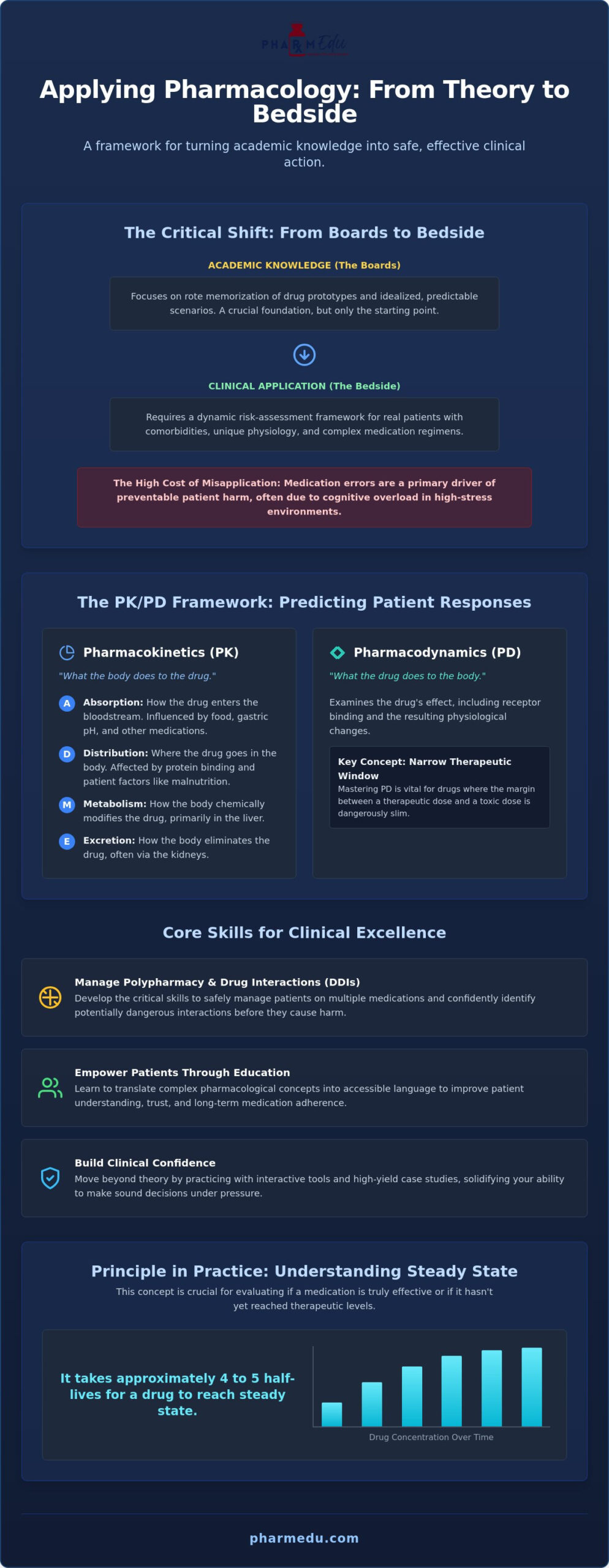
Success on the NAPLEX or NCLEX is a significant achievement, but it’s merely the starting point for pharmacological competence. Board preparation typically focuses on “prototypes,” which are idealized versions of drugs that behave predictably. Clinical practice, however, is defined by nuance. You don’t treat a textbook case; you treat a patient with three comorbidities, a unique genetic profile, and perhaps a history of non-adherence. High-yield learning acts as the filter for clinical relevance, allowing you to prioritize information that directly impacts patient outcomes. It’s the difference between knowing a drug’s molecular weight and knowing how its half-life changes in a patient with Stage 4 chronic kidney disease.
The High Cost of Poor Application
The consequences of pharmacological mismanagement are severe. Medication errors are a primary driver of preventable patient harm, often leading to prolonged hospital stays or permanent injury. For the clinician, the professional and financial repercussions can be life-altering. These errors rarely happen because of a lack of intelligence. Instead, they occur due to cognitive overload in high-stress environments. Using structured learning platforms helps organize complex data into manageable frameworks. By reducing the mental effort required to recall critical drug facts, you can focus your attention on the patient, which significantly improves safety outcomes.
The PK/PD Framework: Predicting Patient Responses
A successful transition from theory to the bedside requires a robust understanding of the PK/PD framework. This dual perspective allows clinicians to move beyond memorized facts and begin the work of applying pharmacology in clinical practice by predicting how a specific patient will respond to a specific dose. Pharmacokinetics (PK) describes the journey of a drug through the body, focusing on absorption, distribution, metabolism, and excretion (ADME). Conversely, pharmacodynamics (PD) examines the drug’s effect on the body, specifically receptor binding and the resulting physiological change. Mastering these concepts is vital when managing drugs with a narrow therapeutic window, where the margin between a therapeutic dose and toxicity is slim.
Clinicians use half-life and steady-state principles to determine dosing intervals. It takes approximately four to five half-lives for a drug to reach steady state. This knowledge is crucial when evaluating if a medication is truly effective or if the dose simply hasn’t reached therapeutic levels yet. When you’re managing complex patients, these calculations aren’t just academic; they’re the foundation of safe prescribing and monitoring.
ADME in the Clinical Context
Real-world absorption is rarely as straightforward as a textbook suggests. Factors like gastric pH or food interactions can drastically alter drug bioavailability. Distribution is often compromised in malnourished or elderly patients with low albumin levels. Because many drugs are highly protein-bound, reduced albumin increases the active drug fraction, raising toxicity risks. Metabolism and excretion require constant vigilance, especially when calculating Creatinine Clearance (CrCl) to adjust doses for renal impairment. These variables highlight why applying pharmacology in clinical practice must be individualized.
Visualizing Drug Action
Understanding the “why” behind a drug’s effect helps prevent errors. Using high-yield video vignettes to visualize the RAAS system makes it easier to predict how ACE inhibitors impact blood pressure and electrolyte balance. This approach also helps you predict side effects based on receptor selectivity. For instance, non-selective beta-blockers affect both heart and lung receptors, which can be problematic for patients with reactive airway disease. Nurses should prioritize “onset, peak, and duration” to time assessments correctly. Strengthening these skills through PharmEDU’s interactive tools provides the bridge needed for confident bedside practice.
Managing Polypharmacy and Drug-Drug Interactions (DDIs)
The modern patient rarely presents with a single ailment. Instead, clinicians often manage individuals with multiple chronic conditions, each requiring a specialized therapeutic regimen. This reality makes applying pharmacology in clinical practice a balancing act between treating disease and avoiding the pitfalls of polypharmacy. Effective management goes beyond simply checking a list of medications; it requires a deep understanding of the biochemical and physiological interplay between every substance the patient consumes, including over-the-counter supplements and herbal remedies. For clinicians interested in the evidence-based use of these natural products, Pacific Rim College Online offers accredited training in holistic health and herbalism.
Drug-drug interactions typically occur through two primary pathways. Pharmacokinetic interactions often involve the Cytochrome P450 (CYP450) enzyme system, where one drug may inhibit or induce the metabolism of another. Inhibition can lead to dangerously high plasma levels and toxicity, while induction can render a life-saving medication sub-therapeutic. Pharmacodynamic interactions occur when drugs have additive or antagonistic effects at the receptor level. For example, combining multiple CNS depressants can lead to profound respiratory depression, even if each drug is within its therapeutic range. Managing Polypharmacy effectively requires clinicians to anticipate these overlaps before they manifest as patient harm.
While interaction checker apps are valuable tools, they can’t replace clinical judgment. These programs often flag every theoretical interaction, leading to “alert fatigue” where critical warnings are ignored. A clinician must evaluate the clinical significance of a flag based on the patient’s age, renal function, and therapeutic goals. You aren’t just looking for an interaction; you’re determining if that interaction matters for the person sitting in front of you.
The Clinician’s Interaction Checklist
To streamline the reconciliation process, focus on “red flag” drug classes that carry the highest risk for adverse events. Anticoagulants, antiplatelets, and diuretics are frequently implicated in emergency department visits due to interactions. When you identify a potential conflict, assess its clinical significance. Does the benefit of the combination outweigh the risk? If not, you must communicate these risks clearly to the interdisciplinary healthcare team to facilitate a safer alternative.
Deprescribing as a Pharmacological Skill
Deprescribing is the planned and supervised process of dose reduction or stopping of medication that may be causing harm or is no longer providing benefit. A common danger is the “prescribing cascade,” where a new drug is prescribed to treat the side effects of an existing one, which the clinician misinterprets as a new medical condition. Utilizing pharmacology study guides for nursing students can help early-career professionals recognize these patterns and advocate for the removal of non-essential therapies. Reducing a patient’s pill burden isn’t just about convenience; it’s a vital intervention for improving safety and adherence.
Patient-Centered Pharmacology: Education and Adherence
Applying pharmacology in clinical practice extends far beyond the walls of the hospital or clinic. It involves the critical step of translating complex scientific data into actionable knowledge for the patient. A clinician’s expertise is only as effective as the patient’s ability to follow the prescribed regimen. If a patient doesn’t understand why they’re taking a medication or fears its side effects, adherence will likely suffer. This gap between prescription and consumption is where many therapeutic plans fail. This diagnostic approach to applying pharmacology in clinical practice ensures that the treatment plan is sustainable in the patient’s home environment.
Identifying barriers to adherence is a diagnostic skill in its own right. Cost remains a primary hurdle, but side effects and low health literacy are equally influential. You must look for subtle cues that a patient is struggling. Perhaps they’re stretching out doses to save money, or they’ve stopped a statin because of muscle aches they didn’t realize were manageable. Empowering patients to recognize and report adverse drug reactions (ADRs) early can prevent complete discontinuation of necessary therapy.
Effective Patient Counseling Strategies
The “Teach-Back” method is one of the most reliable tools for verifying patient understanding. Instead of asking if they understand, ask the patient to explain in their own words how and why they’ll take their medication. This approach highlights gaps in their knowledge immediately. When providing information, prioritize “must-know” details, such as how to recognize a life-threatening reaction, over “nice-to-know” biochemical mechanisms. Visual aids can also bridge the literacy gap, helping patients visualize how a drug like insulin actually works in their bloodstream.
Monitoring for Therapeutic Success
Monitoring isn’t just about laboratory values; it’s about the patient’s lived experience. While you’ll track target blood pressure, HbA1c, or pain scales, clinical success is measured by patient outcomes, not just serum levels. If a patient’s lab results are perfect but they’re too dizzy to work, the therapy isn’t a success. When timing laboratory draws for therapeutic drug monitoring (TDM), ensure the patient understands the importance of trough vs peak levels. Precise timing is essential for drugs with narrow therapeutic windows to avoid toxic peaks or sub-therapeutic troughs.
To refine your ability to handle these complex patient interactions, consider practicing with PharmEDU’s clinical case studies, which simulate real-world counseling and monitoring scenarios.
Mastering Clinical Application with PharmEDU
The transition from academic study to active practitioner is often a jarring experience. While board exams test your ability to recall prototypes, the bedside tests your ability to think critically under pressure. This is where PharmEDU changes the equation. Our comprehensive pharmacy review is specifically designed to move beyond the constraints of traditional textbooks, providing a bridge to actual competence. By focusing on applying pharmacology in clinical practice, we help you develop the mental models necessary to manage complex patients safely and effectively.
Abstract concepts like the RAAS system or the CYP450 enzyme cascade become vivid clinical mental images through our high-yield video vignettes. Instead of just reading about a theoretical interaction, you see the physiological consequences in a way that sticks. This visual approach is reinforced by our clinical case studies. These scenarios allow you to practice decision-making in a risk-free environment, where you can test your knowledge of dosing adjustments and drug-drug interactions before you’re responsible for a real patient’s safety. It’s about building the muscle memory of clinical judgment.
High-Yield Tools for Busy Professionals
Time is a luxury in modern clinical settings. PharmEDU’s mobile-compliant micro-learning segments fit perfectly into the gaps between patient rounds or during a quick break. You don’t need to carry a massive textbook to refresh your memory on a rare contraindication. Our interactive pharmacology flashcards provide rapid recall of black box warnings and critical contraindications, while our pharmacology practice quizzes focus on clinical dilemmas rather than simple factual recall. This “just-in-time” learning ensures you have the right information exactly when you need it most, reducing cognitive load during high-stress moments.
Your Partner in Lifelong Learning
Pharmacology doesn’t stand still. With the 2026 Joint Commission National Performance Goals and frequent FDA updates, staying current is a professional necessity. PharmEDU acts as your digital mentor, helping you stay ahead of evolving drug therapies and regulatory changes. Whether you’re a student preparing for your first clinical rotation or a seasoned practitioner looking to sharpen your skills, our PharmEDU Monthly and Annual Subscriptions are designed to grow with you. We handle the burden of tracking new data so you can focus on what matters most: your patients.
Start your PharmEDU subscription today and master clinical pharmacology.
Elevating Patient Care Through Pharmacological Precision
Transitioning from classroom theory to the bedside is a lifelong journey of professional refinement. You’ve seen how a structured PK/PD framework and a vigilant approach to polypharmacy can prevent life-altering errors before they reach the patient. True competence in applying pharmacology in clinical practice requires more than just knowing a drug’s name; it demands the ability to translate that scientific knowledge into safe, individualized care. By prioritizing patient education and evidence-based monitoring, you ensure that every prescription serves its therapeutic goal without compromising safety.
PharmEDU is here to support your professional growth with high-yield video vignettes, clinical case studies, and mobile-compliant micro-learning segments designed specifically for the modern clinician. These tools take the weight of administrative and educational burdens off your shoulders, allowing you to focus on the nuance of patient care. Master Clinical Pharmacology with PharmEDU Subscriptions today to build the confidence you need for every patient encounter. Your commitment to continuous learning is the most powerful tool in your clinical arsenal, and we’re proud to be your partner in that pursuit.
Frequently Asked Questions
How do I prioritize which drug information to memorize for clinical practice?
Focus on safety-critical data such as black box warnings, contraindications, and narrow therapeutic window drugs. It’s impossible to memorize every minor side effect found in a textbook. Instead, prioritize the medications most common to your specific patient population and those with the highest risk for severe adverse events. High-yield learning involves filtering for information that directly impacts your dosing decisions and monitoring protocols.
What is the most effective way to prevent medication errors in a busy clinical setting?
The most effective way to prevent errors is to implement a structured verification process that goes beyond the basic five rights of administration. This involves a deep clinical check of the patient’s current physiological state before any drug is given. By applying pharmacology in clinical practice, you serve as the final safety barrier, ensuring that the prescribed dose is appropriate for the patient’s current renal and hepatic function.
Can I rely solely on drug interaction software for patient safety?
No, you shouldn’t rely exclusively on software because these tools often lack the specific clinical context of your patient. Interaction checkers frequently generate alert fatigue by flagging every theoretical conflict, regardless of its actual danger. A clinician’s judgment is necessary to determine if an interaction is clinically significant based on the patient’s age, existing comorbidities, and overall therapeutic goals.
How does pharmacokinetics change in geriatric or pediatric populations?
Pharmacokinetics change significantly in these groups due to variations in organ maturity and body composition. Geriatric patients often have reduced renal clearance and lower protein levels, which can increase the toxicity of highly protein-bound drugs. Pediatric patients, particularly neonates, have immature hepatic enzyme systems and different water-to-fat ratios. These factors require precise weight-based dosing and constant monitoring of therapeutic serum levels.
What are the most common high-yield drug classes I should master first?
Master cardiovascular medications, anticoagulants, and antibiotics first, as these are the classes most frequently encountered in acute care. Anticoagulants and antiplatelets are particularly high-risk and require a thorough understanding of monitoring parameters like INR or PTT. Mastering these core classes provides a solid foundation for managing the vast majority of pharmacological challenges you’ll face in daily clinical practice.
How can I improve patient adherence to complex medication regimens?
Improving adherence begins with identifying the specific barriers your patient faces, such as cost, side effects, or health literacy. Use the Teach-Back method to verify they can explain their regimen in their own words. Simplifying the dosing schedule and providing clear, visual aids that explain the drug’s therapeutic benefit can empower patients to take ownership of their treatment plan.
Is there a difference between clinical pharmacology and pharmacotherapy?
Clinical pharmacology is the scientific study of how drugs interact with humans, while pharmacotherapy is the application of that science to treat specific diseases. While clinical pharmacology provides the biochemical why behind drug action, pharmacotherapy focuses on the how of selecting the right medication for a specific condition. Both disciplines are essential for applying pharmacology in clinical practice effectively at the bedside.
How does PharmEDU help with both board exams and clinical practice?
PharmEDU bridges the gap between academic preparation and clinical competence through high-yield video vignettes and clinical case studies. Our platform focuses on the nuances of real-world scenarios that board exams often skip, helping students pass their tests while preparing professionals for the complexities of the bedside. Interactive tools like flashcards and quizzes reinforce this knowledge, making it accessible even in high-pressure clinical settings.