Pharmacology in Special Populations: High-Yield Geriatric Principles for 2026
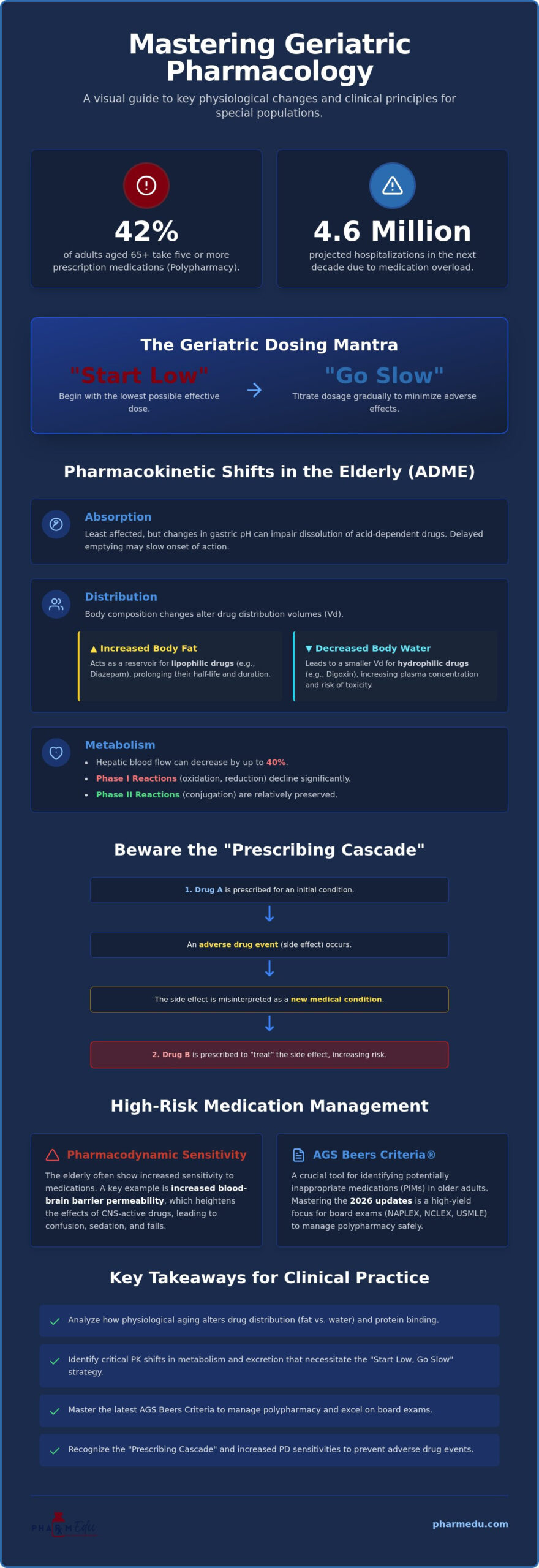
Did you know that 42% of adults aged 65 and older currently take five or more prescription medications? With medication overload predicted to cause 4.6 million hospitalizations over the next decade, mastering pharmacology in special populations geriatrics is more than just a board exam requirement; it’s a critical safety imperative. You’ve likely felt the pressure of memorizing the Beers Criteria while worrying about the complex drug-drug interactions that frequently appear on clinical rotations and high-stakes exams.
It’s understandable to feel overwhelmed by the shifting physiological landscape of aging. This article provides a structured framework to help you master the “Start Low, Go Slow” rationale and identify high-risk medications using the latest 2026 updates. We’ll explore the new AGS Beers Criteria Alternatives List, connect PK/PD changes to clinical case studies, and review the March 2026 ACC/AHA guidelines to ensure your knowledge is both precise and exam-ready. By the end of this guide, you’ll have the confidence to manage polypharmacy with the precision of a seasoned clinician.
Key Takeaways
- Analyze how physiological aging alters drug distribution and protein binding, moving beyond chronological age to understand true clinical frailty.
- Identify the critical pharmacokinetic shifts in absorption and excretion that necessitate the “Start Low, Go Slow” dosing strategy for senior patients.
- Master the 2026 updates to the AGS Beers Criteria to effectively manage polypharmacy and excel in pharmacology in special populations geriatrics assessments.
- Recognize the “Prescribing Cascade” and pharmacodynamic sensitivities, such as increased blood-brain barrier permeability, to prevent adverse drug events.
- Utilize high-yield video vignettes and interactive flashcards to bridge the gap between theoretical pharmacokinetic changes and real-world clinical case studies.
Why Geriatrics is a Critical “Special Population” in Pharmacology
In clinical practice, age is rarely just a number. While chronological age provides a baseline for treatment, physiological frailty dictates the actual risk profile in pharmacology in special populations geriatrics. A 70 year old marathon runner and a 70 year old patient with end stage renal disease require vastly different approaches, even if their birth years are identical. This distinction is vital because as the body ages, the therapeutic window significantly narrows. This means the margin between a dose that heals and a dose that harms becomes razor thin, making precision a requirement rather than a goal.
The Shifting Landscape of Geriatric Care
The demographic shift in healthcare is undeniable. By 2030, the number of individuals in the U.S. aged 65 or older is projected to reach 72.1 million. This growth makes Geriatrics a foundational pillar of modern healthcare education. Pharmacists and nurses play a central role through Medication Therapy Management (MTM), ensuring that complex regimens remain safe and effective. Success in this area requires a deep connection back to pharmacology fundamentals, specifically understanding how standard drug profiles are altered by an aging system that no longer processes chemicals with youthful efficiency.
Core Challenges: Multimorbidity and Sensitivity
Multimorbidity is the rule, not the exception, for older adults. When a patient manages diabetes, hypertension, and osteoarthritis simultaneously, the pharmacotherapy plan becomes a delicate balancing act. Frailty serves as a more accurate predictor of adverse drug reactions (ADRs) than age alone. To mitigate these risks, the clinical mantra “Start Low, Go Slow” remains the gold standard. It isn’t just a catchy phrase; it’s a necessary response to the increased sensitivity and altered clearance rates seen in pharmacology in special populations geriatrics. By starting at the lowest possible dose and titrating slowly, clinicians can find the effective dose while avoiding the toxicities that lead to falls, confusion, or hospitalizations.
Pharmacokinetic Changes in the Elderly: Absorption to Excretion
Pharmacokinetics describes how the body processes a substance, and in pharmacology in special populations geriatrics, these processes undergo significant, predictable shifts. Absorption is often the least affected by age, yet changes in gastric pH and motility still play a role. Increased gastric pH can impair the dissolution of medications that require an acidic environment for optimal absorption. While delayed gastric emptying might not reduce the total amount of drug absorbed, it often delays the time to reach peak plasma concentration. This is particularly relevant when treating acute conditions where a rapid onset of action is necessary. Metabolism also slows as hepatic blood flow decreases by nearly 40 percent in some individuals. Phase I reactions, such as oxidation and reduction, typically decline with age. In contrast, Phase II reactions like conjugation remain relatively preserved. This explains why clinicians often prefer benzodiazepines that bypass Phase I metabolism for older patients.
Distribution Dynamics: Lipophilic vs. Hydrophilic Drugs
Body composition changes fundamentally as we age. Total body water decreases while the percentage of body fat increases. These shifts directly alter the volume of distribution (Vd) for various drug classes. For lipophilic drugs like Diazepam, the increased fat tissue acts as a reservoir, which significantly prolongs the drug’s half-life and duration of action. Conversely, hydrophilic drugs like Digoxin have a smaller volume of distribution. This leads to higher peak plasma concentrations because there’s less water to dilute the medication, increasing the risk of toxicity even at standard doses. Reduced serum albumin levels further complicate this landscape. When albumin is low, highly protein-bound drugs have a larger “free fraction” in the blood. Since only the unbound drug is pharmacologically active, the risk of adverse effects rises even if total drug levels appear to be within the normal range.
Renal Function: The Most Important Board Exam Metric
Declining renal function is the most consistent and clinically significant pharmacokinetic change in the elderly. However, relying solely on Serum Creatinine (SCr) is a common clinical trap. Since SCr is a byproduct of muscle breakdown, an older patient with low muscle mass may have a “normal” SCr despite having a significantly reduced Glomerular Filtration Rate (GFR). For accurate dosing, you must calculate the estimated Creatinine Clearance (CrCl). Utilizing the Cockcroft-Gault equation is essential for anyone using a naplex prep course to master these high-yield calculations. High-yield drugs that require strict renal adjustment include Gabapentin, Enoxaparin, and Lithium. Failing to adjust these medications can lead to profound accumulation and severe toxicity. If you want to see these principles applied to patient scenarios, our Clinical Case Studies offer a practical way to bridge the gap between theory and practice.
Pharmacodynamic Alterations: Increased Sensitivity and Receptor Changes
Pharmacodynamics (PD) explores the biochemical and physiological effects of drugs on the body. While pharmacokinetic changes determine how much drug reaches the site of action, PD changes in pharmacology in special populations geriatrics explain why a standard dose often triggers an exaggerated response. A primary driver of this sensitivity is the increased permeability of the Blood-Brain Barrier (BBB). As the BBB weakens with age, more CNS-active medications cross into brain tissue, leading to profound sedation and cognitive impairment even at low plasma levels. This heightened CNS sensitivity, combined with a natural decline in neuronal density, makes older adults significantly more susceptible to medication-related delirium.
One of the most critical concepts for both clinical safety and board exams is the “Anticholinergic Burden.” Many common medications, ranging from first-generation antihistamines to certain antidepressants, block acetylcholine receptors. In older patients, these drugs don’t just cause dry mouth or constipation; they often lead to acute confusion and memory loss. Additionally, physiological aging blunts baroreceptor sensitivity. These receptors normally compensate for blood pressure changes when a person stands up. In geriatric patients, this response is often delayed or insufficient, which significantly increases the risk of orthostatic hypotension and subsequent falls.
CNS Sensitivity: Sedatives and Analgesics
Sedatives and analgesics present unique challenges due to altered receptor sensitivity. Benzodiazepines and opioids carry a much higher risk of respiratory depression and delirium in the elderly. You’ll also frequently encounter “paradoxical reactions,” where a sedative intended to calm a patient actually causes agitation or insomnia. Furthermore, age-related changes in the dopaminergic system mean that older adults are more sensitive to the effects of antipsychotics. This often results in a higher incidence of extrapyramidal symptoms, making careful monitoring essential during any behavioral intervention.
Cardiovascular PD: Blunted Autonomic Responses
The cardiovascular system also undergoes significant pharmacodynamic shifts. Aging results in a reduced sensitivity of beta-adrenergic receptors, which means that both beta-blockers and beta-agonists may be less effective than they are in younger populations. Conversely, sensitivity to anticoagulants increases. For example, older patients often require much lower doses of Warfarin to achieve a therapeutic INR, as their bodies are more sensitive to vitamin K antagonism. Students preparing for clinical rotations can find specific monitoring parameters for these high-risk drugs in our nursing study guide. Pharmacodynamic sensitivity in the elderly is characterized by an exaggerated tissue response to specific drug concentrations, which directly contributes to the narrowing therapeutic index and increased risk of toxicity.
Polypharmacy and the Beers Criteria: High-Yield Board Exam Focus
Polypharmacy is more than just a lengthy medication list; it’s a clinical state defined by the use of five or more concurrent medications. As established in previous sections, the narrowing therapeutic window in older adults means that every additional drug increases the risk of adverse events exponentially. In pharmacology in special populations geriatrics, managing these risks requires a firm grasp of the CYP450 enzyme system. While Phase II reactions are often preserved, the age-related decline in Phase I metabolism means that drug-drug interactions (DDIs) involving inhibitors or inducers can lead to dangerous plasma concentrations. Beyond physiological changes, clinicians must account for adherence challenges. Cognitive impairment, physical limitations like difficulty opening pill bottles, and financial barriers all complicate the pharmacotherapy plan and increase the likelihood of treatment failure.
The American Geriatrics Society (AGS) Beers Criteria remains the gold standard for identifying Potentially Inappropriate Medications (PIMs). The 2026 clinical landscape emphasizes not just identifying these drugs but utilizing the recently released “AGS Beers Criteria Alternatives List” to transition patients to safer therapies. This shift from simple avoidance to active deprescribing is a major focus for modern licensing exams, which test your ability to recognize when a drug’s risk outweighs its benefit in a frail patient.
The Beers Criteria: Drugs to Avoid or Use with Caution
Specific drug classes consistently appear on board exams due to their high risk profile in seniors. First generation antihistamines like Diphenhydramine are primary offenders; they cross the blood-brain barrier easily and cause acute confusion and falls. Chronic use of NSAIDs is another red flag, as it significantly increases the risk of gastrointestinal bleeding and can exacerbate the renal decline discussed in our pharmacokinetic review. In the realm of diabetes, Sulfonylureas like Glyburide are particularly dangerous. Their prolonged half-life and renal clearance path make them a leading cause of severe, prolonged hypoglycemia in the elderly, often necessitating a switch to more modern agents with a lower hypoglycemic risk.
Managing the Anticholinergic Burden
The “Anticholinergic Burden” refers to the cumulative effect of taking multiple drugs with anticholinergic properties. You can identify these side effects using the classic mnemonic: “blind as a bat, mad as a hatter, red as a beet, hot as a hare, and dry as a bone.” Identifying anticholinergic offenders is essential for preventing not only acute delirium but also long-term cognitive decline and dementia. Mastering these drug lists is a primary hurdle for board exams. You can streamline your study process by using our Interactive Pharmacology Flashcards to drill the most common PIMs and their safer alternatives, ensuring you can identify high-risk medications instantly during clinical vignettes.
Mastering Geriatric Pharmacology with PharmEDU
The transition from textbook theory to clinical bedside decision-making is often where students struggle most. Mastering pharmacology in special populations geriatrics requires more than just rote memorization; it demands a deep understanding of how physiological aging transforms drug behavior. PharmEDU is designed to bridge this gap by providing high-yield video vignettes that help you visualize complex PK/PD changes in real time. Instead of just reading about reduced hepatic blood flow, you’ll see how it impacts drug clearance in a structured, visual format. This approach ensures that when you encounter an elderly patient on multiple medications, you aren’t just looking at a list of drugs, but a dynamic system requiring careful adjustment.
Our platform also features interactive pharmacology flashcards specifically tailored to the 2026 AGS Beers Criteria. These tools use active recall to help you identify potentially inappropriate medications and calculate precise renal adjustments using the Cockcroft-Gault equation. By integrating clinical case studies into your study routine, you’ll apply these principles to realistic patient scenarios, preparing you for the nuance required in modern healthcare. Whether you’re analyzing a “Prescribing Cascade” or adjusting a dose for a frail patient, these resources ensure your knowledge is both practical and exam-ready.
Micro-Learning for Busy Healthcare Students
We know that healthcare students have demanding schedules. PharmEDU’s segments are optimized for micro-learning, allowing you to review high-yield concepts between clinical rotations or during short breaks. You can track your mastery through individual or institutional dashboards, ensuring no gaps remain in your understanding of pharmacology in special populations geriatrics. This methodical approach to learning builds the confidence needed to excel in high-pressure environments, moving you from a feeling of administrative burden to true professional mastery. Utilizing these tools during your clinical rotations helps solidify the connection between drug mechanisms and patient outcomes.
Ready to Excel on Your Boards?
Geriatric pharmacology is a cornerstone of the NAPLEX, NCLEX, and USMLE exams. To succeed, you must be able to identify high-risk drugs like Glyburide, manage the anticholinergic burden, and recognize the impact of decreased total body water on hydrophilic drugs. As you prepare for your clinical rotations, keep this final checklist in mind: verify renal function with calculated CrCl, screen for PIMs using the latest Beers Criteria, and always follow the “Start Low, Go Slow” mantra. If you’re ready to move beyond the basics and master these high-yield principles, it’s time to take the next step in your professional development. Unlock full access to the PharmEDU Pharmacology Review platform today and ensure you’re fully prepared for both your certification exams and your future patients.
Elevating Your Clinical Precision in Geriatric Care
Mastering pharmacology in special populations geriatrics is no longer just an academic exercise; it’s a fundamental requirement for safe practice in an aging society. You’ve explored how shifting body compositions and declining renal function necessitate a “Start Low, Go Slow” approach to prevent toxicities and the dangerous prescribing cascade. By integrating the latest 2026 Beers Criteria updates and understanding the increased CNS sensitivity of older adults, you’re now better equipped to manage complex polypharmacy cases on your boards and in the clinic.
To truly solidify these high-yield concepts, you need tools that match the rigor of your professional goals. PharmEDU offers comprehensive NAPLEX and NCLEX coverage designed to streamline your study process. With our High-Yield Video Vignettes and Interactive Pharmacology Flashcards, you can move beyond memorization to true clinical mastery. Start Your PharmEDU Monthly Subscription for Expert Board Review and take the stress out of your certification journey. We’re here to support your growth as a confident, safety-conscious healthcare professional.
Frequently Asked Questions
What is the most significant pharmacokinetic change in geriatric patients?
The most clinically significant pharmacokinetic change is the age-related decline in renal excretion. This reduction in glomerular filtration rate (GFR) is the most predictable shift in pharmacology in special populations geriatrics, directly leading to drug accumulation and toxicity. Clinicians shouldn’t rely on serum levels alone; they must calculate creatinine clearance to ensure patient safety.
Why is Serum Creatinine often a poor indicator of renal function in the elderly?
Serum Creatinine (SCr) is often misleading because it’s a byproduct of muscle breakdown. Older adults typically have reduced muscle mass, which means they produce less creatinine overall. A “normal” SCr value can give a false sense of security, often masking a significant decline in actual renal function. It’s essential to use the Cockcroft-Gault equation to account for age and weight.
What are the Beers Criteria and why are they important for board exams?
The Beers Criteria is a comprehensive list of Potentially Inappropriate Medications (PIMs) developed by the American Geriatrics Society. They’re critical for board exams because they test your ability to identify drugs where the risk of adverse events outweighs the clinical benefit. Examiners frequently use these criteria to create vignettes involving falls, delirium, or gastrointestinal distress.
How does body composition change in the elderly affect drug distribution?
Aging involves an increase in total body fat and a decrease in total body water. This shift means lipophilic drugs, such as benzodiazepines, have a larger volume of distribution and a significantly prolonged half-life. Conversely, hydrophilic drugs like digoxin have a smaller volume of distribution, which can lead to dangerously high peak concentrations in the bloodstream.
What is the “Prescribing Cascade” in geriatric pharmacology?
A prescribing cascade happens when a drug side effect is misinterpreted as a new medical diagnosis. Instead of stopping the offending agent, a clinician prescribes a second drug to treat the symptom. This cycle is a primary driver of polypharmacy and increases the risk of complex drug-drug interactions in pharmacology in special populations geriatrics.
Can PharmEDU help me prepare specifically for geriatric questions on the NAPLEX?
Yes, PharmEDU provides targeted resources for geriatric pharmacology. Our High-Yield Video Vignettes and Interactive Pharmacology Flashcards focus on the specific pharmacokinetic and pharmacodynamic changes tested on the NAPLEX and NCLEX. These tools help you master the Beers Criteria and renal dosing calculations through active recall and clinical application.
What are the most common high-risk medications for seniors according to the AGS?
High-risk medications include first-generation antihistamines, long-acting benzodiazepines, and certain diabetes medications like glyburide. The AGS also warns against the chronic use of NSAIDs due to the high risk of gastrointestinal bleeding and acute kidney injury. Recognizing these red flag drugs is vital for passing certification exams and ensuring safe geriatric care.
How do Phase I and Phase II hepatic metabolism change as we age?
Phase I hepatic metabolism, which involves oxidation and reduction, typically declines with age. This makes drugs processed through the CYP450 system more likely to accumulate. However, Phase II reactions like conjugation remain relatively well-preserved. It’s why clinicians often prefer medications that bypass Phase I metabolism for older patients.