

Calcium channel blockers: how they work and their types
Calcium channel blockers lower blood pressure by relaxing blood vessels, and some types also slow the heart’s rhythm. These medicines, sometimes called calcium antagonists, limit calcium’s entry into heart and artery cells. They fall into two main groups: dihydropyridines and non-dihydropyridines.
Understanding how calcium channel blockers work explains why the two groups aren’t interchangeable: one mainly targets blood vessels, while the other can also affect heart rate. This guide covers their mechanism, the differences between the groups, and examples such as amlodipine, nifedipine, diltiazem, and verapamil. It also outlines conditions they may treat, including high blood pressure, angina, and certain abnormal heart rhythms. With calcium channel blockers explained in practical terms, you can connect their effects with their uses and distinguish the roles of common medicines in this class.
Key Takeaways
- Calcium channel blockers are used for conditions including high blood pressure and angina, and their effects depend partly on which type is prescribed.
- Learn how limiting calcium entry into heart and artery cells helps relax blood vessels and, with some medicines, affect heart rate.
- Compare the two main types and see how examples such as amlodipine, diltiazem, nifedipine, and verapamil fit into them.
- Review common side effects and build your pharmacology knowledge further with PharmEDU’s learning resources.
What is a calcium channel blocker?
Calcium channel blockers, also called calcium antagonists, treat hypertension and other cardiovascular conditions. They’re commonly prescribed for high blood pressure and may also treat angina, arrhythmias, coronary artery spasms, and blood vessel conditions such as Raynaud’s disease. Considering these uses helps distinguish calcium channel blockers by the conditions they may address.
For Black people with high blood pressure, this class may work better than some other blood pressure medicines. Overall, calcium channel blockers appear similarly effective across racial groups. Both points can be true: a comparison with particular alternatives doesn’t mean the class works only for one group. Consider the specific comparison rather than assuming that every patient responds differently.
Side effects vary by medication. Possible effects include dizziness, flushing, headache, fatigue, nausea, constipation, palpitations, and swelling in the feet or lower legs. Some people may also experience heartburn, gum overgrowth, or worsened chronic acid reflux. These effects can affect daily comfort, while the intended benefits may include better blood pressure control or angina relief.
More serious symptoms need prompt attention. Seek medical care for shortness of breath, chest pain, fainting, irregular heart rhythms, palpitations, or repeated dizziness. These are warning signs, not routine expected effects. Verapamil and diltiazem can also slow heart rate, so their effects differ from medicines that mainly relax blood vessels.
There isn’t one standard dose for every calcium channel blocker. The prescribed amount and schedule depend on the medicine and condition being treated. Many people take a dose once a day at the same time.
If you miss a dose, don’t take an extra one to catch up. If you take more than prescribed, seek prompt medical advice. Get emergency care for symptoms such as fainting, chest pain, or shortness of breath.
How calcium channel blockers work
Calcium channel blockers limit calcium entry into heart and artery cells. Calcium helps these cells contract. With less calcium entering, blood vessel walls can relax and open. This reduces resistance to blood flow, which can lower blood pressure. Having calcium channel blockers explained through these cell-level effects helps connect their action with clinical outcomes.
Relaxed blood vessels help explain the role of these medicines in angina. Angina is chest pain linked to reduced blood flow to the heart. When coronary arteries relax, blood can move more easily through them. These medicines can also treat chest pain caused by coronary artery spasms. A spasm is a sudden tightening of a coronary blood vessel, rather than a fixed narrowing.
Their effects aren’t limited to artery walls. Calcium also plays a part in heart muscle contraction and electrical activity. Some medicines in this class affect heart muscle as well as blood vessels. By changing these effects, they can slow heart rate and help control certain irregular heartbeats. Diltiazem is one example used for this purpose. The specific effects depend on the drug, not just its class.
Timing varies across medicines. Some calcium channel blockers start working within 1 to 4 hours after the first dose. The full effects of some may take 2 to 4 weeks. That difference matters when assessing blood pressure response: an early effect doesn’t necessarily represent the medicine’s full effect. Short-acting and long-acting forms are available, and the appropriate form depends on the person’s health and condition.
These mechanisms connect a medicine’s action with the condition being treated. Relaxing blood vessels can support blood pressure control or help ease angina. Effects on heart muscle can matter when an abnormal rhythm needs control. To understand calcium channel blockers, link each medicine’s effects with its treatment goal. This distinction explains why medicines in the class aren’t interchangeable in every clinical situation.
Dihydropyridine and non-dihydropyridine types
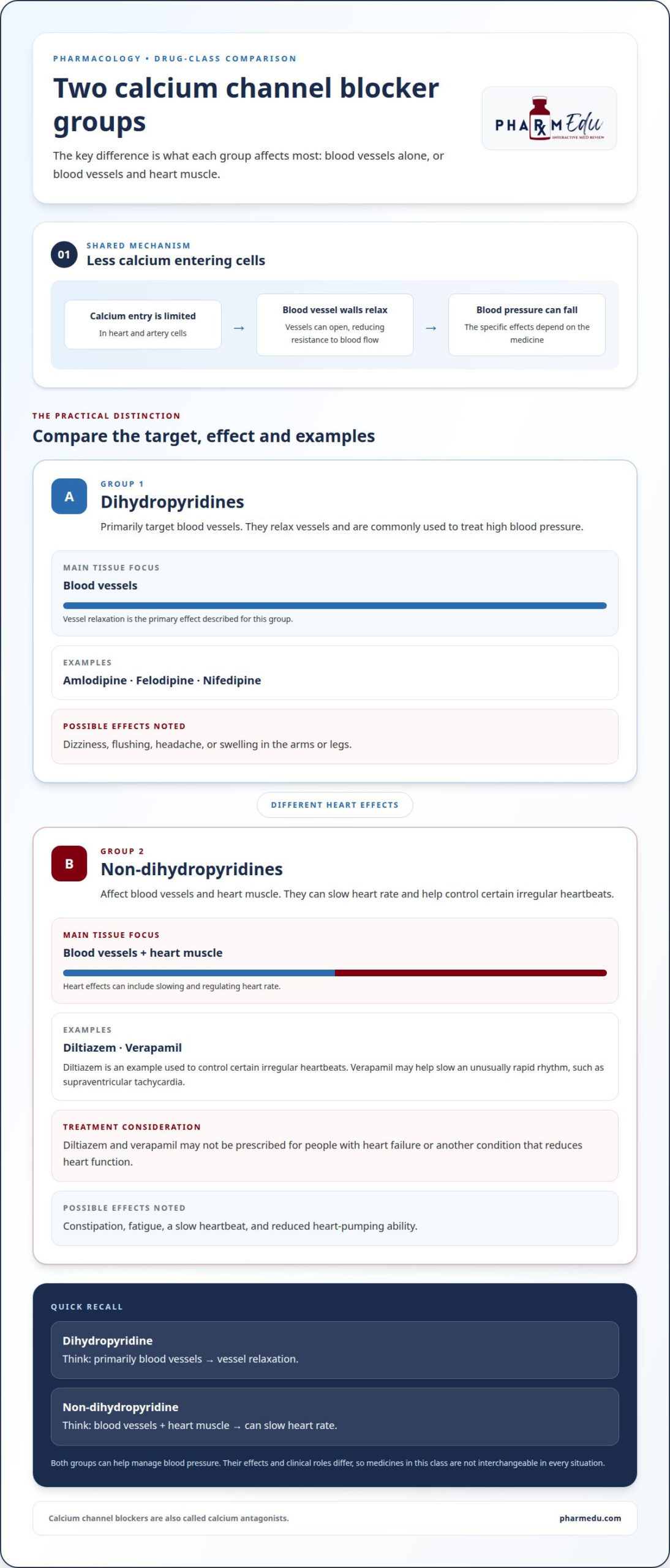
Calcium channel blockers fall into two main groups: dihydropyridines and non-dihydropyridines. The distinction reflects which tissues each group affects most. Dihydropyridines act mainly on blood vessels; non-dihydropyridines affect both blood vessels and heart muscle. This difference helps match a medicine to the condition being treated and explains why medicines in the same class can have different clinical roles.
Amlodipine, felodipine, and nifedipine are dihydropyridines. They relax blood vessels and are commonly used to treat high blood pressure. Their primary effect is vascular, rather than slowing the heartbeat. Dihydropyridines may cause dizziness, flushing, headache, or swelling in the arms or legs. These effects relate to vessel relaxation and may influence which medicine suits a person’s treatment needs.
Diltiazem and verapamil are non-dihydropyridines. These medicines act on heart muscle as well as blood vessels. They can slow heart rate, making them useful for controlling certain irregular heartbeats. Their effects therefore differ from those of dihydropyridines, even though both groups can help manage blood pressure. Verapamil may also help slow an unusually rapid rhythm, such as supraventricular tachycardia.
Non-dihydropyridines are also called rate-limiting calcium channel blockers because they can slow and regulate heart rate. This effect can be valuable for a rhythm-related condition, but it also makes heart function relevant to treatment choice. Diltiazem and verapamil may not be prescribed for people with heart failure or another condition that reduces heart function. Possible side effects include constipation, fatigue, a slow heartbeat, and reduced heart-pumping ability.
To distinguish the groups, consider the main treatment target: blood vessels or heart rate. A dihydropyridine such as amlodipine primarily relaxes blood vessels; diltiazem can also affect heart rate. This is a useful pharmacology distinction, not a substitute for evaluating the specific condition, medicine, and patient.
Examples of calcium channel blockers
Examples span both calcium channel blocker groups. Amlodipine, felodipine, isradipine, nicardipine, nifedipine, and nisoldipine are dihydropyridines. Diltiazem and verapamil are non-dihydropyridines. The group matters because these medicines differ in how strongly they affect blood vessels and heart rate.
Like beta blockers, calcium channel blockers can lower blood pressure; both classes may also treat angina or arrhythmias. ACE inhibitors relax blood vessels, making it easier for the heart to pump blood around the body. Treatment choice depends partly on the condition and the medicine’s effects.
Examples also appear in comparisons of blood-pressure medicines. The ALLHAT trial followed over 30,000 people with high blood pressure while comparing amlodipine with lisinopril and chlorthalidone. Amlodipine is a calcium channel blocker, lisinopril is an ACE inhibitor, and chlorthalidone is another blood-pressure medicine. The comparison illustrates why class and drug names matter when interpreting clinical evidence.
Verapamil and diltiazem can affect the heartbeat as well as blood vessels. Their rate-limiting action can help control certain irregular rhythms. By contrast, amlodipine and nifedipine are vessel-targeting dihydropyridines. These examples make the distinction practical: a medicine’s identity helps explain its intended role, not just its place in a drug list.
Taking calcium channel blockers also calls for attention to interactions. Medicines that lower blood pressure or affect heart rate can interact with them. Grapefruit and grapefruit juice may affect how the body absorbs some calcium channel blockers. People taking diltiazem or verapamil should avoid grapefruit products because these can affect heart rate and blood pressure. St John’s wort may also need to be limited or avoided. A medication review can identify possible interactions, especially when treatment involves several medicines.
Recognizing names such as verapamil, nifedipine, and amlodipine helps connect a prescription with its drug class. Understanding differences in their effects, uses, and interactions is essential context for learning how these medicines fit into care.
PharmEDU
PharmEDU helps healthcare students and professionals strengthen pharmacology knowledge through structured online learning. If you’re reviewing calcium channel blocker mechanisms, comparing drug classes, or preparing for coursework or an exam, its curriculum helps you revisit related concepts across clinical topics.
The curriculum covers over 100 topics through High-Yield Video Vignettes, interactive flashcards, quizzes, and case studies. PharmEDU Monthly Subscription and PharmEDU Annual Subscription support individual learning, while an Institutional Platform License is available for organizations seeking a learning resource for their teams.
Use PharmEDU’s resources to reinforce pharmacology concepts beyond a single medication class and support your ongoing study. Explore the online review and choose a membership plan that fits your learning needs.
Keep building your pharmacology knowledge
A pharmacology review is most useful when calcium channel blockers are explained alongside the broader cardiovascular concepts they connect to. As you study, focus on linking drug mechanisms with clinical applications, safety considerations, and the reasoning behind treatment choices. This approach can turn individual medication facts into knowledge you can apply across coursework and exam preparation.
PharmEDU supports continued pharmacology learning for healthcare students and professionals. Its online educational resources help you revisit concepts, strengthen recall, and build a more connected understanding of the subject. Use this article as a foundation, then continue exploring the areas that matter to your learning goals with PharmEDU’s video vignettes, flashcards, quizzes, content reviews, and case studies.
Explore PharmEDU’s learning resources to find a useful next step in your pharmacology studies. Keep building your knowledge with focus and confidence.
Frequently Asked Questions
How long will I need to take this medication?
For high blood pressure, treatment commonly continues long term because managing blood pressure often requires ongoing medication. Duration depends on the condition being treated and your response over time. Don’t stop a calcium channel blocker suddenly without discussing it with your healthcare provider. If side effects become a serious problem, a clinician may adjust the dose or change the prescription.
How long do I take it for?
The treatment period depends on why the medicine was prescribed. Someone taking it for ongoing hypertension may need long-term treatment, while use for another condition follows that condition’s management plan. Keep taking it as prescribed rather than stopping when you feel well. If you’re unsure how long to take it, ask the prescriber or pharmacist to clarify the plan.
What are the potential benefits and risks of this treatment?
Potential benefits include controlling high blood pressure and relieving angina; some medicines can also help manage abnormal heart rhythms. Risks include side effects and interactions with other medicines, particularly drugs that lower blood pressure or affect heart rate. Grapefruit and St John’s wort may also affect treatment. Ask a pharmacist or healthcare provider to review your medicines, supplements, and relevant health conditions.
What conditions do they treat?
Calcium channel blockers treat high blood pressure and angina, and some are used for certain abnormal heart rhythms. They may also be prescribed for coronary artery spasms or Raynaud’s phenomenon. Some uses, including migraine prevention with verapamil, are off-label. That means the medicine is being used for a purpose other than an approved migraine treatment.
What are calcium channel blockers and how do they work?
Calcium channel blockers limit calcium movement into certain heart and artery cells. This changes how those cells contract: artery walls relax, and some drugs also influence heart rate or electrical activity. The two broad groups affect blood vessels and heart muscle differently, so their uses depend on the specific medicine and treatment goal.
What conditions are calcium channel blockers used to treat?
Common uses include hypertension and angina, while diltiazem and verapamil may be used for selected heart rhythm problems. Other prescriptions may address coronary artery spasms or Raynaud’s phenomenon. Some calcium channel blockers are also used off-label for conditions such as migraine prevention or pulmonary hypertension. The condition and the drug’s effects help determine the intended use.