
Comprehensive NAPLEX Study Guide: Mastering the 2026 Licensure Exam
With the first-time pass rate for 2025 climbing to 86.8%, the expectations for the 2026 cohort are higher than ever. You’ve dedicated years to your pharmacy education, yet the thought of facing 225 non-reversible questions over a grueling 6-hour window often triggers significant anxiety. It’s exhausting to try and memorize thousands of clinical details while simultaneously mastering complex pharmaceutical calculations. We understand that balancing this preparation with your MPJE studies feels like a constant battle against cognitive burnout. Identifying a high-quality NAPLEX study guide is essential to streamline your efforts and ensure your hard work translates into a passing score.
This article provides a structured framework to help you master the five critical domains of the 2026 licensure exam with precision. We’ll share a clear, week-by-week roadmap that emphasizes high-yield content and active retention strategies to replace traditional, dry textbook reading. You’ll learn how to approach clinical case studies with confidence and gain the calculation mastery needed for exam day. By following this expert-backed approach, you can walk into the testing center ready to secure your first-time pass and begin your professional career.
Key Takeaways
- Grasp the 2026 NAPLEX structure, including the 225-question adaptive format and the critical focus on patient safety.
- Identify high-yield clinical domains and master pharmaceutical calculations using a structured NAPLEX study guide framework.
- Move beyond passive textbook reading by utilizing active recall tools like high-yield video vignettes and interactive flashcards for better retention.
- Follow a disciplined 8-week roadmap that transitions from baseline assessments to intensive drills on complex disease states.
- Build a foundation for your professional reputation by mastering the clinical decision-making skills required for long-term practice success.
The 2026 NAPLEX Landscape: What to Expect
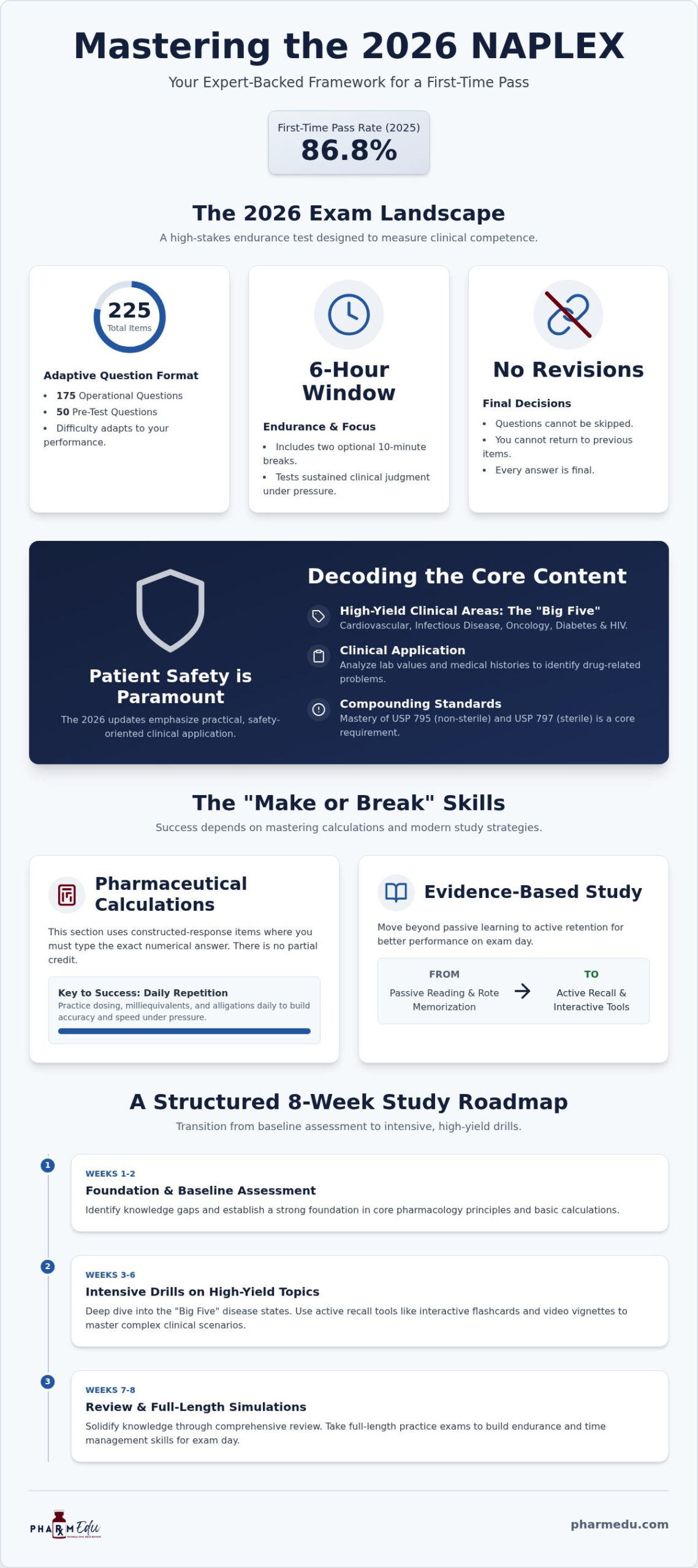
The North American Pharmacist Licensure Examination (NAPLEX) serves as the primary gateway to professional practice. It’s a 225-question, computer-based adaptive exam designed to measure whether you possess the clinical competence to practice safely. Unlike standard multiple-choice tests you encountered in pharmacy school, this exam adapts to your performance. The difficulty of subsequent questions shifts based on your previous answers. This is why a traditional NAPLEX study guide focused solely on rote memorization often falls short. You need to understand the blueprint to navigate this complex environment effectively.
The exam spans six hours, including two optional 10-minute breaks. It’s a high-stakes endurance test. Because it’s an adaptive format, you cannot skip questions or return to previous items. Every decision you make is final. This structure forces you to commit to your clinical judgment in real-time, mirroring the pressures of a fast-paced pharmacy environment. Your path to becoming a licensed pharmacist begins with mastering these technical logistics and the standards they represent.
New Competency Statements for 2026
The NABP updated its competency statements to prioritize clinical outcomes and patient safety. Area 1, which focuses on obtaining and interpreting patient information, now carries significant weight. You’ll be expected to analyze lab values and medical histories to identify potential drug-related problems before they reach the patient. Additionally, the 2026 exam places a heavier emphasis on compounding standards. Mastery of USP 795 and USP 797 is no longer optional. It’s a core requirement for demonstrating safety in both sterile and non-sterile environments. Your NAPLEX study guide must reflect this shift toward practical, safety-oriented clinical application.
Scoring and Pass/Fail Realities
The NAPLEX uses a binary pass/fail reporting system. While this might seem to change the pressure, it actually demands a more consistent level of preparation. Out of the 225 questions, only 175 are operational items that count toward your result. The remaining 50 are pre-test items used for future exam development. Since you won’t know which questions are which, you must treat every item as critical. This pass/fail reality means your preparation should focus on achieving a high baseline of knowledge across all five domains. You aren’t just trying to reach a number; you’re proving you can provide safe patient care.
Decoding the Core NAPLEX Content Domains
Understanding the exam structure is only the first step toward licensure. To succeed, you must master the specific domains outlined in the Official NAPLEX Blueprint. The 2026 exam isn’t just a test of what you know; it’s a test of how you apply that knowledge to complex clinical scenarios. A comprehensive NAPLEX study guide should prioritize high-yield topics to ensure you’re spending your limited time where it matters most. You’ll face questions that require you to manage drug therapy, identify dangerous interactions, and interpret medical literature for evidence-based decisions.
High-Yield Clinical Areas
The exam consistently favors certain therapeutic categories. You should focus heavily on the “Big Five”: Cardiovascular, Infectious Disease, Oncology, Diabetes, and HIV. These areas are dense with potential drug interactions and contraindications. For instance, mastering the pharmacology of ACE inhibitors is vital because they are perennial favorites in cardiovascular cases. You’ll need to memorize black box warnings, such as fetal toxicity, and contraindications like a history of angioedema. Using interactive pharmacology flashcards can help cement these critical details through active recall, making them easier to retrieve during the exam.
Mastering Pharmaceutical Calculations
Calculations are often the “make or break” portion of the exam. The 2026 format continues to use constructed-response items where you must type in the numerical answer. There’s no partial credit. A misplaced decimal point or incorrect unit conversion results in a lost point. You don’t need a calculus background, but you do need a structured mental framework. Practice dosing, milliequivalents, and alligations every single day. This daily repetition builds the muscle memory required to solve these problems accurately under the pressure of a ticking clock. Consistency is the only way to eliminate the anxiety often associated with this section.
Beyond clinical knowledge and math, the exam tests your ability to prepare and dispense medications safely. This includes understanding proper labeling, storage requirements, and dispensing protocols. You’ll also encounter questions that require you to interpret clinical trials or medical literature. Being able to identify the strengths and weaknesses of a study is essential for evidence-based decision-making. Your NAPLEX study guide must bridge the gap between theoretical science and practical pharmacy operations to ensure you’re ready for every question type.
Evidence-Based Study Strategies for High-Yield Retention
Success on the licensure exam isn’t just about how much you study, but how you study. Many students fall into the trap of passive reading, spending hours highlighting a 1,000-page textbook without truly retaining the information. Research highlighted in the AACP NAPLEX Resources suggests that active engagement with the material is far more effective for long-term retention. A modern NAPLEX study guide must prioritize active recall, where you force your brain to retrieve information rather than simply recognizing it on a page. This shift from passive to active learning is the difference between feeling overwhelmed and feeling prepared.
Spaced repetition is another cornerstone of high-yield preparation. By using digital tools to review drug mechanisms at increasing intervals, you move complex data from short-term memory into long-term storage. This process works best through micro-learning. Short, 15-minute study bursts are significantly more effective than exhausting 4-hour cram sessions. These focused intervals prevent cognitive burnout and allow you to maintain a high level of concentration throughout your preparation period. It’s about consistency over intensity.
Leveraging High-Yield Video Vignettes
Visual learning tools excel at simplifying intricate pharmacology concepts that are often difficult to grasp through text alone. Whether you’re analyzing coagulation cascades or calculating renal dosing adjustments, high-yield video vignettes provide a clear, step-by-step breakdown. Integrating these videos into a comprehensive pharmacy review strategy ensures you’re attacking the material from multiple angles. Video vignettes effectively reduce cognitive load by presenting complex information in manageable, visually-driven segments, allowing busy PharmD candidates to focus on clinical application rather than just decoding dense paragraphs.
Interactive Flashcards and Quizzes
Building a daily habit is essential for mastering the top 200 drugs. Interactive pharmacology flashcards allow you to practice active recall on the go, turning dead time during clinical rotations or commutes into productive study sessions. Mobile-compliant platforms mean you don’t have to be tethered to a desk to make progress. Pair these flashcards with practice quizzes to identify specific “blind spots” in your clinical knowledge. Instead of waiting until the end of your study plan to take a practice test, use quizzes as a primary learning tool. This approach ensures your NAPLEX study guide remains a living document that adapts to your specific needs, focusing your energy where your knowledge is weakest.
A Structured 8-Week NAPLEX Study Schedule
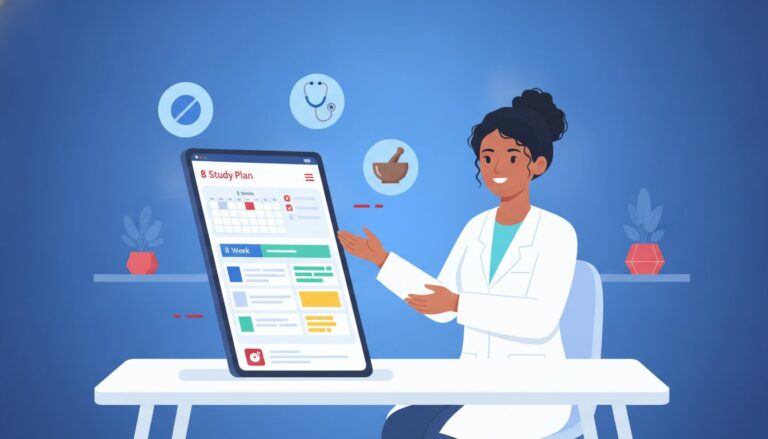
Organizing your preparation into a logical timeline is the only way to ensure you cover the vast amount of clinical material required for licensure. While some students attempt to cram in the final month, a structured 8-week approach provides the necessary buffer for deep comprehension and mental recovery. This timeline transforms your NAPLEX study guide from a static list of topics into a dynamic roadmap. Choosing the best NAPLEX prep course involves finding a plan that integrates seamlessly with your existing clinical rotations or residency requirements, allowing for consistent daily progress.
Phase 1: Building the Clinical Bedrock
The first three weeks focus on establishing your baseline and mastering foundational concepts. Begin by taking a diagnostic pre-test to determine your current percentile rank across the five domains. This data is invaluable because it prevents you from wasting time on topics you already understand well. Focus your energy on Area 1 of the competency statements, which involves interpreting patient information and identifying drug characteristics. Establishing a daily routine is vital during this phase. Aim for 20 minutes of pharmaceutical calculations followed by one hour of video-based topic review. This combination ensures that your math skills and clinical knowledge grow in parallel from day one.
Phase 2 & 3: Mastery and Test-Day Stamina
As you move into weeks four through six, your focus must shift from passive learning to active application. You should transition your study ratio from 70% content review to 70% practice questions. This is the time to deep dive into high-yield disease states, such as cardiovascular health and infectious diseases, while maintaining daily calculation drills. The final two weeks are dedicated to building test-day stamina. You must perform at least two full-length, 6-hour timed simulations to prepare your mind for the endurance required on exam day. Don’t just take the tests; analyze every incorrect answer in your practice quizzes to ensure you’ve achieved conceptual mastery.
The transition from a student mindset to a professional one requires a disciplined approach to information management. By following a structured schedule, you reduce the anxiety associated with the 225-question adaptive format. You aren’t just preparing to pass; you’re building the habits necessary for a successful career in pharmacy practice. To begin your structured journey with the right tools, consider exploring a PharmEDU Annual Subscription to access high-yield vignettes and interactive clinical case studies designed for modern learners.
Transitioning from Licensure Prep to Clinical Excellence
The moment you receive your passing result, your role shifts from a student to a vital member of the healthcare team. The clinical science you’ve mastered through your NAPLEX study guide is more than just a set of facts for an exam; it’s the foundation of your professional reputation. Patients and providers will look to you for definitive answers on drug therapy, and your ability to recall high-yield information quickly is what ensures patient safety. This transition requires a shift in mindset, where you move from clearing a regulatory hurdle to building a lifelong habit of learning.
Pharmacology is a rapidly evolving field, with new drug approvals and updated clinical guidelines released almost monthly. To maintain your clinical edge, you must embrace a structured approach to staying current. The same micro-learning strategies that helped you succeed on the licensure exam will serve you well in practice. By dedicating small blocks of time to reviewing new therapeutic classes or safety updates, you prevent the cognitive burnout that often comes with trying to keep up with the vast volume of medical literature.
From Test-Taker to Clinical Decision Maker
PharmEDU: Your Partner in Professional Growth
PharmEDU is designed to support you far beyond your initial licensure. Our platform provides a digital library of over 100 pharmacology topics that serve as a quick clinical reference during your residency or first years of practice. We also offer an Institutional Platform License for hospitals and pharmacy schools, allowing organizations to track progress and ensure their staff remains at the forefront of evidence-based care. By joining our community, you align yourself with healthcare professionals who prioritize precision and continuous development.
Effective patient care often depends on successful interprofessional collaboration. Understanding the educational frameworks of your colleagues can improve communication and clinical outcomes. For example, referencing the pharmacology study guide for nursing students can help you provide clearer monitoring parameters to the nursing staff on your unit. This cross-disciplinary perspective ensures that the expertise you gained while following your NAPLEX study guide is shared effectively across the entire care team, fostering a culture of clinical excellence.
Securing Your Future in Pharmacy Practice
Mastering the 2026 licensure exam requires more than just broad clinical knowledge; it demands a strategic approach to the 225-question adaptive format. By focusing on high-yield domains and adopting a disciplined 8-week schedule, you can approach your test date with genuine confidence. Success depends on shifting from passive textbook reading to active recall strategies that mirror real-world decision-making. Utilizing a structured NAPLEX study guide ensures that every hour you spend studying contributes directly to your goal of a first-time pass.
PharmEDU provides the tools you need to bridge the gap between graduation and licensure. Our platform offers over 100 high-yield pharmacology video vignettes and interactive flashcards optimized for spaced repetition. Because of our mobile-compliant design, you can maintain your progress during clinical rotations or busy commutes. Start your journey to clinical mastery with a PharmEDU subscription today and join a community dedicated to professional excellence. You’ve worked hard to reach this point; the right preparation will help you step confidently into your new role as a licensed pharmacist.
Frequently Asked Questions
What is the NAPLEX and who is required to take it in 2026?
How many questions are on the NAPLEX and what is the time limit?
The exam consists of 225 questions delivered in a computerized adaptive format. You have a total of six hours to complete the test, which includes two optional 10-minute breaks. Of the 225 items, 175 are operational questions that determine your result, while 50 are pre-test items used for future exam development. Because you cannot skip questions, managing your time efficiently is essential for finishing all items within the allotted window.
What is the passing score for the NAPLEX in 2026?
The NAPLEX results are reported as a binary “Pass” or “Fail” rather than a numerical scaled score. To pass, you must demonstrate a minimum level of entry-level competence across all five competency domains. While there isn’t a specific percentage of correct answers made public, the exam uses complex psychometric weighting to ensure that those who pass meet the safety standards required for professional pharmacy practice. This shift focuses your mindset on total competency rather than just hitting a number.
Can I use a calculator for the NAPLEX calculations section?
Yes, you’ll have access to an on-screen calculator provided by the testing software at the Pearson VUE center. You aren’t permitted to bring your own physical calculator into the testing room. Practicing with an on-screen calculator during your preparation is a smart move, as it helps you become comfortable with the interface you’ll use to solve the high-yield pharmaceutical calculations found in your NAPLEX study guide. This familiarity reduces technical friction during the actual exam.
How long should I study for the NAPLEX to ensure a first-time pass?
Most successful candidates dedicate between 6 and 12 weeks to structured preparation. An 8-week timeline is often considered the “sweet spot,” allowing for a deep dive into foundational pharmacology followed by intensive practice drills. Your specific duration should depend on your baseline performance on diagnostic tests. Consistency is more important than total hours, so aim for daily sessions that prioritize active recall and high-yield content retention over passive reading.
What happens if I fail the NAPLEX? What is the retake policy?
If you don’t pass, you must wait a minimum of 45 days before you can attempt the exam again. The retake fee is $520, plus an additional $100 application fee for each attempt. Candidates are limited to three attempts within any 12-month period and a maximum of five total attempts throughout their lifetime. This strict policy emphasizes the importance of using a comprehensive NAPLEX study guide to ensure success on your first attempt and avoid unnecessary delays in your career.
What are the most high-yield topics to focus on for the clinical section?
The most high-yield clinical topics typically include cardiovascular health, infectious diseases, oncology, diabetes, and HIV. These areas are heavily represented because they involve complex drug interactions, narrow therapeutic indices, and significant patient safety considerations. Additionally, you should focus on Area 1 of the competency statements, which tests your ability to obtain and interpret patient data to identify potential drug-related problems in diverse clinical scenarios. Mastering these core areas provides a strong foundation for the entire clinical section.
Is the NAPLEX still adaptive in 2026?
Yes, the NAPLEX remains a computerized adaptive test in 2026. This means the difficulty of the questions you receive is based on your performance on previous items. If you answer correctly, the system selects a more challenging question; if you answer incorrectly, the next item may be less difficult. This format requires you to answer every question in the order presented, as you cannot skip or return to a previous question once it’s submitted.