Pharmacology of Psychiatric Medications: A High-Yield Guide for 2026
Mastering the pharmacology of psychiatric medications isn’t about memorizing an endless list of drug names. It’s about understanding the precise receptor-site architecture that dictates every clinical outcome. With 2026 bringing novel agents like Bysanti for schizophrenia and the groundbreaking approval of Auvelity for Alzheimer’s agitation, the volume of data can feel insurmountable. You’ve likely felt the frustration of trying to distinguish between the subtle nuances of extrapyramidal symptoms and tardive dyskinesia while juggling increasingly complex receptor binding profiles.
We recognize that the leap from a textbook mechanism to a confident clinical decision is where the most confusion occurs. This guide provides the clarity you need by breaking down neurotransmitter pathways into logical, predictable frameworks. You’ll master the critical safety profiles of modern psychotropic classes and learn to predict side effects based on molecular actions. We’ll examine the latest regulatory shifts, such as the 2025 elimination of the Clozapine REMS program, and provide ready-to-use study structures for your upcoming boards and daily clinical practice.
Key Takeaways
- Understand the foundational role of Serotonin, Dopamine, and GABA in the central nervous system to establish a strong basis for clinical decision-making.
- Master the 2026 landscape of the pharmacology of psychiatric medications by tracing the evolution from legacy agents to modern SSRIs and their precise presynaptic mechanisms.
- Learn to differentiate between first-generation and second-generation antipsychotics by mapping the four primary dopamine pathways that govern therapeutic effects and side-effect profiles.
- Identify specific receptor profiles responsible for sedation and weight gain while gaining a clear framework for distinguishing between dystonia, akathisia, and pseudoparkinsonism.
- Implement high-yield study techniques like active recall and clinical case studies to bridge the gap between theoretical mechanisms and board-exam success.
The Neurochemical Foundation of Psychiatric Pharmacology
Psychiatric pharmacology is the specialized study of substances that cross the blood-brain barrier to modulate the central nervous system (CNS). It’s a field dedicated to treating mental disorders by altering chemical signaling. To master the pharmacology of psychiatric medications, you must first distinguish between pharmacokinetics and pharmacodynamics. Pharmacokinetics describes the body’s impact on the drug, including absorption, distribution, metabolism, and excretion. Conversely, pharmacodynamics focuses on the drug’s impact on the brain, specifically how it interacts with receptors to produce a clinical effect.
The clinical efficacy of these drugs relies on five primary neurotransmitters: Serotonin, Norepinephrine, Dopamine, GABA, and Glutamate. Most modern drug development has been guided by the Monoamine Hypothesis. This theory suggests that depression and other affective disorders stem from a deficiency in monoamine neurotransmitters within the synaptic cleft. While this hypothesis has limitations, it remains the conceptual foundation for most medications in current practice. For those seeking a comprehensive overview of psychiatric medications, understanding these chemical messengers is the first step.
Receptor Binding and Efficacy Dynamics
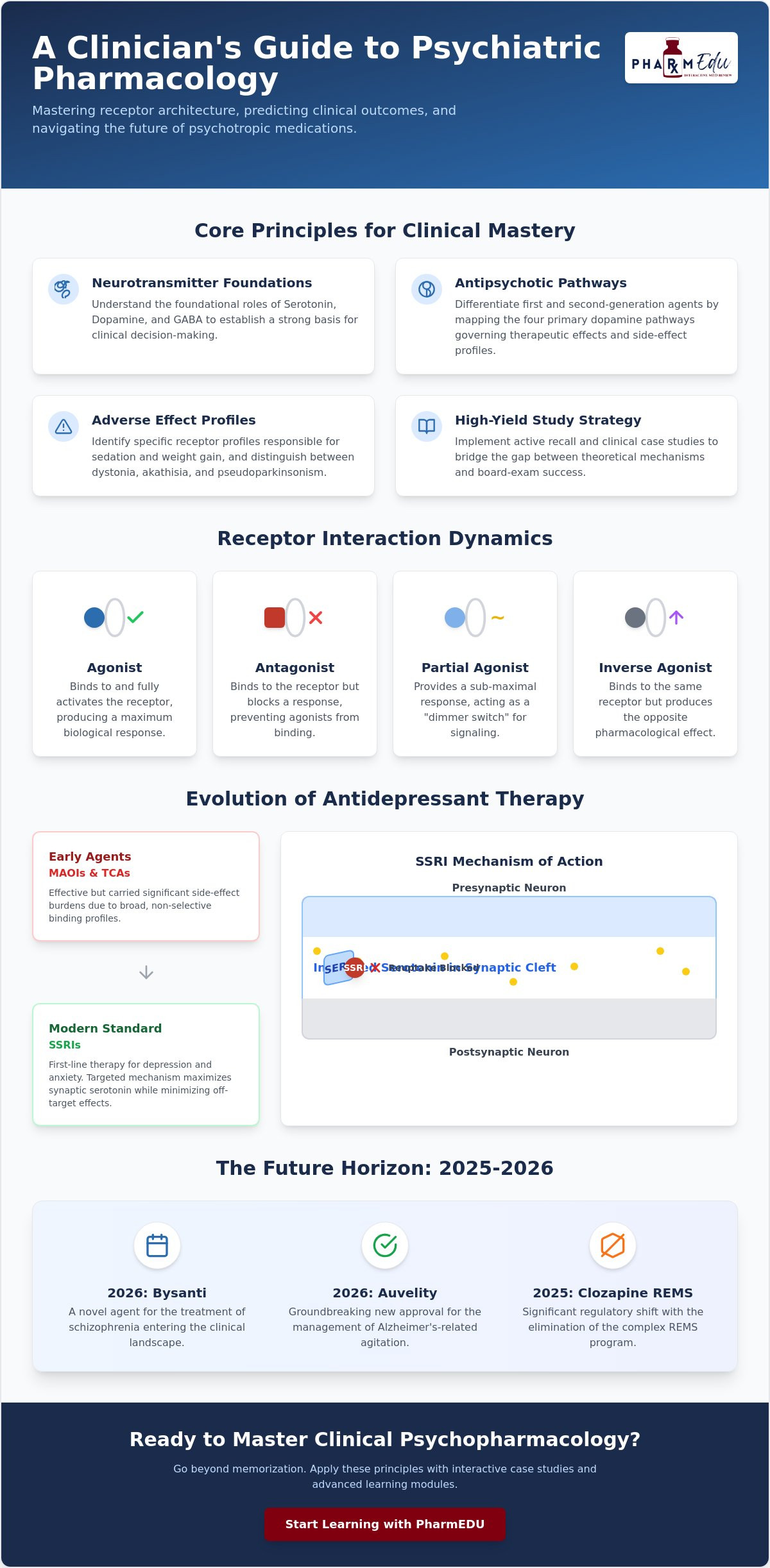
Drugs interact with receptors in distinct ways. Agonists bind to and activate a receptor to produce a biological response. Antagonists bind to the receptor but block the response, essentially “clinching” the lock so the key won’t fit. Partial agonists sit in the middle; they provide a sub-maximal response, acting as a functional “dimmer switch” that can either increase or decrease signaling depending on the baseline neurotransmitter levels. It’s vital to separate receptor affinity, which is how tightly a drug binds, from intrinsic activity, which is the drug’s ability to actually trigger a response once bound. An inverse agonist is a drug that produces the opposite effect of an agonist.
Neuroplasticity and Long-Term Adaptation
Clinicians and patients often wonder why antidepressants take 4 to 6 weeks to work despite immediate changes in synaptic neurotransmitter levels. This delay is due to the brain’s need for long-term adaptation. Initial drug binding triggers a cascade of intracellular events, including the upregulation of Brain-Derived Neurotrophic Factor (BDNF). BDNF supports neuronal survival and growth, facilitating synaptic remodeling. Over time, the brain responds to increased neurotransmitter availability through receptor down-regulation, where the number of available receptors decreases to maintain homeostasis. This structural shift, rather than the immediate chemical change, drives the true therapeutic benefit.
Pharmacology of Antidepressants and Anxiolytics
The evolution of antidepressant therapy reflects a journey toward greater receptor selectivity. Early treatments, such as Monoamine Oxidase Inhibitors (MAOIs) and Tricyclic Antidepressants (TCAs), were effective but carried significant side-effect burdens due to their broad binding profiles. Modern pharmacology of psychiatric medications has shifted toward targeted mechanisms that minimize off-target effects while maximizing synaptic neurotransmitter availability. This transition has made treatment safer and more tolerable for the majority of patients.
Selective Serotonin Reuptake Inhibitors (SSRIs) are now the first-line standard for both depression and various anxiety disorders. Their primary mechanism involves the potent inhibition of the serotonin transporter (SERT) protein at the presynaptic terminal. By blocking this reuptake pump, SSRIs cause serotonin to accumulate within the synaptic cleft, eventually leading to the long-term neuroplastic changes discussed in the previous section. Understanding these nuances is essential for effective Psychopharmacology and Medication Management in modern clinical practice.
Selective Serotonin Reuptake Inhibitors (SSRIs)
Common agents in this class include Fluoxetine, Sertraline, Escitalopram, and Paroxetine. While they share a primary mechanism, their secondary binding profiles and half-lives vary significantly. A high-yield clinical pearl for boards is “activation syndrome.” During the first week of treatment, some patients experience an acute increase in anxiety, jitteriness, or insomnia. It’s vital to educate patients that these symptoms are often transient and precede the actual therapeutic mood improvement. To master these distinctions, you can utilize interactive pharmacology flashcards that highlight specific drug-to-drug variations.
SNRIs and NDRIs: Beyond Serotonin
Serotonin-Norepinephrine Reuptake Inhibitors (SNRIs) provide a dual-action benefit by inhibiting the reuptake of both serotonin and norepinephrine. This makes them particularly effective for patients with comorbid chronic pain or those who haven’t responded to SSRIs alone. Conversely, Norepinephrine-Dopamine Reuptake Inhibitors (NDRIs), specifically Bupropion, offer a unique profile. Because Bupropion doesn’t affect the serotonergic system, it lacks the sexual side effects and weight gain common in other classes, making it a preferred option for many patients.
GABAergic Modulation: Benzodiazepines and Anxiolytics
Benzodiazepines function as positive allosteric modulators of the GABA-A receptor. They increase the frequency of the chloride channel opening in the presence of GABA, leading to rapid neuronal hyperpolarization and sedation. Clinicians must distinguish between agents based on their metabolic pathways. The “LOT” acronym (Lorazepam, Oxazepam, Temazepam) identifies drugs that undergo direct glucuronidation, bypassing the CYP450 system. This makes them safer for elderly patients or those with liver impairment. For long-term anxiety management without sedation, Buspirone serves as a 5-HT1A partial agonist, providing a non-addictive alternative to benzodiazepines.
Advanced Psychopharmacology: Antipsychotics and Mood Stabilizers
The pharmacology of psychiatric medications reaches its highest level of complexity when examining antipsychotics and mood stabilizers. These agents don’t just target a single receptor; they modulate intricate neural circuits across the entire brain. Understanding the distinction between first-generation (typical) and second-generation (atypical) antipsychotics is the first step toward clinical mastery. While typical antipsychotics focus primarily on potent D2 receptor blockade, atypicals introduce 5-HT2A serotonin antagonism. This additional mechanism is vital because serotonin normally inhibits dopamine release in certain areas. By blocking 5-HT2A receptors, atypical agents “release the brakes” on dopamine in the motor pathways, significantly reducing the risk of movement disorders. You can explore these molecular nuances further in this NIH Review of Psychiatric Medication Pharmacology.
Dopamine Pathways and Antipsychotic Action
To predict both therapeutic benefits and side effects, you must map the four primary dopamine pathways. The mesolimbic pathway is the target for treating positive symptoms; blocking D2 receptors here reduces hallucinations and delusions. Conversely, the mesocortical pathway is often already deficient in dopamine in patients with schizophrenia. Blocking receptors here can unfortunately worsen negative symptoms and cognitive dysfunction. The nigrostriatal pathway governs motor control, and it’s where D2 blockade leads to extrapyramidal symptoms (EPS). Finally, the tuberoinfundibular pathway regulates prolactin. When medications block dopamine here, prolactin levels rise, leading to potential endocrine issues. Mastering these pathways is essential for any clinician, and our High-Yield Video Vignettes provide the visual frameworks needed to keep these connections straight during exams.
Lithium and Anticonvulsant Mood Stabilizers
Lithium remains a cornerstone of treatment for bipolar disorder, though its exact mechanism is still being refined. The leading theory involves the inositol depletion hypothesis, suggesting that lithium inhibits enzymes responsible for recycling inositol. This dampens overactive intracellular signaling pathways associated with mania. Because lithium has a remarkably narrow therapeutic index, serum monitoring is a non-negotiable part of clinical practice to avoid renal and neurological toxicity. It’s a high-stakes balance that requires precise dosing and patient education.
Anticonvulsants provide alternative stabilization through different channels. Valproate and Carbamazepine primarily work by modulating voltage-gated sodium channels, which reduces high-frequency neuronal firing and stabilizes excitability in the CNS. Lamotrigine serves a unique role in the maintenance of bipolar depression by inhibiting the release of glutamate through its specific action on sodium channels. Understanding these distinct mechanisms allows for more personalized treatment plans that address the specific phase of a patient’s illness.
Managing Adverse Effects and Drug-Drug Interactions (DDIs)
Mastering the pharmacology of psychiatric medications requires a shift from memorizing side-effect lists to predicting outcomes based on receptor affinity. When a drug binds to H1 histamine receptors, patients typically experience significant sedation. Blockade of 5-HT2C receptors is a primary driver of metabolic weight gain, while Alpha-1 adrenergic antagonism leads to orthostatic hypotension and dizziness. By identifying these specific bindings, clinicians can anticipate a medication’s side-effect profile before the first dose is even administered, allowing for more proactive patient education.
Movement disorders represent some of the most distressing adverse effects in psychiatry. Extrapyramidal Symptoms (EPS) typically occur in a predictable timeline: acute dystonia within hours, akathisia within days, and pseudoparkinsonism within weeks of starting a dopamine antagonist. If D2 blockade persists long-term, the brain often compensates through dopamine receptor supersensitivity. This physiological adaptation is the underlying cause of Tardive Dyskinesia, characterized by involuntary, repetitive movements that may become permanent. Distinguishing these from life-threatening emergencies is a core clinical competency. Neuroleptic Malignant Syndrome (NMS) presents with “lead pipe” rigidity and high fever due to extreme dopamine blockade. In contrast, Serotonin Syndrome is characterized by hyperreflexia, clonus, and tremors caused by excessive serotonergic activity.
The High-Yield “Anticholinergic Burden”
M1 muscarinic receptor blockade creates what clinicians call the “anticholinergic burden.” This is often taught through the mnemonic “dry as a bone, red as a beet, hot as a hare, blind as a bat, and mad as a hatter.” In geriatric populations, these effects are particularly dangerous, as they significantly increase the risk of falls, urinary retention, and acute cognitive decline. For patients on high-risk agents like Clozapine, clinical monitoring remains essential despite the 2025 elimination of the formal REMS program. A robust metabolic syndrome checklist should include regular tracking of waist circumference, blood pressure, fasting glucose, and lipid profiles to manage the elevated risk of diabetes and dyslipidemia.
Critical Drug-Drug Interactions
Safety in psychopharmacology depends on mastering the CYP450 enzyme system. Many psychiatric drugs act as either substrates, inhibitors, or inducers of these hepatic enzymes. For instance, Fluoxetine is a potent 2D6 inhibitor, which can dangerously increase the serum levels of certain antipsychotics or beta-blockers when co-administered. Additionally, the interaction between MAOIs and tyramine-rich foods or sympathomimetics remains a lethal risk due to the potential for hypertensive crisis. To simplify these complex safety protocols, you can refer to our pharmacology study guide for nursing students. Testing your knowledge with our pharmacology practice quizzes is the most effective way to ensure you can spot these interactions in a high-pressure clinical or exam setting.
High-Yield Study Strategies for Psychiatric Pharmacology Boards
The volume of data required to master the pharmacology of psychiatric medications often leads to cognitive overload during board preparation. Success in 2026 requires moving beyond rote memorization toward high-yield study techniques that prioritize long-term retention. Passive reading is the enemy of retention. Instead, top-performing students utilize active recall and spaced repetition to reinforce the neural pathways associated with drug mechanisms. By testing yourself before you feel “ready,” you force the brain to retrieve information, which identifies knowledge gaps far more effectively than highlighting a textbook.
Clinical case studies serve as the essential bridge between theoretical receptor binding and real-world patient care. When you encounter a board vignette describing a patient with “lead-pipe” rigidity and hyperthermia, your brain should immediately link the clinical presentation to the extreme dopamine blockade discussed in previous sections. Our High-Yield Video Vignettes provide a visual anchor for these complex pharmacology concepts, allowing for rapid review of high-stakes topics. PharmEDU is designed to be the definitive naplex prep course partner, ensuring your study time translates directly into exam-day confidence.
Connecting MOA to Clinical Presentation
To master this subject, you must create a mental map that follows a logical progression: Receptor -> Physiological Effect -> Side Effect. For example, rather than simply memorizing that an agent causes orthostatic hypotension, remember that it acts as an Alpha-1 antagonist. This understanding allows you to predict the side effect across all drugs with similar profiles. You should practice identifying the “most likely cause” of symptoms in board-style vignettes to build diagnostic intuition. PharmEDU’s interactive flashcards are specifically built to help you drill drug-class suffixes and unique properties until they become second nature.
Maximizing Your PharmEDU Subscription
Efficiency is the hallmark of a successful professional. We recommend utilizing micro-learning segments to master one specific drug class per study session rather than attempting to cover the entire pharmacology of psychiatric medications in a single sitting. This structured approach prevents burnout and aligns with the brain’s natural learning rhythms. If your university provides an institutional platform license, you have access to a comprehensive pharmacy review that integrates digital tools with the latest 2026 board patterns. Focus your final weeks on our pharmacology practice quizzes, which are meticulously updated to simulate the difficulty and style of the current year’s board exams.
Advancing Your Clinical Mastery in 2026
PharmEDU is built to streamline this learning process. With over 100 high-yield topics and a mobile-compliant micro-learning design, our platform fits into the demanding schedules of today’s healthcare professionals. It’s the reason top-tier pharmacy and nursing programs rely on us for consistent results. Master psychiatric pharmacology today with a PharmEDU Monthly Subscription and take the next step in your professional journey. Your dedication to clinical excellence is the foundation of better patient outcomes, and we’re here to support every milestone of your career.
Frequently Asked Questions
What are the four primary dopamine pathways relevant to psychiatric pharmacology?
The four primary dopamine pathways are the mesolimbic, mesocortical, nigrostriatal, and tuberoinfundibular pathways. Each plays a distinct role in the pharmacology of psychiatric medications, specifically regarding the efficacy and side effects of antipsychotics. The mesolimbic pathway is associated with reward and positive symptoms, while the mesocortical pathway governs cognitive function. Nigrostriatal blockade causes movement disorders, and the tuberoinfundibular pathway regulates prolactin secretion.
How do SSRIs differ from SNRIs in terms of mechanism and clinical use?
SSRIs selectively inhibit the serotonin transporter (SERT), while SNRIs inhibit both SERT and the norepinephrine transporter (NET). Clinically, SSRIs are typically the first-line choice for depression and anxiety due to their favorable safety profile. SNRIs are often preferred when patients have comorbid chronic pain conditions, such as fibromyalgia or diabetic neuropathy, because norepinephrine modulation helps regulate pain signals in the spinal cord.
What is the “washout period” and why is it critical when switching to an MAOI?
A washout period is a specific timeframe where a patient must be drug-free before starting a new medication, most commonly required when switching to an MAOI. This period is typically 14 days for most antidepressants, though fluoxetine requires five weeks because of its exceptionally long half-life. Skipping this step risks Serotonin Syndrome, a potentially fatal condition caused by the over-accumulation of synaptic serotonin.
What are the hallmark symptoms of Neuroleptic Malignant Syndrome (NMS)?
Neuroleptic Malignant Syndrome is characterized by the hallmark symptoms of “lead pipe” muscle rigidity, high fever, and autonomic instability. Patients often present with tachycardia, diaphoresis, and a fluctuating level of consciousness. It’s a medical emergency caused by intense dopamine blockade. Unlike Serotonin Syndrome, which features hyperreflexia and tremors, NMS is defined by its severe, board-like muscle stiffness.
Which psychiatric medications require routine therapeutic drug monitoring (TDM)?
Routine therapeutic drug monitoring is essential for medications with a narrow therapeutic index or significant toxicity risks. Lithium requires frequent serum level checks to prevent renal and neurological damage. Other agents requiring TDM include valproate and carbamazepine to ensure efficacy and safety. Additionally, clozapine requires regular Absolute Neutrophil Count monitoring to detect potential agranulocytosis, even after the 2025 regulatory updates to the monitoring program.
Can psychiatric medications be used for off-label conditions like chronic pain?
Yes, several classes are frequently used off-label to manage chronic pain and other non-psychiatric conditions. Tricyclic antidepressants like amitriptyline and SNRIs like duloxetine are standard treatments for neuropathic pain. These drugs work by enhancing descending inhibitory pain pathways in the central nervous system. This cross-disciplinary application is a key aspect of the pharmacology of psychiatric medications in modern clinical practice.
What is the difference between an agonist and a partial agonist in psychopharmacology?
An agonist binds to a receptor and triggers a full biological response, while a partial agonist binds but only produces a sub-maximal effect. In psychopharmacology, partial agonists like aripiprazole act as functional stabilizers. They increase signaling in areas with low neurotransmitter levels and decrease signaling in areas where levels are too high. This “dimmer switch” effect helps balance the system without causing the extreme blockade seen with full antagonists.
How does the “Black Box Warning” affect the prescription of antidepressants in adolescents?
The FDA’s “Black Box Warning” highlights an increased risk of suicidal thoughts and behaviors in children, adolescents, and young adults under age 25. This warning doesn’t prohibit use but mandates that clinicians monitor patients closely during the first few months of treatment. It’s vital to educate families about this risk, especially during the initial phase when physical energy often returns before a patient’s mood significantly improves.