Antidepressants Drug Class Comparison: A High-Yield Guide for 2026
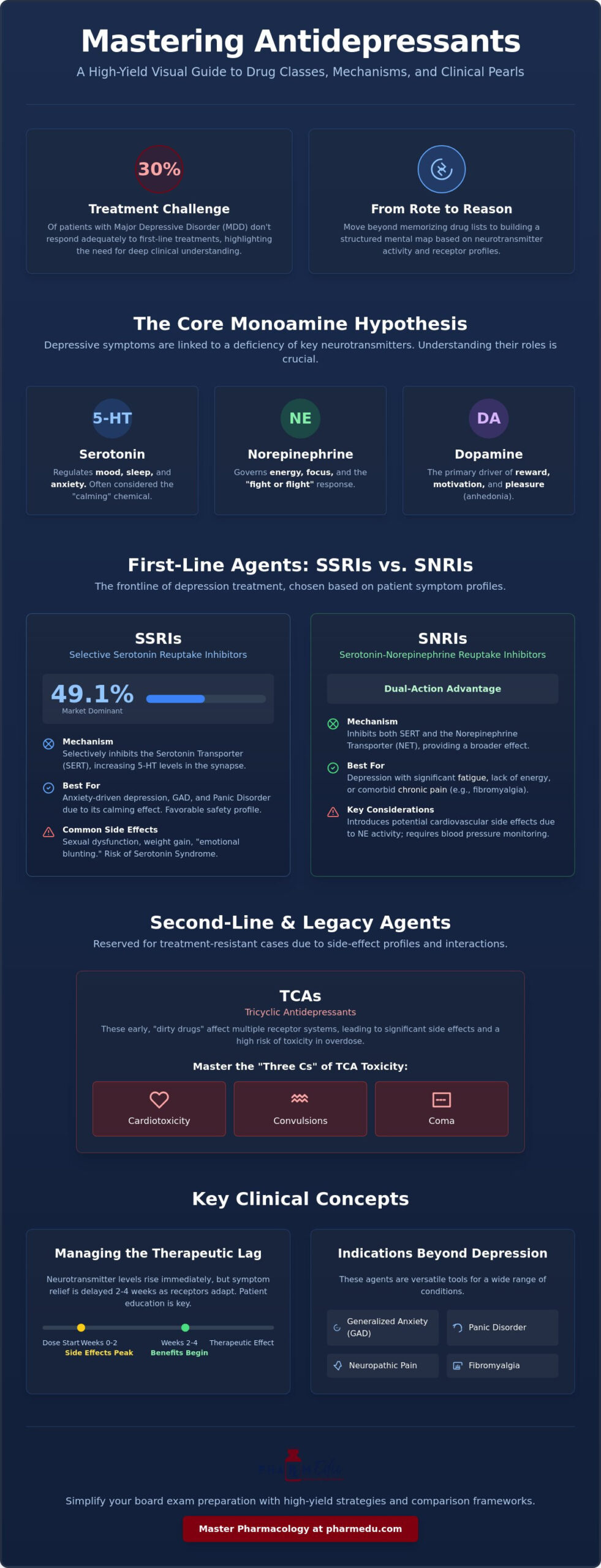
Approximately 30% of patients with Major Depressive Disorder don’t respond adequately to first-line treatments, yet many practitioners still struggle to move beyond basic rote memorization of drug lists. You’ve likely felt the frustration of information overload while trying to distinguish between dozens of similar-sounding medications and their complex side-effect profiles. It’s difficult to feel confident for board certification exams when the pharmaceutical landscape is shifting so rapidly. This guide provides a high-yield antidepressants drug class comparison designed to turn that confusion into a structured mental map.
We’ll help you master the mechanisms and clinical nuances of every major class, from the 49.1% market-dominant SSRIs to the latest 2026 FDA updates, such as the approval of esketamine nasal spray as a monotherapy. You’ll learn to predict adverse reactions based on receptor activity rather than just memorizing lists. We’ll also cover rapid-acting agents like Auvelity and the expanded role of adjunctive therapies like lumateperone. By the end of this review, you’ll have the precision and clinical confidence required to navigate modern psychopharmacology with ease.
Key Takeaways
- Move beyond rote memorization by building a clear mental map of how different classes modulate serotonin, norepinephrine, and dopamine.
- Navigate clinical decisions with confidence using a comprehensive antidepressants drug class comparison that highlights the specific advantages of SSRIs, SNRIs, and atypical NDRIs.
- Master the “Three Cs” of TCA toxicity and other critical side-effect profiles to ensure patient safety and improve treatment adherence.
- Simplify your board exam preparation with high-yield strategies and comparison frameworks designed for the NAPLEX and nursing certification exams.
Understanding the Antidepressant Landscape in 2026
The foundation of modern psychopharmacology rests largely on the Monoamine Hypothesis. This theory proposes that depressive symptoms arise from a functional deficiency of neurotransmitters within the synaptic cleft. While the hypothesis has evolved to include complex neuroplasticity and genetic factors, it remains the most effective way to organize an antidepressants drug class comparison for clinical practice. Understanding these chemical messengers allows you to predict both therapeutic outcomes and potential adverse effects with greater accuracy.
The history of these medications reflects a steady march toward selectivity. Early treatments were often “dirty drugs” that affected multiple receptor systems simultaneously, leading to significant side effects. Modern pharmacology has shifted toward agents that target specific transporters with surgical precision. This comprehensive list of antidepressants highlights how we’ve transitioned from broad-spectrum tricyclics to highly focused inhibitors of specific reuptake pumps. This evolution has significantly improved the safety profile of these medications, making them more accessible for a wider range of patients.
One of the most challenging aspects of clinical treatment is the therapeutic lag. You’ll notice that while neurotransmitter levels rise almost immediately after the first dose, patients rarely feel better for two to four weeks. This delay is likely due to the time required for post-synaptic receptors to downregulate and for downstream signaling pathways to alter gene expression. Managing patient expectations during this window is vital. It’s the period where side effects often peak before the benefits are fully realized.
The Role of Neurotransmitters in Mood Regulation
Each neurotransmitter contributes a unique flavor to the clinical picture. Serotonin (5-HT) is often viewed as the “calming” chemical, vital for regulating mood, sleep, and anxiety. When you focus on Norepinephrine (NE), you’re looking at energy, focus, and the physiological “fight or flight” response. Dopamine (DA) is the primary driver of reward and motivation. Deficiencies here often manifest as the “anhedonic” features of depression, where patients lose interest in previously enjoyable activities. A successful antidepressants drug class comparison must account for how each class balances these three systems.
General Indications Beyond Major Depressive Disorder (MDD)
While depression is the primary focus, these drugs are versatile tools in your clinical arsenal. Many classes are first-line treatments for Generalized Anxiety Disorder (GAD), Panic Disorder, and Social Phobia. Certain agents, particularly those affecting norepinephrine, are highly effective for managing neuropathic pain and fibromyalgia. You’ll also find off-label applications for everything from chronic insomnia to smoking cessation. This versatility underscores why a deep understanding of mechanism is more valuable than simple drug name memorization when preparing for professional exams or daily practice.
First-Line Agents: Comparing SSRIs and SNRIs
SSRIs and SNRIs represent the front line of treatment for major depressive disorder. While both classes are highly effective, clinicians typically begin with Selective Serotonin Reuptake Inhibitors (SSRIs) due to their favorable safety profile and lower risk of cardiovascular side effects. An effective antidepressants drug class comparison highlights that while SSRIs focus strictly on the serotonin transporter (SERT), Serotonin-Norepinephrine Reuptake Inhibitors (SNRIs) also inhibit the norepinephrine transporter (NET). This dual action can be a double-edged sword. It offers broader symptom relief but introduces new monitoring requirements.
When choosing between these classes, consider the patient’s specific symptom cluster. SSRIs are excellent for anxiety-driven depression. However, if a patient reports significant fatigue, lack of energy, or comorbid chronic pain, an SNRI might be the superior choice. The addition of norepinephrine modulation often provides the “activation” that patients with melancholic or atypical features need. If you’re finding these clinical nuances difficult to memorize, reviewing pharmacology practice quizzes can help solidify the logic behind these prescribing patterns.
Selective Serotonin Reuptake Inhibitors (SSRIs)
This class includes widely used agents such as Fluoxetine, Sertraline, Paroxetine, Citalopram, and Escitalopram. Their primary appeal lies in their high therapeutic index. Despite their safety, they are frequently associated with sexual dysfunction, weight gain, and a subjective sense of “emotional blunting.” One critical safety concern is Serotonin Syndrome, which is a life-threatening condition resulting from excessive synaptic serotonin levels and manifests as autonomic instability and neuromuscular irritability. A major meta-analysis on the comparative efficacy of 21 antidepressant drugs confirms that while most SSRIs have similar efficacy, they differ significantly in their tolerability and side-effect profiles.
Serotonin-Norepinephrine Reuptake Inhibitors (SNRIs)
Key agents in this class include Venlafaxine, Duloxetine, and Desvenlafaxine. The “Norepinephrine kick” provided by these drugs makes them particularly effective for treatment-resistant cases and patients with low-energy symptoms. However, this same mechanism requires clinicians to monitor blood pressure and heart rate regularly, as increased norepinephrine can lead to dose-dependent hypertension. Duloxetine holds a unique clinical position because it’s FDA-approved for both depression and the management of diabetic peripheral neuropathic pain. This dual role makes it an invaluable option for patients managing both psychiatric and chronic pain conditions simultaneously.
Atypical Antidepressants: Unique Mechanisms and Benefits
The term “atypical” refers to a diverse group of medications that deviate from the standard monoamine reuptake inhibition seen in SSRIs and SNRIs. In any antidepressants drug class comparison, these agents are valued for their ability to target specific symptoms like insomnia, weight loss, or sexual dysfunction that other classes might exacerbate. By 2026, the clinical use of these agents has expanded. This is especially true with newer approvals like Auvelity, which utilizes a dextromethorphan-bupropion combination for rapid action. These drugs don’t just treat depression; they allow you to fine-tune the treatment based on a patient’s unique physiological needs.
When selecting the right antidepressant, clinicians often look to these unique mechanisms to tailor treatment to the patient’s individual side-effect tolerance. While SSRIs remain the 49.1% market leader, atypical agents provide essential alternatives for the 30% of patients who don’t respond adequately to first-line therapies. Understanding these receptor-level differences is the key to moving beyond basic memorization and toward true clinical mastery, a standard exemplified by KUS Psychiatry LLC in their delivery of personalized mental health care.
Bupropion: The “Happy-Horny-Skinny” Pill Mnemonic
Bupropion stands out as a Norepinephrine-Dopamine Reuptake Inhibitor (NDRI). Because it lacks serotonergic activity, it’s famously associated with the mnemonic “Happy-Horny-Skinny.” It effectively treats depression (Happy), lacks the sexual side effects common in SSRIs (Horny), and is generally weight-neutral or associated with weight loss (Skinny). However, its potent effect on the seizure threshold makes it strictly contraindicated in patients with seizure disorders or eating disorders like bulimia and anorexia. It’s also a valuable tool for smoking cessation, illustrating its versatility beyond mood regulation.
Mirtazapine and Trazodone: Managing Insomnia and Appetite
Mirtazapine works through a complex mechanism involving Alpha-2 antagonism, which increases the release of both serotonin and norepinephrine. Its most notable feature is potent H1 histamine antagonism. This leads to significant sedation and weight gain, which can be a therapeutic advantage. For geriatric patients struggling with “failure to thrive” or cachectic patients who need to regain weight and improve sleep, mirtazapine is often the ideal choice. Trazodone follows a similar logic. While it’s technically a serotonin antagonist and reuptake inhibitor, its high sedative profile means it’s used almost exclusively off-label as a non-habit-forming sleep aid in 2026. These drugs demonstrate how a “side effect” can become a primary clinical benefit when matched with the right patient profile.
Second-Line Legacy: TCAs and MAOIs
While modern medicine favors the selectivity of SSRIs, older classes like Tricyclic Antidepressants (TCAs) and Monoamine Oxidase Inhibitors (MAOIs) remain vital components of any antidepressants drug class comparison. These agents are often reserved for treatment-resistant depression (TRD), a condition affecting approximately 30% of patients who fail to achieve remission with first-line therapies. Their “legacy” status isn’t due to a lack of efficacy; rather, it’s a reflection of their complex receptor activity and the intensive monitoring they require. For the clinician, mastering these drugs is essential for managing the most challenging psychiatric cases.
Understanding the transition from selective to non-selective agents is a common hurdle for students. If you’re struggling to keep these mechanisms straight, our interactive pharmacology flashcards provide a structured way to reinforce these high-yield concepts. Moving beyond the basics allows you to see these drugs not as “obsolete,” but as powerful tools for specialized clinical scenarios.
Tricyclic Antidepressants (TCAs) and Receptor Overload
TCAs like Amitriptyline and Nortriptyline are often described as “dirty drugs” because they interact with a wide array of receptors beyond the serotonin and norepinephrine transporters. This broad activity leads to a predictable pattern of adverse effects. Anticholinergic activity results in dry mouth, blurred vision, and urinary retention, while Alpha-1 adrenergic blockade often causes orthostatic hypotension, increasing fall risks in geriatric populations. For board exams, you must memorize the “Three Cs” of TCA toxicity: Coma, Convulsions, and Cardiotoxicity. This last point is particularly critical, as TCAs can cause lethal arrhythmias by blocking cardiac sodium channels. A helpful pharmacology tip is that Nortriptyline, a metabolite of Amitriptyline, typically exhibits a narrower side-effect profile and is often better tolerated.
MAOIs and the “Cheese Effect”
Monoamine Oxidase Inhibitors, including Phenelzine, Tranylcypromine, and the Selegiline transdermal patch, work by inhibiting the enzymes responsible for breaking down monoamines. Irreversible MAO inhibitors permanently deactivate the monoamine oxidase enzyme, requiring the body to synthesize entirely new enzymes before neurotransmitter metabolism returns to baseline. This mechanism creates a significant risk for the “Cheese Effect,” where the ingestion of tyramine-rich foods like aged cheeses or red wine leads to a massive release of stored norepinephrine and a subsequent hypertensive crisis. Because of these risks, a mandatory two-week “washout” period is required when switching between MAOIs and other serotonergic drugs to prevent the development of Serotonin Syndrome. Despite these restrictions, MAOIs remain some of the most effective agents for atypical depression characterized by mood reactivity and leaden paralysis.
Comparison Framework and Board Exam Strategy
Success on professional certification exams like the NAPLEX or nursing boards requires more than simple memorization. It demands a functional understanding of how neurotransmitter modulation translates into clinical outcomes. When you’re faced with a complex case study, your first step should be to categorize the medication within a broad antidepressants drug class comparison framework. By identifying the primary neurotransmitters involved, you can accurately predict both the therapeutic benefits and the likely adverse reactions a patient will experience.
Pharmacists and nurses play a critical role in monitoring these patients. For those on SNRIs, regular blood pressure checks are non-negotiable. Patients prescribed TCAs require baseline and periodic ECGs to monitor for QTc prolongation. Education is equally vital. Patients must understand that while side effects may appear within days, the mood-lifting benefits typically require two to four weeks of consistent adherence. Clear communication about this timeline often determines whether a patient continues or discontinues their treatment plan. For patients in Ireland who require consistent follow-up, MedicOnline provides a platform to connect with IMC-registered doctors for online consultations, ensuring they receive the support needed throughout their recovery.
| Drug Class | Primary Neurotransmitters | High-Yield Side Effect |
|---|---|---|
| SSRI | Serotonin (5-HT) | Sexual Dysfunction |
| SNRI | 5-HT + Norepinephrine (NE) | Hypertension |
| NDRI | NE + Dopamine (DA) | Insomnia / Seizure Risk |
| TCA | 5-HT + NE (Non-selective) | Anticholinergic Toxicity |
Critical Side Effect Comparison
When selecting an agent, clinicians often choose based on the “least worst” side effect for a specific patient. Sexual dysfunction is most prevalent in SSRIs and SNRIs, whereas Bupropion and Mirtazapine are frequently used as alternatives because they lack this effect. Weight gain is a significant barrier to adherence, peaking with TCAs and Mirtazapine, while Bupropion is often weight-neutral or even promotes weight loss. For patients struggling with insomnia, the sedative properties of Trazodone or Mirtazapine are beneficial, while activating drugs like Fluoxetine or Bupropion are better suited for those with hypersomnia.
PharmEDU Exam Prep: High-Yield Clinical Pearls
The FDA maintains a strict “black box” warning for all antidepressants concerning the increased risk of suicidal thoughts and behaviors in children, adolescents, and young adults under 25. This risk is highest during the initial weeks of treatment or following dosage adjustments. Another common exam topic is Discontinuation Syndrome. Drugs with short half-lives, such as Paroxetine and Venlafaxine, carry the highest risk of withdrawal symptoms like dizziness and “brain zaps” if stopped abruptly. Fluoxetine, with its exceptionally long half-life, has the lowest risk. Ready to master psychopharmacology? Explore PharmEDU’s high-yield video vignettes to see these concepts applied in real-world clinical scenarios.
Advancing Your Clinical Psychopharmacology Expertise
Mastering antidepressants isn’t just about memorizing drug names; it’s about connecting neurotransmitter mechanisms to real-world clinical outcomes. We’ve explored how the landscape has evolved from broad-spectrum TCAs to the precision of modern SSRIs and the rapid action of 2026 approvals like Auvelity. This antidepressants drug class comparison provides the structural framework you need to predict side effects and manage patient expectations effectively during the critical first weeks of treatment. By focusing on the “why” behind the “what,” you move beyond rote learning and toward professional mastery.
To truly solidify these concepts for the NAPLEX or your next clinical rotation, you need a partner in your educational journey. Master Pharmacology with PharmEDU Subscriptions to access over 100 high-yield pharmacology topics. Our platform offers interactive flashcards, practice quizzes, and expert-led video vignettes that simplify complex board review material. You don’t have to navigate these challenging scientific results alone. With the right tools and a clear mental map, you’ll provide safer, more effective care for every patient you treat.
Frequently Asked Questions
What is the main difference between SSRIs and SNRIs?
The primary difference lies in their neurotransmitter targets. SSRIs selectively inhibit the reuptake of serotonin, while SNRIs block both serotonin and norepinephrine. This distinction is a central component of any antidepressants drug class comparison. While SNRIs offer broader symptom relief for conditions like chronic pain or severe fatigue, they require closer monitoring of heart rate and blood pressure due to their noradrenergic activity compared to the more focused SSRI profile.
Which antidepressant has the least sexual side effects?
Bupropion and Mirtazapine are the preferred options for patients concerned about sexual dysfunction. Unlike SSRIs and SNRIs, which frequently cause these issues in a high percentage of users, Bupropion lacks serotonergic activity. Mirtazapine uses a different receptor pathway entirely. This makes them excellent first-line alternatives or adjunctive treatments when sexual health is a priority. They help maintain treatment adherence by avoiding the common emotional and physical barriers associated with standard serotonergic agents.
Why do antidepressants take several weeks to work?
Therapeutic effects are delayed because the brain requires time for receptor downregulation and neuroplasticity. While synaptic neurotransmitter levels rise within hours, the clinical improvement in mood generally takes two to four weeks. This lag occurs as post-synaptic receptors adjust and downstream signaling pathways alter gene expression. Clinicians must encourage adherence during this initial window. It’s the period when side effects are often most noticeable but the desired therapeutic benefits haven’t yet peaked.
What is Serotonin Syndrome and how is it recognized?
Serotonin Syndrome is a life-threatening condition caused by excessive synaptic serotonin levels. It’s recognized by a triad of symptoms: mental status changes, autonomic instability like fever or tachycardia, and neuromuscular hyperactivity such as tremor or clonus. Immediate recognition is vital for patient safety. This syndrome often occurs when multiple serotonergic agents are combined or during an antidepressants drug class comparison review where mandatory washout periods were ignored, leading to a dangerous accumulation of neurotransmitters.
Can you switch directly from an SSRI to an MAOI?
You cannot switch directly from an SSRI to an MAOI without a mandatory washout period. Most SSRIs require a two-week break to ensure serotonin levels normalize before starting an MAOI. Fluoxetine is a notable exception, requiring a five-week washout due to its exceptionally long half-life. Failing to observe these intervals puts the patient at extreme risk. It can lead to a fatal hypertensive crisis or Serotonin Syndrome by causing an uncontrolled surge in monoamines.
Which antidepressant class is most dangerous in overdose?
Tricyclic Antidepressants (TCAs) are the most dangerous class in an overdose scenario. They’re highly cardiotoxic because they block cardiac sodium channels, leading to lethal arrhythmias and widened QRS complexes. Clinicians often use the “Three Cs” mnemonic to remember the signs of toxicity: Coma, Convulsions, and Cardiotoxicity. Because of this narrow therapeutic index, TCAs are rarely used as first-line agents in 2026, especially for patients with a known suicide risk.
What are the dietary restrictions for patients on MAOIs?
Patients on MAOIs must strictly avoid foods high in tyramine to prevent a hypertensive crisis. This includes aged cheeses, cured meats, fermented products, and certain alcoholic beverages like red wine. When MAO enzymes are inhibited, the body can’t break down tyramine, which then triggers a massive release of norepinephrine. These dietary restrictions are a significant factor in why MAOIs are generally reserved for treatment-resistant cases where other safer options have failed to provide relief.
How does Bupropion differ from other antidepressants?
Bupropion differs from most other antidepressants because it doesn’t affect the serotonin system. As a Norepinephrine-Dopamine Reuptake Inhibitor (NDRI), it’s often more “activating” and lacks the weight gain and sexual side effects common in SSRIs. However, it significantly lowers the seizure threshold. This makes it contraindicated for patients with a history of seizures or eating disorders like bulimia. In those cases, electrolyte imbalances can further increase the risk of a drug-induced seizure.