20 Must-Know Drugs for New Nurses: The High-Yield Clinical Guide for 2026
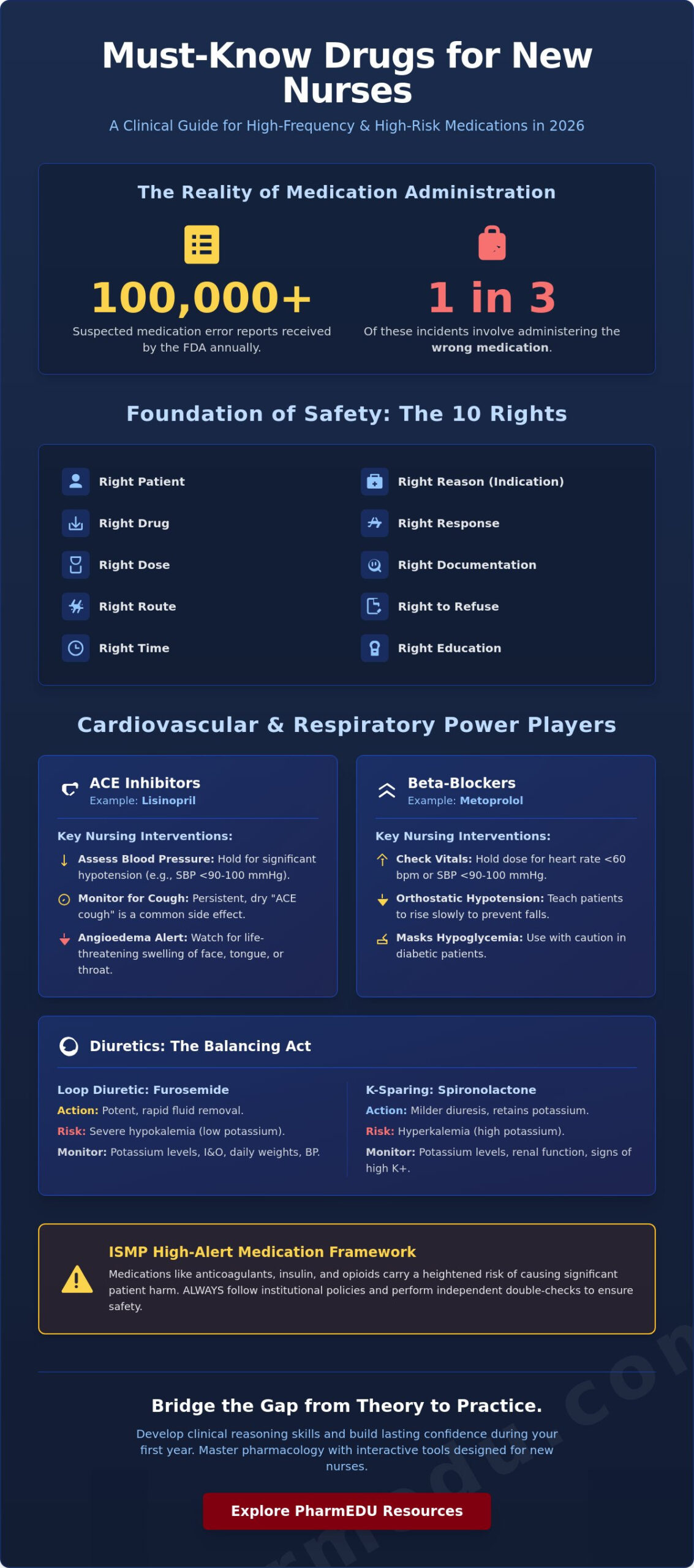
The FDA receives more than 100,000 reports each year associated with suspected medication errors, and research shows that up to one-third of these incidents involve administering the wrong medication. If you feel a surge of anxiety every time you open the medication cart, you aren’t alone. Transitioning from the classroom to the clinical floor often feels like a race against the clock where the stakes are life and death. Identifying the must-know drugs for new nurses is the first step toward moving past the information overload of nursing school and finding your rhythm on the unit.
You don’t need to memorize the entire pharmacopeia to be an excellent clinician; you need to master the high-yield medications that carry the highest risk and frequency. This guide provides a structured breakdown of the essential drugs you’ll handle in 2026. We’ll cover critical updates on Medicare-negotiated medications like Eliquis and Jardiance, examine new 2026 FDA approvals like the once-weekly insulin Awiqli, and apply the 10 Rights of Drug Administration to your daily workflow. This approach ensures you can identify side effects quickly, improve patient safety, and approach every med pass with professional confidence.
Key Takeaways
- Bridge the gap between NCLEX theory and real-world floor nursing by prioritizing clinical assessments over rote memorization.
- Identify the 20 must-know drugs for new nurses that represent the highest clinical frequency and risk in modern hospital settings.
- Master specific monitoring protocols for high-alert medications, including insulin timing and opioid-induced respiratory depression assessments.
- Implement the expanded “10 Rights of Drug Administration” to navigate digital med passes and prevent “Look-Alike, Sound-Alike” errors.
- Develop clinical reasoning skills to move beyond cheat sheets and build long-term confidence during your first year of practice.
The Reality of Medication Management: Why These 20 Drugs Matter
The gap between passing the NCLEX and managing a full patient load is often wider than new graduates expect. While nursing school prepares you to identify generic names and mechanisms of action in a controlled testing environment, the clinical floor demands rapid decision making and precise timing. You aren’t just memorizing facts anymore; you’re managing a complex workflow where every second counts. This shift is why identifying the must-know drugs for new nurses is vital for surviving your first year of practice.
Data from the FDA indicates that more than 100,000 reports of suspected medication errors are received annually. Research shows that up to one-third of these incidents involve the administration of the wrong medication. These statistics aren’t meant to cause fear, but rather to emphasize the necessity of clinical focus. High-yield medications are defined by two specific factors: how often you will administer them and the severity of the risk if an error occurs. Many commonly prescribed drugs fall into this category, requiring you to look beyond the label and understand the patient’s physiological response in real time.
Bridging this classroom-to-bedside gap requires a fundamental shift in how you process information. Utilizing a comprehensive pharmacology study guide for nursing students helps you transition from rote memorization to professional mastery. By focusing on the specific must-know drugs for new nurses that appear most frequently on hospital units, you can build a foundation of safety that protects both your license and your patients.
The “First 90 Days” Learning Curve
New nurses often struggle with medication timing and prioritization because they focus too heavily on individual trade names rather than broader drug classes. Mastering classes allows you to predict side effects and nursing interventions across a broad spectrum of therapies. We recommend using clinical case studies to simulate high-pressure med passes. This practice significantly reduces the cognitive load you experience during your actual shifts, allowing you to focus on the patient instead of the computer screen.
The High-Alert Medication Framework
The Institute for Safe Medication Practices (ISMP) identifies specific “high-alert” medications that carry a heightened risk of causing significant patient harm when used in error. These drugs, such as anticoagulants and concentrated electrolytes, require strict adherence to institutional policies and often mandate independent double-checks. Vigilance isn’t just about being careful; it’s about following a structured safety framework that accounts for human error in a fast-paced environment. Understanding these protocols is non-negotiable for anyone entering the profession in 2026.
Cardiovascular and Respiratory Power Players
Cardiovascular and respiratory medications dominate the daily workflow on most medical-surgical units. You’ll likely encounter these agents during every single med pass. Mastering the must-know drugs for new nurses in this category means moving beyond the mechanism of action to focus on critical assessment data. You can’t safely administer these drugs without current vital signs and recent lab results.
Critical Antihypertensives: ACE Inhibitors and Beta-Blockers
When managing hypertension, ace inhibitors like Lisinopril are foundational. Your primary nursing interventions include monitoring for the “ACE cough” and the life-threatening risk of angioedema. Beta-blockers, such as Metoprolol, require even tighter vigilance. You should generally hold the dose if the patient’s heart rate is below 60 beats per minute or their systolic blood pressure is less than 90 to 100 mmHg, depending on your specific unit protocols. Always teach patients to dangle their feet at the bedside before standing to prevent falls from orthostatic hypotension. If you’re looking to master these assessments before your next shift, practicing with Interactive Pharmacology Flashcards can help solidify your knowledge.
Diuretics and Fluid Volume Management
Effective fluid management often hinges on the balance between loop diuretics and potassium-sparing agents. Furosemide is highly effective but can lead to severe hypokalemia, whereas Spironolactone requires monitoring for hyperkalemia. To minimize the risk of ototoxicity, administer IV Furosemide at a rate not exceeding 20 mg per minute. While intake and output tracking is necessary, recording daily weights at the same time each morning remains the gold standard for assessing fluid status changes. Because these medications significantly impact electrolyte balance, they often overlap with institutional lists of High-Alert Medications that demand extra caution.
Respiratory management frequently involves bronchodilators like Albuterol. While these are excellent for opening airways, they often cause transient tachycardia and tremors. Your assessment should always include the following:
- Pre- and post-administration lung sounds to evaluate effectiveness.
- Current oxygen saturation levels.
- Heart rate monitoring to identify significant spikes after treatment.
If the patient’s heart rate is already significantly elevated, consult with the provider before administration. Understanding these nuances is what separates a novice from a competent clinician. This clinical depth is why these are considered must-know drugs for new nurses in any acute care setting.
Endocrine, Pain Management, and Anticoagulation Essentials
Managing endocrine disorders and acute pain requires a high level of clinical precision. These categories contain some of the most critical essential medications for nurses, where a minor dosing error can lead to immediate patient decompensation. Unlike blood pressure medications that might take hours to show a full effect, drugs like insulin and opioids demand constant bedside vigilance. Mastering these must-know drugs for new nurses is essential for maintaining patient safety during your first year on the unit.
Insulin Mastery: Onsets, Peaks, and Safety
Understanding the “peak” danger zone is the most important skill for managing diabetic patients. This is the window when the insulin is working at its maximum capacity and the patient’s blood glucose is most likely to drop to dangerous levels. For Regular insulin, this peak usually occurs between two and four hours after administration. If you’re mixing insulin in a single syringe, always remember the “clear before cloudy” rule. You must draw up the Regular (clear) insulin before the NPH (cloudy) to prevent contaminating the rapid-acting vial with intermediate-acting particles.
If your patient becomes hypoglycemic, your response depends on their level of consciousness. For a patient who’s awake and can swallow, follow the 15/15 rule by giving 15 grams of simple carbohydrates and rechecking their blood sugar in 15 minutes. If they’re lethargic or unconscious, you’ll need to move to IV Dextrose 50% or IM Glucagon as per your facility’s standing orders. These high-stakes scenarios are exactly why insulin remains a fixture on the list of must-know drugs for new nurses.
The Anticoagulation Tightrope
Anticoagulants like Heparin and Warfarin are frequently used to treat or prevent thromboembolic events, but they require a delicate balance of laboratory monitoring. You’ll track aPTT for Heparin and PT/INR for Warfarin. One unique challenge with Warfarin is patient education regarding Vitamin K. Patients don’t need to avoid green leafy vegetables entirely; they just need to keep their intake consistent so it doesn’t fluctuate their INR levels and interfere with the medication’s efficacy.
You should also watch for Heparin-Induced Thrombocytopenia (HIT), a serious immune reaction where the platelet count drops by 50% or more. This is a medical emergency that requires you to stop all Heparin products immediately. In many cases, you’ll see “bridging therapy” where a patient is on both Heparin and Warfarin simultaneously. This happens because Warfarin takes several days to reach a therapeutic level, and the Heparin provides immediate protection until that goal is met.
Pain Management and Renal Safety
Opioids like Morphine and Hydromorphone are effective but carry the heavy risk of respiratory depression. If a patient’s respiratory rate drops below 12, you must be ready to administer Naloxone. Meanwhile, non-opioid analgesics like NSAIDs require their own set of precautions. Prolonged use can lead to renal impairment or GI bleeding, making them a high-risk choice for elderly patients or those with pre-existing kidney disease. Understanding these nuances helps you maintain safety while effectively managing patient comfort.
Nursing Interventions for High-Alert Medication Safety
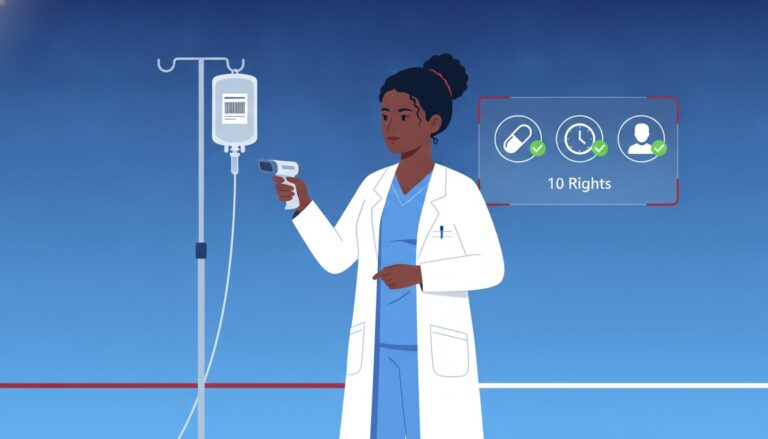
Safe medication administration in a modern hospital requires more than just clinical knowledge; it demands a disciplined adherence to safety systems. While you’ve identified the must-know drugs for new nurses, the environment in which you give them is often chaotic. The traditional “Six Rights” (patient, drug, dose, route, time, and documentation) serve as your baseline, but the digital age adds new layers of complexity. Barcode medication administration (BCMA) is a powerful tool, but it only works if you resist the temptation of workarounds. Scanning the patient’s ID band and the medication at the bedside is a non-negotiable step that prevents the most common errors before they reach the patient.
Look-Alike, Sound-Alike (LASA) medications pose a unique threat to new clinicians. Drugs like Hydralazine and Hydroxyzine or Dopamine and Dobutamine can easily be confused during a high-pressure shift. Many institutions use “Tall Man” lettering to highlight the differences in these names, but your own vigilance is the final line of defense. If you’re ever unsure about a medication’s purpose or its compatibility with a primary IV line, you must communicate your concerns to the pharmacist or the provider immediately. If you want to see these safety protocols in action, our High-Yield Video Vignettes provide real-world simulations of high-stakes med passes.
Preventing the Most Common Medication Errors
High-alert medications, such as Insulin and Heparin, carry a significant risk of patient harm if administered incorrectly. Most facility policies mandate an independent double-check for these agents. This means a second nurse must verify the dose and the pump settings without being told what the first nurse calculated. To maintain focus, many units now implement “No Interruption Zones” around medication carts. Respecting these boundaries helps you manage the cognitive load of a complex med pass. If a near-miss does occur, report it through your facility’s “Just Culture” framework. This system focuses on fixing flawed processes rather than punishing individuals, which ultimately improves safety for everyone.
Effective Patient Education Strategies
Your role doesn’t end when the pill is swallowed. Ensuring the patient understands their therapy is a core nursing responsibility. Use the teach-back method by asking the patient to explain the medication’s purpose and its potential side effects in their own words. When explaining the complex pharmacology behind a new prescription, avoid academic jargon and use layperson-friendly terms. If a patient refuses a medication, you must document the refusal and the education provided, then notify the provider. Refusal is a patient right, but it’s your job to ensure that the decision is informed. Mastering these interventions alongside the must-know drugs for new nurses will define your success in clinical practice.
Beyond the Cheat Sheet: Building Long-Term Competence
Rote memorization might help you pass a classroom exam, but it often fails in the high-stress environment of a busy hospital unit. When you’re managing multiple patients and a ringing call light, your brain can’t easily recall isolated facts from a textbook. Clinical competence requires a shift from memorizing data to developing deep clinical judgment. Understanding the must-know drugs for new nurses isn’t just about knowing what a drug does; it’s about understanding how that drug interacts with your specific patient’s current physiological state.
The transition from using a pharmacology study guide for nursing students to achieving professional mastery is a journey that continues long after orientation ends. Bedside mastery involves recognizing patterns and anticipating needs before they become emergencies. By focusing on high-yield information and utilizing micro-learning tools, you can build a mental framework that supports rapid decision-making without the need for a physical cheat sheet at every med pass.
Developing Clinical Judgment in Pharmacology
As you gain experience, your internal dialogue should shift from “What is this drug?” to “Why is my patient getting this drug right now?” This distinction is the hallmark of professional nursing. To maintain this level of knowledge, consistency is key. Using Interactive Pharmacology Flashcards allows for spaced repetition, ensuring that the must-know drugs for new nurses remain fresh in your mind. This foundational knowledge also serves as a stepping stone for those pursuing advanced certifications or even those considering a transition to pharmacy roles by preparing for the NAPLEX. Professional growth is a continuous process that demands reliable, high-quality resources.
The PharmEDU Advantage for New Clinicians
PharmEDU is designed to support you through the challenging first year of practice and throughout your entire career. Our platform moves beyond dry text to provide High-Yield Video Vignettes that simulate real-world patient interactions and medication scenarios. These visual tools help you visualize the administration process and the patient’s potential response, making the information much easier to retain. Our mobile-compliant tools are perfect for a quick review between shifts or during a break, allowing you to stay sharp in any environment.
When you join our platform, you become part of a community of healthcare professionals dedicated to the highest standards of medication safety. We provide the structure you need to manage the administrative burden of continuing education while delivering practical, bedside-ready knowledge. Don’t let information overload hinder your clinical performance.
Start your PharmEDU Monthly Subscription today and master pharmacology for the bedside!
Elevate Your Clinical Practice in 2026
Mastering the must-know drugs for new nurses is about more than avoiding errors; it’s about building the clinical intuition that defines a seasoned professional. You’ve explored the critical assessments for cardiovascular power players, the high-stakes timing of insulin administration, and the safety frameworks required to navigate a digital med pass. By moving beyond rote memorization and focusing on high-yield clinical application, you protect your patients and your license while gaining the confidence needed to excel in your first year.
PharmEDU is your partner in this professional journey. Our platform offers over 100 high-yield pharmacology topics and interactive flashcards designed for rapid retention. It’s why top nursing and pharmacy programs nationwide trust our resources to bridge the gap between education and practice. You can Master Pharmacology with a PharmEDU Monthly Subscription and gain immediate access to the clinical case studies and pharmacology practice quizzes you need for the bedside. Your transition from student to expert clinician is a marathon, and we’re here to support every step of your professional development.
Frequently Asked Questions
What are the most common medications new nurses give on a med-surg floor?
Antihypertensives, anticoagulants, and analgesics are the most frequent medications administered on a med-surg floor. You’ll give drugs like Lisinopril for blood pressure, Heparin for clot prevention, and Acetaminophen for pain multiple times per shift. These categories represent the core must-know drugs for new nurses because they require constant monitoring of vital signs and laboratory values to ensure patient safety.
How can I remember all the different types of insulin peaks?
Grouping insulin by onset and duration is the most effective way to remember peaks. Rapid-acting insulin like Lispro peaks within 1 to 2 hours, while short-acting Regular insulin peaks in 2 to 4 hours. Intermediate NPH peaks between 4 and 12 hours. Long-acting Glargine has no peak. Focus on the peak time as the “danger zone” for hypoglycemia and always ensure a meal tray is available before administering rapid-acting doses.
What should I do if I realize I made a medication error?
Assess your patient immediately for any adverse changes if you realize a medication error has occurred. Your patient’s safety is the absolute priority. Once you’ve stabilized the situation, notify the prescribing provider and your charge nurse. You’ll then need to complete an institutional incident report. Most hospitals use a “Just Culture” approach that focuses on process improvement rather than individual punishment to prevent future occurrences.
Which medications always require a second nurse to witness?
High-alert medications like insulin and intravenous Heparin almost always require an independent double-check by a second nurse. This includes verifying the drug, dose, and pump settings before administration. Patient-controlled analgesia (PCA) pumps and concentrated electrolytes also typically fall into this category. Always consult your facility’s specific policy, as requirements can vary slightly between different healthcare systems and specialized units.
How do I effectively use a pharmacology study guide during my first year?
Focus on drug classes rather than individual medications to make your pharmacology study guide more manageable. Instead of memorizing 50 different drugs, learn the common suffixes and side effects shared by an entire class. Use the guide to identify the must-know drugs for new nurses on your specific unit. Reviewing high-yield summaries before your shift helps you anticipate the assessments and labs you’ll need for your assigned patients.
What are the red flags for an adverse drug reaction?
Sudden skin rashes, hives, itching, or swelling of the lips and tongue are immediate red flags for an allergic reaction. More severe signs include wheezing, shortness of breath, and a rapid drop in blood pressure, which indicate anaphylaxis. If you observe these symptoms, stop the medication infusion immediately and call for help. Always keep emergency equipment and reversal agents like epinephrine or diphenhydramine accessible during the administration of new medications.
Is there a difference between trade names and generic names for the NCLEX?
The NCLEX primarily uses generic medication names, although some questions might include a trade name for clarity. It’s best to study generic names because they often contain suffixes that reveal the drug’s class and mechanism. For example, knowing that “olol” indicates a beta-blocker is more useful than memorizing individual trade names like Lopressor. Mastering generic nomenclature helps you transition more easily from the classroom to professional clinical practice.
How can I improve my medication pass speed without sacrificing safety?
Organize your supplies and review your patient’s labs before entering the medication room to improve your med pass efficiency. Minimize distractions by using “no interruption” zones and avoid silence-based workarounds with barcode scanners. Speed comes with repetition and a structured workflow, not by cutting corners. Focus on being methodical with your “Six Rights” first, and you’ll find that your speed naturally increases as you become more familiar with the unit’s routine.