
Mastering Pharmacology Case Studies for Students: A 2026 Clinical Guide
What if the most effective way to prepare for your clinical boards isn’t by memorizing more drug classes, but by changing how you process them? It’s common to feel overwhelmed by the sheer volume of data in your pharmacology curriculum. You’ve likely experienced that specific type of anxiety when a textbook explanation doesn’t quite translate to a patient’s bedside reality. Connecting a mechanism of action to a tangible clinical outcome often feels like a missing link in your education. This high-yield guide is designed to bridge that gap. You’ll learn how to approach pharmacology case studies for students with a systematic framework that turns technical data into actionable clinical insights.
We’ll break down the exact steps to improve your clinical reasoning, help you secure higher scores on exams like the NAPLEX or NCLEX, and build your confidence in identifying complex drug-drug interactions. By treating each case as a clinical simulation rather than a simple test, you’ll develop the professional precision required for a successful career in healthcare. This methodology ensures that your knowledge isn’t just a collection of facts, but a reliable tool for patient safety and professional excellence.
Key Takeaways
- Shift your perspective by treating case studies as clinical simulations to develop the high-level reasoning skills required for real-world practice.
- Master a systematic strategy for deconstructing pharmacology case studies for students, focusing on isolating the chief complaint and filtering essential patient data.
- Identify and avoid critical reasoning pitfalls, such as premature closure or overlooking the impact of renal and hepatic impairment on drug clearance.
- Strengthen your exam readiness using interactive tools like high-yield video vignettes and practice quizzes designed to simulate the board exam environment.
Why Pharmacology Case Studies Are Essential for Clinical Success
Pharmacology case studies for students function as vital clinical simulations, providing a safe yet rigorous environment to practice real-world decision-making. Instead of viewing these scenarios as mere academic exercises, you should consider them high-fidelity rehearsals for your future career. They force you to look past the generic drug profile to see the human being behind the medical data. This process is essential because clinical pharmacology isn’t just about what a drug does to a body; it’s about how a specific patient’s unique physiology interacts with that medication. When you engage with a complex scenario, you’re doing much more than recalling facts. You’re developing the high-level clinical reasoning needed to survive a busy shift.
You’ll learn to identify how subtle shifts in renal function or hepatic clearance can turn a standard dose into a toxic one. These studies reveal the nuances of pharmacodynamics that static textbooks often oversimplify. By analyzing these variables in a simulated environment, you build the professional precision required for safe practice. This methodical approach helps you identify the “hidden” risks in a patient’s profile, such as subclinical drug-drug interactions that might otherwise go unnoticed until an adverse event occurs.
Bridging the Gap Between Theory and Practice
Mastering drug classes is only the first step in your professional journey. The real challenge lies in understanding patient-specific variables like age, genetic factors, and co-morbidities. Case studies mimic the daily workflow of pharmacists and nurses, requiring you to prioritize information and make critical calls. This active learning approach offers a significant psychological advantage over passive reading. It builds neural pathways that help you retrieve information faster when you’re on the hospital floor. You aren’t just learning about drugs; you’re learning how to manage a patient’s life through medication.
The Impact on Board Exam Readiness
Modern licensing exams have shifted significantly. The NAPLEX and NCLEX now prioritize integrated clinical scenarios that test your ability to manage multi-system patient issues. High-yield study must involve this type of analysis to be effective. For a deeper dive into these foundational principles, you can refer to Pharmacology: The Comprehensive Guide to the Science of Drugs. Success on these boards depends on your ability to recognize drug-drug interactions and adverse effects within the context of a realistic patient history. Mastering pharmacology case studies for students ensures you aren’t caught off guard by the complexity of modern board questions.
Deconstructing a High-Yield Pharmacology Case Study
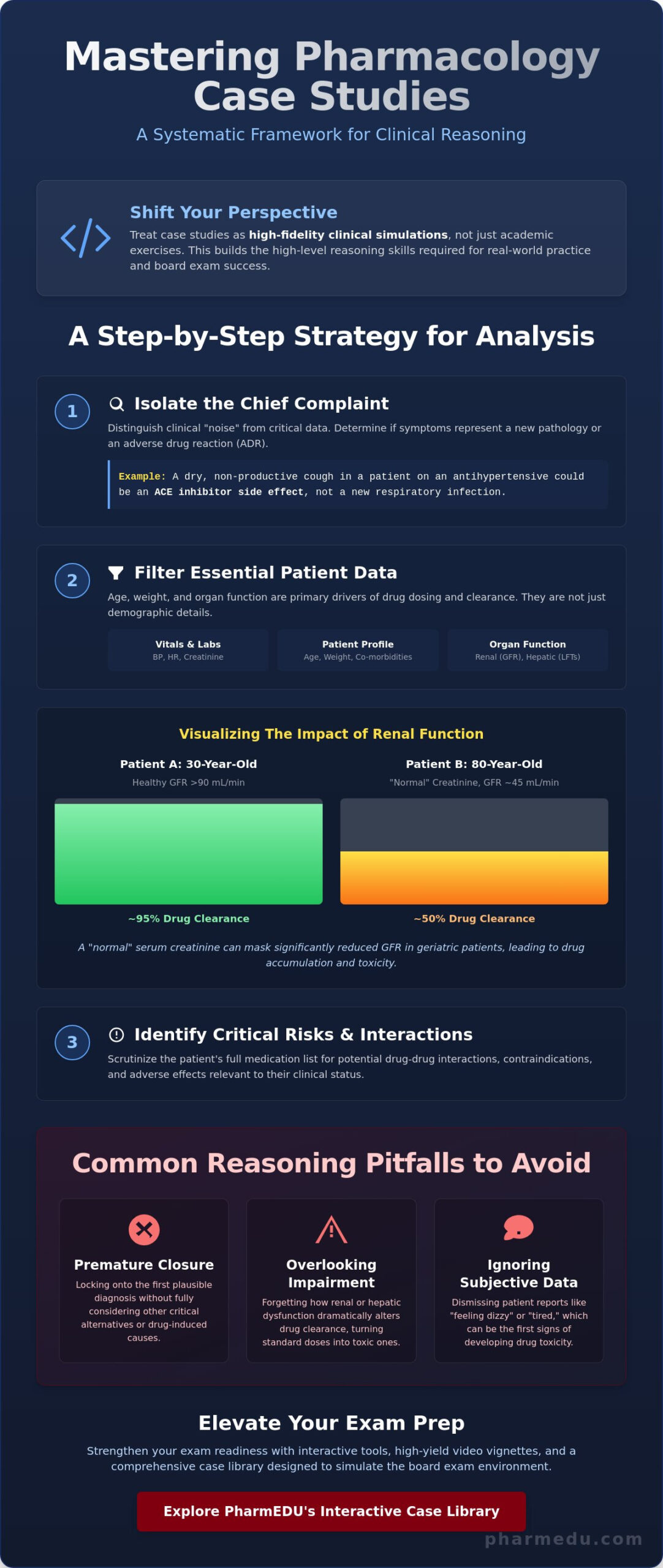
Effective analysis of pharmacology case studies for students begins with a meticulous filtration process. You must distinguish between the “noise” of a patient’s narrative and the critical clinical data that dictates therapeutic decisions. Start by isolating the chief complaint. It’s vital to determine if the patient’s symptoms represent a new pathological process or a delayed adverse drug reaction. For instance, a patient presenting with a dry, non-productive cough might not have a respiratory infection; instead, they could be experiencing a common side effect of their antihypertensive regimen. Professional resources, such as these pharmacology and toxicology case studies, demonstrate how objective vitals often reveal toxicity patterns that subjective reports miss.
Vital signs serve as your most reliable tool for monitoring both drug efficacy and potential toxicity. A stable blood pressure reading might suggest a medication is working, but a concurrent bradycardia could signal that the dose is reaching dangerous levels. You’ll need to balance these objective metrics against subjective patient reports, such as “feeling dizzy” or “tired,” to form a complete clinical picture. As you refine your analysis, utilizing structured clinical case studies can help you practice these identification skills in a controlled environment.
The Patient Profile: More Than Just a Name
Age, weight, and renal function aren’t just demographic details; they’re the primary drivers of drug dosing and clearance. In geriatric patients, a “normal” serum creatinine can mask a significantly reduced glomerular filtration rate, leading to the accumulation of toxic drug metabolites. You must also recognize comorbidities like heart failure or hepatic impairment that act as absolute contraindications for specific drug classes. Within these patient-specific contexts, bioavailability is the fraction of an administered dose of unchanged drug that reaches the systemic circulation, a value that fluctuates based on an individual’s unique enzymatic activity and first-pass metabolism.
Deciphering the Medication Reconciliation
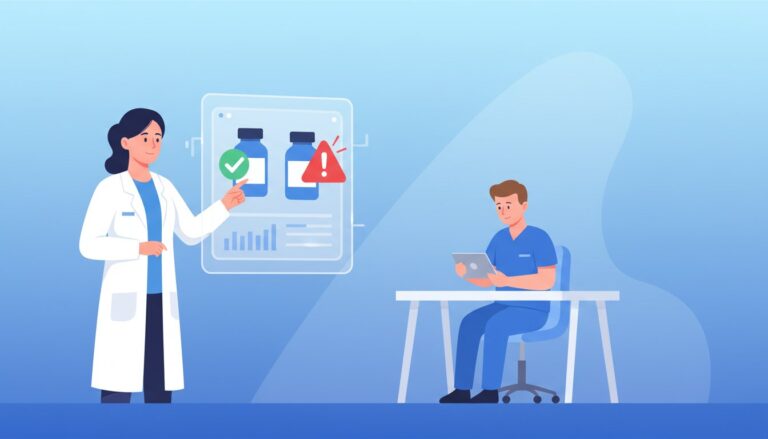
Your next step is spotting “red flag” drugs within the medication list. Compounds with a narrow therapeutic index, such as Warfarin or Digoxin, require immediate scrutiny because even minor drug-drug interactions can lead to catastrophic outcomes. You should also evaluate the significance of PRN (as needed) versus scheduled medications. A patient frequently using PRN NSAIDs while on a scheduled anticoagulant is at a much higher risk for gastrointestinal bleeding. For a specific example of how to manage complex regimens, see our ACE Inhibitors Pharmacology: The High-Yield Guide. This level of detail ensures you’re prepared for the multi-layered pharmacology case studies for students found on modern board exams.
A Step-by-Step Strategy for Analyzing Patient Scenarios
Analyzing pharmacology case studies for students requires a repeatable algorithm rather than a scattergun approach to data. To succeed in clinical settings and on high-stakes exams, you must move from passive reading to active deconstruction. This systematic framework ensures you don’t overlook critical safety details while being pressured by time constraints. Follow these five essential steps to manage any clinical scenario with professional precision:
- Identify the primary clinical problem: Determine the immediate threat to the patient and the desired therapeutic outcome. Is this an acute toxicity or a failure of maintenance therapy?
- Filter the patient data: Isolate the variables that directly impact drug kinetics, such as recent lab values, age-related physiological changes, or weight.
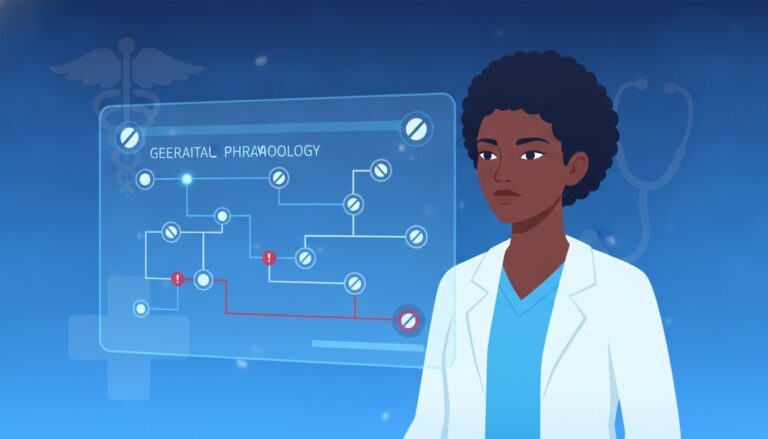
- Apply the ADME framework: Analyze how the drug’s absorption, distribution, metabolism, and excretion are altered by the patient’s current state. This is where you’ll catch potential dosing errors.
- Formulate prioritized interventions: Rank your actions based on patient safety and the acuity of the situation. Always address life-threatening issues first.
- Define monitoring parameters: Establish specific laboratory and clinical markers to track both efficacy and potential toxicity. You must know what “success” looks like for each medication.
Filtering Distractors from Critical Facts
In a complex scenario, you’ll often encounter “red herring” information designed to test your focus. Irrelevant history, such as a childhood surgery with no bearing on current cardiac medications, should be set aside. A useful practice tip is to highlight every medication mentioned along with its primary indication. This helps you quickly visualize the patient’s drug-disease interactions. Skimming a case study effectively means looking for “anchor points” like serum creatinine, liver enzymes, and blood pressure before diving into the narrative text. You’ll find that once the objective data is clear, the subjective narrative becomes much easier to manage.
Prioritizing Interventions for Board Exams
When you’re faced with multiple correct-sounding options on an exam, the “ABC” rule (Airway, Breathing, Circulation) remains your best guide. In a pharmacological context, this means addressing life-threatening toxicity or anaphylaxis before adjusting a maintenance dose. Choosing the “best” next step often involves identifying which intervention prevents the most immediate harm. For more tailored strategies, explore The Ultimate Pharmacology Study Guide for Nursing Students. This structured approach ensures you aren’t just guessing but are applying a logical clinical framework to every one of the pharmacology case studies for students you encounter.
Avoiding Common Pitfalls in Pharmacology Clinical Reasoning
Cognitive biases often represent the greatest hurdle when interpreting pharmacology case studies for students. One of the most dangerous errors is premature closure, where a student settles on a diagnosis before reviewing the entire medication reconciliation. This often leads to the prescribing cascade, where an adverse drug reaction (ADR) is misinterpreted as a new medical condition. For example, if a patient develops peripheral edema from a calcium channel blocker, a student might incorrectly suggest a diuretic rather than adjusting the offending agent. This failure to link current symptoms to the medication list compromises patient safety and clinical accuracy.
You must also account for physiological variables that impact drug clearance. Overlooking renal or hepatic impairment is a frequent pitfall that leads to toxicity. A patient’s non-pharmacological history, including their diet and use of herbal supplements, can drastically alter drug efficacy. St. John’s Wort or grapefruit juice aren’t just trivia; they’re potent modifiers of drug metabolism that you must identify to provide safe care. Identifying these subtle details is what separates a student who memorizes from a professional who understands.
The Silent Killers: Drug-Drug Interactions
The cytochrome P450 (CYP450) enzyme system remains a primary source of confusion. Students often struggle to predict how inhibitors or inducers will change the steady-state concentration of a primary drug. Beyond enzyme interactions, synergistic toxicities require careful monitoring. A classic case involves combining ACE inhibitors with potassium-sparing diuretics. While both drugs manage blood pressure, their combined effect on potassium retention can lead to life-threatening hyperkalemia. Developing a sharp eye for these overlaps is a hallmark of professional competency when working through pharmacology case studies for students.
Subjective Reporting vs. Objective Monitoring
Patient compliance is a frequent “hidden” variable. While a patient might claim perfect adherence, their lab values often tell a different story. If a patient on Warfarin presents with a sub-therapeutic INR, you must investigate their consistency before assuming the dose is too low. Validating patient claims requires a non-judgmental approach to questioning combined with a rigorous review of serum creatinine and other biomarkers. To master these nuances, you can access our interactive Clinical Case Studies to practice identifying these subtle errors in a simulated environment.
Elevating Your Exam Prep with PharmEDU’s Interactive Case Library
Transitioning from theory to the bedside requires tools that match the speed of modern healthcare. Traditional study methods often leave you isolated with a pile of data, but PharmEDU’s library of pharmacology case studies for students replaces that static experience with dynamic, clinical simulations. Our high-yield video vignettes bring complex scenarios to life, allowing you to visualize the physiological consequences of drug therapy. These visual aids are designed to help you recognize patient symptoms and drug reactions as they would appear in a real-world clinical setting. By watching these scenarios unfold, you’ll find it much easier to remember the nuances of drug mechanisms than you would by reading a single paragraph in a textbook.
The platform also features interactive pharmacology flashcards and practice quizzes that directly simulate the board exam environment. These aren’t simple recall questions; they’re designed to test your clinical reasoning under pressure. You’ll face the same types of multi-layered scenarios found on the NAPLEX and NCLEX, helping you build the stamina and precision needed for success. Every segment of our curriculum is developed by experienced healthcare educators, ensuring that the content you study is both accurate and aligned with current institutional standards. This institutional-grade approach provides the security you need to trust your study materials completely.
Why Digital Platforms Beat Traditional Textbooks
Static books can’t provide the real-time feedback necessary for rapid improvement. When you use a digital platform, you get immediate explanations for every correct and incorrect answer, which allows you to correct misconceptions on the spot. You can access over 100 high-yield topics from any mobile device, making it easy to fit a study session into your clinical rotations. For a deeper analysis of these advantages, read our Comprehensive Pharmacy Review: Digital Platforms vs. Traditional Textbooks. This accessibility ensures that your learning never stops, even when you’re on the move between patient rooms.
Start Your Professional Journey Today
Integrating PharmEDU into your daily routine turns a high-stress academic environment into a manageable path toward professional mastery. Think of the platform as a digital mentor that guides you through the complexities of pharmacology case studies for students. You’ll gain the confidence to identify drug-drug interactions and calculate precise clearances without the anxiety of second-guessing yourself. It’s time to move beyond rote memorization and embrace a more effective, supportive way to learn. Take the next step in your clinical education and join PharmEDU today to master clinical pharmacology.
Mastering Clinical Competency for Your Future Career
Mastering the clinical application of drug science is a journey from memorizing lists to protecting patients. By applying a systematic ADME framework and remaining vigilant against cognitive biases, you transform technical knowledge into professional expertise. Utilizing pharmacology case studies for students isn’t just about passing a test; it’s about developing the instinctual precision required in high-stakes environments.
You don’t have to navigate this transition alone. PharmEDU offers an institutional-grade platform designed by healthcare educators specifically for nursing, pharmacy, and medical students. With over 100 high-yield topics delivered through video vignettes and interactive quizzes, our mobile-compliant library ensures you can study anywhere, anytime. Join PharmEDU and Master Pharmacology with High-Yield Case Studies to bridge the gap between the classroom and the clinic. Your professional growth is a continuous process, and with the right tools, you’ll reach your clinical goals with confidence.
Frequently Asked Questions
What are the best sources for pharmacology case studies for nursing students?
The most reliable sources include peer-reviewed academic journals, professional associations, and specialized digital platforms. PharmEDU offers over 100 high-yield topics through video vignettes and interactive scenarios specifically designed by healthcare educators. These resources ensure that pharmacology case studies for students are evidence-based and aligned with the latest clinical guidelines for safe practice.
How do I solve a pharmacology case study for a board exam?
Solving a case study for a board exam requires a systematic clinical algorithm rather than a random search for answers. You should first identify the primary clinical problem and then apply the ADME framework to analyze drug behavior. Prioritize interventions based on the immediate threat to the patient’s safety, always selecting the “best” next step that addresses the most acute issue.
What is the most common mistake students make in pharmacology clinical scenarios?
Premature closure is the most frequent error in clinical reasoning. This occurs when a student settles on a diagnosis before they’ve reviewed the entire medication reconciliation and patient history. By jumping to conclusions, you might miss a critical drug-drug interaction or misinterpret a side effect as a new medical condition, which can lead to a dangerous prescribing cascade.
Can I find free pharmacology case studies with answers online?
You can find free scenarios through professional medical organizations and some government health sites, but the quality of these resources varies significantly. While these free options provide a baseline, they often lack the depth, real-time feedback, and interactive elements found in dedicated study tools. Specialized platforms offer a more structured environment that is specifically tailored to the requirements of modern healthcare curricula.
How do case studies help with NAPLEX or NCLEX preparation?
Modern boards like the NAPLEX and NCLEX have shifted toward integrated clinical scenarios that test high-level reasoning. Practicing with pharmacology case studies for students helps you develop the ability to analyze multi-system patient profiles under pressure. This method moves you away from rote memorization and prepares you to identify the subtle safety risks that are common in board-level questions.
Are interactive pharmacology cases better than textbook workbooks?
Interactive cases are generally superior because they provide immediate feedback and visual support that static books cannot offer. Digital platforms use video vignettes to bring patient symptoms to life, making it easier to recognize drug reactions in a clinical setting. This format also supports micro-learning on mobile devices, which is more practical for students with busy clinical rotations.
What drug classes are most frequently featured in student case studies?
High-risk drug classes with narrow therapeutic indices are the most common subjects in educational scenarios. You’ll frequently encounter anticoagulants like Warfarin, cardiac medications such as Digoxin, and antihypertensives like ACE inhibitors. These classes are prioritized because they require precise dosing and carry a significant risk of life-threatening interactions if managed incorrectly.
How should I prioritize nursing interventions in a drug-related case study?
You should always prioritize interventions using the ABC (Airway, Breathing, Circulation) rule to ensure patient safety. In any pharmacological crisis, address life-threatening issues like anaphylaxis or severe respiratory depression before anything else. Once the patient’s immediate vitals are stable, you can then focus on adjusting maintenance doses or addressing less urgent adverse drug reactions.