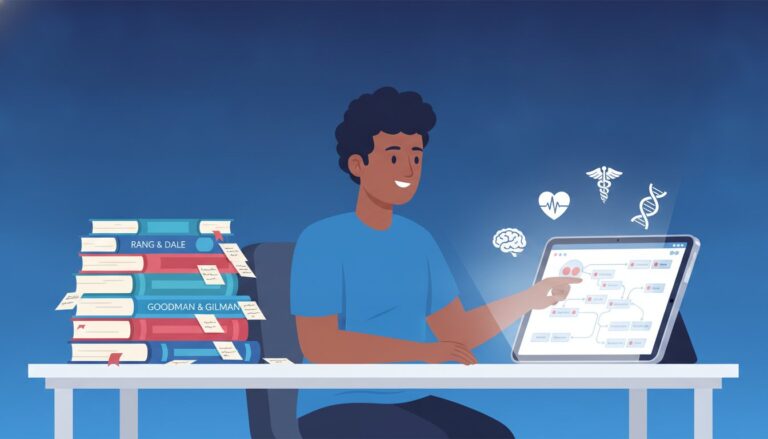

Avoiding Burnout While Studying Pharmacology: A 2026 Survival Guide
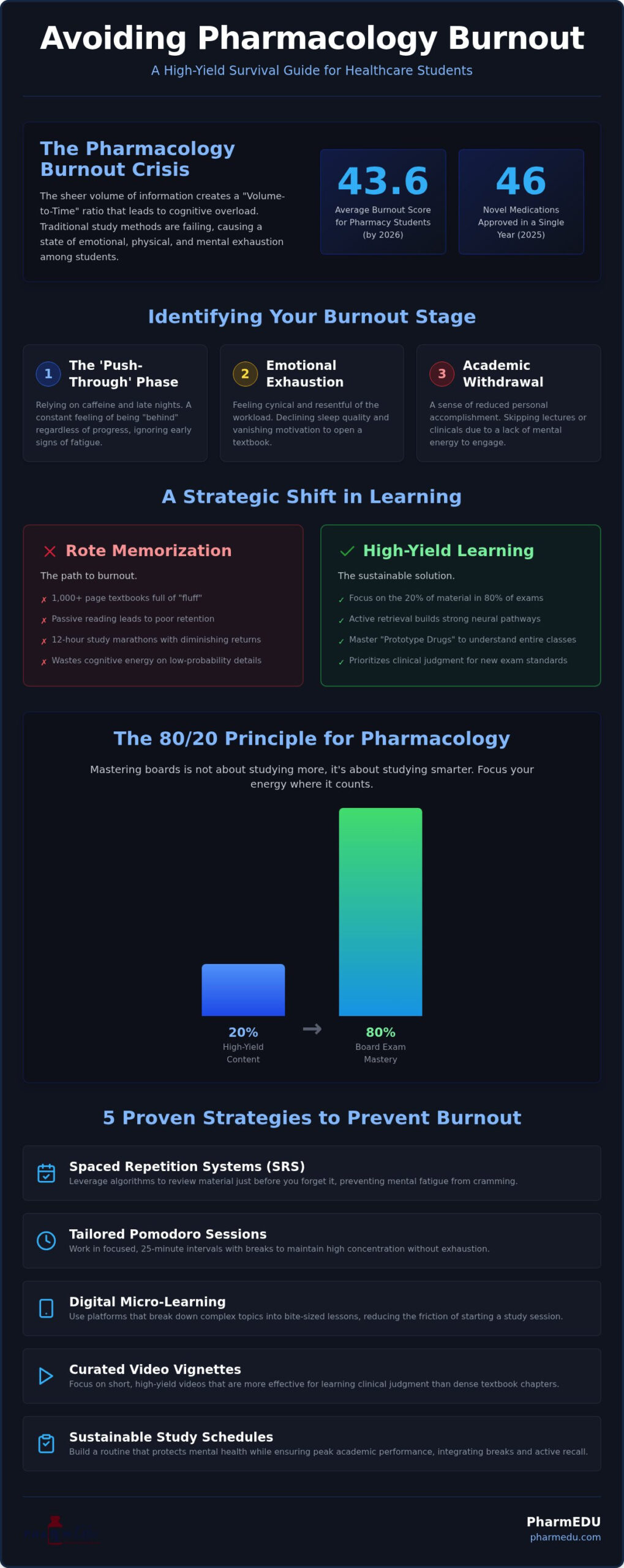
Did you know that by 2026, the average burnout score for pharmacy students has climbed to 43.6, a level that signals a serious crisis in professional education? If you feel overwhelmed by the sheer volume of drug classes and mechanisms, you aren’t alone. Between the 46 novel medications approved in 2025 and the updated NAPLEX and NCLEX requirements that prioritize clinical judgment, the pressure is immense. Successfully avoiding burnout while studying pharmacology requires more than just “trying harder.” It requires a fundamental shift in how you process information.
We understand that 12-hour study marathons often lead to diminishing returns and mental exhaustion rather than academic mastery. You deserve a path to licensure that doesn’t sacrifice your well-being. This survival guide outlines a high-yield approach to learning that emphasizes retention over rote memorization. We’ll preview how to integrate micro-learning vignettes and active recall tools into a sustainable daily routine. By the end of this article, you’ll have a clear framework for passing your exams with confidence while keeping your mental health intact.
Key Takeaways
- Learn why prioritizing high-yield content allows you to master the majority of board exam material with significantly less effort than traditional rote memorization.
- Discover how implementing Spaced Repetition Systems and tailored Pomodoro sessions can prevent the mental fatigue associated with exhaustive study blocks.
- Understand the critical role of digital micro-learning platforms in avoiding burnout while studying pharmacology by reducing the daily friction of starting review sessions.
- Explore why curated video vignettes are more effective for 2026 clinical judgment standards than the “fluff” content found in traditional textbooks.
- Identify the specific strategies needed to build a sustainable study schedule that protects your mental health while ensuring peak academic performance.
The Pharmacology Burnout Crisis: Why Healthcare Students Struggle
Pharmacology isn’t just another subject; it’s a relentless stream of nomenclature, mechanisms, and contraindications. For many healthcare students, the struggle isn’t about a lack of discipline. It’s about the “Volume-to-Time” ratio. When you’re expected to master dozens of drug classes while keeping up with 46 novel medications approved just last year, traditional study methods often fail. This leads to Burnout, a state of emotional, physical, and mental exhaustion caused by excessive and prolonged stress.
Successfully avoiding burnout while studying pharmacology starts with recognizing that cognitive overload is a biological reality. You might find yourself staring at a page for hours, yet failing to recall a single mechanism of action the next morning. This isn’t a character flaw. It’s a sign that your brain’s processing capacity has been breached. When retention drops as study hours increase, you’ve hit the point of diminishing returns. This has real-world consequences. Exhausted students are more prone to clinical errors, and many leave the profession before their careers even truly begin.
The Science of Cognitive Overload in Med-Ed
The human brain processes drug mechanisms differently than simple names. While nomenclature requires rote memory, understanding pharmacodynamics involves complex logic. Short-term memory has strict limits. Trying to force 50+ drug classes into your mind through “cramming” is counterproductive. Biologically, the brain needs time to consolidate these connections. Without it, the information remains superficial and fades before exam day. This is why 2026 board exams like the NAPLEX and NCLEX have shifted toward clinical judgment; they test your ability to apply knowledge, not just repeat it. To support the mental focus required for this shift, exploring resources like jeffyalden.com can provide students with the emotional tools needed to manage academic pressure.
Understanding where you stand is the first step toward recovery. Recognizing these stages helps in avoiding burnout while studying pharmacology before the damage becomes permanent.
- Stage 1: The ‘Push-Through’ Phase. You rely on caffeine and late nights while ignoring early signs of fatigue. You feel a constant sense of being “behind” regardless of your progress.
- Stage 2: Emotional Exhaustion. You feel cynical about your future and resent the workload. Your sleep quality declines, and your motivation to open a textbook vanishes.
- Stage 3: Academic Withdrawal. You feel a sense of reduced personal accomplishment. You may find yourself skipping lectures or clinical rotations because you simply don’t have the mental energy to engage.
The impact of this exhaustion extends beyond the classroom. When you are in a clinical setting, your ability to differentiate between a therapeutic effect and a toxic reaction depends on cognitive clarity. Chronic stress impairs the prefrontal cortex, which is responsible for high-level decision-making. If you aren’t managing your stress levels, you risk carrying these cognitive deficits into your professional practice, where the stakes involve patient safety.
High-Yield Learning vs. Rote Memorization: A Strategic Shift
Traditional textbooks often exceed 1,000 pages, burying essential clinical facts under layers of historical context and chemical minutiae. This “fluff” content is a primary driver of student fatigue. In the context of 2026 board preparation, the Pareto Principle is your most valuable asset. Roughly 80% of exam questions focus on just 20% of the material. Identifying this core content is the cornerstone of avoiding burnout while studying pharmacology, as it prevents you from wasting cognitive energy on low-probability details.
High-yield learning means prioritizing “must-know” information: prototypes, unique mechanisms, and life-threatening side effects. Instead of passive reading, you must shift toward active retrieval. This transition builds stronger neural pathways and ensures that your knowledge is accessible under the pressure of a timed exam. By focusing on what truly matters for clinical practice, you reduce the mental friction that leads to exhaustion.
Breaking Down the Drug Class Hierarchy
Mastering every individual drug name is an impossible task. Instead, focus on the “Prototype Drug” for each class. If you understand the pharmacodynamics of Lisinopril, you inherently understand the entire ACE inhibitor class. Grouping drugs by their mechanism of action (MOA) rather than alphabetical lists allows you to see patterns across different therapeutic areas. When you master pharmacology fundamentals, you can often predict side effects based on a drug’s MOA rather than memorizing a separate list for every agent.
Active Recall: The Antidote to Passive Exhaustion
Reading the same page five times feels like work, but it’s often a “productivity trap.” This passive approach creates a false sense of fluency that disappears during testing. Active recall is a cognitive strategy that requires you to retrieve information from your brain rather than looking at it on a page. Quizzes and flashcards are essential here because they identify knowledge gaps before they become exam-day failures. Utilizing Interactive Pharmacology Flashcards can help you implement this strategy without the administrative burden of creating your own materials.
Active recall is the deliberate process of challenging your brain to retrieve learned information from memory without the aid of notes or textbooks.
By shifting your focus from intake to retrieval, you ensure that your study sessions are efficient and effective. This method not only improves retention but also builds the confidence needed to handle complex clinical cases. It’s about working with your brain’s natural architecture rather than fighting against it.
5 Proven Strategies to Prevent Burnout During Board Prep
Transitioning from passive reading to a strategic workflow is essential for avoiding burnout while studying pharmacology. You can’t rely on willpower alone to survive a 2026 board prep schedule. You need systems that protect your cognitive bandwidth while maximizing every minute spent at your desk. These five strategies move you away from exhausting marathons and toward a sustainable, high-yield routine.
The Power of Spaced Repetition
Spaced Repetition Systems (SRS) are designed to flatten the “Forgetting Curve” for drug names and mechanisms. Instead of re-studying the same beta-blocker list every week, SRS algorithms present the information just as you’re about to forget it. This ensures you aren’t wasting time on concepts you’ve already mastered. Digital tools like Interactive Pharmacology Flashcards are superior to physical ones because they automate this schedule. You can flip through a dozen cards while waiting for a lecture to start, turning “dead time” into productive review sessions without the administrative burden of manual sorting.
The Pomodoro Technique further helps maintain focus by breaking study blocks into manageable intervals. For complex topics like antimicrobial resistance or pharmacogenomics, a 50/10 split is often more effective than the traditional 25/5. These 50-minute blocks allow for the deep concentration required to understand intricate cascades, followed by a 10-minute break to reset your mental focus. This prevents the “zombie mode” that sets in after several hours of uninterrupted study.
Micro-Learning: Studying in the ‘In-Between’ Moments
Micro-learning is a vital component of avoiding burnout while studying pharmacology. By utilizing High-Yield Video Vignettes, you can master a single drug class in under 15 minutes. This “sprint” learning approach prevents the cognitive saturation that occurs during marathon sessions. Mobile-compliant platforms allow you to leverage the “in-between” moments of your day, such as commuting or lunch breaks. This flexibility reduces the need for grueling 12-hour library days and helps you maintain a life outside of your textbooks.
Peer-teaching through the Feynman Technique is another powerful tool. This involves explaining a complex drug interaction in simple terms to a classmate. If you can’t simplify the mechanism, you don’t fully understand it yet. Finally, establish intentional “Zero-Study” zones. Your brain requires total downtime for neural consolidation. Without these periods of rest, the information you’ve studied won’t move from short-term to long-term memory. Protecting your sleep and personal time isn’t a luxury; it’s a physiological requirement for academic success.
The Role of High-Yield Tools in Sustainable Success
Decision fatigue is a silent contributor to academic exhaustion. When you sit down to study and spend thirty minutes deciding which chapter to open, you’ve already drained your mental battery. High-yield digital platforms eliminate this friction by providing a pre-defined roadmap. Following a structured naplex prep course allows you to focus your energy on learning rather than logistics. By delegating the organization of your syllabus to a trusted platform, you reduce the cognitive load required to simply get started.
In the landscape of 2026 pharmacy education, “less is more” has become a vital mantra. Curated content identifies the specific clinical points that board examiners prioritize, such as black box warnings and critical drug-drug interactions. This focus is essential for avoiding burnout while studying pharmacology because it prevents the “information hoard” that leads to paralysis. When you move from passive memorization to active application through clinical case studies, the material becomes more than just a list of facts; it becomes a professional toolset.
Visual Learning and Mnemonics
Complex mechanisms of action are often difficult to visualize through text alone. Video vignettes provide a multi-sensory experience that improves retention and speeds up comprehension. For example, understanding the physiological impact of ace inhibitors on the renin-angiotensin-aldosterone system is significantly easier when you can see the cascade animated in real-time. There’s also a psychological benefit to finishing a ten-minute video segment compared to a fifty-page textbook chapter. These “micro-wins” build momentum and provide a sense of accomplishment that keeps you motivated throughout long semesters.
Simulating Exam Conditions to Reduce Anxiety
Test-day burnout often stems from a lack of “exam stamina.” If you haven’t practiced sitting for long periods and making rapid clinical decisions, the actual board exam will be physically and mentally draining. Practice quizzes are a low-stakes way to build this endurance. They help you identify “weak spots” early, allowing you to redirect your efforts before a knowledge gap becomes a source of significant stress. This proactive approach ensures that by the time you reach your testing center, the environment feels familiar rather than threatening.
To start building your clinical confidence with high-yield resources designed for the modern student, explore the PharmEDU Annual Subscription for comprehensive access to all our study tools.
Ultimately, the right tools act as a force multiplier. They allow you to achieve better results in less time, leaving you with the mental energy needed to maintain your personal well-being. By choosing efficiency over volume, you ensure that your path to becoming a healthcare professional is both successful and sustainable.
Sustainable Pharmacology Mastery with PharmEDU
The PharmEDU philosophy is built on three pillars: efficiency, precision, and support. We recognize that the traditional path to becoming a healthcare professional is often paved with unnecessary obstacles that drain student energy. By providing a structured environment that prioritizes high-yield information, we help you achieve your academic goals without the traditional toll on your mental well-being. Successfully avoiding burnout while studying pharmacology isn’t just about managing your time; it’s about choosing resources that respect your cognitive limits.
Our High-Yield Video Vignettes are specifically designed to replace hours of dry textbook reading. Instead of sifting through pages of chemical properties, you receive the essential clinical pearls needed for your boards and your future career as a pharmacist. These segments are optimized for micro-learning, allowing you to master complex drug classes during your most productive windows. This precision ensures you’re studying the 20% of content that yields 80% of your results, preventing the exhaustion that comes from information overload.
Interactive Pharmacology Flashcards complement these videos by facilitating on-the-go active recall. These tools are mobile-compliant, meaning you can turn a commute or a lunch break into a high-yield review session. This flexibility is a key factor in avoiding burnout while studying pharmacology, as it prevents study tasks from accumulating into overwhelming weekend marathons. By integrating these tools, you transform your study habits into a sustainable professional routine that builds confidence rather than anxiety.
PharmEDU Subscription Benefits
A PharmEDU Monthly or Annual Subscription grants you access to over 100 topics, each distilled into high-yield vignettes and interactive exercises. Our platform’s progress tracking features allow you to visualize your journey, which significantly reduces the uncertainty that often triggers academic stress. Whether you’re preparing for nursing, pharmacy, or medical boards, the content is tailored to meet the specific 2026 standards of your chosen field. This structured approach ensures you always know exactly what to study next.
Join a Community of Resilient Learners
We believe that professional support is vital in high-stakes educational environments. PharmEDU acts as a digital mentor, guiding you through the complexities of modern pharmacology with scientific accuracy and supportive education. Our Institutional Platform License also allows universities to integrate these high-yield methods directly into their curriculum, fostering a culture that actively supports student mental health. This collaborative approach ensures that you aren’t just passing an exam, but preparing for a long-term career in healthcare.
Prioritize your mental health without compromising your grades. By choosing a study partner that values efficiency and precision, you can master pharmacology and enter your clinical career with both confidence and clarity. Start your journey toward sustainable success today with the PharmEDU Annual Subscription.
Securing Your Professional Future with Sustainable Habits
Mastering the complexities of pharmacology in 2026 doesn’t require sacrificing your mental health. By shifting from passive rote memorization to high-yield active retrieval, you achieve better retention with significantly less effort. Implementing strategies like structured Pomodoro sessions and utilizing micro-learning moments ensures that your schedule remains sustainable even during intense board prep. Successfully avoiding burnout while studying pharmacology is ultimately a matter of choosing precision over volume.
PharmEDU is built by healthcare educators to help you navigate this transition smoothly. With over 100 high-yield topics and a mobile-compliant design, our platform allows you to master complex drug classes whenever it fits your busy schedule. Don’t let information overload derail your academic performance or your well-being. Stop the burnout and start studying smarter with a PharmEDU Monthly Subscription today. You have the talent and the drive to succeed; we provide the structure to get you there without total exhaustion.
Frequently Asked Questions
What are the first signs of study burnout in pharmacology?
The first signs of study burnout in pharmacology often manifest as cognitive saturation and emotional withdrawal. You might find yourself reading the same mechanism of action multiple times without retention or feeling a sense of dread before opening your notes. Physical symptoms like disrupted sleep and persistent fatigue are also common indicators. Recognizing these early stages is crucial for avoiding burnout while studying pharmacology before it leads to academic withdrawal or clinical errors.
How many hours a day should I study pharmacology for the NAPLEX?
Quality of study is more important than total hours for the 2026 NAPLEX. Most educators recommend three to four hours of focused, high-yield study per day rather than grueling twelve-hour marathons. This approach prevents cognitive overload and allows for better long-term retention. By breaking your sessions into manageable intervals and focusing on the most relevant 20% of exam content, you can maintain a sustainable pace without sacrificing your mental health.
Is active recall better than re-reading notes for drug classes?
Active recall is significantly more effective than passive re-reading because it forces your brain to retrieve information from memory. This process strengthens neural pathways and builds the clinical judgment required for 2026 board exams. While re-reading creates a false sense of familiarity, active recall through quizzes or flashcards identifies actual knowledge gaps. This method ensures you spend your energy on what you don’t know rather than wasting time on mastered concepts.
Can micro-learning really replace 4-hour study sessions?
Micro-learning is often superior to four-hour sessions because it aligns with the brain’s natural attention span. Short, high-yield segments like ten-minute video vignettes prevent the mental fatigue that leads to diminishing returns. By utilizing “in-between” moments throughout your day for focused review, you can achieve the same cumulative learning without the exhaustion of a marathon library session. This flexibility is a cornerstone of a burnout-proof study schedule in 2026.
How do I deal with the anxiety of forgetting drug names?
Anxiety over forgetting drug names is best managed through Spaced Repetition Systems (SRS) and a focus on prototypes. Instead of trying to memorize thousands of individual names, master the prototype for each class to understand the underlying mechanism. Digital tools that automate review schedules ensure you see difficult names just as you’re about to forget them. This systematic approach reduces the fear of “blanking out” and builds confidence in your clinical knowledge.
What is the ‘high-yield’ approach to studying pharmacology?
The high-yield approach involves focusing on the most clinically relevant information that frequently appears on board exams. This includes mastering prototype drugs, mechanisms of action, and life-threatening contraindications rather than obscure chemical details. By applying the Pareto Principle to your syllabus, you ensure that 80% of your exam performance comes from the most essential 20% of the material. This strategy is vital for avoiding burnout while studying pharmacology by eliminating “fluff” content.
How do PharmEDU flashcards help prevent burnout?
PharmEDU flashcards prevent burnout by reducing the administrative friction of study preparation. Our Interactive Pharmacology Flashcards are mobile-compliant, allowing you to engage in active recall anywhere without carrying physical materials. The system automates your review schedule, ensuring you focus on your weakest areas first. This efficiency means you spend less time organizing and more time learning, which preserves your mental energy for long-term academic and professional success.
Should I take a complete break from studying before my board exams?
Taking a complete break for 24 to 48 hours before your board exam is highly recommended for neural consolidation. Your brain requires downtime to move information from short-term to long-term memory. Continuing to cram up until the last minute increases cortisol levels and can lead to test-day anxiety or mental fog. Trust the work you’ve put into your high-yield study routine and allow your mind to rest so you can perform with clarity.