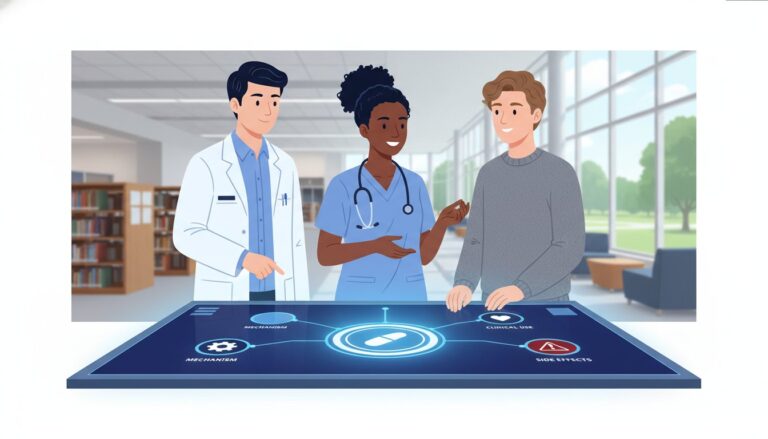
High-Yield Pharmacology Guide for Students (2026)
Rote memorization is the fastest way to fail your pharmacology boards in 2026. With U.S. medicine use reaching 210 billion days of therapy in 2025, trying to memorize the pharmacology of common medications drug-by-drug is an impossible task. You’ve likely felt the anxiety of information overload as dozens of new FDA approvals, like the 46 novel drugs released in 2025, add to your already massive study list. It’s frustrating when you can’t distinguish between drugs in the same class during high-pressure practice sessions.
This guide acts as your digital mentor to transform that confusion into clinical confidence. We promise to help you master the “why” behind drug actions through a high-yield framework that prioritizes suffixes and mechanisms over raw recall. We’ll preview the most frequently prescribed drug classes and the critical clinical applications you must know to pass your board certifications on the first attempt. By focusing on the logic of the drug class rather than individual names, you’ll be ready for the application-based questions that now dominate national exams.
Key Takeaways
- Learn how to simplify complex drug lists by focusing on the ADME framework of pharmacokinetics and the receptor interactions of pharmacodynamics.
- Master the pharmacology of common medications in the cardiovascular class by focusing on high-yield mechanisms like RAAS modulation.
- Organize antimicrobial therapy by site of action to easily distinguish between cell wall inhibitors and protein synthesis blockers.
- Develop a structured approach to CNS pharmacology by analyzing how drugs modulate GABA, serotonin, and dopamine levels.
- Move beyond rote memorization by integrating active recall strategies and high-yield video vignettes into your study routine.
The Framework of Pharmacology: Pharmacokinetics and Pharmacodynamics
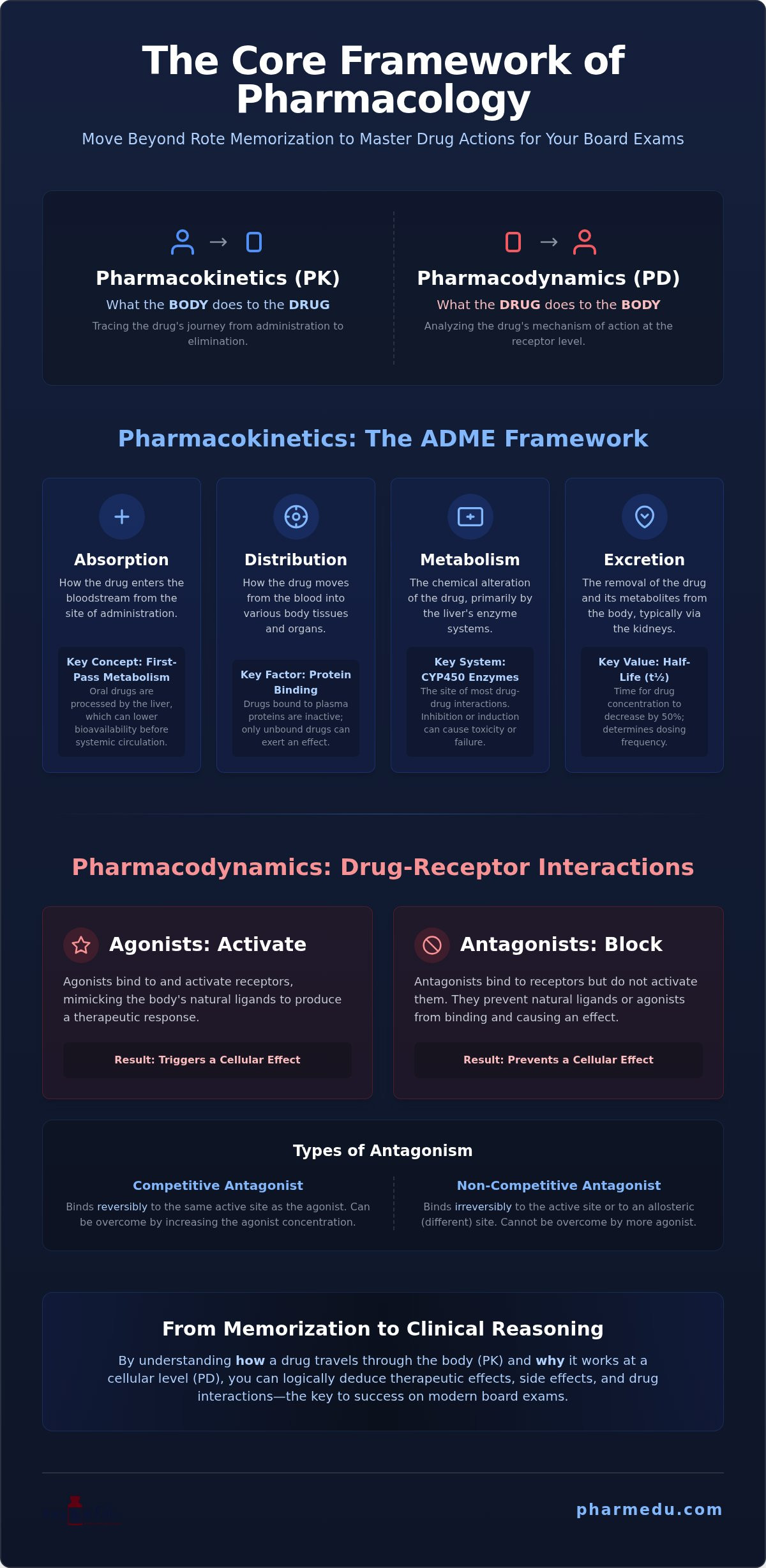
Pharmacology is far more than a catalog of drug names and dosages. It’s the rigorous study of drug-receptor interactions and the subsequent biological responses they trigger. To master the pharmacology of common medications, you must move beyond the surface level and understand how a molecule travels through the body and precisely how it alters cellular function. The Framework of Pharmacology is built upon two pillars: pharmacokinetics and pharmacodynamics. Without these foundations, memorizing thousands of drug facts becomes an exercise in futility.
Pharmacokinetics (PK) describes what the body does to the drug, tracing its journey from administration to elimination. Conversely, pharmacodynamics (PD) explains what the drug does to the body, specifically its mechanism of action (MOA). Developing a deep intuition for both concepts is the most effective strategy for any pharmacology board review, as modern exams like the NAPLEX and NCLEX have shifted toward clinical application rather than simple recall.
The ADME Process: Absorption, Distribution, Metabolism, and Excretion
The PK profile of a medication is defined by the ADME framework. Absorption determines how quickly a drug enters the bloodstream. A critical concept here is first-pass metabolism, where drugs taken orally are processed by the liver via the portal vein before reaching systemic circulation. This process can significantly lower bioavailability, which is why some medications require much higher oral doses compared to intravenous routes. Distribution then describes how the drug moves from the blood into various tissues, often influenced by lipid solubility and plasma protein binding.
Metabolism is primarily driven by the liver’s Cytochrome P450 (CYP450) enzyme system. These enzymes are the site of most drug-drug interactions; for instance, if one drug inhibits a specific CYP enzyme, it can lead to toxic levels of another drug metabolized by that same pathway. Finally, excretion involves the removal of the drug, typically through the kidneys. Half-life is the time required for the concentration of a drug in the body to be reduced by exactly one-half, a value that determines the necessary frequency of dosing intervals to maintain a steady state.
Pharmacodynamics: Receptors, Agonists, and Antagonists
Pharmacodynamics focuses on the “lock and key” relationship between drugs and receptors. When a drug binds to a receptor, it can either activate it or block it. Agonists mimic endogenous ligands to trigger a therapeutic effect, while antagonists prevent activation. Understanding the pharmacology of common medications requires distinguishing between competitive and non-competitive antagonists. Competitive antagonists bind reversibly to the active site and can be overcome by increasing the concentration of the agonist. Non-competitive antagonists bind irreversibly or at an allosteric site, meaning no amount of agonist can displace them.
Focusing on the MOA allows you to predict both therapeutic outcomes and side effects logically. If you know a drug blocks a specific receptor, you don’t need to memorize a list of adverse reactions; you can simply deduce them based on the receptor’s normal physiological role. This structured approach replaces the anxiety of rote memorization with the clarity of clinical reasoning.
High-Yield Cardiovascular Medications: ACE Inhibitors to Statins
Cardiovascular pharmacology is the cornerstone of any board exam. Whether you’re preparing for the NAPLEX or NCLEX, understanding the High-Yield Cardiovascular Medications is essential for clinical success. Most questions focus on the Renin-Angiotensin-Aldosterone System (RAAS), a complex hormonal cascade that regulates blood pressure and fluid balance. By targeting this system, clinicians can manage hypertension and reduce the workload on a failing heart. Mastering the pharmacology of common medications in this category requires recognizing patterns, starting with suffixes. Don’t confuse “-pril” (ACE inhibitors) with “-olol” (beta-blockers), as their physiological targets and side effect profiles differ significantly.
RAAS Modulators: ACEIs and ARBs
ACE Inhibitors and Angiotensin II Receptor Blockers (ARBs) both interrupt the RAAS pathway, but at different stages. ACE inhibitors, such as Lisinopril, prevent the conversion of Angiotensin I to the potent vasoconstrictor Angiotensin II. This mechanism also leads to the accumulation of bradykinin, which triggers the classic dry “ACE cough” in many patients. If this occurs, patients are typically switched to an ARB like Losartan. ARBs block the Angiotensin II receptor directly, avoiding the bradykinin accumulation. Both classes are strictly contraindicated in pregnancy due to the risk of fetal renal damage, a fact frequently tested on national boards.
Beta-Blockers and Calcium Channel Blockers
Beta-blockers are categorized by their receptor selectivity. Selective blockers like Metoprolol target B1 receptors in the heart, while non-selective agents like Propranolol affect both B1 and B2 receptors. This distinction is vital; non-selective agents can trigger bronchoconstriction, making them unsuitable for patients with severe asthma. Calcium Channel Blockers (CCBs) are similarly divided. Dihydropyridines, such as Amlodipine, focus on vasodilation in the periphery. Non-dihydropyridines, like Verapamil, act on the heart’s conduction system to manage arrhythmias and heart rate. Always monitor heart rate and blood pressure before administration to ensure patient safety. To test your knowledge on these distinctions, try our Pharmacology Practice Quizzes to see where you stand before exam day.
Finally, Statins are the primary choice for managing dyslipidemia. They inhibit HMG-CoA reductase, the rate-limiting enzyme in cholesterol production. When studying Statins, focus on the high-yield side effects of myalgia and rhabdomyolysis, especially when used in combination with other lipid-lowering agents. This class remains a top priority for examiners due to its widespread use in chronic disease management.
Antimicrobial Pharmacology: Categorizing Antibiotics by Mechanism
Mastering the pharmacology of common medications in the antimicrobial class requires a shift from memorizing drug names to understanding cellular targets. Antibiotics are generally classified by whether they disrupt the bacterial cell wall, inhibit protein synthesis, or interfere with DNA and RNA replication. This mechanism-based approach helps you predict the spectrum of activity, which distinguishes between drugs targeting Gram-positive bacteria with thick peptidoglycan layers and Gram-negative bacteria with outer lipid membranes. As the FDA approved 46 novel drugs in 2025, including Gepotidacin (Blujepa) for urinary tract infections, staying current on these mechanisms is vital for both board exams and clinical stewardship. For a deeper dive into these clinical applications, consult our pharmacology study guide for nursing students.
Cell Wall Synthesis Inhibitors: Penicillins and Cephalosporins
The Beta-lactam class, including penicillins and cephalosporins, works by inhibiting the cross-linking of peptidoglycan in the bacterial cell wall. The defining feature is the Beta-lactam ring. Bacteria often develop resistance by producing Beta-lactamase enzymes that break this ring. To counter this, we use Beta-lactamase inhibitors like Clavulanate, which acts as a “decoy” to protect the primary antibiotic. Cephalosporins are categorized into five generations; first-generation agents like Cephalexin primarily target Gram-positive organisms, while later generations like Ceftriaxone gain significantly more Gram-negative coverage. Be cautious of cross-sensitivity. While only a small percentage of patients with a penicillin allergy will react to a cephalosporin, it remains a high-yield safety concern on national exams.
Protein Synthesis Inhibitors: Macrolides, Tetracyclines, and Aminoglycosides
These agents target the bacterial ribosome, which is structurally different from human ribosomes. Tetracyclines and Aminoglycosides bind to the 30S subunit, while Macrolides bind to the 50S subunit. Bactericidal agents like Aminoglycosides actively kill bacteria, whereas bacteriostatic agents like Tetracyclines merely inhibit their growth to allow the host’s immune system to finish the job. High-yield toxicities are frequently tested. Aminoglycosides are notorious for ototoxicity and nephrotoxicity, while Tetracyclines can cause permanent tooth discoloration in children. Identifying these patterns allows you to group drugs by their adverse profiles rather than memorizing individual drug entries. This logical grouping is the most efficient way to prepare for the application-based questions you’ll face in 2026.
CNS Pharmacology and Pain Management: Opioids, NSAIDs, and Anxiolytics
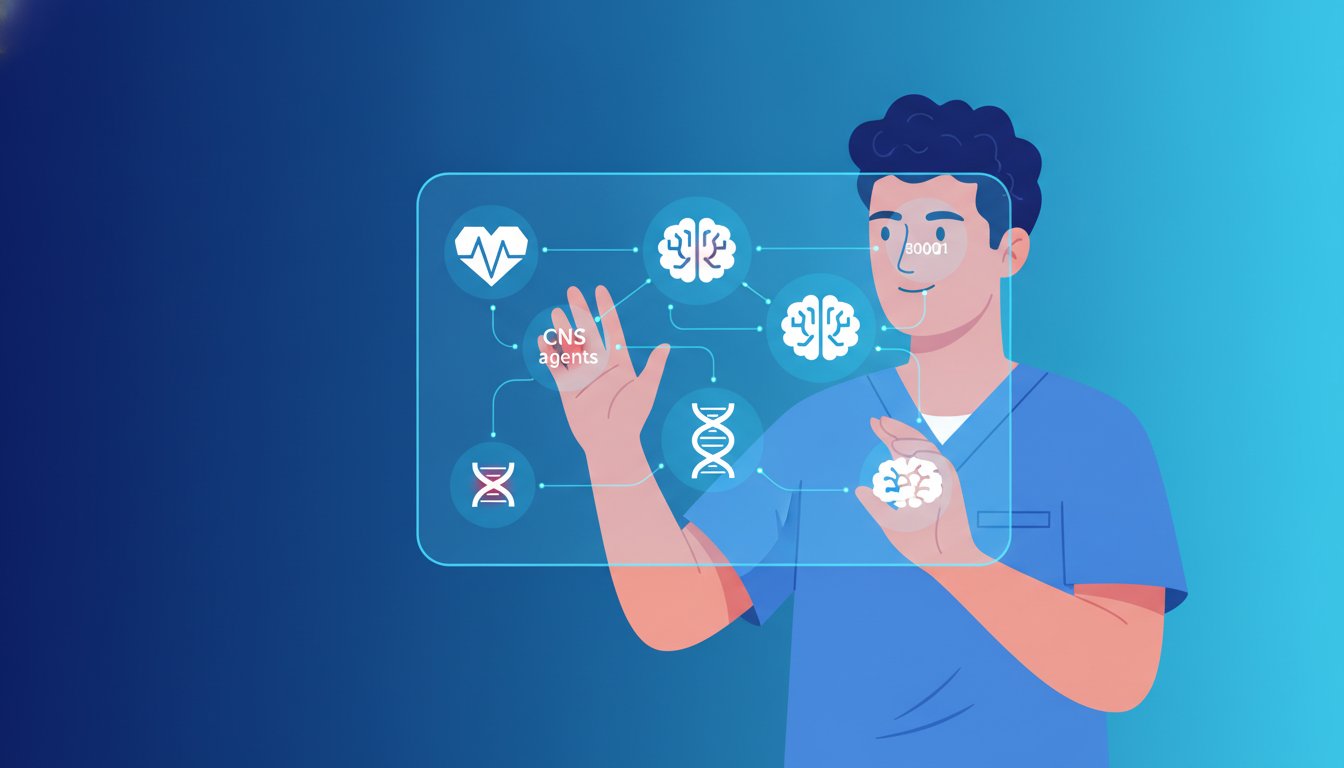
Central Nervous System (CNS) pharmacology represents some of the most clinically significant material on national boards. Understanding the pharmacology of common medications used for pain and mental health requires a firm grasp of neurotransmitter modulation. Drugs in this category typically work by altering the levels or activity of GABA, serotonin, or dopamine. For pain management, clinicians follow the WHO “Pain Ladder,” a structured framework that starts with non-opioids, progresses to “weak” opioids, and finally utilizes potent opioids for severe pain. This progression ensures that therapy remains as safe as possible while meeting the patient’s analgesic needs.
Opioids exert their primary effects through Mu, Kappa, and Delta receptors. The Mu receptor is the high-yield target for board exams, as it is responsible for both profound analgesia and the life-threatening side effect of respiratory depression. Naloxone serves as the essential competitive antagonist used for the rapid reversal of opioid overdose. Mastering the pharmacology of these agents is vital for ensuring patient safety in acute care settings.
Non-Opioid Analgesics: NSAIDs and Acetaminophen
Non-steroidal anti-inflammatory drugs (NSAIDs) work by inhibiting Cyclooxygenase (COX) enzymes, which prevents the synthesis of prostaglandins. It is important to distinguish between COX-1, which provides cytoprotection in the stomach, and COX-2, which is induced during inflammation. Non-selective NSAIDs block both, leading to potential gastric ulcers and renal impairment. In contrast, Acetaminophen has a purely analgesic and antipyretic role with negligible anti-inflammatory effects. While it is generally safe, it carries a high-yield risk of hepatotoxicity if the maximum daily dose of 4 grams is exceeded. N-acetylcysteine (NAC) is the critical antidote used to restore glutathione levels and neutralize the toxic metabolite NAPQI.
Psychotropic Agents: SSRIs, SNRIs, and Benzodiazepines
Selective Serotonin Reuptake Inhibitors (SSRIs) are the first-line treatment for many psychiatric conditions. They work by blocking the reuptake transporter in the synaptic cleft, effectively increasing the concentration of serotonin available to post-synaptic receptors. A critical fact for students is the “Black Box Warning” associated with these agents, which highlights an increased risk of suicidal ideation in children and young adults under age 25. For acute anxiety or seizure management, Benzodiazepines act on the GABA-A receptor. They are positive allosteric modulators that increase the frequency of chloride channel opening, leading to neuronal hyperpolarization and a rapid calming effect. To master these neurotransmitter pathways, explore our Clinical Case Studies to apply these concepts to real-patient scenarios.
How to Master Common Medications for Your Board Exams
Mastering the pharmacology of common medications requires a deliberate shift from passive reading to active engagement. While traditional study methods often rely on re-reading notes, modern research indicates that active recall and spaced repetition are the most effective strategies for long-term retention. By using a comprehensive pharmacy review tool, you can test your knowledge in real-time. This approach ensures you aren’t just recognizing familiar terms but are actually capable of retrieving the information under the pressure of a licensing exam.
Visualizing complex biological processes is another key component of success. PharmEDU’s High-Yield Video Vignettes act as a digital mentor, providing a visual antidote to dry text. These vignettes help you see the “why” behind the pharmacology of common medications, such as how a molecule interacts with a receptor to trigger a systemic response. When you combine these visual tools with clinical case studies, you bridge the gap between theoretical knowledge and the clinical judgment required for 2026 board standards.
Active Learning Strategies: Mnemonics and Flashcards
Mnemonics are essential for grouping vast lists of drugs into manageable categories. You can create class-based mnemonics by focusing on suffixes; for instance, associating “-sartan” with ARBs or “-flozin” with SGLT2 inhibitors. PharmEDU’s Interactive Pharmacology Flashcards take this further by utilizing a Spaced Repetition System (SRS). This technology tracks your performance and shows you difficult cards more frequently while phasing out the ones you’ve already mastered. It’s a scientifically proven way to maximize study efficiency during a busy semester.
For your final 30 days before an exam, we recommend a structured schedule. Spend the first 10 days focusing on high-yield cardiovascular and renal medications. Dedicate the next 10 days to antimicrobials, endocrine agents, and CNS pharmacology. Use the final 10 days for comprehensive practice quizzes and reviewing video vignettes for the most challenging mechanisms of action. This methodical approach reduces anxiety and ensures every major drug class is covered before test day.
The PharmEDU Advantage: Digital Subscriptions for Success
PharmEDU offers flexible solutions tailored to your specific needs. The PharmEDU Monthly Subscription is an excellent choice for students seeking a short-term, intensive review before a major milestone. For academic leaders, our Institutional Platform License allows universities to provide these high-yield resources to their entire student body while tracking collective progress through integrated analytics. These digital tools are designed to take the administrative and mental burden off your shoulders, allowing you to focus on your professional growth. Start your PharmEDU Monthly Subscription today and master pharmacology!
Elevate Your Clinical Judgment for the 2026 Boards
Mastering the pharmacology of common medications is about understanding the foundational “why” behind drug actions rather than memorizing isolated facts. By grouping drugs by their mechanisms of action and cellular targets, you transform a massive list into a logical framework that supports clinical reasoning. This method ensures you’re prepared for the application-based questions that now dominate national licensure exams.
Success on the NAPLEX or NCLEX requires tools that move beyond the textbook. PharmEDU provides 100+ High-Yield Video Vignettes, interactive flashcards, and practice quizzes designed specifically by healthcare educators to bridge the gap between theory and practice. These resources allow you to visualize complex mechanisms and use active recall to ensure long-term retention. Master pharmacology today with a PharmEDU Monthly Subscription!
You have the potential to excel in your medical career. With the right digital mentor and a structured approach to study, you’ll enter your board exams with the confidence needed to succeed on your first attempt.
Frequently Asked Questions
What is the difference between pharmacokinetics and pharmacodynamics?
Pharmacokinetics describes the movement of a drug through the body, focusing on the ADME framework: absorption, distribution, metabolism, and excretion. Pharmacodynamics explains the biochemical and physiological effects of the drug on the body, specifically its mechanism of action at the receptor level. Understanding both is essential for clinical judgment. While pharmacokinetics tells you how long a drug lasts, pharmacodynamics tells you how it achieves its therapeutic effect in the patient.
How can I easily remember drug suffixes for my board exams?
The most effective way to remember suffixes is through class-based categorization and active recall. For example, associating “-pril” with ACE inhibitors and “-sartan” with ARBs allows you to identify the mechanism of action instantly. PharmEDU’s Interactive Pharmacology Flashcards utilize spaced repetition to reinforce these patterns. Instead of memorizing individual names, focus on the common “stems” that define the pharmacological profile of the entire drug class.
What are the most common high-yield drug classes on the NAPLEX?
High-yield drug classes on the NAPLEX typically include cardiovascular agents like ACE inhibitors and statins, antimicrobials, and CNS medications. Endocrine drugs, particularly those for diabetes management, are also frequently tested. The exam focuses on the pharmacology of common medications that require specific monitoring or have critical safety profiles. Prioritizing these classes during your review ensures you are prepared for the most heavily weighted sections of the national exam.
How do ACE inhibitors work to lower blood pressure?
ACE inhibitors lower blood pressure by blocking the angiotensin-converting enzyme, which prevents the production of Angiotensin II. Since Angiotensin II is a potent vasoconstrictor and triggers aldosterone release, inhibiting its formation leads to systemic vasodilation and decreased sodium retention. This dual action reduces peripheral resistance and fluid volume, effectively lowering blood pressure. These medications are a primary treatment for hypertension and are essential for heart failure management.
What are the primary side effects of aminoglycoside antibiotics?
Aminoglycoside antibiotics are notorious for two major toxicities: ototoxicity and nephrotoxicity. Ototoxicity can lead to permanent hearing loss or vestibular dysfunction, while nephrotoxicity involves damage to the renal tubules. Because these drugs have a narrow therapeutic index, clinicians must perform therapeutic drug monitoring to maintain safe serum levels. Students should remember these specific risks when studying the pharmacology of common medications in the antimicrobial category for their board exams.
Can PharmEDU help me prepare for the NCLEX pharmacology section?
Yes, PharmEDU is specifically designed to support students preparing for national US standards, including the NCLEX. The platform’s High-Yield Video Vignettes and Clinical Case Studies focus on the application-based questions that nursing students face. By emphasizing the “why” behind drug actions, PharmEDU helps you develop the clinical judgment necessary to answer complex pharmacology questions correctly on your first attempt at the board certification.
What is the best way to study the Top 200 drugs list?
The best way to study the Top 200 drugs list is to move away from passive reading and embrace active learning. Group medications by their mechanism of action rather than studying them alphabetically. Utilize PharmEDU’s Interactive Pharmacology Flashcards to test your knowledge of drug-receptor interactions and side effect profiles. This method builds a logical framework that makes it easier to recall specific drug information during high-pressure testing environments.
How does the PharmEDU mobile platform support micro-learning?
The PharmEDU platform features a mobile-compliant design that allows busy students to engage in micro-learning segments between clinical rotations or classes. You can access High-Yield Video Vignettes and practice quizzes on any device, ensuring your study time is efficient. These short, focused modules are built to fit into a demanding schedule, helping you maintain a consistent review routine without the need for long, uninterrupted study sessions.