Pharmacology of Seizures and Epilepsy: High-Yield Study Guide for 2026
Did you know that the International League Against Epilepsy recently overhauled its operational classification, reducing the recognized seizure types from 63 down to just 21? Keeping pace with the pharmacology of seizures and epilepsy feels like a moving target, especially when 25% to 35% of patients face drug-resistant conditions. It’s completely normal to feel frustrated when trying to connect complex pathophysiology to the right clinical choice, or when memorizing the latest 2026 FDA labeling updates for drugs like Everolimus and Cannabidiol.
We’re here to provide the structured clarity you need to succeed. This high-yield guide promises to help you master the primary mechanisms of antiseizure medications and build a clear mental map of drug classes. We’ll preview the three physiological pathways of neuronal modulation and dive into 2026’s most critical developments, including the anticipated Q3 submission of Azetukalner. You’ll gain the precision required to answer board-style questions and manage drug-drug interactions with absolute confidence.
Key Takeaways
- Learn to accurately distinguish between focal and generalized seizures using the updated ILAE classification system to guide appropriate therapy selection.
- Build a clear mental map of the pharmacology of seizures and epilepsy by grouping medications into three core categories: ion channel modulation, GABA enhancement, and glutamate inhibition.
- Analyze the clinical advantages of second and third-generation agents over traditional therapies, focusing on their improved pharmacokinetic profiles and reduced drug-drug interactions.
- Master the identification of critical adverse effects, ranging from dose-related CNS depression to idiosyncratic reactions and long-term risks like teratogenicity.
- Gain the tools to excel in board exams with high-yield mnemonics for enzyme induction and evidence-based first-line treatment protocols for specific seizure types.
Pathophysiology and Classification of Seizures
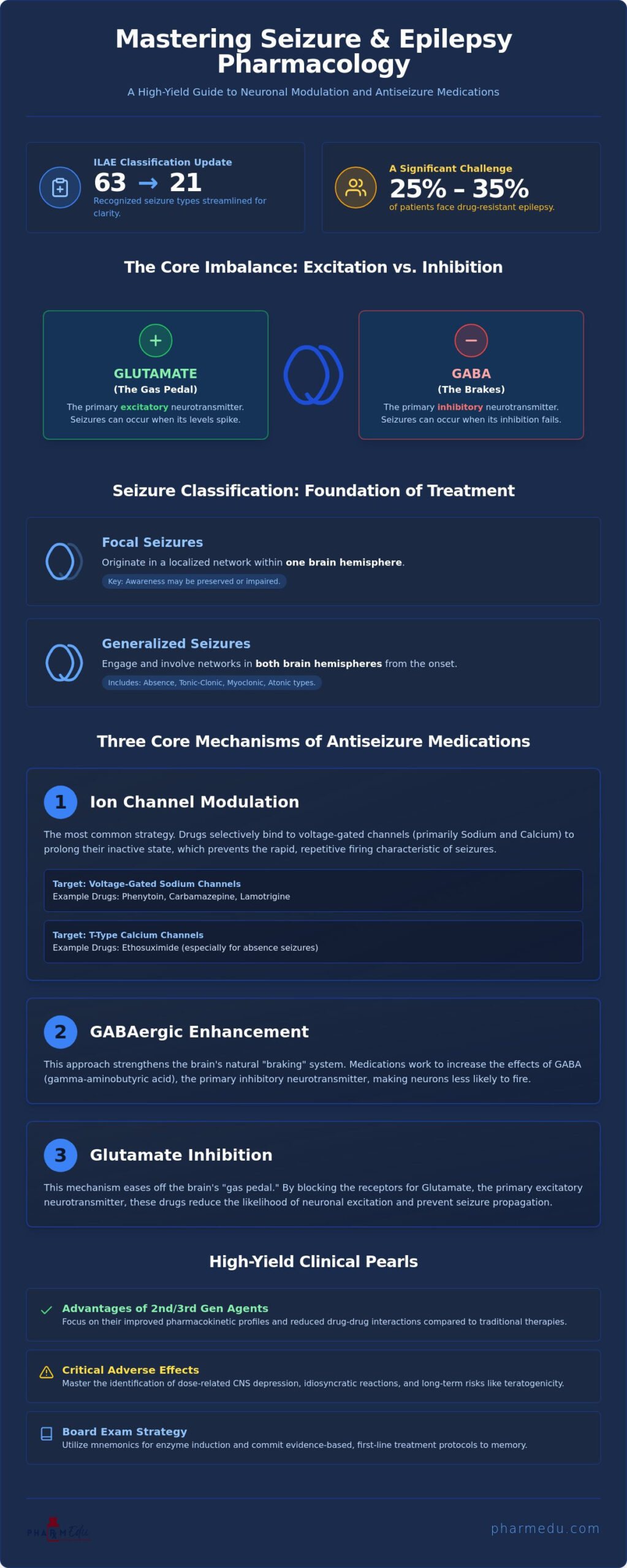
A seizure isn’t a disease. It’s a transient event, a sudden surge of signs or symptoms resulting from abnormal and excessive neuronal activity. When we study the pharmacology of seizures and epilepsy, we’re looking at how to restore a system that’s lost its equilibrium. A formal diagnosis of epilepsy requires a patient to experience at least two unprovoked seizures occurring more than 24 hours apart. This definition separates a one-time reactive event, such as a febrile seizure, from a chronic neurological condition. The 2025 ILAE updates simplified the operational classification of seizures, reducing the recognized types from 63 to 21, which helps clinicians make faster, more accurate diagnostic decisions.
The underlying drive of this activity is a disruption in the balance of the brain’s chemical signaling. Glutamate, the primary excitatory neurotransmitter, acts as the gas pedal. GABA, the primary inhibitory neurotransmitter, acts as the brakes. Seizures occur when glutamate levels spike or GABAergic inhibition fails. Most Anticonvulsant Medications work by targeting these specific pathways to prevent the brain from reaching a threshold of uncontrolled firing. Understanding this imbalance is vital for mastering the pharmacology of seizures and epilepsy, especially since 25% to 35% of patients eventually develop drug-resistant epilepsy.
Focal vs. Generalized Seizures
Clinical classification is the foundation of treatment. Focal seizures start in a localized area of one hemisphere. They’re divided into those where awareness is preserved and those where it’s impaired. Generalized seizures involve both hemispheres from the very beginning. This group includes absence seizures, characterized by brief staring spells; tonic-clonic seizures, which involve stiffening and jerking; and myoclonic or atonic types. Correctly identifying these types is the absolute first step in selecting the correct pharmacology for the patient, as certain drugs can actually worsen specific seizure types.
The Cellular Mechanism of Ictal Activity
At the neuronal level, the hallmark of a seizure is the Paroxysmal Depolarizing Shift (PDS). This is a long-lasting depolarization of the neuronal membrane that triggers high-frequency bursts of action potentials. It isn’t just one neuron misfiring. During an ictal event, the surrounding inhibitory “surround” fails. This failure allows the abnormal activity to recruit neighboring neurons. As this propagation spreads, it moves from a localized cellular event to a clinical seizure that affects the patient’s motor or cognitive function. High-yield reviews focus on this recruitment because blocking this spread is exactly how many modern medications exert their therapeutic effect.
Mechanisms of Action: How AEDs Control Neuronal Excitability
To effectively manage the neuronal “storm” described in the previous section, pharmacological intervention must target the specific gateways of cellular excitability. The pharmacology of seizures and epilepsy organizes these interventions into three main pillars: ion channel modulation, GABAergic enhancement, and glutamate inhibition. By focusing on these pathways, clinicians can dampen the high-frequency firing of the Paroxysmal Depolarizing Shift and prevent the recruitment of healthy tissue. Each drug class approaches this goal with a unique molecular strategy.
Modulating Ion Channels
Voltage-gated sodium channels are the most common targets for traditional antiseizure medications. Drugs such as Phenytoin, Carbamazepine, and Lamotrigine don’t simply plug the channel. Instead, they selectively bind to the sodium channel while it’s in its inactivated state. By prolonging this period of inactivity, these agents prevent the neuron from firing again too quickly. This “use-dependent” blockade is why these drugs are effective against rapidly firing seizure neurons while sparing normal brain activity. If you’re struggling to visualize these binding sites, our High-Yield Video Vignettes provide a clear, visual breakdown of these molecular interactions.
Calcium channels represent another critical target, specifically the T-type calcium channels found in the thalamus. Ethosuximide is the classic example here. It specifically blocks these channels to disrupt the rhythmic 3-Hz spike-and-wave discharges characteristic of absence seizures. Beyond these established targets, potassium channel openers are gaining traction as an emerging therapeutic class. For instance, the investigational drug Azetukalner (XEN1101) targets KCNQ potassium channels to stabilize the membrane potential, with an FDA application planned for the third quarter of 2026.
Enhancing GABAergic Inhibition
If sodium channel blockers take the foot off the gas, GABAergic drugs slam on the brakes. Potentiating GABA, the brain’s primary inhibitory neurotransmitter, increases the “inhibitory tone” of the central nervous system. This enhancement happens through several distinct methods:
- Direct Receptor Modulation: Benzodiazepines and Barbiturates bind to the GABA-A receptor, increasing the frequency or duration of chloride channel opening.
- Enzyme Inhibition: Vigabatrin irreversibly inhibits GABA transaminase, the enzyme responsible for breaking down GABA, thereby increasing its concentration in the synapse.
- Reuptake Blockade: Tiagabine blocks the GAT-1 transporter, preventing the re-entry of GABA into neurons and glia.
Finally, we can’t ignore the role of glutamate inhibition. By blocking NMDA or AMPA receptors, agents like Topiramate or Perampanel reduce the excitatory drive that initiates the seizure in the first place. Mastering the pharmacology of seizures and epilepsy requires recognizing that many modern drugs, like Valproate, actually utilize multiple mechanisms simultaneously to achieve seizure control.
Major Classes of Antiepileptic Drugs: Comparison and Analysis
The evolution of the pharmacology of seizures and epilepsy is defined by a shift from broad, often toxic interventions toward medications with predictable pharmacokinetic profiles. While efficacy remains the primary goal, modern clinical practice prioritizes safety and the reduction of drug-drug interactions. We categorize these agents into narrow-spectrum drugs, which are effective against specific types like focal seizures, and broad-spectrum agents that treat a wide variety of seizure presentations. Understanding these generations is vital for making informed clinical decisions and ensuring patient adherence.
First-Generation AEDs: The Traditional Heavyweights
Traditional agents like Phenytoin and Valproic acid established the foundation of epilepsy care, yet they present significant management challenges. Phenytoin is notorious for its zero-order kinetics. In this metabolic state, the body’s enzyme systems become saturated, meaning even a small dose increase can lead to a disproportionate and toxic rise in plasma levels. This necessitates frequent therapeutic drug monitoring (TDM). Beyond its complex metabolism, its side effect profile includes gingival hyperplasia and hirsutism, which often impact long-term patient compliance.
Valproic acid remains the “Swiss Army Knife” of the pharmacology of seizures and epilepsy due to its ability to treat nearly all seizure types. However, its use requires caution. The FDA updated the prescribing information for Valproic acid as recently as April 3, 2026, to address ongoing safety concerns. Similarly, Carbamazepine is a potent enzyme inducer that triggers auto-induction, essentially speeding up its own metabolism over time. Clinicians must also screen patients for the HLA-B*15:02 allele, a requirement reinforced by FDA label changes on September 30, 2025, to prevent life-threatening Stevens-Johnson Syndrome.
Second and Third-Generation Agents
Newer generations of antiseizure medications offer much cleaner pharmacokinetic profiles. Levetiracetam has become a nearly universal first-line choice because it doesn’t rely on the CYP450 enzyme system. This lack of hepatic metabolism means it’s remarkably free of the drug-drug interactions that plague older agents. It’s an ideal choice for patients on multi-drug regimens, though clinicians must still monitor for behavioral side effects like irritability.
Lamotrigine is another highly effective broad-spectrum option, but it demands a very specific, slow titration schedule. Rapid dosing increases the risk of serious skin reactions, a point the FDA emphasized in its October 10, 2025, label update regarding the HLA-B*15:02 risk factor. Finally, Topiramate utilizes multiple mechanisms of action, making it powerful but often difficult for patients to tolerate. Its common nickname, “Dopamax,” stems from cognitive side effects like word-finding difficulties and sedation. The FDA also released updated prescribing information for Topiramate extended-release (Trokendi XR) on March 6, 2026, to reflect the latest safety data.
Clinical Management: Adverse Effects and Drug Interactions
Managing the pharmacology of seizures and epilepsy requires more than just picking the right mechanism. It demands constant vigilance regarding the adverse effect profiles that can derail treatment. We generally divide these effects into two categories. Dose-related effects, such as CNS depression, dizziness, and ataxia, are predictable and often resolve with careful titration. In contrast, idiosyncratic reactions like severe rashes or organ toxicity are unpredictable and usually require immediate discontinuation. Every clinician must also remember the FDA Black Box warning that applies to the entire class: an increased risk of suicidal ideation and behavior.
Chronic use introduces another layer of complexity. Long-term therapy with enzyme-inducing agents often leads to decreased bone mineral density and osteoporosis. Additionally, weight changes vary significantly between agents; while Valproate is associated with weight gain, Topiramate often causes weight loss. Teratogenicity remains a paramount concern. The American Epilepsy Society released updated practice guidelines in May 2025 regarding neurodevelopmental outcomes after in utero exposure, reinforcing the need for careful planning in patients of childbearing age. This is particularly relevant given the April 3, 2026, FDA updates to Valproic acid prescribing information.
Critical Drug-Drug Interactions
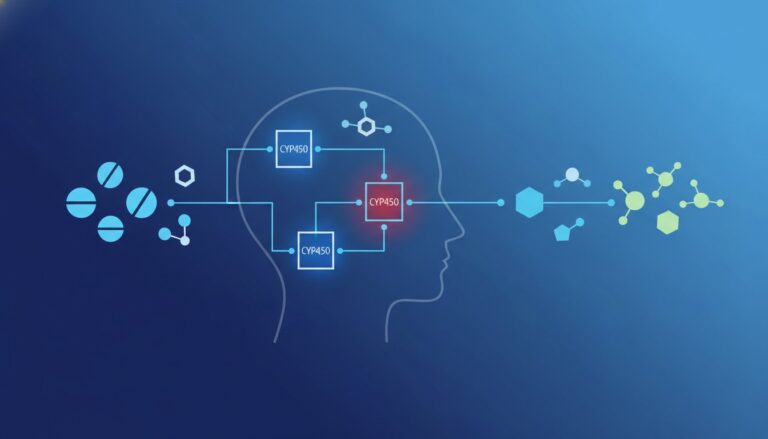
The Cytochrome P450 (CYP) system is the primary battlefield for interactions in the pharmacology of seizures and epilepsy. Strong enzyme inducers like Phenobarbital and Phenytoin can lower the serum concentrations of co-administered drugs, including oral contraceptives. This is a critical teaching point; patients may experience unintended pregnancies if their birth control’s efficacy is compromised. Conversely, Valproate acts as a potent inhibitor. A classic board exam scenario involves the “Valproate + Lamotrigine” combination, where Valproate inhibits the glucuronidation of Lamotrigine, effectively doubling its half-life and dramatically increasing the risk of life-threatening rashes.
High-Yield Side Effects for Board Exams
Memorizing specific drug-linked pathologies is essential for success on the NAPLEX or NCLEX. Fetal hydantoin syndrome is the specific constellation of birth defects, including orofacial clefts and digit hypoplasia, caused by in utero exposure to Phenytoin. For patients of Asian descent, screening for the HLA-B*1502 allele is mandatory before starting Carbamazepine or Lamotrigine to avoid Stevens-Johnson Syndrome (SJS) or Toxic Epidermal Necrolysis (TEN). Finally, always monitor for nephrolithiasis and metabolic acidosis in patients taking Topiramate or Zonisamide due to their carbonic anhydrase inhibitory activity. If you find these specificities difficult to retain, our Interactive Pharmacology Flashcards are designed to help you drill these high-yield facts until they’re second nature.
Mastering Epilepsy Pharmacology for Board Exams (NAPLEX, NCLEX)
Success on professional licensure exams requires more than just rote memorization; it demands the ability to synthesize the pharmacology of seizures and epilepsy into actionable clinical decisions. Board examiners frequently test your ability to match a specific seizure type with its gold-standard treatment. For instance, you should immediately associate absence seizures with Ethosuximide and broad-spectrum needs with Valproate or Levetiracetam. To facilitate rapid recall during high-pressure exams, we recommend utilizing interactive pharmacology flashcards to drill these associations until they become instinctive.
Mnemonics are your best defense against confusing enzyme inducers and inhibitors. For enzyme inducers, remember “PS PORCS”: Phenytoin, Smoking, Phenobarbital, Oxcarbazepine, Rifampin, Carbamazepine, and St. John’s Wort. These agents will lower the serum levels of many co-administered drugs. On the opposite side, Valproate is the premier inhibitor you’ll encounter in this therapeutic class. It’s often the primary culprit in clinical scenarios where a patient develops sudden toxicity from a second medication, such as Lamotrigine.
Status Epilepticus: The Emergency Treatment Algorithm
Status Epilepticus is a medical emergency where every second counts. Examiners look for a structured, step-wise approach to management. This algorithm is a common fixture in high-stakes testing:
- Step 1 (0 to 5 minutes): Administer a fast-acting Benzodiazepine. Lorazepam IV is generally preferred due to its longer duration of action in the CNS, though Midazolam IM is an excellent alternative if IV access isn’t yet established.
- Step 2 (5 to 20 minutes): If the seizure continues, transition to a long-acting antiseizure medication. Fosphenytoin, Levetiracetam, or Valproate are the standard choices for achieving long-term stabilization.
- Step 3 (20+ minutes): For refractory cases, the patient requires anesthetic doses of Midazolam or Propofol infusions, which necessitates intubation and continuous EEG monitoring.
Leveraging PharmEDU for Exam Success
Building a clear mental map of these protocols is easier when you can visualize the underlying science. Our high-yield video vignettes allow you to see ion channel movement and synaptic transitions in real time, making the pharmacology of seizures and epilepsy much more intuitive. These visual tools bridge the gap between textbook theory and clinical application.
For those specifically targeting the 2026 boards, our NAPLEX prep course features specialized Pharmacology Practice Quizzes for the CNS module. These sessions use clinical case studies to force you to apply drug selection logic in real-world scenarios. Instead of just identifying a drug name, you’ll practice managing a patient with complex comorbidities and potential drug-drug interactions. By combining these digital resources with a structured study plan, you’ll walk into your exam with the confidence of a seasoned professional.
Advancing Your Clinical Expertise in Epilepsy Care
Mastering the pharmacology of seizures and epilepsy requires a transition from memorizing drug names to understanding the delicate balance between neuronal excitation and inhibition. By integrating the latest ILAE classifications with a deep knowledge of ion channel modulation and GABAergic enhancement, you build the clinical intuition necessary to manage even the most complex cases. Whether you’re navigating the auto-induction of Carbamazepine or the specific titration needs of Lamotrigine, a structured approach ensures both patient safety and therapeutic success.
To bridge the gap between textbook theory and board exam excellence, you need tools that fit your busy schedule. Our platform provides high-yield video vignettes on CNS pharmacology, interactive flashcards for AED classes, and NAPLEX-style practice quizzes designed for rapid recall. These resources are crafted to take the cognitive burden off your shoulders, allowing you to focus on professional growth and the 2026 standards of care.
Start your PharmEDU Monthly Subscription today to master epilepsy pharmacology and gain the confidence to excel in your career. We’re proud to be your partner in this lifelong educational journey.
Frequently Asked Questions
What is the first-line drug for absence seizures?
Ethosuximide is the primary first-line treatment for absence seizures. It works by selectively blocking T-type calcium channels in the thalamic neurons, which disrupts the rhythmic discharges characteristic of this seizure type. While Valproate is a highly effective broad-spectrum alternative, Ethosuximide is often preferred in pediatric populations due to its more favorable side effect profile for isolated absence epilepsy.
Why is Valproic Acid avoided in women of childbearing age?
Valproic Acid carries a high risk of teratogenicity, including neural tube defects and significant neurodevelopmental delays. Exposure in utero has been linked to lower IQ scores and increased risks of autism spectrum disorders in children. Because of these severe outcomes, clinical guidelines and the April 2026 FDA updates emphasize using safer alternatives like Levetiracetam or Lamotrigine whenever possible for this patient demographic.
What is the difference between Phenytoin and Fosphenytoin?
Fosphenytoin is a water-soluble prodrug that the body rapidly converts into phenytoin after administration. Unlike standard Phenytoin, which requires a slow infusion rate and carries a high risk of phlebitis or “Purple Glove Syndrome,” Fosphenytoin can be administered much faster and is compatible with most common IV fluids. This makes it the preferred choice for urgent stabilization during the emergency management phase of status epilepticus.
How does Levetiracetam differ from traditional sodium channel blockers?
Levetiracetam possesses a unique mechanism of action; it binds to the synaptic vesicle protein SV2A to modulate neurotransmitter release. Traditional agents like Phenytoin or Carbamazepine focus on prolonging the inactivated state of sodium channels. Because Levetiracetam doesn’t rely on the CYP450 enzyme system for metabolism, it avoids many of the complex drug-drug interactions that complicate the pharmacology of seizures and epilepsy when using older medications.
Which antiepileptic drugs are known as potent enzyme inducers?
The most potent hepatic enzyme inducers include Phenytoin, Carbamazepine, Phenobarbital, and Primidone. These medications increase the activity of the Cytochrome P450 system, which can significantly lower the serum concentrations of co-administered drugs. Clinicians must be particularly cautious when these inducers are used alongside medications with narrow therapeutic windows, such as warfarin, or with oral contraceptives, as they can lead to therapeutic failure.
What should a clinician do if a patient develops a rash on Lamotrigine?
The patient must discontinue Lamotrigine immediately at the first sign of a rash. While many drug-induced rashes are benign, the pharmacology of seizures and epilepsy teaches us that Lamotrigine-associated rashes can rapidly progress to life-threatening Stevens-Johnson Syndrome (SJS). This risk is significantly higher if the drug was titrated too quickly or if the patient is concurrently taking Valproate, which slows Lamotrigine’s clearance.
Can antiepileptic drugs be stopped abruptly?
Antiseizure medications should never be stopped abruptly unless a life-threatening adverse reaction occurs. Sudden cessation can trigger rebound seizures or even lead to status epilepticus, which is a medical emergency. Instead, clinicians utilize a slow tapering process, often spanning several weeks or months. This gradual reduction allows the brain to adjust its excitatory and inhibitory balance, minimizing the risk of withdrawal-related ictal events.
How is therapeutic drug monitoring used in epilepsy management?
Therapeutic drug monitoring (TDM) involves measuring serum drug levels to ensure they stay within a specific range that balances efficacy with safety. It’s especially vital for drugs like Phenytoin, which exhibits non-linear kinetics and a narrow therapeutic index. TDM helps clinicians verify patient adherence, manage drug-drug interactions, and adjust dosages during physiological changes such as pregnancy or the development of renal or hepatic impairment.