Safe Medication Administration Principles: The 2026 High-Yield Guide
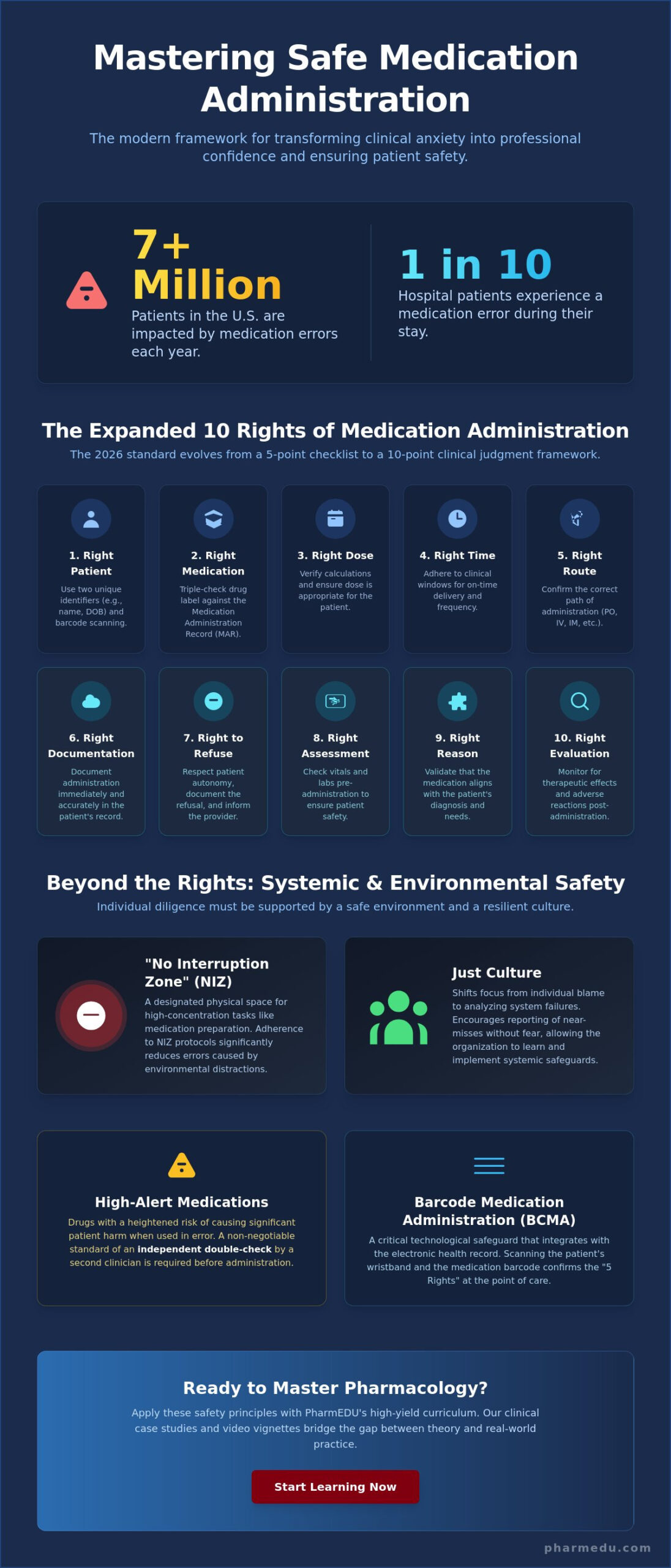
Would you be surprised to learn that medication errors impact more than 7 million patients in the United States every year? This statistic, alongside the reality that 1 in 10 hospital patients experiences an error during their stay, explains why pharmacology often feels like the most high-pressure subject in your medical education. It’s completely natural to feel overwhelmed by the volume of drug data or anxious about making a mistake. However, mastering safe medication administration principles is the most effective way to transform that anxiety into professional clinical confidence.
We know that applying classroom theory to a fast-paced clinical environment is a significant challenge. This guide will help you master the essential safety protocols and clinical judgment frameworks required to eliminate errors and excel in your pharmacology coursework. We’ll examine the 2026 transition from the traditional 5 Rights to the expanded 10 Rights standard, identify high-alert medications, and provide a structured framework to ensure you’re ready for both your clinical rotations and board-level safety questions.
Key Takeaways
- Learn about the 2026 evolution from the 5 Rights to the 10 Rights framework to better address complex clinical scenarios.
- Understand how “No Interruption Zones” and environmental controls significantly reduce the risk of errors during medication preparation.
- Identify high-alert medications and why independent double-checks are a non-negotiable standard for high-risk drug classes.
- Master safe medication administration principles by integrating technological safeguards like Barcode Medication Administration into your daily practice.
- Explore how clinical case studies and high-yield video vignettes can help you apply theoretical knowledge to real-world patient care situations.
The Core Pillars of Safe Medication Administration
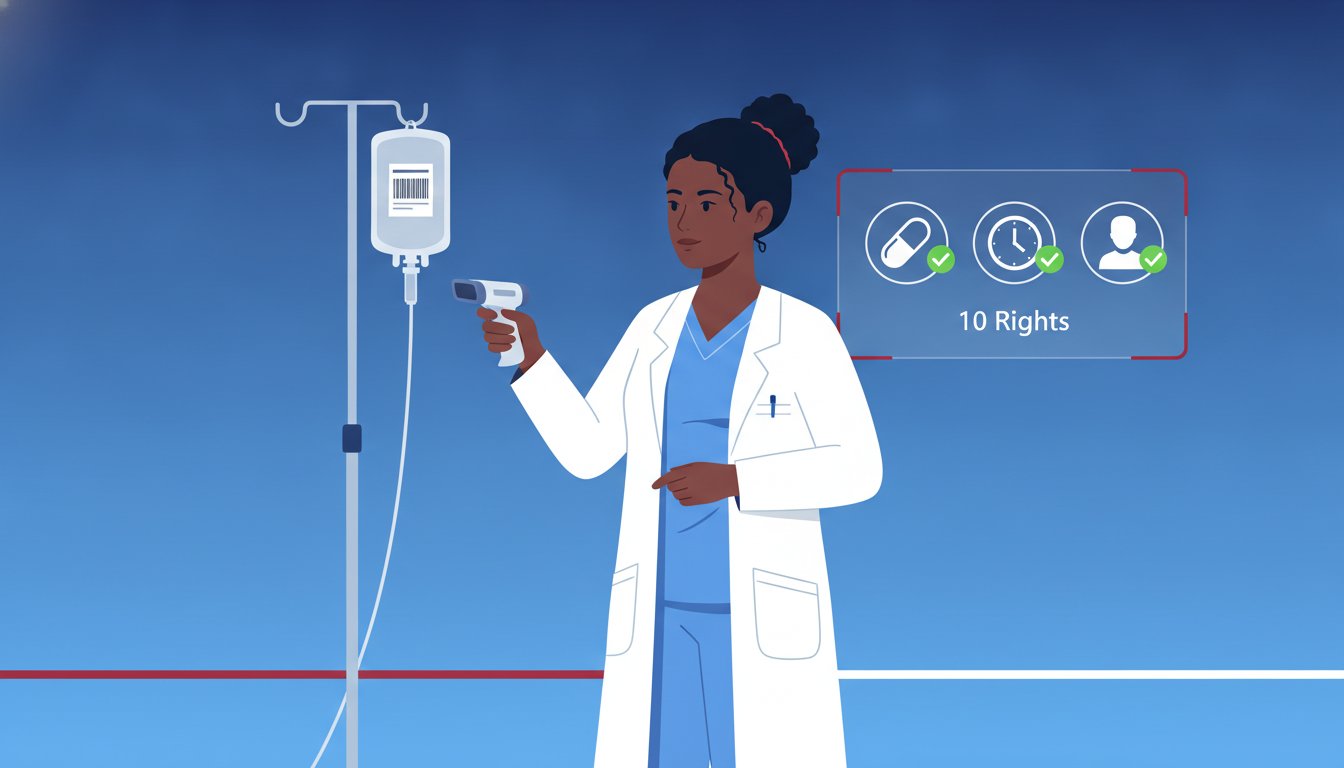
In January 2026, healthcare standards reached a new milestone. The long-standing “5 Rights” were officially expanded to the “10 Rights” framework to address the complexities of modern pharmacology. This transition reflects a shift from a task-oriented mindset to a clinical judgment framework. You’re no longer just “giving a pill”; you’re managing a complex therapeutic intervention. This updated standard ensures that the nurse’s role as a final safety net is fully supported by clinical logic and patient-centered care.
The Expanded Rights of Medication Administration
Checking the “Right Patient” now goes beyond asking for a name. It requires using two unique identifiers, such as name and date of birth, while leveraging barcode technology to prevent identity errors. For the “Right Medication,” you must perform a triple-check of the drug label against the Medication Administration Record (MAR) during preparation. Precision is equally vital for the “Right Dose” and “Right Time,” as you must understand the specific clinical windows for “on-time” delivery. Selecting the correct Routes of Medication Administration is a foundational part of this process, as an incorrect route can lead to therapeutic failure or toxicity. Finally, “Right Documentation” and the “Right to Refuse” form the legal and ethical pillars of your practice, ensuring transparency and patient autonomy.
The Role of Patient Assessment and Evaluation
Safety starts before the medication even leaves the dispensing cabinet. A pre-administration assessment is mandatory; you must check recent vitals and lab values to ensure the drug is safe for the patient’s current physiological state. This leads to the “Right Reason,” where you validate that the prescribed medication aligns with the patient’s actual clinical diagnosis. Your responsibility doesn’t end once the drug is given. Post-administration evaluation is the final step. Here, you monitor the patient for the intended therapeutic effect and any potential adverse reactions. This loop of assessment and evaluation is what separates a technician from a skilled clinician. Integrating these safe medication administration principles ensures that your practice remains patient-focused and evidence-based.
Beyond the Rights: Environmental and Systemic Safety
Systemic safety also relies on the organizational mindset. A “Just Culture” is essential for a safe healthcare environment. It shifts the focus from blaming individuals for mistakes to analyzing the system failures that allowed the error to happen. Reporting near-misses without fear of retribution allows institutions to identify patterns and implement safeguards before a patient is harmed. This systemic approach is often reinforced during the Medication Reconciliation Process, where discrepancies between various care settings are identified and resolved. By focusing on the system rather than just the person, hospitals can create a more resilient safety net for every patient.
Managing Look-Alike, Sound-Alike (LASA) Medications
Look-alike, sound-alike (LASA) medications are drug pairs that share similar names or packaging, which significantly increases the risk of selection errors. To mitigate this, ISMP standards recommend the use of “Tall Man” lettering. By capitalizing specific parts of a drug name, such as bupropion versus busPIRone, the visual difference becomes immediately apparent. Storage strategies are equally vital. Separating similar-looking vials in automated dispensing cabinets and using color-coded bins can prevent a clinician from grabbing the wrong medication in a rush. If you’re struggling to keep these similar names straight, practicing with Interactive Pharmacology Flashcards can help reinforce these visual cues before you reach the clinical floor.
Standardizing the Med Room Workflow
Consistency in the medication room is your best defense against chaos. You should always prepare medications for one patient at a time to prevent cross-contamination of orders. The “sterile cockpit” concept, borrowed from aviation, suggests that all non-essential conversation should be eliminated during critical tasks. This focus ensures that every syringe and container is labeled immediately upon preparation. Never leave a medication unlabeled, even for a moment. This standardized workflow ensures that safe medication administration principles are applied consistently, regardless of how busy the unit becomes. Adhering to these environmental standards transforms the med room from a site of potential error into a controlled environment of clinical precision.
High-Alert Medications and Clinical Judgment
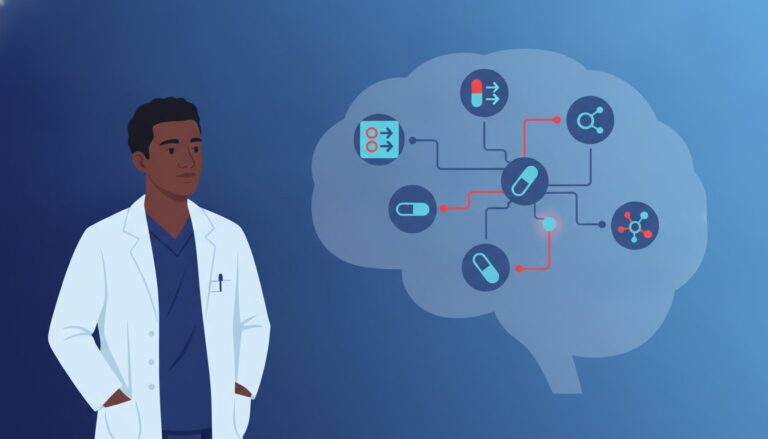
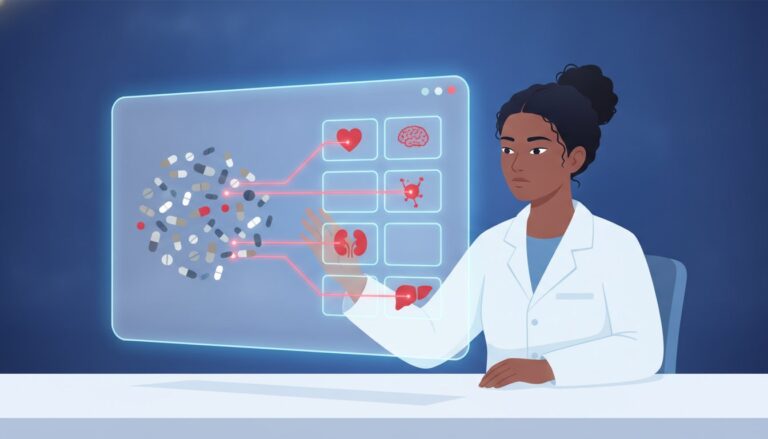
High-alert medications are drugs that carry a heightened risk of causing significant patient harm when used in error. While errors with these drugs may not be more frequent than with other classes, the clinical impact is often life-threatening. Mastering safe medication administration principles involves recognizing these agents immediately and applying specific safeguards. Primary targets include anticoagulants, insulin, and opioids. These drugs require your full attention because their therapeutic effects are as potent as their side effects. For example, a minor miscalculation in an insulin dose can lead to profound hypoglycemia, while a slight over-administration of an opioid can cause fatal respiratory depression. For a deeper understanding of the mechanisms behind these substances, consult our comprehensive guide to the science of drugs.
Clinical judgment is the bridge between knowing a drug’s name and administering it safely. While the Institute for Safe Medication Practices (ISMP) 2018 list remains the current standard for identifying these agents, your facility may have additional local protocols. You must always prioritize accuracy over speed when these drugs are involved. Safety isn’t an accident. It’s the result of deliberate systems designed to catch human error before it reaches the patient bedside. When you prepare a high-alert medication, you aren’t just following a task; you’re managing a high-stakes clinical intervention.
Narrow Therapeutic Index (NTI) Drugs
Narrow Therapeutic Index (NTI) drugs represent a unique safety challenge because the margin between a therapeutic dose and a toxic dose is incredibly slim. Small fluctuations in blood concentration can lead to either therapeutic failure or severe toxicity. Common examples include Digoxin, Lithium, Warfarin, and Phenytoin. Monitoring “Trough and Peak” levels is a non-negotiable part of the protocol for these medications. The trough level, drawn just before the next dose, ensures the drug hasn’t dropped below the therapeutic range. The peak level confirms the concentration hasn’t reached toxic thresholds. You shouldn’t just look at the lab values; you must assess the patient for symptoms of toxicity, like the visual disturbances or bradycardia associated with Digoxin.
Independent Double-Checks (IDC) Protocols
The Independent Double-Check (IDC) is one of the most effective barriers against error. It’s important to understand that “independent” means two clinicians perform the calculation and verification separately without knowing the other person’s result. This process is designed to combat “confirmation bias,” a psychological trap where a second person simply agrees with the first person’s work because they expect it to be correct. If you show a colleague your syringe and ask them to confirm your dose, you’ve already compromised the check. Board exams frequently test your knowledge of which medications require a second signature. High-alert drugs like intravenous heparin, insulin, and potassium chloride infusions almost always fall into this category. Using this protocol consistently demonstrates the professional precision required in modern healthcare.
Error Prevention Strategies and Modern Technology
Modern healthcare has moved far beyond the era of handwritten charts and manual calculations. Today, technology acts as an active partner in patient safety. Computerized Provider Order Entry (CPOE) has revolutionized the first step of the process by virtually eliminating transcription errors caused by illegible handwriting. When a prescriber enters an order directly into the system, it’s immediately checked against the patient’s known allergies and existing drug profile. This digital foundation supports safe medication administration principles by catching potential interactions before the pharmacy even dispenses the drug. However, technology is only as effective as the clinician using it.
Barcode Medication Administration (BCMA) serves as the final digital safety net at the bedside. By scanning the patient’s identification band and the medication’s unique barcode, the system provides a real-time verification of the “rights” of administration. Despite these safeguards, “alert fatigue” remains a significant risk. Many clinicians fall into the trap of using “workarounds,” such as printing extra barcode labels or bypassing scanner warnings to save time. These shortcuts lead to disaster because they disable the very systems designed to protect the patient. To ensure you don’t become overly reliant on automated systems, using pharmacology study guides for nursing students helps you build the mental framework needed to spot a system error before it reaches the patient.
The 3 Checks of Medication Label Verification
Even with barcode scanning, the traditional “three checks” remain a non-negotiable standard of practice. You must verify the medication label at three distinct points: first, when reaching for the medication in the automated dispensing cabinet; second, during the preparation or pouring of the dose; and third, at the bedside immediately before administration. This triple-verification process ensures that your clinical focus remains sharp. It prevents the “autopilot” mindset that often occurs in repetitive tasks. By the time you reach the third check, you’ve confirmed the drug’s identity and dose multiple times, significantly reducing the chance of a selection error.
Smart Pump Technology and Dose Error Reduction Systems
Smart pumps have changed the landscape of intravenous therapy through Dose Error Reduction Systems (DERS). These pumps contain “drug libraries” that establish safe dosing limits for specific medications. It’s vital to understand the difference between “soft limits” and “hard limits.” A soft limit provides a warning that a dose is outside the typical range but allows the clinician to override it if clinically indicated. A hard limit, however, will stop the infusion entirely because the dose is considered dangerously high. While these pumps are sophisticated, your responsibility is to manually verify the pump settings against the original order. Technology assists your judgment, but it never replaces it. To sharpen your ability to manage these high-stakes scenarios, consider practicing with our Pharmacology Practice Quizzes to reinforce your dosage calculation skills.
Mastering Safety with PharmEDU’s High-Yield Curriculum
Mastering safe medication administration principles requires a transition from passive reading to active clinical application. While understanding the theory of the 10 Rights is essential, true competency develops when you can apply that knowledge under pressure. Our High-Yield Video Vignettes are designed to bridge this gap by simulating high-stakes clinical scenarios where distractions, look-alike packaging, and complex orders collide. By watching these simulations, you learn to identify potential errors before they reach a patient, reinforcing the “mental safety net” discussed in previous sections. This immersive approach transforms abstract safety protocols into a practical set of professional habits.
For many students, the most daunting part of pharmacology is the sheer volume of data associated with Narrow Therapeutic Index (NTI) drugs and LASA medications. Our Interactive Pharmacology Flashcards provide a focused way to memorize these high-risk drug pairs and their specific monitoring requirements. Instead of wading through hundreds of pages of text, you can drill down into the most critical safety data points required for safe practice. Additionally, for educators and administrators, an Institutional Platform License allows for the standardization of this safety training across an entire cohort, ensuring every student meets the same rigorous standards for clinical excellence.
Micro-Learning for Busy Clinical Students
We’ve optimized our platform for the reality of a modern student’s schedule. The mobile-compliant interface allows you to review safety protocols or watch high-yield summaries during a break or between clinical shifts. These bite-sized learning modules distill complex institutional standards into essential, actionable insights. Our Clinical Case Studies take this a step further by challenging you to perform a “root cause analysis” on simulated error scenarios. By identifying exactly where a protocol failed, you develop the acute situational awareness necessary to maintain safety in your own practice.
Preparing for Board Certification
Success on board exams requires a deep understanding of safety as a core competency. For nursing students, the “Safety and Infection Control” category is a significant portion of the NCLEX-RN, often determining a candidate’s readiness for licensure. Similarly, pharmacy students must master the “Area 2” competencies of the NAPLEX prep course, which focuses specifically on safe and accurate dispensing. Our Pharmacology Practice Quizzes use board-style questions to test your ability to apply safe medication administration principles in complex, multi-step problems. Don’t leave your clinical confidence to chance. Start your journey toward professional mastery and patient safety today with a PharmEDU subscription.
Advancing Toward Clinical Excellence and Patient Safety
Mastering the 2026 standards for patient care requires a shift from passive learning to active clinical judgment. By internalizing the expanded 10 Rights and recognizing the systemic triggers for error, you’ve already begun building a more resilient professional practice. Success in the med room depends on your ability to combine technological safeguards with acute situational awareness. These safe medication administration principles serve as your foundation, but consistent application is what truly eliminates risk and builds clinical confidence.
You don’t have to navigate this complex landscape alone. PharmEDU provides the tools you need to excel, including over 100 High-Yield Video Vignettes and Interactive Case Studies developed by experienced healthcare educators. These resources simulate real-world pressures, allowing you to refine your skills in a safe, digital environment. Master pharmacology safety with PharmEDU’s high-yield review and take the next step in your professional journey. Your commitment to safety today defines the quality of care you’ll provide throughout your career.
Frequently Asked Questions
What are the 10 rights of medication administration?
The 10 rights include the right patient, medication, dose, route, time, documentation, reason, response, refusal, and education. This comprehensive framework ensures that safe medication administration principles are applied holistically rather than as a simple checklist. By verifying each of these points, you address both the technical accuracy and the ethical requirements of modern patient care.
How do you prevent medication errors in a high-distraction environment?
Preventing errors in busy settings requires establishing a “No Interruption Zone” around medication preparation areas. You should use visual cues like floor tape or signage to signal that you’re performing a high-concentration task. Colleagues should respect the “sterile cockpit” rule, which eliminates non-essential conversation during the preparation phase to ensure your full attention remains on the task at hand.
What is the most common cause of medication administration errors?
Distractions and communication failures are among the most frequent causes of administration errors in clinical settings. Environmental factors like high noise levels or frequent interruptions during the preparation phase often lead to selection or dosage mistakes. Systemic issues, such as look-alike packaging or unclear labeling, also contribute significantly to these adverse events by making it easier for human error to occur.
Which medications are considered high-alert according to ISMP?
High-alert medications include drugs like insulin, intravenous anticoagulants, concentrated electrolytes, and opioids. These agents are categorized by the Institute for Safe Medication Practices (ISMP) because they carry a high risk of causing severe harm if they’re given incorrectly. You should always follow institutional protocols for independent double-checks when handling these specific drug classes to provide an extra layer of safety.
What should a healthcare professional do if a medication error occurs?
Your first priority after an error is the immediate assessment and stabilization of the patient to ensure their safety. Once the patient is stable, notify the prescribing physician and your clinical supervisor to determine the next steps for care and monitoring. You must then complete an internal incident report to help the facility identify system failures, which supports a Just Culture rather than individual blame.
How does barcode medication administration (BCMA) improve patient safety?
BCMA technology improves safety by providing a digital verification of the patient’s identity and the prescribed medication in real-time. By scanning the patient’s wristband and the drug’s barcode, the system ensures a perfect match with the electronic Medication Administration Record (eMAR). This process effectively blocks errors related to wrong patients, incorrect dosages, or expired medications at the bedside.
What is the “triple check” system in nursing and pharmacy?
The triple check system requires verifying the medication label three times before the drug reaches the patient. You check the drug when you first remove it from storage, again while you’re preparing or pouring the dose, and a final time at the bedside. This repetitive verification process is a core component of safe medication administration principles that catches potential errors before they reach the patient.
Can a patient legally refuse their medication?
Patients have a legal and ethical right to refuse any medication prescribed to them, provided they have the capacity to make that decision. If a refusal occurs, you should explore the patient’s concerns, provide necessary education about the drug’s purpose, and notify the healthcare provider. You must document the refusal and the education provided in the patient’s permanent medical record to ensure clinical transparency.