How Long Does It Take to Become a Pharmacist? The 2026 Career Path Guide
What if you could bypass the traditional four-year undergraduate degree and enter the pharmaceutical workforce as a licensed professional in just six years? Most aspiring students feel overwhelmed by the prospect of eight years of schooling and the high-stakes pressure of the NAPLEX and MPJE boards. It’s a valid concern, especially when the total cost of a PharmD can exceed 150,000 dollars depending on your chosen institution. You’re likely looking for a path that balances academic excellence with financial reality.
This guide clarifies exactly how long does it take to become a pharmacist by outlining the milestones required for the 2026 career landscape. We’ll show you how to navigate the educational requirements in as little as 6 to 8 years. You’ll find a detailed comparison between 0-6 accelerated programs and traditional tracks, alongside specific techniques to help you pass your licensing exams on your first try. We’re providing a year-by-year roadmap to ensure your transition from student to practitioner is both efficient and legally compliant.
Key Takeaways
- Map out the standard educational milestones to understand exactly how long does it take to become a pharmacist based on your specific academic background.
- Discover accelerated 3-year PharmD options and direct-entry programs that can significantly shorten your path to professional practice.
- Navigate the evolving admission landscape, including updated prerequisite focus areas and the declining relevance of the PCAT in 2026.
- Prepare for the final hurdles of licensure by mastering the clinical and legal requirements of the NAPLEX and state-specific MPJE exams.
- Gain actionable insights into managing the intensive PharmD workload and overcoming the challenging “Pharmacology Wall” through modern learning techniques.
The Standard Timeline: How Many Years to Become a Pharmacist?
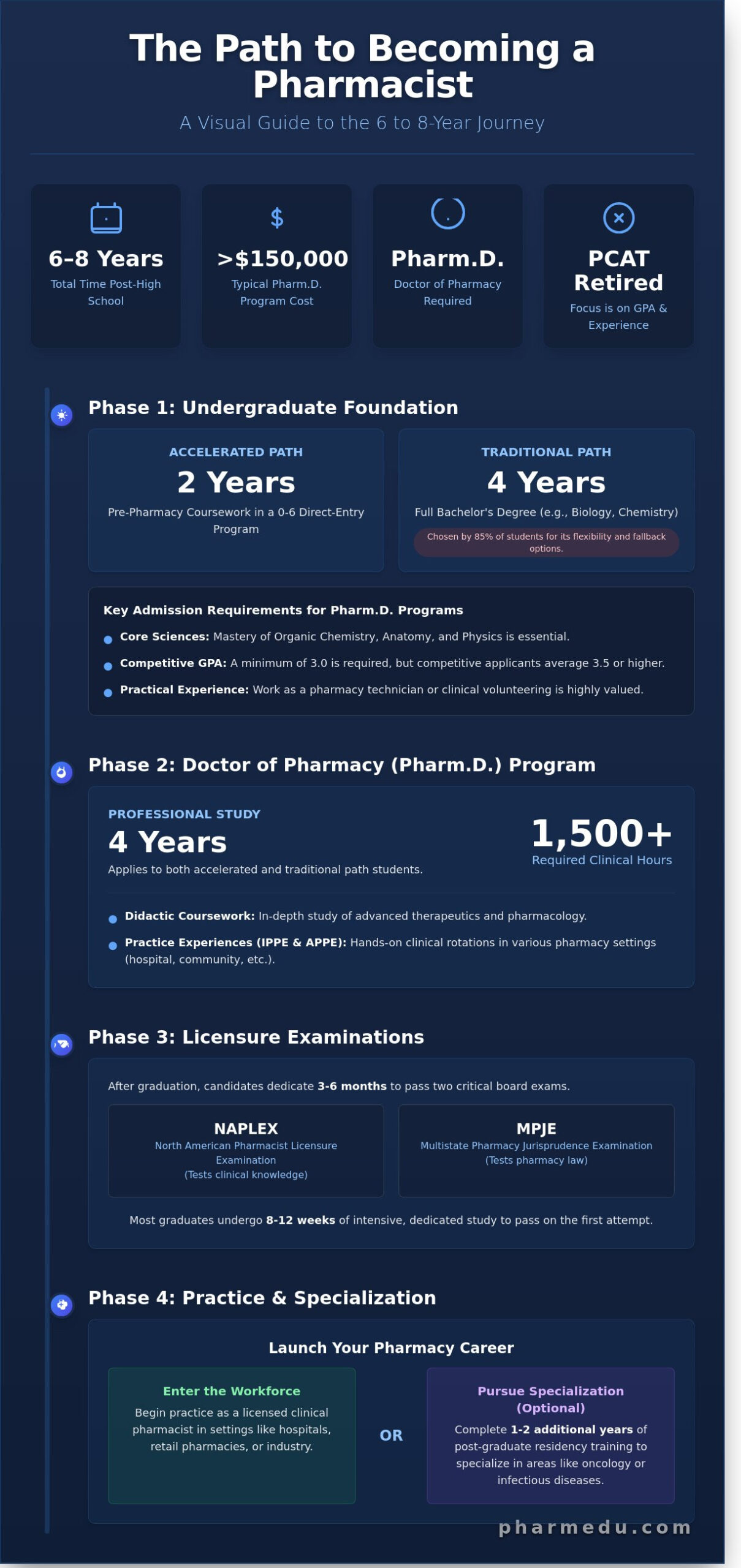
Aspiring clinicians often ask, how long does it take to become a pharmacist in today’s competitive healthcare environment? For most students, the journey spans between 6 and 8 years after high school graduation. This timeframe isn’t arbitrary; it reflects the depth of clinical knowledge required to manage modern pharmacotherapy. The academic foundation consists of 2 to 4 years of undergraduate prerequisite coursework followed by exactly 4 years of professional study in a PharmD program. The Doctor of Pharmacy (Pharm.D.) degree is a professional doctorate designed for clinical practice, which distinguishes it from a research-focused PhD.
While the 8-year path remains the most common route, several variables can accelerate or extend this period. These include the specific type of program you choose, your success in completing rigorous science prerequisites, and whether you pursue optional post-graduate residencies to specialize in areas like oncology or infectious diseases. In 2024, the demand for specialized clinical pharmacists has increased the number of students opting for these additional training years, even if it means a later start to their full-time career.
The 6-Year vs. 8-Year Debate
High school seniors often face a choice between 0-6 direct-entry programs and the traditional 4+4 undergraduate-to-doctorate route. A 0-6 program allows students to transition directly into the professional phase after two years of pre-pharmacy work, effectively entering the workforce two years earlier. However, roughly 85% of pharmacy students currently choose to complete a full 4-year bachelor’s degree first. This traditional path offers a safety net; students earn a degree in biology or chemistry, providing a fallback option if their career goals shift before they commit to the professional doctorate. Completing a full degree also allows more time for personal maturity and the development of study habits needed for the doctoral curriculum.
Key Milestones on the Journey
The first 24 months focus on building a scientific bedrock. Students must master Organic Chemistry, Anatomy, and Physics, often maintaining a GPA above 3.2 to remain competitive for professional admission. Once admitted to a PharmD program, the focus shifts during years 3 through 6 to advanced therapeutics and clinical rotations. You’ll complete Introductory Pharmacy Practice Experiences (IPPE) and Advanced Pharmacy Practice Experiences (APPE), which provide the 1,500 to 2,000 clinical hours required by most state boards for licensure.
Graduation isn’t the final step in determining how long does it take to become a pharmacist. After receiving your diploma, you’ll enter a 3 to 6 month window dedicated to the North American Pharmacist Licensure Examination (NAPLEX) and the Multistate Pharmacy Jurisprudence Examination (MPJE). Most graduates spend 8 to 12 weeks in intensive study to ensure they pass these high-stakes tests on the first attempt. For those seeking clinical roles in specialized hospital settings, an additional 1 to 2 years of residency training usually follows, pushing the total timeline to a full decade of specialized preparation.
Educational Requirements: From Undergrad to PharmD
Understanding the timeline for a pharmacy career begins with the academic framework required by the Accreditation Council for Pharmacy Education (ACPE). Many prospective students ask, how long does it take to become a pharmacist, and the answer depends heavily on your entry point. The journey typically spans six to eight years of post-secondary education. This path is divided into foundational science preparation and professional doctoral training. According to the Bureau of Labor Statistics, candidates must complete a Doctor of Pharmacy (PharmD) degree from an accredited program to practice in the United States.
The application process has evolved significantly. For the 2025-2026 academic cycle, the Pharmacy College Admission Test (PCAT) has been officially retired. Schools now prioritize holistic reviews via PharmCAS, the centralized application service. This shift means 90% of programs now focus on your cumulative GPA, pharmacy-related work experience, and letters of recommendation rather than a single standardized test score. Admissions committees look for a minimum GPA of 3.0, though competitive programs often see averages closer to 3.5. Gaining experience as a pharmacy technician or volunteering in clinical settings provides the practical context necessary for a successful application.
Undergraduate Prerequisites and Degrees
You don’t always need a four-year bachelor’s degree to enter pharmacy school. Many institutions, including the University of Cincinnati (UC) and Xavier University, allow students to apply after completing 62 to 70 credit hours of specific prerequisites. Common majors for those who do finish a degree include Chemistry, Biology, or Biochemistry. At UC’s James L. Winkle College of Pharmacy, required coursework includes Organic Chemistry, Anatomy, Physiology, and Microbiology. Completing these essentials usually takes two to three years of intensive study before you can transition into the professional phase of your education. For a detailed breakdown of every academic and clinical milestone you must meet, reviewing the complete pharmacist education requirements for 2026 licensure will help you plan your prerequisite coursework strategically.
The Professional PharmD Curriculum
Once admitted to a PharmD program, you’ll face four years of rigorous professional study. The first three years, known as P1 through P3, comprise the didactic portion of the degree. You’ll spend 35 to 40 hours per week in lectures and labs focusing on pharmacology, medicinal chemistry, and complex therapeutics. This period builds the scientific foundation required to manage drug interactions and patient safety. Students often find that staying updated on evolving regulations is a lifelong commitment that continues well after graduation through platforms like PharmEDU, which helps professionals maintain their expertise.
The final year, or P4, shifts from the classroom to the clinical environment. During this experiential year, you’ll complete a series of six to nine professional rotations, each lasting four to six weeks. These rotations take place in diverse settings, such as health-system pharmacies, community drugstores, and ambulatory care clinics. You’ll work under the supervision of licensed preceptors to apply your theoretical knowledge to real patients. These P4 rotations are the final step before graduation and serve as the bridge to professional licensure. When calculating how long does it take to become a pharmacist, remember that this final year is a full-time clinical commitment that prepares you for the North American Pharmacist Licensure Examination (NAPLEX).
Accelerated Paths: Can You Become a Pharmacist Faster?
Most students spend eight years in higher education before earning their white coat, but you can shorten that timeline significantly. If you’re asking how long does it take to become a pharmacist, the answer depends on your willingness to trade summer breaks for academic intensity. Accelerated PharmD programs condense a standard four-year curriculum into exactly 36 months. You’ll complete the same 135 to 150 credit hours required for ACPE accreditation, but you won’t have the traditional three-month summer hiatus. This path is designed for disciplined learners who want to enter the professional world as quickly as possible.
Accelerated vs. Traditional Program Comparison
Traditional four-year models typically mandate 15 to 18 credit hours per semester. In contrast, three-year accelerated programs often require 20 to 22 credits during intensive year-round blocks. This pace demands exceptional mental stamina. While traditional students use June through August for internships or travel, accelerated students remain in the classroom or complete clinical rotations. The primary advantage is financial. According to 2023 Bureau of Labor Statistics data, the median annual wage for pharmacists is $132,530. By graduating one year early, you don’t just save on a year of living expenses; you gain a full year of six-figure income. This creates a massive swing in your lifetime earnings and allows you to begin aggressive student loan repayment much sooner.
- Credit Load: 15-18 per semester (Traditional) vs. 20-22 per block (Accelerated).
- Rotation Scheduling: Accelerated programs often start IPPEs (Introductory Pharmacy Practice Experiences) earlier in the first year.
- Burnout Risk: High; the lack of a summer break requires proactive stress management and strong peer support.
Direct-Entry (0-6) Programs
High-achieving high school seniors can choose a 0-6 or 0-7 direct-entry pathway. These programs guarantee a seat in the professional PharmD phase if you maintain specific academic standards during your pre-pharmacy years. You’ll bypass the competitive PharmCAS application cycle entirely, which processed over 40,000 applications in recent cycles. Most 0-6 programs require a minimum high school GPA of 3.5 and SAT scores above 1250 or ACT scores of 27 or higher. Committing to a career at age 18 is a serious decision. It provides a clear, structured route to licensure, but it leaves little room for changing your major without losing credits. If you’re certain about the profession, this is the most efficient method to answer the question of how long does it take to become a pharmacist.
Choosing an accelerated or direct-entry path requires a balance of ambition and self-awareness. You must evaluate whether you prefer a steady, four-year pace that allows for deeper extracurricular involvement or a high-speed, three-year sprint that prioritizes ROI. Both paths lead to the same North American Pharmacist Licensure Examination (NAPLEX). The 3-year model simply moves the finish line closer. For many in the Cincinnati region looking at local institutions, these condensed options are becoming increasingly popular as the demand for specialized clinical pharmacists grows. Ultimately, the decision rests on your personal learning style and your long-term financial goals within the healthcare sector.
Licensure and Beyond: The Final Steps to Practice
Earning your PharmD degree is a monumental achievement, but the transition to a licensed practitioner requires passing two rigorous national exams. This phase typically adds three to four months to your timeline immediately following graduation. You aren’t legally permitted to dispense medication or provide clinical consultations until the state board issues your official license number. When calculating how long does it take to become a pharmacist, you must factor in this post-graduation period where you’re technically a “pharmacy intern” or “graduate pharmacist” awaiting full credentials.
Mastering the NAPLEX and MPJE
The NAPLEX consists of 225 questions that assess your clinical knowledge over a six-hour window. According to 2023 NABP data, the national pass rate for first-time test takers was 77.5%. This statistic highlights why many students begin their high-yield pharmacology review during their P3 year. You’ll also face the MPJE, which covers state-specific statutes. In Ohio, this requires mastering the Ohio Revised Code and Administrative Code. The administrative side of licensure involves several steps; you must submit your application to the state board and wait for your Authorization to Test (ATT). This document usually arrives 15 to 30 days after your school verifies your graduation. Most graduates schedule their exams for July or August to begin working by September.
Post-Graduate Residency and Fellowships
Choosing between clinical and retail paths significantly impacts your timeline. If you aim for a hospital role, a PGY1 residency is often mandatory, adding 12 months of training. For specialties like oncology or infectious diseases, a PGY2 is required. The 2024 ASHP Match involved 6,035 applicants, showing the competitive nature of these positions. Retail pharmacists can start their careers immediately after passing their boards, while clinical specialists spend an additional one to two years in training. Industry fellowships represent another path, typically lasting 24 months. These programs focus on drug development, medical affairs, or marketing. The total duration of how long does it take to become a pharmacist extends to 10 years if you pursue these specialized clinical or corporate roles.
Foreign pharmacy graduates face a longer road to practice in the United States. You must obtain FPGEC certification, which involves the FPGEE exam and the TOEFL iBT for English proficiency. Most states, including those in the Cincinnati region, require 1,500 hours of board-approved internship experience before you’re eligible for the NAPLEX. This process can add two to three years to the standard timeline depending on how quickly you secure an internship site. It’s a methodical process that ensures every practitioner, regardless of where they were educated, meets the high standards of the American healthcare system.
Licensure isn’t the end of your education; it’s the beginning of a lifelong commitment to professional development. Staying current with changing laws and new drug approvals is a legal and ethical necessity. You’ll need to track your credit hours and renew your license every two years in most jurisdictions. This ongoing requirement ensures that the safety of the public remains the top priority in every pharmacy across the region.
How to Succeed in Pharmacy School and Pass Boards
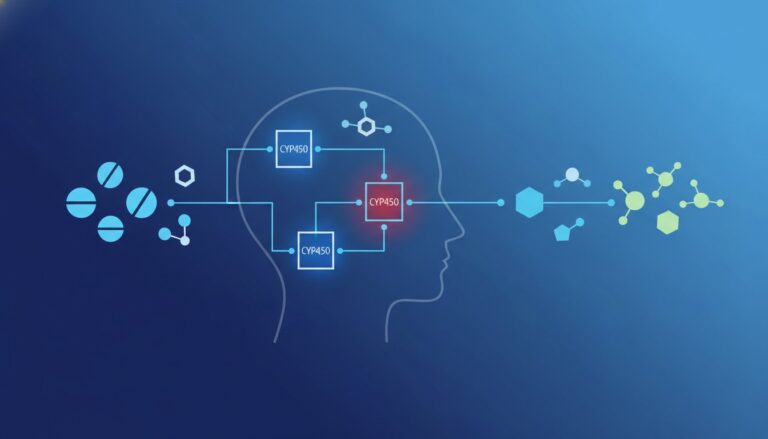
While many prospective students focus on the timeline and ask how long does it take to become a pharmacist, the true challenge lies in the academic rigor of the professional curriculum. Most students hit what educators call the “Pharmacology Wall” during their second professional (P2) year. This is the point where the volume of drug classes, mechanisms of action, and therapeutic nuances increases by nearly 40% compared to introductory coursework. Success requires moving beyond simple memorization to a deep understanding of biochemical pathways. If you don’t master the “why” behind a drug’s effect on a receptor, you’ll likely struggle when clinical cases become complex.
The workload in a PharmD program is massive. Students often face 18 to 22 credit hours per semester, which translates to hundreds of pages of reading every week. Research from educational psychologists suggests that 92% of high-achieving medical students utilize micro-learning to manage this burden. By breaking down a four-hour lecture into five-minute concentrated bursts, you can improve retention by up to 20%. This strategy is particularly effective for the “Top 200” drugs, which you must know inside and out before your first clinical rotation begins.
Preparation for the NAPLEX and MPJE boards shouldn’t wait until your final year. The 2023 national pass rate for first-time NAPLEX candidates sat at approximately 77.5%, a figure that underscores the necessity of early preparation. Treat every P1 and P2 exam as a miniature board review. Building a foundation from day one ensures that you aren’t cramming four years of pharmaceutical science into a two-month window after graduation. Understanding the full scope of pharmacist education requirements and 2026 licensure standards from the outset will help you align your study strategy with the specific competencies tested on the NAPLEX.
Optimizing Your Study Strategy
Ditch the flashcards that only list drug names and dosages. Clinical success depends on your ability to apply knowledge to patient scenarios. High-yield video vignettes are essential here; they simulate the fast-paced environment of a hospital or retail pharmacy. These tools help you visualize complex drug-drug interactions and side effect profiles that are difficult to grasp through text alone. When you see a mechanism animated, it sticks. Institutional support is helpful, but supplemental tools often provide the edge needed for a 90th-percentile board score.
PharmEDU: Your Partner in Pharmacy Education
PharmEDU provides the structured support necessary to navigate the most difficult years of your education. Our platform features 100+ pharmacology topics designed to align with both your classroom syllabus and the rigorous demands of board exams. We know that pharmacy students are rarely sitting at a desk; you’re moving between labs, lectures, and clinical sites. Our mobile-compliant interface allows you to study during transit or between patient rounds on rotations. You can access high-yield pharmacology review and NAPLEX prep today at PharmEDU to ensure you’re ready for the challenge. Understanding how long does it take to become a pharmacist is only the first step; finishing the journey with a license in hand requires the right resources. Our digital mentor approach combines modern e-learning technology with scientific depth, helping you bridge the gap between being a student and becoming a practicing clinician.
Accelerate Your Journey to Clinical Excellence
Navigating the professional path to licensure in 2026 requires a strategic commitment of 6 to 8 years. Most candidates spend 2 to 4 years on undergraduate foundations before completing a 4-year PharmD program, though accelerated 3-year tracks are becoming more prevalent. Regardless of the route, the final hurdle remains the same: passing the NAPLEX and MPJE exams with precision. Understanding how long does it take to become a pharmacist is only the first step; the real challenge lies in retaining the vast clinical knowledge required for safe practice.
Efficiency is vital when you’re balancing clinical rotations and rigorous coursework. For a comprehensive overview of the entire process, including detailed insights into pre-pharmacy requirements and career specialization options, explore our complete guide on how to become a pharmacist in 2026. You can also start your high-yield pharmacology review with a PharmEDU subscription to streamline your study sessions. Our platform offers over 100 high-yield pharmacology topics designed specifically for NAPLEX and board certification prep. We’ve optimized our content into micro-learning segments, making it easier for busy healthcare students to master complex drug classes during 15-minute intervals. You’ve already invested over 2,000 hours into your academic preparation; we’re here to help you secure your credentials. You’re closer to your professional goals than ever before.
Frequently Asked Questions
Can I become a pharmacist in 4 years?
You can’t become a licensed pharmacist in only 4 years because the Doctor of Pharmacy (PharmD) degree itself requires 3 to 4 years of professional study. This timeline doesn’t include the 2 to 4 years of undergraduate coursework necessary to meet admission prerequisites. Most students spend a total of 6 to 8 years in higher education before they’re eligible to sit for licensure exams.
Is a pharmacist considered a doctor?
Pharmacists are clinical doctors because they hold a Doctor of Pharmacy (PharmD) degree. The American Council for Pharmaceutical Education transitioned to this doctoral standard in 2000, replacing the old Bachelor of Pharmacy degree. While they aren’t medical doctors or MDs, they’re the primary healthcare experts responsible for managing complex medication therapy and ensuring patient safety through drug interaction monitoring.
What is the fastest way to become a pharmacist in the US?
The fastest route is enrolling in an accelerated 0-6 program or a year-round 3-year PharmD program. When researching how long does it take to become a pharmacist, these specific paths reduce the traditional 8-year commitment to just 6 years total. Approximately 15% of US pharmacy schools now offer these intensive, year-round schedules that eliminate summer breaks to speed up your entry into the workforce.
Do I need to take the PCAT in 2026?
You don’t need to take the PCAT in 2026 because the American Association of Colleges of Pharmacy officially retired the exam in January 2024. Most accredited institutions now prioritize your undergraduate GPA and pharmacy-related work experience over standardized test scores. By 2026, 100% of pharmacy programs will have moved to alternative admissions criteria, making the PCAT a thing of the past for all applicants.
How much do pharmacists make right out of school?
New pharmacy graduates typically earn a median starting salary of $122,000 per year. According to 2023 Bureau of Labor Statistics data, the top 10% of earners in the field make over $170,000 annually. Many retail chains provide signing bonuses ranging from $10,000 to $30,000 in high-demand areas. Hospital positions might offer slightly lower starting pay but provide excellent benefits and opportunities for clinical advancement.
What happens if I fail the NAPLEX exam?
If you fail the NAPLEX, you’re required to wait at least 45 days before you can schedule a retake. The National Association of Boards of Pharmacy limits candidates to a maximum of five total attempts in their lifetime. In 2023, the first-time pass rate was approximately 77%. You’ll have to pay the $575 registration fee for every attempt, so it’s essential to use the 45-day waiting period for rigorous study.
Is pharmacy school harder than medical school?
Pharmacy school isn’t necessarily harder than medical school, but it requires a much deeper mastery of organic chemistry and molecular pharmacology. A PharmD program lasts 4 years, whereas a medical doctor spends 4 years in school plus 3 to 7 years in residency. Pharmacy students must memorize thousands of drug interactions and precise dosing calculations. Medical students focus more on diagnostic procedures and physical anatomy.
How long is a pharmacy residency?
A pharmacy residency lasts either 1 or 2 years depending on your chosen level of specialization. A Post-Graduate Year One (PGY-1) residency provides 12 months of general clinical training in a hospital or community setting. If you want to specialize in areas like oncology or cardiology, you’ll need to complete a PGY-2 residency for an additional year. Roughly 25% of graduates choose this path to qualify for specialized clinical roles.