
Pharmacology Study Guide for Nursing Students: 2026 Review
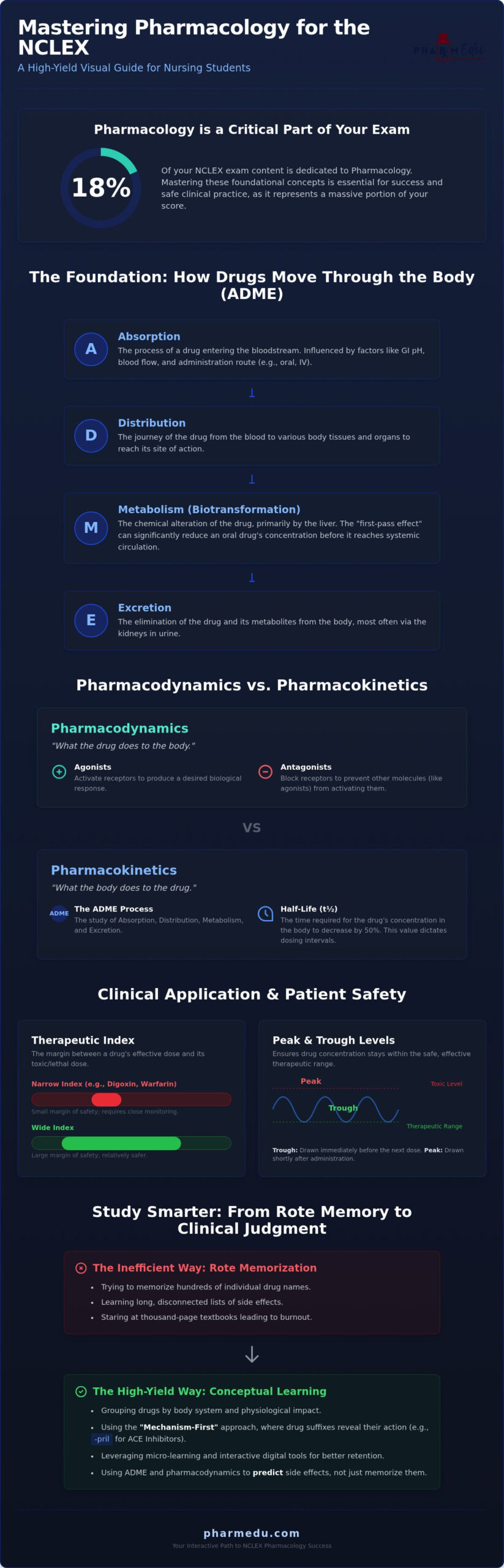
Did you know that pharmacology content accounts for up to 18% of your NCLEX exam? That is a massive portion of your nursing license hanging on your ability to recall hundreds of drug classes, interactions, and side effects. It’s a daunting reality that often leads to burnout before you even step onto the clinical floor.
We understand the anxiety that comes with staring at a thousand-page textbook. It’s difficult to connect abstract drug mechanisms to real-world patient symptoms, and the fear of making a lethal dosage calculation error is a heavy burden for any student to carry. You’re looking for clarity, not just more data points. This pharmacology study guide for nursing students provides a structured, high-yield framework to help you master complex concepts and ace your exams with less stress.
In this 2026 review, we’ll break down the latest NCLEX test plan updates and the new Joint Commission National Performance Goals. You’ll gain a clear roadmap for organizing your study sessions, ensuring you build the clinical judgment necessary for safe medication administration and higher exam scores.
Key Takeaways
- Understand how the ADME framework functions as a predictive tool for drug interactions and patient side effects, reducing the need for rote memorization.
- Master high-yield drug classifications by grouping agents by body system and analyzing the physiological impact of autonomic nervous system agents.
- Learn why this pharmacology study guide for nursing students prioritizes the “Mechanism-First” approach, where drug suffixes reveal critical information about therapeutic actions.
- Strengthen clinical safety by mastering dimensional analysis for dosage calculations and implementing the comprehensive “Ten Rights” of medication administration.
- Discover the benefits of transitioning from traditional textbooks to micro-learning segments and interactive digital tools for better retention and reduced exam anxiety.
Foundations of Nursing Pharmacology: Pharmacokinetics and Dynamics
Many students approach pharmacology as a list of names to memorize. This is a mistake. To truly master the subject, you must understand the Foundations of Pharmacology. This foundational knowledge acts as a “secret code” that allows you to predict how a patient will react to a medication before you even administer it. Instead of memorizing side effects, you’ll understand why they happen based on how the drug interacts with the body’s systems.
Pharmacodynamics focuses on how these drugs interact with specific receptors to trigger a biological response. This involves agonists that activate receptors and antagonists that block them. Understanding a drug’s half-life is equally vital; it’s the time required for the concentration of the drug in the body to decrease by 50%. This value dictates dosing intervals. If you know a drug has a short half-life, you’ll anticipate more frequent dosing to maintain a steady state.
The ADME Process Explained for Nurses
Drug movement begins with absorption, which is influenced by factors like gastrointestinal pH and blood flow at the administration site. If a patient has poor circulation, a subcutaneous injection might not reach the bloodstream as quickly as expected. Once absorbed, many oral drugs undergo first-pass metabolism in the liver. This process can significantly reduce the concentration of the active drug, which is why some medications require much higher oral doses compared to intravenous ones. Pharmacokinetics is the quantitative study of drug movement through the body, specifically tracking Absorption, Distribution, Metabolism, and Excretion (ADME).
Understanding Therapeutic Index and Peak/Trough Levels
Safety is the priority in any pharmacology study guide for nursing students. The therapeutic index represents the margin between a drug’s effective dose and its lethal dose. A wide therapeutic index means the drug is relatively safe; a narrow index, like with Digoxin or Warfarin, requires precise monitoring. Nurses must draw trough levels immediately before the next dose and peak levels shortly after administration to ensure the drug remains within a safe, effective range without causing toxicity.
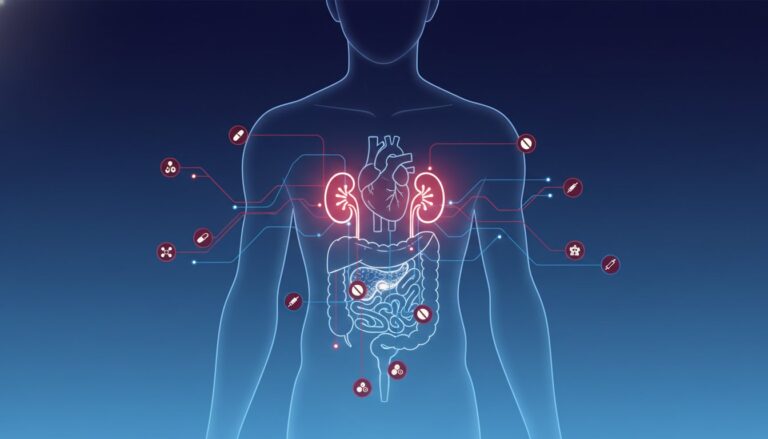
Clinical judgment also requires assessing renal and hepatic function. If a patient’s kidneys aren’t excreting drug metabolites properly, levels can build up to dangerous heights. By monitoring Creatinine and BUN levels, you can predict potential toxicity and advocate for dose adjustments before an error occurs. Mastering these foundations transforms you from someone who just follows orders into a proactive member of the healthcare team.
High-Yield Drug Classifications Every Nursing Student Must Master
Categorizing drugs by body system is the most efficient way to organize a pharmacology study guide for nursing students. This method moves beyond the impossible task of memorizing hundreds of individual drug names and focuses on functional groups. By understanding how a class of drugs affects a specific organ system, you can predict the therapeutic effects and adverse reactions of every medication within that category. For instance, mastering Autonomic Nervous System agents requires you to distinguish between Adrenergics, which trigger the “fight or flight” response, and Cholinergics, which facilitate “rest and digest” functions. If you know a drug is an adrenergic agonist, you’ll immediately anticipate an increased heart rate and bronchodilation.
High-alert medications require even deeper scrutiny because they carry a significant risk of causing serious patient harm when used in error. Insulin, anticoagulants, and opioids fall into this category. When managing these substances, following strict protocols for Medication Administration Safety is essential to prevent life-threatening complications. If you’re looking for a way to visualize these complex interactions, our High-Yield Video Vignettes offer a concise, clinical perspective that traditional textbooks often lack.
Cardiovascular and Renal Pharmacology
Cardiovascular drugs are a cornerstone of nursing exams. ACE Inhibitors, easily identified by their “pril” suffix, work by inhibiting the Renin-Angiotensin-Aldosterone System (RAAS) to lower blood pressure. For a deeper dive into these agents, see our guide on ACE Inhibitors Pharmacology: The High-Yield Guide for Healthcare Students (2026). When administering diuretics, your primary nursing considerations must include monitoring blood pressure and electrolyte levels, particularly potassium, as imbalances can lead to lethal cardiac arrhythmias.
Antimicrobials and Pain Management
Antimicrobials are best studied by their mechanism of action, such as those that inhibit cell wall synthesis like Penicillins or those that disrupt protein synthesis like Tetracyclines. In pain management, the priority is distinguishing between opioid and non-opioid analgesics. Opioids require constant vigilance regarding respiratory depression and sedation levels. For high-potency antibiotics like IV vancomycin, nursing priorities include monitoring for Red Man Syndrome by maintaining a slow infusion rate of at least 60 minutes, assessing for nephrotoxicity through BUN and Creatinine levels, and verifying trough levels to ensure therapeutic dosing.
Advanced Study Strategies: Moving Beyond Rote Memorization
Rote memorization is a trap that many nursing students fall into when faced with hundreds of drug names. It is an exhausting strategy that often fails under the pressure of a high-stakes exam or a fast-paced clinical shift. To truly excel, you must shift toward a “Mechanism-First” approach. This method focuses on the physiological “why” behind a drug class, allowing you to deduce actions and side effects rather than memorizing them in isolation. A high-quality pharmacology study guide for nursing students should prioritize these conceptual connections to foster long-term retention and clinical confidence.
Drug Maps are a superior alternative to traditional, linear lists. Instead of a vertical column of names, a map places the drug class at the center and branches out to include receptors, primary effects, and safety considerations. This visual structure mimics how the human brain stores information; it makes retrieval much faster during clinical case studies where you’re required to apply theoretical knowledge to complex patient scenarios. When you see the connections on paper, you’ll see them more clearly at the bedside.
Utilizing Suffixes and Mnemonics Effectively
Suffixes are your greatest asset; they reveal a drug’s identity and class with just a few letters. For example, “-olol” denotes beta-blockers, “-statin” indicates HMG-CoA reductase inhibitors, and “-prazole” identifies proton pump inhibitors. By mastering these patterns, you can identify the majority of medications you’ll encounter. To manage side effect profiles, build your own mnemonics that resonate with your personal learning style. For high-alert medications, use the “Safety First” mnemonic: Slow administration, Assess vitals, Follow protocols, Evaluate labs, Titrate carefully, and Yield to double-checks.
Active Recall and Practice Testing
Research indicates that active recall, or self-testing, is 50% more effective than simply re-reading your notes. When you force your brain to retrieve information, you strengthen the neural pathways associated with that knowledge. This is why you should integrate resources like Pharmacology: The Comprehensive Guide to the Science of Drugs into your routine, as it emphasizes active engagement over passive reading. Use practice questions at the end of every study session to simulate the NCLEX environment. Spaced repetition, where you revisit difficult topics at increasing intervals, ensures that the information stays fresh until graduation and throughout your professional career.
Clinical Application: Dosage Calculations and Patient Safety
Knowing how a drug works is only half the battle. The final, most critical step is the safe delivery of that medication to your patient. Any comprehensive pharmacology study guide for nursing students must bridge the gap between theoretical mechanisms and clinical practice. This requires a rigorous commitment to safety protocols and a mastery of the mathematics behind every dose. Errors in this stage are rarely due to a lack of effort; they’re usually the result of a breakdown in a structured process.
To ensure high standards of care, nurses utilize the “Three Checks” system. This involves verifying the medication label against the MAR when removing the drug from the dispensing system, during preparation, and at the patient’s bedside. This triple-layered defense is designed to catch human errors before they reach the patient. If you’re struggling to visualize these safety protocols in a clinical setting, our Clinical Case Studies provide realistic scenarios to test your judgment and skills before you reach the hospital floor.
The Ten Rights of Medication Administration
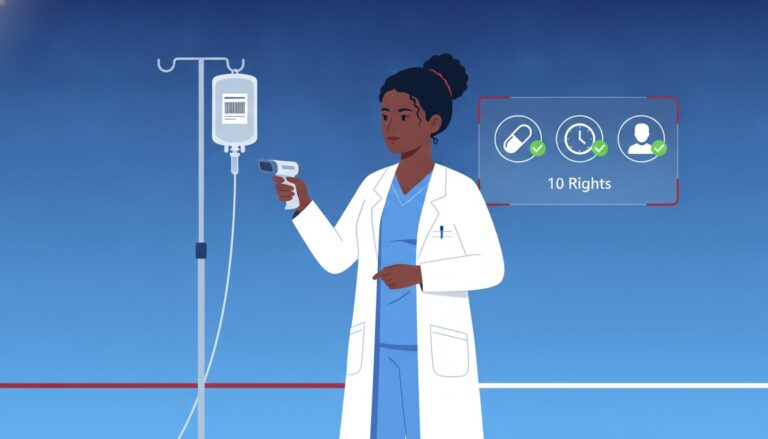
Modern nursing standards have expanded the traditional “Big Five” rights to ten. In addition to the right patient, drug, dose, route, and time, you must also verify the Right Reason, Right Documentation, Right Response, Right to Refuse, and Right Education. Bedside verification for high-alert drugs, such as insulin or heparin, often requires a second nurse to witness the process. This double-check is a non-negotiable safety barrier. In a legal context, the Right Documentation rule dictates that if a medication administration wasn’t recorded accurately and immediately, it simply didn’t happen in the eyes of the law.
Dosage Calculation Mastery
Math anxiety is common, but dosage calculation is a skill that improves with structured practice. Many students prefer Dimensional Analysis because it allows you to track units through multiple conversions, which is vital when moving from micrograms to milligrams to grams. Ratio and Proportion is an alternative, though it can be more prone to errors if the equation isn’t set up perfectly. When calculating IV drip rates or infusion times for critical care, precision is paramount. Pediatric dosing introduces another layer of complexity; calculating mg/kg means a single misplaced decimal point can result in a ten-fold overdose for a vulnerable infant. Always double-check your conversions and never hesitate to ask for a peer review if a calculation feels off.
Finally, patient education is the nurse’s last opportunity to ensure safety after discharge. You must teach the patient not only how to take the drug, but what adverse effects require an immediate call to the provider. Empowered patients are the final link in the safety chain.
Leveraging Digital Tools for Pharmacology Success
The transition from traditional, thousand-page textbooks to high-yield digital platforms marks a significant shift in how modern clinicians are trained. For many, the sheer volume of information in a standard pharmacology study guide for nursing students can feel insurmountable when presented in a static, linear format. Digital tools solve this by transforming passive reading into active engagement. These platforms don’t just store information; they prioritize it based on clinical relevance and exam frequency, ensuring your limited study time yields the highest possible return.
Interactive flashcards offer a distinct advantage over traditional paper decks. While paper cards are static, digital versions utilize spaced repetition algorithms to track which drug classes you’ve mastered and which require more frequent review. This data-driven approach to active recall has been shown to improve long-term retention by focusing your energy on knowledge gaps. When combined with high-yield video vignettes, which visualize complex drug mechanisms in under five minutes, the abstract concepts of pharmacokinetics and pharmacodynamics become concrete clinical realities.
The Benefits of Micro-Learning for Nursing Students
Nursing school schedules are notoriously packed, leaving little room for three-hour library sessions. Micro-learning addresses this by breaking down complex pharmacotherapy into digestible, ten-minute segments. This allows you to fit a high-impact study session into a clinical break or a short commute. By utilizing PharmEDU’s high-yield vignettes, you can master a specific drug class without the cognitive fatigue associated with long-form lectures. For a comprehensive look at how to structure these sessions, refer to The Ultimate Pharmacology Study Guide for Nursing Students in 2026.
Building Exam Confidence with Interactive Quizzes
Success on the NCLEX and other board certifications requires more than just knowing facts; it requires the ability to apply those facts under pressure. Digital platforms simulate the Next Generation NCLEX (NGN) environment by providing interactive quizzes that include case studies and matrix questions. These tools provide real-time feedback, allowing you to identify exactly where your understanding of a drug class might be faltering. Tracking your progress across various categories, from cardiovascular agents to antimicrobials, builds the clinical judgment needed for professional practice. This systematic transition from coursework to board preparation reduces anxiety and ensures you’re ready for the rigors of the 2026 testing standards.
Mastering Pharmacology for the Next Generation of Nursing
Mastering pharmacology is about more than passing an exam; it’s about the safety and well-being of every patient you’ll treat. By moving beyond rote memorization and focusing on physiological mechanisms, you’ve already taken the first step toward clinical excellence. We’ve explored how a foundational understanding of ADME and drug suffixes can simplify your study schedule, while strict adherence to dosage calculations and safety protocols ensures you provide the highest standard of care.
This pharmacology study guide for nursing students serves as your roadmap, but the right tools make the journey much smoother. Digital platforms allow you to integrate active recall and micro-learning into your busy schedule, ensuring that complex information stays fresh. PharmEDU provides over 100 high-yield topics through expert-led video vignettes, all on a mobile-ready platform designed for clinical rotations.
Start your high-yield pharmacology review with PharmEDU today. You have the dedication to succeed, and we’re here to provide the structured support you need to feel confident at the bedside and beyond.
Frequently Asked Questions
What is the best way for nursing students to study pharmacology?
The most effective strategy is to focus on understanding physiological mechanisms rather than memorizing individual drug names in isolation. This pharmacology study guide for nursing students recommends using the ADME framework to predict how a drug will move through the body. By combining this “Mechanism-First” approach with active recall and spaced repetition, you’ll build the clinical judgment necessary for both exams and bedside practice.
How do I remember drug suffixes and their classifications?
Group medications by their common endings to identify their entire class and therapeutic action instantly. For instance, medications ending in “-olol” are beta-blockers, while those ending in “-pril” are ACE inhibitors. By learning the suffix, you can deduce the primary mechanism, side effects, and nursing considerations for dozens of individual medications without having to study each one separately.
What are the most important drug classes to know for the NCLEX?
Focus your study time on high-alert medications and cardiovascular agents, as these are heavily emphasized in the 2026 NCLEX test plan. Pharmacology-related questions make up 12-18% of the exam, with a strong focus on insulin, anticoagulants, opioids, and diuretics. Mastering these high-risk classes is essential for passing the boards and ensuring patient safety in a clinical setting.
Is pharmacology harder than Pathophysiology for nursing students?
Many students find pharmacology more challenging because it requires you to apply pathophysiology to clinical interventions. While pathophysiology explains the “what” of a disease process, pharmacology requires you to understand the “how” of the treatment. Success in pharmacology usually depends on how well you’ve mastered the underlying disease processes, as the drug’s mechanism is designed to fix those specific dysfunctions.
How can I avoid making dosage calculation errors in clinicals?
Utilize dimensional analysis consistently to track your units and prevent dangerous decimal point errors. Always perform the “Three Checks” of medication administration and never bypass the bedside verification process for high-alert drugs. Developing a methodical, slow, and repetitive habit in the medication room is your best defense against errors, especially when calculating weight-based pediatric doses.
What are the ‘Rights of Medication Administration’ I need to know?
Modern nursing standards have expanded the traditional “Big Five” into ten distinct rights. You must verify the right patient, drug, dose, route, time, documentation, reason, response, education, and the right to refuse. Adhering to all ten rights ensures a comprehensive approach to patient safety and provides the necessary legal protection through accurate documentation of the patient’s response.
How many hours a week should I spend studying pharmacology?
Aim for five to ten hours of focused study per week, ideally broken into daily micro-learning sessions. Consistency is far more effective than marathon cramming because your brain needs repeated exposure to solidify complex drug interactions. Short, daily reviews of flashcards or video vignettes help maintain the information without the burnout associated with traditional long-form study methods.
Are digital study guides better than traditional pharmacology textbooks?
Digital guides offer significant advantages because they provide high-yield video vignettes and interactive quizzes that static textbooks cannot match. These tools allow you to visualize drug mechanisms and identify knowledge gaps in real-time. Digital platforms also simulate the Next Generation NCLEX environment, helping you build confidence with the specific question types you’ll face during your board exams.