
Immunomodulators and Biologics Explained: A High-Yield Guide for Healthcare Students
Most students treat “immunomodulator” and “biologic” as interchangeable synonyms, but this common misconception is exactly what leads to missed points on pharmacology board exams. It’s understandable if you feel overwhelmed by the sheer volume of new drug names, especially with the FDA approving 12 new biologics in 2025 alone. Staring at a list of medications like Nipocalimab-aahu or Sibeprenlimab-szsi often feels like trying to decode a foreign language while the exam clock is ticking. This high-yield guide provides the clarity you need by having immunomodulators and biologics explained through a logical, structured classification framework.
You’ll master the crucial distinction between a drug’s therapeutic action and its manufacturing source, which is the foundation of high-level pharmacology. We’ll decode the hidden logic behind monoclonal antibody suffixes and provide the mental shortcuts necessary to identify specific molecular targets instantly. By the end of this breakdown, you’ll have the confidence to tackle complex board questions and understand why the manufacturing process is just as important as the clinical result for these advanced therapies.
Key Takeaways
- Learn to differentiate drugs by their physiological effect versus their biological origin to avoid common classification errors on pharmacology exams.
- Access a high-yield breakdown of immunomodulators and biologics explained by their specific molecular targets, including cytokine inhibitors and monoclonal antibodies.
- Identify critical pre-treatment screening requirements, such as TB and Hepatitis B testing, to ensure patient safety and clinical accuracy.
- Discover how to utilize Interactive Pharmacology Flashcards and High-Yield Video Vignettes to master complex drug suffixes and mechanisms of action.
Immunomodulators vs. Biologics: Understanding the Hierarchy
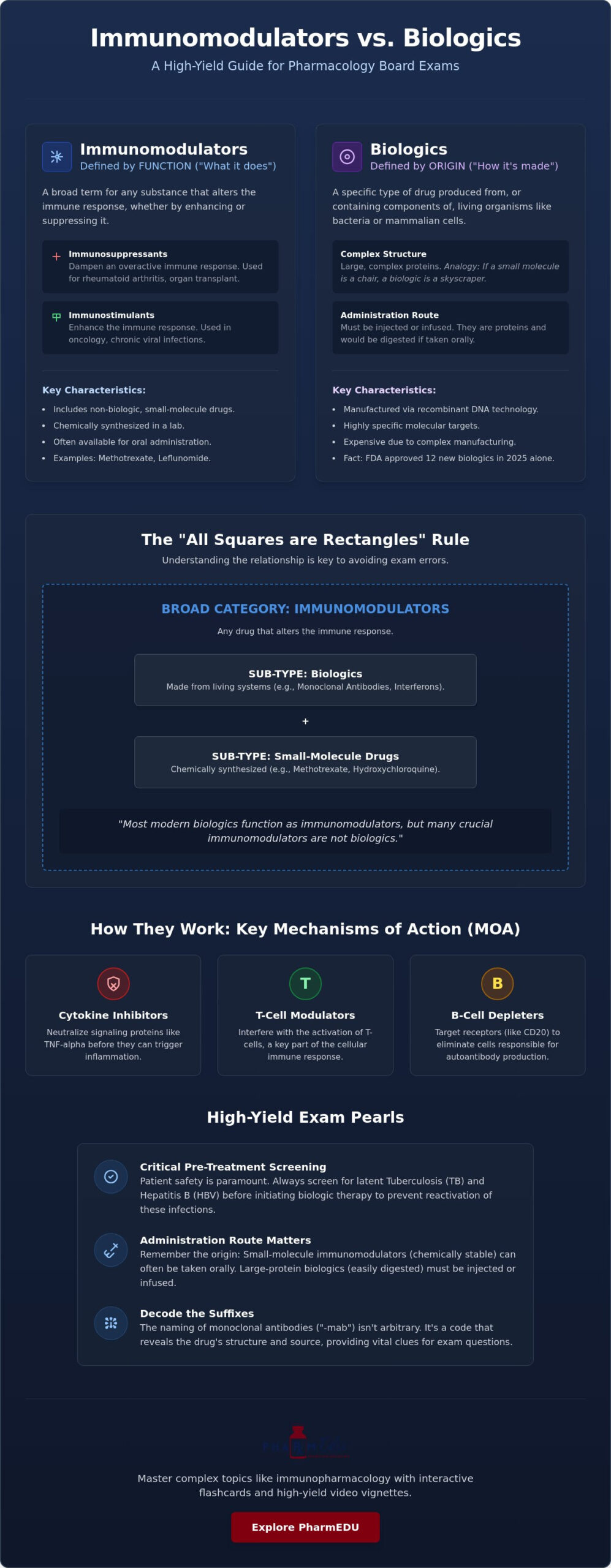
The distinction between these two categories is often a major source of confusion during pharmacology rotations. To have immunomodulators and biologics explained clearly, you must view them through two different lenses: one focused on clinical function and the other on manufacturing origin. The easiest way to visualize this is through a hierarchy. An immunomodulator is a broad umbrella term for any substance that alters the immune response. A biologic is a specific type of medication manufactured in a living system. While most biologics used in modern medicine act as immunomodulators, many traditional immunomodulators are simple, synthetic chemicals. It’s a classic “all squares are rectangles” relationship that helps organize your mental drug map.
What Defines an Immunomodulator?
The term immunomodulator describes the “what” of the drug. Its classification is based entirely on its ability to up-regulate or down-regulate the immune system. In a clinical setting, you’ll encounter two main branches. Immunostimulants are used to enhance the body’s response, often in oncology or chronic viral infections. Immunosuppressants, which are far more common in board exams, dampen an overactive immune response to treat conditions like rheumatoid arthritis or to prevent organ transplant rejection. Because this category is defined by physiological effect, it includes non-biologic, small-molecule drugs like methotrexate, leflunomide, and hydroxychloroquine. These are chemically synthesized in a lab and have a simple, predictable structure that allows for oral administration.
What Defines a Biologic?
A biologic is defined by the “how.” These medications are produced using living organisms, such as bacteria, yeast, or mammalian cell lines. They are often called Biological Response Modifiers (BRMs) because they specifically target the biological pathways involved in the immune response. The manufacturing process is incredibly complex, involving recombinant DNA technology and highly controlled fermentation environments. Unlike synthetic drugs, biologics are massive, complex proteins. If a small-molecule drug like aspirin is a simple wooden chair, a biologic is a high-tech skyscraper. This structural complexity is why the FDA approved 12 new biologics in 2025 alone; they offer a level of precision that synthetic chemistry often cannot reach. Because they are proteins, they must be injected or infused. If you swallowed a biologic, your digestive enzymes would break it down into useless amino acids before it ever reached your bloodstream.
This structural difference explains why biologics are significantly more expensive and difficult to manage than traditional immunomodulators. A synthetic drug has a fixed, stable chemical formula. A biologic is a “living” product where the process is the product. Any slight change in the manufacturing temperature or the specific cell line used can alter the final protein’s folding and efficacy; for researchers studying these complex molecules in a laboratory setting, Essential Acids provides the high-purity materials necessary for precise analytical work. Understanding this hierarchy isn’t just a nomenclature exercise. It’s the key to predicting how these drugs will behave in a clinical environment and how they will be tested on your exams.
Classification and Mechanisms of Action (MOA)
Understanding how these drugs work requires a shift from memorizing names to identifying molecular targets. When we have immunomodulators and biologics explained by their mechanism, three primary categories emerge: cytokine inhibitors, T-cell modulators, and B-cell depleters. Cytokine inhibitors, such as TNF-alpha blockers, neutralize signaling proteins before they can trigger inflammation. T-cell modulators interfere with the activation of the cellular immune response, while B-cell depleters typically target CD20 receptors to eliminate the source of autoantibody production. Most of these therapies act through competitive inhibition or direct receptor blockade, physically preventing ligands from binding to their intended sites. For researchers looking to learn more about how molecular targeting applies to cognitive enhancers, scientific reviews provide valuable insights into these complex interactions.
Interferons and interleukins also play a vital role in this regulatory landscape. These signaling molecules are naturally occurring proteins that the immune system uses to communicate. In a laboratory setting, researchers often utilize specialized compounds from Peptide Research AU to investigate these complex interactions. Therapeutic versions of these molecules can either boost the immune response to fight cancer or dampen it to control autoimmune flares. Unlike monoclonal antibodies that target one specific protein, these signaling molecules often have broader, pleiotropic effects across multiple cell types. This complexity makes them powerful tools, but it also increases the likelihood of systemic side effects.
Monoclonal Antibodies: The Suffix Secret
Monoclonal antibodies (mAbs) represent the most significant class of biologics. Their naming isn’t arbitrary; it’s a code for their structure and source. The suffix “-mab” identifies the drug as a monoclonal antibody, while “-cept” refers to a receptor fusion protein that “captures” its target. The middle syllables tell you the origin: “-xi-” for chimeric (mixed mouse/human), “-zu-” for humanized, and “-u-” for fully human. This is high-yield for exams because the drug source directly correlates with the risk of infusion reactions. Chimeric drugs are recognized as foreign more easily than fully human ones, a critical consideration in developing safer immunomodulatory biologics.
Small Molecule Immunomodulators
Not all immunomodulators require a needle. Small molecule drugs differ from biologics because they can cross cell membranes to target intracellular signaling pathways. Janus Kinase (JAK) inhibitors, like tofacitinib, work “inside-out” by blocking the signaling cascade after a cytokine has already bound to its receptor. Other traditional immunomodulators include antimetabolites and calcineurin inhibitors, which disrupt the DNA synthesis or activation of immune cells. Unlike biologics, which are large proteins, these synthetic chemicals are small enough to survive the digestive tract. This makes them orally bioavailable and often more convenient for patients. If you’re struggling to keep these mechanisms straight, practicing with interactive pharmacology flashcards can help cement the differences between extracellular and intracellular targets.
While synthetic drugs offer oral convenience, the development of complex protein therapies continues to rely on advanced injection methods. For researchers, specialized tools like ReadyPep facilitate the precise administration of these molecules during the experimental phase, ensuring stability and dosing accuracy.
Clinical Applications: When and Why They Are Used
The clinical utility of these agents has transformed the management of chronic disease over the last two decades. While earlier treatments relied on broad, systemic suppression, modern medicine utilizes these tools to pinpoint specific dysfunctional pathways. To have immunomodulators and biologics explained in a clinical context, we must look at how they’ve moved from “last-resort” options to first-line therapies in many protocols. This shift is most evident in autoimmune conditions, oncology, and transplant medicine, where the goal is to maximize efficacy while sparing healthy tissue. Furthermore, the targeted nature of peptide-based biologics has paved the way for specialized wellness programs like PeptivaFit, which utilize these molecules in structured protocols for fat loss and metabolic health.
In addition to these clinical advancements, holistic health platforms are increasingly popular for those seeking to optimize their overall well-being; you can learn more about CelluVive to see how they integrate supplements into a comprehensive wellness strategy.
The Shift Toward Targeted Therapy
The transition to targeted therapy marks a significant milestone in patient safety. Traditional immunosuppressants often act like a sledgehammer, affecting all rapidly dividing cells and leading to significant systemic toxicity. Biologics act more like a scalpel. They target specific extracellular proteins or receptors, which reduces the “off-target” effects common in cytotoxic chemotherapy. In your studies, you’ll often encounter the term “biologic-naive.” This refers to patients who haven’t yet been exposed to these advanced therapies. Determining when to initiate these drugs versus starting with traditional DMARDs is a frequent topic in board exams, as clinicians must balance the high cost and potency of biologics against the long-term safety profiles of older synthetic agents. For patients seeking to access these emerging treatments through research, you can discover trialport and explore current clinical trial opportunities.
Biologics in Gastroenterology and Rheumatology
In the fields of gastroenterology and rheumatology, TNF-alpha inhibitors like infliximab and adalimumab remain the gold standard for moderate-to-severe disease. These drugs have revolutionized the treatment of Crohn’s disease and rheumatoid arthritis by inducing deep mucosal healing and preventing joint destruction in ways that traditional drugs rarely achieved. For more foundational knowledge on how these drug classes fit into the broader medical landscape, consult our Pharmacology Guide. Beyond TNF-alpha, modern dermatology now relies on IL-17 and IL-23 inhibitors to achieve nearly clear skin in patients with severe plaque psoriasis, a feat previously thought impossible. Similarly, biologics targeting IL-4 and IL-13 have become essential for managing severe atopic dermatitis that doesn’t respond to topical steroids.
Oncology has seen perhaps the most dramatic shift with the advent of checkpoint inhibitors. Instead of attacking the tumor directly, these biologics “unleash” the patient’s own immune system by blocking the “off switches” that cancers use to hide from T-cells. This approach requires a sophisticated understanding of definitions of immunomodulators and biologics to manage the unique immune-related adverse events that follow. In transplant medicine, these agents are equally critical. They are used to prevent graft-versus-host disease (GvHD) by selectively inhibiting the T-cell activation that would otherwise cause the new graft to attack the host’s body. By mastering these clinical applications, you’ll be better prepared to interpret the complex patient scenarios presented in clinical case studies.
High-Yield Exam Pearls: Side Effects and Monitoring
Mastering safety protocols is just as critical as understanding mechanisms of action when you have immunomodulators and biologics explained for board exams. These drugs don’t just target disease; they significantly alter the patient’s baseline immune status, necessitating rigorous monitoring. The most high-yield fact for any student is the mandatory screening for latent tuberculosis (TB) and Hepatitis B before starting therapy. Biologics, particularly TNF inhibitors, can cause a reactivation of these dormant infections, turning a manageable condition into a life-threatening clinical crisis. You’ll likely see exam questions where a patient develops a positive PPD test or a cough after starting a biologic; this is a classic “red flag” scenario.
Infusion reactions are another frequent topic for testing and clinical practice. You must distinguish between a mild reaction and true anaphylaxis. Standard protocols often require premedication with acetaminophen and diphenhydramine to mitigate these risks. If a patient develops a reaction during administration, the first step is always to stop the infusion. Long-term, there’s also a documented link to certain malignancies, such as lymphoma, which requires ongoing clinical vigilance and patient counseling. Because biologics are proteins, they’re fragile. They require “cold chain” management, meaning they must be refrigerated and never frozen. For patients, education on subcutaneous self-injection is paramount, including the need to rotate sites between the abdomen and thighs to prevent lipohypertrophy.
Black Box Warnings to Memorize
Exam questions frequently target specific Black Box Warnings. For TNF inhibitors, the primary focus is on serious infections and TB reactivation. If you’re studying integrin inhibitors like natalizumab, watch for Progressive Multifocal Leukoencephalopathy (PML). This is a rare but fatal brain infection caused by the JC virus. Additionally, certain biologics are contraindicated in patients with NYHA Class III or IV heart failure because they can cause severe exacerbations. Memorizing these specific contraindications is a high-yield strategy for pharmacology boards.
Nursing and Pharmacy Considerations
Clinical care plans must address live vaccine contraindications. Patients on biologics shouldn’t receive vaccines like MMR or Varicella, as their dampened immune system can’t handle even attenuated pathogens. Monitoring parameters are also essential; expect to see questions about baseline and periodic CBCs and LFTs. For students developing specific care plans, our Nursing Pharmacology Guide offers a deep dive into these requirements. Therapeutic drug monitoring (TDM) is also becoming standard to ensure patients maintain effective trough levels without developing anti-drug antibodies. Ready to test your knowledge? Try our Pharmacology Practice Quizzes to master these high-yield monitoring pearls.
Mastering Immunopharmacology with PharmEDU
Mastering the nuances of immunopharmacology requires more than just passive reading. As we’ve seen, having immunomodulators and biologics explained through their molecular targets and clinical risks is essential, but retaining that information for high-stakes exams is a different challenge. PharmEDU bridges this gap by transforming dense academic material into actionable knowledge. Our platform is built to help you navigate the transition from classroom theory to clinical board exam readiness with confidence. We focus on the high-yield facts that actually appear on exams, saving you time and reducing the cognitive load associated with these complex drug classes.
High-Yield Study Resources
Traditional textbooks often bury essential facts under layers of academic jargon. PharmEDU takes a different approach. Our High-Yield Video Vignettes break down complex biologic mechanisms into micro-learning segments that you can digest in minutes. Instead of scrolling through hundreds of pages, you can watch a targeted explanation of TNF-alpha inhibitors or JAK signaling while on your lunch break or between clinical rounds. These videos are designed to mirror the logical, structured framework we’ve used throughout this guide. For those specifically preparing for licensure, our NAPLEX Prep Guide provides strategic insights into how these drug classes are tested. You’ll move beyond simple memorization and start recognizing the clinical patterns that examiners love to target.
Why Students Choose PharmEDU
Active recall is the most effective way to cement your understanding of drug suffixes and molecular targets. Our Interactive Pharmacology Flashcards are designed to quiz you on the specific “suffix secrets” we discussed earlier, ensuring you never confuse a chimeric antibody with a humanized one. When you’re ready to test your stamina, our Pharmacology Practice Quizzes simulate the pressure of real-world exams, highlighting exactly where your knowledge of immunomodulators and biologics explained might be lacking. This data-driven approach allows you to focus your study time where it’s needed most.
Students choose PharmEDU because our mobile-compliant design fits into the hectic life of a clinical rotation. Whether you’re between patient rounds or commuting, you can access high-quality content designed by healthcare educators who understand the current scientific landscape. You’re not just buying a study tool; you’re joining thousands of students who have already mastered pharmacology through our structured, evidence-based approach. Start your PharmEDU Monthly Subscription or PharmEDU Annual Subscription today to secure your professional future and approach your board exams with absolute certainty.
Secure Your Clinical Success in Immunopharmacology
Mastering this complex field requires a clear understanding of the hierarchy between drug classes and the specific safety protocols that protect your patients. By having immunomodulators and biologics explained through their molecular targets and naming suffixes, you’ve already built a stronger foundation for your upcoming board exams. You now understand that while biologics offer unprecedented precision, their manufacturing complexity and safety profiles demand a higher level of clinical vigilance. This knowledge is what separates a student who simply memorizes names from a professional who understands physiological impact.
To continue your progress and ensure you’re ready for any pharmacology question, you can start your high-yield pharmacology review with a PharmEDU Monthly Subscription. Our platform provides access to over 100 high-yield pharmacology topics through mobile-compliant micro-learning segments. Every vignette and quiz is designed by healthcare educators who know exactly what’s required for professional success. You have the tools to transform a challenging subject into a career-defining strength. We’re here to support your journey from the classroom to the clinical setting.
Frequently Asked Questions
Are all biologics considered immunomodulators?
No, not all biologics are immunomodulators. While the two terms are often linked in specialty medicine, a biologic is defined by its manufacturing source rather than its clinical effect. Some biologics, such as insulin or clotting factors, serve as replacement therapies rather than immune system modifiers. However, the majority of biologics used to treat autoimmune diseases and cancer fall into the immunomodulator category.
What is the most common side effect of biologic therapy?
Injection site reactions and infusion-related symptoms are the most frequently reported adverse events. Patients often experience localized redness, swelling, or itching shortly after administration. Systemically, an increased susceptibility to upper respiratory infections is a common trait across most classes of these medications because they dampen specific arms of the immune response.
Why do patients need a TB test before starting a biologic?
Screening for tuberculosis is mandatory because many biologics, especially TNF-alpha inhibitors, can cause the reactivation of latent TB. These drugs disrupt the granulomas that the immune system uses to keep TB bacteria contained. Without a pre-treatment screening, a dormant infection could quickly progress into active, life-threatening disease once therapy begins.
Can biologics be taken orally like traditional pills?
Biologics cannot be taken orally because they are large, complex proteins that would be destroyed by stomach acid and digestive enzymes. If swallowed, the body would simply digest them like any other protein from food. To ensure the drug remains intact and reaches its target, it must be administered through subcutaneous injection or intravenous infusion.
What is the difference between a biologic and a biosimilar?
A biosimilar is a biological product that is highly similar to an existing FDA-approved reference biologic with no clinically meaningful differences in safety or potency. Unlike generic versions of synthetic drugs, which are exact chemical copies, biosimilars can’t be identical because they’re grown in living cells. They provide a more cost-effective option while maintaining the same therapeutic standards as the original product.
How do monoclonal antibody suffixes help in identifying the drug source?
The naming convention provides a direct code for the drug’s origin and its potential for triggering an immune response. Suffixes like “-xi-” denote chimeric antibodies, while “-zu-” indicates humanized and “-u-” represents fully human sources. This system is a vital part of having immunomodulators and biologics explained for students, as human-sourced drugs generally carry a lower risk of infusion reactions.
Are live vaccines safe for patients on immunomodulators?
Live vaccines are generally contraindicated for patients currently receiving potent immunomodulators or biologics. Because these therapies suppress the immune system, the attenuated virus in a live vaccine could potentially replicate unchecked and cause an actual infection. Clinicians typically ensure all necessary live vaccinations are completed several weeks before the patient starts biologic therapy.