
Pharmacology Resources for PA Students: The 2026 Comprehensive Guide
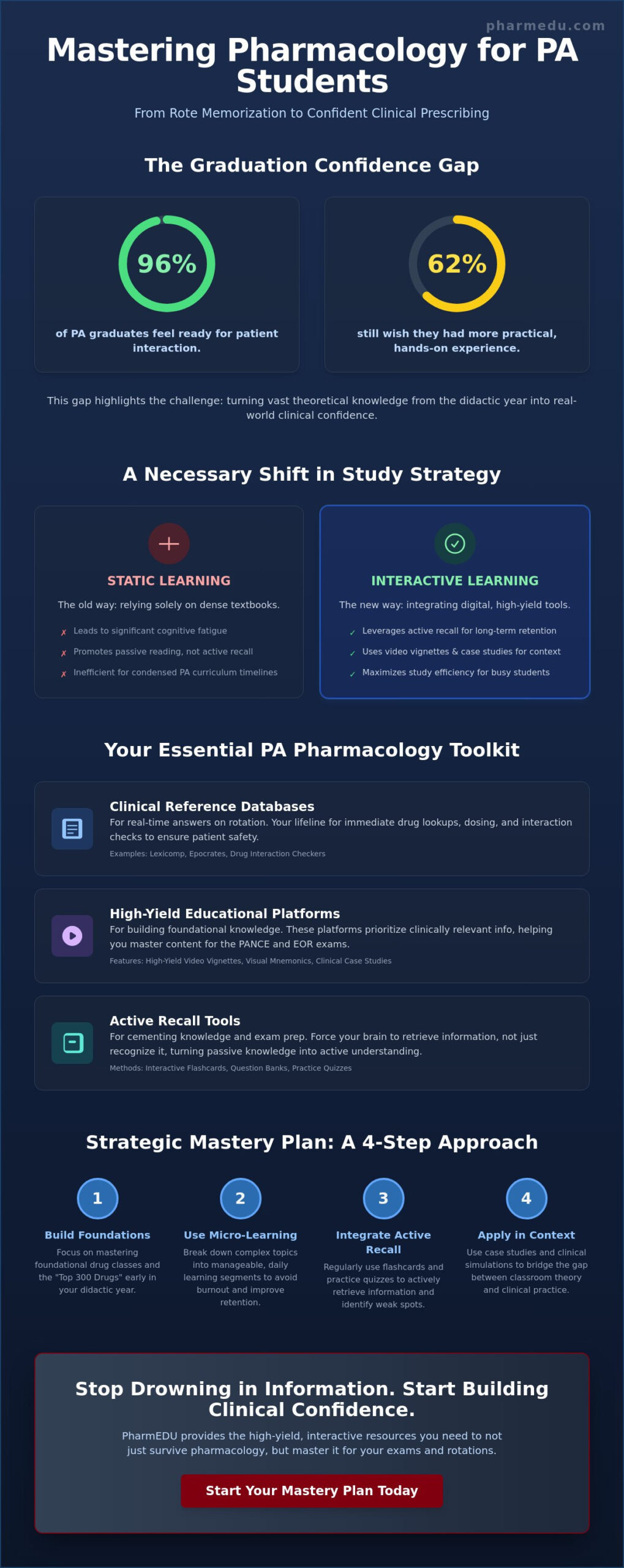
Did you know that while 96% of Physician Assistants feel ready for patient interaction at graduation, a staggering 62% still wish they had more practical, hands-on experience during their training? This gap often stems from the overwhelming pressure of the didactic year, where students are buried under massive textbooks and complex mechanisms of action. Finding the right pharmacology resources for PA students is no longer just about passing the next exam; it’s about building the clinical confidence required to prescribe safely on day one of your rotations.
It’s completely normal to feel like you’re drowning in information when faced with the 2026 PANCE blueprint and its heavy emphasis on systems like cardiovascular and infectious diseases. You want a way to stop the endless rote memorization and start understanding how drugs actually work in a clinical setting. This guide promises to simplify your journey by highlighting the most effective study tools and strategies available today. We’ll explore how to balance high-yield video vignettes with interactive practice to ensure you’re not just surviving your pharmacology curriculum but mastering it for the long term.
Key Takeaways
- Learn how to bridge the gap between classroom theory and clinical practice by adopting a dual-track approach to your study materials.
- Discover why the most effective pharmacology resources for PA students prioritize high-yield digital content over dense, traditional textbooks to maximize your study efficiency.
- Implement a strategic mastery plan that focuses on foundational drug classes through manageable, daily micro-learning segments.
- Evaluate the latest digital platforms based on their ability to provide both exam-focused review and real-time clinical support during rotations.
- Transition from stressful rote memorization to confident clinical prescribing by integrating interactive flashcards and case studies into your routine.
What Are Pharmacology Resources for PA Students?
Pharmacology resources for PA students are specialized educational tools designed to simplify the study of drug classes, pharmacokinetics, and pharmacodynamics. These instruments act as a vital bridge between rigorous academic theory and the practical demands of clinical prescribing safety. While traditional medical education often dives deep into molecular pathways, the PA curriculum requires a more streamlined approach that emphasizes therapeutic application and patient safety. For those seeking a comprehensive overview of pharmacology, it’s essential to recognize that these resources aren’t just about memorizing names. They’re about understanding how a substance interacts with a biological system to produce a specific effect.
The primary goal of these tools is to facilitate long-term retention. PA students face a unique challenge; they must master a vast amount of information in a condensed timeframe. Effective pharmacology resources for PA students range from legacy textbooks like the 14th edition of “Katzung’s Basic & Clinical Pharmacology” to modern digital micro-learning platforms. The choice of resource often determines whether a student merely passes their exams or develops the clinical intuition necessary for rotations. It’s about finding the right balance between depth and utility.
The Scope of PA Pharmacology
The PA education model is built on a “high-yield” philosophy. Unlike broader medical programs, PA curricula focus heavily on the most clinically relevant information. Mastering the “Top 300 Drugs” early in the didactic year is often a non-negotiable requirement for success. Resources must address both the mechanism of action (MOA) and practical prescribing guidelines, such as dosing adjustments for renal impairment or identifying critical drug-drug interactions. This dual focus ensures that students aren’t just scientists, but safe clinicians. It’s a fast-paced environment where precision matters.
Static vs. Interactive Learning Tools
Traditional textbooks provide depth but often lead to significant cognitive fatigue. Reading hundreds of pages on autonomic nervous system drugs can be exhausting and inefficient for the modern learner. This has led to a surge in interactive pharmacology flashcards and practice quizzes. These tools leverage active recall, a technique that forces the brain to retrieve information rather than just recognizing it on a page. Transitioning from passive reading to active engagement is often the turning point for students struggling with exam scores. Modern learners prioritize efficiency. They seek out platforms that offer high-yield video vignettes and clinical case studies to reinforce their knowledge in real-world contexts.
Essential Categories of Pharmacology Study Tools
Success in PA school requires more than just a single textbook. It demands a curated stack of pharmacology resources for PA students that serves two distinct masters: the classroom exam and the clinical bedside. To master this discipline, you must categorize your tools based on their utility. Clinical reference databases provide immediate answers during patient care, while educational review platforms build your knowledge from the ground up. Combining these with active recall tools, such as flashcards and question banks, ensures that you are prepared for both the PANCE and your end-of-rotation (EOR) exams. Research regarding pharmacology curriculum design for PAs highlights that the most effective learning occurs when students can quickly transition from theoretical concepts to practical application.
Reference Tools for Clinical Rotations
High-Yield Video and Visual Mnemonics
Visual learning is often the key to distinguishing between similar drug classes that otherwise blend together. For instance, understanding the nuanced differences in side effect profiles between ARBs and ACE inhibitors is much easier when tied to a specific visual cue or mnemonic. Short, focused video vignettes are particularly effective for the busy PA student lifestyle, allowing you to master complex topics during a commute or a quick lunch break. By integrating pharmacology fundamentals with visual memory cues, you create stronger neural pathways that lead to better long-term retention. If you find yourself struggling with dense text, exploring high-yield video vignettes can provide the clarity you need in a fraction of the time.
Active recall remains the gold standard for high-stakes testing. Practice question banks are crucial for simulating the environment of the PANCE. They force you to apply your knowledge under pressure, identifying gaps in your understanding before they become liabilities on exam day. When you combine these question banks with spaced-repetition flashcards, you move away from temporary memorization and toward true mastery. This multi-layered approach is what separates students who struggle from those who excel in their pharmacology curriculum.
Comparing Top Digital Platforms and Textbooks
Choosing the right pharmacology resources for PA students often comes down to a single metric: yield. In the high pressure environment of a didactic year, you don’t just need information; you need the right information delivered efficiently. Traditional textbooks remain the gold standard for deep dive research, but they often fail as primary study tools due to their sheer density. We’re seeing a significant shift toward digital first platforms that offer a more streamlined comprehensive pharmacy review experience. While AccessPharmacy provides a massive library of reference texts, PharmEDU focuses on high yield mastery through targeted video vignettes and practice quizzes.
Evaluating these tools requires a cost benefit analysis that goes beyond the price tag. Many programs offer an Institutional Platform License, giving students free access to massive databases. However, individual PharmEDU Monthly or Annual Subscriptions are often preferred by students who want a more structured, guided curriculum. The American Academy of Physician Associates emphasizes the importance of staying current with professional standards, and digital platforms often update their content much faster than a printed textbook can go through a new edition cycle.
The Limitations of Traditional Textbooks
“Big Katzung” is a masterpiece of science, but it’s often too dense for the fast paced PA didactic year. When you’re trying to learn the nuances of twenty different antibiotic classes in a single week, a 1,200 page textbook can lead to information paralysis. These books are best used as a secondary reference for complex cases rather than your daily study companion. For initial concept exposure, many students find “made incredibly easy” style books more approachable, as they strip away the academic jargon and focus on the core mechanisms you’ll actually see on the PANCE.
Digital Platforms: Subscription Features to Look For
When selecting a digital resource, mobile compliance is non negotiable. You’ll often find yourself needing to review drug classes between patient rounds or during short breaks on your clinical rotations. Look for platforms that offer high quality practice quizzes with rationale based feedback. Understanding why an answer is wrong is just as important as knowing why it’s right. Some platforms even provide a pharmacology study guide for nursing students that can serve as a helpful, simplified baseline, but PA students should ultimately seek out content specifically tailored to the diagnostic and prescribing depth required for their boards.
Strategic Study Techniques for PA Pharmacology Mastery
Owning the most effective pharmacology resources for PA students is only the first step toward clinical excellence. The true challenge lies in integrating these tools into a schedule that’s already stretched thin by anatomy and clinical skills labs. A methodical, five-step approach ensures that your knowledge is deep, durable, and ready for the bedside. This strategy moves you away from the anxiety of the didactic year and toward the confidence of a practicing clinician.
- Step 1: Build a foundation with foundational drug classes. Start by mastering high-yield categories like ACE inhibitors. Understanding the renin-angiotensin-aldosterone system (RAAS) provides a template for dozens of other cardiovascular agents, making future learning more intuitive.
- Step 2: Use micro-learning segments. Don’t try to learn all of cardiology in a single weekend. Instead, focus on mastering one specific drug class per day. This prevents cognitive overload and allows for better retention of nuanced side effect profiles.
- Step 3: Implement spaced repetition. Use interactive flashcards to ensure that information moves from your short-term memory to long-term storage. This technique forces your brain to work harder at retrieving data, which strengthens the neural pathways.
- Step 4: Apply knowledge through clinical case studies. Simulating real-world prescribing helps you understand how patient factors, such as renal function or age, change the choice of therapy.
- Step 5: Test retention with practice exams. Use high-yield quizzes every weekend to identify gaps in your understanding before they become liabilities on a high-stakes exam.
The Power of Spaced Repetition
Cramming for pharmacology exams might get you through a Monday morning quiz, but it often fails when you reach your clinical year. When you cram, information stays in short-term memory and evaporates within weeks. Spaced repetition uses algorithms to show you “old” drug classes just as you’re about to forget them. A simple 10-minute mobile review habit during your commute or between classes keeps the entire curriculum fresh. This consistency is what allows top students to excel without spending ten hours a day in the library. It’s about studying smarter, not longer.
Applying Theory to Clinical Cases
Transitioning from theory to practice means moving beyond what a drug does to which specific patient needs it. Case studies force you to consider contraindications and side effect profiles in a way that a simple list of facts cannot. You’ll learn to spot the patient who shouldn’t take a specific beta-blocker or the one who needs a dose adjustment based on their labs. Case-based learning significantly reduces medical errors in future practice by training your brain to see the patient as a whole rather than just a drug mechanism. If you want to start applying these concepts today, explore our library of Clinical Case Studies tailored for the PA student experience.
Why PharmEDU is the Premier Resource for PA Students
PharmEDU stands out among pharmacology resources for PA students because it addresses the specific friction points of the modern medical curriculum. While many platforms offer generic medical content, our system is built for the pace and depth required by physician assistant programs. With a comprehensive curriculum covering over 100 essential topics, we provide a structured path from basic pharmacokinetics to advanced clinical prescribing. This isn’t just a collection of facts; it’s a precision tool designed to ensure that you don’t just memorize drug names but actually understand their clinical utility.
The platform integrates High-Yield Video Vignettes that fit perfectly into the busy PA student lifestyle. These videos distill complex physiological interactions into manageable segments, making them ideal for review between classes or during short breaks. To reinforce this knowledge, students utilize our Interactive Pharmacology Flashcards and Pharmacology Practice Quizzes. These tools provide instant feedback and progress tracking, allowing you to identify exactly where your knowledge gaps lie before you sit for a high-stakes exam. Because the interface is fully mobile-compliant, you can transition seamlessly from studying in the library to reviewing drug interactions in the clinic.
Micro-Learning for Maximum Retention
Information burnout is a significant risk during the didactic year, especially when tackling dense subjects like neuropharmacology. PharmEDU’s micro-learning approach breaks these complex topics into bite-sized segments, preventing the cognitive fatigue that often comes with traditional textbooks. Think of the platform as a digital mentor that guides you through the most challenging drug classes with clarity and precision. For programs looking to standardize this level of excellence across an entire cohort, we offer an Institutional Platform License. This allows faculty to track student progress and ensure that every learner is meeting the rigorous standards of professional practice.
Preparing for the PANCE and Beyond
Success in PA school is ultimately measured by your performance on the PANCE and your ability to care for patients. Our resources are meticulously aligned with the board certification blueprint, ensuring that your study time is always focused on high-yield material. By building these habits early, you aren’t just preparing for a single test; you’re engaging in lifelong learning that will support your professional board reviews for years to come. The transition from student to clinician is demanding, but with the right support, it’s a journey you can navigate with total confidence. Start your PharmEDU subscription today and master PA pharmacology.
Mastering Clinical Prescribing for Your PA Career
Success in PA school requires a strategic shift from passive reading to active mastery. As we’ve discussed, the most effective pharmacology resources for PA students are those that bridge the gap between complex drug mechanisms and real-world patient care. By prioritizing high-yield content and implementing spaced repetition, you’ll find that your exam scores rise while your study stress levels drop. It’s about building a foundation of knowledge that serves you long after you’ve passed the PANCE.
PharmEDU is designed to be your partner throughout this journey. Our platform offers over 100 high-yield topics, interactive flashcards, and practice quizzes that provide the instant feedback you need to stay on track. Whether you’re in the library or between patient rounds, our mobile-compliant micro-learning segments ensure that your education never stops. Don’t let information overload hold you back from becoming the confident clinician your future patients deserve.
Join PharmEDU Now – Your All-in-One Pharmacology Success Platform
You’ve already proven you have the dedication to succeed in this profession. Now, give yourself the tools to truly excel in your pharmacology curriculum and beyond.
Frequently Asked Questions
What is the most difficult part of pharmacology for PA students?
The most challenging aspect is often the sheer volume of information combined with the need to understand complex biochemical pathways under a condensed schedule. Students frequently struggle with distinguishing between drugs within the same class that have subtle but clinically significant differences. Mastering pharmacokinetics and pharmacodynamics requires moving beyond simple memorization to understand how a patient’s physiology affects drug metabolism and excretion.
Are flashcards or textbooks better for learning drug mechanisms?
Interactive flashcards are generally superior for active recall and long term retention, while textbooks serve best as deep dive reference tools. Textbooks provide the necessary scientific context, but they can lead to cognitive fatigue during the fast paced didactic year. Utilizing digital pharmacology resources for PA students that feature spaced repetition allows you to identify knowledge gaps more efficiently than passive reading ever could.
How much time should a PA student spend studying pharmacology daily?
Consistency is more important than total hours, so aiming for 45 to 60 minutes of focused review each day is ideal. This approach prevents the need for dangerous weekend cram sessions that rarely lead to long term clinical mastery. Breaking your study sessions into smaller, high yield segments helps maintain focus and ensures that drug mechanisms stay fresh in your mind throughout your rotations.
Can I use nursing pharmacology resources for my PA school exams?
You can use them for foundational concepts, but they often lack the diagnostic and prescribing depth required for PA board exams. PA students must understand not just how a drug works, but also how to manage complex dosing and contraindications at a provider level. It’s better to invest in specialized pharmacology resources for PA students that align specifically with the NCCPA PANCE content blueprint.
What are high-yield pharmacology topics for the PANCE?
The 2026 PANCE blueprint places the highest weight on the Cardiovascular System at 11%, followed by the Pulmonary System at 9% and the Gastrointestinal System at 8%. Other critical areas include Musculoskeletal and Infectious Diseases, each accounting for a significant portion of the medical content. Focusing your study efforts on these high weight categories ensures you are maximizing your time for the most relevant exam questions.
Is it worth paying for a pharmacology study platform?
Investing in a dedicated platform is worth it if the tool provides structured, high yield content that reduces your total study time. These platforms often offer features like interactive practice quizzes and video vignettes that textbooks simply cannot match. When you consider the $550 cost of the PANCE, the return on investment for a tool that ensures a passing score and clinical confidence is quite high.
How do I keep track of drug interactions during my clinical rotations?
What is the best way to memorize the Top 300 drugs?
The most effective method is a combination of visual mnemonics and spaced repetition flashcards. Trying to memorize the entire list at once is rarely successful; instead, you should group drugs by their class and master one small group per day. This micro learning strategy helps you understand the common characteristics of a drug class while highlighting the unique nuances of individual medications within that group.