
FNP Pharmacology Exam Prep: The Ultimate Guide to Mastering Boards in 2026
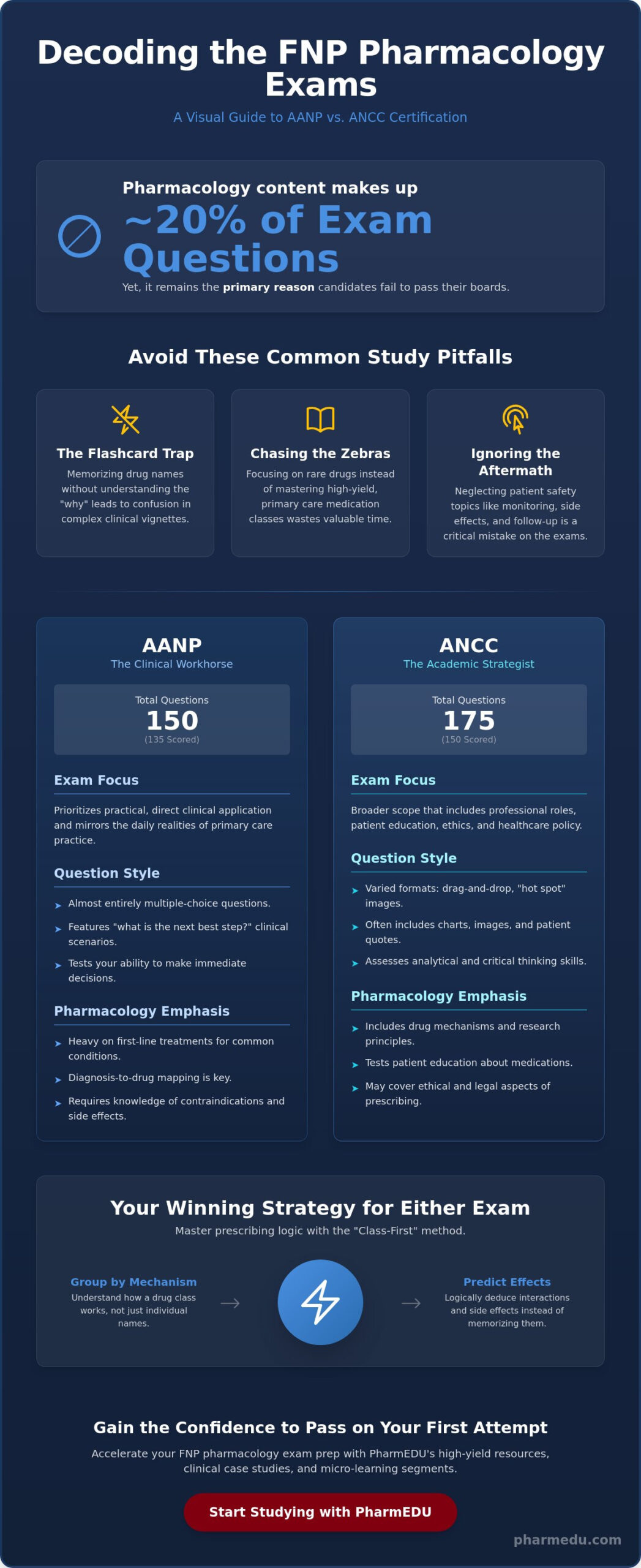
Did you know that pharmacology content represents approximately 20% of the total questions on the AANP and ANCC certification blueprints, yet it remains the primary reason for candidates failing to meet the passing threshold? It’s natural to feel overwhelmed by the 1,500 pages of a standard pharmacology textbook or the anxiety of memorizing complex legal prescribing requirements for 2026. You’ve likely spent hours searching for an effective FNP pharmacology exam prep that distinguishes between the subtle testing differences of each board. We understand that your study time must be as efficient as your future clinical practice.
This guide provides a structured preparation strategy that prioritizes first-line treatments and clinical safety protocols. You’ll gain the clarity needed to handle the most difficult drug-class questions and legal scenarios with precision. We’ll walk through a step-by-step roadmap that simplifies the 2026 exam requirements. This ensures you have the confidence to pass your boards on the very first attempt and start your career with professional authority.
Key Takeaways
- Learn to navigate the distinct pharmacology blueprints of the AANP and ANCC to focus your study on high-yield, first-line clinical treatments.
- Master the “Class-First” method to group medications by mechanism, allowing you to logically predict interactions and side effects rather than relying on rote memorization.
- Develop a high-efficiency FNP pharmacology exam prep strategy using a 4-week intensive schedule built on the principles of active recall and spaced repetition.
- Discover how clinical case studies and micro-learning segments can transform complex theoretical knowledge into practical prescribing confidence for board exams.
- Identify the most common pitfalls that make pharmacology a high-risk section for NP candidates and learn the specific tactics to overcome them.
Why FNP Pharmacology Exam Prep is the Key to Your Certification
Effective FNP pharmacology exam prep serves as the bridge between theoretical knowledge and the clinical realities of advanced practice nursing. It isn’t merely a review of drug names; it’s a specialized study of clinical therapeutics and prescribing safety. For many Family Nurse Practitioner candidates, this domain represents the most significant hurdle on the path to certification. National passing data from previous cycles indicates that pharmacotherapeutics consistently ranks as the highest fail point for students who struggle with the AANP or ANCC exams.
Historical data from the last three years shows that candidates often excel in assessment but falter when asked to select the appropriate second-line agent or identify a specific contraindication. A deep understanding of pharmacology allows you to move beyond simple memorization and start thinking like a prescriber. It’s about recognizing how a patient’s underlying physiology dictates the choice of a therapeutic regimen.
The 2026 board exams introduce a sharper focus on the complexities of modern healthcare. You’ll encounter a higher volume of questions regarding polypharmacy and geriatric prescribing. As the population ages, the boards are prioritizing your ability to manage patients on multiple medications while avoiding adverse drug events. Success in 2026 requires you to prioritize safety and long-term monitoring over the rote memorization of obscure drug mechanisms that rarely appear in primary care settings.
The Role of Pharmacology in the AANP and ANCC Exams
Pharmacology isn’t isolated to a single section of the exam. Instead, it’s integrated across all body systems. Whether you’re answering a question about a pediatric respiratory infection or an elderly patient with heart failure, pharmacotherapeutics will likely be the focus. Typically, 15% to 20% of exam questions directly target drug choices, but nearly 50% of all clinical scenarios involve some level of indirect pharmacological decision-making. The boards distinguish between pure theory and clinical application; they don’t care if you know the molecular weight of a drug, but they’ll definitely test if you know which lab values to check before starting an ACE inhibitor.
Common Pitfalls in FNP Pharmacology Study
Many students sabotage their FNP pharmacology exam prep by adopting inefficient study habits. Avoiding these common mistakes can save you dozens of hours of wasted effort:
- The Flashcard Trap: Relying on flashcards to memorize drug names without understanding the “why” behind the drug choice leads to confusion during complex clinical vignettes.
- Chasing the Zebras: Spending excessive time on rare drugs or orphan medications instead of mastering high-yield primary care classes like antihypertensives, antibiotics, and anticoagulants.
- Ignoring the Aftermath: Focusing only on the initial prescription while neglecting the crucial “monitoring and side effects” aspect that the boards emphasize for patient safety.
Your goal is to develop a systematic approach. If you can’t explain why a specific drug is the first-line treatment for a 65-year-old with diabetes and hypertension, you aren’t ready for the boards. Precision in your study plan is what separates a passing score from a retake.
AANP vs. ANCC: Decoding the Pharmacology Blueprints
Choosing between the American Academy of Nurse Practitioners (AANP) and the American Nurses Credentialing Center (ANCC) requires a clear understanding of their distinct testing philosophies. While both exams verify your competency to practice, their approach to FNP pharmacology exam prep differs in how they weight clinical application versus theoretical framework. The AANP typically consists of 150 questions, with 135 scored, while the ANCC features 175 questions, with 150 scored. Understanding these nuances helps you tailor your study sessions to the specific demands of each board.
AANP Pharmacology: The Clinical Workhorse
The AANP exam mirrors the daily realities of primary care. It prioritizes practical application, focusing heavily on the diagnosis-to-drug mapping process. You’ll need to know that ACE inhibitors are the first-line choice for a hypertensive patient with comorbid chronic kidney disease or diabetes. The exam tests your ability to make immediate clinical decisions through “what is the next best step” questions. These scenarios require you to prioritize interventions based on patient stability and gold-standard guidelines. Safety is a critical component of the AANP blueprint. You must be prepared for specific questions regarding FDA black box warnings, such as the 2023 safety updates on fluoroquinolones or the 2024 monitoring requirements for GLP-1 receptor agonists.
ANCC Pharmacology: The Evidence-Based Approach
The ANCC blueprint leans toward the academic and systemic side of nursing. It evaluates your ability to apply population health data and research-backed guidelines to your prescribing habits. This exam includes a “Professional Role” domain that accounts for approximately 15% to 20% of the content. This section covers prescriptive authority, ethical considerations, and healthcare policy. The ANCC treats non-pharmacological interventions with significant weight, often asking you to choose between lifestyle modifications and medication based on the latest clinical trials. You’ll need to understand the “why” behind the evidence, justifying your choices with current research rather than just clinical intuition.
Deciding which exam to take often comes down to your personal learning style and career goals. Consider these factors:
- Practical Learners: If you excel at bedside logic and direct patient management, the AANP’s focus on “real-world” scenarios may feel more natural.
- Theoretical Learners: If you enjoy analyzing healthcare systems, research methodology, and the broader professional role of the NP, the ANCC’s structure is likely a better match.
- Preparation Strategy: Both exams require a deep dive into the top 200 drugs, but your FNP pharmacology exam prep should shift focus based on the board’s specific blueprint.
Success on either exam requires a commitment to staying current with evolving medical standards. To ensure you’re meeting the latest requirements, you can access accredited study materials that align with the 2026 testing standards. Whether you prefer the clinical focus of the AANP or the systemic approach of the ANCC, your goal remains the same: safe and effective patient care through expert prescribing.
The Class-First Method: Mastering High-Yield Prescribing Logic
Memorizing thousands of individual medications is a recipe for burnout and clinical error. The Class-First method shifts your focus from rote memorization to physiological logic. By mastering the mechanism of action for a specific drug class, you gain the ability to predict the clinical profile, side effects, and interactions of every agent within that group. This approach is essential for effective FNP pharmacology exam prep because it allows you to deduce answers through clinical reasoning rather than relying on fragile recall.
Success on the boards in 2026 requires deep mastery of the “Big Five” systems. These categories represent approximately 75 percent of primary care prescribing questions. You’ll need to focus your energy on these specific areas:
- Cardiovascular: Management of hypertension, heart failure, and dyslipidemia.
- Endocrine: Focus on Type 2 diabetes, thyroid disorders, and osteoporosis.
- Respiratory: Current GINA and GOLD guidelines for asthma and COPD.
- Neurological/Psychiatric: SSRIs, SNRIs, and common seizure medications.
- Infectious Disease: Antibiotic stewardship and first-line treatments for common infections.
Integrating these systems into your routine is more efficient when you use the Ultimate Pharmacology Study Guide for Nursing Students in 2026 to align your study sessions with the most recent clinical practice guidelines.
Categorizing by Prototype Drugs
Prototype drugs serve as the conceptual anchor for an entire class. For example, mastering Lisinopril provides the blueprint for all ACE inhibitors. You’ll know they all carry the risk of a dry cough and hyperkalemia. In 2026, primary care prototypes include Metformin for Biguanides, Losartan for ARBs, Atorvastatin for Statins, and Amoxicillin for Penicillins. When you encounter “me-too” drugs, which are agents with similar structures like Ramipril or Fosinopril, you simply apply the prototype’s rules. This strategy streamlines your FNP pharmacology exam prep by reducing the volume of unique facts you need to store.
Focusing on Contraindications and Side Effects
Board examiners prioritize patient safety over therapeutic efficacy. They want to verify that you won’t harm a patient. This is why questions often focus on when you should avoid a drug. Knowing that ACE inhibitors are strictly contraindicated in pregnancy is a high-yield fact that appears frequently. You must also identify high-alert drug-drug interactions. A classic example is the interaction between Statins and Macrolides, which significantly increases the risk of rhabdomyolysis. The “Safety First” rule of NP prescribing states that a clinician’s primary duty is to identify absolute contraindications before considering the therapeutic benefits of any medication.
How to Build an Effective FNP Pharmacology Study Plan
Success on the board exam isn’t about how many hours you sit with a textbook. It’s about the efficiency of your cognitive load. For the 2026 testing cycle, a 28-day intensive schedule remains the gold standard for busy students balancing clinical rotations and personal lives. This structured approach relies on evidence-based learning science, specifically active recall and spaced repetition, to move information from short-term memory into long-term clinical application. Preparing for your FNP pharmacology exam prep requires a shift from passive reading to active engagement with the material.
Choosing the right medium is your first strategic decision. As detailed in this Comprehensive Pharmacy Review, the choice between digital platforms and traditional textbooks impacts how quickly you can search for drug-class interactions. Digital tools often offer better integration for FNP pharmacology exam prep through searchable databases and interactive modules that fit into a 15-minute break. In a field where guidelines change annually, having a tool that updates in real-time is a significant advantage over static print.
Week 1-2: Foundation and System-Based Review
During the first 14 days, focus on conceptual clarity. Dedicate exactly 2 hours daily to high-yield video vignettes. These visual stories help you visualize the mechanism of action (MOA) rather than just memorizing lists. Structure your calendar by body systems. Tackle Cardiology on Monday and Tuesday, then move to Respiratory on Wednesday and Thursday. Use interactive flashcards every evening to cement drug-class associations. Research shows that reviewing a card right before you’re likely to forget it strengthens neural pathways by up to 300 percent compared to standard cramming.
Week 3-4: Application and Mock Exams
The final two weeks shift from absorption to output. You should aim for 50 to 100 practice questions every single day. This high volume builds the “exam stamina” required to stay sharp during a 175-question board session. Don’t just look at the raw score. Analyze every wrong answer. You’ll likely find “logic gaps” where you understood the drug but misapplied the clinical scenario, rather than “memory gaps” where you simply forgot a name. Complete at least two full-length, timed mock exams to simulate real board conditions and reduce testing anxiety by 40 percent.
Accelerate Your Prep with PharmEDU’s High-Yield Resources
Success in your FNP pharmacology exam prep depends on consistency, not just cramming. PharmEDU designs its curriculum for the working professional who balances clinical rotations with rigorous study. Micro-learning segments break down complex pharmacokinetics into 10 to 12-minute modules. This format fits into the gaps of a busy schedule, turning a commute or a lunch break into a high-yield session that reinforces long-term retention.
Theory often feels disconnected from the pressure of the boards. Our clinical case studies bridge this gap by placing drugs in the context of a patient’s history. You’ll analyze how comorbidities like chronic kidney disease or hepatic impairment alter prescribing choices. For those who require a deeper dive into the fundamental science of drug classes, our Pharmacology Guide provides the foundational knowledge necessary to understand the “why” behind every clinical decision. Mobile-compliant quizzes ensure you can test your knowledge anywhere, providing instant feedback that is vital for correcting misconceptions before they become habits.
Interactive Tools for Active Recall
High-yield video vignettes simplify the most difficult mechanisms of action. Instead of reading a wall of text about the renin-angiotensin-aldosterone system, you watch a visual breakdown that makes the information stick. Interactive flashcard decks, specifically curated for FNP candidates, use spaced repetition to keep high-alert medications fresh in your mind. The platform’s progress tracking features identify your bottom 15 percent of performance areas. This data-driven approach allows you to stop wasting time on topics you’ve already mastered and focus on the weak points that could impact your score.
Joining the PharmEDU Community
A monthly subscription provides a flexible way to manage your FNP pharmacology exam prep during the final months before your board date. This model ensures you have access to the latest evidence-based guidelines without a long-term financial commitment. Many universities also utilize institutional access to boost their program’s pass rates, providing students with a standardized, high-quality resource.
If you’re a dual-degree student or moving between pharmacy and nursing roles, you can also explore our NAPLEX Prep Course for specialized pharmaceutical guidance. PharmEDU serves as a digital mentor, offering the structured, accredited resources you need to transition from a student to a confident, board-certified prescriber in 2026. By combining professional precision with modern technology, we take the administrative and mental burden out of your board preparation.
Secure Your Board Certification for the 2026 Exam Cycle
Approaching your certification boards requires more than just memorization; it demands a strategic grasp of clinical application. By focusing on the Class-First Method, you’ll bridge the gap between academic theory and the high-yield prescribing logic required by both the AANP and ANCC. Success hinges on a structured study plan that fits into your existing clinical rotations without causing burnout. It’s about studying smarter, not longer.
Your FNP pharmacology exam prep should be as mobile and efficient as your daily practice. PharmEDU provides over 100 high-yield topics delivered through a specialized micro-learning format. These resources were built by veteran healthcare educators to ensure maximum retention and professional confidence. The platform’s mobile-compliant design means you can master complex drug interactions between patient visits or during a quick break. You don’t have to navigate these complex regulations and scientific data alone.
Start your high-yield FNP pharmacology review with PharmEDU today!
You’ve put in the hard work throughout your program, and now it’s time to solidify that knowledge for the boards and your future patients.
Frequently Asked Questions
How much of the FNP exam is pharmacology?
Pharmacology accounts for approximately 20% of the AANP certification exam. In contrast, the ANCC Family Nurse Practitioner exam integrates pharmacotherapeutics throughout its domains, representing about 25% of the total 175 questions. You’ll encounter these questions as both direct drug knowledge and clinical management scenarios requiring precise prescribing decisions.
What are the most common drug classes tested on the FNP boards?
The boards prioritize high-frequency primary care medications, focusing heavily on cardiovascular agents like ACE inhibitors and beta-blockers. You should also master endocrine drugs, specifically biguanides and insulin protocols, alongside respiratory medications like SABA and ICS combinations. Antibiotic selection for common infections remains a staple, requiring knowledge of first-line treatments and penicillin allergies.
Should I take the AANP or ANCC if I struggle with pharmacology?
Candidates who struggle with pharmacology often prefer the AANP exam because it focuses on clinical application rather than professional theory. The AANP tests your ability to choose the correct medication for a specific diagnosis. If you’re focusing on your FNP pharmacology exam prep, remember that the ANCC includes more questions on policy and ethics, which might dilute the concentration of pure pharmacology questions.
How long should I study for the FNP pharmacology portion?
You should dedicate 4 to 6 weeks specifically to pharmacology during your board preparation. Most successful candidates spend at least 10 to 15 hours per week reviewing drug mechanisms, interactions, and contraindications. This structured approach ensures you retain the complex data needed for the 2026 exam cycle without feeling overwhelmed by the sheer volume of medications.
Are there specific FDA guidelines I need to know for 2026?
You must be familiar with the 2024 FDA updates regarding GLP-1 receptor agonists for obesity and cardiovascular risk reduction. The 2026 boards will also likely include questions on the latest black box warnings for fluoroquinolones and updated guidelines for monoclonal antibodies in Alzheimer’s treatment. Staying current with these regulatory changes is vital for maintaining professional accuracy in your practice.
Can I use NP pharmacology prep apps instead of a full course?
Apps serve as excellent supplemental tools for quick review, but they shouldn’t replace a comprehensive study program. While mobile platforms offer convenience for practicing 50 to 100 questions daily, they often lack the deep physiological explanations found in structured courses. Your FNP pharmacology exam prep requires a logical foundation that apps alone rarely provide, especially for complex patient cases.
What happens if I fail the pharmacology section of the FNP boards?
You can’t fail just one section; if your overall score falls below the passing threshold, you fail the entire certification exam. For the AANP, a passing score is 500 out of 800, while the ANCC requires 350 out of 500. If you don’t pass, you’ll receive a diagnostic report showing your performance in pharmacology to help you target your studies for the retake.
Is the PharmEDU subscription worth it for a one-month intensive review?
A PharmEDU subscription provides high-value returns for an intensive one-month review due to its focus on 2026 clinical standards and accredited content. The platform’s structured e-learning modules allow you to cover the entire pharmacology curriculum systematically. It eliminates the administrative burden of finding current study materials, letting you focus entirely on mastering drug classes and earning necessary credits.