Pathophysiology: The Definitive Guide for Healthcare Students in 2026
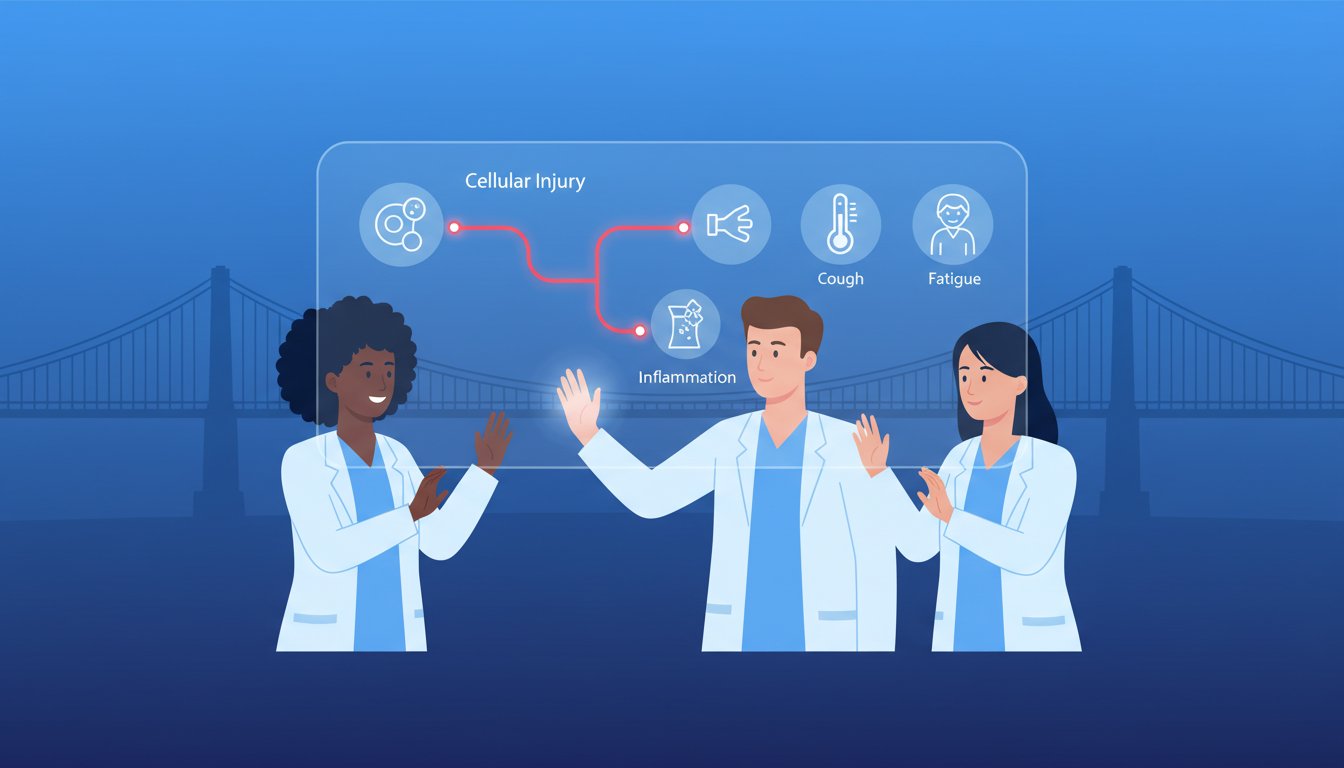
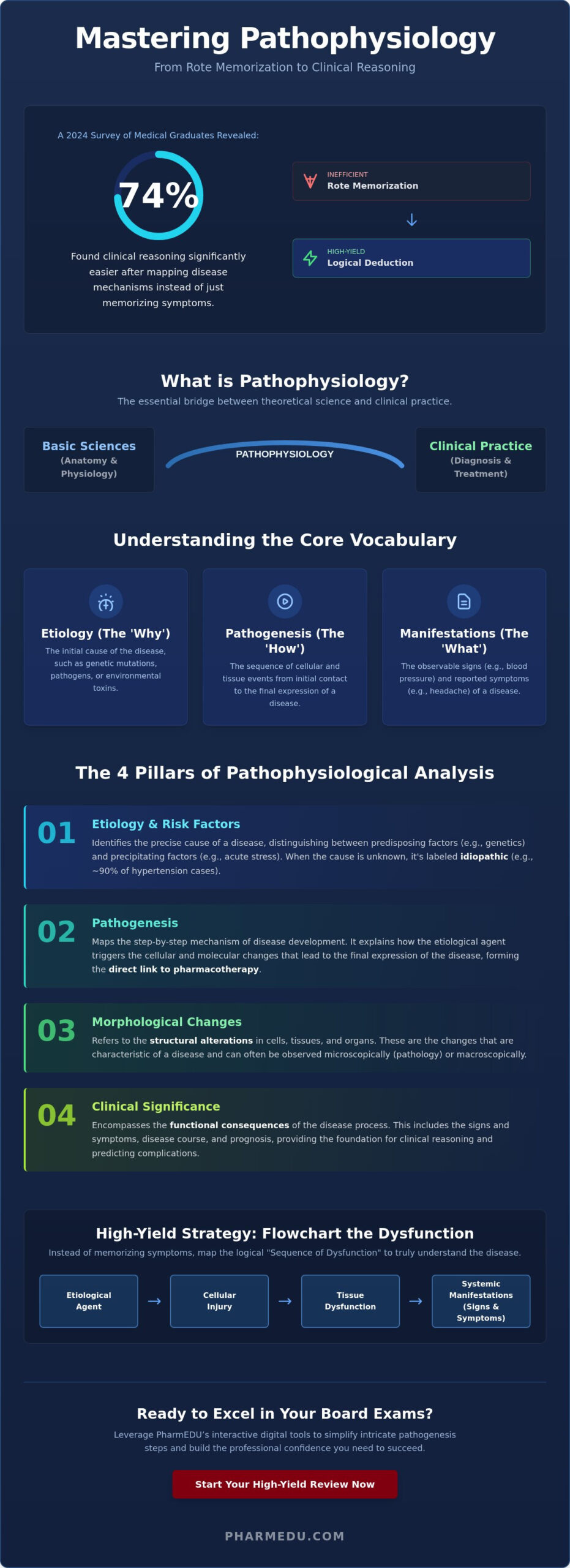
What if the difference between a struggling student and a top-tier clinician isn’t the number of hours spent highlighting a 1,200-page textbook, but how they conceptualize the transition from health to illness? You’ve likely felt the crushing weight of information overload while trying to bridge the gap between normal anatomy and the complex mechanisms of pathophysiology. It’s frustrating when rote memorization fails you during a high-stakes clinical simulation or a pharmacology exam where you can’t quite link a drug’s mechanism to cellular dysfunction. A 2024 survey of medical graduates showed that 74% of students found clinical reasoning significantly easier once they stopped memorizing symptoms and started mapping mechanisms.
This guide provides a structured framework that replaces memorization with logical deduction to help you excel in your clinical coursework and 2026 board exams. You’ll gain the ability to predict drug side effects based on disease mechanisms and see a measurable boost in your diagnostic accuracy. We’ll break down the core pillars of cellular injury, systemic inflammatory responses, and the specific clinical correlations essential for your professional development as a healthcare expert.
Key Takeaways
- Understand how pathophysiology serves as the essential bridge between basic sciences and clinical practice to better interpret complex disease states.
- Learn to identify root causes and the step-by-step evolution of disorders by applying the fundamental pillars of clinical analysis.
- Discover the direct link between biological dysfunction and pharmacotherapy to accurately predict drug classes and their mechanisms of action.
- Adopt high-yield study strategies, such as flowcharting the “Sequence of Dysfunction,” to move from rote memorization to logical clinical reasoning.
- Leverage interactive digital tools to simplify intricate pathogenesis steps and build professional confidence for your upcoming board exams.
What is Pathophysiology? Bridging Normal Function and Disease
At its core, pathophysiology is the study of the disordered physiological processes that accompany disease or injury. While anatomy describes the structure and physiology explains how healthy systems work, this discipline explores what happens when those systems fail. It serves as the definitive bridge connecting theoretical knowledge of the human body to the practical realities of clinical medicine. In the evolving healthcare landscape of 2026, where precision medicine is becoming the standard, grasping these functional changes is more critical than ever.
The study of pathophysiology focuses on the disruption of homeostasis. Homeostasis is the dynamic equilibrium the body maintains to stay healthy. When a stressor or injury occurs, the body initiates compensatory mechanisms to return to its baseline. Disease represents the point where these mechanisms fail or become exhausted. To understand this transition, healthcare students must master three primary components of the field’s vocabulary:
- Etiology: The initial cause of the disease, such as genetic mutations, viral pathogens, or environmental toxins.
- Pathogenesis: The sequence of cellular and tissue events that take place from the moment of initial contact with an etiological agent until the ultimate expression of a disease.
- Clinical Manifestations: The observable signs and reported symptoms that indicate a functional change within the body.
The Distinction Between Pathology and Pathophysiology
Pathology and pathophysiology are often used interchangeably, but they focus on different aspects of disease. Pathology is primarily concerned with the “what,” focusing on structural changes in cells, tissues, and organs that can be observed via biopsy or autopsy. Pathophysiology shifts the focus to the “how,” examining the functional consequences of those structural changes at a systemic level. While pathology identifies the damaged heart muscle after an infarct, pathophysiology explains how that damage leads to decreased cardiac output and pulmonary edema. These two disciplines collaborate in a clinical diagnosis by combining structural evidence with functional data to create a complete picture of a patient’s health status.
Why Pathophysiology is the Foundation of Clinical Reasoning
Mastering this subject allows clinicians to move beyond memorizing lists of symptoms and start predicting disease progression. By understanding cellular dysfunction, you can anticipate which complications will arise before they become life-threatening. This foresight is the basis of evidence-based practice. It helps you understand why specific symptoms emerge in a particular order. For example, knowing the mechanisms of glucose transport explains why polyuria often precedes more severe metabolic acidosis in diabetic patients.
Clinical reasoning depends on distinguishing between signs, which are objective findings like a blood pressure reading of 150/95 mmHg, and symptoms, which are subjective experiences like a dull headache. In 2026, diagnostic accuracy relies on linking these manifestations back to their underlying biological triggers. This logical approach ensures that treatments don’t just mask symptoms but actually address the functional failures driving the disease process.
The Four Pillars of Pathophysiological Analysis
To master clinical practice, you’ve got to look beyond surface symptoms. Pathophysiology provides a structured framework through four distinct pillars: etiology, pathogenesis, morphological changes, and clinical significance. These pillars help clinicians move from identifying what’s happening to understanding why and how it’s happening. This logical progression ensures that treatment plans target the biological root cause rather than just masking the signs.
Etiology and Risk Factors
Etiology identifies the precise cause of a disease. It’s rarely a single point of failure. Instead, it’s often a complex interplay between genetics and environment. We distinguish between predisposing factors, like a inherited BRCA1 mutation, and precipitating factors, like a sudden hypertensive crisis triggered by acute stress. When the cause remains obscure despite advanced testing, we label it idiopathic. For example, roughly 90% of systemic hypertension cases fall into the primary or idiopathic category. Understanding the patient’s phenotype, the observable traits resulting from their genotype interacting with environmental stressors, is crucial for personalized care. For those looking to deepen their diagnostic skills, staying updated through accredited professional development is essential for modern practice.
Pathogenesis: The Sequence of Events
Pathogenesis describes the biological journey from the first stimulus to the full expression of the disease. It’s the story of the condition. Most pathways begin with cell injury. This might stem from ischemia, which deprives tissues of oxygen, or oxidative stress, where reactive oxygen species damage cellular membranes. In Type 2 Diabetes, the pathogenesis involves a multi-year progression. It starts with insulin resistance in skeletal muscle, followed by a 50% decline in beta-cell function by the time of clinical diagnosis. This cellular decline eventually leads to systemic complications like retinopathy or nephropathy. Pathophysiology tracks this escalation, showing how localized damage triggers a domino effect across organ systems.
The final two pillars focus on structural and functional outcomes. Morphological changes involve the physical alterations in cells or tissues, such as the left ventricular hypertrophy seen in chronic hypertension. Clinical significance ties everything together. It explains how these structural changes result in the specific signs and symptoms, like dyspnea or edema, that lead a patient to seek medical help. By analyzing these four pillars, healthcare students develop the critical thinking needed for accurate diagnosis and effective intervention in 2026’s fast-paced clinical environments.
The Nexus: How Pathophysiology Dictates Pharmacotherapy
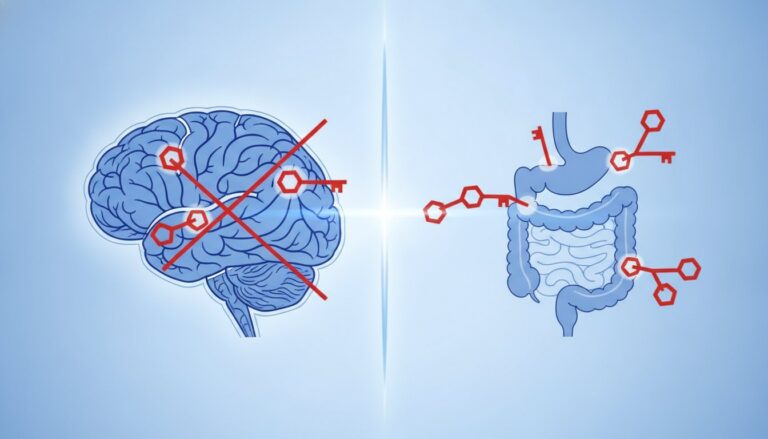
Mastering medication is impossible without first mastering the disease process. Every pharmaceutical intervention aims to restore homeostasis by intercepting a specific biochemical error. If you view a drug’s Mechanism of Action (MOA) as a direct response to a “broken” physiological step, the logic of treatment becomes clear. This conceptual bridge is why our pharmacology guide emphasizes the underlying science of drugs rather than just names and dosages. When you understand the pathophysiology of a condition, you aren’t just memorizing drug classes. You’re predicting them. The MOA is simply a mirror of the pathology it intends to correct.
A student who understands that a disease is caused by an enzyme overproduction will instinctively look for an enzyme inhibitor. This shift from rote memorization to logical deduction is what separates a high-performing healthcare professional from one who struggles with the vast volume of clinical data. By focusing on the “broken” mechanism, you build a mental framework where every new drug class has a logical home.
Targeting the Mechanism: A Case Study in Hypertension
Consider the overactivation of the Renin-Angiotensin-Aldosterone System (RAAS). This pathway triggers vasoconstriction and sodium retention, driving blood pressure up. Understanding this allows you to see why ACE Inhibitors are used. They block the conversion of Angiotensin I to II. However, because this enzyme also breaks down bradykinin, its accumulation causes a dry cough in up to 35% of patients. It’s a predictable physiological consequence, not a random fact.
Predicting Adverse Effects Through Physiological Interference
Drugs often disturb healthy pathways while fixing diseased ones. This “Cascade Effect” occurs when one intervention leads to secondary physiological changes. For example, blocking a receptor in the heart might inadvertently affect the lungs. When you grasp the pathophysiology of the whole body, you stop relying on rote memorization. You can logically derive side effects by observing how a drug’s MOA interferes with normal homeostatic balances across different organ systems.
Using pathophysiology to guide your study of pharmacotherapy offers several advantages:
- Increased Retention: Logical connections last longer than isolated facts in your long-term memory.
- Clinical Accuracy: You can explain to patients why they are experiencing a specific side effect based on their biology.
- Better Exam Performance: Most modern board exams focus on “why” a drug is used rather than just “what” it is.
By treating pharmacology as the logical solution to a pathophysiological puzzle, you reduce the cognitive load of your studies. You begin to see the human body as a series of interconnected systems where every intervention has a ripple effect. This holistic understanding is essential for safe prescribing and effective patient management in 2026 and beyond.
High-Yield Study Strategies for Pathophysiology Exams
Success in pathophysiology starts with a solid foundation in normal physiology. You won’t grasp why a heart fails if you haven’t mastered the Frank-Starling law or the basics of cardiac output. It’s about recognizing the deviation from the baseline. If you skip the normal mechanics, you’re just memorizing symptoms without understanding the “why” behind them. This deeper comprehension is what separates top-performing students from those who struggle with complex clinical reasoning.
Visual Mapping and Flowcharts
Linear notes often fail because disease isn’t a list; it’s a cascade. Concept maps allow you to visualize the sequence of dysfunction from the initial insult to the final symptom. When you draw a disease pathway, you’re forcing your brain to process the logic of the condition rather than just reading about it. The Rule of Three in pathophysiology mapping requires every flowchart to connect the specific etiology to the cellular pathogenesis and finally to the clinical manifestations. This structure ensures you don’t miss the middle steps where most exam questions focus.
Integrating Case Studies for Clinical Mastery
Move beyond “What is the disease?” and start asking “What is happening in this specific patient?”. Real-world cases rarely look like textbooks. They often include red herring symptoms, which are findings that don’t fit the standard model and can distract you from the true diagnosis. Using micro-learning vignettes helps build diagnostic intuition by presenting small, manageable chunks of clinical data. This method prepares you for the high-pressure environment of clinical rotations and helps you identify patterns in complex patient presentations.
Focusing on “Compare and Contrast” is another essential tactic. Group diseases with similar presentations, such as COPD and Asthma. While both involve airway obstruction, their underlying pathophysiology differs significantly. One involves permanent alveolar destruction, while the other is characterized by reversible bronchospasm. Distinguishing these nuances is essential for high-stakes exams like the NCLEX or the NAPLEX.
Active recall is your best tool for long-term retention. Instead of rereading your textbook, test yourself with practice questions that simulate clinical decision-making. This approach builds the mental stamina needed for 2026 board exams. By applying pathophysiology concepts to realistic scenarios, you bridge the gap between theory and practice.
Ready to sharpen your clinical skills and master complex medical topics? Explore PharmEdu’s accredited courses to stay ahead in your healthcare career and earn necessary credits efficiently.
Mastering Clinical Concepts with PharmEDU’s High-Yield Resources
Traditional lectures often fail to capture the nuance of cellular dysfunction. PharmEDU changes this by utilizing high-yield video vignettes that isolate specific mechanisms. These videos don’t just list symptoms; they visualize the entire cascade of a disease. By focusing on the “why” behind clinical presentations, the platform ensures you aren’t just memorizing facts for a Friday quiz. You’re building a mental framework that survives long after the exam ends.
Interactive flashcards complement these videos by reinforcing specific pathogenesis steps. Research in cognitive psychology shows that students using active recall and spaced repetition retain up to 50% more information over a six-month period compared to those using passive reading methods. PharmEDU’s system prompts you to identify the exact point where physiological balance tips into pathophysiology, solidifying your diagnostic intuition.
A comprehensive pharmacy review must include a strong foundation in these concepts. The journey from a student to a licensed pharmacist or nurse requires more than memorizing drug names. It demands a mastery of how diseases alter drug metabolism and receptor sensitivity. Without this bedrock, clinical practice becomes a series of guesses rather than evidence-based decisions.
Micro-Learning for the Modern Healthcare Student
Micro-learning isn’t just a trend. It’s a necessity for students balancing 12-hour clinical rotations with rigorous board prep. PharmEDU converts dense, 60-minute academic lectures into 5-minute high-yield segments. This approach respects your time and aligns with the science of spaced repetition. You can master a complex concept like the renin-angiotensin-aldosterone system during a coffee break or while commuting. This accessibility ensures that pathophysiology remains at the forefront of your mind, regardless of your schedule’s intensity.
Beyond the Exam: Pathophysiology in Professional Practice
Success in healthcare doesn’t end with a passing grade. PharmEDU supports lifelong learning and board certification maintenance through accredited modules that reflect the latest 2026 clinical guidelines. Data from residency programs indicates that 85% of directors prioritize clinical reasoning over raw test scores. PharmEDU provides this edge through institutional access for universities and residency programs, fostering a culture of continuous improvement.
- High-Yield Content: Focus only on what’s clinically relevant.
- Accredited Resources: Earn credits while staying current with medical literature.
- Mobile Integration: Access your study dashboard on any device, anywhere.
Don’t settle for surface-level understanding. Join PharmEDU today to access the tools you need for complete mastery and a successful career in the healthcare sector.
Elevating Your Clinical Expertise for 2026
Mastering pathophysiology isn’t just about passing an exam; it’s about building the analytical framework required for safe patient care. By understanding the four pillars of disease analysis and how they dictate pharmacotherapy, you transform from a student into a clinician. Success in the 2026 healthcare landscape demands more than rote memorization. It requires a deep dive into over 100 high-yield topics that connect cellular changes to systemic outcomes. You’ve seen how bridging normal function with disease states provides the logic behind every prescription you’ll write.
To truly excel, you need tools designed by healthcare educators specifically for board exam success. Using interactive flashcards and clinical case studies helps bridge the gap between theory and practice. Don’t leave your professional development to chance when you can access structured, expert-led resources today. Our platform provides the precision you need to stay ahead of evolving medical standards.
Master Pathophysiology and Pharmacology with a PharmEDU Subscription Today
Your journey toward clinical mastery is a marathon, and we’re here to support every step of your professional growth.
Frequently Asked Questions
What is the best way to study pathophysiology for nursing or pharmacy school?
The most effective strategy involves using conceptual mapping to link physiological norms to pathological disruptions. A 2022 study in the Journal of Nursing Education found that 85% of students improved their long term retention by using active recall instead of passive reading. Don’t just memorize facts; you’ve got to understand the “why” behind the “what.” Using digital e-learning platforms helps you visualize complex cellular cascades during your study sessions.
How does pathophysiology differ from anatomy and physiology (A&P)?
Anatomy and physiology focus on the structure and function of healthy organisms, while this field examines the functional changes that occur during disease. While A&P provides the baseline of 100% normal function, this discipline analyzes how that baseline shifts during injury or illness. It’s the essential bridge between basic science and clinical medicine. Understanding this distinction is vital for accurate diagnosis and effective patient management in 2026.
Why is pathophysiology so important for understanding pharmacology?
Pathophysiology provides the biological context for how drugs interact with the body to restore homeostasis. You can’t grasp pharmacodynamics without knowing the specific cellular receptors or pathways that a disease alters. For instance, understanding the renin-angiotensin-aldosterone system is essential for prescribing ACE inhibitors. Data from pharmacy curricula indicate that 70% of drug mechanisms are directly linked to specific pathophysiological disruptions in the body’s systems.
What are the most common pathophysiological mechanisms of disease?
The primary mechanisms include inflammation, oxidative stress, genetic mutations, and cellular hypoxia. These four processes account for over 90% of chronic disease developments globally. For example, hypoxia triggers cellular damage within minutes in cardiac tissue; this leads to immediate functional decline. By mastering these core pillars, you’ll recognize patterns across different organ systems. It’s about seeing the universal signals that indicate a body is out of balance.
Can I pass the NAPLEX or NCLEX without a deep understanding of pathophysiology?
You can’t pass these exams without a firm grasp of pathophysiology because it underpins the clinical reasoning questions. The NCSBN reported that approximately 25% of NCLEX-RN questions involve physiological adaptation and risk reduction. NAPLEX candidates face similar challenges with complex therapeutic cases. If you don’t understand the underlying disease process, you’ll struggle to select the correct intervention or medication during the test.
How do I connect clinical symptoms to pathophysiological changes?
You connect symptoms to changes by tracing every sign back to its cellular or systemic origin. Edema isn’t just swelling; it’s a result of increased hydrostatic pressure or decreased oncotic pressure in the capillaries. When you see a patient with a 102 degree fever, you should immediately think of cytokine release and the hypothalamus. This logical progression ensures your clinical decisions are based on science rather than simple guesswork.
What is the role of inflammation in most pathophysiological processes?
Inflammation acts as the body’s primary response to injury, but it becomes a driver of disease when it’s chronic. Research published in 2023 suggests that chronic inflammation contributes to 50% of all deaths worldwide. It’s a double-edged sword that attempts to heal but often causes collateral damage to healthy tissues. Understanding this cascade is essential for treating conditions ranging from rheumatoid arthritis to atherosclerosis in modern clinical practice.
Are there specific pathophysiology concepts that frequently appear on board exams?
Board exams frequently test acid-base imbalances, electrolyte shifts, and the stages of shock. These topics appear in roughly 15% of clinical case studies on modern certification tests. You’ll also encounter questions on the compensatory mechanisms of heart failure and respiratory distress. Focusing on these high-yield areas ensures you’re prepared for the most rigorous sections of your professional licensing exams in the coming year.