

Metoclopramide Pharmacology: High-Yield Review for Healthcare Students (2026)
Mastering metoclopramide requires more than just knowing it treats nausea; you must understand that its dual role as a prokinetic and a central dopamine antagonist makes it one of the most high-risk medications on your pharmacology shelf exam. It’s frustrating when you’re trying to distinguish between different antiemetics while simultaneously worrying about missing a life-altering side effect like tardive dyskinesia. You aren’t alone in finding the transition from textbook theory to clinical safety challenging, especially when recent studies suggest up to 30% of healthcare students struggle to differentiate between various D2 receptor antagonists under exam pressure.
This high-yield review provides the clarity you need to excel in your 2026 clinical rotations and board assessments. You’ll gain a precise understanding of D2 receptor antagonism and the specific mechanics of prokinetic action that drive gastric emptying. We’ll examine the critical safety warnings and contraindications, giving you the confidence to identify exactly when this drug should be avoided in practice.
We’ve structured this guide to move logically from molecular mechanism to bedside application. Expect a focused breakdown of extrapyramidal side effects and the essential pearls that frequently appear on professional licensing exams.
Key Takeaways
- Understand how this D2 receptor antagonist functions as a prokinetic agent by targeting the Chemoreceptor Trigger Zone to master its mechanism of action.
- Gain clinical clarity on the FDA-approved uses for metoclopramide, including its critical role in managing the symptoms of diabetic gastroparesis.
- Recognize serious neurological risks and the specific FDA Black Box Warning regarding tardive dyskinesia to ensure patient safety.
- Identify absolute contraindications, such as mechanical GI obstructions and pheochromocytoma, to prevent life-threatening drug-disease interactions.
- Master high-yield mnemonics and testable facts designed to help you excel in the pharmacology sections of the NAPLEX or NCLEX exams.
Understanding Metoclopramide: Mechanism of Action and Pharmacokinetics
As a substituted benzamide, Metoclopramide serves a dual role as a potent dopamine D2 receptor antagonist and a prokinetic agent. It’s a cornerstone in the clinical management of diabetic gastroparesis and refractory nausea. The drug’s efficacy relies on its ability to target both the central nervous system and the enteric nervous system, though its crossing of the blood-brain barrier is responsible for several of its therapeutic and adverse effects.
Dopamine D2 Antagonism and Antiemetic Effects
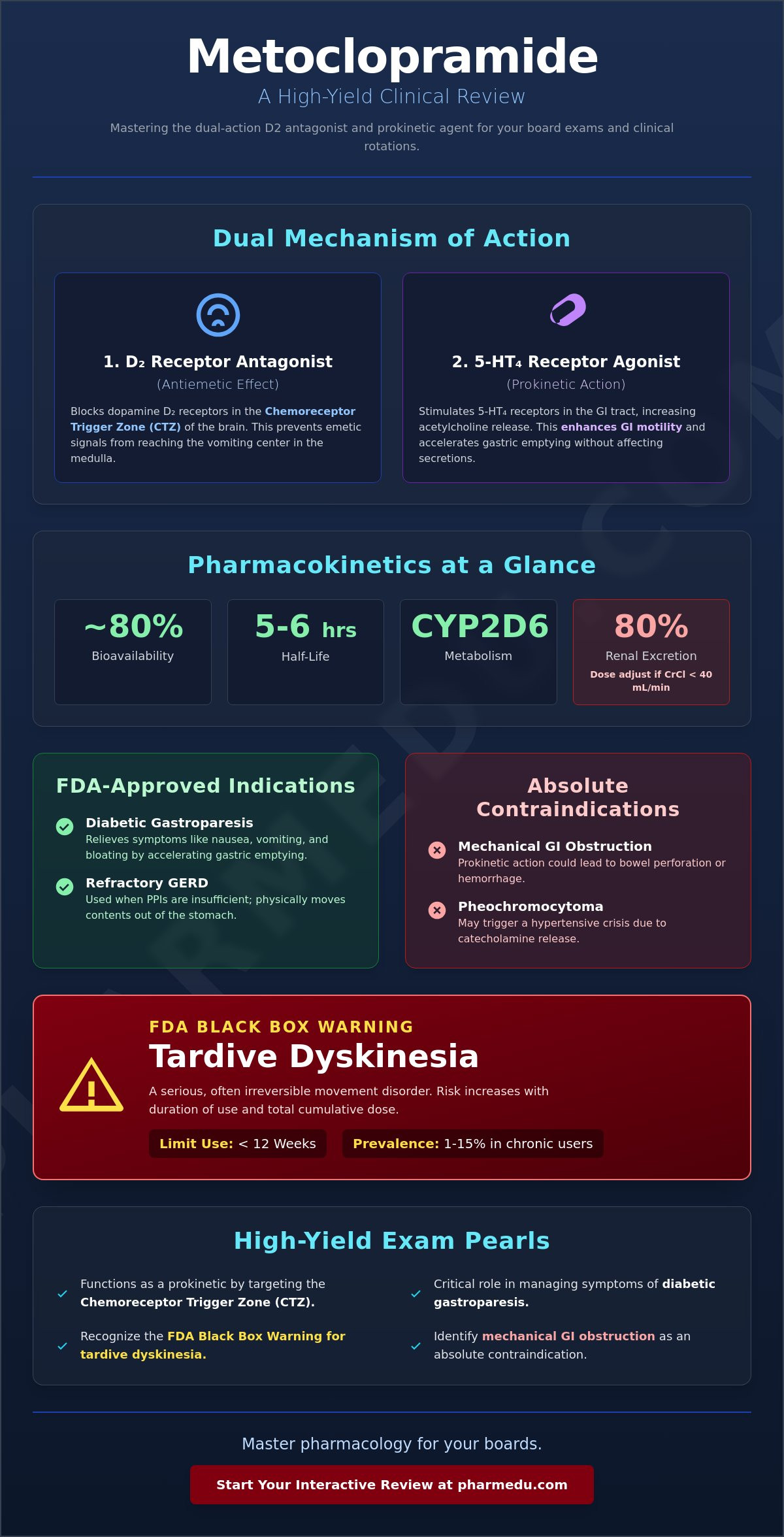
The primary antiemetic mechanism involves blocking D2 receptors in the Chemoreceptor Trigger Zone (CTZ). This area, situated in the area postrema on the floor of the fourth ventricle, lacks a fully functional blood-brain barrier, allowing the drug to intercept circulating emetic toxins. By inhibiting these dopaminergic signals, the medication prevents the activation of the vomiting center in the medulla.
This mechanism differs significantly from 5-HT3 antagonists like ondansetron, which focus on serotonin pathways. Because metoclopramide blocks dopamine, it also interacts with the nigrostriatal pathway. This interaction often leads to neurological side effects like acute dystonia or tardive dyskinesia. Clinical data suggests the risk of tardive dyskinesia is particularly high in patients using the drug for over 12 weeks, with a reported prevalence between 1% and 15% in chronic users.
Prokinetic Action: The 5-HT4 Connection
Beyond its central effects, the drug acts as a 5-HT4 receptor agonist in the gastrointestinal tract. This stimulation increases the release of acetylcholine from myenteric neurons, which enhances the resting tone of the lower esophageal sphincter. It simultaneously increases the amplitude of antral contractions and relaxes the pyloric sphincter, which speeds up the transit of food into the duodenum.
A prokinetic action is defined as the pharmacological enhancement of gastrointestinal motility by increasing the frequency or strength of contractions without disrupting their natural rhythm. This effect is achieved without stimulating gastric, biliary, or pancreatic secretions, making it a focused tool for motility disorders.
The pharmacokinetic profile of the drug is characterized by rapid absorption and a bioavailability of roughly 80%. Peak plasma levels are reached within 60 to 120 minutes after oral administration. It undergoes hepatic metabolism via the CYP2D6 pathway and has an elimination half-life of 5 to 6 hours. Since 80% of the dose is excreted renally, clinicians must adjust dosages for patients with a creatinine clearance below 40 mL/min to avoid toxicity.
Clinical Indications: When is Metoclopramide Prescribed?
Metoclopramide serves as a potent prokinetic and antiemetic agent. It’s primarily used to treat disorders where gastric motility is compromised or when the emetic reflex needs suppression. The FDA has approved this medication for several specific conditions, and clinicians choose between oral, intramuscular, or intravenous routes based on the patient’s immediate needs. Understanding these indications is vital for healthcare students preparing for clinical rotations or board exams.
Managing Diabetic Gastroparesis and GERD
Diabetic gastroparesis presents a significant challenge for patients with long-standing diabetes. It typically manifests as early satiety, persistent nausea, and upper abdominal bloating. These symptoms occur because the stomach fails to empty properly due to autonomic neuropathy. Metoclopramide addresses this by stimulating the muscles of the gastrointestinal tract, which accelerates gastric emptying. This Metoclopramide StatPearls review highlights how the drug increases the resting tone of the lower esophageal sphincter to prevent reflux.
Clinical guidelines emphasize a 12-week treatment limit for this medication. Using it longer increases the risk of irreversible movement disorders like tardive dyskinesia. In cases of Gastroesophageal Reflux Disease (GERD) that don’t respond to standard proton pump inhibitors (PPIs), metoclopramide provides a different mechanism of action. While PPIs reduce acid production, this prokinetic physically moves contents out of the stomach. This dual approach can be effective for patients with refractory symptoms who haven’t found relief through acid suppression alone.
Antiemetic Uses in Postoperative and Chemotherapy Settings
Postoperative nausea and vomiting (PONV) remains a common complication, affecting approximately 30 percent of patients following general anesthesia. Parenteral formulations are often administered near the end of surgery to mitigate these risks. Its dopamine-antagonist properties at the chemoreceptor trigger zone make it a reliable choice for acute emesis management in the recovery room.
In oncology, it plays a specific role in chemotherapy-induced nausea and vomiting (CINV) protocols. While 5-HT3 antagonists are often first-line, metoclopramide is utilized for breakthrough symptoms or in combination therapy for highly emetogenic agents. High-dose protocols, sometimes reaching 1 to 2 mg/kg, were historically common, though healthcare professionals must carefully monitor these patients for extrapyramidal side effects. Maintaining professional knowledge of these dosing protocols ensures patient safety and therapeutic efficacy in high-acuity environments.
Clinicians also utilize metoclopramide for off-label purposes. It’s a frequent choice in emergency settings for migraine-associated nausea. By improving gastric motility, it helps the body absorb oral migraine medications more effectively. Additionally, because it increases prolactin levels, some providers prescribe it off-label to assist with lactation induction, though this requires close monitoring of both the mother and the infant to ensure safety.
Adverse Effects and the Black Box Warning for Tardive Dyskinesia
Metoclopramide’s clinical utility is often overshadowed by its potential for severe neurological complications. The most critical safety concern is the FDA-mandated Black Box Warning regarding tardive dyskinesia (TD). This warning emphasizes that the risk of developing this movement disorder increases with the duration of treatment and total cumulative dose. Patients shouldn’t use this medication for longer than 12 weeks. Clinical data indicates that elderly women are at the highest risk, though it can affect any demographic. Beyond the neurological risks, patients frequently report central nervous system (CNS) effects. Drowsiness and fatigue affect up to 70% of those on high-dose regimens. Restlessness, often described as an internal sense of unease, is another common complaint that can lead to non-compliance. Detailed Metoclopramide Drug Information provides a full list of these common reactions for clinical review.
Tardive Dyskinesia and Extrapyramidal Symptoms (EPS)
TD presents as repetitive, involuntary movements that are often socially isolating for the patient. Healthcare providers must look for specific signs during physical exams:
- Involuntary tongue protrusion: Often described as “fly-catching” movements.
- Facial grimacing: Uncontrolled puckering or lip-smacking.
- Rapid blinking: Increased frequency of eyelid movements.
These symptoms often persist even after the patient stops taking the medication, making them potentially irreversible. It’s vital to distinguish TD from other extrapyramidal symptoms for exam preparation. Acute dystonia involves sudden muscle contractions, often seen in the neck or eyes within the first 48 hours of therapy. Akathisia manifests as a physical inability to sit still. While acute dystonia is more prevalent in patients under age 30, TD is typically a consequence of chronic exposure in older populations.
Neuroleptic Malignant Syndrome (NMS) and Rare Risks
Neuroleptic Malignant Syndrome is a rare but life-threatening reaction to dopamine antagonists like metoclopramide. It’s characterized by hyperpyrexia, with temperatures often exceeding 38°C, lead-pipe muscle rigidity, and autonomic instability. If NMS is suspected, immediate discontinuation and supportive care are mandatory. Because metoclopramide blocks dopamine in the tuberoinfundibular pathway, it also triggers endocrine effects. This causes hyperprolactinemia, which can lead to galactorrhea or menstrual irregularities. Long-term use is also linked to depression and suicidal ideation in patients with no prior psychiatric history. Clinicians should screen for mood changes at every follow-up appointment to ensure patient safety and maintain the high standards of care expected in modern practice.
Contraindications and Critical Drug Interactions
Safety remains the primary concern when prescribing metoclopramide in a clinical setting. You’ve got to identify patients at risk for catastrophic outcomes before the first dose is administered. While the drug is highly effective for gastroparesis, its prokinetic and dopaminergic effects pose severe risks for specific populations. Clinical data shows that improper administration in contraindicated patients can lead to surgical emergencies or life-threatening hypertensive events.
GI Safety and Absolute Contraindications
You must never use metoclopramide when stimulating gastrointestinal motility could be hazardous. This includes patients with mechanical bowel obstruction, perforation, or active GI hemorrhage. When the drug increases peristalsis against a physical blockage, it raises intraluminal pressure significantly. This pressure can lead to a bowel rupture or worsen a bleed. In cases of suspected obstruction, a radiographic evaluation is mandatory before starting prokinetic therapy.
Specific endocrine and neurological conditions also serve as hard stops for this medication:
- Pheochromocytoma: Metoclopramide can trigger a massive release of catecholamines from the tumor. This often results in a hypertensive crisis that’s difficult to manage.
- Seizure Disorders: The drug lowers the seizure threshold. Patients with epilepsy are at a much higher risk for increased seizure frequency or severity.
- Breast Cancer: Metoclopramide increases prolactin levels. Since roughly 30% of breast cancers are prolactin-dependent, avoid use in patients with a history of these malignancies.
Staying current with these safety profiles is essential for clinical excellence. You can master these pharmacological nuances and earn your required credits through our accredited healthcare continuing education courses.
Significant Drug-Drug Interactions
The efficacy and safety of metoclopramide change drastically when combined with other substances. Anticholinergic drugs and narcotic analgesics are direct physiological antagonists. These agents slow down gut motility, which effectively cancels out the prokinetic benefits of the medication. If a patient is on high-dose opioids, the expected gastric emptying won’t occur, leading to therapeutic failure.
Central nervous system interactions require careful monitoring. When you combine this drug with alcohol, sedatives, or hypnotics, the sedative effects become additive. This increases the risk of profound respiratory depression or cognitive impairment. Furthermore, the interaction with Monoamine Oxidase (MAO) inhibitors is particularly dangerous. This combination can precipitate a hypertensive crisis similar to the reaction seen in pheochromocytoma patients.
Finally, avoid combining metoclopramide with other dopamine antagonists, such as phenothiazines or butyrophenones. This “double hit” on dopamine receptors significantly increases the incidence of extrapyramidal symptoms. Patients are much more likely to develop acute dystonia or tardive dyskinesia when these pathways are blocked simultaneously. Always review the patient’s full medication list for antipsychotics before finalizing the treatment plan.
Metoclopramide Study Pearls for NAPLEX and NCLEX Exams
Mastering the clinical application of metoclopramide requires a firm grasp of its dual mechanism as both a prokinetic and an antiemetic. For board exams like the NAPLEX or NCLEX, you’ll likely face questions regarding its dopamine-antagonist properties and the resulting neurological risks. Success on these exams depends on your ability to link the drug’s physiological action to its specific administration protocols and safety warnings.
High-Yield Mnemonics and Exam Tips
To keep the primary indications and effects of Reglan straight, use the mnemonic: Reglan = Rapid Emptying of Gastric stuff, Lowering Antiemetic Needs. This reminds you that the drug accelerates gastric emptying (prokinetic) and reduces nausea (antiemetic). While metoclopramide doesn’t cross the blood-brain barrier as easily as potent antipsychotics, it crosses sufficiently to cause extrapyramidal symptoms (EPS). This distinction is a common trap on exams; students often forget that a GI drug can cause movement disorders normally associated with psychiatric medications.
The FDA Boxed Warning for tardive dyskinesia is the most testable safety fact. This risk increases significantly when the drug is used for longer than 12 weeks. If you’re looking for more ways to organize your drug cards, check out The Ultimate Pharmacology Study Guide for Nursing Students in 2026 for advanced memory strategies.
Renal Dose Adjustments and Safety
Clinical precision is vital when managing patients with impaired kidney function. Metoclopramide is primarily excreted by the kidneys, meaning toxicity risks rise as filtration rates drop. For patients with a Creatinine Clearance (CrCl) less than 40 mL/min, you must reduce the initial dose by 50%. Ignoring this adjustment leads to drug accumulation, significantly increasing the likelihood of EPS or sedation. National board exams frequently use case studies where a patient has a rising serum creatinine, requiring you to identify that the metoclopramide dose must be halved.
Nursing Considerations and Patient Education
Proper timing is the cornerstone of effective therapy. You should instruct patients to take metoclopramide 30 minutes before meals and at bedtime. This ensures the drug is active when the stomach needs to move food into the duodenum. Patient education must focus on the “stop and report” rule. Patients should immediately contact their provider if they experience involuntary movements like lip-smacking, tongue protrusion, or rapid eye blinking. These signs of tardive dyskinesia can become irreversible if the medication isn’t discontinued promptly.
For a deeper dive into how these mechanisms fit into broader drug classes, you can review Pharmacology: The Comprehensive Guide to the Science of Drugs. Understanding the foundational science makes it much easier to predict side effects without rote memorization.
Don’t leave your exam success to chance. A PharmEDU subscription provides the structured, high-yield content you need to master complex drug classes and secure your professional future. Join our community of healthcare students today to access premium study modules and expert-led review sessions.
Advancing Your Clinical Expertise with Metoclopramide
Mastering the clinical application of metoclopramide requires a precise understanding of its dual role as a prokinetic agent and a potent antiemetic. You must prioritize patient safety by strictly monitoring for extrapyramidal symptoms; the FDA maintains a critical black box warning that limits treatment duration to 12 weeks to mitigate the risk of tardive dyskinesia. Success on the 2026 NAPLEX or NCLEX exams depends on your ability to link these pharmacodynamics with contraindications such as mechanical GI obstruction or pheochromocytoma. It’s vital to bridge the gap between textbook theory and bedside practice to ensure optimal patient outcomes.
PharmEDU serves as your digital mentor, providing the structured resources necessary to navigate complex drug profiles with confidence. Our platform delivers high-yield video vignettes covering 100+ pharmacology topics alongside interactive flashcards and NAPLEX-style practice quizzes. Pharmacy and nursing schools nationwide trust our evidence-based curriculum to prepare students for professional licensure. You don’t have to manage your study schedule in isolation when expert-led tools are available at your fingertips. Pass your boards with PharmEDU: Start your 7-day trial today!
Your journey toward becoming a licensed healthcare professional is a marathon, and staying updated with the latest pharmacological standards is the best way to ensure career longevity.
Frequently Asked Questions
What is the primary mechanism of action for metoclopramide?
Metoclopramide acts primarily as a dopamine D2 receptor antagonist in the chemoreceptor trigger zone and the upper gastrointestinal tract. It also functions as a 5-HT4 receptor agonist and a weak 5-HT3 antagonist. This combination of effects increases lower esophageal sphincter pressure and accelerates gastric emptying by stimulating antral and small intestinal contractions.
Why is there a Black Box Warning for metoclopramide?
The FDA issued a Black Box Warning for metoclopramide because it carries a high risk of causing tardive dyskinesia, a potentially irreversible movement disorder. This risk increases significantly with treatment durations exceeding 12 weeks or in patients over 65 years of age. Clinical data shows that elderly women are the most susceptible demographic for developing these permanent extrapyramidal symptoms.
Can metoclopramide be used long-term for GERD?
Long-term use of metoclopramide for GERD isn’t recommended as therapy shouldn’t exceed a 12-week duration. While the drug effectively manages gastric stasis, the cumulative danger of neurological side effects outweighs the benefits of chronic reflux control. Most clinicians limit prescriptions to a 4 to 8 week window to ensure patient safety and prevent motor complications.
What are the signs of tardive dyskinesia that patients should watch for?
Patients should monitor for involuntary, repetitive movements like tongue protrusion, puffing of the cheeks, or rapid eye blinking. These symptoms often begin in the facial muscles but can spread to the limbs and trunk over time. Early detection is vital since these movements may persist in 1% of long-term users even after they stop taking the medication.
How does metoclopramide interact with Parkinson’s disease medications?
Metoclopramide interferes with Parkinson’s medications like levodopa by blocking the dopamine receptors those drugs are designed to stimulate. This antagonism can cause a sudden worsening of motor symptoms or induce a “frozen” state in the patient. Healthcare providers must avoid this combination to prevent severe motor fluctuations and a total loss of therapeutic efficacy.
Is metoclopramide safe to use during pregnancy or breastfeeding?
Metoclopramide is generally considered safe during pregnancy, classified as Category B, but it does cross into breast milk in small amounts. While it’s often used to treat severe hyperemesis gravidarum, it can also increase prolactin levels and affect milk production. Clinicians should monitor infants for any signs of GI distress if the mother is breastfeeding while on therapy.
What is the recommended timing for taking oral metoclopramide?
Patients should take oral doses 30 minutes before meals and at bedtime to achieve peak plasma levels when they’re most needed. This specific timing ensures the prokinetic effect is active during the digestive process to prevent gastric stasis. Following this 4-times-daily schedule helps maintain consistent symptom control and reduces the likelihood of nocturnal acid reflux.
Does metoclopramide require dosage adjustment for renal impairment?
Dosage adjustment is necessary for patients with a creatinine clearance below 40 mL/min because the kidneys excrete 80% of the drug. For these patients, the starting dose is typically reduced by 50% to prevent drug accumulation and central nervous system toxicity. Regular monitoring of renal function ensures that blood levels stay within a safe therapeutic window during the course of treatment.