

Comprehensive Guide to Gout Medication in 2026
Did you know that while global gout prevalence rose by 25% over the last decade, nearly 40% of patients still hesitate to begin necessary treatment due to safety concerns? According to data from The Lancet Rheumatology in 2024, this gap in care often stems from a lack of clear information about how modern gout medication actually works within the body. It’s frustrating to manage the intense pain of a flare-up while feeling uncertain about which pill is the safest or most effective choice for your specific health profile.
We’re here to provide the professional clarity you need to make informed decisions about your health. This guide delivers the latest clinical insights into gout medication options available in 2026, helping you understand their mechanisms and what to expect during treatment. We’ll break down the balance between rapid symptom relief and long-term urate management, examine potential side effects with scientific precision, and provide a structured strategy for maintaining joint health over the coming years. By the end of this article, you’ll have a clear roadmap for discussing these therapeutic options with your healthcare provider.
Key Takeaways
- Understand the critical distinction between medications designed for acute flare-up relief and those used for long-term uric acid management.
- Evaluate the therapeutic profile of each major gout medication through a detailed comparison of clinical efficacy, side effects, and cost considerations.
- Stay informed on the latest scientific breakthroughs, including the emergence of biologics and gene therapy in the treatment of hyperuricemia.
- Discover practical methods for implementing a structured medication routine and tracking symptoms to ensure continuous improvement in joint health.
Understanding Gout and Its Impact
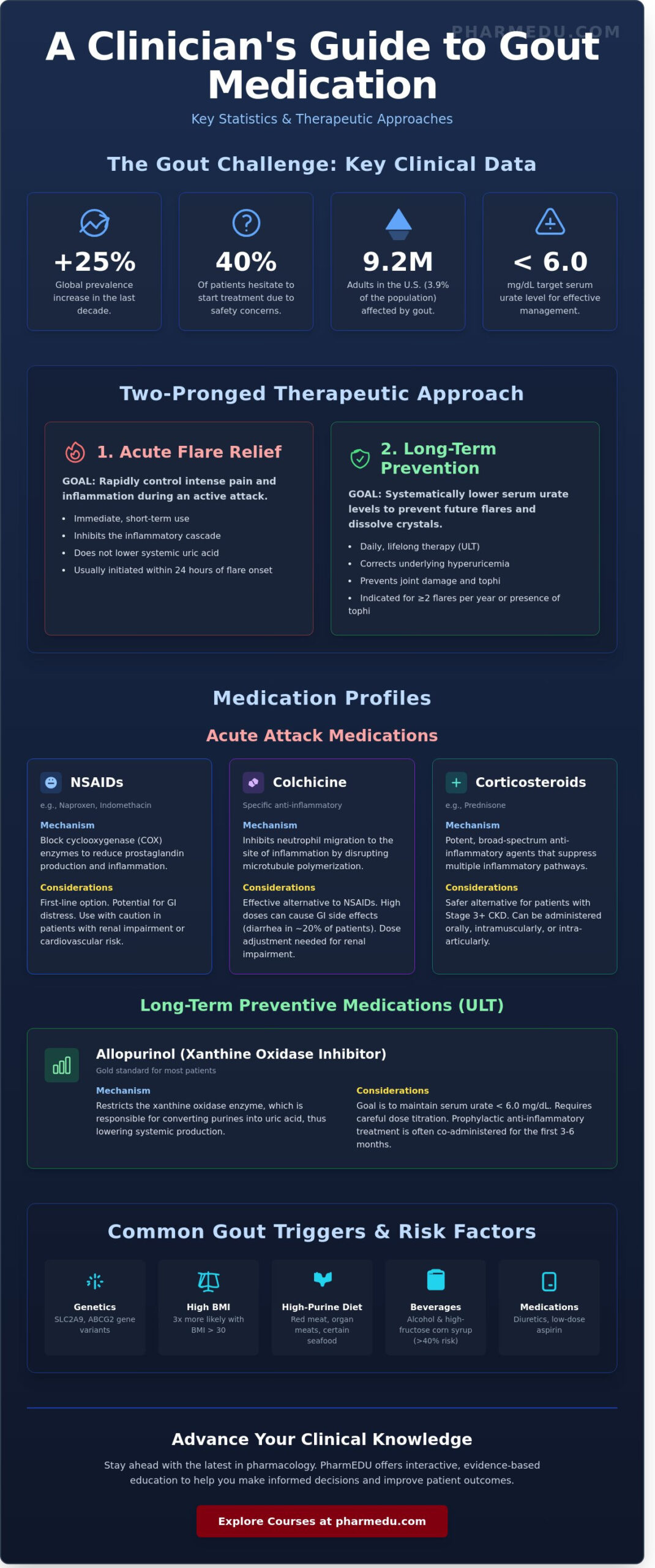
Gout represents one of the most common forms of inflammatory arthritis, affecting approximately 3.9% of the United States adult population, which equates to roughly 9.2 million individuals as of 2023 data. This metabolic condition isn’t just a localized pain issue; it’s a systemic challenge that requires precise clinical management. For healthcare professionals across the country, staying updated on the latest gout medication protocols is essential to reduce the burden on urgent care facilities and improve long-term patient mobility. Without intervention, the chronic deposition of monosodium urate crystals leads to irreversible joint destruction and significant disability.
The condition’s impact on daily life is profound. Patients often report a total inability to walk or even bear the weight of a bedsheet during an acute flare. While the immediate focus is often on pain relief, the underlying physiological disruption involves a complex interplay of genetics and renal function. This Gout overview provides a foundation for understanding how hyperuricemia serves as the primary precursor to these debilitating episodes.
What Causes Gout?
Gout occurs when serum urate levels exceed the physiological saturation point of approximately 6.8 mg/dL. This hyperuricemia typically results from the kidneys’ inability to efficiently excretes uric acid or, less commonly, an overproduction of the substance. Genetics play a heavy role, with variations in the SLC2A9 and ABCG2 genes accounting for a significant portion of risk. Beyond heredity, lifestyle factors and comorbidities drive exacerbations. Patients with a BMI over 30 are three times more likely to develop the condition. Additionally, the prevalence of Type 2 diabetes and hypertension in the patient population often complicates the selection of an appropriate gout medication due to potential drug interactions and renal considerations. Practitioners managing hypertension alongside gout should be aware that ace inhibitors pharmacology is particularly relevant here, as these agents can influence urate handling and interact with the broader treatment plan.
- Dietary Triggers: High-purine foods like red meat and certain seafoods.
- Beverages: Alcohol and high-fructose corn syrup increase flare risks by over 40%.
- Medications: Low-dose aspirin and diuretics can inadvertently raise urate levels.
Symptoms to Watch For
A gout attack usually strikes with sudden, excruciating intensity, often in the middle of the night. The first metatarsophalangeal joint is involved in 50% of initial cases, though the instep, ankles, and knees are also frequent sites. Practitioners should look for the “cardinal signs” of inflammation: extreme erythema, warmth, and swelling that mimics cellulitis. Most attacks reach peak intensity within 12 to 24 hours. If a patient experiences these symptoms more than twice a year, it’s a clear clinical indicator to transition from acute relief to long-term urate-lowering therapy. Prompt consultation is necessary when a fever accompanies joint pain, as this might indicate septic arthritis rather than a standard gout flare.
How Gout Medications Work
The primary objective of gout medication is the systematic reduction of uric acid levels in the bloodstream. Effective management requires Cincinnati practitioners to distinguish between drugs that suppress active inflammation and those that alter the underlying metabolic pathology. Because hyperuricemia drives the disease, the clinical goal is maintaining a target serum urate level below 6 mg/dL to dissolve existing monosodium urate crystals. While acute treatments address immediate pain, long-term success relies on systemic control and preventing crystal deposition in the joints.
Pharmacological intervention typically follows a two-pronged approach. Acute treatments focus on the rapid resolution of pain and swelling during a flare. Conversely, preventive therapies aim for long-term metabolic stability. Practitioners must also account for drug-drug interactions. For example, thiazide diuretics or low-dose aspirin can interfere with renal urate excretion, potentially complicating the therapeutic response. Managing these variables is a core component of modern gout diagnosis and treatment protocols.
Medications for Acute Gout Attacks
During an active flare, the clinical priority is the inhibition of the inflammatory cascade. Nonsteroidal anti-inflammatory drugs (NSAIDs) like naproxen or indomethacin are standard first-line options. They work by blocking cyclooxygenase enzymes, which reduces prostaglandin production. Colchicine offers another pathway by inhibiting microtubule polymerization, effectively preventing neutrophils from migrating to the site of crystal deposition. Practitioners should monitor for gastrointestinal distress, especially since clinical data suggests 20% of patients may experience diarrhea with high-dose colchicine. For those with Stage 3 chronic kidney disease, corticosteroids provide a safer alternative to NSAIDs to avoid renal strain.
Preventive Gout Medications
Long-term management centers on urate-lowering therapy (ULT). Allopurinol remains the gold standard for most patients. As a xanthine oxidase inhibitor, it restricts the enzyme responsible for converting purines into uric acid. Febuxostat serves as a potent alternative for those who don’t tolerate allopurinol or require more aggressive lowering. Success with preventive gout medication depends entirely on patient adherence and consistent dosing. Clinical studies indicate that roughly 40% of patients fail to reach their target urate levels due to inconsistent use or under-dosing. Practitioners can support patient outcomes by recommending accredited clinical education programs that focus on patient counseling and adherence strategies. These drugs aren’t analgesics; they’re essential tools for preventing permanent bone erosion and tophi formation over time.
Comparing Gout Medications: Pros and Cons
Selecting an appropriate gout medication requires a balance between clinical efficacy and the patient’s unique physiological profile. Practitioners in Cincinnati often face complex cases where comorbidities like chronic kidney disease (CKD) or cardiovascular issues dictate the therapeutic path. The 2020 American College of Rheumatology guidelines emphasize a treat-to-target strategy, usually aiming for a serum urate level below 6 mg/dL to prevent joint damage and tophi formation.
| Medication | Effectiveness | Common Side Effects | Cost/Access |
|---|---|---|---|
| Allopurinol | High (Gold Standard) | Skin rash, AHS (rare) | Low (Generic available) |
| Febuxostat | High | Nausea, joint pain, CV risk | Higher than Allopurinol |
| Colchicine | High (Acute/Prophylaxis) | Diarrhea, abdominal cramps | Moderate |
| NSAIDs | Moderate to High (Acute) | GI upset, renal strain | Low (OTC and Generic) |
Choosing the Right Medication
Clinicians must evaluate several variables before prescribing. Renal function remains the most critical factor; for instance, Allopurinol dosages require careful titration in patients with an eGFR below 30 mL/min. Patient history also plays a vital role. Genetic screening for the HLA-B*5801 allele is recommended for patients of Southeast Asian or African American descent to prevent life-threatening hypersensitivity. You should always align the gout medication choice with the patient’s daily routine to ensure long-term adherence. If a patient travels frequently, a once-daily oral tablet is often preferred over more complex regimens.
Understanding Side Effects
Monitoring is essential for therapeutic success. Colchicine causes gastrointestinal distress, including diarrhea or nausea, in approximately 20% of patients if the dosage isn’t managed correctly. Febuxostat carries a boxed warning from the FDA regarding cardiovascular death, so it’s typically reserved for those who can’t tolerate Allopurinol. Encourage your patients to report any skin rashes or unusual fatigue immediately. Regular blood work every 6 months helps track both urate levels and potential liver or kidney strain. Utilizing a patient-centered approach helps minimize risks while maximizing the benefits of the chosen therapy.
Emerging Trends in Gout Treatment
Research in 2023 and early 2024 has shifted the medical focus from simple urate-lowering to complex immunomodulation. While traditional therapies remain the gold standard, the integration of biologics represents a significant leap for refractory cases. These treatments target the IL-1β pathway, which is the primary driver of the intense inflammation seen during acute flares. Data from clinical trials indicates that patients who don’t respond to standard gout medication see a 50% reduction in flare frequency when treated with monoclonal antibodies. This shift toward biological intervention provides a new safety net for patients with chronic, debilitating tophaceous gout.
Innovative Approaches in Drug Development
Precision medicine is no longer a theoretical concept in rheumatology. In 2023, clinicians began more frequent screenings for the HLA-B*58:01 allele, particularly in high-risk populations, to prevent severe cutaneous adverse reactions. This genetic approach ensures that the prescribed gout medication is both safe and effective for the individual’s specific profile. New drug candidates like Tigulixostat have shown promising results in Phase 2 trials, with 47% of participants achieving target serum urate levels of less than 5 mg/dL within 12 weeks. These advancements suggest a future where dosing is tailored to genetic markers and metabolic speed rather than a one-size-fits-all protocol.
The Role of Lifestyle in Gout Management
Medication is most effective when it’s supported by targeted metabolic changes. A 2022 study involving over 44,000 participants confirmed that strict adherence to a DASH-style diet reduces the risk of gout by 35%. Weight management remains the most influential non-pharmacological factor; losing just 5% of total body weight can significantly lower systemic inflammation markers. Practitioners should provide patients with these concrete strategies to reduce uric acid levels naturally:
- Vitamin C Supplementation: Daily intake of 500mg has been shown to lower serum uric acid by an average of 0.5 mg/dL.
- Fructose Limitation: Eliminating high-fructose corn syrup can reduce the metabolic triggers that lead to urate overproduction.
- Hydration Protocols: Maintaining a daily intake of 2 to 3 liters of water helps the kidneys clear urate more efficiently.
- Tart Cherry Extract: While data is still emerging, some studies suggest a 35% lower risk of gout attacks when patients consume cherry concentrate over a 48-hour period.
The landscape of gout care is evolving rapidly as we integrate these technological and lifestyle insights. Practitioners must stay informed about these changes to provide the highest level of care. You can explore these latest clinical updates and earn credits through our accredited medical education courses. By combining new pharmaceutical developments with evidence-based lifestyle interventions, Cincinnati practitioners can offer a more holistic and effective management plan for their patients.
Managing Gout with Medication: Practical Tips
Successful gout management requires a shift from reactive flare treatment to proactive, long-term prevention. Practitioners in Cincinnati often find that the biggest hurdle isn’t the pharmacological choice, but the patient’s consistency in taking their gout medication. Adherence rates for urate-lowering therapy (ULT) remain lower than those for other chronic conditions, with studies showing only 40% of patients remain compliant after the first year. Establishing a structured routine is the primary way to bridge this gap and ensure therapeutic success.
Building an Effective Medication Routine
Clinicians should encourage patients to link their daily dose to an existing habit, such as eating breakfast or morning grooming. Digital tools provide significant support for those who struggle with memory. Apps like Medisafe or MyTherapy offer automated reminders and can track remaining pill counts. For patients who prefer analog methods, a simple weekly pill organizer remains a reliable tool for visual confirmation. To prevent gaps in therapy, suggest that patients utilize 90-day mail-order refills or local pharmacy synchronization programs. These systems reduce the administrative burden on the patient and ensure the medication supply remains constant throughout the year.
Monitoring and Adjusting Treatment
Monitoring progress involves more than just periodic blood draws; it requires active patient participation. Patients should maintain a detailed symptom diary to record the frequency, duration, and intensity of any breakthrough flares. This data helps the practitioner determine if the current dose of gout medication is achieving the “Treat-to-Target” goal of serum urate levels below 6 mg/dL. If a patient experiences more than two flares annually despite therapy, it’s a clear signal that a dosage adjustment or a change in the therapeutic agent is necessary.
Open communication is vital during the first six months of treatment. Patients often stop taking their gout medication because they believe it’s causing flares during the initiation phase. Practitioners must educate them about the mobilization of urate stores and the necessity of prophylactic anti-inflammatory coverage. This education prevents premature discontinuation of treatment. Regular follow-ups every six months once stable allow for necessary dosage tweaks and reinforcement of lifestyle modifications. Effective management isn’t just about the prescription; it’s about the partnership between the provider and the patient to reach specific clinical benchmarks.
- Symptom Tracking: Use a digital log or paper diary to note flare triggers and frequency.
- Lab Coordination: Schedule serum urate tests every 3 to 6 months until targets are met.
- Education: Ensure patients understand that ULT is a lifelong commitment, not a temporary fix for pain.
By focusing on these practical elements, healthcare providers can improve patient outcomes and reduce the long-term burden of gout-related joint damage. Clear instructions and modern tracking tools turn a complex medical regimen into a manageable daily routine.
Mastering Gout Management in 2026 and Beyond
The landscape of gout medication is shifting rapidly as we move through 2026. Recent data from the American College of Rheumatology highlights a critical move toward personalized urate-lowering therapies that prioritize long-term joint health over simple symptom management. It’s vital to recognize that successful treatment now relies on early intervention and precise dosing of xanthine oxidase inhibitors. Healthcare professionals who stay informed about these emerging biological agents can significantly reduce the 20% recurrence rate often seen in poorly managed cases. Maintaining clinical excellence requires access to peer-reviewed, up-to-date information that cuts through the noise of modern medicine.
PharmEDU serves as your digital mentor in this evolving environment. We offer accredited educational content that’s trusted by healthcare professionals to deliver practical, evidence-based results. Our platform streamlines your professional development by connecting scientific rigor with the administrative ease you need in a busy clinical setting. Explore PharmEDU’s Comprehensive Pharmacology Resources to ensure your knowledge remains at the forefront of the industry. You’ve got the talent to change patient lives; we provide the data to make it happen.
Frequently Asked Questions
What is the most effective medication for gout?
Allopurinol is the most effective first-line treatment for long-term management according to the 2020 American College of Rheumatology guidelines. It’s a xanthine oxidase inhibitor that lowers serum urate levels by blocking uric acid production. Clinical data shows that approximately 70% of patients achieve the target urate level of less than 6 mg/dL through proper titration. This makes it the cornerstone of chronic care for practitioners in Cincinnati.
Can lifestyle changes alone manage gout without medication?
Diet and lifestyle changes alone are usually insufficient to manage chronic gout for the majority of patients. Clinical research shows that strict dietary adherence typically reduces serum urate levels by only 1.0 to 1.5 mg/dL. Since most patients require a much larger reduction to reach the 6 mg/dL therapeutic target, initiating gout medication is a medical necessity. It’s vital to supplement healthy habits with evidence-based pharmacological support.
How long does it take for gout medication to work?
Relief from acute pain typically begins within 12 to 24 hours when using anti-inflammatory treatments like Colchicine or NSAIDs. However, long-term urate-lowering therapies require more patience. It often takes 6 to 12 months of daily adherence for the body’s uric acid levels to stabilize enough to prevent new flares. During this initial phase, the risk of mobilization flares increases as old crystal deposits begin to dissolve.
Are there any natural alternatives to prescription gout medications?
Cherry extract and Vitamin C are the most studied natural supplements, but they don’t replace standard pharmaceutical care. A 2012 study in Arthritis and Rheumatology indicated that cherry intake could reduce flare risks by 35%. While 500 mg of Vitamin C daily might slightly lower urate levels, it isn’t potent enough to serve as a standalone gout medication for patients with established tophi or frequent attacks.
What are common side effects of gout medications?
Gastrointestinal issues like diarrhea occur in roughly 20% of patients using Colchicine for acute flares. Allopurinol is generally well-tolerated, but practitioners must watch for Allopurinol Hypersensitivity Syndrome, which affects about 1 in 1,000 patients. This rare but severe reaction is more common in individuals with the HLA-B*5801 genetic marker. It’s essential to monitor renal function regularly, as impaired kidneys can increase the risk of adverse drug reactions.
How can I prevent future gout attacks?
Preventing future attacks requires maintaining a consistent serum urate level below 6 mg/dL through daily medication and monitoring. Statistics show that 80% of patients who achieve this target remain flare-free after the first year of treatment. Practitioners should also encourage patients to keep their BMI below 25. Research indicates that obesity increases the risk of recurrent gout by 2.5 times compared to individuals with a healthy weight.