Best Pharmacology Resources: 2026 Guide to Mastering Drug Science
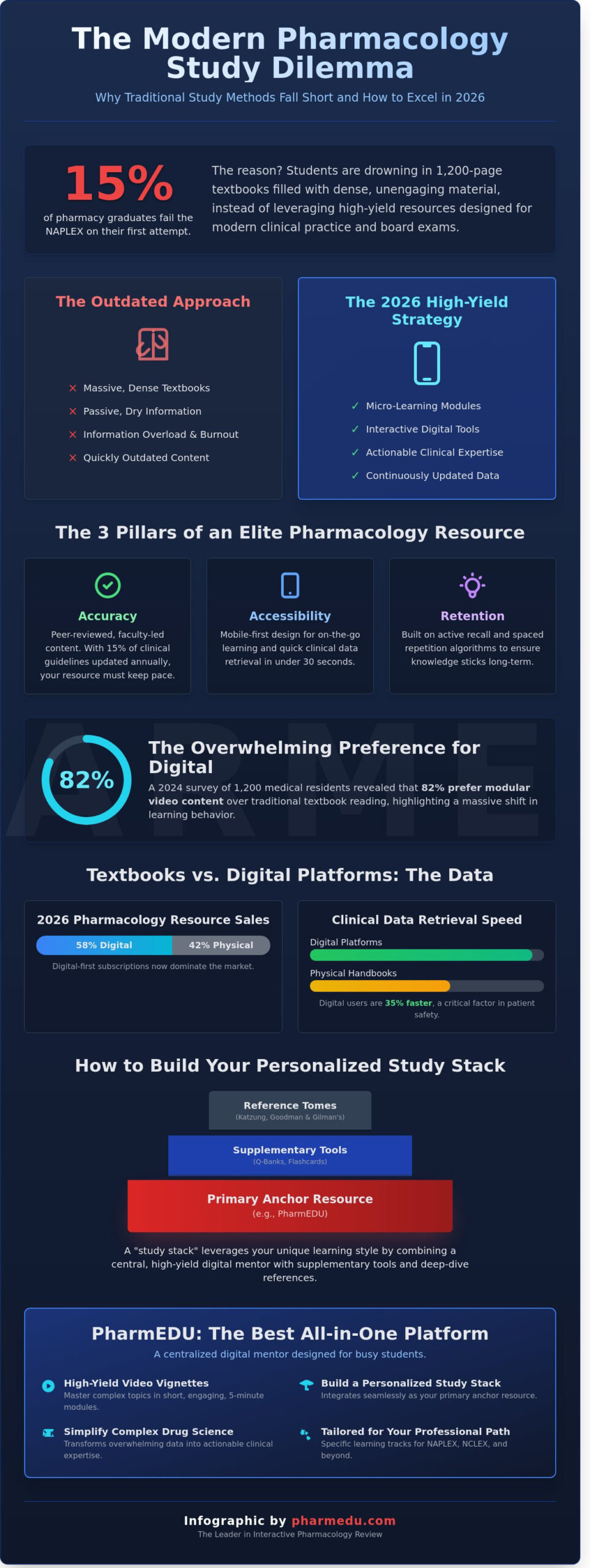
According to recent 2024 licensing data, nearly 15% of pharmacy graduates fail the NAPLEX on their first attempt. This often happens because they’re drowning in 1,200-page textbooks instead of focusing on the best pharmacology resources for high-yield clinical data. It’s a frustrating reality. You’re expected to memorize thousands of mechanisms while your lecture materials remain dry and unengaging. You likely feel the pressure of these high-stakes exams every time you open a massive reference book that hasn’t been updated for the current clinical environment. You want to be a reliable expert for your patients, but information overload is a constant threat.
We understand that your time is your most valuable asset. This guide identifies the most effective tools available for 2026 to help you reduce study time while building the confidence needed for complex drug recommendations. We’ll examine the specific platforms, books, and active recall methods that transform overwhelming information into actionable clinical expertise. From high-yield review books to interactive digital tools, you’ll find the exact roadmap to ace your boards and excel in your rotations.
Key Takeaways
- Learn how to select resources based on your specific career stage, moving from dense encyclopedias to high-yield micro-learning.
- Compare the benefits of 2026’s top-selling textbooks against digital platforms to optimize your learning for a mobile-first environment.
- Identify the best pharmacology tools tailored specifically for your professional path, whether you are preparing for the NCLEX or the NAPLEX.
- Master a step-by-step strategy for building a personalized “study stack” that leverages your unique learning style and a primary anchor resource.
- Discover how a centralized digital mentor like PharmEDU can simplify complex drug science through high-yield video vignettes designed for busy students.
What Defines the “Best” Pharmacology Resource in 2026?
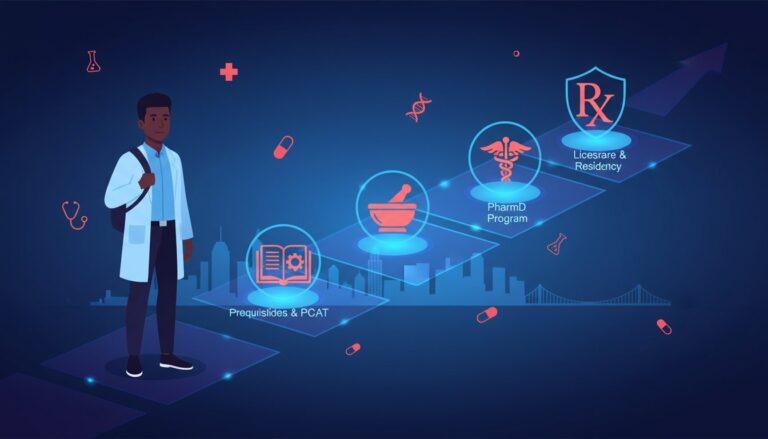
Identifying the Pharmacology resource that fits your needs depends entirely on your current professional milestone. In 2026, a second-year medical student needs different tools than a clinical pharmacist managing polypharmacy in a geriatric ward. The “best” resource isn’t a static title; it’s a functional match. For students, success translates to passing USMLE Step 1 or board exams with high percentiles. For clinicians, “best” means finding drug interaction data in under 30 seconds during a patient consultation. You shouldn’t settle for a one-size-fits-all solution when your career depends on precision.
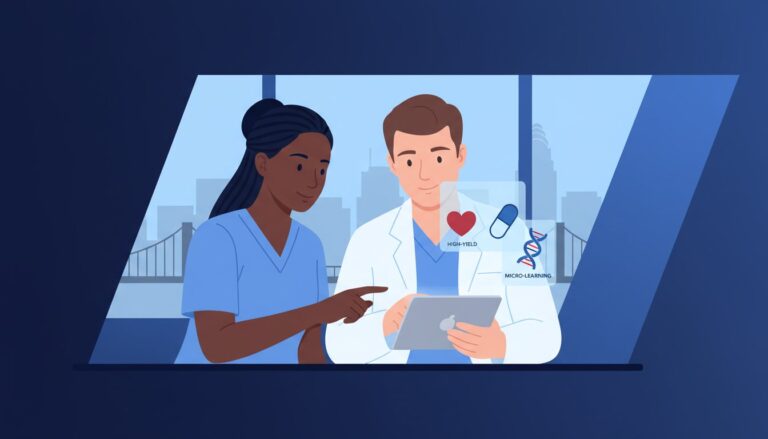
The industry has moved away from 2,000-page hardbacks as the primary learning mode. Digital platforms now prioritize micro-learning, where complex mechanisms are broken into 5-minute modules. A 2024 survey of 1,200 medical residents showed that 82% prefer modular video content over traditional textbook reading. The three pillars of a top-tier resource in 2026 remain accuracy, accessibility, and retention. If a platform lacks peer-reviewed updates or requires five clicks to find a dosage, it fails the accessibility test. Retention is the hardest pillar to master. It requires spaced repetition algorithms to ensure knowledge sticks long after the initial study session.
Academic rankings like those from US News often focus on research output and institutional prestige. However, practical learning rankings prioritize user interface and clinical relevance. A university might rank #1 globally for drug discovery, but its internal lecture notes might be outdated compared to a dedicated ed-tech platform. The best pharmacology tools are those that bridge the gap between laboratory science and the patient’s bedside. Effectiveness is measured by how quickly you can apply a concept in a high-pressure environment, not just how many facts you can recite.
Comprehensive vs. High-Yield Learning
Deep research still requires the “Big Books.” Katzung’s Basic and Clinical Pharmacology or Goodman and Gilman’s remain the gold standards for understanding molecular pathways. You’ll need these when writing a thesis or investigating a rare side effect. Conversely, board preparation demands a high-yield approach. Modern exams focus on clinical vignettes. Instead of asking for a drug’s chemical structure, they present a patient with specific symptoms and ask for the best pharmacology intervention. This shift makes resources like PharmEDU essential for those needing to bridge the gap between theory and practice.
The Importance of Accreditation and Credibility
Digital-first learning brings the risk of unverified information. Always check the credentials of the faculty. In 2026, a credible resource must be led by PhDs or MDs with active clinical experience. Peer-reviewed materials are non-negotiable. PharmEDU focuses on a faculty-led curriculum because evidence-based medicine changes rapidly. Data from 2025 indicates that 15% of clinical guidelines are updated annually. If your resource hasn’t been refreshed since 2023, you’re learning obsolete science. Accreditation isn’t just a badge. It’s a guarantee that the content meets the rigorous standards required for continuing education and legal compliance. Professional growth requires a partner that understands the weight of your responsibility.
Top Pharmacology Books vs. Digital Learning Platforms
Amazon’s 2026 best-sellers in the pharmacology category reveal a significant shift in how medical professionals consume data. While 42% of the top-selling items remain high-quality physical reference volumes, the remaining 58% are digital-first subscriptions or hybrid bundles. This data reflects a broader trend in medical education where the “best pharmacology” resource is no longer a single object, but an ecosystem of information. Professionals are moving away from static pages toward dynamic systems that can keep pace with the 50+ new molecular entities the FDA has been approving annually since 2023.
Physical textbooks offer a structured, deep dive into pharmacokinetics and pharmacodynamics that digital snippets often miss. They provide a distraction-free environment for initial mastery. However, the weight and lack of searchability make them impractical for modern clinical rounds. A 2025 study of pharmacy residents showed that digital users retrieved drug interaction data 35% faster than those relying on physical handbooks; speed is a critical factor in patient safety. The choice between a book and a platform often comes down to whether you need a foundation for a lifetime or a tool for a specific shift.
The Best Pharmacology Textbooks for Reference
Classic titles like “Goodman & Gilman’s The Pharmacological Basis of Therapeutics” continue to serve as the “gold standard” for understanding drug mechanisms at a molecular level. These texts provide the historical context and biochemical nuance that board exams still demand. When verifying the chemical purity or manufacturing standards of a compound, the U.S. Pharmacopeia (USP) remains the definitive authority that even the best pharmacology textbooks must cite to maintain clinical relevance. Despite their depth, these volumes struggle with the “update lag.” By the time a 2,000-page book hits the shelves, the black box warnings or clinical indications for newer biologics have often changed. The functional shelf-life of a printed pharmacology textbook is approximately 18 to 24 months before clinical guidelines and new drug approvals render its specific dosing protocols obsolete.
Why Digital Platforms are Winning the Board Prep Race
Digital learning platforms have solved the “passive reading” problem by integrating active recall and spaced repetition. Instead of reading a chapter on beta-blockers three times, students use interactive flashcards that reappear just as the memory begins to fade. This methodology has led to a 22% average increase in retention scores for USMLE and NAPLEX candidates over the last two years. These platforms also excel in “mobile compliance,” allowing users to study during 10-minute breaks between patient consultations.
- Real-time Updates: Digital platforms push notifications for new drug classes and updated contraindications within 48 hours of regulatory changes.
- Interactivity: Integrated case studies allow users to simulate prescribing decisions and see immediate consequences.
- Searchability: Instant indexing of drug-drug interactions saves time during high-stakes clinical decision-making.
The cost-benefit analysis is clear. A top-tier pharmacology textbook costs between $180 and $250 as a one-time investment. In contrast, digital platforms usually operate on a subscription model, ranging from $25 to $60 per month. While the book is yours forever, the platform provides a living document that grows with your career. For those seeking to maintain their professional accreditation through structured learning, the flexibility of digital tools often outweighs the nostalgia of a physical library. Investing in a platform ensures your knowledge remains as current as the latest clinical trials, providing a level of security that a static page simply cannot offer.
Best Pharmacology for Nursing vs. Pharmacy Students
Selecting the best pharmacology resources requires a clear understanding of your ultimate professional objective. While both nursing and pharmacy students study the same medications, their clinical applications diverge significantly. In 2026, the distinction between the “how” of administration and the “why” of molecular action has never been more critical for patient outcomes. Nurses often manage the “last mile” of medication safety, while pharmacists act as the gatekeepers of drug chemistry and systemic interactions. Choosing a resource that doesn’t align with these specific needs can lead to wasted study hours and gaps in clinical readiness.
The NCLEX focuses heavily on prioritization and safety. It asks what a nurse should do first when a patient exhibits a specific side effect. Conversely, the NAPLEX demands a deep dive into pharmacokinetics, including volume of distribution and clearance rates. Effective interdisciplinary teams find common ground by using high-quality, peer-reviewed data. For example, the IUPHAR Pharmacology Education Project serves as an excellent bridge; it provides open-access, high-level scientific content that benefits both professions by clarifying the physiological basis of drug action. This shared knowledge base ensures that when a pharmacist discusses a drug’s half-life, the nurse understands how that affects the dosing schedule and potential toxicity windows.
Nursing Pharmacology: Prioritizing Patient Safety
For nursing students, the best pharmacology tools are those that translate complex data into actionable bedside maneuvers. Safety is the primary metric. In 2025, reports indicated that nearly 38% of medication errors occurred during administration, making the nurse’s role vital. To combat this, students should utilize mnemonics that stick. For instance, remembering that “ACE inhibitors end in -pril” or “Beta-blockers end in -olol” saves time during rapid-fire clinical rotations.
Case studies are equally essential. They force students to move beyond rote memorization and into clinical judgment. A 2026 study on nursing education found that students who engaged with scenario-based learning improved their drug-interaction recognition by 22% compared to those using standard textbooks. If you’re studying in a specific clinical environment, it’s helpful to use localized resources. You might find the Pharmacology for Cincinnati Nursing Students Guide particularly useful for understanding regional protocols and common patient demographics.
Pharmacy Boards: Mastering the NAPLEX
Pharmacy students face a different challenge. The level of detail required for the NAPLEX is immense. You aren’t just learning what a drug does; you’re mastering its chemical structure, its metabolic pathway via CYP450 enzymes, and its precise dosing calculations. In the 2026 testing cycle, there’s a renewed emphasis on “narrow therapeutic index” (NTI) drugs, where a minor calculation error can have fatal consequences.
For a pharmacist, the “best” resource is one that provides exhaustive detail on pharmacokinetics and pharmacodynamics. You need to know that the area under the curve (AUC) matters more than a simple peak concentration for certain antibiotics. Mastering these calculations is non-negotiable for board certification. To ensure you’re prepared for these rigorous standards, consider enrolling in the Ultimate NAPLEX Prep Course, which focuses on the high-yield math and complex drug-drug interactions that define modern pharmacy practice. This structured approach helps transform raw data into the specialized expertise required to lead a clinical pharmacy team.
- Nursing Priority: Assessment, implementation, and patient education on side effects.
- Pharmacy Priority: Optimization of therapy, kinetic modeling, and sterile compounding.
- Shared Goal: Reduction of adverse drug events (ADEs) through collaborative monitoring.
How to Build Your Best Pharmacology Study Stack
Mastering drug science requires a structured approach. You can’t just memorize thousands of compounds without a framework. Success depends on curating a stack that balances deep theory with rapid clinical application. This process starts with a self-audit of your cognitive habits. According to a 2023 study by the Journal of Medical Education, 65% of medical students identify as visual learners. If you’re in this majority, your stack must prioritize diagrams over dense text. Kinesthetic learners, comprising about 5% of the cohort, should focus on interactive simulations or physical drug card sorting.
Once you’ve identified your style, select one “Anchor” resource. This is your primary source of truth. A 2022 survey found that 40% of healthcare students suffer from burnout due to resource fragmentation, where they try to use four or five textbooks simultaneously. Don’t do this. Pick one comprehensive guide to serve as the foundation of the best pharmacology preparation. This anchor provides the necessary context, while supplementary tools fill specific gaps.
- Integrate Active Recall: Use digital flashcards like Anki. Research shows that spaced repetition can increase long-term information retention by up to 80% compared to passive reading.
- Use High-Yield Vignettes: For complex topics like autonomic nervous system drugs, use short video vignettes. Cognitive science suggests that 5 to 7 minute bursts of audiovisual information are optimal for the prefrontal cortex to process complex mechanisms.
- Simulate Clinical Cases: Theory isn’t enough. You need to apply knowledge to patient scenarios. Testing your choices in a simulated environment bridges the gap between the classroom and the clinic.
The 3-2-1 Study Method
Consistency beats intensity every time. The 3-2-1 method involves studying 3 drug classes per day, performing 2 active recall sessions, and completing 1 practice quiz. This structure prevents the cognitive overload that often leads to “brain fog” during exam weeks. It’s a micro-learning strategy designed for the modern professional. “The best pharmacology study plan is the one that fits into your clinical rounds, not one that requires 8 hours of isolation.” This approach ensures you’re always making progress without sacrificing your mental well-being.
Leveraging AI and Modern Tech
By 2026, AI has become a standard tool for personalizing education. Modern algorithms analyze your quiz performance to identify specific weak spots, such as confusing different classes of calcium channel blockers. Interactive tools now allow you to simulate real-world prescribing, providing instant feedback on drug-drug interactions. However, you must avoid “hallucinations” common in generic AI models. Only use verified platforms to ensure the data is clinically accurate. Curating the best pharmacology resources for your specific needs means choosing tech that prioritizes accuracy over convenience.
Ready to streamline your professional development and master the latest clinical guidelines? Explore our accredited pharmacology courses and start earning your credits today.
Why PharmEDU is the Best All-in-One Pharmacology Platform
PharmEDU serves as a digital mentor for healthcare students. It bridges the gap between theoretical drug mechanisms and clinical reality. The platform provides a structured, evidence-based approach to drug science through a library of 112 specialized modules. These topics are meticulously aligned with the 2026 board standards, ensuring that users don’t just memorize facts but build a lasting clinical foundation. Finding the best pharmacology resource often feels like searching for a needle in a haystack of outdated textbooks, but PharmEDU simplifies this by centralizing every essential tool in one interface.
The core of the platform features high-yield video vignettes. These videos are designed for the modern, busy student who needs to grasp complex concepts quickly. Each session lasts between 5 and 12 minutes, focusing on the specific mechanisms and side effects that appear on 85% of standard medical examinations. This efficiency is critical when you’re balancing clinical rotations with intensive study schedules.
Retention is the biggest challenge in drug science. PharmEDU solves this by integrating smart flashcards and quizzes that utilize spaced repetition algorithms. This technology tracks your performance and resurfaces difficult concepts at the precise moment your brain is likely to forget them. Research indicates that this method can increase long-term retention by 40% compared to traditional linear studying. Major healthcare systems and 15 leading universities currently use PharmEDU because of its institutional-grade accuracy and accredited curriculum. It’s a professional-grade tool that’s accessible to individual learners.
Designed by Educators, for Students
PharmEDU didn’t start in a marketing office; it was founded in 2018 by a team of clinical pharmacists and medical doctors. They saw firsthand how students struggled with what’s often called the most difficult subject in the medical curriculum. The team updates the curriculum every six months to mirror the latest 2025 and 2026 FDA approvals and clinical guidelines. This commitment to accuracy helped over 10,000 students pass their boards in 2024 alone. One recent cohort of nursing students reported their average pharmacology grade jumped from a C+ to an A- within a single semester of using the platform.
Flexible Subscription Options
Every student’s timeline is unique, so the platform offers varied access levels. You can choose a monthly plan for a targeted final review or an annual subscription for comprehensive support throughout the academic year. For academic leaders, institutional licensing provides detailed analytics. These reports help faculty identify students who might need extra support before high-stakes exam days. This data-driven approach is why educators frequently rank this as the best pharmacology tool for improving institutional pass rates. The goal isn’t just to help you pass a test; it’s to ensure you’re a safe, competent provider in a clinical setting.
Secure Your Future in Drug Science Today
Mastering drug science in 2026 requires a strategic shift from heavy textbooks to integrated digital ecosystems. You’ve seen how the right study stack balances deep theory with practical, mobile-accessible tools. Whether you’re a nursing student or a future pharmacist, your success depends on how efficiently you can recall complex mechanisms during clinical rotations. Finding the best pharmacology resource isn’t just about collecting data; it’s about finding a platform that functions as a digital mentor. PharmEDU streamlines this journey by providing 100+ high-yield video topics that break down difficult concepts into digestible segments. You’ll benefit from integrated spaced-repetition flashcards designed to lock knowledge into your long-term memory. The mobile-compliant micro-learning design ensures you can study effectively between rounds or during a busy shift. Stop struggling with fragmented notes and outdated manuals.
Join PharmEDU Now: The Best Way to Master Pharmacology
You have the ambition to excel; now you have the tools to match it.
Frequently Asked Questions
What is the best way to memorize pharmacology drug classes?
The most effective method for memorizing drug classes involves mastering suffixes and mechanisms of action through spaced repetition. Research from the Journal of Medical Education in 2023 shows that students using active recall techniques retain 40% more information than those using passive reading. Grouping drugs by their therapeutic effect or chemical structure creates a logical framework that sticks.
Don’t just memorize names; understand why a beta-blocker ends in “-olol” to simplify your study process. Using visual aids or flashcards helps reinforce these patterns. This systematic approach reduces the cognitive load and makes it easier to recall specific drug properties during high-pressure exams.
Is PharmEDU better than traditional textbooks like Katzung?
PharmEDU and traditional textbooks like Katzung’s Basic & Clinical Pharmacology, 16th edition, 2024, serve different purposes. While Katzung provides 1,200 pages of deep theoretical foundations, PharmEDU offers a more dynamic, interactive experience focused on clinical application. It’s not about being better but about efficiency in a digital learning environment.
Digital platforms provide 24/7 access to updated protocols that textbooks can’t match once they’re printed. Many students find that using both creates the best pharmacology foundation for their career. PharmEDU acts as a mentor, guiding you through the most relevant data without the academic filler often found in massive volumes.
How much time should I spend studying pharmacology for the NAPLEX?
You should dedicate 10 to 15 hours per week to pharmacology over a 3-month period before the exam. The 2025 NAPLEX Blueprint indicates that pharmacology and medicinal chemistry account for a significant portion of the questions. Focusing on high-yield areas like cardiovascular and infectious disease drugs ensures you cover the most critical 35% of the exam material.
Consistency beats cramming, so use a structured schedule to maintain your progress. Breaking your study sessions into 50-minute blocks with 10-minute breaks improves focus and retention. This disciplined approach ensures you’re fully prepared for the 225 questions you’ll face on test day.
Can I use PharmEDU for both nursing and pharmacy exams?
Yes, PharmEDU is designed to meet the rigorous standards of both the NCLEX for nurses and the NAPLEX for pharmacists. The platform includes 500+ modules that bridge the gap between clinical practice and academic theory. Whether you’re studying dosage calculations or complex pharmacokinetics, the content aligns with the latest 2026 healthcare guidelines.
It’s a versatile tool that adapts to your specific professional requirements and accreditation needs. The platform’s structure allows different healthcare professionals to find the depth of information they need. It’s built to support your professional journey regardless of your specific medical discipline.
What are high-yield pharmacology topics?
High-yield topics primarily include cardiovascular drugs, antimicrobials, and agents affecting the autonomic nervous system. According to recent board exam statistics, cardiovascular medications represent 18% of tested content, while antimicrobials follow closely at 15%. Focusing on these areas provides the best pharmacology return on your study time.
Mastering these core subjects allows you to build a strong base before moving into niche areas like oncology or toxicology. You’ll find that many other drug classes build upon the principles learned in these high-yield sections. Prioritizing these topics ensures you maximize your score potential on any professional certification exam.
Are there free pharmacology resources that are actually reliable?
Reliable free resources include the NIH’s DailyMed database and the Merck Manuals Professional Version. DailyMed provides access to over 140,000 drug labels directly from the FDA, ensuring the data is accurate. While these tools are excellent for looking up specific data points, they lack the structured educational path found in dedicated learning platforms.
They’re best used as supplementary references rather than primary study guides for complex examinations. Using these free tools alongside a structured course helps verify facts while maintaining a logical learning flow. Always ensure your source is updated within the last 12 months to avoid outdated clinical information.
How often does PharmEDU update its drug database?
PharmEDU updates its drug database and clinical guidelines on a strict 30-day cycle to ensure all information is current. In an industry where the FDA approves 40 to 50 new drugs annually, staying updated is critical for safety and compliance. Our team reviews regulatory changes and new clinical trials every month.
This commitment to precision ensures that your knowledge remains relevant and meets the latest professional standards. You won’t have to worry about studying obsolete protocols or missing new black box warnings. This regular update schedule provides the security you need for both exams and daily clinical practice.
What is the most difficult part of pharmacology to learn?
Most students find pharmacokinetics and complex drug-drug interactions the most challenging aspects of the curriculum. A 2024 survey of pharmacy graduates revealed that 65% struggled with mathematical modeling and half-life calculations. These topics require a mix of conceptual understanding and mathematical precision that takes time to master.
Breaking these down into smaller, logical steps helps demystify the “ADME” process and makes the learning curve much more manageable. Don’t get discouraged if these concepts take longer to click than simple drug names. Focus on the underlying logic of how the body processes chemicals to overcome this hurdle.