

Anticholinergic Drugs: A High-Yield Guide to Mechanism, Uses, and Side Effects
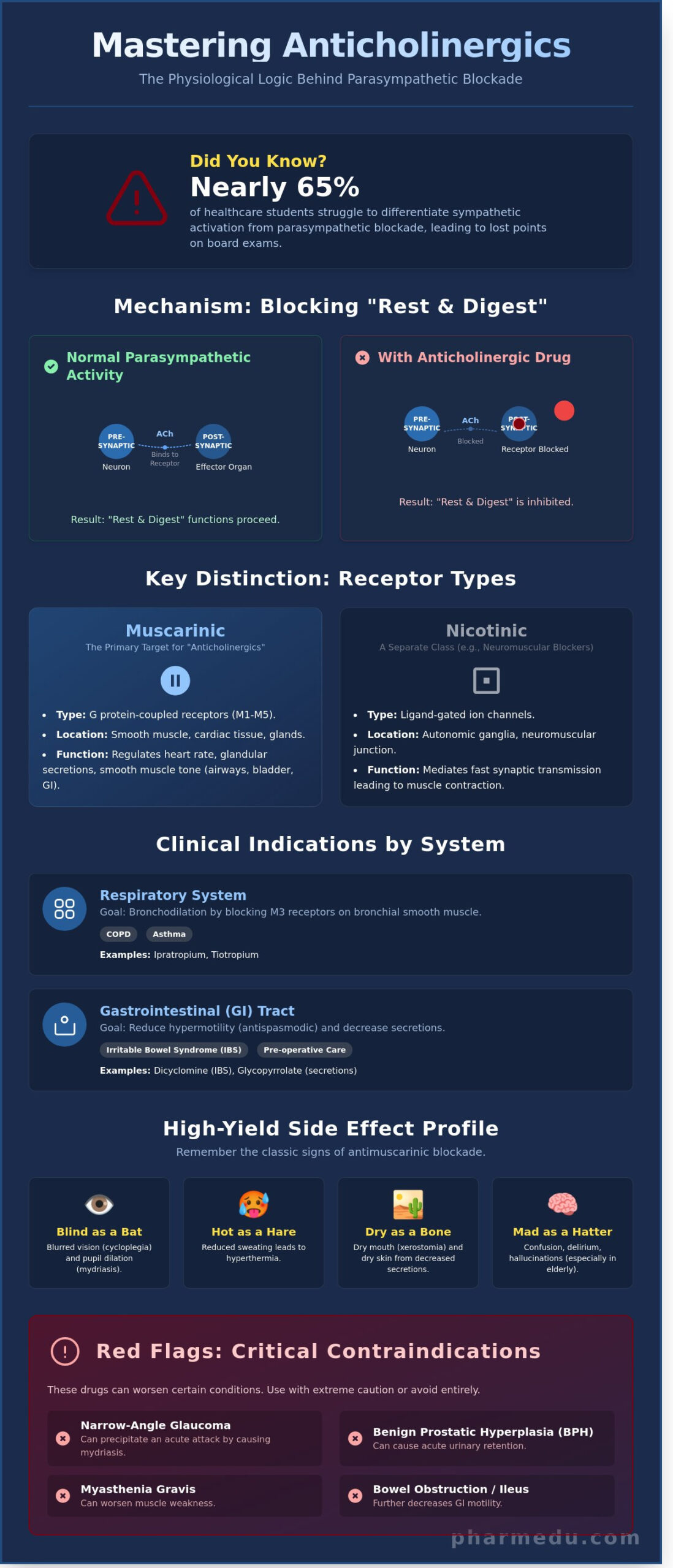
Why do nearly 65% of healthcare students lose points on pharmacology boards by confusing sympathetic activation with parasympathetic blockade? It’s frustrating to stare at a list of fifty medications and feel like you’re just memorizing alphabet soup. You’ve probably spent hours trying to keep the “SLUDGE” symptoms separate from their opposites, only to have the details blur during a timed exam. We understand that the pressure to perform in clinical rotations requires more than just a passing grade; it requires a deep, intuitive grasp of drug behavior.
This guide changes your approach by teaching you the physiological logic behind every anticholinergic drug, ensuring you don’t have to rely on blind memorization. You’ll gain the clarity needed to excel in your coursework and make safe clinical decisions for your future patients. We’ll explore the core mechanism of action, use high-yield mnemonics to lock in side effects, and identify the red-flag contraindications essential for your professional practice. By the end of this article, the complex web of muscarinic receptors will become a structured map for your clinical success.
Key Takeaways
- Understand the physiological logic of how blocking acetylcholine at central and peripheral synapses disrupts parasympathetic homeostasis.
- Learn to categorize clinical indications by organ system and distinguish when a side effect serves as a primary therapeutic objective.
- Master high-yield mnemonics by connecting classic symptoms like dry mouth and blurred vision to their underlying biological causes.
- Identify critical contraindications and understand why monitoring the total anticholinergic burden is a vital skill for board exams and patient safety.
- Develop a structured study strategy using micro-learning techniques to retain complex pharmacological data for long-term professional success.
What is an Anticholinergic? Mechanism and Receptor Physiology
An anticholinergic is a substance that blocks the action of the neurotransmitter acetylcholine (ACh) at synapses in the central and peripheral nervous systems. These agents serve as critical tools in clinical medicine, specifically by inhibiting the parasympathetic nervous system (PNS). Under normal conditions, the PNS maintains homeostasis through the “Rest and Digest” response. This physiological state involves slowing the heart rate, stimulating digestive enzymes, and maintaining tone in smooth muscles. When an anticholinergic drug is introduced, it shifts this balance by preventing ACh from binding to its target receptors, effectively suppressing parasympathetic activity.
The inhibition typically occurs through competitive or non-competitive mechanisms. Most therapeutic drugs are competitive antagonists; they bind to the receptor site without activating it, which locks the site against ACh. If the drug concentration is high enough, the physiological effects of the PNS are silenced. This leads to clinical outcomes like decreased glandular secretions and bronchodilation. Non-competitive inhibition is less common in routine practice, involving the drug binding to an allosteric site to alter the receptor’s configuration. This change prevents the neurotransmitter from initiating a response regardless of how much ACh is present in the synapse.
The Role of Acetylcholine (ACh)
ACh is the foundational neurotransmitter of the parasympathetic system. It’s synthesized within the nerve terminal from choline and acetyl-CoA. Once the nerve fires, ACh crosses the synaptic cleft to trigger smooth muscle contraction or glandular activity. Its signal is terminated rapidly by the enzyme acetylcholinesterase, which cleaves the molecule into its base components. This cycle is a fundamental concept in pharmacology, as many drugs modify these specific metabolic stages to treat conditions ranging from glaucoma to myasthenia gravis.
Muscarinic vs. Nicotinic Receptors
Cholinergic receptors are categorized into two distinct types: muscarinic and nicotinic. Muscarinic receptors (M1 through M5) are G protein-coupled and reside in diverse tissues throughout the body. For instance, M2 receptors primarily influence the heart’s rate, while M3 receptors regulate airway constriction and bladder contraction. In most clinical environments, the term anticholinergic refers specifically to antimuscarinics.
Conversely, nicotinic receptors are ligand-gated ion channels found at the neuromuscular junction and in autonomic ganglia. Nicotinic antagonists, such as the neuromuscular blockers used in surgery, are usually treated as a separate class. Distinguishing between these two is vital for board exams and safe prescribing. It explains why a systemic antimuscarinic drug doesn’t cause muscle paralysis, even though both receptor types respond to the same neurotransmitter.
Clinical Indications: Why We Prescribe Anticholinergic Agents
Understanding the clinical utility of an anticholinergic agent requires a shift in perspective. What one patient considers an annoying side effect, another finds to be a life-changing therapeutic outcome. For example, the reduction of salivary flow is a nuisance for a hypertensive patient, yet it’s a vital goal for a patient in terminal care suffering from respiratory congestion. Clinicians select these drugs by matching their receptor profiles to the specific needs of the organ system involved.
Respiratory and Gastrointestinal Applications
Ipratropium and Tiotropium serve as the primary bronchodilators for managing Chronic Obstructive Pulmonary Disease (COPD) and acute asthma exacerbations. These agents work by blocking M3 muscarinic receptors on bronchial smooth muscle. This action prevents acetylcholine from causing constriction, which helps keep the airways open. Tiotropium is particularly valued for its long-acting profile, often providing 24 hours of relief with a single dose.
In the gastrointestinal tract, the focus shifts to reducing hypermotility and secretions. Dicyclomine is a common prescription for Irritable Bowel Syndrome (IBS). It functions as a potent antispasmodic that relaxes the smooth muscle of the gut to reduce cramping. Glycopyrrolate is another essential tool, often used in preoperative settings to dry up oral and pharyngeal secretions. This prevents aspiration during intubation, making it a staple in anesthesia protocols across 90 percent of modern surgical units.
Neurological and Genitourinary Uses
Neurological applications often target the balance between dopamine and acetylcholine in the brain. Benztropine is frequently used to treat Parkinson’s disease, specifically to manage tremors and rigidity. It’s also the first-line treatment for drug-induced extrapyramidal symptoms caused by older antipsychotic medications. By dampening cholinergic activity, Benztropine helps restore motor control in patients struggling with these movement disorders.
Genitourinary health relies heavily on the ability of an anticholinergic to relax the bladder. Oxybutynin and Tolterodine are the gold standards for treating overactive bladder (OAB). They inhibit M3 receptors in the detrusor muscle, which reduces the frequency of involuntary contractions and increases the bladder’s functional capacity. For motion sickness, Scopolamine remains the most effective option. Its unique transdermal delivery system provides a steady release of medication for 72 hours, bypassing the need for frequent oral dosing during travel.
Modern drug design now focuses on high selectivity to avoid the “anticholinergic burden” that leads to cognitive decline in elderly patients. Newer agents aim to target M3 receptors specifically, sparing the M1 receptors in the brain and M2 receptors in the heart. Staying current with these pharmacological shifts is vital for maintaining patient safety and professional excellence. You can explore these therapeutic nuances further and earn essential credit points through PharmEdu’s accredited training modules. Selecting the right agent isn’t just about efficacy; it’s about minimizing systemic impact through precise prescribing.
The High-Yield Side Effect Profile: Mastering the Mnemonics
Clinical mastery of any anticholinergic agent requires a deep understanding of its predictable, multisystem side effects. These symptoms arise directly from the blockade of muscarinic receptors, which normally facilitate “rest and digest” functions. Practitioners often use the simple framework “Can’t Spit, Can’t See, Can’t Pee, Can’t Poop” to recall the primary peripheral effects. Each of these represents a specific physiological failure:
- Can’t Spit: Blockade of M3 receptors on salivary glands leads to xerostomia, which can affect up to 80% of patients on high-dose therapy.
- Can’t See: Inhibition of the pupillary sphincter and ciliary muscle causes mydriasis and cycloplegia, resulting in blurred near vision.
- Can’t Pee: Relaxation of the detrusor muscle and contraction of the urethral sphincter lead to urinary retention, a critical concern for patients with prostatic hyperplasia.
- Can’t Poop: Reduced intestinal peristalsis significantly increases transit time, often resulting in chronic constipation.
In acute overdose or high-dose scenarios, these symptoms escalate into a dangerous clinical state. The anticholinergic toxidrome is a clinical state characterized by mydriasis, tachycardia, and altered mental status. Recognizing this constellation of symptoms is vital for emergency intervention, as hyperthermia and seizures can follow if left untreated.
The “Mad as a Hatter” Mnemonic
The classic medical rhyme helps clinicians identify the systemic manifestations of toxicity. “Red as a beet” describes the cutaneous vasodilation that occurs as the body attempts to dissipate heat. This is closely linked to “Hot as a hare,” which refers to hyperthermia. Because the drug blocks sweat glands, the body loses its primary cooling mechanism. “Blind as a bat” refers to the extreme mydriasis and loss of accommodation. “Dry as a bone” signifies the complete cessation of glandular secretions. Finally, “Mad as a hatter” encompasses the CNS effects, ranging from mild confusion to vivid hallucinations and agitated delirium. These symptoms often appear when the drug’s concentration exceeds the therapeutic window by as little as 20% in sensitive populations.
Peripheral vs. Central Side Effects
Distinguishing between peripheral and central effects is essential for risk stratification. Peripheral effects like tachycardia occur when M2 receptors in the sinoatrial node are blocked, removing the vagal “brake” on the heart. These are common with almost all muscarinic antagonists. Central effects, including sedation, cognitive impairment, and delirium, depend heavily on a drug’s lipophilicity.
Drugs with a tertiary ammonium structure, such as atropine or scopolamine, are highly lipophilic and readily cross the blood-brain barrier. In contrast, quaternary ammonium compounds like ipratropium don’t cross the barrier effectively, limiting their impact on the CNS. For patients over age 65, central side effects are particularly hazardous. Studies indicate that a high “anticholinergic burden” is linked to a 50% increased risk of developing dementia over a 10 year period, making careful drug selection a priority for long-term care.
Contraindications and Safety: Who Should Avoid Anticholinergics?
Clinicians must evaluate the cumulative anticholinergic burden before initiating therapy. This metric quantifies the total exposure to medications with muscarinic antagonist properties. Pharmacists frequently use the Anticholinergic Cognitive Burden (ACB) scale, where a score of 3 or higher correlates with a 50% increase in the risk of cognitive impairment. Using multiple agents simultaneously, such as combining a tricyclic antidepressant with over-the-counter diphenhydramine, creates a dangerous additive effect. These risks differ from the acute respiratory depression seen in other toxicological emergencies, which are detailed in our barbiturate overdose guide.
The Beers Criteria and Geriatric Risks
The American Geriatrics Society (AGS) maintains the Beers Criteria to identify medications that are potentially inappropriate for patients aged 65 and older. Chronic anticholinergic use in this demographic is linked to a 46% higher risk of developing dementia over a cumulative three-year period. Beyond cognitive decline, these drugs increase the incidence of falls by approximately 25%. Central nervous system suppression leads to ataxia and dizziness, making hip fractures a primary concern for geriatric safety. It’s vital that practitioners screen for these agents during every medication therapy management session.
Glaucoma and Urinary Retention
Absolute contraindications frequently tested on the NAPLEX and NCLEX include narrow-angle glaucoma and symptomatic prostatic hypertrophy. In narrow-angle glaucoma, drug-induced mydriasis causes the iris to block the drainage angle of the eye. This can trigger an acute angle-closure crisis, which is a medical emergency. For patients with Benign Prostatic Hyperplasia (BPH), these agents relax the detrusor muscle, often leading to acute urinary retention. You’ll also find that tachycardia is a major contraindication; patients with unstable cardiovascular disease shouldn’t take these drugs because M2 receptor blockade can dangerously accelerate heart rate.
- Narrow-angle glaucoma: Risk of acute intraocular pressure spikes.
- BPH: High probability of total bladder outlet obstruction.
- Myasthenia Gravis: Antagonism of ACh receptors worsens muscle weakness.
- Tachyarrhythmias: Potential to precipitate myocardial ischemia.
Understanding these safety parameters ensures you provide high-quality care while meeting regulatory standards. Stay updated on the latest clinical guidelines and earn your required credits through our accredited pharmacology courses.
Mastering Anticholinergics for Your Exams with PharmEDU
Success in pharmacology requires a shift from passive observation to active engagement. Memorizing a list of drugs isn’t enough to pass high-stakes exams. You need a strategy that bridges the gap between physiological theory and clinical application. PharmEDU’s micro-learning platform is built on this principle. We break down the complex anticholinergic class into modular units that fit into a busy schedule. This approach prevents cognitive overload and ensures you master one mechanism before moving to the next.
Active recall is the cornerstone of our methodology. Studies in educational psychology show that students using active testing retain 50% more information than those who only reread their notes. We’ve integrated this into our curriculum to make your study sessions more efficient. By choosing PharmEDU as your partner for NAPLEX prep, you’re investing in a system that prioritizes long-term retention over short-term cramming. Our materials are fully updated to meet 2026 board standards, ensuring you’re studying the most relevant clinical guidelines.
High-Yield Video Vignettes
Our video library focuses on visualization to simplify the “Rest and Digest” inhibition. These vignettes, typically under 10 minutes, use clear animations to show how an anticholinergic agent blocks muscarinic receptors. We don’t just list facts; we present clinical case studies that simulate actual board exam questions. You’ll see how a patient with overactive bladder or COPD presents in a clinical setting. This context helps you recognize drug effects and contraindications instantly during your exam. Every video is reviewed for 2026 accuracy to reflect current pharmacy practice.
Interactive Flashcards and Quizzes
Retention relies on timing. Our platform uses spaced-repetition flashcards to help you match drug names to their specific classes and indications. You won’t waste time on what you already know. The algorithm prioritizes the cards you struggle with most. Our practice quizzes focus heavily on the most commonly tested side effects, such as xerostomia, blurred vision, and tachycardia. These are the “red flag” items that frequently appear on the NAPLEX and other professional certifications. You can start your free trial today to access our complete Autonomic Nervous System module and begin your path to mastery.
- Micro-learning modules designed for 15-minute study blocks.
- Clinical scenarios that mirror 2026 exam formats.
- Spaced-repetition tools for permanent knowledge.
- Direct alignment with NAPLEX competency statements.
Advancing Your Clinical Mastery of Autonomic Pharmacology
Understanding the anticholinergic drug class requires a precise grasp of muscarinic receptor physiology and the specific clinical indications where these agents excel. You’ve explored how competitive antagonism at M1 through M5 receptors dictates both therapeutic outcomes and the classic side effect profile. Mastering these mechanisms ensures you can identify potential contraindications before they lead to adverse patient events in a clinical setting. Recognizing the specific physiological responses at each receptor site is vital for safe prescribing practices.
PharmEDU bridges the gap between theoretical knowledge and board exam success through a curriculum designed by active healthcare educators. Our platform features over 100 high-yield pharmacology topics structured for maximum retention. This mobile-compliant micro-learning system allows you to study efficiently during clinical rotations or busy work shifts. It’s built for practitioners who need reliable, peer-reviewed information that fits into a demanding schedule. You’ll find that our structured approach simplifies complex pathways without sacrificing scientific depth.
Master pharmacology today – Start your PharmEDU subscription
Your commitment to professional excellence starts with the right tools. We’re here to support your journey toward becoming a more confident, knowledgeable practitioner.
Frequently Asked Questions
What are the 4 main side effects of anticholinergics?
The four primary side effects are dry mouth, blurred vision, constipation, and urinary retention. These symptoms occur because anticholinergic agents block acetylcholine from binding to its receptors in the parasympathetic nervous system. Clinical data indicates that xerostomia affects up to 30% of patients using these medications. Healthcare providers often use the mnemonic “can’t see, can’t spit, can’t pee, can’t poop” to help students memorize this profile during their clinical rotations.
Is Benadryl (diphenhydramine) considered an anticholinergic?
Yes, Benadryl is a first-generation H1 antagonist that exhibits potent anticholinergic activity. It crosses the blood-brain barrier easily, which leads to significant sedation and cognitive impairment. Because of its non-selective nature, diphenhydramine affects both peripheral and central muscarinic receptors. This makes it a frequent cause of accidental toxicity in patients who don’t realize its broad pharmacological profile. It’s often the primary culprit in drug-induced delirium cases in emergency departments.
Why are anticholinergics contraindicated in patients with glaucoma?
These drugs are contraindicated in narrow-angle glaucoma because they cause mydriasis, which can trigger an acute angle-closure crisis. When the pupil dilates, the iris tissue folds into the drainage angle and blocks the outflow of aqueous humor. This leads to a rapid increase in intraocular pressure. Medical guidelines from the American Academy of Ophthalmology state that this pressure spike can cause permanent vision loss if it’s not treated within hours of onset.
How do anticholinergics affect the heart rate?
Anticholinergics typically increase the heart rate by inhibiting vagal tone at the sinoatrial (SA) node. By blocking M2 muscarinic receptors, these drugs prevent acetylcholine from slowing the heart’s natural pacemaker. Atropine, for instance, is the standard treatment for symptomatic bradycardia and can raise the heart rate to over 100 beats per minute in emergency settings. Practitioners must monitor patients for tachycardia when administering high doses to avoid cardiovascular strain.
What is the Beers Criteria and why does it matter for these drugs?
The Beers Criteria is a list of potentially inappropriate medications for older adults published by the American Geriatrics Society. Updated in 2023, it warns against using these drugs in patients over 65 due to the high risk of falls, delirium, and fractures. It’s a vital tool for pharmacists looking to reduce polypharmacy. Following these guidelines helps prevent the 15% of hospital admissions in the elderly caused by preventable adverse drug reactions.
Can anticholinergics cause memory loss or dementia?
Long-term use of these medications is linked to an increased risk of developing dementia and chronic cognitive decline. A 2015 study published in JAMA Internal Medicine found that individuals taking high-potency versions for three years or more had a 54% higher risk of dementia. The depletion of acetylcholine in the brain mimics the pathology seen in Alzheimer’s disease. This makes careful prescribing essential for maintaining long-term brain health in aging populations.
What is the difference between an anticholinergic and an antimuscarinic?
The primary difference is that “antimuscarinic” refers specifically to drugs that block muscarinic receptors, while “anticholinergic” is a broader umbrella term. Most drugs in clinical use are actually antimuscarinics, targeting M1 through M5 receptor subtypes. A true anticholinergic could also block nicotinic receptors at the neuromuscular junction or autonomic ganglia. While people use the terms interchangeably in clinical practice, the distinction is important for precise pharmacological classification and exam preparation.
What is the antidote for anticholinergic toxicity?
Physostigmine is the specific pharmacological antidote used to reverse severe central and peripheral toxicity. It’s a reversible acetylcholinesterase inhibitor that increases the concentration of acetylcholine at the receptor sites to outcompete the toxin. Clinicians reserve its use for patients with extreme agitation or life-threatening arrhythmias. It’s the only agent capable of crossing the blood-brain barrier to treat the “mad as a hatter” central nervous system symptoms effectively.